seamus dubhghaill

Promoting Irish Culture and History from Little Rock, Arkansas, USA


Leave a comment

Death of Martin Fay, Founding Member of The Chieftains

Martin Fay, Irish fiddler and bones player, and a former member of The Chieftains, dies on November 14, 2012. The Chieftains collaborate with musicians from a wide range of genres and cultures and bring in guest performers such as Mick Jagger, Van Morrison and James Galway. Yet traditional tunes lay at the heart of the band, with Fay’s fiddle a vital part of their distinctive sound.

Fay is born in Cabra, Dublin, where his mother teaches him to play the piano. As a boy, he is captivated by the music in the film The Magic Bow (1946), about the life of Niccolò Paganini, and he changes instrument. He progresses well in his classical violin lessons and at fifteen is playing in a Butlins holiday camp orchestra. After leaving school at eighteen, Fay works in an office by day and in the evenings plays in the Abbey Theatre orchestra, where he meets the Abbey’s musical director, Seán Ó Riada.

In the 1950s, traditional music is regarded as distinctly old-fashioned in Ireland, but Ó Riada’s success with a film score, and a play at the Abbey, encourage him to establish a folk orchestra which includes Fay, piper Paddy Moloney and the tin whistle player Seán Potts. Instead of all the musicians playing together in unison, as in the established cèilidh bands, Ó Riada wants to create a chamber orchestra, playing arrangements of folk music. Fay’s classical music background is essential for this approach. The resulting ensemble, Ceoltóirí Cualann, enjoys radio success and, in 1961, plays the soundtrack for a film of The Playboy of the Western World. Fay was soon earning more playing traditional music than in his day job.

Garech Browne, a member of the Guinness family and founder of Claddagh Records, asks Moloney to record some traditional Irish music. Moloney brings in Fay, Potts and Michael Tubridy on flute, and uses a similar approach to arranging the tunes. Their eponymous album, The Chieftains, is released in 1964, before they first perform in public. The success of this new approach to traditional Irish music leads to radio and television work, and they attract celebrity fans. Browne is a great thrower of parties, where the guests included Jagger, Princess Grace of Monaco, Peter O’Toole and Sean Connery, with The Chieftains invariably playing through the night.

By 1968, Moloney is working full time for Claddagh Records, and when he, Potts and Fay are offered a recording contract by a rival company, Gael Linn, Moloney refuses to sign. Potts and Fay believe that their future lay with Gael Linn, and they leave The Chieftains, only to return a year later. In the meantime, Seán Keane has joined to play fiddle, but on Fay’s return the pair work well together.

The Chieftains’ popularity is extending far beyond folk enthusiasts, but they are still playing only in their spare time. That changes in 1975 when they provide music for the Oscar-winning score of Stanley Kubrick‘s film Barry Lyndon and the promoter Jo Lustig books the group into the Royal Albert Hall in London on St. Patrick’s Day. The sell-out concert is a triumph, and Fay and his fellow Chieftains finally give up their day jobs.

The relentless international touring takes its toll on band members with young families, and Tubridy and Potts leave, to be replaced by the flautist Matt Molloy. Fay is happy to continue. A reserved and modest man with a great sense of humour, he is unfazed by the pressures of extensive touring. He is the only Chieftain not to be racked by nerves when playing to well over a million people at Phoenix Park during Pope John Paul II‘s visit to Dublin in 1979.

Although he has a classical training, Fay has a natural understanding of traditional music. He is a master of changing the mood at Chieftains concerts from the lively onstage parties to a more tranquil atmosphere, through his emotional interpretations of the slow airs. In total, Fay records more than 30 albums with the group before he withdraws from touring in 2001 and retires altogether in 2002.

Martin Fay dies in Cabra, Dublin, on November 14, 2012, after a lengthy illness.


Leave a comment

Birth of Footballer Johnny Giles

Michael John “Johnny” Giles, former association footballer and manager, is born in Ormond Square, Dublin, on November 6, 1940. He is best remembered for his time as a midfielder with Leeds United F.C. in the 1960s and 1970s. After retiring from management in 1985, Giles serves as the senior analyst on RTÉ Sport‘s coverage of association football from 1986 until 2016. The Football Association of Ireland (FAI) votes Giles as the greatest Irish player of the last 50 years at the UEFA Jubilee Awards in 2004.

After winning an FA Cup winner’s medal under Matt Busby at Manchester United F.C., Giles moves to Leeds in 1963 where he plays in midfield alongside captain Billy Bremner. The duo goes on to form a central midfield partnership which is one of the best in English club football. Their pairing helps yield several major trophies in the most successful era in Leeds’ history. By a strange coincidence, Giles and Bremner both score exactly 115 goals for the club.

In his later years in football, Giles pursues a managerial career which sees him installed as player-manager and manager of, among others, West Bromwich Albion F.C., the Republic of Ireland national football team, Vancouver Whitecaps F.C. and Shamrock Rovers F.C. Despite having an outstanding knowledge of the game, Giles personally never likes being a manager. He becomes disillusioned with aspects of the job, such as suffering at the hands of non-committal boardrooms and leaves management permanently in 1985. He later declares that he has no regrets about quitting managerial life.

Subsequently, after repeated encouragement from childhood friend Eamon Dunphy, Giles inadvertently enters the world of football punditry in 1986. He goes on to establish himself as the highly respected senior analyst on RTÉ Sport. In addition, he writes two columns per week for the Irish Evening Herald newspaper and offers his opinions about the game on radio station, Newstalk 106.

Giles resides in the Harborne area of the city of Birmingham, England. To coincide with his 70th birthday, Giles compiles a first ever autobiography chronicling his life in and outside of football which is released in November 2010. The autobiography, titled A Football Man, becomes the best-selling book in the Republic of Ireland.


Leave a comment

John Banville Wins Booker Prize for Fiction

Irish author John Banville beats higher profile favorites to become the surprise winner of Britain‘s prestigious Booker Prize for fiction on October 11, 2005. His 14th novel, The Sea, is described by the judges as “a masterly study of grief, memory, and love recollected.”

Banville wins the Booker Prize in 2005 after having been on the short list in 1989. His later work is contending with novels by Kazuo Ishiguro, Julian Barnes, Ali Smith, Sebastian Barry and Zadie Smith. The judge’s vote is split between Banville and Ishiguro, and Chairman of Judges John Sutherland casts the winning vote in favour of Banville.

Earlier in the year Sutherland had written approvingly of Ian McEwan‘s novel Saturday. Banville strongly criticizes the work in The New York Review of Books. Banville later admits that, upon reading Sutherland’s letter in response to his review, he had thought, “Well, I can kiss the Booker goodbye. I have not been the most popular person in London literary circles over the past half-year. And I think it was very large of Sutherland to cast the winning vote in my favour.”

Banville is noted for having written a letter in 1981 to The Guardian requesting that the Booker Prize, for which he is “runner-up to the shortlist of contenders”, be given to him so that he can use the money to buy every copy of the longlisted books in Ireland and donate them to libraries, “thus ensuring that the books not only are bought but also read — surely a unique occurrence.”

When his The Book of Evidence is shortlisted for the 1989 Booker Prize, Banville says a friend, whom he describes as “a gentleman of the turf,” instructed him “to bet on the other five short listees, saying it was a sure thing, since if I won the prize I would have the prize-money, and if I lost one of the others would win…But the thing baffled me and I never placed the bets. I doubt I’ll be visiting Ladbrokes any time soon.”

Banville has received numerous other awards in his career. His novel The Book of Evidence is shortlisted for the Booker Prize and wins the Guinness Peat Aviation award in 1989. In 2011, Banville is awarded the Franz Kafka Prize, while 2013 brings both the Irish PEN Award and the Austrian State Prize for European Literature. In 2014 he wins the Prince of Asturias Award in Letters. He is considered a contender for the Nobel Prize in Literature. He is elected a Fellow of the Royal Society of Literature in 2007.


Leave a comment

Birth of Singer & Songwriter Gavin Friday

Gavin Friday, born Fionán Martin Hanvey, Irish singer and songwriter, composer, actor and painter, is born in Dublin on October 8, 1959.

Friday grows up in Ballygall, a neighbourhood located on Dublin’s Northside between Finglas and Glasnevin where he went to school. When he is fourteen years old and living on Cedarwood Road, he meets Bono and Guggi at a party to which he has not been invited. Bono says, “We caught him trying to steal something of the house. Classic teenage stuff… but we became friends.”

Friday is a founding member of the post-punk group Virgin Prunes and has recorded several solo albums and soundtracks. In 1986, after the demise of The Virgin Prunes, he devotes himself to painting for a while, sharing a studio with Bono, Guggi and Charlie Whisker. This results in the exhibition Four Artists – Many Wednesdays (1988) at Dublin’s Hendricks Gallery. Friday, Guggi and Whisker show paintings, while Bono opts to exhibit photos taken in Ethiopia. Friday’s part of the show is entitled I didn’t come up the Liffey in a bubble, an expression often used by his father.

His main collaborator between 1987 and 2005 is multi-instrumentalist, Maurice Seezer. They sign to Island Records in 1988 and release three albums together, before parting with the company in 1996. After that Friday and Seezer compose the score for the Jim Sheridan films The Boxer and In America which is nominated for Best Original Film Score in the 2004 Ivor Novello Awards.

Friday has maintained a close friendship with U2‘s Bono since childhood, and they collaborate on the soundtrack for the Jim Sheridan’s film In the Name of the Father, including the title track, “Billy Boola” and “You Made Me the Thief of Your Heart”, which is sung by Sinéad O’Connor and nominated for a Golden Globe Award for Best Original Song. In 2003 they write “Time Enough for Tears,” the original theme tune for Sheridan’s film In America, as sung by Andrea Corr. The song is nominated for a Golden Globe Award for Best Original Song.

In 2005 Friday and Seezer collaborate with Quincy Jones on incidental music for the 50 Cent biopic Get Rich or Die Tryin’. In 2001 they score the film Disco Pigs by Kirsten Sheridan and two years later they also collaborated with Bono on Peter & the Wolf in aid of the Irish Hospice Foundation.

Taking time out from work on his fourth solo album with Herb Macken, Friday teams up with English composer Gavin Bryars, the Royal Shakespeare Company and Opera North for a new interpretation of William Shakespeare‘s Sonnets touring as part of the 2007 Complete Works Festival. Friday and Macken compose the music for the Patrick McCabe play, The Revenant, which opens as part of the 2007 Galway International Arts Festival.

In 2009 Friday and Macken work on Bryars’ fourth studio album. On April 6, 2010, Rubyworks Records announces the signing of Gavin Friday and that a new album is on its way. The new CD is titled catholic and is released in Ireland on Good Friday, April 22, 2011.


Leave a comment

The Guildford Pub Bombings

The Guildford pub bombings occur on October 5, 1974, when the Provisional Irish Republican Army (IRA) detonate two 6-pound gelignite bombs at two pubs in Guildford, Surrey, southwest of London. The pubs are targeted because they are popular with British Army personnel stationed at the barracks in Pirbright. Four soldiers and one civilian are killed, while 65 others are wounded.

The bomb in the Horse and Groom pub detonates at 8:30 PM. It kills Paul Craig, a 22-year-old plasterer, two members of the Scots Guards and two members of the Women’s Royal Army Corps. The Seven Stars pub is evacuated after the first blast, and thus there are no serious injuries when the second bomb explodes at 9:00 PM.

These attacks are the first in a year-long campaign by an IRA Active Service Unit who are eventually captured after the Balcombe Street siege. A similar bomb to those used in Guildford, with the addition of shrapnel, is thrown into the Kings Arms pub in Woolwich on November 7, 1974. Gunner Richard Dunne and Alan Horsley, a salesclerk, die in that explosion. On August 27, 1975, the same IRA unit detonates a bomb in Surrey at the Caterham Arms pub which injures over 30 people. Surrey police say it is “a carbon copy of the Guildford bombs.”

The bombings occur at the height of the Troubles in Northern Ireland. The Metropolitan Police Service is under enormous pressure to apprehend the IRA bombers responsible for the attacks in England. The bombings contribute to the speedy and unchallenged passing of the Prevention of Terrorism Acts in November 1974.

In December 1974 the police arrest Gerry Conlon, Paul Hill, Patrick Armstrong and Carole Richardson, later known as the Guildford Four. The Guildford Four are falsely convicted of the bombings in October 1975 after the Metropolitan Police use the Prevention of Terrorism Acts to force false confessions. All four are sentenced to life in prison.

The Guildford Four are held in prison for fifteen years, although Gerry Conlon dies near the end of his third year of imprisonment. All the convictions are overturned years later in the appeal courts after it is proved the Guildford Four’s convictions had been based on confessions obtained by torture, while evidence specifically clearing the Four is not reported by the police.


Leave a comment

German U-Boat Visits Dingle, County Kerry

In one of the more intriguing episodes of World War II, German U-Boat U-35, under the command of Kapitan Werner Lott, disembarks 28 men from the Greek cargo ship Diamantis at Dingle, County Kerry, on October 4, 1939.

On the afternoon of October 3, the Diamantis is torpedoed by U-35 and sinks 40 miles west of the Scilly Islands. Because the lifeboats are not suited for use in the bad weather, Lott decides to take all crew members aboard and lands them the next day at Dingle.

The realities of World War II reach the shores of the Dingle Peninsula as a crowd of local people are amazed when they see a German submarine coming within 10 yards of the shore at Ventry. What they do not know at the time is that they are witnessing a most humane and unwarlike act by the German captain on board the submarine.

Twenty-eight Greek sailors from the Diamantis are landed at Ventry, two at a time in a small lifeboat. The submarine pulls away, none of the German crew having set foot on neutral Irish soil. The Greeks are brought to a local farmhouse owned by Thomas Cleary and his mother Joan.

In 1984, Werner Lott makes a nostalgic first trip to Dingle and even meets Jimmy Fenton of Ballymore, one of the locals who had witnessed the drama of that night.

“I was about 11 at the time and I remember we had just come home from school when the excitement began. I had to run about a quarter of a mile to the harbour when I spotted the sub. I think the first person there was a local customs man called Browne.”

After all this time the German captain hears how grateful the Greeks are to him. “Their English was bad but they kept saying ‘German gut man’,” says Fenton.

In a major interview, Captain Lott, who is reared in an African colony where his father is one of the first white doctors, describes how he came so close to Dingle shore during World War II, how he was shortly afterwards taken prisoner himself and how a life long friendship with Lord Louis Mountbatten began.

(Pictured: Jimmy Fenton with Werner Lott in 1984, at the point where U-35 landed the 28 Greek sailors at Ventry Harbor, Ireland in October 1939 courtesy of u-35.com | Content courtesy of https://stairnaheireann.net/2016/10/04/1939-in-one-of-the-more-intriguing-episodes-of-world-war-ii-german-u-boat-35-under-the-command-of-kapitan-werner-lott-disembarked-28-men-at-dingle-co-kerry-from-the-greek-cargo-ship-diaman-2/)


Leave a comment

Commissioning of the USS The Sullivans

The United States Navy commissions the Fletcher-class destroyer USS The Sullivans (DD-537), on September 30, 1943. The ship commemorates the tragedy of the five Sullivan brothers (George, Francis, Joseph, Madison, and Albert), descendants of an Irish immigrant, who are killed November 13, 1942, after their ship, USS Juneau (CL-52), is hit by a Japanese torpedo at the Naval Battle of Guadalcanal. Only ten of the almost 700 crew survive. This is the greatest military loss by any one American family during World War II. The ship is also the first ship commissioned in the Navy that honors more than one person.

The Sullivans is originally laid down as Putnam on October 10, 1942, at San Francisco by the Bethlehem Shipbuilding Corporation. She is initially renamed Sullivan until President Franklin D. Roosevelt changes the name to The Sullivans to clarify that the name honors all five Sullivan brothers. The name is made official on February 6, 1943, and launches on April 4, 1943. The ship is sponsored by Mrs. Thomas F. Sullivan, the mother of the five Sullivan brothers. The Sullivans is commissioned on September 30, 1943, with Commander Kenneth M. Gentry in command.

Following a shakedown cruise, The Sullivans gets underway with USS Dortch (DD-670) and USS Gatling (DD-671) on December 23, 1943, arriving at Pearl Harbor five days later. After service in both World War II and the Korean War, USS The Sullivans is assigned to the United States 6th Fleet and is a training ship until she is decommissioned in 1965.

The Sullivans receives nine service stars for World War II service and two for Korean service. On January 7, 1965, The Sullivans is decommissioned at the Philadelphia Naval Shipyard, and she remains in reserve into the 1970s. In 1977, she and cruiser USS Little Rock (CL-92) are processed for donation to the Buffalo and Erie County Naval & Military Park in Buffalo, New York. The ship now serves as a memorial and is open for public tours. The ship is declared a National Historic Landmark in 1986.


Leave a comment

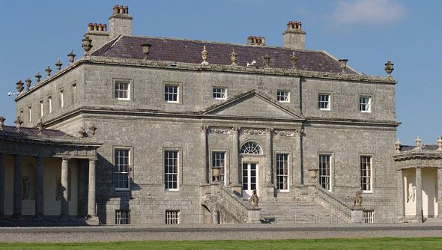
Fourth Art Theft at Russborough House

The priceless art collection at stately Russborough House in County Wicklow is the target of thieves for a fourth time on September 29, 2002. The thieves use a jeep to smash their way into the property and make off with a haul of art treasures.

The raid happens shortly before dawn, when the gang drives across the fields from a back road leading from Blessington to Ballymore Eustace in a four wheel drive Mitsubishi. The thieves mount the steps at the back of the house and smash a window leading to a room known as the salon. They take less than five minutes to snatch five paintings from the wall of the drawing room of the home. They speed away from the scene using the same route as the alarm alerts gardai in local stations to which the system is linked. The noise also wakes an elderly caretaker who also contacts the gardai.

The gang abandons the jeep on the side of the Ballymore Eustace road and switch to a waiting vehicle. They are on their way back to Dublin before the gardai reach the house.

Two paintings by the renowned artist Sir Peter Paul Rubens are stolen, including Portrait of a Dominican Monk, which had previously been stolen in 1986 by the notorious Dublin crime boss Martin Cahill, known as The General, but was subsequently recovered. Also missing is The Cornfield by Jacob van Ruisdael.

The heist at Russborough comes just days after two paintings, by Thomas Gainsborough and Belotto, are recovered from the last haul snatched from the house in June 2001. Detectives from the arts and antiques section of the national bureau of criminal investigation recover the two paintings in south Dublin.

There is widespread speculation that the latest heist is masterminded by a major Dublin criminal and former close associate of The General, who is responsible for the 1986 theft from the house. It is suggested that the latest robbery might be an act of revenge for the recovery of the earlier paintings two days earlier, although Gardai involved in this case say that is “pure speculation.” Another theory is that it is a copycat burglary inspired by publicity surrounding the previous thefts. Gardai believe that whoever is involved in the theft knew the layout of the house and the surrounding countryside as well as the value of the contents.

(Pictured: Russborough House in County Wicklow | Glanville, Lynn. “Fourth Robbery in 30 Years Art Heist from Russborough.” Independent.ie. 4 October 2002)


Leave a comment

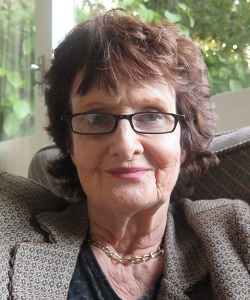
Birth of Eavan Boland, Irish Poet, Author & Professor

Eavan Boland, Irish poet, author and professor who has been active since the 1960s and helped develop feminist publishing company Arlen House, is born in Dublin on September 24, 1944. She is currently a professor at Stanford University, where she has taught since 1996. Her work deals with the Irish national identity and the role of women in Irish history. A number of poems from Boland’s poetry career are studied by Irish students who take the Leaving Certificate.

Boland’s father, Frederick Boland, is a career diplomat and her mother, Frances Kelly, is a noted post-expressionist painter. When she is six, her father is appointed Irish Ambassador to the United Kingdom. The family follows him to London, where she has her first experiences of anti-Irish sentiment. Her dealing with this hostility strengthens her identification with her Irish heritage. She speaks of this time in her poem “An Irish Childhood in England: 1951.”

At 14, she returns to Dublin to attend Holy Child School in Killiney. She publishes a pamphlet of poetry, 23 Poems, in her first year at Trinity College, Dublin in 1962. She earns a BA with First Class Honors in English Literature and Language from Trinity in 1966. Since then, she has held numerous teaching positions and published poetry, prose criticism and essays. She marries the novelist Kevin Casey in 1969 and has two daughters. Her experiences as a wife and mother influence her to write about the centrality of the ordinary, as well as provide a frame for more political and historical themes.

Boland has taught at Trinity College, Dublin, University College Dublin, and Bowdoin College, and was a member of the International Writing Program at the University of Iowa. She was also writer in residence at Trinity College, Dublin, and at the National Maternity Hospital, Dublin. In the late 1970s and 1980s, she teaches at the School of Irish Studies in Dublin. Since 1996 she has been a tenured Professor of English at Stanford University where she is currently Bella Mabury and Eloise Mabury Knapp Professor in the Humanities and Melvin and Bill Lane Professor for Director of the Creative Writing program. She divides her time between Palo Alto, California and her home in Dublin.

In 2015, Boland says that Trinity College, Dublin not only “influenced her career,” but “determined her career.”


Leave a comment

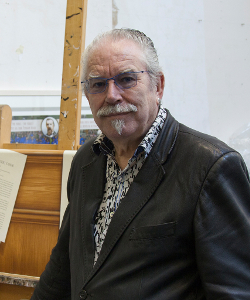
Birth of Robert Ballagh, Artist, Painter & Designer

Robert “Bobby” Ballagh, artist, painter and designer, is born in Dublin on September 22, 1943. His painting style is strongly influenced by pop art. He is particularly well known for his hyperealistic renderings of well-known Irish literary, historical or establishment figures.

Ballagh grows up in a ground-floor flat on Elgin Road in Ballsbridge, the only child of a Presbyterian father and a Catholic mother. He studies at Bolton Street College of Technology and becomes an atheist while attending Blackrock College. Before turning to art as a profession, he is a professional musician with the Irish showband Chessmen. He meets artist Michael Farrell during this period, and Farrell recruits him to assist with a large mural commission, which is painted at Ardmore Studios.

Ballagh represents Ireland at the 1969 Biennale de Paris. Among the theatre sets he has designed are sets for Riverdance, I’ll Go On, Gate Theatre (1985), Samuel Beckett‘s Endgame (1991) and Oscar Wilde‘s Salomé (1998). He also designs over 70 Irish postage stamps and the last series of Irish banknotes, “Series C,” before the introduction of the euro. He is a member of Aosdána and his paintings are held in several public collections of Irish painting including the National Gallery of Ireland, the Hugh Lane Gallery, the Ulster Museum, Trinity College, Dublin, and Nuremberg‘s Albrecht Dürer House.

In 1991, he co-ordinates the 75th anniversary commemoration of the 1916 Easter Rising, during which he claims he is harassed by the Special Branch of the Garda Síochána.

He is the president of the Ireland Institute for Historical and Cultural Studies, which promotes international republicanism. It is based at the new Pearse centre at 27 Pearse Street, Dublin, which is the birthplace of Pádraig Pearse in 1879.

In July 2011 it is reported that he might consider running for the 2011 Irish Presidential election with the backing of Sinn Féin and the United Left Alliance. A Sinn Féin source confirms there has been “very informal discussions” and that Ballagh’s nomination is “a possibility” but “very loose at this stage.” However, on July 25 Ballagh rules out running in the election, saying that he has never considered being a candidate. His discussions with the parties had been about the election “in general” and he has no ambitions to run for political office.

That same month, Ballagh breaks ranks with his colleagues in the travelling production of Riverdance in their decision to perform in Israel. He is an active member of the Ireland Palestine Solidarity Campaign, which insists that artists and academics participate in boycotts of Israeli businesses and cultural institutions.

In July 2012, Ballagh says he is “ashamed and profoundly depressed” at the en masse closure of Irish galleries and museums. He cites an example of some Americans and Canadians on holiday in Ireland. “They described most of the National Gallery as being closed along with several rooms in the Hugh Lane Gallery. I’m glad they didn’t bother going out to the Museum of Modern Art in Kilmainham because that’s closed too. At the point I met them, they were returning from Galway where they had found the Nora Barnacle Museum closed too.” He condemns the hypocrisy of political leaders, saying, “I know arts funding is not a big issue for people struggling to put food on the table, but we are talking about the soul of the nation.”