Agar is the second son of Henry Agar, a former MP for Gowran, and Anne Ellis, and is probably born at Gowran Castle in County Kilkenny. On March 20, 1760, he marries Lucia Martin, widow of Henry Boyle-Walsingham. Together they have three children: Henry-Welbore Agar-Ellis (b. January 22, 1761), John Ellis (b. December 31, 1763), and Charles-Bagnell (b. August 13, 1765).
In addition to being a Member of Parliament (MP) for Gowran, for which he sits three times, from 1753 to 1761, again from 1768 to 1769 and finally from 1776 to 1777, Agar controls three other borough seats through the strength of his family holdings. He represents Kilkenny County between 1761 and 1776 and Thomastown between 1768 and 1769. He holds the post of joint Postmaster General of Ireland with William Ponsonby, 1st Baron Ponsonby between 1784 and 1789.
James Agar dies on January 1, 1789. His eldest son, Henry-Welbore Agar-Ellis, becomes 2nd Viscount Clifden and Baron Mendip.
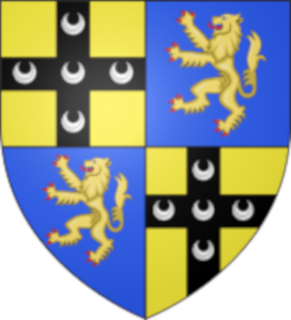
(Pictured: Arms of Agar-Ellis: 1st and 4th quarter: a cross sable charged with five crescents argent for Ellis; 2nd and 3rd quarter: azure with a lion rampant for Agar)
William Dargan, arguably the most important Irish engineer of the 19th century and certainly the most important figure in railway construction, is born at Killeshin near Carlow in County Laois (then called Queen’s County) on February 28, 1799. He designs and builds Ireland’s first railway line from Dublin to Dún Laoghaire in 1833. In total he constructs over 1,300 km (800 miles) of railway to important urban centres of Ireland. He is a member of the Royal Dublin Society and also helps establish the National Gallery of Ireland. He is also responsible for the Great Dublin Exhibition held on the lawn of Leinster House in 1853. His achievements are honoured in 1995, when the Dargan Railway Bridge in Belfast is opened, and again in 2004 when the William Dargan Bridge in Dublin, a new cable stayed bridge for Dublin’s Light Railway Luas, are both named after him.
Dargan is the eldest in a large family of tenant farmers on the Earl of Portarlington‘s estate. He attends a local hedge school in Graiguecullen near Carlow, where he excels in mathematics and accounting. He subsequently works on his father’s 101-acre farm before securing a position in a surveyor’s office in Carlow. With the assistance of prominent local people, particularly John Alexander, a prominent Carlow miller, and Henry Parnell MP for County Laois, he begins working with the Scottish engineer Thomas Telford on the Holyhead side of the London-Holyhead road. He works there between 1819 and 1824.
In 1824 Telford asks Dargan to begin work on Howth Road, from Raheny to Sutton in Dublin. He earns the relatively large sum of £300 for his work on this road and this provides the capital for future public works investments. Henry Parnell describes the road as “a model for other roads in the vicinity of Dublin.” Around the same time Dargan contributes roads in Dublin, Carlow and Louth as a surveyor. He also serves as assistant manager for about three years on the Birmingham & Liverpool Junction Canal and the Middlewich Branch, which are two canals in the English midlands.
On October 13, 1828, Dargan marries Jane Arkinstall in the Anglican Church of St. Michael & All Angels, Adbaston, Staffordshire. He and Jane do not produce any offspring.
When Dargan comes back to Ireland, he is occupied by minor construction projects, including rebuilding the main street of Banbridge and the 13 kilometers long Kilbeggan branch of the Grand Canal. After Irish parliament decides to launch a plan for the very first railway, the Dublin & Kingstown Railway in 1825, he becomes increasingly invested in the project. To fight against the skepticism of any railway program in Ireland, he spends a considerable amount of unpaid time promoting this first railway of Ireland, working along with engineer Charles Vignoles to plan the route. After a persistent effort, the Dublin & Kingstown Railway is opened on December 17, 1834, with eight trains running in each direction.
Dargan next constructs the water communication between Lough Erne and Belfast, afterwards known as the Ulster Canal, a signal triumph of engineering and constructive ability.
Other great works follow – the Dublin and Drogheda Railway, the Great Southern and Western Railway and the Midland Great Western Railway. By 1853 Dargan has constructed over six hundred miles of railway, and he has contracts for two hundred more. He pays the highest wages with the greatest punctuality and his credit is unbounded. At one point he is the largest railway projector in Ireland and one of its greatest capitalists.
Dargan has a strong sense of patriotism to Ireland. He is offered a knighthood by the British Viceroy in Ireland, but declines. Following this, Britain’s Queen Victoria visits Dargan at his residence, Dargan Villa, Mount Annville on August 29, 1853. She offers him a baronetcy, but he declines this also. Wishing to encourage the growth of flax, he then takes a tract of land which he devotes to its culture, but owing to some mismanagement the enterprise entails a heavy loss. He also becomes a manufacturer, and sets some mills working in Chapelizod, in the neighbourhood of Dublin, but that business does not prosper.
In his later years Dargan devotes himself chiefly to the working and extension of the Dublin, Wicklow and Wexford Railway, of which he is chairman. In 1866 he is seriously injured by a fall from his horse. He dies at 2 Fitzwilliam Square East, Dublin, on February 7, 1867, and is buried in Glasnevin Cemetery. His widow, Jane, is granted a civil list pension of £100 on June 18, 1870.
William Carleton, Irish writer and novelist, is born in Clogher, County Tyrone on February 20, 1794. He is best known for his Traits and Stories of the Irish Peasantry, a collection of ethnic sketches of the stereotypical Irishman.
Carleton receives a basic education at various hedge schools. Most of his learning is gained from a curate, Father Keenan, who teaches at a classical school at Donagh, County Monaghan which he attends from 1814 to 1816. He studies for the priesthood at St. Patrick’s Pontifical University, Maynooth, but leaves after two years. Around the age of 19 he undertakes one of the religious pilgrimages then common in Ireland. His experiences as a pilgrim make him give up the thought of entering the church.
Carleton’s vacillating ideas as to a mode of life are determined by reading the picaresque novelGil Blas by Alain-René Lesage. He decides to try what fortune has in store for him, and he goes to Killanny, County Louth. For six months he serves as tutor to the family of a farmer named Piers Murphy. After some other experiments he sets out for Dublin, arriving with two shillings and sixpence in his pocket.
Carleton first seeks occupation as a bird-stuffer, but a proposal to use potatoes and meal as stuffing fails to recommend him. He then tries to become a soldier, but the colonel of the regiment dissuades him. After staying in a number of cheap lodgings, he eventually finds a place in a house on Francis Street which contains a circulating library. The landlady allows him to read from 12 to 16 hours a day. He obtains some teaching and a clerkship in a Sunday School office, begins to contribute to journals. “The Pilgrimage to Lough Derg,” which is published in the Christian Examiner, attracts great attention.
In 1830 Carleton publishes his first full-length book, Traits and Stories of the Irish Peasantry (2 volumes), which is considered his best achievement. A second series (3 volumes) appears in 1833, and Tales of Ireland in 1834. From that time until a few years prior to his death he writes constantly. “Fardorougha the Miser, or the Convicts of Lisnamona” appears in 1837–1838 in the Dublin University Magazine.
Carleton remained active publishing in Dublin magazines through the 1830s and 1840s writing many ethnic stories often drawn from the south Tyrone locality. He also writes a lot of fiction. During the last months of his life, he begins an autobiography which he brings down to the beginning of his literary career. This forms the first part of The Life of William Carleton by David James O’Donoghue, which contains full information about his life, and a list of his scattered writings.
Carleton’s later years are characterised by drunkenness and poverty. In spite of his considerable literary production, he remains poor but receives a pension in 1848 of £200 a year granted by Lord John Russell in response to a memorial on Carleton’s behalf signed by numbers of distinguished persons in Ireland.
William Carleton dies at his home at Woodville, Sandford Road, in Ranelagh, Dublin on January 30, 1869, and is interred at Mount Jerome Cemetery, Harold’s Cross, Dublin. The house, now demolished, is close to the entrance to the Jesuit residence at Milltown Park. Despite his conversion to Protestantism, Carleton remains on friendly terms with one of the priests there, Reverend Robert Carbery, who offers to give him the Last Rites of the Catholic Church. In the final weeks before his death, Carleton politely declines the offer, stating he had not been a Roman Catholic “for half a century and more.”
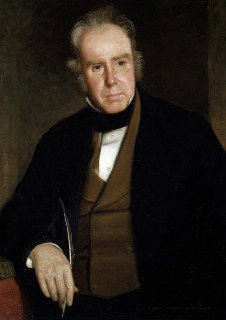
(Pictured: Portrait of Irish author William Carleton (1794-1869) by John Slattery (fl. 1850s))
In the 17th century, parliament settles at Chichester House, a town house in Hoggen Green (later College Green) formerly owned by Sir George Carew, Lord President of Munster and Lord High Treasurer of Ireland, which had been built on the site of a nunnery disbanded by King Henry VIII at the time of the dissolution of the monasteries. Carew’s house, named Chichester House after its later owner Sir Arthur Chichester, is a building of sufficient importance to have become the temporary home of the Kingdom of Ireland’s law courts during the Michaelmas law term in 1605. Most famously, the legal documentation facilitating the Plantation of Ulster is signed there on November 16, 1612.
Chichester House is in a dilapidated state, allegedly haunted and unfit for official use. In 1727 parliament votes to spend £6,000 on a new building on the site. It is to be the world’s first purpose-built two-chamber parliament building.
The then ancient Palace of Westminster, the seat of the English before 1707 and, later, British Parliament, is a converted building. The House of Commons‘s odd seating arrangements is due to the chamber’s previous existence as a chapel. Hence MPs face each other from former pews.
The original, domed House of Commons chamber is destroyed by fire in the 1790s, and a less elaborate new chamber, without a dome, is rebuilt in the same location and opened in 1796, four years before the Parliament’s ultimate abolition.
Pearce’s designs come to be studied and copied both at home and abroad. The Viceregal Apartments in Dublin Castle imitate his top-lit corridors. The British Museum in Bloomsbury in London copies his colonnaded main entrance. His impact reaches Washington, D.C., where his building, and in particular his octagonal House of Commons chamber, is studied as plans are made for the United States Capitol building. While the shape of the chamber is not replicated, some of its decorative motifs are, with the ceiling structure in the Old Senate Chamber and old House of Representatives chamber (now the National Statuary Hall) bearing a striking resemblance to Pearce’s ceiling in the House of Commons.
(Pictured: Architectural drawing of the front of Parliament House by Peter Mazell based on the drawing by Rowland Omer, 1767)
The son of an army major, Croker has little school education but does read widely while working in merchant trade. For some years Croker holds a position in the Admiralty, where his distant relative, John Wilson Croker, is his superior.
Croker devotes himself largely to the collection of ancient Irish poetry and Irish folklore. He assists in founding the Percy Society and the Camden Society. He and his wife’s testimonies about funereal customs, particularly the tradition of keening the deceased are among the earliest and most significant contributions to the understanding of the Irish languagelament and the accompanying traditions. The first part of his Fairy Legends and Traditions of the South of Ireland is published in 1825. It grows to six editions and is translated into German by the Brothers Grimm (Irische Elfenmärchen, 1826). Parts two and three follow in 1828, the latter including Croker’s translation of the long Grimm preface to part one.
Croker publishes Legends of the Lakes: Or, Sayings and Doings at Killarney in 1829, in which he features discussions of the music of his friend, the Irish piper James Gandsey.
A Church of Ireland landowner, his family had originally migrated to Ireland from Congleton in Cheshire. Although not from an Irish Roman Catholic background, Parnell, the only son of Sir John Parnell, 1st Baronet, is renowned in Irish history for his efforts to bring about a more emancipated country. He is the great-grandfather of Charles Stewart Parnell, known as the uncrowned king of Ireland and best known for opposing the Acts of Union 1800 between the two kingdoms of Great Britain and Ireland.
From a line of politically astute ancestors who had moved to Ireland in the 17th century, Parnell rises to the highest positions in Irish politics as Commissioner of the Revenue (1780), Chancellor of the Exchequer of Ireland (1787), and Lord of the Treasury (1793).
Henry Grattan describes Parnell as “an honest, straightforward, independent man, possessed of considerable ability and much public spirit; as Chancellor of the Exchequer, he was not deficient, and he served his country by his plan to reduce the interest of money. He was amiable in private, mild in disposition, but firm in mind and purpose. His conduct at the Union did him honour, and proved how warmly he was attached to the interests of his country, and on this account, he was dismissed.”
(Pictured: Oil painting on canvas, The Right Hon. Sir John Parnell, 2nd Bt (1744–1801) by Pompeo Girolamo Batoni (Lucca 1708 – Rome 1787))
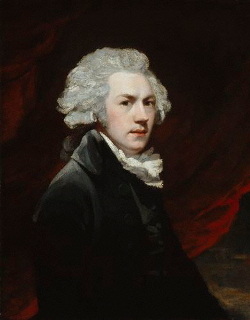
Shee is born into an old Irish Catholic family, the son of Martin Shee, a merchant, who regards the profession of a painter as an unsuitable occupation for a descendant of the Shees. He nevertheless studies art in the Royal Dublin Society and comes to London. There, in 1788, he is introduced by Edmund Burke to Joshua Reynolds, on whose advice he studies in the schools of the Royal Academy of Arts.
In 1789 Shee exhibits his first two pictures, the “Head of an Old Man” and “Portrait of a Gentleman.” Over the next ten years he steadily increases in practice. In 1798 he is chosen an associate of the Royal Academy and in 1800 he is elected a Royal Academician. He moves to George Romney‘s former house at 32 Cavendish Square and sets up as his successor.
Shee continues to paint with great readiness of hand and fertility of invention, although his portraits are eclipsed by more than one of his contemporaries, and especially by Thomas Lawrence. His earlier portraits are carefully finished, easy in action, with good drawing and excellent discrimination of character. They show an undue tendency to redness in the flesh painting, a defect which is still more apparent in his later works, in which the handling is less square, crisp and forcible. In addition to his portraits, he executes various subjects and historical works, such as Lavinia, Belisarius, his diploma picture “Prospero and Miranda,” and the “Daughter of Jephthah.”
In 1805 Shee publishes a poem consisting of Rhymes on Art, and a second part follows in 1809. Lord Byron speaks well of it in his English Bards and Scotch Reviewers. He publishes another small volume of verse in 1814, entitled The Commemoration of Sir Joshua Reynolds, and other Poems, but this is less successful. He also produces a tragedy, Alasco, set in Poland. The play is accepted at Covent Garden, but is refused a licence, on the grounds that it contains treasonable allusions, and Shee angrily resolves to make his appeal to the public. He carries out his threat in 1824, but Alasco is still on the list of unacted dramas in 1911. He also publishes two novels – Oldcourt (1829, in three volumes) and Cecil Hyde (1834).
On the death of Sir Thomas Lawrence in 1830, Shee is chosen president of the Royal Academy in his stead and shortly afterwards receives a knighthood. In 1831 he is elected a Fellow of the Royal Society. In an examination before the parliamentary committee of 1836 concerning the functions of the Royal Academy, he ably defends its rights. He continues to paint until 1845, when illness makes him retire to Brighton. He is deputised for at the Academy by J. M. W. Turner, who had appointed him a trustee of the projected Turner almshouse.
Martin Archer Shee dies in Brighton, Sussex, England on August 13, 1850, and is buried in the western extension to St. Nicholas’ Churchyard in Brighton. His headstone remains but has been laid flat and moved to the perimeter of the site.
Sterne is born to a British military officer stationed in County Tipperary. Following his father’s postings, the family moves briefly to Yorkshire before returning to Ireland, where they live largely in poverty and move frequently throughout the rest of Sterne’s youth. When the elder Sterne is dispatched to Jamaica, where he would die in 1731, he places his son with a wealthy uncle who supports the boy’s education.
Sterne attends Jesus College, Cambridge, following in the footsteps of his grandfather, Richard Sterne, who had been Master of the College. After being ordained as an Anglican priest, he takes up the vicarship of Sutton-on-the-Forest, where he marries Elizabeth Lumley. The couple lives there for the next 20 years.
Through his paternal family line, Sterne is connected to several powerful clergymen. His uncle, Archdeacon Jacques Sterne, encourages him to contribute to Whig political journals, and consequently he writes several articles supporting Sir Robert Walpole. However, when his political fervency fails to match his uncle’s, prompting him to abandon the role of political controversialist, Jacques Sterne cuts ties with his nephew and refuses to support his career. Nevertheless, Sterne continues writing.
Sterne’s first long work, a sharp satire of the spiritual courts entitled A Political Romance, makes him as many enemies as allies. Though the work is not widely distributed and indeed is burned at the request of those targeted by its Swiftian-style criticism, it represents Sterne’s first foray into the kind of humorous satire for which he would become famous. At age 46, he steps back from managing his parishes and turns his full attention to writing.
Sterne begins what becomes his best-known work, The Life and Opinions of Tristram Shandy, Gentleman, at a moment of personal crisis. He and his wife are both ill with tuberculosis and, in the same year that the first volumes of his long comic novel appear, his mother and uncle Jacques die. The blend of sentiment, humour and philosophical exploration that characterises his works matures during this difficult period. Tristram Shandy is an enormous success, and Sterne becomes, for the first time in his life, a famous literary figure in London. Still suffering from tuberculosis, he leaves England for Continental Europe, where his travels influence his second major work, A Sentimental Journey Through France and Italy (1768).
Sterne’s narrator in A Sentimental Journey is Parson Yorick, a sensitive but also comic figure who first appears in Tristram Shandy and who becomes Sterne’s fictive alter ego. In A Sentimental Journey, Parson Yorick wears a “little picture of Eliza around his neck,” and in the last year of his life Sterne writes the autobiographical Journal to Eliza under the pseudonym Yorick. Eliza is Eliza Draper, the wife of an East India Company official, and the literary and emotional muse of Sterne’s final years. After Draper returns to India, the two continue to exchange letters, some of which Draper allows to be published after Sterne’s death in the volume Letters from Yorick to Eliza.
In early 1768, less than a month after A Sentimental Journey is published, Sterne’s strength fails him and he dies in his lodgings at 41 Old Bond Street in London on March 18, 1768, at the age of 54. He is buried in the churchyard of St. George’s Hanover Square Church.
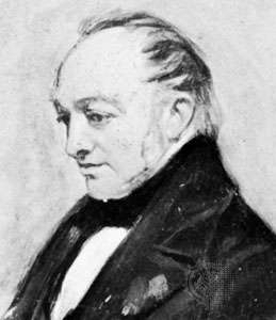
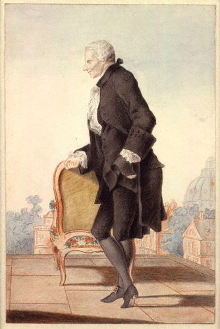
(Pictured: Laurence Sterne painted in watercolour by French artist Louis Carrogis Carmontelle, ca. 1762)
Theobald Wolfe Tone, Irish republican and rebel who sought to overthrow English rule in Ireland and who led a French military force to Ireland during the Irish Rebellion of 1798, dies at Provost’s Prison, Dublin on November 19, 1798, from a stab wound to his neck which he inflicted upon himself on November 12. His attempted suicide is the result of being refused a soldier’s execution by firing squad and being sentenced to death by hanging.
Wolfe Tone is born in Dublin on June 20, 1763. The son of a coach maker, he studies law and is called to the Irish bar in 1789 but soon gives up his practice. In October 1791 he helps found the Society of United Irishmen, initially a predominantly Protestant organization that works for parliamentary reforms, such as universal suffrage and Roman Catholic emancipation. In Dublin in 1792 he organizes a Roman Catholic convention of elected delegates that forces Parliament to pass the Catholic Relief Act of 1793. He himself, however, is anticlerical and hopes for a general revolt against religious creeds in Ireland as a sequel to the attainment of Irish political freedom.
By 1794 Wolfe Tone and his United Irishmen friends begin to seek armed aid from Revolutionary France to help overthrow English rule. After an initial effort fails, he goes to the United States and obtains letters of introduction from the French minister at Philadelphia to the Committee of Public Safety in Paris. In February 1796 he arrives in the French capital, presents his plan for a French invasion of Ireland, and is favourably received. The Directory then appoints one of the most brilliant young French generals, Lazare Hoche, to command the expedition and makes Tone an adjutant in the French army.
On December 16, 1796, Wolfe Tone sails from Brest with 43 ships and nearly 14,000 men. But the ships are badly handled and, after reaching the coast of west Cork and Kerry, are dispersed by a storm. He again brings an Irish invasion plan to Paris in October 1797, but the principal French military leader, Napoleon Bonaparte, takes little interest. When insurrection breaks out in Ireland in May 1798, Wolfe Tone can only obtain enough French forces to make small raids on different parts of the Irish coast. In September he enters Lough Swilly, Donegal, with 3,000 men and is captured there.
At his trial in Dublin on November 10, Wolfe Tone defiantly proclaims his undying hostility to England and his desire “in fair and open war to produce the separation of the two countries.” He is found guilty and is sentenced to be hanged. Early in the morning of November 12, 1798, the day he is to be hanged, he cuts his throat with a penknife and dies at the age of 35 in Provost’s Prison, Dublin, not far from where he was born. He is buried in Bodenstown, County Kildare, near his birthplace, and his grave is in the care of the National Graves Association.
A previous Custom House had been built in 1707 by engineer Thomas Burgh. However, by the late 18th century it is deemed unfit for purpose.
The building of a new Custom House for Dublin is the idea of John Beresford, who becomes first commissioner of revenue for Ireland in 1780. In 1781 he appoints James Gandon as architect, after Thomas Cooley, the original architect on the project, dies. This is Gandon’s first large scale commission. The new Custom House is unpopular with the Dublin Corporation and some city merchants who complain that it moves the axis of the city, would leave little room for shipping, and is being built on what at the time is a swamp. Purchase of land is delayed and proves exorbitant, and the laying of foundations is disrupted by the High Sheriff and members of the Dublin Corporation with a mob of several thousand. However, Beresford is determined to complete the project and ignores the protests.
Construction begins in 1781, and for his assistants Gandon chooses Irish artists such as Meath stone-cutter Henry Darley, mason John Semple, and carpenter Hugh Henry. Every available mason in Dublin is engaged in the work. When it is completed and opens for business on November 7, 1791, it has cost £200,000 to build – a considerable sum at the time. The four facades of the building are decorated with coats-of-arms and ornamental sculptures by Edward Smyth representing Ireland’s rivers. Another artist, Henry Banks, is responsible for the statue on the dome and other statues.
As the port of Dublin moves further downriver, the building’s original use for collecting custom duties becomes obsolete, and it is used as the headquarters of local government in Ireland. During the Irish War of Independence in 1921, the Irish Republican Army (IRA) burns down the Custom House in an attempt to disrupt British rule in Ireland. Gandon’s original interior is completely destroyed in the fire and the central dome collapses. A large quantity of irreplaceable historical records is also destroyed in the fire. Despite achieving its objectives, the attack on the Custom House is a setback for the IRA as a large number of Volunteers are captured either during the attack or when falling back.
After the Anglo-Irish Treaty, it is restored by the Irish Free State government. The results of this reconstruction can still be seen on the building’s exterior today. The dome is rebuilt using Irish Ardbraccan limestone which is noticeably darker than the Portland stone used in the original construction. This is done as an attempt to promote Irish resources.
Further restoration and cleaning of the stonework is done by an Office of Public Works team in the 1980s.






 seamus dubhghaill