The Articles of Confederation is approved, after much debate between July 1776 and November 1777, by the Second Continental Congress and sent to the states for ratification. The Articles come into force on March 1, 1781, after being ratified by all thirteen states. A guiding principle of the Articles is to preserve the independence and sovereignty of the states. The weak central government established by the Articles receives only those powers which the former colonies had recognized as belonging to king and parliament.
The document provides clearly written rules for how the states’ “league of friendship” is to be organized. During the ratification process, the Congress looks to the Articles for guidance as it conducts business, directs the war effort, conducts diplomacy with foreign nations, addresses territorial issues and deals with Native American relations. Little changes politically once the Articles of Confederation go into effect, as ratification does little more than legalize what the Continental Congress had already been doing. That body is renamed the Congress of the Confederation however most Americans continue to call it the Continental Congress, since its organization remains the same.
As the Confederation Congress attempts to govern the continually growing American states, delegates discover that the limitations placed upon the central government render it ineffective at doing so. As the government’s weaknesses become apparent, especially after Shays’ Rebellion, some prominent political thinkers in the fledgling nation begin asking for changes to the Articles. Their hope is to create a stronger national government.
Initially, some states meet to deal with their trade and economic problems. However, as more states become interested in meeting to change the Articles, a meeting is set in Philadelphia on May 25, 1787. This becomes the Constitutional Convention. It is quickly agreed that changes will not work, and instead the entire Articles needs to be replaced. On March 4, 1789, the government under the Articles is replaced with the federal government under the Constitution of the United States. The new Constitution provides for a much stronger federal government by establishing a chief executive (the President), courts, and taxing powers.
Hagan is born in County Tyrone on June 17, 1822. His family moves to a farm near Philadelphia, Pennsylvania when he is still at an early age, and he is educated at Clermont Academy. He moves to Alabama in 1837. His prosperous uncle, John Hagen of New Orleans, Louisiana, takes him into the family business and sets him up in Mobile to manage the Hagan business there.
Hagan serves in John Coffee Hays‘s Texas Rangers, a cavalry unit in Major GeneralZachary Taylor‘s army during the Mexican–American War. He is recognized for his gallantry at the Battle of Monterrey. He is commissioned a captain in the 3rd U.S. Dragoons in 1848 and is discharged on July 31, 1848. After the war, he returns to Mobile where he purchases and subsequently manages a plantation rather than remaining in the family mercantile business. In 1854, he marries Bettie Oliver, daughter of Alabama’s attorney general.
At the beginning of the American Civil War, Hagan organizes and is elected captain of a cavalry company for the Alabama Militia, the “Mobile Dragoons,” which serves on guard duty along the Gulf Coast. At the rank of major he transfers to the 1st Mississippi Cavalry Regiment on October 26, 1861. The regiment fights at the Battle of Shiloh on April 6–7, 1862. He leads his men in a mounted charge at the Battle of Perryville, which is highly commended by his brigade commander, Brigadier GeneralJoseph Wheeler.
Hagan is promoted to colonel of a new regiment, the 3rd Alabama Cavalry Regiment, on July 1, 1862. The regiment fights in all of the campaigns of the Army of Tennessee. In July 1863, He is assigned to command Brigade 1 of Brigadier General William T. Martin‘s Division of the Cavalry Corps of the Army of Tennessee, which is Major General Joseph Wheeler’s old brigade. During the spring and summer of 1863, the brigade screens the left front of GeneralBraxton Bragg‘s army. Wheeler recommends that Hagan be promoted to brigadier general, but Bragg blocks the promotion because he says Hagan is in a state of “dissipation”, a reference to drunkenness or alcoholism. Hagan is wounded near Franklin, Tennessee in the winter of 1862 and again near Kingston, Tennessee in November 1863. In November 1863, he resigns and returns to Mobile to recover from his wounds and his disappointment from not being promoted.
Although Hagan is assigned as acting brigadier general in early 1865, he never receives an official appointment from Jefferson Davis or confirmation by the Confederate States Senate of an appointment as a general officer. Major General Wheeler later writes that he had been told unofficially by Confederate States War Department officials that brigadier general commissions had been issued for Hagan, Henry Marshall Ashby and Moses Wright Hannon near the end of the war, but no such commissions ever were delivered.
Hagan returns to Mobile after the war but is penniless since his fortune had been converted to Confederate money. He works as manager of a plantation on the Alabama River in the 1870s and early 1880s. President Grover Cleveland appoints him crier of the United States District Court in Alabama in 1885.
James Hagan dies on November 6, 1901, at Mobile, Alabama. He is buried in Magnolia Cemetery in Mobile.
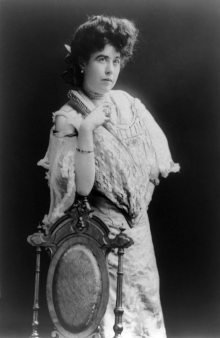
Margaret Brown (née Tobin), an American socialite and philanthropist posthumously known as “The Unsinkable Molly Brown”, dies in New York City on October 26, 1932. She is best remembered for unsuccessfully encouraging the crew in Lifeboat No. 6 to return to the debris field of the 1912 sinking of RMS Titanic to look for survivors. During her lifetime, her friends called her “Maggie”, but even by her death, obituaries refer to her as the “Unsinkable Mrs. Brown.” The reference is further reinforced by a 1960 Broadway musical based on her life and its 1964 film adaptation which are both entitled The Unsinkable Molly Brown.
Tobin is born in a hospital near the Mississippi River in Hannibal, Missouri, on what is now known as Denkler’s alley. Her parents are Irish Catholic immigrants. At age 18, she relocates to Leadville, Colorado, with her siblings Daniel Tobin, Mary Ann Collins Landrigan and Mary Ann’s husband John Landrigan. Margaret and her brother Daniel share a two-room log cabin and she finds a job in a department store.
In Leadville, she meets and marries James Joseph “J.J.” Brown (1854–1922), an enterprising, self-educated man, in Leadville’s Annunciation Church on September 1, 1886. They have two children.
The Brown family acquires great wealth when in 1893 J.J.’s mining engineering efforts prove instrumental in the production of a substantial ore seam at the Little Jonny Mine of his employers, Ibex Mining Company, and he is awarded 12,500 shares of stock and a seat on the board. In Leadville, Margaret helps by working in soup kitchens to assist miners’ families.
In 1894, the Browns purchase a $30,000 Victorian mansion in Denver and in 1897 they build a summer house, Avoca Lodge in Southwest Denver near Bear Creek, which gives the family more social opportunities. Margaret becomes a charter member of the Denver Woman’s Club, whose mission is the improvement of women’s lives by continuing education and philanthropy. After 23 years of marriage, Margaret and J.J. privately sign a separation agreement in 1909. Although they never reconcile, they continue to communicate and care for each other throughout their lives.
Brown spends the first months of 1912 traveling in Egypt as part of the John Jacob Astor IV party, until she receives word from Denver that her eldest grandchild, Lawrence Palmer Brown Jr., is seriously ill. She immediately books passage on the first available liner leaving for New York, the RMS Titanic. Originally her daughter Helen is supposed to accompany her, but she decides to stay on in Paris, where she is studying at the Sorbonne.
The RMS Titanic sinks in the early morning hours of April 15, 1912, after striking an iceberg. Brown helps others board the lifeboats but is finally persuaded to leave the ship in Lifeboat No. 6. Brown is later called “The Unsinkable Molly Brown” by authors because she helps in the ship’s evacuation, taking an oar herself in her lifeboat and urging that the lifeboat go back and save more people. After several attempts to urge QuartermasterRobert Hichens to turn back, she threatens to throw him overboard. Sources vary as to whether the boat goes back and if they find anyone alive. Brown’s efforts seal her place in history, regardless.
Upon being rescued by the RMS Carpathia, Brown proceeds to organize a survivors’ committee with other first-class survivors. The committee works to secure basic necessities for the second- and third-class survivors and even provides informal counseling.
During the last years of her life, Brown is an actress. She dies in her sleep on October 26, 1932, at the Barbizon Hotel in New York City, New York. Subsequent autopsy reveals a brain tumor. She is buried on October 31 alongside her husband in the Cemetery of the Holy Rood in Westbury, New York, following a small ceremony attended only by family members. There is no eulogy.
Boyle is born to Alice (Lewis) and Francis Xavier Boyle. His paternal grandparents are Irish immigrants, and his mother is of mostly French and British Isles descent. He eventually moves to Philadelphia, where his father is a sought-after local TV personality and children’s show host. Following a solid Catholic upbringing, he is a sensitive youth and joins the Christian Brothers religious order at one point while attending La Salle University in Philadelphia. He leaves the monastery after only a few years when he “lost” his calling.
Bent on an acting career, Boyle initially studies with guru Uta Hagen in New York. The tall, hulking, prematurely bald actor wannabe struggles through a variety of odd jobs as a postal worker, waiter and bouncer while simultaneously building up his credits on stage and waiting for that first big break. Things start progressing for him after appearing in the national company of The Odd Couple in 1965 and landing TV commercials on the sly. In the late 1960s Boyle joins Chicago‘s The Second City improv group and makes his Broadway debut as a replacement for Peter Bonerz in Paul Sills’ Story Theatre (1971).
Boyle gains acclaim for his first starring role, playing the title character, a bigoted New York City factory worker, in the 1970 movie Joe, directed by John G. Avildsen. The film’s release is surrounded by controversy over its violence and language. The role leads to major notoriety, however, and some daunting supporting parts in T.R. Baskin (1971), Slither (1973) and as Robert Redford‘s calculating campaign manager in The Candidate (1972). During this time his political radicalism finds a visible platform after joining Jane Fonda and Donald Sutherland on anti-war crusades, which also includes the anti-establishment picture Steelyard Blues (1973). This period also sees the forging of a strong friendship with former BeatleJohn Lennon.
Destined to be cast as monstrous undesirables throughout much of his career, Boyle plays a monster of another sort in his early film days, and thus avoids a complete stereotype as a film abhorrent. His hilarious, sexually potent Frankenstein’s Monster in the cult Mel Brooks spoof Young Frankenstein (1974) sees him in a sympathetic and certainly more humorous vein. His creature’s first public viewing, in which Boyle shares an adroit tap-dancing scene with “creator” Gene Wilder in full Fred Astaire regalia, is a show-stopping audience pleaser. Late 1970s filmgoers continue to witness him in seamy, urban settings with brutish roles in Taxi Driver (1976) and Hardcore (1979). At the same time, he addresses several TV mini-movie roles with the same brilliant darkness such as his Senator Joe McCarthy in Tail Gunner Joe (1977), for which he receives an Emmy nomination, and his murderous, knife-wielding Fatso in the miniseries remake of From Here to Eternity (1979).
While the following decade finds Boyle in predominantly less noteworthy filming and a short-lived TV series lead as remote cop Joe Bash (1986), the 1990s bring him Emmy glory for a guest role in an episode of The X-Files (1993). Despite a blood clot-induced stroke in 1990 that impairs his speech for six months, he ventures on and caps his enviable career on TV wielding funny but crass one-liners in the “Archie Bunker” mold on the long-running sitcom Everybody Loves Raymond (1996). A major Emmy blunder has him earning seven nominations for his Frank Barone character without a win, the only prime player on the show unhonored. He survives a heart attack while on the set of Everybody Loves Raymond in 1999 but manages to return full time for the remainder of the series’ run through 2005.
Eileen Evelyn Greer Garson, motion picture actress best known as Greer Garson, is born on September 29, 1904, in Manor Park, London, England. Her classic beauty and screen persona of elegance, poise, and maternal virtue make her one of the most popular and admired Hollywood stars of the World War II era.
Garson often claims to have been born in County Down, Ireland, where her grandparents lived and which she happily visited as a child, but she is, in fact, born and raised in London. Although she wanted to study acting, she wins a scholarship to the University of London and her practical-minded family encourage her to pursue a teaching career. After graduating with honours, she works briefly for Encyclopædia Britannica and a London advertising firm but continually tries to get her foot into a backstage door.
After suffering through a discouraging first year in Hollywood, Garson returns to England to film the small role of Mrs. Chips in MGM’s Goodbye, Mr. Chips (1939). She receives her first Oscar nomination for the role but loses to Vivien Leigh for Gone with the Wind. Her portrayal of the beloved schoolteacher’s charming wife endears her to the American public and sets her career in motion. It is the first in a series of roles in which she plays women of great loyalty, refinement, and wifely or motherly strength.
Garson’s other significant films of the period include Pride and Prejudice (1940), Blossoms in the Dust (1941), her first appearance with her frequent costar Walter Pidgeon, Random Harvest (1942), and Madame Curie (1943). The film that cements her reputation and image, however, is Mrs. Miniver (1942). Filmed during World War II and tailor-made for the times, Mrs. Miniver extolls the strength and spirit of the British home front and is one of the year’s biggest hits. Her grace-under-pressure portrayal of a courageous wife and mother, the personification of British fortitude, not only wins her an Academy Award but is credited with bolstering American support for the war.
Following the war Garson’s career falters. The public rejects her attempts to reforge her image to that of a more fun-loving, less noble heroine in such films as Adventure (1945) and Julia Misbehaves (1948). During the 1950s she appears in several unexceptional films and television dramas and stars on Broadway in Auntie Mame. Her remarkably convincing portrayal of Eleanor Roosevelt in Sunrise at Campobello (1960) is widely praised and earns her a seventh Oscar nomination, but she performs only occasionally thereafter, devoting most of her time to philanthropic causes, including the endowment of scholarships for theatre students at Southern Methodist University in University Park, Texas and the construction of a campus theatre.
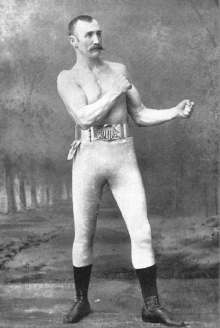
Mike Donovan, middleweight boxer of the bare-knuckle era also known as Professor Mike Donovan and Mike O’Donovan, is born in Chicago, Illinois on September 27, 1847, to Irish-born parents. He later becomes one of the foremost teachers of the sport.
The first of many memorable events in Donovan’s life comes when he fights for the Union Army in the American Civil War, serving in William Tecumseh Sherman‘s army in its march through Georgia. After the war, he begins a boxing career that associates him with some of the best-known people of his age, in and out of the ring.
In 1868, Donovan defeats John Shanssey in a bout in Cheyenne, Wyoming, refereed by famous Western lawman Wyatt Earp. He wins the middleweight title in 1887 in San Francisco. He also fights the most famous Irish boxing champion in history, John L. Sullivan, fighting two four-round fights with him in 1880 and 1881.
After his active boxing career ends, Donovan becomes a boxing instructor at the New York Athletic Club and works with several famous Irish fighters. He is in Jake Kilrain‘s corner when he loses to John L. Sullivan in the last bare-knuckle heavyweight championship fight, and also helps James Corbett when he defeats Sullivan for the title in 1892.
Donovan spars with PresidentTheodore Roosevelt, who loves boxing, on several occasions. He earns the sobriquet “Professor” for his scientific approach to his own career and in his later teaching of the sport. The “Professor” leaves a legacy, as well. His son Arthur is a famous boxing referee in the 1930s and 1940s and is enshrined in the International Boxing Hall of Fame along with the “Professor,” the only father-son combination so honored. His grandson, also Art, plays for the Baltimore Colts in the National Football League and is enshrined in the Pro Football Hall of Fame in Canton, Ohio.
Donovan dies on March 24, 1918, at St. Francis Hospital in the Bronx, New York from complications from a bout with pneumonia he develops while teaching a boxing class. He is survived by his wife, Cecilia, and eight children, all who are at his bedside when he dies. After his death, his will indicates that his last name is actually O’Donovan.
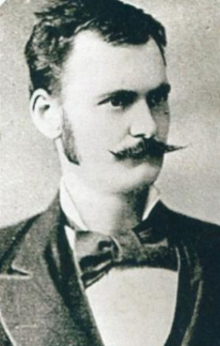
Dowling is born in the townland of Knockballyvishteal, Milltown, County Galway on January 14, 1837, the second of eight children, born to tenant farmer Patrick and Bridget Dowling (née Qualter). Following the eviction of his family from their home in 1845, the first year of the Great Famine, nine-year-old Dowling leaves Ireland in 1846 with his older sister Honora, bound for New Orleans in the United States.
As a teenager, Dowling displays his entrepreneurial skills by successfully running the Continental Coffeehouse, a saloon in the fashionable French Quarter. His parents and siblings follow from Ireland in 1851, but the joy of reunion is short-lived. In 1853, a yellow fever outbreak in New Orleans takes the lives of his parents and one of his younger brothers. With rising anti-Irish feeling growing in New Orleans, following local elections which see a landslide victory for the “Know Nothing” party, Dowling moves to Houston in 1857.
In 1857 Dowling marries Elizabeth Ann Odlum, daughter of Benjamin Digby Odlum, a Kildare-born Irishman, who had fought in the Texas Revolution, being captured at the Battle of Refugio in 1836.
By 1860, Dowling owns a number of saloons. His most successful is named the Bank of Bacchus, located on Courthouse Square in downtown Houston. “The Bank” as it is known locally becomes Houston’s most popular social gathering place in the 1860s and is renowned for its hospitality. He is also involved in setting up Houston’s first gaslight company and is first to have it installed in his home and “The Bank.” He is a founding member of Houston’s Hook and Ladder Company Number One fire department and is also involved in running the city’s first streetcar company.
Prior to the outbreak of the American Civil War, Dowling makes a name for himself as an able and successful entrepreneur. Among other things, he is involved with a predominantly Irish militia company which serves a more social than military role in Houston society. Upon Secession, this militia company is mustered straight into the Confederate States Army, with Dowling being elected First Lieutenant. The unit names themselves the “Jefferson Davis Guards” in honor of Confederate PresidentJefferson Davis. The Davis Guards are initially part of a Texas State Troops/Confederate expedition sent to take over Union Army forts and arsenals along the border with Mexico. The expedition is successfully completed without a shot being fired. They participate in the Battle of Galveston on New Year’s Day 1863, following which they are assigned to a newly constructed artillery post near the mouth of the Sabine River called Fort Sabine.
Sabine Pass was important as a point of arrival and departure for blockade runners. It is suspected that the Union Army will attempt an invasion of Texas via Sabine Pass because of its value as a harbor for blockade runners and its proximity 18 miles southeast of Beaumont, which lies on the railroad between Houston and the eastern part of the Confederacy.
To negotiate Sabine Pass all vessels except small boats take one of the two river channels. No seagoing ship can traverse the Pass without great risk of running aground should it stray from one of the channels. The inevitable course of any steam-powered warship, including shallow-draft gunboats then common to the U.S. Navy, would use one of the channels, both of which are within fair range of the fort’s six smoothbores.
Dowling spends the summer of 1863 at the earthen fort instructing his men in gunnery. On September 8, 1863, a Union Navyflotilla of some 22 gunboats and transports with 5,000 men accompanied by cavalry and artillery arrive off the mouth of Sabine Pass. The plan of invasion is sound, but monumentally mismanaged. Four of the flanking gunboats are to steam up the pass at speed and draw the fire of the fort, two in each channel, a tactic which had been used successfully in subduing the defensive fortifications of Mobile and New Orleans prior to this. This time, however, Dowling’s artillery drills pay off as the Confederates pour a rapid and withering fire onto the incoming gunboats, disabling and capturing two, while the others retreat in disarray. The rest of the flotilla retreats from the mouth of the pass and returns ignominiously to New Orleans, leaving the disabled ships with no option but to surrender to Dowling. With a command of just 47 men, Dowling had thwarted an attempted invasion of Texas, in the process capturing two gunboats, some 350 prisoners and a large quantity of supplies and munitions.
The Confederate government offers its gratitude and admiration to Dowling, now promoted to Major, and his unit, as a result of their battlefield prowess. In gratitude, the ladies of Houston present the unit with specially struck medals, which are actually Mexican eight reale coins with both faces sanded down and inscribed “Sabine Pass, 1864” on one side and a Maltese cross with the letters D and G on the other. Because of the official recognition given to the action, it is now accepted that these Davis Guard Medals are the only medals of honor issued by the Confederate government, and consequently are collector’s items today.
After the battle of Sabine Pass Dowling is elevated to hero status in his hometown of Houston. He subsequently serves as a recruiter for the Confederacy and is personally commended for his action at the battle by Jefferson Davis. After the war he returns to his saloon business and quickly becomes one of the city’s leading businessmen.
Dowling’s promising future is cut short by another yellow fever epidemic which devastates Houston in the late summer of 1867, and he dies on September 23, 1867. He is buried at St. Vincent’s Catholic Cemetery, the oldest Catholic cemetery in Houston.
In 1787 Paterson heads the New Jersey delegation to the federal Constitutional Convention, where he plays a leading role in the opposition of the small states to representation according to population in the federal legislature. As an alternative to James Madison‘s large-state Virginia Plan, he submits the small-state New Jersey Plan, also called the Paterson Plan, which advocates an equal vote for all states. The issue is finally resolved with the compromise embodied in the bicameral Congress —representation by population in the House of Representatives, and equality of states in the Senate.
Paterson is instrumental in securing ratification of the final document in New Jersey and is elected one of the state’s first two U.S. senators. He resigns his seat in 1790 and serves as governor of New Jersey until 1793, when he is named an associate justice of the United States Supreme Court.
On September 9, 1806, Paterson, aged 60, dies from the lingering effects of a coach accident suffered in 1803 while on circuit court duty in New Jersey. He is on his way to the spa at Ballston Spa, New York, to “take the waters”, when he dies at the Manor of Rensselaerswyck home of his daughter, Cornelia, and son-in-law, Stephen Van RensselaerStephen Van Rensselaer, in Albany, New York. He is laid to rest in the Van Renssalaer family vault. When the city acquires the property, his remains are relocated to Albany Rural Cemetery in Albany County, New York. Also buried there are Associate Justice Rufus W. Peckham and President Chester A. Arthur.
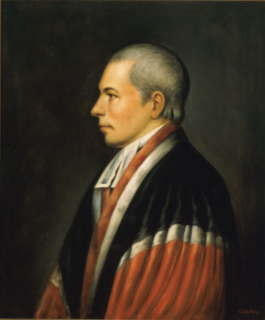
(Pictured: Portrait of William Paterson (1745–1806) when he was a Supreme Court Justice (1793–1806). This image is from a copy by C. Gregory Stapoko(1913-2006) of the original by James Sharples(1751-1811))
In the fall of 1862, two Confederate armies move on separate paths into Kentucky, hoping to put the shadow Confederate government of Kentucky of that state into power, threaten Union cities along the Ohio River, and recruit men to join the army. First to move is Kirby Smith, departing Knoxville on August 13, leading the Confederate Army of Kentucky, whose ideas provide the initiative for the offensive. General Braxton Bragg, commanding the Army of Mississippi, leaves Chattanooga on August 27 and moves on a roughly parallel track to the west.
Brigadier General Patrick Cleburne leads Smith’s advance with Colonel John S. Scott’s cavalry out in front. The Confederate cavalry, while moving north from Big Hill on the road to Richmond, Kentucky, on August 29, encounters Union troopers and begin skirmishing. After noon, Union artillery and infantry join the fray, forcing the Confederate cavalry to retreat to Big Hill.
At that time, Brigadier General Mahlon Dickerson Manson, who commands Union forces in the area, orders a brigade to march to Rogersville, toward the rebels. Fighting for the day stops after pursuing Union forces briefly skirmish with Cleburne’s men in the late afternoon. That night, Manson informs his superior, Bull Nelson, of his situation, and he orders another brigade to be ready to march in support, when required.
Kirby Smith orders Cleburne to attack in the morning and promises to hurry reinforcements. Cleburne starts early, marching north, passes through Kingston, disperses Union skirmishers, and approaches Manson’s battle line near Zion Church. As the day progresses, additional troops join both sides. Following an artillery duel, the battle begins, and after a concerted Confederate attack on the Union right, the Union troops give way. Retreating into Rogersville, they make another futile stand at their old bivouac.
By this time, Smith and Nelson arrive and take command of their respective armies. Nelson rallies some troops in the cemetery outside Richmond, but they are routed.
Nelson and some of his men escape, but the Confederates capture over 4,300 Union troops. Total casualties are 5,353 (206 killed, 844 wounded, and 4,303 captured or missing) on the Union side, 451 (78 killed, 372 wounded, and one missing) for the Confederates. The way north towards Lexington and Frankfort is open.
During the battle Cleburne is wounded in the face when a Minié ball pierces his left cheek, smashes several teeth, and exits through his mouth. He recovers in time to re-join Bragg and William Joseph Hardee and participate in the Battle of Perryville.
The Civil War Trust, a division of the American Battlefield Trust, and its partners have acquired and preserved 365 acres of the Richmond Battlefield. The Mt. Zion Christian Church, which served as a hospital during the battle and has cannonballs embedded in its brick walls, is listed on the National Register of Historic Places. Two discontinuous areas totaling 214 acres are listed on the National Register of Historic Places as Battle of Richmond Historic Areas in 1996.
(Pictured: Major General Patrick Ronayne Cleburne, courtesy of Library of Congress)
The style of trompe-l’œil painting that Harnett develops is distinctive and inspired many imitators, but it is not without precedent. A number of Dutch Golden Age painters, Pieter Claesz for instance, had specialized in tabletop still life of astonishing verisimilitude. Raphaelle Peale, working in Philadelphia in the early 19th century, pioneers the form in America. What sets Harnett’s work apart, besides his enormous skill, is his interest in depicting objects not usually made the subject of a painting.
Harnett paints musical instruments, hanging game, and tankards, but also paints the unconventional Golden Horseshoe (1886), a single rusted horseshoe shown nailed to a board. He paints a casual jumble of second-hand books set on top of a crate, Job Lot, Cheap (1878), as well as firearms and even paper currency. His works sell well, but they are more likely to be found hanging in a tavern or a business office than in a museum, as they did not conform to contemporary notions of high art.
Harnett spent the years 1880–1886 in Europe, staying in Munich from 1881 until early 1885. His best-known paintings, the four versions of After the Hunt, are painted between 1883 and 1885. Each is an imposing composition of hunting equipment and dead game, hanging on a door with ornate hinges at the right and keyhole plate at the left. These paintings, like the horseshoe or currency depictions mentioned earlier, are especially effective as trompe-l’œil because the objects occupy a shallow space, meaning that the illusion is not spoiled by parallax shift if the viewer moves.
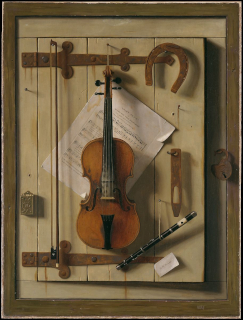
Overall, Harnett’s work is most comparable to that of the slightly younger John F. Peto. The two artists know each other, and a comparison can be made between two paintings featuring violins. Harnett’s Music and Good Luck from 1888 shows the violin hanging upright on a door with ornate hinges and with a slightly torn piece of sheet music behind it. The elements are arranged in a stable, deliberate manner. Peto’s 1890 painting shows the violin hanging askew, as well as chipped and worn, with one broken string. The sheet music is dog-eared and torn around the edges and placed haphazardly behind the instrument. The hinges are less ornate, and one is broken. Harnett’s objects show signs of use but are well preserved, while Peto’s more humble objects are nearly used up.
Crippling rheumatism plagues Harnett in his last years, reducing the number but not the quality of his paintings. He dies in New York City on October 29, 1892. Other artists who paint similar compositions in Harnett’s wake include his contemporary John Haberle and successors such as Otis Kaye and Jefferson David Chalfant.






 seamus dubhghaill