seamus dubhghaill

Promoting Irish Culture and History from Little Rock, Arkansas, USA


Leave a comment

The Release of the Birmingham Six

birmingham-six

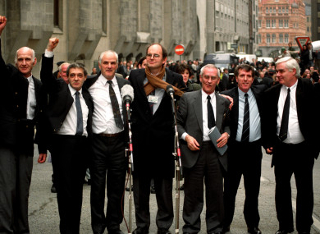
The Birmingham Six – Paddy Joe Hill, Hugh Callaghan, Richard McIlkenny, Gerry Hunter, Billy Power and Johnny Walker – are released from jail on March 14, 1991, after their convictions for the murder of 21 people in two pubs are quashed by the Court of Appeal.

The Birmingham pub bombings take place on November 21, 1974, and are attributed to the Provisional Irish Republican Army. Explosive devices are placed in two central Birmingham pubs – the Mulberry Bush at the foot of the Rotunda and the Tavern in the Town, a basement pub in New Street. Up until this point, the resulting explosions collectively are the most injurious attacks in Great Britain since World War II. Ten people at the Mulberry Bush and eleven at the Tavern in the Town are killed and 182 people are injured. A third device, outside a bank in Hagley Road, fails to detonate.

Five of the six are taken into custody on the evening of November 21. The men agree to be taken to Morecambe police station for forensic tests. The following morning, after the forensic tests and questioning at the hands of the Morecambe police, the men are transferred to the custody of West Midlands Serious Crime Squad police unit. Hugh Callaghan is taken into custody on the evening of November 22.

On May 12, 1975, the six men are charged with murder and conspiracy to cause explosions. The trial begins on June 9, 1975, at the Crown Court sitting at Lancaster Castle. After legal arguments the statements made in November are deemed admissible as evidence. The unreliability of these statements is later established. Forensic scientist Dr. Frank Skuse uses positive Griess test results to claim that Hill and Power had handled explosives. Callaghan, Hunter, McIlkenny and Walker all had tested negative. The jury finds the six men guilty of murder. On August 15, 1975, they are each sentenced to 21 life sentences.

In March 1976 their first application for leave to appeal is dismissed by the Court of Appeal. Their second full appeal, in 1991, is allowed. New evidence of police fabrication and suppression of evidence, the successful attacks on both the confessions and the 1975 forensic evidence causes the Crown to decide not to resist the appeals. The Court of Appeal states that “in the light of the fresh scientific evidence, which at least throws grave doubt on Dr. Skuse’s evidence, if it does not destroy it altogether, these convictions are both unsafe and unsatisfactory.” On March 14, 1991, the six walk free.

In 2001, a decade after their release, the six men are awarded compensation ranging from £840,000 to £1.2 million.

The success of the appeals and other miscarriages of justice cause the Home Secretary to set up a Royal Commission on Criminal Justice in 1991. The commission reports in 1993 and leads to the Criminal Appeal Act 1995 which establishes the Criminal Cases Review Commission in 1997. Superintendent George Reade and two other police officers are charged with perjury and conspiracy to pervert the course of justice but are never prosecuted. During the inquest into the bombings in 2016, Hill states that he knows the identities of three of the bombers who are still “free men” in Ireland.


2 Comments

Deportation of Joe Doherty

joseph-doherty

Joe Doherty, a volunteer in the Belfast Brigade of the Provisional Irish Republican Army (IRA) who escapes during his 1981 trial for killing a member of the Special Air Service (SAS) in 1980, is arrested in the United States in 1983 and is deported to Northern Ireland by the U.S. government on February 19, 1992. A first season episode of Law & Order entitled “The Troubles” is based on his case.

The trial of Doherty and the other members of their four-man active service unit nicknamed the “M60 gang” begins in early May 1981, on charges including three counts of murder. On June 10, Doherty and seven other prisoners, including Angelo Fusco and the other members of the IRA unit, take a prison officer hostage at gunpoint in Crumlin Road Gaol and ultimately escape in waiting cars. Two days after the escape, Doherty is convicted in absentia and sentenced to life imprisonment with a minimum recommended term of thirty years.

Doherty escapes across the border into the Republic of Ireland, and then travels to the United States on a false passport. He lives with an American girlfriend in Brooklyn and New Jersey, working on construction sites and as a bartender at Clancy’s Bar in Manhattan, where he is arrested by the FBI on June 28, 1983. He is imprisoned in the Metropolitan Correctional Center in Manhattan, and a legal battle ensues with the British government seeking to extradite him back to Northern Ireland. Doherty claims he is immune from extradition as the killing of Royal Irish Constabulary Captain Herbert Westmacott was a political act. In 1985 federal judge John E. Sprizzo rules Doherty cannot be extradited as the killing is a “political offense.” Doherty’s legal battle continues as the United States Department of Justice then attempts to deport him for entering the country illegally.

Doherty remains in custody at the Metropolitan Correctional Center and attempts to claim political asylum, and on June 15, 1988, Attorney General Edwin Meese overturns an earlier ruling by the Federal Board of Immigration Appeals that Doherty can be deported to the Republic of Ireland and orders his deportation to Northern Ireland. In February 1989 new Attorney General Dick Thornburgh chooses not to support the decision made by his predecessor and asks lawyers for Doherty and the Immigration and Naturalization Service to submit arguments for a review of the decision and Doherty’s claim for asylum. By this time Doherty’s case is a cause célèbre with his sympathisers including over 130 Congressmen and a son of then President of the United States George H. W. Bush. In 1990 a street corner near the Metropolitan Correctional Center is named after him.

In August 1991, Doherty is transferred to a federal prison in Lewisburg, Pennsylvania, and on January 16, 1992, the Supreme Court of the United States overturns a 1990 Federal Appeals Court ruling by a 5-to-3 decision, paving the way for his deportation. On February 19, 1992, Doherty is deported to Northern Ireland, despite pleas to delay the deportation from members of Congress, Mayor of New York City David Dinkins, and the Cardinal Archbishop of New York, John Joseph O’Connor.

Doherty is returned to Crumlin Road Gaol before being transferred to HM Prison Maze. He is released from prison on November 6, 1998, under the terms of the Good Friday Agreement. After his release Doherty becomes a community worker specialising in helping disadvantaged young people. In 2006, he appears in the BBC television show Facing the Truth opposite the relatives of a soldier killed in the Warrenpoint ambush.


Leave a comment

Irish Phone Tapping Scandal

bruce-arnold-geraldine-kennedy

The Minister for Justice, Michael Noonan, reveals on January 20, 1983, that the previous Fianna Fáil administration has been involved in tapping the phones of journalists Geraldine Kennedy and Bruce Arnold.

On December 18, 1982, The Irish Times security correspondent Peter Murtagh breaks the news that the telephone of Bruce Arnold and Geraldine Kennedy have been tapped officially with warrants signed by former Minister for Justice Seán Doherty. This is revealed after the November 1982 elections which the outgoing government had lost.

Incoming Minister for Justice Michael Noonan orders an investigation and on January 20, 1983, announces findings that the previous Fianna Fáil government had authorised illegal phone tapping of the journalists Geraldine Kennedy, Bruce Arnold and Vincent Browne. The phone tapping warrants are initiated by Séan Doherty while serving as Minister for Justice in discussion with Deputy Garda Commissioner Joseph Ainsworth. Normally phone tapping is used to investigate serious crime or threats to the security of the state, but the reverse happens in this case, Minister Noonan announces.

The phone of Bruce Arnold is tapped from May 10 to July 12, 1982. The application is stated to be for security purposes, with a departmental record claiming he is “anti-national.”

The phone of Geraldine Kennedy is tapped from July 28 to November 16, 1982, with a renewal on October 27 on the grounds that it is “yielding results.” For the tap on Kennedys’ phone a new category of “national security” is created for the warrant.

The incoming cabinet meets on January 18-19, 1983, and an initial draft of a decision expresses loss of confidence in Garda Commissioner Patrick McLaughlin and Deputy Commissioner Thomas Joseph Ainsworth and that they consider removing them from office, though this is removed from the final draft. On January 20, 1983, the cabinet meets again and notes the intentions of both Commissioner and Deputy Commissioner to retire.

Deputy Garda Commissioner Lawrence Wren finds that neither Bruce Arnold or Geraldine Kennedy have been connected with criminal or subversive activities or people involved with same, that the request for the warrants had not come from the Gardaí but from then minister Séan Doherty and that copies of the recordings had been supplied to minister Doherty.

Geraldine Kennedy and Bruce Arnold sue and win for the phone tapping and Vincent Browne settles out of court for earlier phone tapping.

Nearly a decade after the scandal broke, Seán Doherty announces at a press conference that he had shown transcripts of recordings to Charles Haughey in 1982 while the latter was still Taoiseach. Until the press conference, Doherty had denied this. This leads to Haughey’s resignation as Taoiseach.

(Pictured: Bruce Arnold and Geraldine Kennedy leaving the High Court after the judgment awarding them £20,000)


1 Comment

Birth of Barrister Alexander Martin Sullivan

alexander-martin-sullivan

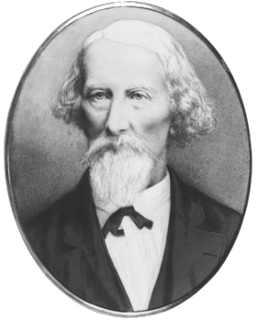
Alexander Martin Sullivan, Irish lawyer best known as the leading counsel for the defence in the 1916 treason trial of Roger Casement, is born in Dublin on January 14, 1871. He is the last barrister in either Ireland or England to hold the rank of Serjeant-at-Law, hence his nickname The Last Serjeant.

A younger son of A.M. Sullivan and Frances Donovan, Sullivan is educated at Ushaw College, Belvedere College, Trinity College, Dublin and King’s Inns. He is called to the Irish Bar in 1892 and practises on the Munster Circuit.

Sullivan is appointed an Irish KC in 1908 and King’s Third Serjeant-at-law (Ireland) in 1912 advancing to Second Serjeant in 1913 and First Serjeant in 1919, the last holder of that position.

A moderate constitutional nationalist and supporter of the Irish Parliamentary Party, Sullivan is a prominent campaigner for the recruitment of Irishmen into the British Army during World War I. His opposition to Sinn Féin republicanism and his prominent role in conducting prosecutions on behalf of the Crown during the Irish War of Independence lead to at least one attempt on his life. As a result, he relocates to England in 1921 and establishes a career at the English Bar, having previously been called to the Middle Temple in 1899. He subsequently becomes a Bencher and Treasurer of Middle Temple. By courtesy, he is always referred to as Serjeant Sullivan, even though that rank no longer exists in England.

Sullivan remains a member of the Irish Bar and returns at least once to appear in the celebrated case of Croker v Croker, where the children of the former leader of Tammany Hall, Richard “Boss” Croker attempt to overturn his will, which leaves his entire estate to their stepmother.

Sullivan is noted as a fearless advocate, who brings to his English practice the robust manners he had learned in the Irish county courts. He does not hesitate to interrupt the judge, and if he feels that he is not receiving a fair hearing, he is quite capable of walking out of Court.

In 1916 Sullivan is retained as lead counsel in the trial of Sir Roger Casement for treason. No English barrister will defend Casement, and Sullivan is persuaded to take the case by George Gavan Duffy, whose wife Margaret is Sullivan’s sister. Despite his rank of Serjeant at law and King’s Counsel at the Irish bar he is only ranked as a junior barrister in England. As the facts relied on by the prosecution are largely undisputed, Sullivan is limited to arguing a technical defence that the Treason Act 1351 only applies to acts committed “within the realm” and not outside it. The Act’s terms had however been expanded by case law over the previous 560 years, and the defence is rejected by the trial judges and by the Court of Criminal Appeal.

Sullivan writes two books: Old Ireland in 1927 and The Last Serjeant in 1952. He retires from legal practice in 1949. He dies on January 9, 1959.