seamus dubhghaill

Promoting Irish Culture and History from Little Rock, Arkansas, USA


Leave a comment

William J. Brennan Appointed to U.S. Supreme Court

william-brennan

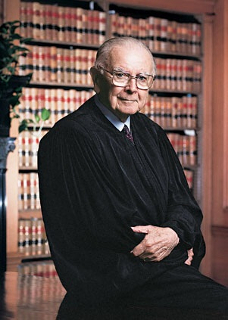
William Joseph Brennan, Jr., American judge, is named an Associate Justice of the Supreme Court of the United States through a recess appointment by President Dwight D. Eisenhower on October 15, 1956, shortly before the 1956 presidential election. He serves from 1956 until July 20, 1990. As the seventh longest-serving justice in Supreme Court history, he is known for being a leader of the Court’s liberal wing.

Brennan is born in Newark, New Jersey to Irish immigrants, originally from County Roscommon, on April 25, 1906. He attends public schools in Newark, graduating from Barringer High School in 1924. He then attends the Wharton School of the University of Pennsylvania, where he graduates cum laude with a degree in economics in 1928. He graduates from Harvard Law School near the top of his class in 1931 and is a member of the Harvard Legal Aid Bureau.

Brennan enters private practice in New Jersey and serves in the United States Army during World War II. He is appointed to the Supreme Court of New Jersey in 1951. After his appointment to the U.S. Supreme Court by Eisenhower in 1956, he wins Senate confirmation the following year.

On the Supreme Court, Brennan is known for his outspoken progressive views, including opposition to the death penalty and support for abortion rights. He authors several landmark case opinions, including Baker v. Carr, establishing the “one person, one vote” principle, and New York Times Co. v. Sullivan, which requires “actual malice” in libel suits brought by public officials. Due to his ability to shape a wide variety of opinions and “bargain” for votes in many cases, he is considered to be among the Court’s most influential members. Justice Antonin Scalia calls Brennan “probably the most influential Justice of the [20th] century.”

Brennan holds the post on the Court until his retirement on July 20, 1990, after suffering a stroke. He is succeeded by Justice David Souter. Brennan then teaches at Georgetown University Law Center until 1994. He dies in Arlington County, Virginia on July 24, 1997, and is buried in Arlington National Cemetery.

With 1,360 opinions, he is second only to William O. Douglas in number of opinions written while a Supreme Court justice. On November 30, 1993, President Bill Clinton presents Brennan with the Presidential Medal of Freedom.


Leave a comment

Passage of the First Penal Laws

penal-laws

Penal Laws are passed on September 7, 1695, which restrict the rights of Irish Catholics to have an education, to bear arms, or to possess a horse worth more than five pounds. This is the price the Irish have to pay for their support of King James II in his war against William of Orange.

The Catholic James flees to Ireland and raises an army after he is deposed during England’s Glorious Revolution. His successor, William of Orange, wages war in Ireland from 1689 to 1691, eventually defeating James’s armies and causing the ex-monarch to flee to France. It is Ireland’s last great episode of resistance to British rule until the Society of United Irishmen emerges in the 1790s.

Originally it looks as though the terms will be rather lenient. The draft of the Treaty of Limerick, which ends the war between William and James, contains generous terms for the latter’s defeated supporters in Ireland. Soldiers who fought in James’s army are offered free passage to France to join James in exile. James’s supporters in Ireland are to be allowed to keep their lands and to practice their trades and professions. Finally, Catholics are promised freedom of religion.

William supports these lenient terms because he wants to end the struggle in Ireland. It is costing a great deal of money and diverting military resources he wants to use in his ongoing war against France. Irish Protestants, however, bitterly oppose the treaty’s concessions to Catholics, and successfully water down or remove key provisions from the final draft of the Treaty. They also successfully push for a series of anti-Catholic measures known as the Penal Laws.

The first of the Penal Laws are passed on September 7, 1695. Many more follow over the next 30 years. These “popery laws,” as they are popularly known, sharply curtail the civil, religious, and economic rights of Catholics in Ireland. The most important ones make it illegal for Catholics to marry Protestants, inherit land from Protestants, buy land, carry weapons, teach school, practice law, vote in parliamentary elections, hold public office, practice their religion, own a horse worth more than 5 pounds, and hold a commission in the army or navy.

One particularly devastating law forces Catholic landowners to divide their estates among all their sons, in contrast to the preferred practice of handing most or all of the land to the eldest, unless they convert to the Church of Ireland. This leaves them with a choice between two evils: abandon their Catholic faith in order to save their holdings or allow them to be successively subdivided into oblivion.

It is this law, along with continued land forfeitures, that over the next century and a half push Ireland’s people onto smaller and smaller plots of land. Smaller holdings force Irish peasants to turn to the potato, a high yield crop, for the bulk of their daily diet. By the eve of the Great Famine, more than 60 percent of the Irish people depend on the potato for the main source of food. Thus, the Penal Laws create the conditions that turn an accident of nature — the fungus that ravages Ireland’s potato crop between 1845 and 1850 — into a monumental human tragedy.

Some Penal Laws are either repealed or simply ignored in the course of the eighteenth century. By the late-1700s, for example, Catholics are allowed to buy land and practice their religion. But the most debilitating laws, those that deny Irish Catholics basic political, economic, and civil rights, are kept in full force until Daniel O’Connell launches his successful campaign for Catholic Emancipation in the 1820s.

(Source: The Irish Echo, oldest Irish American newspaper in the United States, February 16, 2011)


Leave a comment

Birth of Francis O,Neill, Music Collector & Police Officer

francis-oneill

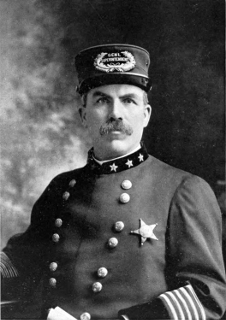
Francis O’Neill, Irish-born American police officer and collector of Irish traditional music, is born in Tralibane, near Bantry, County Cork on August 28, 1848. His biographer Nicholas Carolan refers to him as “the greatest individual influence on the evolution of Irish traditional dance music in the twentieth century.”

At an early age O’Neill hears the music of local musicians, among them Peter Hagarty, Cormac Murphy and Timothy Dowling. At the age of 16, he becomes a cabin boy on an English merchant vessel. On a voyage to New York, he meets Anna Rogers, a young emigrant whom he later marries in Bloomington, Illinois. The O’Neills move to Chicago, and in 1873 he becomes a policeman with the Chicago Police Department. He rises through the ranks quickly, eventually serving as the Chief of Police from 1901 to 1905. He has the rare distinction, in a time when political “pull” counts for more than competence, of being re-appointed twice to the position by two different mayors.

O’Neill is a flautist, fiddler and piper and is part of the vibrant Irish community in Chicago at the time. During his time as chief, he recruits many traditional Irish musicians into the police force, including Patrick O’Mahony, James O’Neill, Bernard Delaney, John McFadden and James Early. He also collects tunes from some of the major performers of the time including Patsy Touhey, who regularly sends him wax cylinders and visits him in Chicago. He also collects tunes from a wide variety of printed sources.

O’Neill retires from the police force in 1905. After that, he devotes much of his energy to publishing the music he has collected. He dies in Chicago, at the age of 87, on January 28, 1936.

In 2000, a life-size monument of Francis O’Neill playing a flute is unveiled next to the O’Neill family homestead in Tralibane, County Cork. The monument, and a commemorative wall are erected through the efforts of the Captain Francis O’Neill Memorial Company.

In 2008, Northwestern University Press issues Captain O’Neill’s Sketchy Recollections of an Eventful Life in Chicago, a non-musical memoir edited by Ellen Skerrett and Mary Lesch, O’Neill’s great-granddaughter, with a foreword by Nicholas Carolan of the Irish Traditional Music Archive. Carolan himself writes a musical biography of O’Neill, A Harvest Saved: Francis O’Neill and Irish Music in Chicago, which is published in Ireland by Ossian in 1997.

In August 2013, the inaugural Chief O’Neill Traditional Music Festival takes place in Bantry, County Cork, just a few miles from Tralibane. The 2013 event marks the centenary of the publication of O’Neill’s Irish Minstrels and Musicians. The event has taken place annually since.


Leave a comment

John de Wogan Ceases to be Justiciar of Ireland

picton-castle

Sir John de Wogan, Cambro-Norman judge styled lord of Picton, ceases to be Justiciar of Ireland on August 6, 1312 although remaining nominally justiciar until April 1313. He serves as Justiciar of Ireland from 1295 to 1313.

There are several dubious theories about Wogan’s ancestry, and uncertainty exists about his wives, sons, and other relations. He comes from Picton Castle in Pembrokeshire and is a vassal of William de Valence, 1st Earl of Pembroke. He comes to have lands in Pembrokeshire, Somerset, Dorset, Devon, Wiltshire, and Oxfordshire. He represents de Valence at an Irish court case in 1275, and in 1280 he is steward of Wexford, Valence’s Irish liberty. He is an eyre in England from 1281 to 1284, and returns to Ireland in 1285. In 1290 he is a referee with Hugh de Cressingham in a dispute between Queen Eleanor and de Valence and his wife.

In December 1295 Wogan takes office as justiciar and organises a two-year truce between the feuding Burkes and Geraldines. In 1296 he organises a force with Richard Óg de Burgh, 2nd Earl of Ulster, Theobald Butler, and John FitzGerald, 1st Earl of Kildare, to assist Edward I in the First War of Scottish Independence. The king entertains them at Roxburgh Castle in May. After his return to Ireland, Wogan “kept everything so quiet that we hear of no trouble in a great while.” The Parliament of Ireland he summons in 1297 is for long compared to the English “Model Parliament” of 1295, though historical opinion now places less importance on it.

In February 1308, under orders from the new king Edward II, Wogan suppresses the Knights Templar in Ireland. In June 1308 his forces are defeated by the O’Tooles and O’Byrnes, who are harrying The Pale from the Wicklow Mountains. From September 1308 to May 1309 Piers Gaveston, 1st Earl of Cornwall is in Ireland as “king’s lieutenant,” a new position outranking the justiciar, and he has more success against the Gaels. Wogan leaves Ireland in August 1312 although remaining nominally justiciar until April 1313.

Either the same John Wogan or his son of the same name returns to Ireland in 1316 as advisor to Roger Mortimer, 1st Earl of March, who counters Edward Bruce‘s invasion of Ireland.

John de Wogan dies in 1321 and is buried in St. David’s Cathedral, initially in a chapel he had endowed, later in Edward Vaughan‘s chapel.


2 Comments

Birth of Geoffrey Henry Cecil Bing, Barrister & Politician

geoffrey-henry-cecil-bing

Geoffrey Henry Cecil Bing, British barrister and politician who serves as the Labour Party Member of Parliament for Hornchurch from 1945 to 1955, is born on July 24, 1909, at Craigavad near Belfast in what is now Northern Ireland.

Bing is educated at Rockport School and Tonbridge School before going on to Lincoln College, Oxford, where he reads history. He graduates with a second-class degree in 1931, before attending Princeton University, where he is a Jane Eliza Procter Visiting Fellow between 1932 and 1933. He is called to the bar from the Inner Temple in 1934.

Always a radical and a member of the socialist left, Bing is active in the Haldane Society of Socialist Lawyers and the National Council for Civil Liberties. During the Spanish Civil War, he joins the International Brigades as a journalist, barely avoiding capture at Bilbao. He is also an early anti-Nazi.

During World War II, Bing serves in the Royal Corps of Signals, attaining the rank of major. A 1943 experiment with parachutes at the GSO2 Airborne Forces Development Centre leaves him disfigured and he bears the scars for many years.

At the 1945 general election, Bing stands for Labour in Hornchurch, winning the seat. He is re-elected in 1950 and 1951, serving until 1955. He serves briefly as a junior whip in 1945-1946 but this is widely thought to have been the unintended result of confusion on the part of Clement Attlee, who confuses him for another Labour MP of a similar name.

On the backbenches, Bing is, according to his Times obituary, “the unrestrained leader of a small group of radicals, never fully trusted by their colleagues and known as ‘Bing Boys.'” He takes a particular interest in the cases of Timothy Evans and John Christie, and he supports the campaign to overturn the conviction of Evans, which is ultimately successful. He supports Communist China and takes a keen interest in Northern Ireland, the brewers’ monopoly and parliamentary procedure.

Bing also builds a practice in West Africa. He becomes close to Kwame Nkrumah, the first post-colonial president of Ghana and is appointed Ghana’s attorney-general, a post he holds until 1961. When Nkrumah is ousted in 1966, Bing is arrested and ill-treated, before being sent home some months later. His memoir of Nkrumah’s Ghana, Reap the Whirlwind, is published in 1968.

Geoffrey Henry Cecil Bing dies in London on April 24, 1977, at the age of 67.


Leave a comment

Birth of New Zealand Settler Frederick Edward Maning

frederick-edward-maning

Frederick Edward Maning, a notable early settler in New Zealand and writer and judge of the Native Land Court, is born in Johnville, County Dublin on July 5, 1812.

Maning is the eldest son of moderately wealthy, Protestant Anglo-Irish parents. His father, Frederick Maning, emigrates to Van Diemen’s Land in 1824 with his wife and three sons to take up farming. Young Maning becomes a skilled outdoorsman and builds up the physical strength to match his six-foot, three-inch stature. In 1829, his father becomes a customs officer in Hobart and moves there with his family. By 1832, Frederick leaves home to manage a remote outpost in the north of Tasmania. Soon after, he decides to pursue his fortune in New Zealand.

Maning arrives in the Hokianga area on June 30, 1833, and lives among the Ngāpuhi Māori people. With his physical skills and great stature, as well as his considerable good humor, he quickly gains favour with the tribe. He becomes known as a Pākehā Māori (a European turned native) and his arrival in New Zealand is the subject of the first chapters of his book Old New Zealand.

In 1837, he sells his property and returns to Hobart. He returns to Hokianga in March 1839 and in September purchases 200 acres for a farm at Onoke. He builds a house there that is standing until destroyed by fire in 2004. He takes a Māori wife, Moengoroa, and they have four children.

In 1840, Maning acts as a translator at meetings about the Treaty of Waitangi, and he advises the local Māori to not sign. His vocal opposition to the Treaty is primarily because he has settled with the Māori precisely to escape from the restrictions of European civilisation. He fears that the introduction of European style law will put a damper on his lifestyle and on his entrepreneurial trading activities. He warns the Māori that European colonisation will degrade them. Governor William Hobson counters by telling the Māori that without British Law, lawless self-interested Europeans without any regard for Māori rights will soon take all their land. Maning’s book Old New Zealand is, in part, a lament for the lost freedom enjoyed before European rule.

In 1845–1846, during the Māori Wars, Maning sometimes uses his influence with the Māori to intercede on behalf of settlers. He also organises supplies to the government’s Māori supporters. However, he writes his second book, History of the War in the North of New Zealand against the Chief Heke, from the perspective of an imaginary supporter of Hōne Heke, who is one of the principal antagonists opposing the government.

Through the 1850s, Maning primarily occupies himself with timber and gum trade. In the early 1860s, he retires from business activities. In 1865, he enters the public service as a judge of the Native Land Court, where his unequalled knowledge of the Māori language, customs, traditions and prejudices are of solid value.

Maning retires in 1876 although he helps conduct a major land court hearing at Taupo in 1881. He becomes estranged from his children in his later years. In November 1882, he goes to London for an operation, however, he dies there on July 25, 1883, of cancer. At his wish, his body is taken back to New Zealand and buried in December 1883, in the Symonds Street Cemetery in Auckland.

Maning is chiefly remembered as the author of two short books, Old New Zealand and History of the War in the North of New Zealand against the Chief Heke. Both books have been reprinted many times and have become classics of New Zealand literature.


Leave a comment

The Death of Art Ó Laoghaire

art-o-laoghaire

Art Ó Laoghaire, an Irish Roman Catholic and captain in the Hungarian Hussars Regiment of the army of Maria Theresa of Austria, is killed by soldiers near Millstreet, County Cork on May 4, 1773.

Ó Laoghaire marries Eibhlín Dubh Ní Chonaill, aunt of Daniel O’Connell, in 1767. She has been a widow from the age of 15 and is now 23. They have three children, Cornelius, Fiach and a third who apparently does not survive infancy.

Having returned home to Rathleigh House near Macroom, Cork, the hot-tempered Ó Laoghaire becomes involved in a feud with a protestant landowner and magistrate, Abraham Morris of Hanover Hall, Macroom. When Morris is High Sheriff of County Cork in 1771, he lays charges against Ó Laoghaire following his alleged attack on Morris and the wounding of his servant on July 13, 1771, at Hanover Hall. In October of that year, Ó Laoghaire is indicted in his absence, and Morris offers a 20-guinea reward for his capture.

The feud between the two men continues and in 1773, Morris demands that Ó Laoghaire sell him the fine horse that Ó Laoghaire had brought back from his service in the Austro-Hungarian army for £5. The Penal Laws state that no Catholic might own a horse worth more than £5 and could be forced to sell a more valuable one on demand to any Protestant at this price. Ó Laoghaire refuses to sell and challenges Morris to a duel, which Morris declines. Morris uses, or misuses, his position as magistrate to persuade his fellow magistrates to proclaim Ó Laoghaire an outlaw, who can then legally be shot on sight. Morris leads a contingent of soldiers that track Ó Laoghaire down to Carrignanimma on May 4, 1773. He gives the order to fire on Ó Laoghaire. The first shot, which kills him, is fired by a soldier called Green.

Morris and the soldiers are held to be guilty of Ó Laoghaire’s murder by a coroner’s inquest on May 17, but Morris is acquitted of the murder by Cork magistrates on September 6, 1773. Morris is shot in Cork on July 7 by Ó Laoghaire’s brother Cornelius, who sees Morris at a window of a house in Hammond’s Lane where he is lodging. He fires three shots, wounding Morris. The shots are not immediately fatal, but Morris dies in September 1775, presumably as the result of the shooting. The soldier Green is decorated for his “gallantry.”

Ó Laoghaire’s wife Eibhlín Dubh Ní Chonaill composes the long poem “Caoineadh Airt Uí Laoghaire” (Lament for Art O’Leary), mourning his death and calling for revenge.

Ó Laoghaire’s tomb at Kilcrea Friary has the epitaph likely composed by his widow:

Lo Arthur Leary, generous, handsome, brave,
Slain in his bloom lies in this humble grave.


7 Comments

The Last Execution in the Republic of Ireland

michael-manning

Michael Manning, Irish murderer, becomes the twenty-ninth and last person to be executed in the Republic of Ireland on April 20, 1954.

Manning, a 25-year-old carter from Johnsgate in Limerick, County Limerick, is found guilty of the rape and murder of Catherine Cooper, a 65-year-old nurse who works at Barrington’s Hospital in the city, in February 1954. Nurse Cooper’s body is discovered on November 18, 1953, in the quarry under the New Castle, Dublin Road, Castletroy. She is found to have choked on grass stuffed into her mouth to keep her from screaming during the committal of the crime.

Manning expresses remorse at the crime which he does not deny. By his own account, he is making his way home on foot after a day’s drinking in The Black Swan, Annacotty when he sees a woman he does not recognise walking alone. “I suddenly lost my head and jumped on the woman and remember no more until the lights of a car shone on me.” He flees at this point but is arrested within hours, after his distinctive hat is found at the scene of the crime.

Although Manning makes an impassioned plea for clemency in a letter to Minister for Justice Gerald Boland, his request is denied despite it also being supported by Nurse Cooper’s family. The execution by hanging is duly carried out on April 20, 1954, in Mountjoy Prison, Dublin by Albert Pierrepoint, who has traveled from Britain where he is one of three Senior Executioners.

Frank Prendergast, subsequently Teachta Dála (TD) for Limerick East who knew Manning well, recalls later, “Friends of mine who worked with me, I was serving my time at the time, went up to visit him on the Sunday before he was hanged. And they went to Mass and Holy Communion together and they played a game of handball that day. He couldn’t have been more normal.”

Manning leaves a wife who is pregnant at the time of the murder. His body is buried in an unmarked grave in a yard at Mountjoy Prison.

The death penalty is abolished in 1964 for all but the murder of gardaí, diplomats and prison officers. It is abolished by statute for these remaining offences in 1990 and is finally expunged from the Constitution of Ireland by approval by referendum of the Twenty-First Amendment on June 7, 2001.

The hanging of Michael Manning inspires a play by Ciaran Creagh. Creagh’s father, Timothy, is one of the two prison officers who stays with Michael Manning on his last night and Last Call is loosely based on what happened. It is shown in Mountjoy Prison’s theatre for three nights in June 2006.


Leave a comment

Birth of Patrick McGilligan, Fine Gael Politician

patrick-mcgilligan

Patrick Joseph McGilligan, lawyer and Cumann na nGaedheal and Fine Gael politician, is born in Hanover Place, Coleraine, County Londonderry on April 12, 1889. He serves as the 14th Attorney General of Ireland from 1954 to 1957, Minister for Finance from 1948 to 1951, Minister for External Affairs from 1927 to 1932 and Minister for Industry and Commerce from 1924 to 1932. He serves as a Teachta Dála (TD) from 1923 to 1965.

McGilligan is the son of Patrick McGilligan, a draper, who serves as Member of Parliament (MP) for South Fermanagh from 1892 to 1895 for the Irish Parliamentary Party, and Catherine O’Farrell. He is educated at St. Columb’s College in Derry, Clongowes Wood College in County Kildare and University College Dublin. He joins Sinn Féin but is unsuccessful in his attempt to be elected as a MP at the 1918 general election. He is called to the bar in 1921.

McGilligan is elected as a Cumann na nGaedheal TD for the National University of Ireland at a by-election held on November 3, 1923. Between 1924 and 1932 he serves as Minister for Industry and Commerce, notably pushing through the Shannon hydroelectric scheme, then the largest hydroelectricity project in the world. In 1927 he sets up the Electricity Supply Board (ESB), and also the Agricultural Credit Corporation.

Also, in 1927 McGilligan takes over the External Affairs portfolio following the assassination of Kevin O’Higgins by the anti-Treaty elements of the Irish Republican Army (IRA), in revenge for O’Higgins’ support for the execution of Republican prisoners during the Irish Civil War. In this position he is hugely influential at the Committee on the Operation of Dominion Legislation and at the Imperial Conference in 1930 jointly with representatives of Australia, Canada, New Zealand, South Africa and the United Kingdom. The Statute of Westminster that emerges from these meetings gives greater power to dominions in the Commonwealth like the Irish Free State.

During McGilligan’s period in opposition from 1932 to 1948 he builds up a law practice and becomes professor of constitutional and international law at University College, Dublin. When the National University of Ireland representation is transferred to Seanad Éireann in 1937, he is elected as TD for the Dublin North-West constituency.

In 1948 McGilligan is appointed Minister for Finance in the first Inter-Party Government. As Minister he undertakes some major reforms. He instigates a new approach where Government invests radically in capital projects. Colleagues however complain of his frequent absence from the Cabinet table and the difficulty of contacting him at the Department of Finance. Between 1954 and 1957 he serves as Attorney General. He retires from Dáil Éireann at the 1965 general election, having served for over 40 years.

Patrick McGilligan dies in Dublin on November 15, 1979. Despite his well-known fondness for predicting that he would die young, he reaches the age of ninety. A later Attorney General, John M. Kelly, in the preface to his definitive text, The Irish Constitution (1980), notes the remarkable number of senior judges who are former students of McGilligan and suggests that, given his own firm belief in the value of judicial review, he deserves much of the credit for the remarkable development of Irish law in this field since the early 1960s.


Leave a comment

Catherine Nevin Found Guilty of Murder

catherine-nevin

On April 11, 2000, Catherine Nevin (née Scully), in a dramatic end to the two-month trial, is found guilty by a jury at the Central Criminal Court of all four charges against her arising out of the 1996 shooting death of her husband, Tom Nevin, at Jack White’s Inn, a pub owned by the couple in County Wicklow. The jury also finds her guilty on three charges of soliciting others to kill him after five days of deliberation, then the longest period of deliberation in the history of the Republic of Ireland. She is subsequentlty dubbed the “Black Widow” by the press. She is the subject of significant coverage by the tabloid press and Justice Mella Carroll orders a ban on the press commenting on Nevin’s appearance or demeanour during the trial.

Catherine Scully meets Tom Nevin in Dublin in 1970 and they are married in Rome in 1976. Within ten years, they own two houses and manage a pub in Finglas, Dublin. In 1986 they open Jack White’s Inn near Brittas Bay in County Wicklow.

On March 19, 1996, Tom Nevin is killed with a shot from a nine pellet shotgun while counting the day’s takings in Jack White’s Inn. According to Catherine Nevin, she is awakened by someone pressing her face into a pillow. She claims it was a man shouting profanities and holding a knife in his left hand. IR£13,000 is taken from the pub, and the Nevins’ car is stolen. It is later found abandoned in Dublin.

After her conviction, Nevin serves her sentence at the Dóchas Centre, Dublin. She loses an appeal in 2003 and, in 2010, also loses an application to have her conviction declared a miscarriage of justice.

Catherine Nevin is diagnosed with a brain tumor in 2016 and given only months to live by doctors at Dublin’s Mater Private Hospital. She receives compassionate release in late 2017 and dies on February 19, 2018. She denies any involvement in her husband’s murder to the very end.