seamus dubhghaill

Promoting Irish Culture and History from Little Rock, Arkansas, USA


Leave a comment

Birth of John Lynch, Actor & Novelist

john-lynch

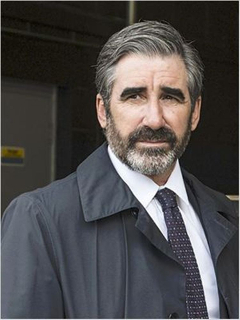
John Lynch, actor and novelist, is born in Corrinshego, County Armagh, Northern Ireland on December 26, 1961. He wins the AFI (AACTA) Award for Best Actor in a Leading Role for the 1995 film Angel Baby. His other film appearances include Cal (1984), The Secret Garden (1993), In the Name of the Father (1993) and Sliding Doors (1998).

Lynch is the eldest of five children of an Irish father and an Italian mother from Trivento in the Province of Campobasso. His younger sister Susan and his nephew Thomas Finnegan are also actors. He attends St. Colman’s College, Newry and begins acting in Irish language-medium plays at school during the early years of the conflict in Northern Ireland.

Lynch has appeared in numerous films related to Northern Ireland’s problems such as Cal (1984) with Helen Mirren, In the Name of the Father (1993) with Daniel Day-Lewis, The Railway Station Man (1992) with Julie Christie and Donald Sutherland, Nothing Personal (1995) and Some Mother’s Son (1996), also with Mirren, as well as the Irish-themed film Evelyn (2002).

Lynch stars as a supporting actor in Derek Jarman‘s Edward II (1991), as Lord Craven in Agnieska Holland‘s film of The Secret Garden (1993), as Tadhg in The Secret of Roan Inish (1994), and as Gerry in Sliding Doors (1998).

Lynch plays the part of football legend George Best in the 2000 film Best. He plays the lead in the Australian feature Angel Baby, winning the Australian Film Institute award for best leading actor and the Australian Film Critics Association award for best actor of 1995. He is nominated for a Satellite Film Award for the film Moll Flanders in 1996. He works with acclaimed Belgian director Marion Hänsel on her adaptation of Booker-nominated author Damon Galgut‘s novel, The Quarry (1998), which wins Best Film at the Montreal World Film Festival. He wins Best Actor for the lead role in Best at the Fort Lauderdale Film Festival in 2000.

Lynch is nominated for a British Academy of Film and Television Arts (BAFTA) for Cal, as well as for an Irish Film and Television Award for his role in The Baby War. He stars in Five Day Shelter as Stephen, which wins a European Film Award and is in competition at the Rome Film Festival. He plays the lead in Craig Vivieros’ first feature film, the prison drama Ghosted. He plays the role of Wollfstan in Black Death and appears in the 2012 film version of Michael Morpurgo‘s novel, Private Peaceful.

Lynch is also a novelist. His first novel, Torn Water, is published in November 2005 by the 4th Estate, a literary imprint of HarperCollins Publishers LLC, and his second, Falling Out of Heaven, is published on May 13, 2010, by the same publisher.


Leave a comment

Birth of Patrick MacGill, Poet & Novelist

patrick-macgill

Patrick MacGill, journalist, poet and novelist, is born on December 24, 1889, in Glenties, County Donegal. He is known as “The Navvy Poet” because he works as a navvy before he begins writing.

During World War I, MacGill serves with the London Irish Rifles (1/18th Battalion, London Regiment) and is wounded at the Battle of Loos on October 28, 1915. He is recruited into Military Intelligence and writes for MI 7b between 1916 and the Armistice in 1918. He writes a memoir-type novel called Children of the Dead End.

Patrick MacGill dies on November 22, 1963, the same day that U.S. President John F. Kennedy is assassinated in Dallas, Texas.

In early 2008, a docu-drama starring Stephen Rea is made about the life of Patrick MacGill, which is released in Ireland in 2009 as Child of the Dead End. One of the film’s locations is the boathouse of Edinburgh Canal Society at Edinburgh on the Union Canal, and one of its rowing boats.

An annual literary MacGill Summer School is held in Glenties in mid-July each year in his honour. A statue in his honour is on the bridge where the main street crosses the river in Glenties. He has three children, Christine, Patricia and Sheila MacGill.


Leave a comment

Birth of Kuno Meyer, Scholar of Celtic Philology

kuno-meyer

Kuno Meyer, German scholar distinguished in the field of Celtic philology and literature, is born in Hamburg, Germany on December 20, 1858. He was considered first and foremost a lexicographer among Celtic scholars but is known by the general public in Ireland rather as the man who introduced them to Selections from Ancient Irish Poetry (1911). His brother was the distinguished classical scholar, Eduard Meyer.

Meyer studies in Hamburg at the Gelehrtenschule des Johanneums. He spends two years in Edinburgh, Scotland, as a teenager (1874–1876) learning English. From 1879, he attends Leipzig University, where he is taught Celtic scholarship by Ernst Windisch. He receives his doctorate for his thesis Eine irische Version der Alexandersage, an Irish version of the Romance of Alexander, in 1884.

Meyer then takes up the post of lecturer in Teutonic languages at the new University College, Liverpool, the precursor of the University of Liverpool, which is established three years earlier.

Meyer continues to publish on Old Irish and more general topics on the Celtic languages, as well as producing textbooks for German. In 1896, he founds and edits, jointly with Ludwig Christian Stern, the prestigious Zeitschrift für celtische Philologie. He also cofounds Archiv für celtische Lexicographie in 1898 with Whitley Stokes, producing three volumes from 1900 to 1907.

In 1903, Meyer founds the School of Irish Learning in Dublin, and the next year creates its journal Ériu of which he is the editor. Also in 1904, he becomes Todd Professor in the Celtic Languages at the Royal Irish Academy. In October 1911, he follows Heinrich Zimmer as Professor of Celtic Philology at Friedrich Wilhelm University in Berlin. The following year, a volume of Miscellany is presented to him by pupils and friends in honour of his election, and he is made a freeman of both Dublin and Cork.

At the outbreak of World War I, Meyer leaves Europe for the United States, where he lectures at Columbia University, University of Illinois at Urbana-Champaign, and elsewhere. A pro-German speech he gives in December 1914 to Clan na Gael on Long Island causes outrage in Britain and some factions among the Irish, and as a result, he is removed from the roll of freemen in Dublin and Cork and from his Honorary Professorship of Celtic at Liverpool. He also resigns as Director of the School of Irish Learning and editor of Ériu. Harvard University also had extended an invitation to Meyer to lecture on campus, but it subsequently cancels the invitation in the fall of 1914 on account of Meyer’s propagandist activity.

Meyer nevertheless accepts candidacy for the post of exchange professor at Harvard, at the recommendation of German professors there. However, when the April 1915 issue of The Harvard Advocate awards first prize to an anti-German satirical poem “Gott mit Uns” written by an undergraduate, Meyer sends the university and the press a letter of protest, rebuking the faculty members who served as judges for failure to exercise neutrality. Meyer also declines his candidacy from the exchange professorship in the letter. In a reply, President Abbott Lawrence Lowell says, in explaining Harvard’s policy, that freedom of speech includes pro-German and pro-Allied voices alike.

Meyer is injured in a railway collision in 1915 and meets 27-year-old Florence Lewis while he is recovering in a California hospital. They marry shortly afterwards. He returns to Germany in 1917 and dies in Leipzig on October 11, 1919.

Posthumously, in 1920, Meyer’s name is restored, both by Dublin and Cork, in their Rolls of Honorary Freemen. The restoration occurs on April 19, 1920, in Dublin, where Sinn Féin had won control of the City Council three months earlier, rescinding the decision taken in 1915 by the Irish Parliamentary Party. The restoration in Cork follows on May 14, 1920.


Leave a comment

Birth of Edna O’Brien, Novelist, Playwright & Poet

edna-o-brien

Edna O’Brien, novelist, memoirist, playwright, poet and short story writer, is born in Tuamgraney, County Clare on December 15, 1930. Philip Roth describes her as “the most gifted woman now writing in English,” while the former President of Ireland Mary Robinson cites her as “one of the great creative writers of her generation.” Her works often revolve around the inner feelings of women, and their problems in relating to men, and to society as a whole.

O’Brien is the youngest child of “a strict, religious family.” From 1941 to 1946 she is educated by the Sisters of Mercy, a circumstance that contributes to a “suffocating” childhood. “I rebelled against the coercive and stifling religion into which I was born and bred. It was very frightening and all pervasive. I’m glad it has gone.” She is fond of a nun as she deeply misses her mum and tries to identify the nun with her mother.

In 1950, O’Brien is awarded a licence as a pharmacist. In Ireland, she reads such writers as Leo Tolstoy, William Makepeace Thackeray, and F. Scott Fitzgerald. In 1954, she marries, against her parents’ wishes, the Irish writer Ernest Gébler and the couple moves to London. They have two sons, but the marriage is dissolved in 1964. Gébler dies in 1998.

In London, O’Brien purchases Introducing James Joyce, with an introduction written by T. S. Eliot. When she learns that James Joyce‘s A Portrait of the Artist as a Young Man is autobiographical, it makes her realise where she might turn, should she decide to write herself. In London she starts work as a reader for Hutchinson, where on the basis of her reports she is commissioned, for £50, to write a novel. Her first novel, The Country Girls (1960), is often credited with breaking silence on sexual matters and social issues during a repressive period in Ireland following World War II.

This novel is the first part of a trilogy of novels which includes The Lonely Girl (1962) and Girls in Their Married Bliss (1964). Shortly after their publication, these books are banned and, in some cases burned, in her native country due to their frank portrayals of the sex lives of their characters. Her novel A Pagan Place (1970) is about her repressive childhood. Her parents are vehemently against all things related to literature and her mother strongly disapproves of her daughter’s career as a writer.

O’Brien is a panel member for the first edition of the BBC‘s Question Time in 1979. In 2017, she becomes the sole surviving member.

In 1980, she writes a play, Virginia, about Virginia Woolf, and it is staged originally in June 1980 at the Stratford Festival, Ontario, Canada and subsequently in the West End of London at the Theatre Royal Haymarket with Maggie Smith and directed by Robin Phillips. It is staged at The Public Theater in New York City in 1985.

Other works include a biography of James Joyce, published in 1999, and one of the poet Lord Byron, Byron in Love (2009). House of Splendid Isolation (1994), her novel about a terrorist who goes on the run, marks a new phase in her writing career. Down by the River (1996) concerns an under-age rape victim who seeks an abortion in England, the “Miss X case.” In the Forest (2002) deals with the real-life case of Brendan O’Donnell, who abducts and murders a woman, her three-year-old son, and a priest, in rural Ireland.

O’Brien now lives in London. She receives the Irish PEN Award in 2001. Saints and Sinners wins the 2011 Frank O’Connor International Short Story Award, the world’s richest prize for a short story collection. Faber and Faber publish her memoir, Country Girl, in 2012. In 2015, she is bestowed Saoi by Aosdána.


Leave a comment

Death of Historian Richard Bagwell

richard-bagwell-ireland-under-the-tudors

Richard Bagwell, noted historian of the Stuart and Tudor periods in Ireland and a political commentator with strong Unionist convictions, dies on December 4, 1918 at Marlfield, Clonmel, County Tipperary. He is the eldest son of John Bagwell, M.P. for Clonmel from 1857 to 1874. His son John Philip Bagwell follows the family tradition in politics becoming a Senator in the government of the Irish Free State in 1923.

Bagwell is educated at Harrow School and the University of Oxford in England and is called to the Bar, being admitted to Inner Temple in 1866. He serves as a special local government commissioner (1898–1908) and as a commissioner of national education (1905–18).

As a historian of sixteenth- and seventeenth-century Ireland, Bagwell works for nearly sixty years to produce his two three-volume works, Ireland under the Tudors (1885–90) and Ireland under the Stuarts (1909–16), using manuscript sources throughout. He is the first to treat this period in a systematic and scholarly fashion. For this solid work he is made Member of the Royal Irish Academy (MRIA) and honoured by the University of Dublin and the University of Oxford in 1918. He also writes the historical entry on “Ireland” for the Encyclopædia Britannica (Chicago 1911).

A one-time liberal, Bagwell is a founder member (1885) of the Irish Loyal and Patriotic Union, renamed the Irish Unionist Alliance (IUA) in 1891. A “diehard” unionist, he is one of the most prominent and respected southern unionists. A tireless political publicist, he is an assiduous letter-writer to the newspapers, a didactic pamphleteer, and a regular speaker at political meetings throughout Ireland. He opposes the majority report of the Irish Convention (1917) and is one of the original signatories of the “Call to unionists” that splits the IUA.

Bagwell serves as a Commissioner on National Education between 1905 and 1918 and a member of the Patriotic Union (Southern Unionists). He holds the position of High Sheriff of Tipperary in 1869. He is a Justice of the Peace for County Tipperary, and later for County Waterford, and holds the office of Deputy Lieutenant of Tipperary. He is also Special Local Government Commissioner between 1898 and 1903 and President of the Borstal Association of Ireland.

Bagwell marries Harriet Philippa Joscelyn, fourth daughter of P. J. Newton of Dunleckney Manor, County Carlow, on January 9, 1873. The couple has one son, John Philip Bagwell, and three daughters, Emily Georgiana, Margaret and Lilla Minnie.

Richard Bagwell dies one hundred years ago today on December 4, 1918 at Marlfield, having suffered from gout for many years.


Leave a comment

Birth of American-Irish Writer Morgan Llywelyn

morgan-llywelyn

Morgan Llywelyn, American-Irish historical fantasy, historical fiction, and historical non-fiction writer, is born Sally Snyder in New York City on December 3, 1937. Her fiction has received several awards and has sold more than 40 million copies, and she herself is recipient of the 1999 Exceptional Celtic Woman of the Year Award from Celtic Women International.

In her teens, Llywelyn moves to the Dallas area, where she develops a love of horses. By the age of 16, she is competing in professional horse shows across the United States. By age 18, she models for Neiman Marcus and Arthur Murray. After 15 years of experience as a horse trainer and instructor, she tries out for and narrowly misses making the 1976 United States Olympic Team in Dressage. She is instead shortlisted, missing the cut off score by .05 percent.

With her mother’s encouragement and a successfully published article on horse training, she refocuses her efforts in tracing the Llywelyn family history and eventually makes a career out of writing historical novels that allow the exploration of her Celtic roots. In reference to this career change, Llywelyn has this to say:

“I have a strong strain of Welsh on my mother’s side, which does indeed go back to Llywelyn ap Iorwerth. And Llywelyn the Great! (We have the proven genealogy from the College of Heralds.) She was very proud of her royal Welsh connection. That is why she was so interested in genealogy in the first place, and inspired me to get involved as well … leading in turn to “The Wind from Hastings.” But both my parents were predominantly Irish – my father totally so – and I spent half the years of my childhood here. So I have always been much more interested in Ireland and its history and legends.”

Llywelyn has received several awards for her works. She receives the Novel of the Year Award from the National League of American Pen Women for her novel, The Horse Goddess, as well as the Woman of the Year Award from the Irish-American Heritage Committee for Bard: The Odyssey of the Irish. The latter award is presented to her by Ed Koch, then-mayor of New York City.

Although Llywelyn’s grandparents have their roots in Ireland, it is only after the death of her parents and her husband in 1985 that she relocates to Ireland. Llywelyn now lives outside Dublin and has become an Irish citizen.

In 1990, Llywelyn begins her focus on writing books geared for younger readers. These works start with Brian Boru: Emperor of the Irish, for which she wins an Irish Children’s Book Trust Bisto Award in 1991, and includes other titles, such as Strongbow: The Story of Richard and Aoife, for which she wins a Bisto Award in the Historical Fiction category, 1993 and the Reading Association of Ireland Award, 1993, and Star Dancer which departs from her usual Celtic topic and is centered on her experiences with Dressage. Further works include The Vikings in Ireland, an exploration of when the Norsemen arrived in Ireland and Pirate Queen, a younger reader’s version of the story of Grace O’Malley, told through letters from Granuaile to her beloved son.


Leave a comment

The Birth of John Toland, Philosopher & Freethinker

john-toland

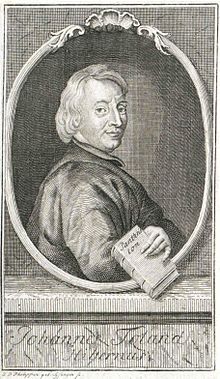
John Toland, Irish rationalist philosopher and freethinker, and occasional satirist, is born in Ardagh on the Inishowen peninsula, a predominantly Catholic and Irish-speaking region in northwestern Ireland, on November 30, 1670. He writes numerous books and pamphlets on political philosophy and philosophy of religion which are early expressions of the philosophy of the Age of Enlightenment.

Very little is known of Toland’s early life. His parents are unknown. He later writes that he had been baptised Janus Junius, a play on his name that recalls both the Roman two-faced god Janus and Lucius Junius Brutus, reputed founder of the Roman Republic. According to his biographer, Pierre des Maizeaux, he adopts the name John as a schoolboy with the encouragement of his schoolteacher.

Having formally converted from Catholicism to Protestantism at the age of 16, Toland gets a scholarship to study theology at the University of Glasgow. In 1690, at age 19, the University of Edinburgh confers a master’s degree on him. He then gets a scholarship to spend two years studying at Leiden University in the Netherlands, and subsequently nearly two years at the University of Oxford in England (1694–95). The Leiden scholarship is provided by wealthy English Dissenters who hope Toland will go on to become a minister for Dissenters.

In Toland’s first and best-known book, Christianity not Mysterious (1696), he argues that the divine revelation of the Bible contains no true mysteries. Rather, all the dogmas of the faith can be understood and demonstrated by properly trained reason from natural principles. For this argument he is prosecuted by a grand jury in London. As he is a subject of the Kingdom of Ireland, members of the Parliament of Ireland propose that he should be burned at the stake. In his absence three copies of the book are burned by the public hangman in Dublin as the content is contrary to the core doctrines of the Church of Ireland. Toland bitterly compares the Protestant legislators to “Popish Inquisitors who performed that Execution on the Book, when they could not seize the Author, whom they had destined to the Flames.”

After his departure from Oxford, Toland resides in London for most of the rest of his life but is also a somewhat frequent visitor to Continental Europe, particularly Germany and the Netherlands. He lives on the Continent from 1707 to 1710.

John Toland dies in Putney on March 10, 1722. Just before he dies, he composes his own epitaph: “He was an assertor of liberty, a lover of all sorts of learning … but no man’s follower or dependent. Nor could frowns or fortune bend him to decline from the ways he had chosen.” The 1911 Encyclopædia Britannica says of him that at his death in London at age 51 “he died… as he had lived, in great poverty, in the midst of his books, with his pen in his hand.”

Very shortly after his death a lengthy biography of Toland is written by Pierre des Maizeaux.

(Pictured: The only known image of John Toland)


Leave a comment

Birth of Laurence Sterne, Humorist & Author

laurence-sterne

Lawrence Sterne, Anglican clergyman, humorist, and author of the experimental novel The Life and Opinions of Tristram Shandy, Gentleman, is born on November 24, 1713, in Clonmel, County Tipperary. Though popular during his lifetime, he becomes even more celebrated in the 20th century, when modernist and postmodernist writers rediscover him as an innovator in textual and narrative forms.

Sterne is born to a British military officer stationed in County Tipperary. Following his father’s postings, the family moves briefly to Yorkshire before returning to Ireland, where they live largely in poverty and move frequently throughout the rest of Sterne’s youth. When the elder Sterne is dispatched to Jamaica, where he would die in 1731, he places his son with a wealthy uncle who supports the boy’s education.

Sterne attends Jesus College, Cambridge, following in the footsteps of his grandfather, Richard Sterne, who had been Master of the College. After being ordained as an Anglican priest, he takes up the vicarship of Sutton-on-the-Forest, where he marries Elizabeth Lumley. The couple lives there for the next 20 years.

Through his paternal family line, Sterne is connected to several powerful clergymen. His uncle, Archdeacon Jacques Sterne, encourages him to contribute to Whig political journals, and consequently he writes several articles supporting Sir Robert Walpole. However, when his political fervency fails to match his uncle’s, prompting him to abandon the role of political controversialist, Jacques Sterne cuts ties with his nephew and refuses to support his career. Nevertheless, Sterne continues writing.

Sterne’s first long work, a sharp satire of the spiritual courts entitled A Political Romance, makes him as many enemies as allies. Though the work is not widely distributed and indeed is burned at the request of those targeted by its Swiftian-style criticism, it represents Sterne’s first foray into the kind of humorous satire for which he would become famous. At age 46, he steps back from managing his parishes and turns his full attention to writing.

Sterne begins what becomes his best-known work, The Life and Opinions of Tristram Shandy, Gentleman, at a moment of personal crisis. He and his wife are both ill with tuberculosis and, in the same year that the first volumes of his long comic novel appear, his mother and uncle Jacques die. The blend of sentiment, humour and philosophical exploration that characterises his works matures during this difficult period. Tristram Shandy is an enormous success, and Sterne becomes, for the first time in his life, a famous literary figure in London. Still suffering from tuberculosis, he leaves England for Continental Europe, where his travels influence his second major work, A Sentimental Journey Through France and Italy (1768).

Sterne’s narrator in A Sentimental Journey is Parson Yorick, a sensitive but also comic figure who first appears in Tristram Shandy and who becomes Sterne’s fictive alter ego. In A Sentimental Journey, Parson Yorick wears a “little picture of Eliza around his neck,” and in the last year of his life Sterne writes the autobiographical Journal to Eliza under the pseudonym Yorick. Eliza is Eliza Draper, the wife of an East India Company official, and the literary and emotional muse of Sterne’s final years. After Draper returns to India, the two continue to exchange letters, some of which Draper allows to be published after Sterne’s death in the volume Letters from Yorick to Eliza.

In early 1768, less than a month after A Sentimental Journey is published, Sterne’s strength fails him and he dies in his lodgings at 41 Old Bond Street in London on March 18, 1768, at the age of 54. He is buried in the churchyard of St. George’s Hanover Square Church.

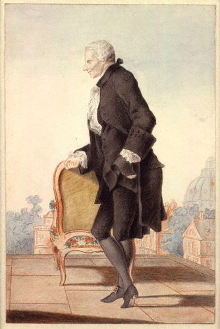
(Pictured: Laurence Sterne painted in watercolour by French artist Louis Carrogis Carmontelle, ca. 1762)


Leave a comment

Birth of Charlotte Grace O’Brien

charlotte-grace-obrien

Charlotte Grace O’Brien, author, philanthropist, plant collector, and activist in nationalist causes and the protection of female emigrants, is born on November 23, 1845, at Cahirmoyle, County Limerick.

O’Brien is the younger daughter in a family of five sons and two daughters of William Smith O’Brien, Irish nationalist, and his wife Lucy Caroline, eldest daughter of Joseph Gabbett, of High Park, County Limerick. Upon her father’s return in 1854 from the penal colony in Tasmania, she rejoins him in Brussels and stays there until his removal to Cahirmoyle in 1856. Upon her mother’s death in 1861 she moves with her father to Killiney, near Dublin, and is his constant companion until his death at Bangor, Gwynedd in 1864.

From 1864 O’Brien lives at Cahirmoyle with her brother Edward, tending his motherless children, until his remarriage in 1880. She then goes to live at Foynes on the River Shannon and there devotes herself to literary pursuits. She has already published in 1878 her first novel, Light and Shade, a tale of the Fenian rising of 1867, the material for which had been gathered from Fenian leaders. A Tale of Venice, a drama, and Lyrics appear in 1880.

By 1881 her interests and pen are absorbed in Irish political affairs, in which she shares her father’s opinions. She contributes articles to the Nineteenth Century on The Irish Poor Man (December 1880) and Eighty Years (March 1881). In the spring of 1881, the attitude of the liberal government towards Ireland leads her to address many fiery letters to The Pall Mall Gazette, then edited by John Morley.

Another interest, however, soon absorbs O’Brien’s activities. The disastrous harvest in Ireland in 1879, combined with Irish political turmoil, leads to much emigration to the United States. At Queenstown, the port of embarkation, female emigrants suffer much from overcrowded lodgings and robbery. She not only induces the board of trade to exercise greater vigilance but also founds in 1881 a large boarding-house at Queenstown for the reception and protection of girls on the point of emigrating.

In order to improve the steamship accommodations for female emigrants, and to study their prospects in America, O’Brien makes several steerage passages to America. She also establishes in New York a similar institution to that in Queenstown for the protection of girls. Many experiences during this period find expression in her Lyrics (Dublin, 1886), a small volume of poems, which gives simple pictures of the emigrants and contains some stirring nationalist ballads.

On her retirement from active public work in 1886, O’Brien returns to Ardanoir, Foynes, on the bank of the Shannon, devoting her leisure to writing and to study of plant life. She contributes much on the flora of the Shannon district to the Irish Naturalist and joins the Roman communion in 1887.

Charlotte Grace O’Brien dies on June 3, 1909, at Foynes, and is buried at Knockpatrick. Selections from her Writings and Correspondence is published at Dublin in 1909. Her verses have dignity and grace, her polemical essays are vigorous and direct, and her essays on nature charm by their simple style.


Leave a comment

Death of Poet William Allingham

william-allingham

William Allingham, Irish poet, diarist and editor, dies in Hampstead, London, England on November 18, 1889. He writes several volumes of lyric verse, and his poem “The Faeries” is much anthologised. However, he is better known for his posthumously published Diary, in which he records his lively encounters with Alfred Tennyson, Thomas Carlyle and other writers and artists. His wife, Helen Allingham, is a well-known watercolourist and illustrator.

Allingham is born on March 19, 1824, in the small town of Ballyshannon, County Donegal, and is the son of the manager of a local bank who is of English descent. During his childhood his parents move twice within the town, where he enjoys the country sights and gardens, learns to paint and listens to his mother’s piano playing. When he is nine, his mother dies.

Allingham obtains a post in the custom house of his native town and holds several similar posts in Ireland and England until 1870. During this period, he publishes Poems (1850), which includes his well-known poem “The Fairies,” and Day and Night Songs (1855). Laurence Bloomfield in Ireland, his most ambitious, though not his most successful work, a narrative poem illustrative of Irish social questions, appears in 1864. He also edits The Ballad Book for the Golden Treasury series in 1864, and Fifty Modern Poems in 1865.

In April 1870 Allingham retires from the customs service, moves to London and becomes sub-editor of Fraser’s Magazine, eventually becoming editor in succession to James Anthony Froude in June 1874, a post he holds until 1879. On August 22, 1874, he marries the illustrator, Helen Paterson, who is twenty-four years younger than he. His wife gives up her work as an illustrator and becomes well known under her married name as a water-colour painter. At first the couple lives in London, at 12 Trafalgar Square, Chelsea, near Allingham’s friend, Thomas Carlyle, and it is there that they have their first two children – Gerald Carlyle (b. 1875 November) and Eva Margaret (b. 1877 February).

Allingham’s Songs, Poems and Ballads appears in 1877. In 1881, after the death of Carlyle, the Allinghams move to Sandhills near Witley in Surrey, where their third child, Henry William, is born in 1882. At this period Allingham publishes Evil May Day (1883), Blackberries (1884) and Irish Songs and Poems (1887).

In 1888, due to Allingham’s declining health, they move back to the capital, to the heights of Hampstead village. However, on November 18, 1889, he dies at Hampstead. According to his wishes he is cremated. His ashes are interred at St. Anne’s church in his native Ballyshannon.

Posthumously Allingham’s Varieties in Prose is published in 1893. William Allingham A Diary, edited by Mrs. Helen Allingham and D. Radford, is published in 1907. It contains Allingham’s reminiscences of Tennyson, Carlyle and other writers and artists.