seamus dubhghaill

Promoting Irish Culture and History from Little Rock, Arkansas, USA


Leave a comment

Birth of Katharine Tynan, Novelist & Poet

katharine-tynan

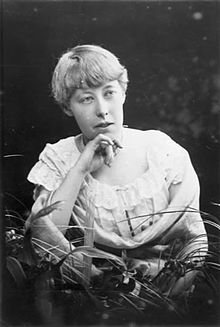
Katharine Tynan, Irish writer, known mainly for her novels and poetry, is born into a large farming family in Clondalkin, County Dublin, on January 23, 1859.

Tynan is educated at St. Catherine’s, a convent school in Drogheda. Her poetry is first published in 1878. She meets and becomes friendly with the poet Gerard Manley Hopkins in 1886. She goes on to play a major part in Dublin literary circles. In 1898 she marries English writer and barrister Henry Albert Hinkson, and they move to England. After her marriage she usually writes under the name Katharine Tynan Hinkson, or variations thereof. Later she lives at Claremorris, County Mayo, when her husband is a magistrate from 1914 until 1919. Of their three children, Pamela Hinkson (1900–1982) was also known as a writer.

For a while, Tynan is a close associate of William Butler Yeats (who may have proposed marriage and been rejected, around 1885), and later a correspondent of Francis Ledwidge. Involved in the Irish Literary Revival, Tynan expresses concern for feminist causes, the poor, and the effects of World War I in her work. She also meditates on her Catholic faith. A prolific writer, she wrote more than one hundred novels, twelve collections of short stories, reminiscences, plays, and more than a dozen books of poetry.

Katharine Tynan Hinkson dies on April 2, 1931, in Wimbledon, London, at the age of 72.


Leave a comment

Christopher Nolan Wins Whitbread Book Award

christopher-nolan

Christopher Nolan, Irish poet and author who cannot move or speak because of an accident at birth, wins the Whitbread Book Award on January 19, 1987, for his autobiography Under the Eye of the Clock.

Nolan is born in Mullingar, County Westmeath, on September 6, 1965, the son of Joseph and Bernadette Nolan. Due to asphyxiation at birth, he is born with permanent impairment of his “nerve-signaling system, a condition he said is now labelled dystonia.” Because of these complications, he is born with cerebral palsy and can only move his head and eyes. To write, Nolan uses a special computer and keyboard. In order to help him type, his mother holds his head in her cupped hands while he painstakingly picks out each word, letter by letter, with a pointer attached to his forehead.

Upon becoming a teenager, Nolan receives his education from the Central Remedial Clinic school, Mount Temple Comprehensive School, and at Trinity College, Dublin. His first book is published when he is fifteen. He is also awarded an Honorary Doctorate of Letters in the UK, the medal of excellence from the United Nations Society of Writers, and a Person of the Year award in Ireland. At the age of fifteen, he publishes his collection of poems titled Dam-Burst of Dreams. He writes an account of his childhood, Under the Eye of the Clock, published by St. Martin’s Press, which wins him the UK’s Whitbread Book Award in 1987 at the age of 21. He soon drops out of Trinity College to write a novel entitled The Banyan Tree (1999).

Nolan spends more than a decade writing The Banyan Tree. According to The New York Times, the book is a multigenerational story of a dairy-farming family in Nolan’s native county of Westmeath. The story is seen through the eyes of the aging mother. It is inspired, he tells Publishers Weekly, by the image of “an old woman holding up her skirts as she made ready to jump a rut in a field.” A review of the book is done in The New York Times by Meghan O’Rourke. She reviews the book and relates it to James Joyce‘s A Portrait of the Artist as a Young Man; in the story the protagonist leaves his mother in Ireland while he moves on to travel the world. Nolan, however, gives the reader a version of the mother’s story. “And so, in the end, one suspects that he wants Minnie’s good-natured, commonplace ways to stand as their own achievement, reminding us that life continues in the places left behind.”

Christopher Nolan dies at age 43 in Beaumont Hospital in Dublin at 2:30 AM on February 20, 2009, after a piece of salmon becomes trapped in his airway. Irish president Mary McAleese, upon hearing the news, says, “Christopher Nolan was a gifted writer who attained deserved success and acclaim throughout the world for his work, his achievements all the more remarkable given his daily battle with cerebral palsy.”


2 Comments

Birth of Frances Browne, Poet & Novelist

frances-browne

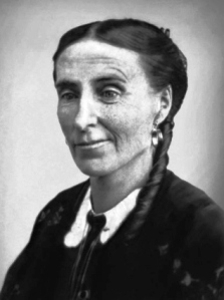
Frances Browne, Irish poet and novelist, best remembered for Granny’s Wonderful Chair, her collection of short stories for children, is born on January 16, 1816, at Stranorlar, County Donegal, the seventh child in a family of twelve children.

Browne is blind from infancy as a consequence of an attack of smallpox when she is only 18 months old. In her writings, she recounts how she learned by heart the lessons which her brothers and sisters said aloud every evening, and how she bribed them to read to her by doing their chores. She then worked hard at memorising all that she had heard. She writes her first poem, a version of “The Lord’s Prayer,” when she is seven years old.

In 1841, her first poems are published in the Irish Penny Journal and in the London Athenauem. One of those included in the Irish Penny Journal is the beautiful lyric “Songs of Our Land” which can be found in many anthologies of Irish patriotic verse. She publishes a complete volume of poems in 1844, and a second volume in 1847. The provincial newspapers, especially the Belfast-based Northern Whig reprint many of her poems and she becomes widely known as “The Blind Poetess of Ulster.”

In 1845 she makes her first contribution to the popular magazine Chambers’s Journal and she writes for this journal for the next 25 years. The first short story that she has published in the Journal is entitled, “The Lost New Year’s Gift,” appearing in March 1845. She also contributes many short stories to magazines that have a largely female readership.

In 1847, she leaves Donegal for Edinburgh with one of her sisters as her reader and amanuensis. She quickly establishes herself in literary circles, and writes essays, reviews, stories, and poems, in spite of health problems. In 1852, she moves to London, where she writes her first novel, My Share of the World (1861). Her best-known work, Granny’s Wonderful Chair, is published in 1856. It remains in print to this day and has been translated into several languages. It is a richly imaginative collection of fairy stories. It is also in 1856 that Pictures and Songs of Home appears, her third volume of poetry. This is directed at very young children and contains beautiful illustrations. The poems focus on her childhood experiences in County Donegal and provide evocative of its countryside.

After her move to London she writes for the Religious Tract Society, making many contributions to their periodicals The Leisure Hour and The Sunday at Home. One of these is “1776: a tale of the American War of Independence” which is printed in The Leisure Hour on the centenary of that event in 1876. As well as describing some of the revolutionary events, it is also a touching love story and is beautifully illustrated. Her last piece of writing is a poem called “The Children’s Day” which appears in The Sunday at Home in 1879.

Frances Brown dies from apoplexy on August 21, 1879, at 19 St. John’s Grove in Richmond-upon-Thames. She is buried on August 25, 1879, in plot 40 in the cemetery at St. Mary Magdalene Church in Richmond, London. Frances dies unmarried and leaves all her belongings, valued at less than 100 pounds, to Eliza Hickman who had been her faithful companion and secretary for many years.

(Pictured:  Frances Brown from the family photo collection of Selwyn Glynn, Brisbane, Australia)


Leave a comment

Birth of Thomas Dermody, Scholar & Poet

thomas-dermody

Thomas Dermody, classical scholar and poet, is born in Ennis, County Clare, on January 15, 1775. He writes under several pseudonyms including Mauritius Moonshine and Marmaduke Myrtle.

Dermody is scholarly but lives hard and makes little of his life. At the age of nine he is employed as a classical teacher in his father’s school, and has already acquired from his father a love for literature and the bottle.

Dermody has the genius of a poet, and writes fairly good poetry, but his genius is not enough. He lives for 27 years, half his life a promising boy and half a ne’er-do-well. His promise brings him generous patrons in his early days in Ireland, but he scorns the hand that feeds him, denies the friends who could nurse his genius, and runs away to England to keep bad company.

At the age of nineteen, he enlists in the army and behaves uncommonly well under military discipline. He becomes corporal, sergeant, and eventually second lieutenant, serving with distinction. He is wounded in France, and upon his return to England, is retired on half-pay.

He gains and loses friend after friend and abuses patron after patron. They clothe and clean him and make him presentable, but he then drinks himself to nakedness and rags and behaves like a brute. Such from day to day and year to year is his life, and in the end he drinks himself to death and perishes in a miserable cottage near Lewisham on July 15, 1802. He is filled with conceit and a slave to his desires, but the lines that are fading away on the stone above his grave show that he was a poet. Dermody is buried in the churchyard of St. Mary’s Church Lewisham.

Dermody publishes two books of poems which, after his death, are collected as The Harp of Erin. Some 56 of his sonnets have been published in various works, from his first 1789 collection Poems to those published in 1792, with a few posthumously published verses in the biography by James Grant Raymond. Samuel Taylor Coleridge takes an interest in some of his verse which has been included in the literary magazine The Anthologia Hibernica.


Leave a comment

Death of Philosopher George Berkeley

george-berkeley

George Berkeley, Irish philosopher whose primary achievement is the advancement of a theory he calls “immaterialism” (later referred to as “subjective idealism” by others), dies in Oxford, England, on January 14, 1753. His theory of immaterialism denies the existence of material substance and instead contends that familiar objects like tables and chairs are only ideas in the minds of perceivers and, as a result, cannot exist without being perceived. Berkeley is also known for his critique of abstraction, an important premise in his argument for immaterialism.

Berkeley is born at his family home, Dysart Castle, near Thomastown, County Kilkenny, the eldest son of William Berkeley, a cadet of the noble family of Berkeley. He is educated at Kilkenny College and attends Trinity College, Dublin, earning a bachelor’s degree in 1704 and completing a master’s degree in 1707. He remains at Trinity College after completion of his degree as a tutor and Greek lecturer.

In 1709, Berkeley publishes his first major work, An Essay towards a New Theory of Vision, in which he discusses the limitations of human vision and advances the theory that the proper objects of sight are not material objects, but light and colour. This foreshadows his chief philosophical work, A Treatise Concerning the Principles of Human Knowledge, in 1710, which, after its poor reception, he rewrites in dialogue form and publishes under the title Three Dialogues between Hylas and Philonous in 1713.

In this book, Berkeley’s views are represented by Philonous, while Hylas embodies the Irish thinker’s opponents, in particular John Locke. Berkeley argues against Sir Isaac Newton‘s doctrine of absolute space, time, and motion in De Motu (On Motion), published in 1721. His arguments are a precursor to the views of Ernst Mach and Albert Einstein. In 1732, he publishes Alciphron, a Christian apologetic against the free-thinkers, and in 1734, he publishes The Analyst, a critique of the foundations of calculus, which is influential in the development of mathematics.

His last major philosophical work, Siris (1744), begins by advocating the medicinal use of tar water and then continues to discuss a wide range of topics, including science, philosophy, and theology. Interest in Berkeley’s work increases after World War II because he tackles many of the issues of paramount interest to philosophy in the 20th century, such as the problems of perception, the difference between primary and secondary qualities, and the importance of language. It sold more copies than any of his other books during his lifetime.

In 1734, Berkeley is appointed Bishop of Cloyne in Ireland, a position he holds until his death. He remains at Cloyne until 1752, when he retires and goes to Oxford to live with his son and supervise his education. He dies soon afterward and is buried in Christ Church Cathedral, Oxford.

The Berkeley portion of the Yale University campus is named after George Berkeley.


Leave a comment

Birth of George Sigerson, Physician & Writer

george-sigerson

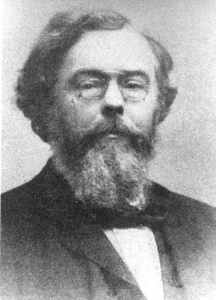
George Sigerson, Irish physician, scientist, writer, politician, and poet, is born at Holy Hill, near Strabane in County Tyrone on January 11, 1836. He is a leading light in the Irish Literary Revival of the late 19th century in Ireland.

Sigerson is the son of William and Nancy (née Neilson) Sigerson and has three brothers, James, John and William, and three sisters, Ellen, Jane, and Mary Ann. He attends Letterkenny Academy but is sent by his father, who developed the spade mill and who played an active role in the development of Artigarvan, to complete his education in France.

He studies medicine at the Queen’s College, Galway, and Queen’s College, Cork, and takes his degree in 1859. He then goes to Paris where he spends some time studying under Jean-Martin Charcot and Duchenne de Boulogne. Sigmund Freud is one of his fellow students.

Sigerson returns to Ireland and opens a practice in Dublin, specializing in neurology. He continues to visit France annually to study under Charcot. His patients included Maud Gonne, Austin Clarke, and Nora Barnacle. He lectures on medicine at the Catholic University of Ireland and is professor of zoology and later botany at the University College Dublin.

His first book, The Poets and Poetry of Munster, appears in 1860. He is actively involved in political journalism for many years, writing for The Nation. Sigerson and his wife Hester are by now among the dominant figures of the Gaelic Revival. They frequently hold Sunday evening salons at their Dublin home to which artists, intellectuals, and rebels alike attend, including John O’Leary, W.B. Yeats, Patrick Pearse, Roger Casement, and 1916 signatory Thomas MacDonagh. Sigerson is a co-founder of the Feis Ceoil and President of the National Literary Society from 1893 until his death. His daughter, Dora, is a poet who is also involved in the Irish literary revival.

Nominated to the first Seanad Éireann of the Irish Free State, Sigerson briefly serves as the first chairman on December 11-12, 1922, before the election of James Campbell, 1st Baron Glenavy. Sigerson dies at his home at 3 Clare Street, Dublin, on February 17, 1925, at the age of 89, after a short illness. On February 18, 1925, the day after his death, the Seanad Éireann pays tribute to him.

The Sigerson Cup, the top division of third level Gaelic football competition in Ireland is named in his honour. Sigerson donates the salary from his post at UCD so that a trophy can be purchased for the competition. In 2009, he is named in the Sunday Tribune‘s list of the “125 Most Influential People In GAA History.” The cup is first presented in 1911, with the inaugural winners being UCD GAA.


Leave a comment

Birth of Irish Playwright Brian Patrick Friel

brian-patrick-friel

Brian Patrick Friel, Irish playwright, short story writer, and founder of the Field Day Theatre Company, is born on January 9, 1929, at Knockmoyle, near Omagh, County Tyrone. Prior to his death, he had been considered one of the greatest living English-language dramatists and referred to as an “Irish Chekhov” and “the universally accented voice of Ireland.” His plays have been compared favourably to those of contemporaries such as Samuel Beckett, Arthur Miller, Harold Pinter, and Tennessee Williams.

Friel is the son of Patrick “Paddy” Friel, a primary school teacher and councillor on Londonderry Corporation, the local city council in Derry. Friel’s mother, Mary McLoone, is postmistress of Glenties, County Donegal. The family moves to Derry when Friel is ten years old. There, he attends St. Columb’s College, the same school attended by Seamus Heaney, John Hume, Seamus Deane, Phil Coulter, Eamonn McCann, and Paul Brady.

Friel receives his B.A. from St. Patrick’s College, Maynooth (1945–48), and qualifies as a teacher at St. Joseph’s Training College in Belfast. He marries Anne Morrison in 1954, with whom he has four daughters and one son. Between 1950 and 1960, he works as a math teacher in the Derry primary and intermediate school system, taking leave in 1960 to pursue a career as a writer, living off his savings. In the late 1960s, the Friels move from 13 Malborough Street, Derry to Muff, County Donegal, eventually settling outside Greencastle, County Donegal.

Recognised for early works such as Philadelphia, Here I Come! and Faith Healer, Friel has 24 plays published in a more than half-century spanning career that culminates in his election to the position of Saoi of Aosdána. His plays are commonly featured on Broadway throughout this time. In 1980, Friel co-founds Field Day Theatre Company, and his play Translations is the company’s first production. With Field Day, Friel collaborates with Seamus Heaney, 1995 recipient of the Nobel Prize in Literature. Heaney and Friel first become friends after Friel sends the young poet a letter following the publication of Death of a Naturalist.

Friel is a member of the American Academy of Arts and Letters, the British Royal Society of Literature, and the Irish Academy of Letters. He is appointed to Seanad Éireann in 1987 and serves until 1989. In later years, Dancing at Lughnasa reinvigorates Friel’s oeuvre, bringing him Tony Awards, including Best Play, the Laurence Olivier Award for Best New Play, and the New York Drama Critics Circle Award for Best Play. It is also adapted into a film, starring Meryl Streep, directed by Pat O’Connor, script by Frank McGuinness.

After a long illness Friel dies at the age of 86 in the early morning of Friday, October 2, 2015, in Greencastle, County Donegal.


Leave a comment

Birth of Irish Novelist Anna Maria Hall

anna-maria-hall

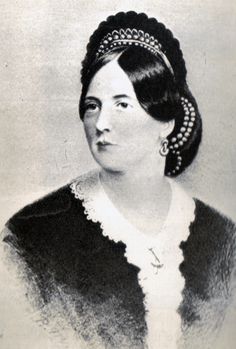
Anna Maria Hall (nee Fielding), Irish novelist who often publishes as “Mrs. S. C. Hall,” is born in Dublin on January 6, 1800. She lives with her mother, a widow named Sarah Elizabeth Fielding, and stepfather, George Carr of Graigie, Wexford, until 1815. She goes to England with her mother in 1815, and on September 20, 1824, marries Samuel Carter Hall. Her mother lives with her in London until she dies.

Hall’s first recorded contribution to literature is an Irish sketch called “Master Ben,” which appears in The Spirit and Manners of the Age, January 1829. Other tales follow. Eventually they are collected into a volume entitled Sketches of Irish Character (1829), and henceforth she becomes “an author by profession.” The following year she issues a little volume for children, Chronicles of a School-Room, consisting of a series of simple tales.

In 1831, she publishes a second series of Sketches of Irish Character fully equal to the first, which is well received. The first of her nine novels, The Buccaneer (1832), is a story of the time of The Protectorate, and Oliver Cromwell is among the characters. To The New Monthly Magazine, which her husband is editing, she contributes Lights and Shadows of Irish Life, articles which are republished in three volumes in 1838. The principal tale in this collection, “The Groves of Blarney,” is dramatised with considerable success by the author with the object of supplying a character for Tyrone Power and runs for a whole season at the Adelphi Theatre in 1838. Hall also writes “The French Refugee,” produced at the St. James’s Theatre in 1836, where it runs ninety nights, and for the same theatre Mabel’s Curse, in which John Pritt Harley sustains the leading part.

Another of her dramas, of which she has neglected to keep a copy, is Who’s Who? which is in the possession of Tyrone Power when he is lost in the President in April 1841. In 1840, she issues what has been called the best of her novels, Marian, or a Young Maid’s Fortunes, in which her knowledge of Irish character is again displayed in a style equal to anything written by Maria Edgeworth. Her next work is a series of “Stories of the Irish Peasantry,” contributed to Chambers’s Edinburgh Journal, and afterwards published in a collected form. In 1840 she aids her husband in a book chiefly composed by him, “Ireland, its Scenery, Characters, &c.” She edits the St. James’s Magazine from 1862 to 1863.

In the Art Journal, edited by her husband, she brings out Pilgrimages to English Shrines in 1849, and here the most beautiful of all her books, Midsummer Eve, a Fairy Tale of Love, first appears. One of her last works, Boons and Blessings (1875), dedicated to the Earl of Shaftesbury, is a collection of temperance tales, illustrated by the best artists.

Hall’s sketches of her native land bear a closer resemblance to the tales of Miss Mitford than to the Irish stories of John Banim or Gerald Griffin. They contain fine rural descriptions and are animated by a healthy tone of moral feeling and a vein of delicate humour. Her books are never popular in Ireland, as she sees in each party much to praise and much to blame, so that she fails to please either the Orange Order or the Roman Catholics.

On December 10, 1868, she is granted a civil list pension of £100 a year. She is instrumental in founding the Hospital for Consumption at Brompton, the Governesses’ Institute, the Home for Decayed Gentlewomen, and the Nightingale Fund. Her benevolence is of the most practical nature. She works for the temperance cause, for women’s rights, and for the friendless and fallen. She is a friend to street musicians, and a thorough believer in spiritualism, but this belief does not prevent her from remaining, as she ever was, a devout Christian. She dies at Devon Lodge, East Moulsey, January 30, 1881, and is buried in Addlestone churchyard on February 5.


2 Comments

Birth of Padraic Fallon, Poet & Playwright

padraic-fallon

Padraic Fallon, Irish poet and playwright, is born in Athenry, County Galway, on January 3, 1905.

Fallon’s upbringing and his early impressions of Athenry and the surrounding landscape are intimately described in his poetry. After passing the civil service exams in 1923 he moves to Dublin to work in the Customs House. In Dublin he becomes part of the circle of George William Russell (Æ) who encourages his literary ambitions and arranges for the publication of his early poetry. His early poetry, short stories, and literary criticism are published in The Dublin Magazine and The Bell.

He forms close friendships with Seumas O’Sullivan, editor of The Dublin Magazine, the poets Austin Clarke, Robert Farren, F.R. Higgins, and Patrick McDonagh and later the novelist James Plunkett. In 1939, Fallon leaves Dublin to serve as a Customs official in County Wexford, living in Prospect House, near Wexford Town with his wife, Dorothea (née Maher) and his six sons. During this time, he becomes a close friend of the painter Tony O’Malley.

Fallon is a regular contributor to Radio Éireann in the 1940s and 1950s, serving variously as a journalist, scriptwriter, and literary critic. A number of his short stories and early dramatic pieces are broadcast by the station during the 1940s. The first of Fallon’s verse plays for radio, Diarmuid and Gráinne, is broadcast by Radio Éireann in November 1950. This is followed by The Vision of Mac Conglinne (1953), Two Men with a Face (1953), The Poplar (1953), Steeple Jerkin (1954), A Man in the Window (1955), Outpost (1955), The Wooing of Étain (1955), Deirdre’s King (1956), The Five Stations (1957), The Hags of Clough (1957), The Third Bachelor (1958), At the Bridge Inn (1960), and Lighting up Time (1961).

Three plays adapted from Irish mythology, Diarmuid and Gráinne, The Vision of Mac Conglinne, and Deirdre’s King receive particular contemporary critical acclaim. The landscape, mythology, and history of Ireland, interwoven with classical themes and religious symbolism, are frequent themes in his poetry and dramatic works.

A number of his radio plays are later broadcast on the BBC Third Programme, and, in translation, in Germany, Holland, and Hungary. A stage play, The Seventh Step, is staged at The Globe Theatre in Dublin in 1954. A second stage play, Sweet Love ’till Morn, is staged in the Abbey Theatre in 1971. Fallon also writes dramatic pieces for television such as A Sword of Steel (1966) and The Fenians (1967), the latter produced by James Plunkett.

Fallon retires from the Civil Service in 1963, returning to Dublin before moving to Cornwall in 1967 to live with his son, the sculptor Conor Fallon and his daughter-in-law, the artist Nancy Wynne-Jones. He and his wife return to Ireland in 1971. He spends his last years in Kinsale. He is visiting his son Ivan Fallon in Kent at the time of his death on October 9, 1974.

While his poetry has previously appeared in The Dublin Magazine, The Bell, The Irish Times, and a number of anthologies, his first volume of collected poetry, Poems, incorporating a number of previously unpublished poems, is not produced until 1974, months before his death. Three volumes of his poetry, edited by his son, the journalist and critic Brian Fallon, are published after his death – Poems and Versions (1983), Collected Poems (1990), with an introduction by Seamus Heaney, and A Look in the Mirror and Other Poems (2003), with an introduction by Eavan Boland. In 2005, three of Fallon’s verse plays, The Vision of Mac Conglinne, The Poplar, and The Hags of Clough are published in a single volume. A selection of his prose writings and criticism edited by Brian Fallon, A Poet’s Journal, is published in the same year.


Leave a comment

Birth of Irish Author Mary Anne Sadlier

mary-anne-sadlier

Mary Anne Sadlier, Irish author, is born Mary Anne Madden in Cootehill, County Cavan, on December 30, 1820.

Sadlier publishes roughly sixty novels and numerous stories in her lifetime. She writes for Irish immigrants in both the United States and Canada, encouraging them to attend mass and retain the Catholic faith. In so doing, Sadlier also addresses the related themes of anti-Catholicism, the Great Famine, emigration, and domestic work. Her writings are often found under the name Mrs. J. Sadlier.

Upon the death of her father, Francis, a merchant, Mary Madden emigrates to Sainte-Marthe, Quebec in 1844, where she marries publisher James Sadlier, also from Ireland, on November 24, 1846. Sadlier publishes much of her work in the family’s Catholic magazine, The Tablet. Sadlier experiences her most productive literary period after her marriage and is most creative after the time all of her children are born. While living in Canada, Sadlier publishes eighteen books — five novels, one collection of short stories, a religious catechism, and nine translations from the French — in addition to assorted magazine articles she contributes to the Pilot and American Celt free of charge. In New Lights (1853), Sadlier deals with the Great Famine for the first time. The book proves one of her most popular, going through at least eight editions in fifty years. In this novel, Sadlier focuses a polemical attack on the Protestant practice of converting Irish peasants by promising them soup but condemns peasant retaliation and violence.

In the early 1860s, the couple moves to New York City. The Sadlier’s New York home becomes the hub of literary activity in the Catholic community, and Sadlier also enjoys the company of the brightest Irish writers in the United States and Canada, including New York Archbishop John Hughes, editor Orestes Brownson, and Thomas D’Arcy McGee. She holds weekly salons in her Manhattan home, as well as her summer home on Far Rockaway on Long Island. Her closest friend is D’Arcy McGee, a poet, Irish nationalist exile and Canadian statesman known as one of the founding “Fathers of Confederation” who helps bring about Canada’s independence. McGee and Sadlier share an interest in a “national poetry” that does not only capture the spirit of a people but inspires them to political and national independence. While McGee, as a man, can take part in political rallies and organize Irish American support for Home Rule, Sadlier, as a woman, directs her support for Irish independence into literature. McGee’s biographer notes that Sadlier’s success inspires him to write emigrant novels and is planning a novel on this subject at the time of his assassination by an Irish American radical in 1868. His death is a crushing blow to Sadlier and her husband. Sadlier edits a collection of McGee’s poetry in 1869 in tribute to his memory.

Sadlier remains in New York for nine years before returning to Canada, where she dies in Montreal on April 5, 1903. In later years she loses the copyright to all her earlier works, many of which remain in print. One of Mary Anne’s daughters, Anna Theresa Sadlier, also becomes a writer.