seamus dubhghaill

Promoting Irish Culture and History from Little Rock, Arkansas, USA


Leave a comment

Birth of Thomas D’Arcy McGee, Canadian Politician

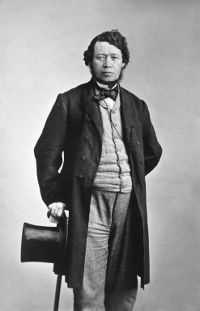
Thomas D’Arcy Etienne Hughes McGee, Irish Canadian politician, Catholic spokesman, journalist, poet, and a Father of Canadian Confederation, is born on April 13, 1825, in Carlingford, County Louth.

McGee grows up a Catholic Irishman who hates the British rule of Ireland and works for a peasant revolution to overthrow British rule and secure Irish independence. He escapes arrest and flees to the United States in 1848, where he reverses his political beliefs. He becomes disgusted with American republicanism and democracy, and becomes intensely conservative in his politics and in his religious support for the Pope.

McGee moves to Canada in 1857 and works hard to convince the Irish Catholics to cooperate with the Protestant British in forming a Confederation that will make for a strong Canada in close alliance with Britain. His fervor for Confederation garners him the title “Canada’s first nationalist.” He fights the Fenians in Canada, who are Irish Catholics who hate the British and resemble his younger self politically. McGee succeeds in helping create the Canadian Confederation in 1867.

On April 7, 1868, McGee, having participated in a parliamentary debate that goes on past midnight, walks back to the boarding house where he is staying. McGee is opening the door to Trotter’s Boarding House in Ottawa when he is shot by someone waiting for him on the inside. Several people run to the scene, however there is no sign of the assassin. It is later determined that McGee is assassinated with a shot from a handgun by Patrick J. Whelan. He is to date the only Canadian victim of political assassination at the federal level.

McGee is given a state funeral in Ottawa and interred in a crypt at the Cimetière Notre Dame des Neiges in Montreal. His funeral procession in Montreal draws an estimated crowd of 80,000 out of a total city population of 105,000.

Patrick J. Whelan, a Fenian sympathiser and a Catholic, is accused, tried, convicted, and hanged for the crime on February 11, 1869, in Ottawa. The jury is decisively swayed by the forensic evidence that Whelan’s gun had been fired shortly before the killing, together with the circumstantial evidence that he had threatened and stalked McGee. Historian David Wilson points out that forensic tests conducted in 1972 show that the fatal bullet is compatible with both the gun and the bullets that Whelan owned. Wilson concludes, “The balance of probabilities suggests that Whelan either shot McGee, or was part of a hit-squad, but there is still room for reasonable doubt as to whether he was the man who actually pulled the trigger.”

The government of Canada’s Thomas D’Arcy McGee Building stands near the site of the assassination. The case is dramatised in the Canadian play Blood on the Moon by Ottawa actor/playwright Pierre F. Brault. The assassination of McGee is also a major component of Away, a novel about Irish immigration to Canada by Canadian novelist Jane Urquhart.


Leave a comment

The Tender of Union Comes Into Effect

flag-of-the-commonwealth

The Tender of Union, a declaration of the Parliament of England during the Interregnum following the War of the Three Kingdoms, comes into effect on April 12, 1654. The ordinance states that Scotland will cease to have an independent parliament and will join England in its emerging Commonwealth republic.

The English parliament passes the declaration on October 28, 1651 and after a number of interim steps an Act of Union is passed on June 26, 1657. The proclamation of the Tender of Union in Scotland on February 4, 1652 regularises the de facto annexation of Scotland by England at the end of the Third English Civil War. Under the terms of the Tender of Union and the final enactment, the Scottish Parliament is permanently dissolved and Scotland is given 30 seats in the Westminster Parliament. This act like all the others passed during the Interregnum is repealed by both Scottish and English parliaments upon the Restoration of monarchy under Charles II.

On October 28, 1651 the English Parliament issues the Declaration of the Parliament of the Commonwealth of England, concerning the Settlement of Scotland, in which it is stated that “Scotland shall, and may be incorporated into, and become one Common-wealth with this England.” Eight English commissioners are appointed, Oliver St. John, Sir Henry Vane, Richard Salwey, George Fenwick, John Lambert, Richard Deane, Robert Tichborne, and George Monck, to further the matter. The English parliamentary commissioners travel to Scotland and at Mercat Cross, Edinburgh on February 4, 1652, proclaim that the Tender of Union is in force in Scotland. By April 30, 1652 the representatives of the shires and Royal burghs of Scotland have agreed to the terms which include an oath that Scotland and England be subsumed into one Commonwealth. On the April 13, 1652, between the proclamation and the last of the shires to agree to the terms, a bill for an Act for incorporating Scotland into one Commonwealth with England is given a first and a second reading in the Rump Parliament but it fails to return from its committee stage before the Rump is dissolved. A similar act is introduced into the Barebone’s Parliament but it too fails to be enacted before that parliament is dissolved.

On April 12, 1654, the Ordinance for uniting Scotland into one Commonwealth with England is issued by the Lord Protector Oliver Cromwell and proclaimed in Scotland by the military governor of Scotland, General George Monck. The Ordinance does not become an Act of Union until it is approved by the Second Protectorate Parliament on June 26, 1657 in an act that enables several bills.


Leave a comment

Birth of Kathleen Clarke, Founder Member of Cumann na mBan

kathleen-clarke-1

Kathleen Clarke (née Daly), a founder member of Cumann na mBan, and one of very few privy to the plans of the Easter Rising in 1916, is born in Limerick, County Limerick on April 11, 1878. She is the wife of Tom Clarke and sister of Edward “Ned” Daly, both of whom are executed for their part in the Rising. She is subsequently a Teachta Dála (TD) and senator with both Sinn Féin and Fianna Fáil, and the first female Lord Mayor of Dublin (1939–41).

Kathleen Daly is born into a prominent Fenian family, the third daughter of Edward and Catherine Daly. Her paternal uncle, John Daly, is at the time imprisoned for his political activities in Chatham and Portland Prisons in England. He is released in 1896 and returns home to Limerick. When Tom Clarke, who had been imprisoned with her uncle, is released in 1898 he travels to Limerick to receive the Freedom of the City and stays with the Daly family.

In 1901 Daly decides to emigrate to the United States to join Tom, who had been there since 1900, having secured work through his Fenian contacts. They marry on July 16, 1901, in New York City. Through his contacts in the Clan na Gael and the Irish Republican Brotherhood (IRB), Tom Clarke continues to be involved in nationalist activity. Kathleen joins the Gaelic League while in the United States and they return to Ireland in November 1907.

In 1914 Clarke becomes a founder member of Cumann na mBan. Her husband forbids her permission to take an active part in the 1916 Easter Rising as she has orders regardless of how the events pan out. As Tom Clarke is the first signatory of the Proclamation of the Irish Republic, he is chosen to be executed for his part in the Easter Rising. Her younger brother, Ned Daly, is also executed for taking part in the rising. She visits both of them before they are executed. After the Rising, Michael Collins establishes contact with her while in prison in his attempts to re-build the IRB network. She also sets up the Irish National Aid Fund to aid those who had family members killed or imprisoned as a result of the Easter Rising, closely aided by Sorcha MacMahon.

Clarke becomes a member of Sinn Féin and in 1917 is elected a member of the party’s Executive. During the German Plot she is arrested and imprisoned in Holloway Prison for eleven months. During the Irish War of Independence, she serves as a District Judge on the Republican Courts in Dublin. In 1919 she is elected as an Alderman for the Wood Quay and Mountjoy Wards of Dublin Corporation and serves until the Corporation is abolished in 1925.

Clarke is elected unopposed as a Sinn Féin TD to the Second Dáil at the 1921 elections for the Dublin Mid constituency. She is not re-elected at the 1922 general election, however, and supports the Anti-Treaty forces during the Irish Civil War. In 1926 she becomes a founder member of Fianna Fáil and has to resign from Cumann na mBan. She is re-elected to the short-lived 5th Dáil at the June 1927 election as a Fianna Fáil member for the Dublin Mid constituency but loses her seat at the September 1927 election and does not regain it. She is elected as one of six Fianna Fáil Senators to the Free State Seanad for nine years at the 1928 Seanad election under the leadership of Joseph Connolly. She remains a member of the Seanad until it is abolished in 1936.

In 1930 Clarke is elected to the re-constituted Dublin Corporation for Fianna Fáil along with Robert Briscoe, Seán T. O’Kelly, Thomas Kelly and Oscar Traynor. She serves as the first Fianna Fáil Lord Mayor of Dublin as well as the first female Lord Mayor, from 1939 to 1941. She opposes the Constitution of Ireland as she feels that several of its sections would place women in a lower position that they had been afforded in the Proclamation of the Irish Republic. She is criticised by many in the Fianna Fáil organisation as a result and, while she resigns from the Thomas Clarke Cumann, she remains a member of the Fianna Fáil Ard Chomhairle.

While Clarke does not support the Irish Republican Army (IRA) bombing in England during World War II, she appeals for those sentenced to death by the Irish Government to be given clemency. Ultimately this leads to her breaking with the party completely after her term as Lord Mayor finishes in 1941. She declines to stand as a Fianna Fáil candidate at the 1943 general election.

In 1966, as part of the celebrations of the Easter Rising, Clarke and other surviving relatives are awarded honorary Doctor of Law by the National University of Ireland. Following her death in Dublin on September 29, 1972, she receives the rare honour of a state funeral. She is buried at Deans Grange Cemetery, Dublin.


Leave a comment

Birth of William Massey, New Zealand Prime Minister

william-ferguson-massey

William Ferguson Massey, New Zealand statesman, Prime Minister from 1912 to 1925, and founder of the Reform Party, is born in Limavady, County Derry in what is now Northern Ireland on March 26, 1856. He is a lifelong spokesman for agrarian interests and opponent of left-wing movements. His Reform Party ministries include leadership of the country during World War I.

The Massey family arrives in New Zealand on October 21, 1862, on board the Indian Empire as Nonconformist settlers, although William remains in Ireland for an additional eight years to complete his education. After arriving on December 10, 1870, on the City of Auckland, he works as a farmhand for some years before acquiring his own farm in Mangere, south Auckland, in 1876.

While managing his own farm, Massey assumes leadership in farmers’ organizations. He enters Parliament in 1894 as a conservative and from 1894 to 1912 is a leader of the conservative opposition to the Liberal ministries. He becomes prime minister in 1912 and promptly signs legislation enabling freeholders to buy their land at its original value. The first years of his ministry see labour strikes by miners in Waihi in 1912 and wharf workers in Wellington in 1913. His harsh repression of them give impetus to the formation of the Labour Party in 1916. He also improves federal administration by putting civil service positions under a nonpolitical commission.

A coalition with the Liberal Party led by Sir Joseph Ward enables Massey to continue his ministry in 1915. He participates in the Imperial War Cabinet (1917–18) and signs the Treaty of Versailles at the Paris Peace Conference of 1919, making New Zealand a founding member of the League of Nations. He opposes separate sovereign status for dominions within the British Commonwealth.

Following the war, farmers are troubled by depressed prices resulting from the sharply reduced British demand for their products, and they also face inflation in land prices, aggravated by increased demand for land by returning servicemen. Massey responds to these problems by establishing the Meat Control Board (1922) and the Dairy Export Control Board (1923), but rural and urban unrest resulting from rising prices continue to mount in the final years of his ministry.

In 1924 cancer forced Massey to relinquish many of his official duties, and he dies on May 10, 1925, at Wellington, New Zealand. The Massey Memorial is erected as his mausoleum in Wellington, paid for mostly by public subscription. Massey University is named after him, the name chosen because the university had a focus on agricultural science, matching Massey’s own farming background.


Leave a comment

Terence O’Neill Becomes Fourth Prime Minister of Northern Ireland

File source: http://en.wikipedia.org/wiki/File:Captain_Terence_O%27Neill.jpg

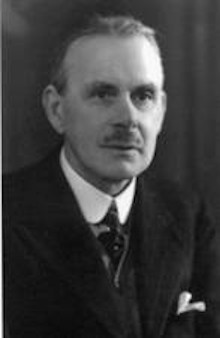
Terence O’Neill becomes the fourth Prime Minister of Northern Ireland on March 25, 1963, following the resignation of Basil Brooke, 1st Viscount Brookeborough. He plays a significant role in the first year of the Troubles, trying unsuccessfully to stem growing sectarian violence.

O’Neill is born on September 10, 1914, at 29 Ennismore Gardens, Hyde Park, London, the son of Captain Arthur O’Neill of Shane’s Castle, Randalstown, the first member of parliament (MP) to be killed in action in World War I five months later. He is educated in the English public school system at West Downs SchoolWinchester and Eton College, spending his summer holidays at the family estate in Ulster. He is later commissioned in the British Army, rising to the rank of captain and serving with the Irish Guards in World War II. He is wounded in 1944 and opts to resettle permanently in Northern Ireland.

In 1946, O’Neill is elected to the Parliament of Northern Ireland, representing the Unionist stronghold of Bannside. He remains in the parliament at Stormont for almost 25 years. He becomes Northern Ireland’s Minister of Home Affairs in April 1956, Minister of Finance in September 1956 and Prime Minister in March 1963.

As Prime Minister, O’Neill introduces economic reforms to stimulate industrial growth and employment, with mixed results. He also tries narrowing the divide between Protestants and Catholics. He does this with important gestures, like visiting Catholic schools and expressing condolences on the death of Pope John XXIII.

O’Neill also seeks better relations with the Republic of Ireland, and in January 1965 invites Taoiseach Seán Lemass to Belfast. Catholics and moderate Unionists welcome this reconciliation but many conservative Loyalists, like Ian Paisley, condemn it as treachery.

When the civil rights movement erupts in the late 1960s, O’Neill offers a package of reforms and concessions, including changes to the allocation of housing. These proposals, however, anger staunch Unionists and fail to satisfy many Republicans.

In December 1969, O’Neill appears on Northern Ireland television and makes an impassioned plea for unity, warning that “Ulster stands at the crossroads.” His government is reelected in February 1969, though O’Neill himself is almost voted out of his own seat.

With the situation worsening, O’Neill is further embarrassed by Loyalist attempts to sabotage Belfast’s water supply. Fast losing the confidence of his own party, he resigns the prime ministership in April 1969. He remains in the parliament until January 1970.

O’Neill is made Baron O’Neill of the Maine and spends the last decade of his life in Britain’s House of Lords. He dies of cancer on June 12, 1990.


Leave a comment

Chaim Herzog Elected President of Israel

chaim-herzog

Chaim Herzog, Israeli politician, general, lawyer, and author, is elected the sixth President of Israel on March 22, 1983. He serves from 1983 to 1993.

Herzog is born in Cliftonpark Avenue in Belfast on September 17, 1918. He is raised predominantly in Dublin, the son of Ireland’s Chief Rabbi Yitzhak HaLevi Herzog and his wife Sara. Herzog’s father, a fluent speaker of the Irish language, is known as “the Sinn Féin Rabbi” for his support of the First Dáil and the Irish Republican cause during the Irish War of Independence. Herzog studies at Wesley College, Dublin, and is involved with the Federation of Zionist Youth and Habonim Dror, the Labour-Zionist movement, during his teenage years.

The family emigrates to Mandatory Palestine in 1935 and Herzog serves in the Jewish paramilitary group Haganah during the 1936–1939 Arab revolt. He goes on to earn a degree in law at University College London, and then qualifies as a barrister at Lincoln’s Inn.

Herzog joins the British Army during World War II, operating primarily in Germany as a tank commander in the Armoured Corps. There, he is given his lifelong nickname of “Vivian” because the British could not pronounce the name, “Chaim.” A Jewish soldier had volunteered that “Vivian” is the English equivalent of “Chaim.”

Herzog returns to Palestine after the war and, following the end of the British Mandate and Israel’s Declaration of Independence in 1948, operates in the Battles of Latrun during the 1948 Arab–Israeli War. He retires from the Israel Defence Forces in 1962 with the rank of Major-General.

After leaving the army, Herzog opens a private law practice. He returns to public life when the Six-Day War breaks out in 1967, serving as a military commentator for Kol Israel radio news. Following the capture of the West Bank, he is appointed Military Governor of East Jerusalem, and Judea and Samaria.

In 1972 Herzog is a co-founder of Herzog, Fox & Ne’eman, which becomes one of Israel’s largest law firms. Between 1975 and 1978 he serves as Israel’s Permanent Representative to the United Nations, in which capacity he repudiates UN General Assembly Resolution 3379, the “Zionism is Racism” resolution, and symbolically tears it up before the assembly.

Herzog enters politics in the 1981 elections, winning a Knesset seat as a member of the Alignment. Two years later, in March 1983, he is elected to the largely ceremonial role of President. He serves two five-year terms before retiring in 1993. He dies on April 17, 1997, and is buried on Mount Herzl, Jerusalem. His son, Isaac Herzog, led the Israeli Labour Party and the parliamentary Opposition in the Knesset from 2013 until 2018.


Leave a comment

The Adventurers’ Act Receives Royal Assent

coat-of-arms-of-the-united-kingdom

The Adventurers’ Act 1640, an Act of the Parliament of England which specifies its aim as “the speedy and effectual reducing of the rebels in His Majesty’s Kingdom of Ireland,” receives Royal assent on March 19, 1642.

The Act is passed by the Long Parliament as a way of raising funds to suppress the Irish Rebellion of 1641, which had broken out five months earlier. It invites members of the public to invest £200 for which they will receive 1,000 acres of lands that are to be confiscated from rebels in Ireland. Two and a half million acres of Irish land are set aside by the English government for this purpose. The entire island of Ireland is about 20.9 million acres.

The enactment is done at the request of King Charles in the House of Lords, joined by the House of Commons, and is unanimously accepted without any debate. The Act had been placed before the Houses for inspection but is not formally read into the record. The title of the Act – “An Act for the speedy and effectual reducing of the Rebels, in His Majesty’s Kingdom of Ireland, to their due Obedience to His Majesty, and the Crown of England” – is read aloud to Parliament, followed by the statement: “Le Roy le veult.”

The “Adventurers” are so called because they are risking their money at a time when the Crown has just had to pay for the Bishops’ Wars in 1639–40. “Reducing” the rebels means leading them back to the legal concept of the “King’s Peace.” King Charles cannot subsequently enforce the Act, but it is realised by his political opponents following the Cromwellian conquest of Ireland in 1649–1653 and forms the main legal basis for the contentious Act for the Settlement of Ireland 1652.

Ironically, in May 1642 the Confederate Irish rebels draft the Confederate Oath of Association that recognises Charles as their monarch.

The Adventurers’ Act is extended and amended by three other acts – Lands of Irish Rebels; Adventurers’ Subscriptions Act 1640 (c. 34), Lands of Irish Rebels; Adventurers’ Subscriptions Act 1640 (c. 35), and Irish Rebels Act 1640 (c. 37). All four receive Royal Assent in the summer of 1642, just before the start of the English Civil War, but are usually referred to as 1640 acts, which is the year the Long Parliament started to sit and the 16th year of Charles I’s reign.

In July 1643, Parliament passes the Doubling Ordinance which doubles the allocation of land to anyone who increases their original investment by 25%. The purpose of the Act is twofold, firstly to raise money for Parliament to help suppress the rebellion in Ireland, and secondly to deprive the King of the lands seized from rebels that would be his by prerogative.

To enforce the Acts the Cromwellian conquest of Ireland is launched in 1649. In 1653, Ireland is declared subdued, and the lands are allocated to the subscribers in what becomes known as the Cromwellian Settlement.

The Adventurers Act and the other three statutes are repealed by the Statute Law Revision Act 1950.


Leave a comment

Murder of George Clancy, Mayor of Limerick

george-clancy

George Clancy, Irish nationalist politician and Mayor of Limerick, is shot in his home by Royal Irish Constabulary (RIC) Auxiliaries and dies on March 7, 1921, during the Irish War of Independence.

Clancy is born at Grange, County Limerick in 1881 to a family with a strong republican tradition. He is educated at Crescent College, Limerick, and thereafter at the Catholic University in St. Stephen’s Green, now University College, Dublin. Among his friends at the university are James Joyce, Francis Sheehy-Skeffington, Tomás Mac Curtain and Terence MacSwiney. He helps form a branch of the Gaelic League at college and persuades his friends, including Joyce, to take lessons in the Irish language. He plays hurling and is a good friend of Michael Cusack. With Arthur Griffin he joins the Celtic Literary Society. It is said that he is the model for the character of Michael Davin in Joyce’s A Portrait of the Artist as a Young Man.

Clancy graduates in 1904 and finds a position teaching the Irish language at Clongowes Wood College and is active in the Gaelic Athletic Association. Due to ill health he has to return to his home at Grange. In 1908 he comes to Limerick to teach Irish. In 1913 he joins the Irish Volunteers. In 1915 he marries Máire Killeen, a teacher. After the 1916 Easter Rising, he is arrested and imprisoned in Cork, but is released before he comes to trial following a hunger strike.

Clancy helps in Éamon de Valera‘s election campaign in East Clare. He nearly dies of Spanish flu during the 1918 epidemic but recovers and, in January 1921, he is elected Sinn Féin Mayor of Limerick.

On the night of March 6, 1921, three Auxiliaries come to Clancy’s house and one of them shoots him, injuring him fatally. His wife is also injured in the attack. The previous Mayor, Michael O’Callaghan, is also murdered on the same night by the same group.

Suspicion immediately falls upon members of the Black and Tans, but a British inquiry into the murder, like most such inquiries through the years, absolve Crown forces of any blame. One of Clancy’s killers is later said to be George Nathan who dies in the Spanish Civil War in July 1937.


Leave a comment

Funeral of Tom McEllistrim, Fianna Fáil TD

fianna-fail-logo

President Mary McAleese and former Taoiseach Charles Haughey are among the many people to pay tribute at the funeral of Kerry North Fianna Fáil Teachta Dála (TD) and former minister, Tom McEllistrim, on February 27, 2000.

Born in Boherbee, County Kerry on January 15, 1926, McEllistrim is the son of the Fianna Fáil politician and Irish War of Independence veteran, Tom McEllistrim. He succeeds his father when he is elected to Dáil Éireann as a Fianna Fáil Teachta Dála (TD) for the Kerry North constituency at the 1969 general election. At the 1977 general election he is elected along with his running mate Kit Ahern. This is the first time that Fianna Fáil wins two seats in the three seat Kerry North constituency. McEllistrim, who is given much credit for this feat, is disappointed not to receive a promotion to a Minister of State.

McEllistrim becomes disillusioned with the Taoiseach and party leader Jack Lynch from then and begins to believe that Charles Haughey is the right candidate for the party leadership. He believes that Lynch is about to retire and is particularly uncomfortable at the thought of George Colley succeeding Lynch. Like his father before him he believes Colley is not right for the role of leader of the party. He is particularly vocal with regard to party policy towards Northern Ireland and, as he sees it, Lynch’s apparent lack of sympathy towards the northern nationalist community.

McEllistrim is a member of the so-called “gang of five” along with Seán Doherty, Mark Killilea Jnr, Jackie Fahey and Albert Reynolds who start a lobbying campaign in favour of Haughey on the backbenches of the party. After Lynch loses two by-elections in his native County Cork he resigns as party leader in December 1979. The leadership contest is called two days later and is a two-way race between Haughey and Colley. Haughey wins the leadership contest by a decisive margin and McEllistrim is rewarded by being appointed Minister of State at the Department of Finance with special responsibility for the Office of Public Works. He serves as a Minister of State again in 1982, this time at the Department of Fisheries and Forestry.

McEllistrim loses his seat at the 1987 general election by four votes to Dick Spring. After being nominated to Seanad Éireann he regains his seat at the 1989 general election but does not retain it at the 1992 general election when he loses to constituency colleague Denis Foley.

McEllistrim dies aged 74 on February 25, 2000. His son, Tom McEllistrim, is a TD for Kerry North from 2002 to 2011.