seamus dubhghaill

Promoting Irish Culture and History from Little Rock, Arkansas, USA


Leave a comment

Death of Jennie Wyse Power, Activist & Feminist

jennie-wyse-power

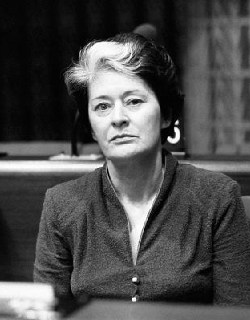
Jennie Wyse Power, Irish activist, feminist, politician, and businesswoman, dies at her home in Dublin on January 5, 1922. She is a founder member of Sinn Féin and also of Inghinidhe na hÉireann.

Power is born Jane O’Toole in Baltinglass, County Wicklow on May 1, 1858. In the 1880s she joins the Ladies’ Land League and finds herself immersed in their activities during the Land War. She compiles lists of those evicted from their homes and also organises the Land League in Wicklow and Carlow. In 1883 she marries John Wyse Power, a journalist who shares her political beliefs and is a member of the Irish Republican Brotherhood (IRB). They have four children together, a fact that does not interfere with her political work.

Power helps set up the Irish Women’s Franchise League and is also a founding member of Inghinidhe na hÉireann and Sinn Féin becoming Vice-President of both organisations. She is later on the Provisional Committee that sets up Cumann na mBan. She rises in the ranks to become one of the most important women of the revolution. In October 1914, she is elected the first President of Cumann na mBan. She is a successful businesswoman owning four branches of her Irish Farm Produce Company. The 1916 Proclamation of the Irish Republic is written in her home at 21 Henry Street, and she always maintains that the Military Council signed the proclamation in no particular order; they just signed as it was passed to each of the signatories, though, with James Connolly being eager to be the first to sign. Even the identity of the head of the Provisional Government was not altogether clear.

During the 1916 Easter Rising she supplies food to the Irish Volunteers. After the Rising she and her daughter, Nancy, help re-organise Cumann na mBan and distribute funds to families suffering hardships, as well as the Prisoners Dependants Fund. These funds had been sent by Clan na Gael in the United States. She is subsequently elected as one of five women members onto Dublin Corporation in 1920 for the Inns Quay – Rotunda District.

Power supports the Anglo-Irish Treaty and by the end of 1921, she is convinced that in doing so, will mean the need to leave Cumann na mBan to form a separate organisation. She helps set up Cumann na Saoirse (The League for Freedom), the pro-Treaty women’s organisation and becomes its Vice-President. She is a Free State Senator from 1922 until 1936 and is also a member of Cumann na nGaedheal.

Jennie Wyse Power dies on January 5, 1941, aged 82, at her home in Dublin. She is interred in Glasnevin Cemetery with her husband and daughter, Máire (who predeceased her). Her funeral is attended by many from both sides of the Dáil and the former revolutionary movement.


Leave a comment

Birth of David Fulton, 4th Mayor of the Town of Little Rock

david-fulton

David Fulton, the fourth and final mayor of the Town of Little Rock, Arkansas, before it is incorporated, is born in the Parish of Templemore, County Donegal on January 2, 1771. He serves as mayor from January 1835 through November 1835, his term cut short by the transition of Little Rock from town to city status. Once that occurs in November 1835, a new election has to be held.

Fulton is also proprietor of the Tan Yard, a tanning operation in Little Rock. He later serves as a judge and is appointed as Surveyor General of Public Lands in Arkansas by U.S. President Martin Van Buren in 1838.

Fulton marries Elizabeth Savin in June 1795 in Maryland. She dies in November 1829, while they reside in Alabama. One of their children, William Savin Fulton (for whom Fulton County, Arkansas is named), serves as the fourth Territorial Governor of Arkansas in 1835 and 1836 and is one of Arkansas’ first United States Senators upon statehood in 1836. Fulton is serving as Mayor at the same time his son is Governor.

Fulton comes to Little Rock in 1833. His daughter, Jane Juliet Shall, and her four children come to Little Rock as well. The family makes the move to be nearer to the future governor. The Fultons and Shalls rent the Hinderliter House, now part of Historic Arkansas Museum, in 1834. One of his descendants, Louise Loughborough, is the person who saves the Hinderliter House from destruction and is founder of what is now Historic Arkansas Museum.

In addition to serving as Mayor, Fulton is president of the Anti-Gambling Society and a Pulaski County Justice of the Peace. From 1836 until 1838, he is County Judge of Pulaski County.

David Fulton dies in Little Rock on August 7, 1843 and is buried at Mount Holly Cemetery as are several other members of his family.

(From: “Little Rock Look Back: David Fulton, LR’s 4th Mayor” by Scott Whiteley Carter, Little Rock Culture Vulture blog, January 2, 2019)


Leave a comment

The Constitution of Ireland Comes Into Force

constitution-of-ireland-1937

The Constitution of Ireland, the second constitution of the Irish state since independence, comes into force on December 29, 1937, following a statewide plebiscite held on July 1, 1937, replacing the 1922 Constitution of the Irish Free State. It asserts the national sovereignty of the Irish people. The constitution falls broadly within the tradition of liberal democracy, being based on a system of representative democracy. It guarantees certain fundamental rights, along with a popularly elected non-executive president, a bicameral parliament based on the Westminster system, a separation of powers and judicial review. The Constitution may be amended solely by a national referendum.

The Constitution of Ireland replaces the Constitution of the Irish Free State which had been in effect since the independence, as a dominion, of the Irish state from the United Kingdom on December 6, 1922. There are two main motivations for replacing the constitution in 1937. Firstly, the Statute of Westminster 1931 grants parliamentary autonomy to the six British Dominions (now known as Commonwealth realms) within a British Commonwealth of Nations. This has the effect of making the dominions sovereign nations in their own right. The Irish Free State constitution of 1922 is, in the eyes of many, associated with the controversial Anglo-Irish Treaty. The anti-treaty faction, who oppose the treaty initially by force of arms, is so opposed to the institutions of the new Irish Free State that it initially takes an abstentionist line toward them, boycotting them altogether. However, the largest element of this faction becomes convinced that abstentionism cannot be maintained forever. This element, led by Éamon de Valera, forms the Fianna Fáil party in 1926, which enters into government following the 1932 Irish general election.

After 1932, under the provisions of the Statute of Westminster, some of the articles of the original Constitution which were required by the Anglo-Irish Treaty are dismantled by acts of the Oireachtas of the Irish Free State. Such amendments remove references to the Oath of Allegiance, appeals to the United Kingdom’s Judicial Committee of the Privy Council, the British Crown and the Governor-General of the Irish Free State. The sudden abdication of Edward VIII in December 1936 is quickly used to redefine the Royal connection. Nevertheless, the Fianna Fáil government still desires to replace the constitutional document they see as having been imposed by the British government in 1922.

The second motive for replacing the original constitution is primarily symbolic. De Valera wants to put an Irish stamp on the institutions of government and chooses to do this in particular through the use of Irish Gaelic nomenclature.

The text of the draft constitution, with minor amendments, is approved on June 14, 1937, by Dáil Éireann, then the sole house of parliament as the Seanad had been abolished the previous year.

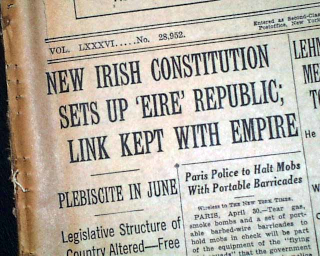
The draft constitution is then put to a plebiscite on July 1, 1937, the same day as the 1937 Irish general election, when it is passed by a plurality of 56% of the voters, comprising 38.6% of the whole electorate. The constitution formally comes into force on December 29, 1937.

Among the groups who oppose the constitution are supporters of Fine Gael and the Labour Party, Unionists, and some independents and feminists. The Seal of the President of Ireland is also adopted in the same year. Ireland does not become a republic until 1948.

(Pictured: Headline from The New York Times, May 1, 1937)


Leave a comment

John Hely-Hutchinson Created Baron Hutchinson of Alexandria & Knocklofty

Generated by IIPImage

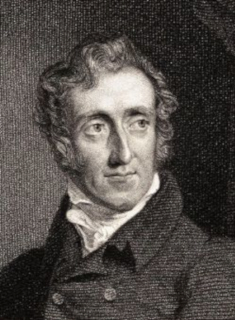
General John Hely-Hutchinson, Jr., Member of Parliament (MP) for Cork Borough, is created Baron Hutchinson of Alexandria and Knocklofty on December 18, 1801, for his military service.

Hely-Hutchinson is born on May 15, 1757, the son of John Hely-Hutchinson and the Christiana Hely-Hutchinson, 1st Baroness Donoughmore. He is educated at Eton College, Magdalen College, Oxford, and Trinity College, Dublin.

Hely-Hutchinson enters the Army as a cornet in the 18th Royal Hussars in 1774, rising to a lieutenant the following year. In 1776 he is promoted to become a captain in the 67th (South Hampshire) Regiment of Foot, and a major there in 1781. He moves regiments again in 1783, becoming a lieutenant-colonel in, and colonel-commandant of, the 77th Regiment of Foot, which is, however, disbanded shortly afterwards following an earlier mutiny. He spends the next 11 years on half-pay, studying military tactics in France before serving as a volunteer in the Flanders campaigns of 1793 as aide-de-camp to Sir Ralph Abercromby.

In March 1794 Hely-Hutchinson obtains brevet promotion to colonel and the colonelcy of the old 94th Regiment of Foot and then becomes a major-general in May 1796, serving in Ireland during the Irish Rebellion of 1798, where he is second-in-command at the Battle of Castlebar under General Gerard Lake. In 1799, he is in the expedition to the Netherlands.

Hely-Hutchinson is second-in-command of the 1801 expedition to Egypt, under Abercromby. Following Abercromby’s death in March after being wounded at the Battle of Alexandria, he takes command of the force. From then he is able to besiege the French firstly at Cairo which capitulates in June and then besieges and takes Alexandria, culminating in the capitulation of over 22,000 French soldiers. In reward for his successes there, the Ottoman Sultan Selim III makes him a Knight, 1st Class, of the Order of the Crescent.

On December 18, 1801, Hely-Hutchinson is created Baron Hutchinson in the Peerage of the United Kingdom, gaining a seat in the House of Lords. In recognition of his “eminent services” during the “late glorious and successful campaign in Egypt,” at the request of the King, the Parliament of the United Kingdom settles on Lord Hutchinson and the next two succeeding male heirs of his body an annuity of £2000 per annum, paid out of the Consolidated Fund.

Hely-Hutchinson is promoted lieutenant-general in September 1803 and made a full general in June 1813. In 1806, he becomes colonel of the 57th (West Middlesex) Regiment of Foot, transferring in 1811 to be colonel of the 18th Regiment of Foot, a position he holds until his death. He also holds the position of Governor of Stirling Castle from 1806 until his death.

Hely-Hutchinson sits as Member of Parliament (MP) for Lanesborough from 1776 to 1783 and for Taghmon from 1789 to 1790. Subsequently, he represents Cork City in the Irish House of Commons until the Act of Union 1800 and is then member for Cork City in the after-Union Parliament of the United Kingdom until 1802.

Hely-Hutchinson dies on June 29, 1832, never having married.


Leave a comment

Birth of Henry Harrison, Politician & Writer

henry-harrison

Captain Henry Harrison, nationalist politician and writer, is born in Holywood, County Down on December 17, 1867.

A Protestant nationalist, Harrison is the son of Henry Harrison and Letitia Tennent, the daughter of Robert James Tennent, who had been Liberal Party MP for Belfast from 1847 to 1852. Later, when widowed, she marries the author Hartley Withers.

Harrison goes to Westminster School and then to Balliol College, Oxford. While there he develops an admiration for Charles Stewart Parnell and becomes secretary of the Oxford University Home Rule League. At this time, the Land War is in progress and in 1889 he goes to Ireland to visit the scene of the evictions in Gweedore, County Donegal. He becomes involved in physical confrontations with the Royal Irish Constabulary and as a result becomes a Nationalist celebrity overnight. The following May, Parnell offers the vacant parliamentary seat of Mid Tipperary to Harrison, who leaves Oxford at age 22, to take it up, unopposed.

Only six months later, following the divorce case involving Katharine O’Shea, the Irish Parliamentary Party splits over Parnell’s leadership. Harrison strongly supports Parnell, acts as his bodyguard and aide-de-camp, and after Parnell’s death devotes himself to the service of his widow Katharine. From her he hears a completely different version of the events surrounding the divorce case from that which had appeared in the press, and this is to form the seed of his later books.

At the 1892 United Kingdom general election in Ireland, Harrison does not defend Mid-Tipperary. He stands at West Limerick as a Parnellite instead but comes nowhere near winning the seat. In the 1895 United Kingdom general election in Ireland, he stands at North Sligo, polling better but again far short of winning. In 1895 he marries Maie Byrne, an American, with whom he has a son. He comes to prominence briefly again in 1903 when, in spite of his lack of legal training, he successfully conducts his own case in a court action all the way to the House of Lords.

Otherwise, however, Harrison disappears from public view until his war service with the Royal Irish Regiment when he serves on the Western Front with distinction in the New British Army formed for World War I, reaching the rank of Captain and being awarded the Military Cross (MC). He organises patrols in “No Man’s Land” so successfully that he is appointed special patrol officer to the 16th (Irish) Division. He is invalided out and becomes a recruiting officer in Ireland. He is appointed an Officer of the Order of the British Empire in the 1919 New Year Honours.

Harrison then makes a return to Irish politics, working with Sir Horace Plunkett as Secretary of the Irish Dominion League, an organisation campaigning for dominion status for Ireland within the British Empire. He is a lifelong opponent of Irish partition. He is Irish correspondent of The Economist from 1922 to 1927 and owner-editor of Irish Truth from 1924 to 1927.

Harrison’s two books defending Parnell are published in 1931 and 1938. They have had a major impact on Irish historiography, leading to a more favourable view of Parnell’s role in the O’Shea affair. F. S. L. Lyons comments that he “did more than anyone else to uncover what seems to have been the true facts” about the Parnell-O’Shea liaison. The second book, Parnell, Joseph Chamberlain and Mr Garvin, is written in response to J. L. Garvin‘s biography of Joseph Chamberlain, which had ignored his first book, Parnell Vindicated: The Lifting of the Veil. Later, he successfully repulses an attempt in the official history of The Times to rehabilitate that newspaper’s role in using forged letters to attack Parnell in the late 1880s. In 1952 he forces The Times to publish a four-page correction written by him as an appendix to the fourth volume of the history.

During the difficult years of the Anglo-Irish Trade War over the land purchase annuities, declaration of the Republic, Irish neutrality during World War II, and departure from the Commonwealth, Harrison works to promote good relations between Britain and Ireland. He publishes various books and pamphlets on the issues in dispute and writes numerous letters to The Times. He also founds, with General Sir Hubert Gough, the Commonwealth Irish Association in 1942.

At the time of his death on February 20, 1954, Harrison is the last survivor of the Irish Parliamentary Party led by Parnell, and as a member of the pre-1918 Irish Parliamentary Party, he seems to have been outlived only by John Patrick Hayden, who dies a few months after him in 1954 and by Patrick Whitty and John Lymbrick Esmonde who are only MPs for a very short time during World War I. He is buried in Holywood, County Down.


Leave a comment

1918 Irish General Election

irish-general-election-1918

Sinn Féin, pledged to an Irish Republic, wins 73 of 105 Irish Member of Parliament (MP) seats in the 1918 United Kingdom general election in Ireland held on December 14, 1918. Winners include Constance Markievicz who becomes the first woman elected to the Parliament of the United Kingdom. In 1919 she is appointed Minister for Labour, the first female minister in a democratic government cabinet.

The Irish general election is that part of the 1918 United Kingdom general election which takes place in Ireland. The election is now seen as a key moment in modern Irish history because it sees the overwhelming defeat of the moderate nationalist Irish Parliamentary Party (IPP), which had dominated the Irish political landscape since the 1880s, and a landslide victory for the radical Sinn Féin party. The party had never stood in a general election but had won six seats in by-elections in 1917–1918. Sinn Féin vows in its manifesto to establish an independent Irish Republic. In Ulster, however, the Unionist Party is the most successful party.

The election is held in the aftermath of World War I, the Easter Rising and the Conscription Crisis. It is the first general election to be held after the Representation of the People Act 1918. It is thus the first election in which women over the age of 30, and all men over the age of 21, can vote. Previously, all women and most working-class men had been excluded from voting.

In the aftermath of the elections, Sinn Féin’s elected members refuse to attend the British Parliament in Westminster. Instead, they form a parliament in Dublin, the First Dáil Éireann, which declares Irish independence as a republic. The Irish War of Independence is conducted under this revolutionary government which seeks international recognition and sets about the process of state-building.


Leave a comment

Birth of Erskine H. Childers, 4th President of Ireland

erskine-hamilton-childers-1

Erskine Hamilton Childers, Irish politician and a member of the Fianna Fáil party who serves as the fourth President of Ireland (1973–74), is born on December 11, 1905, in the Embankment Gardens, Westminster, London, to a Protestant family, originally from Glendalough, County Wicklow.

Childers is educated at Gresham’s School, Holt, and the University of Cambridge, hence his striking British upper-class accent. On November 24, 1922, when he is sixteen, his father, Robert Erskine Childers, is executed by the new Irish Free State on politically inspired charges of gun-possession. The pistol he had been found with had been given to him by Michael Collins. Before his execution, in a spirit of reconciliation, the elder Childers obtains a promise from his son to seek out and shake the hand of every man who had signed his death warrant.

Following his father’s funeral, he returns to Gresham’s, then two years later he goes on to Trinity College, Cambridge. He returns to Ireland in 1932 and becomes advertising manager of The Irish Press, the newly founded newspaper owned by the family of Éamon de Valera.

Childers’s political debut is as a successful Fianna Fáil candidate for a seat in Dáil Éireann, the lower house of the Oireachtas, the Irish parliament, in 1938. He becomes a Parliamentary secretary in 1944 and is later Minister for Posts and Telegraphs (1951–54), Minister for Lands (1957–59), and Minister for Transport and Power (1959–69). He also serves as Tánaiste and Minister for Health (1969–73). He supports Taoiseach Jack Lynch’s condemnation of the violence in Northern Ireland and Lynch’s advocacy of a European role for the Irish republic within the European Economic Community (now European Community, embedded in the European Union).

Childers is nominated as the presidential candidate of Fianna Fáil at the behest of de Valera, who pressures Jack Lynch in the selection of the presidential candidate. He is a controversial nominee, owing not only to his British birth and upbringing but to his Protestantism. However, on the campaign trail his personal popularity proved enormous, and in a political upset at the 1973 Irish presidential election, he is elected the fourth President of Ireland on May 30, 1973, defeating Tom O’Higgins by 635,867 (52%) votes to 578,771 (48%). He becomes the second Protestant to hold the office, the first being Douglas Hyde (1938–1945).

Prevented from transforming the presidency as he desires, Childers instead throws his energy into a busy schedule of official visits and speeches, which is physically taxing.

On November 17, 1974, during a conference to the psychiatrists of the Royal College of Physicians of Ireland in Dublin, Childers suffers a congestional heart failure causing him to lie sideways and turn blue before suddenly collapsing. He is pronounced dead the same day at Mater Misericordiae University Hospital.

Childers’s state funeral in St. Patrick’s Cathedral, Dublin, is attended by his presidential predecessor Éamon de Valera and world leaders including Louis Mountbatten, 1st Earl Mountbatten of Burma (representing Queen Elizabeth II), the British Prime Minister Harold Wilson and British Opposition Leader Edward Heath, and Presidents and crowned heads of state from Europe and beyond. He is buried in the grounds of the Church of Ireland Derralossary Church, in Roundwood, County Wicklow.


Leave a comment

President McAleese & Queen Elizabeth II Meet in Belfast

mcaleese-and-queen-elizabeth

President of Ireland Mary McAleese and Queen Elizabeth II shake hands on Northern Ireland soil for the first time on December 9, 2005 — a symbolic milestone following years of peacemaking in this long-disputed British territory.

The British monarch and the Republic of Ireland‘s head of state chat and pose together at Hillsborough Castle, outside Belfast, for an occasion that would have provoked hostility within Northern Ireland’s Protestant majority just a few years earlier. But their trouble-free meeting becomes inevitable once Ireland dropped its territorial claim to Northern Ireland as part of the landmark Good Friday Agreement peace accord of 1998. The visit also fuels speculation the queen could soon make her first official visit to the neighboring Republic of Ireland, where the Irish Republican Army assassinated Lord Louis Mountbatten, the uncle of her husband, Prince Philip, Duke of Edinburgh.

No British monarch has visited the territory of the modern-day Republic of Ireland since George V visited Dublin in 1911, a decade before the island’s partition into a mostly Protestant north that remains within the United Kingdom, and a predominantly Catholic rest of Ireland that gradually gains full independence from Britain.

Camera crews are allowed to film the moment, but not record the sound, when McAleese shakes the queen’s hand at the start of a 20-minute meeting, their fourth since 1998. Previous meetings occurred at Buckingham Palace and on a World War I battlefield site. McAleese later calls it “a very special day for Anglo-Irish relationships” that brings forward the day when the queen will visit the Irish Republic.

McAleese, a Belfast-born Catholic, had made scores of visits to Northern Ireland since being elected to the Irish Republic’s largely symbolic presidency in 1997. As part of her presidential theme of “building bridges,” she regularly invites Protestant groups to her official Dublin mansion and has built impressive diplomatic contacts with northern Protestants.

Before McAleese’s arrival, visits north by an Irish president were rare events that drew public protests from Protestants, who demanded that Ireland remove its territorial claim from its 1937 constitution. The republic’s voters overwhelmingly supported this in a May 1998 referendum, an action completed in December 1999.

The queen has avoided traveling to the Irish Republic, in part, because of security fears following the IRA assassination of Mountbatten in August 1979. He, his daughter-in-law and two teenage boys are killed when the IRA blows up his private boat near his castle in County Sligo. However, Prince Philip and their son, Prince Charles, make several visits to the Irish Republic in the decade following the IRA’s 1994 cease-fire.


Leave a comment

Signing of the Anglo-Irish Treaty

anglo-irish-treatyThe Anglo-Irish Treaty, commonly known as The Treaty and officially the Articles of Agreement for a Treaty Between Great Britain and Ireland, is signed in the early morning hours of December 6, 1921 by representatives of the Irish government appointed by President Éamon de Valera and those negotiating for the government of the United Kingdom of Great Britain and Ireland, ending the Irish War of Independence against Great Britain. It is then, and remains, one of the most debated moments in Irish history.

The Treaty provides for the establishment of the Irish Free State within a year as a self-governing dominion within the “community of nations known as the British Empire“, a status “the same as that of the Dominion of Canada.” It also provides Northern Ireland, which had been created by the Government of Ireland Act 1920, an option to opt out of the Irish Free State, which it exercises.

The agreement is signed in London by representatives of the British government, which includes Winston Churchill and Prime Minister David Lloyd George, who are old masters at the game of politics, and by representatives of the Irish Republic including Michael Collins and Arthur Griffith, who have nowhere near the political acumen of the British delegation. De Valera, a shrewd, experienced politician, may have been the only man in all of Ireland who might have matched them, but he refuses to join the negotiations.

The Irish representatives have plenipotentiary status acting on behalf of the Irish Republic, though the British government declines to recognise that status. As required by its terms, the Treaty is approved by “a meeting” of the members elected to sit in the House of Commons of Southern Ireland and separately by the British Parliament. In reality, Dáil Éireann, the legislative assembly for the de facto Irish Republic, first debates then approves the treaty. Members then proceed with the “meeting.” Though the Treaty is narrowly approved, the split leads to the Irish Civil War, which is won by the pro-treaty side.

The Irish Free State as contemplated by the Treaty comes into existence when its constitution becomes law on December 6, 1922 by a royal proclamation.

(Pictured: Michael Collins signs the Anglo-Irish Treaty on December 6, 1921)


Leave a comment

Birth of Anthony Malone, Lawyer & Politician

anthony-malone

Anthony Malone, Irish lawyer and politician, is born on December 5, 1700, the eldest son of Richard Malone of Baronston, County Westmeath, and Marcella, daughter of Redmond Molady. Edmund Malone is his nephew, and a younger brother, Richard Malone (1706–1759), is MP for Fore from 1741.

Malone is educated at Mr. Young’s school in Abbey Street, Dublin, and on April 6, 1720 is admitted a gentleman-commoner of Christ Church, Oxford. After two years at university he enters the Middle Temple and is called to the Irish bar in May 1726. In 1737 he is created LL.D. of Trinity College, Dublin.

In 1733, Malone marries Rose, daughter of Sir Ralph Gore, 4th Baronet, speaker of the Irish House of Commons. The marriage results in no children.

Malone makes a successful career as a lawyer. From 1727 to 1760, and again from 1769 to 1776, he represents the county of Westmeath, and from 1761 to 1768 the borough of Castlemartyr, in the Irish parliament. In 1740 he is appointed Serjeant-at-law, but is dismissed from office in 1754 for opposing the claim of the crown to dispose of unappropriated revenue. In 1757 he is made Chancellor of the Exchequer of Ireland, but his attitude in council in regard to the Money Bill of 1761 leads to his again being removed from office. His treatment is regarded as too severe by William Pitt, 1st Earl of Chatham, and Malone, who draws a distinction between advice offered in council and his conduct in parliament, introduces the measure as chairman of the committee of supply. He is shortly afterwards granted a patent of precedence at the bar, but is charged with having sold his political principles for money.

Malone supports John Monck Mason‘s bill for enabling Roman Catholics to invest money in mortgages on land. In 1762 he is appointed, with Sir Richard Aston, to try the Whiteboys of Munster. They agree in ascribing the rural violence to local and individual grievances.

Malone dies at the age of 75 on May 8, 1776. At one time, a marble bust of him adorned Baronston House. By his will, made in July 1774, he leaves all his estates in the counties of Westmeath, Roscommon, Longford, Cavan, and Dublin to his nephew, Richard Malone, 1st Baron Sunderlin as he became, eldest son of his brother Edmund. On his death in 1816 the right of succession is disputed.