seamus dubhghaill

Promoting Irish Culture and History from Little Rock, Arkansas, USA


Leave a comment

Birth of Catholic Teetotalist Reformer Theobald Mathew

theobald-mathew

Theobald Mathew, Irish Catholic teetotalist reformer popularly known as Father Mathew and “The Apostle of Temperance,” is born at Thomastown, near Golden, County Tipperary, on October 10, 1790.

Mathew receives his schooling in Kilkenny, then moves for a short time to Maynooth. From 1808 to 1814 he studies in Dublin, where in the latter year he is ordained to the priesthood. Having entered the Capuchin order, after a brief period of service at Kilkenny, he joins the mission in Cork.

The movement with which his name is associated begins on April 10, 1838, with the establishment of the Cork Total Abstinence Society, which in less than nine months enrolls no fewer than 150,000 names. It rapidly spreads to Limerick and elsewhere, and some idea of its popularity may be formed from the fact that at Nenagh 20,000 persons are said to take the pledge in one day, 100,000 at Galway in two days, and 70,000 in Dublin in five days. At its height, just before the Great Famine, his movement enrolls some 3 million people, or more than half of the adult population of Ireland. In 1844 he visits Liverpool, Manchester, and London with almost equal success.

His work has a remarkable impact on the condition of the people in Ireland. The number committed to jail falls from 12,049 in 1839 to 9,875 by 1845. Sentences of death fall from 66 in 1839 to 14 in 1846, and transportations fall from 916 to 504 over the same period.

Mathew visits the United States in 1849, returning in 1851. While there, he finds himself at the center of the Abolitionist debate. Many of his hosts are pro-slavery and want assurances that their influential guest will not stray outside his remit of battling alcohol consumption. But Mathew has signed a petition encouraging the Irish in the U.S. to not partake in slavery in 1841 during Charles Lenox Remond‘s tour of Ireland. Now however, in order to avoid upsetting his slave-owning friends in the U.S., he snubs an invitation to publicly condemn chattel slavery, sacrificing his friendship with that movement. He defends his position by pointing out that there is nothing in the scripture that prohibits slavery. He is condemned by many on the abolitionist side, including the former slave and abolitionist Frederick Douglass who had received the pledge from Mathew in Cork in 1845.

Mathew dies on December 8, 1856, in Queenstown, County Cork, after suffering a stroke. He is buried at St. Joseph’s Cemetery, Cork City, which he had established himself.

Statues of Mathew stand on St. Patrick’s Street, Cork by John Henry Foley (1864), and on O’Connell Street, Dublin by Mary Redmond (1893). There is also a Fr. Mathew Bridge in Limerick, County Limerick, which is named after the temperance reformer when it is rebuilt in 1844-1846.


Leave a comment

Union of the Dioceses of Glendalough & Dublin

diocese-of-dublin-and-glendalough-arms

The union of the diocese of Glendalough with that of Dublin, having been promulgated by Pope Innocent III, is confirmed by Pope Honorius III on October 6, 1216.

The broad Dublin area is Christian long before Dublin has a distinct diocese, with monasteries such as Glendalough as well as at Finglas, Glasnevin, Rathmichael, Swords, and Tallaght. Several of these function as “head churches” and the most powerful of all is Glendalough.

In the early church in Ireland, the church has a monastic basis, with greatest power vested in the Abbots of the major communities. There are bishops but not organised dioceses in the modern sense, and the offices of abbot and bishop are often comprised in one person. Some early “Bishops of Dublin,” as far back as 633, are mentioned in Ware’s Antiquities of Ireland but the Diocese of Dublin is not considered to have begun until 1038.

The Kingdom of Dublin first seeks to have a bishop of their own in the 11th century, under Sitric MacAulaf, who has been on pilgrimage to Rome. He sends his chosen candidate, Donat, to be consecrated in Canterbury in 1038, and the new prelate sets up the Diocese of Dublin as a small territory within the walled city, over which he presides until 1074. The new diocese is not part of the Church in Ireland but of the Norse Province of Canterbury. Sitric also provides for the building of Christ Church Cathedral in 1038.

At the Synod of Ráth Breasail, convened in 1118 by Gillebert, Bishop of Limerick, on papal authority, the number of dioceses in Ireland is fixed at twenty-four. Dublin is not included as the city is described as lying within the Diocese of Glendalough and still attached to Canterbury.

In 1151, Pope Eugene III commissions Cardinal Giovanni Paparo to go to Ireland and establish four metropolitans. At the Synod of Kells in 1152, Armagh, Dublin, Cashel, and Tuam, are created archiepiscopal sees. In a document drawn up by the then Archbishop of Tuam in 1214, Cardinal Paparo states that he delivered the pallium to Dublin which he determines to be preferred over Glendalough and appoints that the Glendalough diocese should be divided, and that one part thereof should fall to the metropolitan.

The part of North County Dublin known as Fingall is taken from Glendalough Diocese and attached to Dublin City. The new Archdiocese has 40 parishes, in deanaries based on the old senior monasteries. All dependence upon English churches such as Canterbury is also ended.

The founding Archbishop of the larger Dublin Diocese is Gregory, with the Bishops of Kildare, Ossory, Leighlin, Ferns, and Glendalough reporting to him.

In 1185, the Lord of Ireland, John Lackland, grants the merger of the dioceses of Dublin and Glendalough. This is initially without effect as the charter lacks papal approval. When the bishop Macrobius dies in 1192, a synod is held in Dublin under the direction of the papal legate Metthew O Enna. William Piro is elected as Bishop of Glendalough and remains in office at least until 1212. Robert de Bedford is elected as successor in 1213 or 1214 but never has the opportunity to take possession of the diocesan seat. Instead, John, now King of England, reissues a grant to join Glendalough to Dublin which is finally approved in by Pope Innocent III in 1216 and confirmed by his successor Honorius III in the same year.


Leave a comment

Pope John Paul II’s Visit to Ireland

pope-john-paul-ii

Pope John Paul II becomes the first pontiff to set foot on Irish soil with his pastoral visit to the Republic of Ireland beginning on September 29, 1979. Over 2.5 million people attend events in Dublin, Drogheda, Clonmacnois, Galway, Knock, Limerick, and Maynooth during what is one of Pope John Paul’s first foreign visits. The visit is occasioned by the centenary of the reputed apparition of Blessed Virgin Mary, Saint Joseph, and Saint John the Evangelist in Knock, County Mayo.

An Aer Lingus Boeing 747, named the St. Patrick, brings Pope John Paul II from Rome to Dublin Airport. The Pope kisses the ground as he disembarks. After being greeted by the President of Ireland, Dr. Patrick Hillery, the Pope flies by helicopter to the Phoenix Park where he celebrates Mass for 1,250,000 people, one quarter of the population of the island of Ireland, one third of the population of the Republic of Ireland. Afterwards he travels to Killineer, near Drogheda, where he leads a Liturgy of the Word for 300,000 people, many from Northern Ireland. There the Pope appeals to the men of violence, “on my knees I beg you to turn away from the path of violence and return to the ways of peace.” The Pope has hopes of visiting Armagh, but the security situation in Northern Ireland renders it impossible. Drogheda is selected as an alternative venue as it is situated in the Catholic Archdiocese of Armagh. Returning to Dublin that evening, the Pope is greeted by 750,000 people as he travels in an open top popemobile through the city centre and visits Aras an Uachtarain, the residence of the Irish President.

The Pope begins the second day of his tour with a short visit to the ancient monastery at Clonmacnois in County Offaly. With 20,000 in attendance, he speaks of how the ruins are “still charged with a great mission.” Later that morning he celebrates a Youth Mass for 300,000 at Ballybrit Racecourse in Galway. It is here that the Pope utters perhaps the most memorable line of his visit, “Young people of Ireland, I love you.” That afternoon, he travels by helicopter to Knock Shrine in County Mayo which he describes as “the goal of my journey to Ireland.” The outdoor Mass at the shrine is attended by 450,000. The Pope meets with the sick and elevates the church to the title of Basilica.

The final day of the visit begins with a trip to St. Patrick’s College, Maynooth, the National Seminary, in County Kildare. Some 80,000 people pack the grounds of the college for the brief visit. A dense fog delays the Pope’s arrival from Dublin by helicopter. The final Mass of the Pope’s visit to Ireland is celebrated at Greenpark Racecourse in Limerick before 400,000 people, many more than had been expected. The Mass is offered for the people of Munster. Pope John Paul leaves Ireland from nearby Shannon Airport travelling to Boston where we begins a six-day tour of the United States.


Leave a comment

The Battle of the Diamond

daniel-winter-homestead

The Battle of the Diamond, a planned confrontation between the Catholic Defenders and the Protestant Peep o’ Day Boys, takes place on September 21, 1795, near Loughgall, County Armagh. The Diamond, which is a predominantly Protestant area, is a minor crossroads in County Armagh, lying almost halfway between Loughgall and Portadown.

In the 1780s, County Armagh is the most populous county in Ireland, and the center of its linen industry. Its population is equally split between Protestants, who dominate in the northern part of the county, and Catholics, who dominate in the south. Sectarian tensions increase throughout the decade and are exacerbated by the relaxing of some of the Penal Laws, failure to enforce others, and the entry of Catholics into the linen industry at a time when land is scarce, and wages are decreasing due to pressure from the mechanised cotton industry.

By 1784, sectarian fighting breaks out between gangs of Protestants and Catholics. The Protestants re-organise themselves as the Peep o’ Day Boys, with the Catholics forming the Defenders. The next decade sees an escalation in the violence between the two and the local population as homes are raided and wrecked.

On the morning of September 21, the Defenders, numbering around 300, make their way downhill from their base, occupying Daniel Winter’s homestead, which lay to the northwest of The Diamond and directly in their line of advance. News of the advance reaches the Peep o’ Day Boys who quickly form at the brow of the hill where they have made their camp. From this position, they gain three crucial advantages: the ability to comfortably rest their muskets allowing for more accurate shooting, a steep uphill location which makes it hard for attackers to scale, and a direct line-of-sight to Winter’s cottage, which the Defenders have made their rallying point.

The shooting begins and, after Captain Joseph Atkinson gives his weapon and powder to the Peep o’ Day Boys, he rides to Charlemont Garrison for troops to quell the trouble. There is no effective unit stationed in the garrison at the time, despite the fact a detachment of the North-Mayo Militia is stationed in Dungannon and a detachment of the Queen’s County Militia is at Portadown.

The battle is short, and the Defenders suffer “not less than thirty” fatalities. James Verner, whose account of the battle is based on hearsay, gives the total as being nearly thirty, while other reports give the figure as being forty-eight, however this may be taking into account those that die afterwards from their wounds. A large number of Defenders are also claimed to have been wounded. One of those claimed to have been killed is “McGarry of Whiterock,” the leader of the Defenders. The Peep o’ Day Boys on the other hand, in the safety of the well-defended hilltop position, suffered no casualties.

In the aftermath of the battle, the Peep o’ Day Boys retire to James Sloan’s inn in Loughgall, and it is here that James Wilson, Dan Winter, and James Sloan found the Orange Order, a defensive association pledged to defend “the King and his heirs so long as he or they support the Protestant Ascendancy.” The first Orange lodge of this new organisation is established in Dyan, County Tyrone, founding place of the Orange Boys.

(Pictured: Daniel Winter’s home near Loughgall)


Leave a comment

Apparition at Church of Saint John the Baptist at Knock

knock-shrineOn the evening of Thursday, August 21, 1879, at about 8 o’clock, fifteen people, whose ages range from five to seventy-five and include men, women, teenagers, and children, witness what they state is an apparition of Our Lady, Saint Joseph, and Saint John the Evangelist at the south gable end of the local small parish church, the Church of Saint John the Baptist. Behind them and a little to the left of Saint John is a plain altar. On the altar is a cross and a lamb, a traditional image of Jesus as reflected in the religious phrase The Lamb of God, with adoring angels.

The Blessed Virgin Mary is described as being beautiful, standing a few feet above the ground. She wears a white cloak, hanging in full folds and fastened at the neck. Her crown appears of a golden brightness, of a deeper hue, than the striking whiteness of the robe she wears. The upper parts of the crown appear to be a series of sparkles, or glittering crosses. She is described as “deep in prayer,” with her eyes raised to heaven, her hands raised to the shoulders or a little higher, the palms inclined slightly to the shoulders.

Saint Joseph, also wearing white robes, stands on the Virgin’s right hand. His head is bent forward from the shoulders towards the Blessed Virgin. Saint John the Evangelist stands to the left of the Blessed Virgin. He is dressed in a long robe and wears a mitre. He is partly turned away from the other figures. He appears to be preaching and he holds open a large book in his left hand. To the left of St. John is an altar with a lamb on it. There is a cross standing on the altar behind the lamb.

Those who witness the apparition stand in the pouring rain for up to two hours reciting the Rosary, a series of traditional Catholic prayers. When the apparition begins there is good light, but although it then becomes very dark, witnesses can still see the figures very clearly – they appear to be the colour of a bright whitish light. The apparition does not flicker or move in any way. The witnesses report that the ground around the figures remains completely dry during the apparition although the wind is blowing from the south. Afterwards, however the ground at the gable becomes wet and the gable dark.

A number of cures and favours are associated with visitors to Our Lady of Knock’s Shrine and those who claim to have been cured here still leave crutches and sticks at the spot where the apparition is believed to have occurred.

Each Irish diocese makes an annual pilgrimage to the Marian Shrine and the nine-day Knock novena attracts ten thousand pilgrims every August.

While the original church still stands, a new Apparition chapel with statues of Our Lady, St. Joseph, the lamb, and St, John the Evangelist, has been built next to it. Knock Basilica is a separate building showing a tapestry of the apparition.


Leave a comment

Death of Mochta of Louth, Disciple of St. Patrick

st-mochtas-house

Mochta of Louth, in Latin sources Maucteus or Mauchteus, the last surviving disciple of St. Patrick, dies on August 20, 535.

Mochta is, like Patrick, a native of Britain. His name is British and Adomnán‘s Life of Columba describes him as “a certain British stranger, a holy man and a disciple of the holy bishop Patrick.” Adomnán presents Mochta as having prophesied the birth of Colm Cille.

According to one account, Mochta is brought to Ireland as a child, along with his parents, by a druid named Hoam. The druid settles in County Louth, where Mochta is brought up as a member of the family. He goes to Rome to continue his studies and there the Pope consecrates him bishop and sends him back to Ireland with twelve companions. The first church he founds is at Kilmore. Departing from Kilmore, he leaves all his possessions to the monks, taking only “the fountain at the door.” He follows a stream, which becomes the River Fane, to Louth.

Mochta founds a monastery in Louth, originally the site of a shrine to the Celtic god Lugh. Mochta’s monastery gains a nationwide reputation. He is an accomplished scholar, especially learned in Sacred Scripture. He writes a rule for monks but no trace of it has survived. He begins a series of annals at Louth, which is continued by his successors, and becomes known as the Book of the Monks. In his old age, Patrick comes and spends some time with Mochta. After Patrick’s death, Mochta takes charge of Armagh for a brief period before turning it over to Benignus.

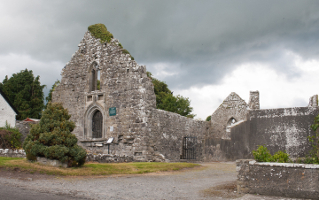
Both monastery and village are burned and plundered frequently by the Danes in the period 829-968. A round tower built for protection is blown down in 981. There are no physical remains of the early monastery. The ruined buildings at the site today (pictured) are the 13th century church of St. Mary’s Augustinian Priory and the stone roofed oratory known as St. Mochta’s House, which probably dates to the second half of the 12th century.

The Annals of Ulster report Mochta’s death twice, in 535 and 537, which indicates that he is considerably younger than Patrick, whose death the Annals date to 493. Scholars believe that he, the last of Patrick’s disciples then alive, dies at the age of 90. The entry for 535 dates his death to the 13th of the Calends of September, i.e. 20 August, and quotes the opening of a letter written by him: “Mauchteus, a sinner, priest, disciple of St. Patrick, sends greetings in the Lord.” However the remainder of this letter nor any other compositions of Mochta have survived.


Leave a comment

Death of Father Willie Doyle

father-willie-doyle

Father Willie Doyle, an Irish Jesuit priest, is killed in action on August 16, 1917, during the World War I.

Born William Joseph Gabriel Doyle in Dalkey, County Dublin, on March 3, 1873, Doyle is the youngest of seven children of Hugh and Christine Byrne Doyle. He is educated at Ratcliffe College, Leicester. After reading St. Alphonsus’ book Instructions and Consideration on the Religious State he is inspired to enter the priesthood and is ordained a Jesuit priest in 1907. He serves for five years on the mission staff.

Doyle serves in the Royal Army Chaplains’ Department of the British Army during World War I, appointed as a chaplain to 48 Brigade of the 16th Irish Division. During the Battle of Loos Doyle is caught in a German gas attack and for his conduct is mentioned in dispatches. A recommendation for a Military Cross is rejected as “he had not been long enough at the front.” Instead, Doyle is presented with the parchment of merit of the 49th Infantry Brigade (Irish). He is killed in the Battle of Langemarck, on August 16, 1917. Father Doyle’s body is never recovered but he is commemorated at Tyne Cot Memorial in Belgium.

General William Bernard Hickie, the commander-in-chief of the 16th Irish Division, describes Doyle as “one of the bravest men who fought or served out here.” Doyle is awarded the Military Cross for his bravery during the assault on the village of Ginchy. He is recommended for a posthumous Victoria Cross and Distinguished Service Order but is awarded neither. Doyle is proposed for canonisation in 1938, but this is not followed through.

A stained-glass window dedicated to his memory is present in St. Finnian’s Church, Dromin, County Louth.


Leave a comment

Birth of Henry Grattan Guinness, Evangelist & Author

henry-grattan-guinness

Henry Grattan Guinness, Irish Protestant Christian preacher, evangelist, and author, is born in Kingstown in Taney Parish, Dublin, on August 11, 1835. He is the great evangelist of the Evangelical awakening and preaches during the Ulster Revival of 1859 which draws thousands to hear him. He is responsible for training and sending hundreds of “faith missionaries” all over the world.

Guinness begins preaching in 1855. He offers to join the China Inland Mission founded by James Hudson Taylor in 1865 but takes Taylor’s advice to continue his work in London.

In September 1866, while in Keighley, Yorkshire, Guinness sees a notice advertising a series of lectures by the freethinker and communist Harriet Law. For a week he holds a series of meetings at the same time to try to counteract her influence. He is appalled at the “scoffing unbelief” of such speakers. With the help of Professor John Couch Adams, some astronomical tables, and examination of the scriptures, Guinness works out the prophetic chronology of the bible in terms of a series of “solilunar cycles.” This proves to him that he is living at the end of the sixth unsabbatic day of creation, 6,000 years from Adam, and that the “redemption Sabbath” will soon arrive. This revelation becomes the subject of many of his books and sermons.

In March 1873, Henry and his wife Fanny start the famous East London Missionary Training Institute, also known as Harley College, at Harley House in Bromley-by-Bow, East End of London with just six students. The renowned Dr. Thomas John Barnardo is co-director with Dr. Guinness and is greatly influenced by him. The school trains 1,330 missionaries for 30 societies of 30 denominations.

Harley College becomes so successful that it needs a larger home. In 1883, Elizabeth Hulme offers Guinness Cliff House near Calver, Derbyshire. Harley College is renamed Hulme Cliff College. Now known as Cliff College it continues to this day training and equipping Christians for mission and evangelism.

In 1873, Guinness founds the East London Institute for Home and Foreign Missions, the root of the Regions Beyond Missionary Union. In 1877, he founds the Livingstone Inland Mission. His son, Dr. Henry Grattan Guinness, founds the Congo-Balolo Mission in 1888 and co-founds the Congo Reform Association in 1904.

Guinness dies in Bath, Somerset, England, on June 21, 1910, at 75 years of age.


Leave a comment

Archbishop Paul Cullen Elevated to First Irish Cardinal

cardinal-paul-cullen

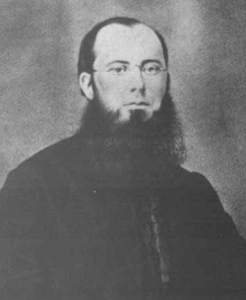
Archbishop Paul Cullen, Roman Catholic Archbishop of Dublin and previously of Armagh, is elevated to the cardinalate as Cardinal-Priest of San Pietro in Montorio on June 22, 1866, becoming the first Irish cardinal.

Cullen is born at Prospect, Narraghmore, Athy, County Kildare. He enters St. Patrick’s, Carlow College, in 1816, and proceeds to the Pontifical Urban College in Rome in 1820.

Cullen is ordained in 1829 and is appointed Rector of the Pontifical Irish College in Rome in late 1831. He successfully secured the future of the college by increasing the student population and thereby strengthening the finances of the college.

Cullen is promoted to the primatial See of Armagh on December 19, 1849, and is consecrated by the Cardinal Prefect of Propaganda at the Irish College in Rome on February 24, 1850. He is also named Apostolic Delegate. Cullen is transferred to the See of Dublin on May 1, 1852.

Cullen is sent to Ireland to bring the Irish church into conformity with Roman canon law and usage. His first major act as Archbishop of Armagh is to convene the Synod of Thurles, the first national synod held in Ireland since the Reformation. This occurs during the period of the debilitating Irish Famine which reduces the population of the country by over 2 million people through starvation, disease, and emigration. After a series of disastrous harvests in the 1860s, he founds, along with the Lord Mayor of Dublin, the Mansion House Relief Committee in 1862. Cullen also starts the practice of Irish priests wearing Roman clerical collars and being called “Father” rather than “Mister” by their parishioners.

Cullen pays frequent visits to Rome. He takes part in the definition of the dogma of the Immaculate Conception of the Blessed Virgin Mary in 1854, and with the eighteenth centenary of the martyrdom of Saints Peter and Paul in 1867.

After his elevation to cardinal, Cardinal Cullen takes an active part in deliberations during the Vatican Council. Towards the close of the council at the express wish of the Central Commission, Cardinal Cullen proposes a formula for the definition of Papal Infallibility. It is a matter of great delicacy, as promoters of the definition are split up into various factions, some anxious to assign a wide range to the pope’s decisions, while others wish to set forth in a somewhat indefinite way the papal prerogative.

Cullen is the most important Irish political figure in the thirty years between Daniel O’Connell and Charles Stewart Parnell. In political matters Cullen makes it a rule to support every measure, whatever its provenance, conducive to the interests of his vision for the Roman Catholic Church in Ireland. Cullen is also a frequent visitor at the vice-regal lodge to lobby the government.

Cardinal Paul Cullen dies in Dublin on October 24, 1878, at the age of 75. He is buried at Holy Cross College in Drumcondra.


Leave a comment

Birth of Sister Stanislaus Kennedy

stanislaus-kennedy

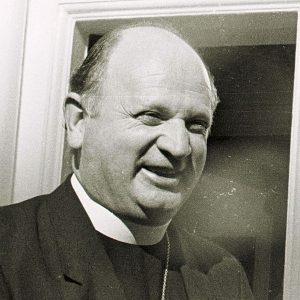
Sister Stanislaus Kennedy, campaigner against poverty and homelessness and a member of the congregation of Religious Sisters of Charity since 1958, is born in Dingle, County Kerry, on June 19, 1939. She is affectionately known as Sr. Stan.

At the age of 18, Sr. Stan, then Treasa Kennedy, decides to become a nun. Following in the footsteps of Mary Aikenhead, founder of the Religious Sisters of Charity, she too is drawn to work on behalf of the poor in the towns and cities of Ireland. For over fifty years she has pioneered, campaigned, explored, and developed a range of inspiring social innovations to benefit thousands of people who have experienced exclusion in its many forms.

In the 1960s, Sr. Stan is missioned to Kilkenny to work alongside Bishop Peter Birch in developing Kilkenny Social Services. For nineteen years Peter Birch is both guide and mentor to Sr. Stan as the Kilkenny social services develop into an innovative, comprehensive model of community care becoming a blue-print for the rest of Ireland.

In 1974, the Irish Government appoints Sr. Stan as the first chair of The National Committee on Pilot Schemes to Combat Poverty, and in 1985 the European Commission appoints her as trans-national coordinator in the European rural anti poverty programme working across Europe.

Moving to Dublin in the early 1980s, Sr. Stan tackles one of Ireland’s most neglected social inequalities – homelessness. In 1985, she establishes Focus Point which is now Focus Ireland, the biggest national, voluntary organisation helping people to find, create, and maintain a home.

Sr. Stan founds The Sanctuary in 1998, a meditation/spirituality centre in the heart of Dublin, a place where people can find a quiet space and time for themselves to explore and develop their inner world and wisdom and find stillness.

Sr. Stan establishes two other initiatives in 2001, the Immigrant Council of Ireland (ICI), an independent national organisation working to promote the rights of immigrants through information, advocacy, and legal aid and the Young Social Innovators (YSI), a national showcase providing an opportunity for students to become involved in social issues.

Sr. Stan has also written thousands of articles that have been published in Ireland and elsewhere. She lectures on social issues and policies, is a frequent keynote speaker at many events, and regularly gives talks to many diverse groups in Ireland, Europe, and outside of Europe.