Foley’s most recent work includes Cold Courage, a TV series thriller for Lionsgate, Viaplay and Luminoir shot in Europe in 2019 and The Man Who Died, a series for Elisa-Viaplay.
Foley writes, produces and directs The Riddle in 2006, starring Jones, Sir Derek Jacobi and Vanessa Redgrave. In September 2007, The Riddle becomes the world’s first feature film to be released as a DVD premiere by a national newspaper. The UK’s The Mail on Sunday buys UK DVD rights and distributes 2.6 million copies, making the film one of the most widely watched independent films in the UK.
During 2006–07, Foley writes and directs Assault of Darkness, a satirical horror film set in rural Ireland, starring Jones, Jason Barry and Nora-Jane Noone. It is released by Lionsgate in the United States on DVD in 2009. He co-creates and is a writer on Shelldon, a children’s environmental animated TV series on NBC (2010–12) and Byrdland (five seasons of animated TV series in Asia with GMM Grammy).
In 2015, Foley starts developing a new TV detective series for BBC Television, Farmoor (makers of The Fall) and Northern Ireland Screen (UK home of Game of Thrones) and, in 2016, he develops Tunnel Kings, a mini-series on World War IIPOW “escape-artists” for the Canadian Broadcasting Corporation and Dream Street, Canada. He completes pilot scripts for SOS, a new eco-thriller series by Finnish producers Luminoir, and Kvenland, set in the Dark Ages. Previously he writes the pilot for drama Dr. Feelgood for Monday TV (Denmark).
Cold Courage, described as a Nordic noir series involving Finnish characters in present-day London made by Finnish producers Luminoir for Lionsgate and Viaplay, shot in London, Dublin, Belgium and Finland in 2019. Actor John Simm tells Variety that he is attracted to the series by the quality of the writing and the fact that it is a pan-European thriller.
Foley has written books for U.S. and UK publishers. Under The Wire, a World War II POW escape drama, which he writes along with its subject, pilot William Ash, is published by Random House, London and St. Martin’s Press, New York, in 2005 and 2006. It becomes a best-seller, reaching number one on Amazon UK‘s history and biography charts. In 2018/19, a related TV series is developed as a future miniseries by CBC in Canada and Northern Ireland Screen.
Foley’s next book, Archerfield, a novel, published in 2015, covers 16,000 years of history in one square mile of Scotland.
Mannock was born on May 24, 1887, to an English father, Edward Mannock, and an Irish mother, Julia Sullivan. His father serves in the British Army and in 1893, deeply in debt and exasperated with civilian life, he re-enlists, and the family moves to Meerut, India when he is five years old. In his early years, he is sickly and develops several ailments. Soon after arriving in Asia, he contracts malaria, narrowly avoiding death. Upon his return to England, he becomes a fervent supporter of Irish nationalism and the Irish Home Rule movement but becomes a member of the Independent Labour Party (ILP).
In 1914, Mannock is working as a telephone engineer in Turkey. After the Ottoman Empire‘s entry into the war on the side of the Central Powers he is interned. Poorly fed and cared for, his health rapidly declines in prison. Dysentery racks his intestines, and he is confined to a small cell. Turkish authorities repatriate him to Britain believing him to be unfit for war service. He recovers and joins the Royal Engineers (RE) and then the Royal Army Medical Corps (RAMC). He moves services again and in 1916 joins Royal Flying Corps (RFC). After completing his training, he is assigned to No. 40 Squadron RFC. He goes into combat on the Western Front, participating in three separate combat tours. After a slow start he begins to prove himself as an exceptional pilot, scoring his first victory on May 7, 1917.
By February 1918, Mannock has achieved sixteen victories and is appointed a Flight Commander in No. 74 Squadron. He amasses thirty-six more victories from April 12 — June 17, 1918. After returning from leave he is appointed commanding officer of No. 85 Squadron in July 1918, and scores nine more victories that month.
On July 26, Major Mannock offers to help a new arrival, Lt. Donald C. Inglis from New Zealand, obtain his first victory. After shooting down an enemy LVG two-seater behind the German front-line, Mannock is believed to have dived to the crash site to view the wreckage, seemingly breaking one of the unwritten rules of fellow pilots about the hazards of flying low into ground fire. In consequence, while crossing the trenches the fighters are met with a massive volley of ground fire. The engine of his aircraft is hit and immediately catches fire, and shortly thereafter the plane crashes behind German lines. His body is believed to have been found, though this is unproven, about 250 yards (250m) from the wreck of his plane, perhaps thrown, perhaps jumped. The body shows no gunshot wounds although he had vowed to shoot himself if shot down in flames.
The exact cause of Mannock’s death remains uncertain. A year later, after intensive lobbying by Ira Jones and many of his former comrades, he is awarded the Victoria Cross (VC).
Mannock’s name is listed on the Wellingborough War Memorial with the other fallen men from the town and the local Air Training Corps (ATC) unit bears his name – 378 (Mannock) Squadron. Additionally, Mannock Road, a residential street in Wellingborough, is named after him.
On June 24, 1988, a plaque is unveiled at 183 Mill Road, Wellingborough, by top scoring World War II British fighter pilot Air Vice-MarshalJohnnie Johnson. Mannock had lived at that address prior to the war after being befriended by the Eyles family.
Miller begins his career with Celtic and is later loaned to the Danish sports club Aarhus Gymnastikforening in 2001. He returns to Celtic Park and breaks into the first-team squad during the 2003–04 season. Rejecting the offer of a new contract from Celtic, he joins Manchester United in 2004 on a free transfer under the Bosman ruling. Loaned to Leeds United during the 2005–06 season, he makes 22 first-team appearances for Manchester United.
Miller represents the Republic of Ireland team internationally, making his debut in 2004 against the Czech Republic. He earns 21 caps over the next five years, scoring one international goal.
On January 15, 2015, he joins League of IrelandCork City club, choosing his hometown club over several offers in Asia. He makes his debut on March 7 as the season begins with a 1–1 draw at Sligo Rovers. He is a regular in his only season at Turners Cross, in which the team finishes as runners-up in the league and the FAI Cup to Dundalk. On January 19, 2016, he chooses to leave the team.
A benefit football match is played on September 25, 2018, with the intention of raising funds for Miller’s family and charities. The Gaelic Athletic Association permits the game to be played at Páirc Uí Chaoimh in Cork, which would not normally be allowed under GAA rules. The match, between a Manchester United XI and a team composed of former Celtic and Republic of Ireland players, ends with the United XI winning on penalties following a 2–2 draw.
Duff is born in Dublin on June 7, 1889, at 97 Phibsboro Road, the eldest of seven children of John Duff and his wife, Susan Letitia (née Freehill). The wealthy family lives in the city at St. Patrick’s Road, Drumcondra. He attends Blackrock College.
In 1908, Duff enters the Civil Service and is assigned to the Irish Land Commission. In 1913, he joins the Society of Saint Vincent de Paul and is exposed to the real poverty of Dublin. Many who live in tenement squalor are forced to attend soup kitchens for sustenance, and abject poverty, alcoholism, and prostitution are rife in parts of Dublin. He joins and soon rises through the ranks to President of the St. Patrick’s Conference at St. Nicholas of Myra Parish. Having concern for people he sees as materially and spiritually deprived, he gets the idea to picket Protestant soup kitchens as he considers they are giving aid in the form of food and free accommodation at hostels in return for not attending Catholic services. He sets up rival Catholic soup kitchens and, with his friend, Sergeant Major Joe Gabbett, discourages Catholics from patronizing Protestant soup kitchens. They succeeded in closing down two of them over the years.
Duff publishes his first pamphlet, Can we be Saints?, in 1916. In it, he expresses the conviction that all, without exception, are called to be saints, and that through Christian faith, all have the means necessary.
Duff briefly acts as private secretary to Michael Collins, the chairman of the Provisional Government and the commander-in-chief of the National Army. In 1924, he is transferred to the Department of Finance.
On September 7, 1921, Duff is a part of a meeting alongside Fr. Michael Toher and fifteen women which becomes the nucleus of what would become the Legion of Mary. The Legion of Mary is created to organise lay Catholics to perform voluntary work. He models the organisation on Roman legions. Some of the first causes the Legion pursues is to become involved with homelessness and prostitution in Dublin. In 1922, he defies the wishes of the Archbishop of Dublin and the widespread Crypto-Calvinism, or Jansenism, within the Catholic Church in Ireland, which had created an intense hostility towards both prostitutes and other allegedly “fallen women.” Similarly, to St. Vitalis of Gaza before him, he begins an outreach to the prostitutes living in often brutal and inhuman conditions in the “kip houses” of “the Monto,” as Dublin’s red-light district, one of the largest in Europe at the time, is then called. Although middle-class Dubliners dismissively view these women as “whores,” the impoverished but devoutly Catholic residents of the Monto tenements refer to local prostitutes as “unfortunate girls,” and understand that they often turn to prostitution as a last resort. As part of his work, Duff establishes the Sancta Maria hostel, a safe house for former prostitutes who had run away from their “kip keepers.” Following the Irish War of Independence and Irish Civil War, he also persuades the first Catholic Commissioner of the Dublin Metropolitan Police, former Irish Army General W. R. E. Murphy, to launch a crackdown and, even though prostitution in the Republic of Ireland, rooted in human trafficking, still exists, the closure of the Monto’s last “Kip-Houses” is announced on March 12, 1925.
In 1927, Duff establishes the Morning Star hostel for homeless men, followed shortly by the Regina Coeli hostel for homeless women in 1930. Unlike the Magdalen Asylums, the Regina Coeli hostel reflects his view that unwed mothers should be taught how to be able to provide for and raise their children. This defies the norm of the era which holds that the children of unwed mothers should be saved from the stigma of their illegitimacy by being put up for adoption as quickly as possible.
While Duff enjoys the support of W. T. Cosgrave, Ireland’s head of government, and in May 1931 is granted an audience with Pope Pius XI, his efforts are opposed internally in the Dublin diocese. The Archbishop of Dublin Edward Joseph Byrne and his successor John Charles McQuaid seek to censor him because of his involvement with prostitutes. McQuaid also does not approve of his ecumenical efforts. In the 1930s and 1940s Duff creates the Mercier Society, a study group designed to bring together Catholics and Protestants, as well as the Pillar of Fire, a group designed to promote dialogue with Ireland’s Jewish community. In communication with Irish social dissidents Seán Ó Faoláin and Peadar O’Donnell, he suggests he is far more censored than even they are.
Duff does have some supporters amongst the Catholic hierarchy though. With the backing of Cardinal Joseph MacRory and Francis Bourne of Westminster, the Legion is able to expand rapidly and internationally. In 1928 the Legion establishes its first presidium in Scotland. In 1932 he is able to use the occasion of the Eucharistic Congress of Dublin to introduce the concept of the Legion of Mary to several visiting bishops, leading to further international growth.
Duff retires from the Civil Service in 1934 to devote all of his time to the Legion of Mary.
In July 1940, an overseas club for Afro-Asian students in Dublin is created. At that time Ireland is a popular destination for students from Asia and Africa because of its recent anti-imperial, anti-colonial history. Duff personally funds the purchase of a building for the club using funds from an inheritance. The club lasts until 1976 and facilitate many notable students, including Jaja Wachuku.
For the rest of his life, and with the help of many others, Duff guides the Legion’s worldwide extension. Today, the Legion of Mary has an estimated four million active members and 10 million auxiliary members in close to 200 countries in almost every diocese in the Catholic Church.
In 1965, Pope Paul VI invites Duff to attend the Second Vatican Council as a lay observer. When he is introduced to the assembly by the Archbishop of Liverpool, John Heenan, he receives a standing ovation.
Duff dies in Dublin at the age of 91 on November 7, 1980, and is interred at Glasnevin Cemetery. In July 1996, the cause of his beatification is introduced by Cardinal Desmond Connell.
On April 19, 2003, Bono, the lead singer of the Irish rock band U2, surpasses competition from British Prime MinisterTony Blair and French PresidentJacques Chirac to become Europe’s greatest hero. Already laden down with similar honours, he is picked by online voters from a list of 36 other Europeans compiled by the prestigious Time magazine.
Bono’s work for the starving starts with Band Aid in 1984 but develops over the years into a crusade lobbying world leaders and trying to reduce Third World debt.
“There are potentially another ten Afghanistans in Africa, and it is cheaper by a factor of 100 to prevent the fires from happening than to put them out. Look, I know how absurd it is to have a rock star talk about debt relief or HIV/AIDS in Africa. But if not me, who?” Bono says.
Caoimhe Butterly, a 24-year-old from Dublin, is also nominated by Time editors for her role as a peace activist, which resulted in her being shot at by Israeli troops. “I don’t really think the concept of heroes is helpful, but if my inclusion helps highlight the cause of people struggling against oppression, then it’s of some good,” Butterly says. She expects to go to Iraq in the near future “to further the struggle against oppression.”
The third Irish person on the list is 58-year-old Christina Noble whose torrid childhood leads her to work on behalf of impoverished street children in Asia. She survives tuberculosis, hunger, homelessness, beatings, molestation by relatives, institutionalisation and a gang rape. She starts her foundation‘s work in Vietnam in 1989 and Mongolia in 1997.
In Vietnam, where she is known fondly as Mama Tina, her foundation has 50 projects providing education, food and clean water for children. “We’re tools. We help a little. You don’t need brains or brawn to do that. You just need the heart of a survivor,” Noble says.
The stadtholder dies suddenly, however, and the States are now embarrassed by Cromwell taking the idea too seriously. The English propose the joint conquest of all remaining Spanish and Portuguese possessions. England would take America and the Dutch would take Africa and Asia. But the Dutch have just ended their war with Spain and already taken over most Portuguese colonies in Asia, so they see little advantage in this grandiose scheme and propose a free trade agreement as an alternative to a full political union. This again is unacceptable to the British, who would be unable to compete on such a level playing field, and is seen by them as a deliberate affront.
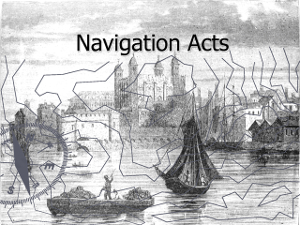
The Act bans foreign ships from transporting goods from outside Europe to England or its colonies, and bans third-party countries’ ships from transporting goods from a country elsewhere in Europe to England. These rules specifically target the Dutch, who control much of Europe’s international trade and even much of England’s coastal shipping. It excludes the Dutch from essentially all trade with England, as the Dutch economy is competitive with, not complementary to the English, and the two countries therefore exchange few commodities. This Anglo-Dutch trade, however, constitutes only a small fraction of total Dutch trade flows.
The Act is often mentioned as a major cause of the First Anglo-Dutch War, though it is only part of a larger British policy to engage in war after the negotiations have failed. The English naval victories in 1653 (the Battle of Portland, the Battle of the Gabbard and the Battle of Scheveningen) show the supremacy of the Commonwealth navy in home waters. However, farther afield the Dutch predominate and are able to close down English commerce in the Baltic and the Mediterranean. Both countries hold each other in a stifling embrace.
The Treaty of Westminster (1654) ends the impasse. The Dutch fail to have the Act repealed or amended, but it seems to have had relatively little influence on their trade. The Act offers England only limited solace. It cannot limit the deterioration of England’s overseas trading position, except in the cases where England herself is the principal consumer, such as the Canary Islands wine trade and the trade in Puglian olive oil. In the trade with the West Indies, the Dutch keep up a flourishing “smuggling” trade, thanks to the preference of English planters for Dutch import goods and the better deal the Dutch offer in the sugar trade. The Dutch colony of New Netherland offers a loophole through intercolonial trade wide enough to drive a shipload of Virginia tobacco through.
The 1651 Act, like other laws of the Commonwealth period, is declared void on the Restoration of Charles II of England, having been passed by “usurping powers.” Parliament therefore passes new legislation. This is generally referred to as the “Navigation Acts,” and, with some amendments, remains in force for nearly two centuries.
Eleanor McEvoy, one of Ireland’s most accomplished contemporary singer/songwriters, is born in Dublin on January 22, 1967. McEvoy composes the song “Only A Woman’s Heart,” the title track of A Woman’s Heart, the best-selling Irish album in Irish history.
McEvoy’s life as a musician begins at the age of four when she begins playing piano. At the age of eight she takes up violin and, as a teen, she joins the Junior Irish Youth Orchestra. Upon finishing school, she attends Trinity College, Dublin where she studies music by day and works in pit orchestras and music clubs by night.
McEvoy graduates from Trinity with an Honors Degree in music and spends four months busking in New York City. In 1988, she is accepted into the RTÉ National Symphony Orchestra where she spends four years before leaving to concentrate on songwriting.
During a solo date in July 1992, she performs a little-known, self-penned song, “Only a Woman’s Heart.” Mary Black, of whose band McEvoy is a member, is in the audience and invites her to add the track to an album of Irish female artists. The album is subsequently titled A Woman’s Heart and the track is released as the lead single. The album goes on to sell over three-quarters of a million copies in Ireland alone and remains the biggest selling Irish album of all time. The record’s success makes McEvoy a superstar virtually overnight.
Eleanor McEvoy, the self-titled debut offering, recorded in Windmill Lane Studios, is released in February 1993, and tours in the United States, Asia, and Europe follow. Back on Irish soil, McEvoy is awarded Best New Artist, Best New Performer, and Best Songwriter Awards by the Irish entertainment and music industries.
McEvoy signs a contract with Columbia Records and begins working on a new, edgier second album, which is eventually entitled What’s Following Me? The album is released in 1996 and the sound is louder and grungier than her debut.
McEvoy releases her third album Snapshots in 1999. Her primary goal is to make Snapshots her most song-oriented album to date. Toward that goal, she hooks up with legendary producer Rupert Hine, who has worked with Stevie Nicks, Tina Turner, Suzanne Vega, and Duncan Sheik, and records the album at Rupert’s “Chateau de la Tour de Moulin” and then in Metropolis Studios in London.
As the century closes, McEvoy has had enough of major-label involvement, making the decision to take the fourth album and head down the independent road. Yola was a turning point in McEvoy’s musical direction. Released in 2001, it reflects the acoustic, jazz-influenced style she had developed on stage with Brian Connor.
March 2004 sees the release of Early Hours, produced by McEvoy and Brian Connor. The style differs from McEvoy’s previous work, taking on a jazz/blues feel for many of the songs. She continues to tour with Brian Connor until April 2005. She then begins performing solo, accompanying herself on bass guitar, electric guitar, mandolin, and violin.
Naked Music (2016) is McEvoy’s twelfth studio album. It is recorded at the Grange Studio in Norfolk, UK. McEvoy records the tracks by “studio-performing,” in other words, playing the songs as she would in a live performance. The album features exclusive artwork by famed painter Chris Gollon.





 The
The 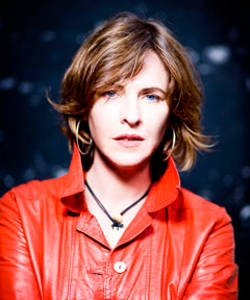
 seamus dubhghaill