seamus dubhghaill

Promoting Irish Culture and History from Little Rock, Arkansas, USA


Leave a comment

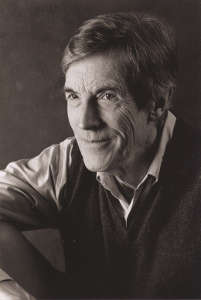
Birth of Denis Johnston, Writer & Playwright

Irish writer William Denis Johnston is born in Ballsbridge, Dublin on June 18, 1901. He primarily writes plays, but also works of literary criticism, a book-length biographical essay of Jonathan Swift, a memoir and an eccentric work on cosmology and philosophy.

Johnston is a protégé of William Butler Yeats and George Bernard Shaw, and has a stormy friendship with Seán O’Casey. He is a pioneer of television and war reporting. He works as a lawyer in the 1920s and 1930s before joining the BBC as a writer and producer, first in radio and then in the fledgling television service. His broadcast dramatic work include both original plays and adaptation of the work of many different writers.

Johnston’s first play, The Old Lady Says “No!”, helps establish the worldwide reputation of the Dublin Gate Theatre. His second, The Moon in the Yellow River, has been performed around the globe in numerous productions featuring such actors as Jack Hawkins, Claude Rains and Errol Flynn, although not all in the same production. He plays a role in the 1935 film version of John Millington Synge‘s Riders to the Sea.

During World War II Johnston serves as a BBC war correspondent, reporting from El Alamein to Buchenwald. For this he is awarded an OBE, a Mentioned in Despatches and the Yugoslav Partisans Medal. He then becomes Director of Programmes for the television service.

Johnston later moves to the United States and teaches at Mount Holyoke College, Smith College and other universities. He keeps extensive diaries throughout his life, now deposited in the Library of Trinity College, Dublin. These, together with his many articles and essays, give a distinctive picture of his times and the people he knows. Another archive of his work is held at the library of Ulster University at Coleraine. He receives honorary degrees from the Ulster University and Mount Holyoke College and is a member of Aosdána.

The Denis Johnston Playwriting Prize is awarded annually by Smith College Department of Theatre for the best play, screen play, or musical written by an undergraduate at Smith, Mount Holyoke, Amherst College, Hampshire College and the University of Massachusetts Amherst.

Johnston’s war memoir Nine Rivers from Jordan reaches The New York Times Bestseller List and is cited in the World Book Encyclopedia‘s 1950s article on World War II under “Books to Read”, along with Churchill, Eisenhower et al. Joseph Ronsley cites an unnamed former CBS Vietnam correspondent who calls the book the “Bible”, carrying it with him constantly, “reading it over and over in the field during his tour of duty.”

Denis Johnston dies on August 8, 1984, in Ballybrack, Dublin. His daughter Jennifer Johnston is a respected novelist and playwright.


Leave a comment

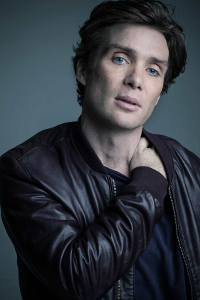
Birth of Cillian Murphy, Stage & Screen Actor

Cillian Murphy, actor of stage and screen, is born in Douglas, County Cork, on May 25, 1976.

Since making his debut in his home country in the late 1990s, Murphy has also become a presence in British and American cinemas noted by critics for his performances in many independent and mainstream films. He is best known as Jim in 28 Days Later (2002), the Scarecrow in The Dark Knight Trilogy (2005–12), Jackson Rippner in Red Eye (2005), Robert Capa in Sunshine (2007), Robert Fischer in Inception (2010) and Thomas Shelby in the BBC series Peaky Blinders.

Murphy begins his performing career as a rock musician. After turning down a record deal, he makes his professional acting debut in the play Disco Pigs in 1996. While continuing with stage work, he also begins appearing in independent films, first coming to international attention in 2002 as the hero of Danny Boyle‘s post-apocalyptic film 28 Days Later. Murphy’s profile continues to grow in 2005 when he appears in a series of successful films including as the Scarecrow in Christopher Nolan‘s 2005 blockbuster Batman Begins, a role he reprises in The Dark Knight (2008) and The Dark Knight Rises (2012), and in the action-thriller Red Eye (2005). For his performance as a transgender woman in Breakfast on Pluto (2005), Murphy receives a Golden Globe award nomination for Best Actor in a Musical or Comedy.

In 2006, Murphy plays the lead role in Ken Loach‘s Palme d’Or-winning film The Wind That Shakes the Barley. He teams up again with Boyle for the science-fiction film Sunshine (2007), and with Nolan for the highly successful thriller Inception (2010). Since 2013, Murphy has played the lead in the BBC gangster series Peaky Blinders. He continues to work on stage and wins the Drama Desk Award for Outstanding Solo Performance for Misterman in 2011.

In 2011 Murphy becomes patron of the UNESCO Child and Family Research Centre at the National University of Ireland Galway. He is closely associated with the work of Professor Pat Dolan Director UCFRC and UNESCO Chair in Children, Youth and Civic Engagement.

Murphy lives with his wife, Yvonne McGuinness, and two children in Monkstown, County Dublin.


Leave a comment

Birth of Enya, Singer & Songwriter

Eithne Pádraigín Ní Bhraonáin, singer, songwriter, musician, and producer better known professionally as Enya, is born into a musical family in Dore, GweedoreCounty Donegal on May 17, 1961.

Enya’s father, Leo Brennan, is the leader of the Slieve Foy Band, an Irish showband, and runs Leo’s Tavern in Meenaleck. Her mother, Máire Brennan (née Duggan), who has Spanish roots, is an amateur musician who plays in Leo’s band and teaches music at Gweedore Community School. Her maternal grandfather, Aodh, is the founder of the Gweedore Theatre company.

Enya begins her music career when she joins her family’s Celtic band Clannad in 1980 on keyboards and backing vocals. She leaves in 1982 with their manager and producer Nicky Ryan to pursue a solo career, with Ryan’s wife Roma Ryan as her lyricist. Enya develops her distinct sound over the following four years with multi-tracked vocals and keyboards with elements of new age, Celtic, classical, church, and folk music. She sings in ten languages.

Enya’s first projects as a solo artist include soundtrack work for The Frog Prince (1984) and the 1987 BBC documentary series The Celts, which is released as her debut album, Enya (1987). She signs with Warner Music UK which grants her considerable artistic freedom and minimal interference from the label. The commercial and critical success of Watermark (1988) propels her to worldwide fame, helped by its international top 10 hit single Orinoco Flow. This is followed by the multi-million selling albums Shepherd Moons (1991), The Memory of Trees (1995), and A Day Without Rain (2000). Sales of the latter and its lead single, Only Time, surge in the United States following its use in the media coverage of the September 11 attacks. Following Amarantine (2005) and And Winter Came… (2008), Enya takes an extended break from music. She returns in 2012 and releases Dark Sky Island (2015).

Enya is known for her private lifestyle and has yet to undergo a concert tour. She is Ireland’s biggest selling solo artist and second overall behind U2, with a discography that has sold 26.5 million certified albums in the United States and an estimated 80 million albums worldwide, making her one of the best-selling music artists of all time. A Day Without Rain (2000) remains the best-selling new age album with an estimated 16 million copies sold worldwide.

Enya has won several awards throughout her career, including seven World Music Awards, four Grammy Awards for Best New Age Album, and an Ivor Novello Award. She is nominated for an Academy Award and a Golden Globe Award for May It Be, a song she writes for the film The Lord of the Rings: The Fellowship of the Ring (2001).


Leave a comment

Sinn Féin Votes to Accept the Good Friday Agreement

Members of Sinn Féin, the political wing of the republican Irish Republican Army (IRA), vote to accept the Good Friday Agreement on May 10, 1998, effectively acknowledging the north-south border. This marks a major shift in modern republicanism as, up until now, Sinn Féin has regarded participation in a Northern Ireland body as a tacit acceptance of partition.

The agreement comes at the party’s annual conference, which includes about thirty IRA prisoners granted special leave in order to vote.

The British and Irish governments welcome the decision to formally approve the peace agreement signed at Stormont in April to create the Northern Ireland Assembly and new cross-border institutions. Taoiseach Bertie Ahern says he now looks forward to an overwhelming “yes” vote in referendums on the deal later in the month. The British government praises Sinn Féin leader Gerry Adams saying the decision marks a final realisation that violence does not pay.

Secretary of State for Northern Ireland Mo Mowlam expresses her delight at the outcome, “I recognise how significant this decision is for republicans and pay tribute to the leadership of Gerry Adams in bringing his party to support the agreement, north and south of the border.” In what she describes as an “exceptional decision,” the IRA’s commanding officer, Patrick Wilson, who is confined in HM Prison Maze, is among the 30 republican inmates freed for the conference in an effort to bring about a “Yes” vote.

Sinn Féin also votes to amend its constitution to allow members to sit in a new Northern Ireland Assembly after Adams tells his members they have a real chance to influence the strategy of the party and the way towards a united Ireland.

Martin McGuinness, one of Sinn Féin’s UK Members of Parliament (MP), tells the BBC he is optimistic about achieving a “Yes” vote in the referendum due to be held on May 22. “I think there are concerns naturally among a small section of the Sinn Féin membership, but I have to say I think the mood all over the island is that moving into the assembly to further our republican objectives towards our ultimate goal of a united Ireland is at this moment in time the sensible thing to do,” he says.

(Pictured: Sinn Féin MP Martin McGuinness and Sinn Féin president Gerry Adams)


Leave a comment

Birth of Sir Kenneth Percy Bloomfield in Belfast

Sir Kenneth Percy Bloomfield, former head of the Northern Ireland Civil Service who is later a member of the Independent Commission for the Location of Victims’ Remains and for a time Northern Ireland Victims Commissioner, is born in Belfast on April 15, 1931. He has also held a variety of public sector posts in Northern Ireland and elsewhere.

Bloomfield is born to English parents and grows up close to Neill’s Hill railway station. Between the years of 1943 and 1949, he attends the Royal Belfast Academical Institution and later goes on to read Modern History at St. Peter’s College, Oxford. On September 12, 1988, he and his wife are the targets of an Irish Republican Army (IRA) attack on their home in CrawfordsburnCounty Down. Neither Bloomfield nor his wife are injured in the blast.

Having joined the Civil Service in 1952, Bloomfield is appointed Permanent Secretary to the power sharing executive in 1974. After the collapse of the executive, he goes on to become Permanent Secretary for the Department of the Environment and the Department of Economic Development, and finally Head of the Northern Ireland Civil Service on December 1, 1984. In that capacity he is the most senior advisor to successive Secretaries of State for Northern Ireland and other Ministers on a wide range of issues. He retires from the post in April 1991.

Since retiring from the Civil Service, Bloomfield has embarked on a life of involvement in a diverse range of organisations. He has taken up roles such as Chairman for the Northern Ireland Legal Services Commission and his alma mater, the Royal Belfast Academical Institution. He has also been involved in the political reform of the States of Jersey and spearheaded the Association for Quality Education, which is fighting to retain academic selection in the Northern Ireland education system. In December 1997 he is asked by the Secretary of State for Northern Ireland, Mo Mowlam, to become the Northern Ireland Victims Commissioner for a fixed term. His role is to produce a report on the way forward for Victims issues in Northern Ireland. His report entitled We Will Remember Them is published in April 1998. From 1991 to 1999 he serves as the BBC‘s National Governor for Northern Ireland.

Bloomfield receives a Knighthood in the 1987 Queen’s Birthday Honours and honorary doctorates from Queen’s University, Belfast, the Open University and the Ulster University. He is also a Member of the Royal Irish Academy.


Leave a comment

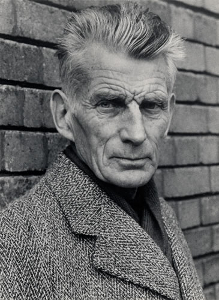
Birth of Playwright & Poet Samuel Barclay Beckett

Samuel Barclay Beckett, avant-garde novelist, playwright, theatre director, and poet, is born on Good Friday, April 13, 1906, in FoxrockDublin. His father, William Frank Beckett, works in the construction business and his mother, Maria Jones Roe, is a nurse. Beckett attends Earlsfort House School in Dublin and then, at age 14, he goes to Portora Royal School, the same school attended by Oscar Wilde. He receives his bachelor’s degree from Trinity College, Dublin in 1927. In his youth he periodically experiences severe depression keeping him in bed until mid-day. This experience later influences his writing.

In 1928, Beckett finds a welcome home in Paris where he meets and becomes a devoted student of James Joyce. In 1931, he embarks on a restless sojourn through Great BritainFrance and Germany. He writes poems and stories and does odd jobs to support himself. On his journey, he comes across many individuals who inspire some of his most interesting characters.

In 1937, Beckett settles in Paris. Shortly thereafter, he is stabbed by a pimp after refusing his solicitations. While recovering in the hospital, he meets Suzanne Dechevaux-Dumesnuil, a piano student in Paris. The two become life-long companions and eventually marry. After meeting with his attacker, Beckett drops the charges, partly to avoid the publicity.

During World War II, Beckett’s Irish citizenship allows him to remain in Paris as a citizen of a neutral country. He fights in the resistance movement until 1942 when members of his group are arrested by the Gestapo. He and Suzanne flee to the unoccupied zone until the end of the war.

After the war, Beckett is awarded the Croix de Guerre for bravery during his time in the French resistance. He settles in Paris and begins his most prolific period as a writer. In five years, he writes EleutheriaWaiting for GodotEndgame, the novels MolloyMalone DiesThe Unnamable, and Mercier et Camier, two books of short stories, and a book of criticism.

Beckett’s first publication, Molloy, enjoys modest sales, but more importantly praise from French critics. Soon, Waiting for Godot, achieves quick success at the small Theatre de Babylone putting Beckett in the international spotlight. The play runs for 400 performances and enjoys critical praise.

Beckett writes in both French and English, but his most well-known works, written between World War II and the 1960s, are written in French. Early on he realizes his writing has to be subjective and come from his own thoughts and experiences. His works are filled with allusions to other writers such as Dante AlighieriRené Descartes, and James Joyce. Beckett’s plays are not written along traditional lines with conventional plot and time and place references. Instead, he focuses on essential elements of the human condition in dark humorous ways. This style of writing has been called “Theater of the Absurd” by Martin Esslin, referring to poet Albert Camus’ concept of “the absurd.” The plays focus on human despair and the will to survive in a hopeless world that offers no help in understanding.

The 1960s are a period of change for Beckett. He finds great success with his plays across the world. Invitations come to attend rehearsals and performances which lead to a career as a theater director. In 1961, he secretly marries Suzanne Dechevaux-Dumesnuil who takes care of his business affairs. A commission from the BBC in 1956 leads to offers to write for radio and cinema through the 1960s.

Beckett continues to write throughout the 1970s and 1980s, mostly in a small house outside Paris. There he can give total dedication to his art evading publicity. In 1969, he is awarded the Nobel Prize in Literature, though he declines accepting it personally to avoid making a speech at the ceremonies. However, he should not be considered a recluse. He often times meets with other artists, scholars and admirers to talk about his work.

By the late 1980s, Beckett is in failing health and is moved to a small nursing home. His wife Suzanne dies in July 1989. His life is confined to a small room where he receives visitors and writes. He dies on December 22, 1989, in a hospital of respiratory problems just months after his wife.


Leave a comment

Birth of Joseph Tomelty, Actor & Playwright

joseph-tomeltyJoseph Tomelty, Irish character actor and playwright, is born at Portaferry, County Down, on March 5, 1911. He works in film, television, radio, and on the stage, starring in Sam Thompson‘s 1960 play Over the Bridge.

Tomelty is the eldest of seven children. His father is known as “Rollickin’ James” for his skill on the fiddle. He leaves his local primary school at the age of 12 and is apprenticed to the trade of housepainter, his father’s trade. He moves to Belfast and attends classes at Belfast Technical College.

Tomelty first acts with St. Peter’s Players and with others in 1937 and 1938 takes part in discussions which lead to the formation of the Northern Ireland Players on a more professional basis. Radio plays Barnum is Right and Elopement are broadcast in December 1938 and February 1939 respectively. The Northern Ireland Players choose the stage version of Barnum is Right for their first major commercial venture at the Empire Theatre in June 1939.

In 1940 the Northern Ireland Players join forces with the Ulster Theatre and the Jewish Institute Dramatic Society to form the Group Theatre. In 1942 Tomelty becomes its general manager remaining in the post until 1951. His play, Idolatry at Innishargie, enjoys a short run at the Group Theatre in 1942, but The End House, a controversial political play, does not even appear there. The play deals with what he describes as “the inhumanity that resulted from the Special Powers Act.” It is however performed at the Abbey Theatre in Dublin in 1944.

Meanwhile, his career as a character actor rapidly develops and a successful stage and film career is underway. In 1948 he is commissioned by the BBC in Belfast to write the weekly radio comedy drama series The McCooeys. This radio series lasts for seven years with Tomelty writing 6,000 word scripts for each episode. He continues to write plays, including his masterpiece, and a modern Irish theatre classic, All Souls’ Night in 1948.

In 1954 Tomelty is injured in an automobile accident while filming Bhowani Junction in England and, while he recovers, he is never as productive again. He dies in Belfast on June 7, 1995.


Leave a comment

Birth of Brendan Behan, Irish Republican, Poet & Writer

brendan-behan

Brendan Francis Aidan Behan, Irish Republican, poet, short story writer, novelist, and playwright who writes in both English and Irish, is born in Dublin on February 9, 1923.

Behan is widely regarded as one of the greatest Irish writers and poets of all time. He is also an Irish republican and a volunteer in the Irish Republican Army (IRA). Born in Dublin into a staunchly republican family, he becomes a member of the IRA’s youth organisation Fianna Éireann at the age of fourteen. However, there is also a strong emphasis on Irish history and culture in the home, which means he is steeped in literature and patriotic ballads from an early age. Behan eventually joins the IRA at sixteen, which leads to his serving time in a borstal youth prison in the United Kingdom. He is also imprisoned in Ireland. During this time, he takes it upon himself to study and he becomes a fluent speaker of the Irish language. Subsequently released from prison as part of a general amnesty given by the Fianna Fáil government in 1946, Behan moves between homes in Dublin, Kerry, and Connemara, and also resides in Paris for a time.

In 1954, Behan’s first play, The Quare Fellow, is produced in Dublin. It is well received, however, it is the 1956 production at Joan Littlewood‘s Theatre Workshop in Stratford, London, that gains Behan a wider reputation. This is helped by a famous drunken interview on BBC television. In 1958, Behan’s play in the Irish language, An Giall, has its debut at Dublin’s Damer Theatre. Later, The Hostage, Behan’s English-language adaptation of An Giall, meets with great success internationally. Behan’s autobiographical novel, Borstal Boy, is published the same year and becomes a worldwide best-seller.

He marries Beatrice Ffrench-Salkeld in 1955. By early March 1964, after developing diabetes, the end is in sight. Collapsing at the Harbour Lights bar, he is transferred to the Meath Hospital in central Dublin, where he dies at the age 41 on March 20, 1964. He is given an IRA guard of honour, which escorts his coffin. It is described by several newspapers as the biggest funeral since those of Michael Collins and Charles Stewart Parnell.


Leave a comment

The M62 Coach Bombing

m62-coach-bombing

The M62 coach bombing occurs on February 4, 1974, on the M62 motorway in Northern England, when a Provisional Irish Republican Army (IRA) bomb explodes in a coach carrying off-duty British Armed Forces personnel and their family members. Twelve people, nine soldiers and three civilians, are killed by the bomb, which consists of 25 pounds of high explosive hidden in a luggage locker on the coach.

The coach has been specially commissioned to carry British Army and Royal Air Force personnel on leave with their families from and to the bases at Catterick and Darlington during a period of railway strike action. The vehicle departs from Manchester and is making good progress along the motorway. Shortly after midnight, when the bus is between junction 26 and 27, near Oakwell Hall, there is a large explosion on board. Most of those aboard are sleeping at the time. The blast, which can be heard several miles away, reduces the coach to a “tangle of twisted metal” and throws body parts up to 250 yards.

The explosion kills eleven people outright and wounds over fifty others, one of whom dies four days later. Amongst the dead are nine soldiers – two from the Royal Artillery, three from the Royal Corps of Signals, and four from the 2nd battalion Royal Regiment of Fusiliers. One of the latter is Corporal Clifford Haughton, whose entire family, consisting of his wife Linda and his sons Lee (5) and Robert (2), also die. Numerous others suffer severe injuries, including a six-year-old boy, who is badly burned.

The driver of the coach, Roland Handley, is injured by flying glass, but is hailed as a hero for bringing the coach safely to a halt. Handley dies at the age of 76 after a short illness in January 2011.

Suspicions immediately fall upon the IRA, which is in the midst of an armed campaign in Britain involving numerous operations, later including the Guildford pub bombing and the Birmingham pub bombings.

Reactions in Britain are furious, with senior politicians from all parties calling for immediate action against the perpetrators and the IRA in general. The British media are equally condemnatory. According to The Guardian, it is “the worst IRA outrage on the British mainland” at that time, whilst the BBC describes it as “one of the IRA’s worst mainland terror attacks.” The Irish newspaper The Sunday Business Post later describes it as the “worst” of the “awful atrocities perpetrated by the IRA” during this period.

IRA Army Council member Dáithí Ó Conaill is challenged over the bombing and the death of civilians during an interview and replies that the coach had been bombed because IRA intelligence indicated that it was carrying military personnel only.

Following the explosion, the British public and politicians from all three major parties call for “swift justice.” The ensuing police investigation led by Detective Chief Superintendent George Oldfield is rushed, careless, and ultimately forged, resulting in the arrest of the mentally ill Judith Ward who claims to have conducted a string of bombings in Britain in 1973 and 1974 and to have married and had a baby with two separate IRA members. Despite her retraction of these claims, the lack of any corroborating evidence against her, and serious gaps in her testimony – which is frequently rambling, incoherent, and “improbable” – she is wrongfully convicted in November 1974.

The case against Ward is almost completely based on inaccurate scientific evidence using the Griess test and deliberate manipulation of her confession by some members of the investigating team. The case is similar to those of the Guildford Four, the Birmingham Six, and the Maguire Seven, which occur at the same time and involve similar forged confessions and inaccurate scientific analysis. Ward is finally released in 1992, when three Appeal Court judges hold unanimously that her conviction was “a grave miscarriage of justice,” and that it had been “secured by ambush.”


Leave a comment

Sinking of the MV Princess Victoria

mv-princess-victoria

MV Princess Victoria, one of the earliest roll-on/roll-off ferries, sinks on January 31, 1953, in the North Channel during a severe European windstorm with the loss of 133 lives. It is then the deadliest maritime disaster in United Kingdom waters since World War II.

Princess Victoria is built in 1947 by William Denny and Brothers, Dumbarton. She is the first purpose-built ferry of her kind to operate in British coastal waters and could hold 1,500 passengers plus cargo and had sleeping accommodations for 54.

Captained by James Ferguson, the vessel leaves Stranraer‘s railway loading pier at 7:45 AM on January 31, 1953 with 44 tons of cargo, 128 passengers, and 51 crew. Captain Ferguson has served as master on various ferries on the same route for seventeen years. A gale warning is in force but he makes the decision to put to sea. Loch Ryan is a sheltered inlet and the immediate force of the wind and sea is not apparent, but it is noted that spray is breaking over the stern doors. A “guillotine door” has been fitted, because of a previously identified problem with spray and waves hitting the stern doors, but it is rarely used, because it takes too long to raise and lower. This would provide extra protection for the sliding stern doors but on this occasion it is not lowered.

Shortly after clearing the mouth of Loch Ryan, the ship turns west towards Larne, County Antrim, Northern Ireland and exposes her stern to the worst of the high seas. Huge waves damage the low stern doors, allowing water to enter the car deck. The crew struggles to close the doors again but they prove to be too badly damaged and water continues to flood in from the waves. The scuppers do not appear to be allowing the water to drain away. The ship takes a list to starboard and at this point Captain Ferguson decides to retreat to the safety of Loch Ryan by going astern and using the bow rudder. This proves to be impossible, because the extreme conditions prevent the deckhands from releasing the securing pin on the bow rudder. Ferguson then makes a decision to try to reach Northern Ireland by adopting a course which keeps the stern of the craft sheltered from the worst of the elements. At 9:46 AM, two hours after leaving Stranraer, a message is transmitted in Morse code (the Princess Victoria does not have a radio telephone) by radio operator David Broadfoot to the Portpatrick Radio Station: “Hove-to off mouth of Loch Ryan. Vessel not under command. Urgent assistance of tugs required.”

With a list to starboard exacerbated by shifting cargo, water continues to enter the ship. At 10:32 AM an SOS transmission is made, and the order to abandon is given at 2:00 PM. Possibly the first warship in the area is HMS Launceston Castle, commanded by Lt. Cdr J M Cowling, a frigate which is en route to Derry. Searches are carried out but Launceston Castle is forced to leave when her condensers are contaminated by salt. Upon the upgrade of the assistance message to an SOS, the Portpatrick Lifeboat the Jeannie Spiers is dispatched, as is the destroyer HMS Contest. Contest, commanded by Lt. Commander HP Fleming, leaves Rothesay at 11:09 AM but, although she comes close to her position at 1:30 PM, poor visibility prevents the crew from seeing the sinking ship. The destroyer has been trying to maintain a speed of 31 knots to reach the listing ferry but, after sustaining damage from the seas, Captain Fleming is forced to reduce speed to 16 knots.

The Princess Victoria is still reporting her position as 5 miles northwest of Corsewall Point but her engines are still turning and even at the speed of 5 knots are gradually drawing the vessel closer to Northern Ireland and away from her reported position. At 1:08 PM, the ship broadcasts that her engines have stopped. The final morse code message at 1:58 PM reports the ship “on her beam end” five miles east of the Copeland Islands.

The Court of Enquiry into the sinking, held in March 1953 at Crumlin Road Courthouse in Belfast, finds that the Princess Victoria was lost due to a combination of factors. In a 30,000 page report the enquiry finds that firstly, the stern doors are not sufficiently robust. Secondly, arrangements for clearing water from the car deck are inadequate. The report concludes “If the Princess Victoria had been as staunch as those who manned her, then all would have been well and the disaster averted.” The court also notes the failure of the duty destroyer HMS Tenacious from the 3rd Training Squadron based at HMS Sea Eagle at Londonderry Port to be able to put to sea as too many men had been released on shore leave. As a consequence of the enquiry the duty destroyer from the 3rd Squadron is subsequently based “on station” at the mouth of Lough Foyle on one hour readiness to put to sea.

The wreck lay undiscovered until 1992 when a team from Cromarty Firth Diving, led by John MacKenzie and funded by the BBC, working from data provided by a Royal Navy seabed survey carried out in 1973, are able to locate it five miles north northeast of the Copeland Islands in 90 metres of water. Video footage and stills from this expedition are transmitted on a BBC programme called Home Truths (Things Don’t Happen to Boats Like This) on the 40th anniversary of the sinking in 1993.