seamus dubhghaill

Promoting Irish Culture and History from Little Rock, Arkansas, USA


Leave a comment

The 1992 Coalisland Riots

The 1992 Coalisland riots are a series of clashes in the town of Coalisland, County Tyrone, Northern Ireland, on May 12 and 17, 1992, between local Irish nationalist civilians and British Army soldiers of the 3rd Battalion, Parachute Regiment and the King’s Own Scottish Borderers (KOSB). The Third Battalion 1992 tour’s codename is “Operation Gypsy.”

On May 12, 1992, a unit of the Provisional Irish Republican Army (IRA) East Tyrone Brigade launches a bomb attack on a British Army foot patrol near the republican stronghold of Cappagh, County Tyrone. One soldier of the Parachute Regiment, Alistair Hodgson, loses both legs as a result. The improvised land mine is described in an IRA statement as an “anti-personnel device.” Other paratroopers receive lesser wounds, according to the same statement. The incident triggers a rampage by members of the Parachute Regiment in the nearby, overwhelmingly Irish nationalist town of Coalisland, some ten miles to the east. The IRA attack is described as a “provocation” tactic, devised to produce an over-reaction by troops to make them even more unpopular among local nationalists.

The deployment of the paratroopers, which begins in April has already been criticised by republican activist and former Member of Parliament Bernadette Devlin McAliskey, who denounces beatings, shootings and damages to property reportedly carried out by the troops. These previous incidents include the destruction of fishing gear and boats in the townland of Kinturk, near Ardboe, and a brawl on April 22 between soldiers and motorists at a checkpoint in Stewartstown, in which plastic bullets are fired that end with a civilian and two paratroopers wounded. Unionist politician and Ulster Defence Regiment (UDR) officer Ken Maginnis, then-Member of Parliament for the area, calls for the withdrawal of the regiment after receiving a large number of complaints about their behaviour.

On May 12, two hours after the IRA ambush at Cappagh, members of the regiment seal off the town of Coalisland, ten miles east of Cappagh. According to a Social Democratic and Labour Party (SDLP) politician, the soldiers fabricate a bogus bomb warning, while the Royal Ulster Constabulary (RUC) states that the operation began when a joint police/military patrol was stoned by a crowd. Two pubs are ransacked by the troops and a number of civilian cars are damaged. Several people are allegedly hit with sticks. Following this, a lieutenant is suspended from duty and the regiment is removed from patrol duties in Coalisland.

On the evening of May 17, a fistfight begins at Lineside Road, where a group of young men are having a drink. A passing four-man patrol of the King’s Own Scottish Borderers regiment is challenged to a “boxing match” by the residents. The soldiers set aside their weapons and engage the youths. Noncritical injuries are reported on both sides. The official claim is that the patrol was attacked by a mob of at least 30 people. In the melée, a rifle and a light machine gun are stolen. The rifle is later recovered nearby. The youths smash a backpack radio which is left behind by the troops. Two KOSB soldiers are hospitalised, while in the end seven other soldiers, including paratroopers, receive lesser injuries, one of them hit by a car that crashes through two roadblocks set up by the British Army.

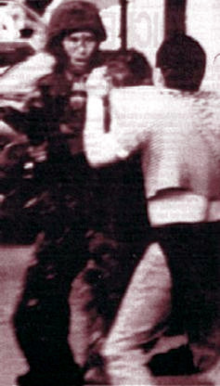
The Parachute Regiment is called to the scene again, and at 8:30 p.m., a major riot starts outside The Rossmore pub between local people and about 20 to 25 paratroopers. The soldiers claim one of their colleagues is isolated and dragged by the crowd. Some witnesses claim paratroopers were in a frenzy, showing their guns and inviting civilians to try to take them. Suddenly, shots are fired by the troops — first into the air and then toward the people outside the pub. Three civilians are rushed to hospital in Dungannon with gunshot wounds, while the soldiers return to their barracks. Another four civilians suffer minor injuries. The paratroopers claim that a “member of the growing crowd” attempted to fire the stolen machine gun at them, but the weapon jammed. One of the wounded is the brother of IRA volunteer Kevin O’Donnell, who had been killed by the Special Air Service (SAS) in February during an ambush at the nearby hamlet of Clonoe, shortly after carrying out a machine-gun attack on the local RUC base.

About 500 people attend a protest rally in Coalisland on May 19, and the wisdom of deploying the troops to patrol the town is questioned by members of the Dáil in Dublin. The Minister for Foreign Affairs of the Republic of Ireland, David Andrews, asks the British Government to withdraw the regiment. As a result, the paratroopers are redeployed outside the urban areas. The RUC claims that the stolen machine gun is found 11 days later at a farmhouse near Cappagh, along with another light machine gun and an AK-47 rifle. The IRA denies they had the machine gun in their possession. Republicans question whether the weapon had really been stolen, suggesting this was merely an excuse for the soldiers’ rampage in Coalisland. Bernardette McAliskey goes even further, suggesting that the recovery of the machine gun near Cappagh, where the initial IRA attack had taken place, was actually staged by the security forces as a publicity stunt. British officials accuse Sinn Féin of being the instigators of the riots, while Michael Mates, then Minister of State at the Northern Ireland Office, states that the incidents were due to “a gang of thugs motivated by the IRA.” Eventually the battalion’s 1992 tour in Northern Ireland is scaled down, with the patrols suspended before the official end of the deployment. The Third Brigade’s commander, Brigadier Tom Longland, is replaced by Brigadier Jim Dutton. This is the first occasion that a high-ranking officer is disciplined in such a way during the Troubles.

The last patrol takes place on June 27, when two paratroopers drown while crossing the River Blackwater. The same day there are further clashes with local residents, this time in the town of Cookstown, when a group of people that the Belfast News Letter calls “drunken hooligans” assault a number of paratroopers trying to help an elderly man who is suffering a heart attack.

The 3rd Battalion of the Parachute Regiment is replaced by the 1st Battalion of the Coldstream Guards.

Six soldiers face criminal charges for their roles in the May riots but are acquitted one year later. Five are bound over. Maurice McHugh, the presiding magistrate, avers that the soldiers were “not entirely innocent,” while Sinn Féin sources dub the ruling “a farce.” Dungannon priest Father Denis Faul is of the opinion that the soldiers should have been charged with conspiracy. The Ulster Television documentary Counterpoint of June 1993 claims that Director of Public Prosecutions for Northern Ireland, Sir Alasdair Fraser, returned the case file to the RUC recommending no prosecution. The programme also interviews Alistair Hodgson, the soldier maimed at Cappagh, who says that “had another member of my unit been injured in the way that I was, I would have been with the rest of the lads attacking the locals.” Authors Andrew Sanders and Ian S. Wood suggest that the deployment of the battalion in Coalisland and elsewhere hindered the British policy of police primacy in Northern Ireland.

Fresh clashes between local residents and troops are reported at Coalisland on March 6, 1994, a few months before the first IRA ceasefire, when a crowd assaults two soldiers after the RUC searched a car. Plastic bullets are fired, and three civilians and two soldiers are slightly injured.

(Pictured: Confrontation between a British paratrooper and a civilian in Coalisland, May 1992)

Leave a comment

The 1991 Cappagh Killings

The 1991 Cappagh killings, a gun attack by the loyalist Ulster Volunteer Force (UVF) in the village of Cappagh, County Tyrone, Northern Ireland, takes place on March 3, 1991. A unit of the UVF’s Mid-Ulster Brigade drive to the staunchly republican village and shoot dead three Provisional Irish Republican Army (IRA) members and a Catholic civilian at Boyle’s Bar. There are allegations of collusion between the UVF and the Ulster Defence Regiment (UDR) in the shootings.

Although nobody is ever charged in connection with the killings, it is widely believed by nationalists and much of the press that the attack had been planned and led by Billy Wright, the leader of the Mid-Ulster Brigade’s Portadown unit. Wright himself takes credit for this and boasts to The Guardian newspaper, “I would look back and say Cappagh was probably our best,” though some sources are sceptical about his claim.

On the evening of Sunday, March 3, 1991, a unit of the UVF’s Mid-Ulster Brigade drive into the heartland of the East Tyrone IRA, intent on wiping out an entire IRA unit that is based in the County Tyrone village of Cappagh. One team of the UVF men wait outside Boyle’s Bar, while a second team waits on the outskirts of the town. At 10:30 p.m. a car pulls into the car park outside the bar and the UVF gunmen open fire with vz. 58 assault rifles, killing Provisional IRA volunteers John Quinn (23), Dwayne O’Donnell (17) and Malcolm Nugent (20). The victims and car are riddled with bullets. According to author Thomas G. Mitchell, Quinn, O’Donnell and Nugent are part of an IRA active service unit (ASU). The gunmen then attempt to enter the pub but are unable to after the civilians inside realise what is happening and barricade the door. Unable to get into the bar, a UVF gunman shoots through a high open toilet window killing local civilian, Thomas Armstrong (50) and badly wounding a 21-year-old man. Their intended target, IRA commander Brian Arthurs, escapes with his life by crouching behind the bar during the shooting. According to the Conflict Archive on the Internet (CAIN), the three IRA volunteers chose to go to the pub “on the spur of the moment,” thus are unlikely to be the UVF’s original target.

After the attack, the UVF issues a statement: “This was not a sectarian attack on the Catholic community, but was an operation directed at the very roots of the Provisional IRA command structure in the Armagh–Tyrone area.” The statement concludes with the promise that “if the Provisional IRA were to cease its campaign of terror, the Ulster Volunteer Force would no longer deem it necessary to continue with their military operations.” Privately the UVF are hugely pleased with the attack in a republican heartland and Billy Wright, leader of the Portadown unit of the UVF’s Mid-Ulster Brigade, who is alleged to be centrally involved, tells Jim Cusack and Henry McDonald the killings were “one of things we did militarily in thirty years. We proved we could take the war to the Provos in one of their strongest areas.” Cusack and McDonald assert that a wealthy UVF supporter with a business in South Belfast helped the UVF purchase the cars used in the attack at auctions in the city.

The Provisional IRA initially does not acknowledge that three of the victims are within its ranks, apparently with the aim of garnering sympathy from the wider world, particularly in the Republic of Ireland, toward nationalists in Northern Ireland.

The first reprisal takes place on April 9, 1991, when alleged UVF member Derek Ferguson, a cousin of local MP Reverend William McCrea, is shot and killed in Coagh by members of the East Tyrone Brigade. His family denies any paramilitary links. In the months following the 1991 shootings, two former UDR soldiers are killed by the IRA near Cappagh. One of them is shot dead while driving along Altmore Road on August 5, 1991. The other former soldier is blown up by an IRA bomb planted inside his car at Kildress on April 25, 1993. It is claimed that he has loyalist paramilitary connections. The 1993 bombing leads to allegations that the IRA is killing Protestant landowners in Tyrone and Fermanagh in an orchestrated campaign to drive Protestants out of the region. There are at least five botched IRA attempts against the life of Billy Wright before the Irish National Liberation Army (INLA) succeeds in killing him in 1997 inside the Maze Prison.

This is not the first time the UVF carries out an attack on Boyle’s Bar in Cappagh. On January 17, 1974, at around 7:40 p.m. two masked UVF gunmen enter the pub and open fire indiscriminately on the customers with a Sterling submachine gun and a Smith & Wesson revolver, firing at least 35 shots. A Catholic civilian and retired farmer Daniel Hughes (73) is shot eleven times and killed in the attack and three other people are injured. A group calling itself the “Donaghmore-Pomeroy Battalion of the UVF” claim responsibility for the shooting. The attack is linked to the notorious Glenanne gang.

(Pictured: The scene of the UVF attack outside Boyle’s Bar in Cappagh in March 1991. Photo: Pacemaker Archive Belfast 153-91-BW)


Leave a comment

Death of Martin McCaughey, Sinn Féin Councillor & IRA Volunteer

Gerard Patrick Martin McCaughey, Sinn Féin councillor and volunteer in the East Tyrone Brigade of the Provisional Irish Republican Army (IRA), is killed by undercover British Army soldiers in County Armagh on October 9, 1990, along with fellow IRA volunteer Dessie Grew.

McCaughey, from Aughnagar, Galbally, County Tyrone, Northern Ireland, is born on February 24, 1967, the oldest son of Owen and Bridget McCaughey. He is a boyhood friend of several of the “Loughgall Martyrs” including Declan Arthurs, Seamus Donnelly, Tony Gormley and Eugene Kelly, with whom he travels to local discos and football matches when they are growing up.

McCaughey is a talented Gaelic football player who plays for local side Galbally Pearses and is also selected for the Tyrone minor Gaelic team.

McCaughey is elected as a Sinn Féin councillor for Dungannon and South Tyrone Borough Council and at the time is the youngest elected representative on the island of Ireland.

Two months prior to his shooting, McCaughey is disqualified from holding his office on the council as he had failed to appear for a monthly council meeting. After his death, the Royal Ulster Constabulary (RUC) reveals the explanation behind his disappearance. He had been shot and wounded in a shoot-out with undercover British Army security forces near Cappagh, County Tyrone. He is then taken south across the Irish border into the Republic of Ireland where he is given hospital treatment and therefore unable to attend the meetings.

Ulster Unionist MP and fellow Dungannon councillor Ken Maginnis alleges that McCaughey had conspired to kill him while both sat as councillors.

McCaughey is shot dead on October 9, 1990, along with Dessie Grew, in an operation by undercover British soldiers. A secret undercover intelligence unit named 14 Intelligence Company, also known as the DET, are monitoring three AK-47s at a farm building in a rural part of County Armagh and are aware that the pair are due to remove the guns.

As McCaughey and Grew are approaching an agricultural shed which is being used to grow mushrooms and also thought to be an IRA arms dump, as many as 200 shots are fired at the two men. British Army reports of the shooting state that the two men left the shed holding two rifles. Republican sources state the men were unarmed.

McCaughey is buried at Galbally Cemetery in October 1990.

The family of McCaughey claims that he and Grew were ambushed after a stakeout by the Special Air Service (SAS). In January 2002, Justice Weatherup, a Northern Ireland High Court judge, orders that official military documents relating to the shooting should be disclosed. However, Police Service of Northern Ireland (PSNI) Chief Constable Hugh Orde has the ruling overturned on appeal in January 2005.

Fellow Sinn Féin representative, Francie Molloy, replaces McCaughey on Dungannon Council after a by-election is held following McCaughey’s death.

In January 2007, the lawyers representing McCaughey and another volunteer, Pearse Jordan, apply to the House of Lords to challenge the details of how the inquests into their deaths are to proceed.

McCaughey’s father, Owen, seeks to compel Chief Constable Hugh Orde to produce key documents including intelligence reports relevant to the shooting and the report of the RUC’s investigating officer.

In 2010, a commemorative portrait of McCaughey is unveiled in the mayor’s parlour at Dungannon council.


Leave a comment

Death of Brian Keenan, Member of the Army Council of the Provisional IRA

Brian Keenan, a member of the Army Council of the Provisional Irish Republican Army (IRA), dies on May 21, 2008, at Cullyhanna, County Armagh, Northern Ireland, following a battle with colorectal cancer. He receives an 18-year prison sentence in 1980 for conspiring to cause explosions and plays a key role in the Northern Ireland peace process.

The son of a member of the Royal Air Force (RAF), Keenan is born on July 17, 1941, in Swatragh, County Londonderry, Northern Ireland, before his family moves to Belfast. As a teenager, he moves to England to find work, for a time working as a television repairman in partnership with his brother in Corby, Northamptonshire. During this time, he comes to the attention of the police when he damages a cigarette machine, which leads to police having his fingerprints on file. He returns to Northern Ireland when the Troubles begin and starts working at the Grundig factory in the Finaghy area of Belfast where he acquires a reputation as a radical due to his involvement in factory trade union activities.

Despite his family having no history of republicanism, Keenan joins the Provisional Irish Republican Army in 1970 or 1971, and by August 1971 is the quartermaster of the Belfast Brigade. He is an active IRA member, planning bombings in Belfast and travelling abroad to make political contacts and arrange arms smuggling, acquiring contacts in East Germany, Libya, Lebanon and Syria. In 1972, he travels to Tripoli to meet with Libyan leader Muammar Gaddafi in order to acquire arms and finance from his government. In early 1973 he takes over responsibility for control of the IRA’s bombing campaign in England and also becomes IRA Quartermaster General. In late 1973, he is the linchpin of the kidnap of his former employer at Grundig, director Thomas Niedermayer.

In early 1974, Keenan plans to break Gerry Adams and Ivor Bell out of Long Kesh using a helicopter, in a method similar to Seamus Twomey‘s escape from Mountjoy Prison in October 1973, but the plan is vetoed by Billy McKee. He is arrested in the Republic of Ireland in mid-1974 and sentenced to twelve months imprisonment for IRA membership. On March 17, 1975, he is shot and wounded while attempting to lead a mass escape from Portlaoise Prison. While being held in Long Kesh, Gerry Adams helps to devise a blueprint for the reorganisation of the IRA, which includes the use of covert cells and the establishment of a Southern Command and Northern Command. As the architects of the blueprint, Adams, Bell and Brendan Hughes, are still imprisoned, Martin McGuinness and Keenan tour the country trying to convince the IRA Army Council and middle leadership of the benefits of the restructuring plan, with one IRA member remarking “Keenan was a roving ambassador for Adams.” The proposal is accepted after Keenan wins support from the South Derry Brigade, East Tyrone Brigade and South Armagh Brigade, with one IRA member saying, “Keenan was really the John the Baptist to Adams’ Christ.”

In December 1975, members of an IRA unit based in London are arrested following the six-day Balcombe Street siege. The IRA unit had been active in England since late 1974 carrying out a series of bombings, and a few months after his release from prison Keenan visits the unit in Crouch Hill, London, to give it further instructions. In follow-up raids after the siege, police discover crossword puzzles in his handwriting and his fingerprints on a list of bomb parts. A warrant is issued for his arrest.

Garda Síochána informer Sean O’Callaghan claims that Keenan recommended IRA Chief of Staff Seamus Twomey to authorise an attack on Ulster Protestants in retaliation to an increase in sectarian attacks on Catholic civilians by Protestant loyalist paramilitaries, such as the killing of three Catholics in a gun and bomb attack by the Ulster Volunteer Force (UVF) on Donnelly’s Bar in Silverbridge, County Armagh on December 19, 1975. According to O’Callaghan “Keenan believed that the only way, in his words, to put the nonsense out of the Prods [Protestants] was to just hit back much harder and more savagely than them.” Soon after the sectarian Kingsmill massacre occurs, when ten Protestant men returning home from their work are ordered out of a minibus they are travelling in and executed en masse with a machine gun on January 5, 1976.

Keenan is arrested on the basis of the 1975 warrant near Banbridge on March 20, 1979, when the Royal Ulster Constabulary (RUC) stopped two cars travelling north on the main road from Dublin to Belfast and is extradited to England to face charges relating to the Balcombe Street Gang‘s campaign in England. His capture is a blow to the IRA, in particular as he was carrying an address book listing his contacts including Palestinian activists in the United Kingdom. The IRA responds by dispatching Bobby Storey and three other members to break Keenan out of prison using a helicopter, but all four are arrested and remanded to Brixton Prison. Keenan stands trial at the Old Bailey in London in June 1980 defended by Michael Mansfield and is accused of organising the IRA’s bombings in England and being implicated in the deaths of eight people including Ross McWhirter and Gordon Hamilton Fairley. He is sentenced to eighteen years imprisonment after being found guilty on June 25, 1980.

Keenan continues to support Gerry Adams while in prison. In August 1982 Adams is granted permission by the IRA’s Army Council to stand in a forthcoming election to the Northern Ireland Assembly, having been refused permission at a meeting the previous month. In a letter sent from Leicester Prison, Keenan writes that he “emphatically” supports the move and endorses the Army Council’s decision.

Keenan is released from prison in June 1993 and by 1996 is one of seven members of the IRA’s Army Council. Following the events after the IRA’s ceasefire of August 1994, he is openly critical of Gerry Adams and the “tactical use of armed struggle,” or TUAS, strategy employed by the republican movement. After the Northern Ireland peace process becomes deadlocked over the issue of the IRA decommissiong its arms, he and the other members of the Army Council authorise the Docklands bombing which kills two people and marks the end of the IRA’s eighteen-month ceasefire in February 1996.

Keenan outlines the IRA’s public position in May 1996 at a ceremony in memory of hunger striker Seán McCaughey at Milltown Cemetery, where he states, “The IRA will not be defeated…Republicans will have our victory…Do not be confused about decommissioning. The only thing the Republican movement will accept is the decommissioning of the British state in this country.” In the same speech he accuses the British of “double-dealing” and denounces the Irish government as “spineless.”

On February 25, 2001, Keenan addresses a republican rally in Creggan, County Armagh, saying that republicans should not fear “this phase” of “the revolution” collapsing should the Good Friday Agreement fail. He confirms his continued commitment to the Armalite and ballot box strategy, saying that both political negotiations and violence are “legitimate forms of revolution” and that both “have to be prosecuted to the utmost.” He goes on to say, “The revolution can never be over until we have British imperialism where it belongs—in the dustbin of history,” a message aimed at preventing rank-and-file IRA activists defecting to the dissident Real IRA.

Keenan plays a key role in the peace process, acting as the IRA’s go-between with the Independent International Commission on Decommissioning (IICD). Gerry Adams remarks, “There wouldn’t be a peace process if it wasn’t for Brian Keenan.” Keenan resigns from his position on the Army Council in 2005 due to ill-health, and is replaced by Bernard Fox, who had taken part in the 1981 Irish hunger strike. On May 6, 2007, he is guest speaker at a rally in Cappagh, County Tyrone, to commemorate the 20th anniversary of the deaths of the so-called “Loughgall Martyrs,” eight members of the IRA East Tyrone Brigade killed by the Special Air Service (SAS) in 1987.

In July 2002, Keenan is diagnosed as suffering from terminal colorectal cancer. It is alleged by the Irish Independent and The Daily Telegraph that Keenan succeeded Thomas “Slab” Murphy as Chief of Staff of the Provisional IRA at some point between the late 1990s and the mid-2000s before he relinquished the role to deal with his poor health caused by cancer.

Keenan’s last years are spent living with his wife in Cullyhanna, County Armagh, where he dies of cancer on May 21, 2008. He is an atheist and receives a secular funeral, representing a major republican show of strength.


Leave a comment

1997 Coalisland Attack

On the evening of March 26, 1997, the Provisional Irish Republican Army (IRA) East Tyrone Brigade launches an improvised grenade attack on the fortified Royal Ulster Constabulary (RUC)/British Army base in Coalisland, County Tyrone, Northern Ireland. The blast sparks an immediate reaction by an undercover Special Air Service (SAS) unit, who shoots and wounds Gareth Doris, an Irish republican and alleged IRA volunteer. The SAS unit is then surrounded by a crowd of protesters who prevent them approaching Doris or leaving. RUC officers arrive and fire plastic bullets at the crowd, allowing the special forces to leave the area.

Coalisland is a town in County Tyrone that has a tradition of militant republicanism; five residents are killed by British security forces before the first IRA ceasefire in 1994. In February 1992, four IRA volunteers are killed in a gun battle with the SAS during their escape after a machine gun attack on the RUC/British Army barracks there. Three months later, an IRA bomb attack on a British Army patrol at Cappagh, in which a paratrooper loses his legs, triggers a series of clashes between local residents and British troops on May 12 and 17. A number of civilians and soldiers are injured, a soldier’s backpack radio destroyed, and two British weapons stolen. The melee is followed by a 500-strong protest in the town and bitter exchanges between Republic of Ireland and British officials. Further scuffles between civilians and soldiers are reported in the town on March 6, 1994.

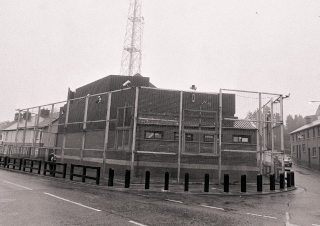
At 9:40 p.m. on Wednesday, March 26, 1997, a grenade is thrown at the joint British Army/RUC base at Coalisland, blowing a hole in the perimeter fence. The RUC reports that a 1 kg device hit the fence ten feet off the ground. Another source claims that the device is a coffee-jar bomb filled with Semtex. The grenade is thrown or fired by two unidentified men. At the time of the attack, there is an art exhibition at Coalisland Heritage Hall, also known as The Mill, from where the explosion and the gunshots that follow are clearly heard. The incident lasts less than two minutes.

Just one minute after the IRA attack, bypassers hear high-velocity rounds buzzing around them. A number of men, apparently SAS soldiers, get out of civilian vehicles wearing baseball caps with “Army” stamped on the front. A source initially describes them as members of the 14 Field Security and Intelligence Company. The men are firing Browning pistols and Heckler & Koch submachine guns. Witnesses say there are eight to ten gunshots, while a republican source claims that up to eighteen rounds are fired. Nineteen-year-old Gareth Doris is shot in the stomach and falls to the ground. He is allegedly returning from the local church and is in the company of a priest when he is shot. A local priest, Seamus Rice, is driving out of the church car park when his car is hit by bullets, smashing the windscreen.

Three minutes after the blast, hundreds of angry residents gather at the scene and confront the undercover soldiers. The soldiers fire live rounds at the ground and into the air to keep people back. The crowd keeps drawing back and moving forward again until 9:50 p.m., when the RUC arrives and begins firing plastic bullets at the protesters. Two women are wounded by plastic bullets and the undercover soldiers then flee in unmarked cars, setting off crackers or fireworks at the same time. Sinn Féin councillor Francie Molloy claims that the protesters forced the SAS to withdraw, saving Doris’s life in the process. Witnesses allegedly fear an undercover soldier brandishing a pistol would have killed the wounded Doris with a shot to his head.

Afterward, hundreds of residents are forced to leave their homes as security forces search the area near the base. This keeps tensions high, according to local republican activist Bernadette McAliskey. Two men are later questioned by the RUC about the attack.

The attack, along with two large bombings the same day in Wilmslow, England, raise concerns that the IRA is trying to influence the upcoming UK general election. Martin McGuinness describes the shooting as “murderous,” while independent councillor Jim Canning says that more than a dozen soldiers “were threatening to shoot anybody who moved […] while a young man lay shot on the ground.” Republican sources claim that this is another case of shoot-to-kill policy by the security forces. Ulster Unionist Party (UUP) MP Ken Maginnis, however, praises the SAS for their actions.

Gareth Doris is admitted to South Tyrone Hospital in Dungannon, where he is arrested after undergoing surgery. He is later transferred to Musgrave Park Hospital in Belfast. He is later convicted for involvement in the bombing and sentenced to ten years in jail, before being released in 2000 under the terms of the Good Friday Agreement. Gareth is the cousin of Tony Doris, an IRA member killed in an SAS ambush in the nearby village of Coagh on June 3, 1991, and a cousin of Sinn Féin leader Michelle O’Neill. According to Sinn Féin councillor Brendan Doris, another cousin of Gareth, “He absolutely denies being involved in terrorist activity of any description.” Amnesty International raises its concerns over the shooting and the fact that no warning is given beforehand.

DNA evidence collected in the area of the shooting leads to the arrest of Coalisland native Paul Campbell by the Police Service of Northern Ireland (PSNI) in 2015, on the charges of being the other man with Doris during the attack. In February 2020, he is convicted by a Diplock court in Belfast. He denies the charges but receives a seven-and-a-half-year sentence. The prosecutor acknowledges that Campbell would have been released by this time under the provisions of the Good Friday Agreement but argues that that was a decision for the parole commission, not the court.

On July 5, 1997, on the eve of the 1997 nationalist riots in Northern Ireland, the British Army/RUC base is the scene of another attack, when an IRA volunteer engages an armoured RUC vehicle with gunfire beside the barracks. One female officer is wounded. The former RUC station at Coalisland is eventually shut down in 2006 and sold for private development in 2010.

(Pictured: Coalisland RUC/British Army base in Coalisland, County Tyrone, Northern Ireland)


Leave a comment

The Ballygawley Land Mine Attack

ballygawley-land-mine-attack

The Ballygawley land mine attack is a bomb attack carried out by the Provisional Irish Republican Army (IRA) on July 13, 1983. The IRA explodes a land mine under an Ulster Defence Regiment‘s (UDR) mobile patrol at Ballygawley Road, near Dungannon, County Tyrone, Northern Ireland. Four UDR soldiers are killed in the incident.

After the 1981 Irish hunger strike, floods of recruits sign up to join the IRA. Republicans in County Tyrone are especially angry over the death of Martin Hurson who was from the small Tyrone village of Cappagh and was one of Cappagh’s most famous sons. Cappagh becomes a Republican stronghold in the 1980s. Many young men flock to join the East Tyrone Brigade to avenge Hurson’s death. Some of those who join after being radicalized by the Hunger Strike go onto become famous IRA Volunteers like Declan Arthurs and Martin McCaughey who were both small children when the conflict broke out in 1969.

Sinn Féin member Francie Molloy said the following on Hurson’s funeral and the effect his death had on the young people of Cappagh:

“There was people everywhere. The village was black with them. It was the first sign in Tyrone of thousands and thousands of people assembling to honor the remains of a native son coming home. Martin was young when he went to jail and young when died on hunger strike. His death just made young people more determined that they were going to replace him. They saw ten men dead as the British government taking people out of the struggle. I think the young people of Cappagh and surrounding areas decided there and then that they were going to replace every one of them and replace them tenfold. And that is what they did. The number of young people who joined up in response was massive.”

On July 13, 1983, four British Army (Ulster Defence Regiment) soldiers (Ronald Alexander, Thomas Harron, John Roxborough, and Oswald Neely), all Protestant members of the 6th Battalion UDR, are travelling in their mobile patrol along a road in Tyrone close to the small town of Ballygawley. IRA Volunteers from the East Tyrone Brigade plant a 500 lb. land mine along the road the UDR patrol is traveling. The IRA unit notices the UDR takes a similar route every so often and has spotted weakness in the patrol. The IRA Volunteers are watching the UDR patrol while being well hidden. Once the UDR patrol is close to the land mine the IRA Volunteers detonate the land mine by remote control killing the four UDR soldiers almost immediately. This is the highest casualty rate suffered by the UDR in a single incident during The Troubles and worst attack suffered by the security forces since 1981. The attack is carried out by an Active Service Unit (ASU) of the IRA’s East Tyrone Brigade which is one of the most active and successful Brigade areas in the IRA during the 1980s.

Within five years the IRA’s East Tyrone Brigade launches two more high-profile attacks in Ballygawley. In 1985, during the Attack on Ballygawley barracks, an IRA unit led by Patrick Joseph Kelly and Jim Lynagh attacks the Ballygawley RUC barracks, shooting dead two RUC officers who are at the front of the station. A 200 lb. bomb destroys the entire barracks and injures three more RUC officers. In 1988, the IRA kills eight British soldiers and injures twenty-eight others during the Ballygawley bus bombing. Many Republicans see this as revenge for the Loughgall ambush the year before when the Special Air Service (SAS) shot dead eight IRA Volunteers.


Leave a comment

The Coagh Ambush

coagh-county-tyrone

The Coagh ambush takes place in Coagh, County Tyrone, Northern Ireland, on June 3, 1991, during The Troubles, when a Provisional Irish Republican Army (IRA) active service unit from its East Tyrone Brigade is ambushed by the British Army‘s Special Air Service (SAS) while on its way to kill a part-time member of the Ulster Defence Regiment (UDR). The ambush results in the deaths of all three IRA men involved.

The series of killings which lead to the Coagh ambush begin on April 26, 1988, when a 23-year-old UDR soldier from Coagh, Edward Gibson, is shot dead by an IRA unit at Ardboe while at work for Cookstown Council on a bin lorry. The Ulster Volunteer Force (UVF) retaliates by murdering Phelim McNally, brother of local Sinn Féin councillor Francie McNally, on November 24, 1988. This is followed by an IRA attack upon a car maintenance garage business owned by retired UDR soldier Leslie Dallas on March 7, 1989, in which Dallas, along with two civilian pensioners that are in the premises at the time of the attack, are all murdered by machine gun fire from a passing vehicle, the IRA attackers driving off afterwards cheering as reported by eyewitnesses in the vicinity.

The tit-for-tat campaign around Coagh continues on November 29, 1989, when UVF gunmen attack a pub owned by IRA member Liam Ryan, shooting Ryan dead. A customer in the premises is also killed in the incident. On March 8, 1990, part-time UDR soldier and construction worker Thomas Jamison is killed by the IRA in a gun and grenade ambush attack on a lorry he is driving near Donaghmore, while delivering concrete to a British Army base. On March 3, 1991, the Ulster Volunteer Force carries out an attack at the village of Cappagh, killing three IRA members. On April 9, 1991, the IRA’s East Tyrone Brigade shoots dead Derek Ferguson in Coagh, a cousin of local Member of Parliament Reverend William McCrea, stating afterward that he was a paramilitary with the Ulster Volunteer Force. Ferguson’s family subsequently refutes that he had anything to do with Loyalist paramilitarism.

At 7:30 AM on June 3, 1991, three Tyrone IRA paramilitaries, Tony Doris (21), Michael “Pete” Ryan (37) and Lawrence McNally (39), drive a stolen Vauxhall Cavalier from Moneymore, County Londonderry to the village of Coagh, crossing the border of counties Londonderry and Tyrone, to kill a part-time Ulster Defence Regiment soldier, who is in his civilian life a contractor that works with the security forces. Their intent, however, is known to the British security forces, having been revealed by either a Crown agent within the IRA itself or from covert technical surveillance. In consequence a detachment from the British Army’s Special Air Service is lying in wait on both sides of Coagh’s main street, and also in a red Bedford lorry at the scene.

The stolen car is driven by Doris towards the centre of the village, its journey from Moneymore being tracked on the ground and in the air. At the scene of the ambush the British Army has set up a “decoy” target for the IRA to go for in the form of an SAS trooper who is pretending to be their intended victim, sitting in his car at a regular spot while waiting to pick up a friend on their way to work, which IRA intelligence had established as a behavioral pattern of their intended victim. When the stolen car carrying the IRA men approaches the scene, the Special Air Service detachment opens sustained automatic fire upon it from close range. Doris is immediately hit and the out-of-control car crashes into two nearby parked cars. The shooting continues until the car explodes in flames. According to an eyewitness, one of the IRA men in the car returns fire from within the vehicle after the crash.

Some reports claim at least two of the IRA men attempt to exit the crashed car and are subsequently found lying half out of its doors by the later police investigation of the scene. Relatives of the IRA men subsequently state that they had received information from the scene that two of the IRA attackers had fled on foot from the car after the crash, but had been pursued after and shot down by the British Army in the vicinity, with their bodies being taken back to the car, which is subsequently reported to be riddled with over 200 bullet holes. A Royal Ulster Constabulary crime-scene report states that a balaclava belonging to one of the IRA men is found some distance away from the vehicle.

The bodies of Doris, Ryan and McNally are badly burned and have to be identified by police using their dental records. Two rifles are recovered from within the burned-out stolen car and subsequent police forensic examination reveals that they had both been used in the multiple murders at Leslie Dallas’s garage in March 1989.

(Pictured: Looking towards Coagh village, from the County Londonderry side)


Leave a comment

Birth of Hunger Striker Edward Martin Hurson

edward-martin-hurson

Edward Martin Hurson, Irish republican hunger striker and a volunteer in the East Tyrone Brigade of the Provisional Irish Republican Army (IRA), is born in Cappagh, County Tyrone, on September 13, 1956.

Hurson is one of nine children born to Johnnie and Mary Ann Hurson. Both of his parents come from the Cappagh district, and every member of the family is born into the white-washed farmhouse perched precipitously on top of the thirty hilly acres of rough land. Martin is close to the land as he grows up. He is educated to a primary level at Crosscavanagh Primary School in Galbally and at secondary level in St. Patrick’s, Galbally. When he is not at school, he is more often than not helping out about the farm, driving a tractor, helping to rear “croppy pigs,” or looking after cattle.

After leaving school, he works as an apprentice fitter welder for a while before going to Manchester, England where he stays for eighteen months with his brother Francis and works in the building trade. Returning to County Tyrone around Christmas of 1974, both he and his brother spend time in Bundoran, County Donegal, a known IRA training and supply centre.

Hurson, together with Kevin O’Brien, Dermot Boyle, Peter Kane, and Pat O’Neill are arrested and taken to the Omagh Royal Ulster Constabulary (RUC) barracks on November 11, 1976. He is beaten about the head, back, and testicles, spread-eagled against a wall and across a table, slapped, punched, and kicked. Under torture Martin signs statements admitting involvement in republican activity. On Saturday night, November 13, Martin is charged with a landmine explosion at Galbally in November 1975.

This charge is later dropped, but he is then further charged with IRA membership and explosive offences. Hurson spends a year on remand before being convicted in November 1977 and sentenced to 20 years for possession of landmines and conspiracy. He appeals his conviction on the grounds that the judge had ignored medical evidence about his ill-treatment.

The appeal is dismissed but he is granted a retrial. At the four-day trial in September 1979, the Omagh statements are ruled inadmissible, but instead of Martin walking free the judge goes on to accept the admissibility of the Cookstown statements, themselves extracted under threat of renewed torture. Following his retrial, he appeals his conviction once again, challenging the admissibility of the Cookstown statements, but his appeal is disallowed in June 1980.

Hurson becomes engaged to his long-term girlfriend, Bernadette Donnelly, while in prison. He is part of the blanket protest and joins the 1981 Irish Hunger Strike on May 28, replacing South Derryman Brendan McLaughlin who withdraws following a perforated stomach ulcer.

He loses the ability to hold down water after approximately 40 days on hunger strike and suffers a horrifically agonising death due to dehydration at 4:30 AM on July 13, after only 46 days on hunger strike, considerably shorter than any other hunger striker. Near the end his family considers the possibility of intervening to save his life, but they are told that he will likely have permanent brain damage.


1 Comment

Edward Martin Hurson Dies on Hunger Strike

edward-martin-hursonEdward Martin Hurson, a volunteer in the East Tyrone Brigade of the Provisional Irish Republican Army (IRA), dies on July 13, 1981, after 46 days on hunger strike.

Hurson, from Cappagh, County Tyrone, Northern Ireland, is one of nine children born to Johnnie and Mary Ann Hurson. He is educated to a primary level at Crosscavanagh Primary School in Galbally and at secondary level in St. Patrick’s, Galbally.

After leaving school, he works as a welder for a while before going to England where he stays for eighteen months with his brother Francis and works in the building trade. Returning to County Tyrone at the end of 1974, both he and his brother spend time in Bundoran, County Donegal, a known IRA training and supply centre.

In November 1976, Hurson, together with Kevin O’Brien, Dermot Boyle, Peter Kane, and Pat O’Neill are arrested. Hurson is tried and convicted of involvement in three IRA landmine incidents, one at Cappagh in September, one at Galbally, County Tyrone in November 1975 and a third at Reclain in February 1976, when several members of the Royal Ulster Constabulary and Ulster Defence Regiment narrowly escape being killed. He receives concurrent sentences of twenty, fifteen, and five years for these convictions.

Hurson becomes engaged to his long-term girlfriend, Bernadette Donnelly, while in prison. He is part of the blanket protest and joins the 1981 Irish Hunger Strike on May 28, replacing Brendan McLaughlin who withdraws following a perforated stomach ulcer.

He loses the ability to hold down water after about 40 days on hunger strike, and dies of dehydration after only 46 days, considerably shorter than any other hunger striker (the next shortest is Francis Hughes at 59 days). Near the end, his family considers the possibility of intervening to save his life, but they are told that he would probably have permanent brain damage.