seamus dubhghaill

Promoting Irish Culture and History from Little Rock, Arkansas, USA


Leave a comment

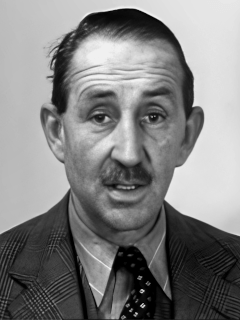
Death of Basil Stanlake Brooke, Third Prime Minister of Northern Ireland

Basil Stanlake Brooke, 1st Viscount Brookeborough, KG, CBE, MC, TD, PC (Ire), Ulster Unionist Party (UUP) politician who serves as the third Prime Minister of Northern Ireland from May 1943 until March 1963, dies on August 18, 1973, at Colebrooke Park, Brookeborough, County Fermanagh, Northern Ireland. He has been described as “perhaps the last Unionist leader to command respect, loyalty and affection across the social and political spectrum.” Equally well, he has also been described as one of the most hardline anti-Catholic leaders of the UUP, and his legacy involves founding his own paramilitary group, which feeds into the reactivation of the Ulster Volunteers.

Brooke is born on June 9, 1888, at Colebrooke Park, his family’s neo-Classical ancestral seat on what is then the several-thousand-acre Colebrooke Estate, just outside Brookeborough, a village near Lisnaskea in County Fermanagh. He is the eldest son of Sir Arthur Douglas Brooke, 4th Baronet, whom he succeeds as 5th Baronet when his father dies in 1907. His mother is Gertrude Isabella Batson. He is a nephew of Field Marshal Alan Brooke, 1st Viscount Alanbrooke, Chief of the Imperial General Staff (CIGS) during World War II, who is only five years his senior. His sister Sheelah marries Sir Henry Mulholland, Speaker of the Stormont House of Commons and son of Lord Dunleath. He is educated for five years at St. George’s School in Pau, France, and then at Winchester College (1901–05).

After graduating from the Royal Military College, Sandhurst, Brooke is commissioned into the Royal Fusiliers on September 26, 1908, as a second lieutenant. He transfers to the 10th Royal Hussars in 1911. He is awarded the Military Cross and Croix de guerre with palm for his service during World War I.

Brooke is a very active Ulster Unionist Party member and ally of Edward Carson. He founds his own paramilitary group, Brooke’s Fermanagh Vigilance, from men returning from the war front in 1918. Although the umbrella Ulster Volunteers had been quiescent during the war, it is not defunct. It re-emerges strongly in 1920, subsuming groups like Brooke’s.

In 1920, having reached the rank of captain, Brooke leaves the British Army to farm the Colebrooke Estate, the family estate in west Ulster, at which point he turns toward a career in politics.

Brooke has a very long political career. When he resigns the Premiership of Northern Ireland in March 1963, he is Northern Ireland’s longest-serving prime minister, having held office for two months short of 20 years. He also establishes a United Kingdom record by holding government office continuously for 33 years.

In 1921, Brooke is elected to the Senate of Northern Ireland, but he resigns the following year to become Commandant of the Ulster Special Constabulary (USC) in their fight against the Irish Republican Army (IRA). He is created a Commander of the Order of the British Empire in 1921.

In 1929 Brooke is elected to the House of Commons of Northern Ireland as Ulster Unionist Party MP for the Lisnaskea division of County Fermanagh. In the words of the Oxford Dictionary of National Biography, “his thin, wiry frame, with the inevitable cigarette in hand, and clipped, anglicised accent were to be a feature of Stormont for the next forty years.”

Brooke becomes Minister of Agriculture in 1933. By virtue of this appointment, he also acquires the rank of Privy Councilor of Northern Ireland. From 1941 to 1943 he is Minister of Commerce.

On May 2, 1943, Brooke succeeds John M. Andrews as Prime Minister of Northern Ireland. In 1952, while Prime Minister, was raised to the peerage as Viscount Brookeborough, the title taken from the village named after the Brookes. Although a peer, he retained his seat in the House of Commons at Stormont and remained Prime Minister for another decade.

As the Northern Ireland economy begins to de-industrialise in the mid-1950s, leading to high unemployment amongst the Protestant working classes, Brooke faces increasing disenchantment amongst UUP backbenchers for what is regarded as his indifferent and ineffectual approach to mounting economic problems. As this disenchantment grows, British civil servants and some members of the UUP combine to exert discreet and ultimately effective pressure on Brooke to resign to make way for Captain Terence O’Neill, who is Minister of Finance.

In 1963, his health having worsened, Brooke resigns as Prime Minister. However, he remains a member of the House of Commons of Northern Ireland until the 1969 Northern Ireland general election, becoming the Father of the House in 1965. During his last years in the Parliament of Northern Ireland he publicly opposes the liberal policies of his successor Terence O’Neill, who actively seeks to improve relationships with the Republic of Ireland, and who attempts to address some of the grievances of Catholics and grant many of the demands of the Northern Ireland Civil Rights Association (NICRA).

Brooke is noted for his casual style toward his ministerial duties. Terence O’Neill later writes of him, “he was good company and a good raconteur, and those who met him imagined that he was relaxing away from his desk. However, they did not realise that there was no desk.”

In his retirement Brooke develops commercial interests as chairman of Carreras (Northern Ireland), a director of Devenish Trade, and president of the Northern Ireland Institute of Directors. He is also made an honorary LL.D. of Queen’s University Belfast.

From 1970 to 1973, years in which the Stormont institution comes under its greatest strain and eventually crumbles, Brooke makes only occasional forays into political life. In 1972, he appears next to William Craig MP on the balcony of Parliament Buildings at Stormont, a diminutive figure beside the leader of the Vanguard Unionist Progressive Party (VUPP) who is rallying right-wing Unionists against the Government of Northern Ireland. He opposes the Westminster white paper on the future of Northern Ireland and causes some embarrassment to his son, Captain John Brooke, the UUP Chief Whip and an ally of Brian Faulkner, by speaking against the Faulkner ministry‘s proposals.

Brooke dies at his home, Colebrooke Park, on the Colebrooke Estate, on August 18, 1973. His remains are cremated at Roselawn Cemetery, East Belfast, three days later, and, in accordance with his wishes, his ashes are scattered on the demesne surrounding his beloved Colebrooke Park.

Leave a comment

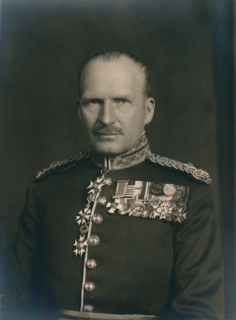
Birth of Sir John Greer Dill, Irish-born British Army Officer

Sir John Greer Dill, senior British Army officer with service in both World War I and World War II, is born on December 25, 1881, at Lurgan, County Armagh. From May 1940 to December 1941, he is the Chief of the Imperial General Staff (CIGS), the professional head of the British Army, and subsequently serves in Washington, D.C., as Chief of the British Joint Staff Mission and then Senior British Representative on the Combined Chiefs of Staff (CCS).

Dill is the only son of John Dill, bank manager, and Jane Dill (née Greer). He is educated at Cheltenham College in England before entering the Royal Military College (RMC), Sandhurst. Commissioned as a second lieutenant, he joins the Prince of Wales’s Leinster Regiment (Royal Canadians) in May 1901 and serves in South Africa for the remainder of the Second Boer War. Promoted to captain in 1911, he is a student at the Staff College, Camberley, at the outbreak of World War I. He holds several important staff appointments during the war, including brigade major of 25th Brigade (8th Division) and General Staff Officer (Grade 2) to the Canadian Corps. Present at the battles of Neuve Chapelle, Aubers Ridge, Arras, and Third Ypres, at the end of the war he is serving as chief of operations branch at GHQ with the temporary rank of brigadier general. He is awarded the Distinguished Service Order (DSO) (1915), the Order of St. Michael and St. George (CMG) (1918), the French Legion of Honour and the Belgian Order of the Crown.

Remaining active during the interwar years, Dill serves as chief assistant to the commandant of the Staff College (1919–22) before commanding the Welsh Border Brigade, TA (1922–23), and 2nd Infantry Brigade at Aldershot (1923–26). In late 1926, he is appointed army instructor at the newly established Imperial Defence College. A period in India follows as general staff officer of the Western Command (1929–31), based at Quetta. On return to England, he is promoted to major general and made commandant of the Staff College. Appointments as commander of the British forces in Palestine and Transjordan (1936–37) and the Aldershot Command (1937–39) follow. During this period, he shows a remarkable ability to both train and inspire those under his command. Most of his colleagues expect him to become the new chief of the Imperial General Staff and are surprised when Major General Lord Gort, junior to Dill in both rank and seniority, is appointed to the post.

At the outbreak of World War II Dill commands I Corps British Expeditionary Force (BEF) in France and is made a full general. In April 1940, he is made vice-CIGS and in May takes over as CIGS. His initial period in office is not a happy one, and he has to inform the public of setbacks in both Norway and France. His workload is enormous, and after the evacuation at Dunkirk in late May he devotes himself to preparing the defences of Britain against invasion. He clashes with Winston Churchill throughout 1941, advocating a more cautious and realistic approach to the situations in North Africa, Greece, and Crete.

The workload begins to affect his health adversely, and in November 1941 it is announced that he will resign as CIGS on reaching the age of 60 and serve as governor-designate of Bombay with the rank of field marshal. He seeks to be more actively involved in the war effort, however, and in December 1941 he visits the United States with Churchill, remaining there as head of the British joint staff mission in Washington, D.C. He plays a significant role in promoting Anglo–American military cooperation and attends the Casablanca, Quebec, and Tehran conferences.

In late 1944 his health again breaks down and he dies from aplastic anemia on November 4, 1944, at the Walter Reed General Hospital, Washington, D.C. After a memorial service at Washington National Cathedral, he is buried with full military honours at Arlington National Cemetery in Arlington County, Virginia. President Franklin D. Roosevelt later pays tribute to him as a great soldier and friend, “the most important figure in the remarkable accord which has been developed in the combined operations of our two countries.”

Dill first marries (1907) Ada Maud Le Mottée, daughter of Col. William Le Mottée of the 18th Regiment. Their son, Major John de Guerin Dill, serves as an artillery officer throughout World War II. In October 1941, Dill marries Nancy Isabelle Charrington, widow of Brigadier Denis Walter Furlong. Dill’s honours include a GCB (1942), an honorary degree from Princeton University (1944), the Howland Memorial Prize of Yale University (1944), and a posthumous Distinguished Service Medal (DSM) from the United States government. There are portraits of him in Cheltenham College and the Imperial War Museum, and a statue in Washington, D.C.

(From: “Dill, Sir John Greer” by David Murphy, Dictionary of Irish Biography, http://www.dib.ie, October 2009 | Pictured: Sir John Greer Dill, bromide print, 1932, by Walter Stoneman, National Portrait Gallery, London)


Leave a comment

IRA Commander Seán Mac Eoin Captured at Mullingar

Seán Mac Eoin, Irish Republican Army (IRA) North Longford commander, is captured at Mullingar, County Westmeath, on March 1, 1921, and charged with the murder of a Royal Irish Constabulary (RIC) detective, dealing a severe blow to the IRA in that area.

Mac Eoin is born John Joseph McKeon on September 30, 1893, at Bunlahy, Granard, County Longford, the eldest son of Andrew McKeon and Catherine Treacy. After a national school education, he trains as a blacksmith at his father’s forge and, on his father’s death in February 1913, he takes over the running of the forge and the maintenance of the McKeon family. He moves to Kilinshley in the Ballinalee district of County Longford to set up a new forge.

Having joined the United Irish League in 1908, Mac Eoin’s Irish nationalist activities begin in earnest in 1913, when he joins the Clonbroney Company of the Irish Volunteers. Late that year he is sworn into the Irish Republican Brotherhood (IRB) and joins the Granard circle of the organization.

Mac Eoin comes to prominence in the Irish War of Independence as leader of an Irish Republican Army (IRA) flying column. In November 1920, he leads the Longford brigade in attacking Crown forces in Granard during one of the periodic government reprisals, forcing them to retreat to their barracks. On October 31, Inspector Philip St. John Howlett Kelleher of the RIC is shot dead in the Greville Arms Hotel in Granard. Members of the British Auxiliary Division set fire to parts of the town. The following day, Mac Eoin holds the village of Ballinalee situated on the Longford Road between Longford and Granard. They stand against superior British forces, forcing them to retreat and abandon their ammunition. In a separate attack on November 8, he leads his men against the RIC at Ballinalee. One constable is killed, and two others are wounded.

On the afternoon of January 7, 1921, a joint RIC and British Army patrol consisting of ten policemen appears on Anne Martin’s street. According to Mac Eoin’s own testimony at his trial he is in the house in partial uniform, wearing Sam Browne belt and revolver with two Mills No. 4 bombs in his pocket. Owing to some females being in the house, he has to get out as to not endanger them. He steps out on the street and opens fire with his revolver. The leading file falls and the second file brings their rifles to the ready. He then throws a bomb, after which he sees that the entire force has cleared away, save the officer who was dead or dying on the street.

On February 2, 1921, the Longford IRA ambushes a force of the Auxiliaries on the road at Clonfin, using a mine it had planted. Two lorries are involved, the first blown up, and the second strafed by rapid rifle fire. Four auxiliaries and a driver are killed and eight wounded. The IRA volunteers capture 18 rifles, 20 revolvers and a Lewis gun. At the Clonfin Ambush, Mac Eoin orders his men to care for the wounded British, at the expense of captured weaponry, earning him both praise and criticism. He is admired by many within the IRA for leading practically the only effective column in the midlands.

Mac Eoin is captured at Mullingar railway station on March 1, 1921, imprisoned and sentenced to death for the murder of an RIC district inspector in the shooting at Anne Martin’s street in January 1921.

In June 1921, Henry Wilson, the British Chief of the General Staff (CIGS), is petitioned for clemency by Mac Eoin’s mother, his brother Jemmy, and the local Church of Ireland vicar, but passes on the appeals out of respect for the latter two individuals. Three auxiliaries had already given character references on his behalf after he had treated them chivalrously at the Clonfin Ambush in February 1921. However, Nevil Macready, British Commander-in-Chief, Ireland, confirms the death sentence describing Mac Eoin as “nothing more than a murderer.”

While imprisoned Mac Eoin is elected to Dáil Éireann at the 1921 Irish elections, as a TD for Longford–Westmeath. He is eventually released from prison, along with all other members of the Dáil, after Michael Collins threatens to break off treaty negotiations with the British government unless they are freed.

Mac Eoin joins the National Army and is appointed GOC Western Command in June 1922. His military career soars after the Irish Civil War. He is appointed GOC Curragh Training Camp in August 1925, Quartermaster General in March 1927, and Chief of Staff in February 1929.

Mac Eoin resigns from the Army in 1929 and is elected at a by-election to Dáil Éireann for the Leitrim–Sligo constituency, representing Cumann na nGaedheal. At the 1932 Irish general election, he returns to the constituency of Longford–Westmeath and continues to serve the Longford area as TD until he is defeated at the 1965 Irish general election.

During a long political career Mac Eoin serves as Minister for Justice (February 1948 – March 1951) and Minister for Defence (March–June 1951) in the First Inter-Party Government, and again as Minister for Defence (June 1954 – March 1957) in the Second Inter-Party Government. He unsuccessfully stands twice as candidate for the office of President of Ireland, against Seán T. O’Kelly in 1945 and Éamon de Valera in 1959.

Mac Eoin retires from public life after the 1965 general election and dies in Dublin on July 7, 1973.