McGrady enters politics in 1961 as an Independent Nationalist councillor on Downpatrick Urban Council, serving as chairman from 1964 until the council is replaced by Down District Council in 1973.
In 1970, McGrady becomes a founder member of the SDLP, later serving as its first chairman (1971–73). He sits on Down District Council from 1973 to 1989, serving as chairman from 1974–1975 and is also elected to all three regional assemblies in 1973, 1975 and 1982 representing South Down. In the 1973 power-sharing executive he is appointed as Head of the Department of Executive Planning and Co-ordination, serving from January to May 1974.
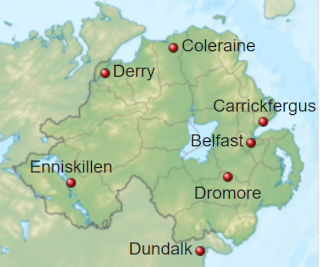
In Westminster elections McGrady contests South Down unsuccessfully in 1979, 1983 and at the by-election of January 1986, losing on each occasion to Enoch Powell, the sitting MP. He succeeds at the fourth attempt in the 1987 United Kingdom general election and holds the seat until his retirement in 2010. His tenure is briefly threatened in the mid-1990s when the Boundary Commission suggests merging much of his constituency with the neighbouring Newry and Armagh constituency to form a new “Newry and Mourne” constituency. This is overturned during a local review, which preserves his seat and actually removes more Unionist sections such as Dromore. His support holds solid over the years despite talk of a slippage, and this is reinforced in the 2005 United Kingdom general election with his re-election to the House of Commons.
On February 25, 2010, McGrady announces that he will stand down at the 2010 General Election. He continued to be chairperson of the Lecale Branch of the SDLP.
McGrady dies at the age of 78 in Downpatrick on November 11, 2013.
The Protestant forces are taken by surprise and there is little fighting, reflected in the term “Break,” a Scottish word for rout. Victory secures eastern Ulster for the Jacobites but they fail to fully exploit their success.
While much of the Protestant population of east Ulster supports the claim of William III to thrones of Ireland, England and Scotland, the rest of Ireland, including the Lord Deputy of Ireland, Richard Talbot, 1st Earl of Tyrconnell, and the army, support James II. As a result, war breaks out in Ireland after James is deposed in the Glorious Revolution. At the start of the conflict, the Jacobites are left in control of two fortified positions at Carrickfergus and Charlemont in territory which is predominantly Williamite in sympathy. The local Williamites raise a militia and meet in a council at Hillsborough. They make an ineffective assault on Carrickfergus. However, this is easily beaten off and a local Catholic cleric named O’Hegarty reports that the Williamite are badly armed and trained.
The Jacobite commander in the north is Richard Hamilton, an experienced soldier who serves with the French military from 1671 to 1685, when he is appointed a colonel in the Irish Army. In September 1688, he and his regiment are transferred to England. When James flees into exile, he is held in the Tower of London. Released on parole by William in February, he is sent to negotiate with Talbot but drops this mission once back in Ireland. Alexander Osbourne, a Presbyterian clergyman, is sent to offer the Hillsborough council a pardon in return for surrender but they refuse, reportedly encouraged by Osbourne. On March 8, Hamilton marches north from Drogheda with 2,500 men to subdue the Williamites by force.
On March 14 Hamilton crosses the River Lagan and attacks a 3,000 strong Williamite force under Lord Mount Alexander at Dromore. Alexander’s cavalry falls back in disorder following a charge by the Jacobite dragoons. Seeing this, Hamilton orders a general advance of his infantry and the Williamite foot flee toward Dromore itself. They are overtaken in the village by the Jacobite cavalry and slaughtered, roughly 400 being killed and the rest fleeing for their lives.
Lord Mount Alexander rides to Donaghadee and takes a ship to England, while many other Protestants leave for Northern England or Scotland. Hamilton’s men capture Hillsborough, along with £1,000 and large stocks of food but fail to pursue their opponents. This allows the bulk of the militia under Rawdon and Henry Baker to reach Coleraine, then make their way to Derry, where they take part in the successful defence of the city.
Cunningham is born in 1728 or 1729 at Ballymacilhoyle in the parish of Killead, County Antrim, the youngest son in the large family of John Cunningham and his wife, Jane, daughter of James Waddell of Islandderry, a townland in the parish of Dromore, County Down. The extended families of Cunningham and Waddell have interests in farming, linen, provisioning, and overseas trade. By 1752, no doubt with support from his family, Cunningham is in New York City trading near the meal market. Just as the Seven Years’ War is beginning in May 1757, he becomes the local partner of a Belfast merchant, Thomas Greg. While carrying on a wide range of commercial activities, the firm of Greg & Cunningham specialises in the flaxseed trade with Ireland and becomes “the most successful Irish American transatlantic trading partnership of the colonial period.” He amasses a large fortune from trade, some of it illicit, during the war, and becomes one of the largest shipowners in the American port. This enables the partners to purchase a 150-acre estate, which they rename “Belfast,” on the West Indies island of Dominica, just as it is passing, by the Treaty of Paris (1763), from French to British rule. It is possible that the estate is managed by Greg’s brother, John.
Sometime after suffering imprisonment for assaulting a fellow merchant (July–August 1763), Cunningham returns to Ireland, leaving the firm in the charge of junior partners until its dissolution in 1775. In Belfast he enters into a second partnership with Greg in May 1765 comprising all their business activities other than those in New York. In November 1765, he also marries Greg’s sister-in-law Margaret, second daughter of a Belfast merchant, Samuel Hyde. He lives in a large house in Hercules Street, later renamed Royal Avenue, which serves also as the premises for his many business interests, commercial, financial, industrial, and agricultural. In 1767, he and Greg start the manufacture of vitriol at a factory by the River Lagan at Lisburn, 12 km from Belfast. They open up fisheries in Donegal and Sligo, exporting herring to the West Indies as food for slaves. They also trade Irish horses and mules for West Indian sugar and American tobacco, the sugar being processed by them at the New Sugar House in Waring Street, Belfast. During the American Revolutionary War (1775–83), he illegally ships linen uniforms to the insurgent colonists. He becomes a middleman on the estate of Arthur Chichester, 5th Earl of Donegall, by obtaining leases of land in the Templepatrick district of County Antrim, a venture that involves him in disputes with tenant farmers resulting in an attack by the Hearts of Steel on Belfast and the destruction by fire of his home on December 23, 1771.
Despite this setback, Cunningham becomes the foremost Belfast merchant. As well as those mentioned, he has interests in shipping, brewing, glass manufacture and flour milling. When a chamber of commerce is set up in 1783, he is elected president, a position he holds until 1790. In the 1780s, in partnership with William Brown, John Campbell and Charles Ranken, he opens a bank. Known as Cunningham’s Bank, it closes on December 31, 1793, likely as a result of the recession brought on by the outbreak of war between England and France.
A prominent Volunteer, Cunningham joins the movement as a lieutenant in 1778 and is captain of the 1st Belfast company from 1780 until the dissolution of the Volunteers in 1793. Entering politics, he fails to be nominated as a parliamentary candidate for Belfast by its patron, Lord Donegall, at the general election of 1783, but stands for Carrickfergus at a February 1784 by-election on a platform of parliamentary reform and is returned – a rare distinction for a Presbyterian – by 474 votes to 289. A petition against his return is lodged successfully, but he remains an MP until March 1785, when he is defeated in a new election. It is during this period that he, probably the wealthiest, most enterprising merchant in Belfast and having, as he does, Caribbean interests, proposes in December 1784 fitting out a ship to engage in the Atlantic slave trade. The proposal comes to nothing but is the subject of intense debate in the 1920s between two rival Belfast local historians, Francis Joseph Bigger and Samuel Shannon Millin.
Cunningham plays a prominent role on several Belfast boards – those of White Linen Hall, the harbour, poorhouse, and dispensary. He gives money to the first Catholic chapel, St. Mary’s, opened in the town in 1784, and to the First Belfast Presbyterian congregation, as well as providing a site for a meeting house for his own congregation, Second Belfast, in 1767. Staunch in his advocacy of the reform of parliament, he becomes a member of the Northern Whig Club in 1790. He is cautious, however, about Catholic relief, for he fears its possible consequences. On July 14, 1792, an organiser of a Volunteer display to mark the third anniversary of the fall of the Bastille, he balks even at a very moderately worded resolution in favour of the Catholics. Thereafter he becomes increasingly ill-disposed toward reform and when the Belfast yeoman infantry is formed in 1797, he becomes captain of the 4th company.
Cunningham dies on December 15, 1797, at his restored house in Hercules Street. He and his wife have no children. His property in Ireland (worth £60,000) passes to James Douglas, youngest son of his sister Jane, who had married their first cousin, Cunningham’s personal clerk Robert Douglas. His name had already passed to Thomas Greg’s son, Cunningham Greg, who takes over Greg’s business after his death. Cunningham’s portrait is painted by Robert Home. A mausoleum is built over the Cunningham vault at Knockbreda Church cemetery overlooking Belfast.
(From: “Cunningham, Waddell” by C. J. Woods, Dictionary of Irish Biography, http://www.dib.ie, October 2009)
Ferguson is the son of a farmer. In 1902, he goes to work with his brother, Joe, in his bicycle and car repair business. While working there as a mechanic, he develops an interest in aviation, visiting air shows abroad. In 1904, he begins to race motorcycles.
The first person to accomplish powered flight in the UK is Alliot Verdon Roe in June 1908, who also flies an aeroplane of his own design, but this has not yet been achieved in Ireland. Ferguson begins to develop a keen interest in the mechanics of flying and travels to several air shows, including exhibitions in 1909 at Blackpool and Rheims where he takes notes of the design of early aircraft. He convinces his brother that they should attempt to build an aircraft at their Belfast workshop and, working from his notes, they work on the design of a plane, the Ferguson monoplane.
After making many changes and improvements, they transport their new aircraft by towing it behind a car through the streets of Belfast up to Hillsborough Park to make their first attempt at flight. They are at first thwarted by propeller trouble but continue to make technical alterations to the plane. After a delay of nearly a week caused by bad weather, the Ferguson monoplane finally takes off from Hillsborough on December 31, 1909. Ferguson becomes the first Irishman to fly and the first Irishman to build and fly his own aeroplane.
After falling out with his brother over the safety and future of aviation, Ferguson decides to go it alone, and in 1911 founds a company selling Maxwell, Star and Vauxhall cars and Overtime Tractors. He sees at first hand the weakness of having tractor and plough as separate articulated units, and in 1917 he devises a plough that can be rigidly attached to a Ford Model T car — the Eros, which becomes a limited success, competing with the Fordson Model F.
In 1917 Ferguson meets Charles E. Sorensen while Sorensen is in England scouting production sites for the Fordson tractor. They discuss methods of hitching the implement to the tractor to make them a unit. In 1920 and 1921 he demonstrates early versions of his three-point linkage on Fordson tractors at Cork and at Dearborn, Michigan. He and Henry Ford discuss putting the Ferguson system of hitch and implements onto Fordson tractors at the factory, but no deal is struck. At the time the hitch is mechanical. Ferguson and his team of longtime colleagues, including Willie Sands and Archie Greer, soon develop a hydraulic version, which is patented in 1926. After one or two false starts, he eventually founds the Ferguson-Sherman Inc., with Eber and George Sherman.
The new enterprise manufactures the Ferguson plough, incorporating the patented “Duplex” hitch system mainly intended for the Fordson “F” tractor. Following several more years of development, Ferguson’s new hydraulic version of the three-point linkage is first seen on his prototype “Ferguson Black” or ‘Irish tractor’ as he calls it, now in the Science Museum, South Kensington, London. A production version of the “Black” is introduced in May 1936, made at one of the David Brown Engineering Ltd. factories in Huddersfield, West Yorkshire, and designated Ferguson Model A tractor.
In October 1938, Ferguson demonstrates his latest tractor to Henry Ford at Dearborn, and they make the famous “handshake agreement.” He takes with him his latest patents covering future improvements to the Ferguson tractor and it is these that lead to the Ford-Ferguson 9N introduction to the world on June 29, 1939.
Henry Ford II, Ford’s grandson, ends the handshake agreement on June 30, 1947, following unsuccessful negotiations with Ferguson, but continues to produce a tractor, the 8N, incorporating Ferguson’s inventions, the patents on almost all of which have not yet expired, and Ferguson is left without a tractor to sell in North America. His reaction is a lawsuit demanding compensation for damage to his business and for Ford’s illegal use of his designs. The case is settled out of court in April 1952 for just over $9 million. The court case costs him about half of that and a great deal of stress and ill health.
By 1952, most of the important Ferguson patents have expired, and this allows Henry Ford II to claim that the case had not restricted Ford’s activities too much. It follows that all the world’s other tractor manufacturers can also use Ferguson’s inventions, which they do. A year later Ferguson merges with Massey-Harris Limited to become Massey-Harris-Ferguson Co., later Massey Ferguson.
Ferguson dies at his home at Stow-on-the-Wold, Gloucestershire, England, on October 25, 1960, as the result of a barbiturate overdose. The inquest is unable to conclude whether his death had been accidental or not.
A blue plaque commemorating Ferguson is mounted on the Ulster Bank building in Donegall Square, Belfast, the former site of his showroom. A granite memorial has been erected to Ferguson’s pioneering flight on the North Promenade, Newcastle, County Down, and a full-scale replica of the Ferguson monoplane and an early Ferguson tractor and plough can be seen at the Ulster Folk and Transport Museum at Cultra, County Down. Today his name lives on in the name of the Massey Ferguson company.
Ferguson is born on November 4, 1884, at Growell, near Dromore, County Down, in what is now Northern Ireland, the son of a farmer. In 1902, he goes to work with his brother, Joe, in his bicycle and car repair business. While working there as a mechanic, he develops an interest in aviation, visiting airshows abroad. In 1904, he begins to race motorcycles.
The first person to accomplish powered flight in the UK is Alliot Verdon Roe in June 1908, who also flies an aeroplane of his own design, but this has not yet been achieved in Ireland. Ferguson begins to develop a keen interest in the mechanics of flying and travels to several air shows, including exhibitions in 1909 at Blackpool and Rheims where he takes notes of the design of early aircraft. He convinces his brother that they should attempt to build an aircraft at their Belfast workshop and, working from his notes, they work on the design of a plane, the Ferguson monoplane.
After making many changes and improvements, they transport their new aircraft by towing it behind a car through the streets of Belfast up to Hillsborough Park to make their first attempt at flight. They are at first thwarted by propeller trouble but continue to make technical alterations to the plane. After a delay of nearly a week caused by bad weather, the Ferguson monoplane finally takes off from Hillsborough on December 31, 1909. Ferguson becomes the first Irishman to fly and the first Irishman to build and fly his own aeroplane.
After falling out with his brother over the safety and future of aviation, Ferguson decides to go it alone, and in 1911 founds a company selling Maxwell, Star and Vauxhall cars and Overtime Tractors. He sees at first hand the weakness of having tractor and plough as separate articulated units, and in 1917 he devises a plough that can be rigidly attached to a Ford Model T car — the Eros, which becomes a limited success, competing with the Fordson Model F.
In 1917 Ferguson meets Charles E. Sorensen while Sorensen is in England scouting production sites for the Fordson tractor. They discuss methods of hitching the implement to the tractor to make them a unit. In 1920 and 1921 he demonstrates early versions of his three-point linkage on Fordson tractors at Cork and at Dearborn, Michigan. He and Henry Ford discuss putting the Ferguson system of hitch and implements onto Fordson tractors at the factory, but no deal is struck. At the time the hitch is mechanical. Ferguson and his team of longtime colleagues, including Willie Sands and Archie Greer, soon develop a hydraulic version, which is patented in 1926. After one or two false starts, he eventually founds the Ferguson-Sherman Inc., with Eber and George Sherman.
The new enterprise manufactures the Ferguson plough, incorporating the patented “Duplex” hitch system mainly intended for the Fordson “F” tractor. Following several more years of development, Ferguson’s new hydraulic version of the three-point linkage is first seen on his prototype “Ferguson Black” or ‘Irish tractor’ as he calls it, now in the Science Museum, South Kensington, London. A production version of the “Black” is introduced in May 1936, made at one of the David Brown Engineering Ltd. factories in Huddersfield, West Yorkshire, and designated Ferguson Model A tractor.
In October 1938, Ferguson demonstrates his latest tractor to Henry Ford at Dearborn, and they make the famous “handshake agreement.” He takes with him his latest patents covering future improvements to the Ferguson tractor and it is these that lead to the Ford-Ferguson 9N introduction to the world on June 29, 1939.
Henry Ford II, Ford’s grandson, ends the handshake agreement on June 30, 1947, following unsuccessful negotiations with Ferguson, but continues to produce a tractor, the 8N, incorporating Ferguson’s inventions, the patents on almost all of which have not yet expired, and Ferguson is left without a tractor to sell in North America. His reaction is a lawsuit demanding compensation for damage to his business and for Ford’s illegal use of his designs. The case is settled out of court in April 1952 for just over $9 million. The court case costs him about half of that and a great deal of stress and ill health.
By 1952, most of the important Ferguson patents have expired, and this allows Henry Ford II to claim that the case had not restricted Ford’s activities too much. It follows that all the world’s other tractor manufacturers can also use Ferguson’s inventions, which they do. A year later Ferguson merges with Massey-Harris Limited to become Massey-Harris-Ferguson Co., later Massey Ferguson.
Ferguson dies at his home at Stow-on-the-Wold on October 25, 1960, as the result of a barbiturate overdose. The inquest is unable to conclude whether his death had been accidental or not.
A blue plaque commemorating Ferguson is mounted on the Ulster Bank building in Donegall Square, Belfast, the former site of his showroom. A granite memorial has been erected to Ferguson’s pioneering flight on the North Promenade, Newcastle, County Down, and a full-scale replica of the Ferguson monoplane and an early Ferguson tractor and plough can be seen at the Ulster Folk and Transport Museum at Cultra.



 seamus dubhghaill