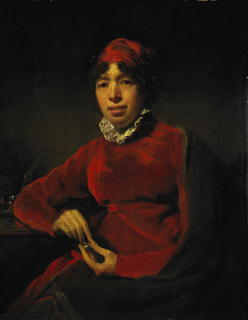
Hamilton is born to Charles Hamilton (d.1759), a Scottish merchant, and his wife Katherine Mackay (d.1767). She lives most of her life in Scotland, moving there in 1762 to live with a Mrs. Marshall, her paternal aunt, near Stirling and spending much of her later life in Edinburgh.
Hamilton’s first literary efforts are directed in supporting her brother Charles in his orientalist and linguistic studies. After his death in 1792 she continues to publish orientalist scholarship, as well as historical, educationalist and theoretical works. She writes The Cottagers of Glenburnie (1808), a tale which has much popularity in the day, and perhaps has some effect in the improvement of certain aspects of humble domestic life in Scotland. She also writes the anti-Jacobin novel Memoirs of Modern Philosophers (1800), and the satirical Translation of the Letters of a Hindoo Rajah in 1796, a work in the tradition of Montesquieu and Oliver Goldsmith. Her most important pedagogical works are Letters on Education (1801), Letters on the Elementary Principles of Education (1801), Letters addressed to the Daughter of a Nobleman, on the Formation of Religious and Moral Principle (1806), and Hints addressed to the Patrons and Directors of Schools (1815).
After the failure of the Young Ireland Rebellion of 1848, O’Leary attempts to rescue the Young Ireland leaders from Clonmel Gaol, and is himself imprisoned for a week from September 8, 1849. He takes part in a further attempted uprising in Cashel on September 16, 1849, but this proves abortive.
On September 16, 1865, O’Leary is arrested and later tried on charges of high treason, eventually reduced to “treason felony.” He is sentenced to twenty years of penal servitude, of which five years are spent in English prisons, prior to his release and exile in January 1871. During his exile, he lives mainly in Paris, also visiting the United States, remains active in the IRB and its associated organisations, and writes many letters to newspapers and journals.
On the expiration of his 20-year prison term and therefore of the conditions associated with his release in 1885, O’Leary returns to Ireland. He and his sister, the poetEllen O’Leary, both become important figures within Dublin cultural and nationalist circles, which include William Butler Yeats, Maud Gonne, Rose Kavanagh, Rosa Mulholland, George Sigerson, and Katharine Tynan. He also functions as an elder statesman of the separatist movement, being active in the Young Ireland Society, and acts as president of the Irish Transvaal Committee, which supports the Boer side in the Second Boer War.
John O’Leary dies at his residence in Dublin on the evening of March 16, 1907. He is referred to famously by W.B. Yeats in his poem September 1913: “Romantic Ireland’s dead and gone/It’s with O’Leary in the grave.”
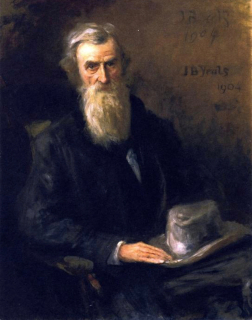
(Pictured: Painting of John O’Leary, a favorite subject of John Butler Yeats (1904). The National Gallery of Ireland owns three oil portraits of O’Leary.)
Kennedy’s father, Joseph Hamilton Kennedy, is a policeman in the Royal Irish Constabulary (RIC). While growing up in the village of Coagh, Kennedy writes several songs and poems. He is inspired by local surroundings — the view of the Ballinderry River, the local Springhill House and the plentiful chestnut trees on his family’s property, as evidenced in his poem Chestnut Trees. He later moves to Portstewart, a seaside resort in County Londonderry.
While awaiting a Colonial Service posting to the colony of Nigeria, Kennedy embarks on a career in songwriting. His first success comes in 1930 with “The Barmaid’s Song”, sung by Gracie Fields. Fellow lyricist Harry Castling introduces him to Bert Feldman, a music publisher based in London‘s “Tin Pan Alley“, for whom he starts to work. In the early 1930s he writes a number of successful songs, including “Oh, Donna Clara” (1930), “My Song Goes Round the World” (1931), and “The Teddy Bears’ Picnic” (1933), in which he provides new lyrics to John Walter Bratton‘s tune from 1907.
In 1934, Feldman turns down Kennedy’s song “Isle of Capri“, but it becomes a major hit for a new publisher, Peter Maurice. He writes several more successful songs for Maurice, including “Red Sails in the Sunset” (1935), inspired by beautiful summer evenings in Portstewart, Northern Ireland, “Harbour Lights” (1937) and “South of the Border” (1939), inspired by a holiday picture postcard he receives from Tijuana, Mexico and written with composer Michael Carr. He and Carr also collaborate on several West End shows in the 1930s, including London Rhapsody (1937). “My Prayer,” with original music by Georges Boulanger, has English lyrics penned by Kennedy in 1939. It is originally written by Boulanger with the title “Avant de Mourir” in 1926.
During the early stages of World War II, while serving in the British Army‘s Royal Artillery, where he rises to the rank of Captain, Kennedy writes the wartime hit, “We’re Going to Hang out the Washing on the Siegfried Line.” His hits also include “Cokey Cokey” (1945), and the English lyrics to “Lili Marlene.” After the end of the war, his songs include “Apple Blossom Wedding” (1947), “Istanbul (Not Constantinople)” (1953), and “Love Is Like a Violin” (1960). In the 1960s he writes the song “The Banks of the Erne'”, for recording by his friend from the war years, Theo Hyde, also known as Ray Warren.
Kennedy is a patron of the Castlebar Song Contest from 1973 until his death in 1984 and his association with the event adds great prestige to the contest.
O’Connor is born into a prominent Irish Protestant family who claims to be the descendants of the 12th-century king Ruaidrí Ua Conchobair. He is educated mainly at Portarlington Grammar School and has some elementary schooling in England.
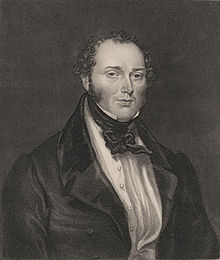
O’Connor practices law but exchanges law for politics when he enters the British Parliament in 1832 as a member for County Cork. Unseated in 1835, he turns to radical agitation in England, although he continues to press Irish grievances and to seek Irish support. As a result of his humour, invective, and energy, he becomes the best-known Chartist leader and the movement’s most popular speaker. His journal, the Northern Star (founded in 1837), gains a wide circulation.
O’Connor’s methods and views alienate other Chartist leaders, particularly William Lovett, but in 1841, after spending a year in prison for seditious libel, he acquires undisputed leadership of the Chartists. Failing to lead the movement to victory and vacillating in his attitude toward the middle class and toward the People’s Charter, a six-point bill drafted and published in May 1838, he begins to lose power, although he is elected to Parliament for Nottingham in 1847. The failure of the People’s Charter in 1848 marks the beginning of the end for O’Connor, whose egocentricity is already bordering on madness.
The circulation of the Northern Star falls steadily, and it loses money. O’Connor’s health is failing, and reports of his mental breakdown regularly appear in the newspapers. In the spring of 1852, he visits the United States, where his behaviour leaves no doubt that he is not a well man.
In 1852 in the House of Commons O’Connor strikes three fellow MPs, one of them Sir Benjamin Hall, a vocal critic of the Land Plan. Arrested by the Deputy Sergeant-at-Arms, he is sent by his sister to Dr. Thomas Harrington Tuke‘s private Manor House Asylum in Chiswick, where he remains until 1854, when he is moved to his sister’s house. He dies on August 30, 1855, at 18 Albert Terrace, Notting Hill Gate and is buried on September 10 in Kensal Green Cemetery. No fewer than 40,000 people witness the funeral procession. Most Chartists preferred to remember O’Connor’s strengths rather than his shortcomings.
To make up for a deficiency in their living Hannay writes a short story and sends it to a London publisher. It is accepted for publication, and he receives a check of £10. On his wife’s advice, he gives up writing fiction and commits himself to the study of Christian theology with her. This bears fruit with the publications of The Spirit and Origin of Christian Monasticism (1903) and The Wisdom of the Desert (1904).
Hannay then serves as rector of Holy Trinity Church in Westport, County Mayo. It is here that he makes his debut as a novelist. His early writings raise the ire of nationalist Catholics, and he withdraws from the Gaelic League in the wake of ongoing protests about the tour of his successful play General John Regan.
Hannay becomes rector of Kildare parish from 1918 to 1920, and after serving as chaplain to the Lord Lieutenant of Ireland, he joins the British ambassadorial team in Budapest in 1922. He returns to officiate at Mells, Somerset from 1924 to 1934, after which he is appointed vicar of Holy Trinity Church in the London suburb of Kensington where he serves from 1934 until his death in London on February 2, 1950.
Hannay enjoys sailing and is taught the rudiments by his father and grandfather in Belfast. When he is based in Westport, the financial success of his writing enables him to purchase a boat, a Dublin Bay Water Wag. In recognition of Hannay, the Water Wag Club of Dun Laoghaire returns to Westport and Clew Bay in 2016. In the frontispiece of his book The Inviolable Sanctuary Hannay includes a picture of the Water Wag.
Roberts’s father, Rex Roberts, played double bass with a dance band called The Melodists in the 1940s. The headmaster at The High School, Dublin, calls his father in one day to suggest that he consider move his son to a boarding school as he is spending a lot of time in detention.
After being bribed with the promise of a bicycle, Roberts is moved to a Quaker-run boarding school, Newtown School, Waterford. The move proves successful but not for the anticipated reasons. He quickly takes notice of the electric guitars of the school band and realizes that is to be his future.
In 1976, Roberts and Johnnie Fingers (Moylett) decide to put a band together and, between them, they recruit the other four members, Pete Briquette (bass), Gerry Cott (guitar), Simon Crowe (drums) and singer Bob Geldof to form The Boomtown Rats.
Following the breakup of The Boomtown Rats in 1986, Roberts works with Simply Red, Orchestral Manoeuvres in the Dark and Flesh For Lulu in the role of audio engineer on tours in the UK and the United States. He avoids playing the guitar in public for ten years, after which he and Simon Crowe play together for four years in the rhythm and blues four-piece band The Velcro Flies.
After fifteen successful years as an Independent Financial Adviser, Roberts becomes disillusioned with the life insurance industry and becomes a central heating engineer to keep himself occupied between gigs. Roberts and Crowe, with Darren Beale on second lead guitar, and Peter Barton on bass guitar and lead vocals, are now playing together as Boomtown Rats Roberts and Crowe, and are performing material from the Boomtown Rats’ first three albums across Europe and the UK.
After playing for the Shamrock Rovers F.C. under-18 squad at the age of 11, Jennings concentrates on Gaelic football until he is sixteen years old, when he makes his soccer comeback with his hometown Newry City F.C. After impressing with the team, he moves to English Third DivisionWatford F.C. in May 1963. He again impresses in his first season in England, playing every league game for his club, and making two international appearances that season. He is signed by Tottenham Hotspur F.C. for £27,000 in June 1964.
Jennings spends thirteen years at White Hart Lane, where he plays in 472 league games for the Spurs, and 591 in all competitions. He wins the FA Cup in 1967, the League Cup in 1971 and 1973, and the UEFA Cup in 1972. In 1973 the Football Writers’ Association name him as its footballer of the year. Three years later he wins the Professional Footballers’ Association‘s (PFA) version of the award, the first goalkeeper to receive this accolade.
In August 1977, Jennings is transferred to Tottenham’s arch-rivals, Arsenal F.C., with Tottenham thinking he is nearing the end of his career. However, Jennings plays for Arsenal for another eight years where he helps Arsenal to the FA Cup final in 1978, 1979, and 1980, as well as the UEFA Cup Winners’ Cup final that year. However, Arsenal only manages to win the second of these finals, a 3–2 victory against Manchester United F.C. In total, Jennings makes 327 appearances for Arsenal between 1977 and his eventual retirement from first-team club football in 1985. On February 26, 1983, he becomes the first player in English football to make 1,000 senior appearances, celebrating this milestone with a clean sheet in a goalless league draw for Arsenal at West Bromwich Albion F.C.
After his retirement, Jennings returns to Tottenham Hotspur, playing mostly in their reserve side to maintain his match sharpness for Northern Ireland’s 1986 FIFA World Cup campaign. His final appearance for Tottenham is in the Football League Super Cup against Liverpool F.C. in January 1986. He also plays briefly for Everton F.C., having been signed as goalkeeping cover for the 1986 FA Cup Final against Liverpool.
Despite retiring from club football in 1985, Jennings plays his final international game at the 1986 FIFA World Cup, on his 41st birthday, making him at the time the World Cup’s oldest ever participant. The match is Northern Ireland’s final group game, a 3–0 defeat against Brazil. In total, he participates in the qualifying stages of six World Cups between 1966 and 1986.
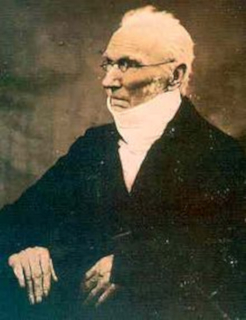
Brontë is the first of ten children born to Hugh Brunty, a farm labourer, and Alice McClory, in Drumballyroney, County Down. At one point in his adult life, he formally changes the spelling of his name from Brunty to Brontë.
Brontë has several apprenticeships until he becomes a teacher in 1798. He moves to England in 1802 to study theology at St. John’s College, Cambridge, and receives his BA degree in 1806. He is then appointed curate at Wethersfield, Essex, where he is ordained a deacon of the Church of England in 1806, and into the priesthood in 1807.
In 1809, Brontë becomes assistant curate at Wellington, Shropshire, and in 1810 his first published poem, Winter Evening Thoughts, appears in a local newspaper, followed in 1811 by a collection of moral verses, Cottage Poems. He moves to the West Riding of Yorkshire in 1811 as assistant curate at Hartshead, where he serves until 1815. In the meantime he is appointed a school examiner at a Wesleyan academy, Woodhouse Grove School, near Guiseley. In 1815 he moves again on becoming perpetual curate of Thornton. At Guiseley, Brontë meets Maria Branwell, whom he marries on December 29, 1812.
Brontë is offered the perpetual curacy of St. Michael and All Angels’ Church, Haworth in June 1819, and he takes the family there in April 1820. His sister-in-law Elizabeth Branwell, who had lived with the family at Thornton in 1815, joins the household in 1821 to help to look after the children and to care for Maria Brontë, who is suffering the final stages of uterine cancer. She decides to move permanently to Haworth to act as housekeeper.
After several attempts to seek a new spouse, Brontë comes to terms with widowhood at the age of 47, and spends his time visiting the sick and the poor, giving sermons, communion, and extreme unction, leaving his children alone with their aunt and a maid, Tabitha Aykroyd (Tabby), who tirelessly recounts local legends in her Yorkshire dialect while preparing the meals.
Brontë is responsible for the building of a Sunday school in Haworth, which he opens in 1832. He remains active in local causes into his old age, and between 1849 and 1850 organises action to procure a clean water supply for the village, which is eventually achieved in 1856.
In August 1846, Brontë travels to Manchester, accompanied by Charlotte, to undergo surgery on his eyes. On August 28 he is operated upon, without anaesthetic, to remove cataracts. Surgeons do not yet know how to use stitches to hold the incision in the eye together and as a consequence the patient is required to lie quietly in a darkened room for weeks after the operation. Charlotte uses her time in Manchester to begin writing Jane Eyre, the book which is to make her famous.
Following the death of his last surviving child, Charlotte, nine months after her marriage, he co-operates with Elizabeth Gaskell on the biography of his daughter. He is also responsible for the posthumous publication of Charlotte’s first novel, The Professor, in 1857. Charlotte’s husband, Arthur Bell Nicholls, who had been Brontë’s curate, stays in the household until he returns to Ireland after Brontë’s death, at the age of 84, on June 7, 1861. Brontë outlives not only his wife (by 40 years) but all six of his children.
In 1908, at the age of ten, de Valois starts attending ballet lessons. At the age of thirteen she begins her professional training at the Lila Field Academy for Children. It is at this time that she changes her name and makes her professional debut as a principal dancer in pantomime at the Lyceum Theatre in the West End.
The success of de Valois’s ballet Job: A Masque for Dancing for the Camargo Society in 1931, followed by her association with Lilian Baylis, director of the Old Vic Theatre, leads to the founding in 1931 of the Vic-Wells Ballet Company and the Sadler’s Wells School. She traces the history of the company, from its founding until it becomes the Royal Ballet in 1956, in Invitation to the Ballet (1937) and Come Dance with Me (1957).
Besides directing the company that she created, de Valois choreographs numerous ballets, including Checkmate (1937) and Don Quixote (1950). By drawing from English tradition for her choreographic material, as in The Rake’s Progress (1935), inspired by William Hogarth’s series of engravings, and The Prospect Before Us (1940), modeled on Thomas Rowlandson’s caricature of the same name, she creates a uniquely national ballet company. Her narrative ballets include prominent roles for male dancers, giving them artistic opportunities often neglected by other choreographers.
In 1963 de Valois retires as director of the Royal Ballet, although she remains head of the school until 1972. She is created a Dame of the British Empire in 1951 and is named Companion of Honour in 1980.
de Valois keeps her private life very distinct from her professional life, making only the briefest of references to her marriage to Dr. Arthur Blackall Connell, a physician and surgeon from Wandsworth, in her autobiographical writings. In April 1964 she is the subject of This Is Your Life, when she is surprised by Eamonn Andrews at the home of the dancer Frederick Ashton in London. She continues to make public appearances until her death in London on March 8, 2001 at the age of 102.
Gaughan, the eldest of six children, is born in Ballina, County Mayo, on October 5, 1949. He grows up at Healy Terrace and is educated at St. Muredach’s College, Ballina. After finishing his schooling, he emigrates from Ireland to England in search of work.
While in London, Gaughan becomes a member of the Official Irish Republican Army through Official Sinn Féin‘s English wing Clann na hÉireann and becomes an IRA volunteer in a London-based Active Service Unit. In December 1971, he is sentenced at the Old Bailey to seven years imprisonment for his part in an IRA fundraising mission to rob a bank in Hornsey, north London, which yields just £530, and for the possession of two revolvers.
Gaughan is initially imprisoned at Wormwood Scrubs, where he spends two years before being transferred to the top security HM Prison Albany on the Isle of Wight. While at Albany Prison, he requests political status, which is refused, and he is then placed in solitary confinement. He is later transferred to Parkhurst Prison, where four of the Belfast Ten are on hunger strike for political status.
On March 31, 1974, Gaughan, along with current Sinn Féin MLA Gerry Kelly, Paul Holme, Hugh Feeney and fellow Mayoman Frank Stagg, go on hunger strike to support the fight of Dolours and Marion Price to obtain political status and to be transferred to a jail in Ireland. The prisoners’ demands are as follows:
The right to political status
The right to wear their own clothes
A guarantee that they would not be returned to solitary confinement
The right to educational facilities and not engage in penal labour
The setting of a reasonable date for a transfer to an Irish prison
British policy at this time is to force-feed hunger strikers. According to the National Hunger Strike Commemoration Committee, “six to eight guards would restrain the prisoner and drag him or her by the hair to the top of the bed, where they would stretch the prisoner’s neck over the metal rail, force a block between his or her teeth and then pass a feeding tube, which extended down the throat, through a hole in the block.”
After visiting Gaughan in jail, his brother John describes his condition, “His throat had been badly cut by force feeding and his teeth loosened. His eyes were sunken, his cheeks hollow and his mouth was gaping open. He weighed about six stone.”
During his hunger strike, Gaughan’s weight drops from 160 lbs. to 84 lbs. He is force-fed for the first time on April 22, and this occurs 17 times during course of his hunger strike. The last time he is force-fed is the night before his death. After a hunger strike that lasts 64 days, Michael Gaughan dies on Monday, June 3, 1974, at the age of 24.
The cause of Gaughan’s death is disputed. The British government states that he died of pneumonia. The Gaughan family state that he died after prison doctors injured him fatally when food lodged in a lung punctured by a force-feeding tube. His death causes controversy in English medical circles, as some forms of treatment can be classed as assault if given without the express permission of the patient.
The timing of Gaughan’s death comes just one week after the British Government had capitulated to the demands of Ulster loyalist hunger strikers. After his death, the British government’s policy of force-feeding ends and the remaining hunger strikers are given assurances that they will be repatriated to Irish prisons. However, these promises are reneged on by the British government.
Gaughan’s body is initially removed from London and on June 7-8 over 3,000 mourners line the streets of Kilburn and march behind his coffin, which is flanked by an IRA honour guard, to a Requiem Mass held in the Church of the Sacred Heart of Jesus.
Following the Requiem Mass, his body is transported to Dublin, where again it is met by mourners and another IRA honour guard who bring it to the Church of the Immaculate Conception on Merchant’s Quay, where thousands file past as it lay in state. The following day, his body is removed to Ballina, County Mayo. A funeral mass takes place on June 9, at St. Muredach’s Cathedral, and the procession then leads to Leigue Cemetery. Gaughan is given a full IRA funeral and is laid to rest in the republican plot, where Frank Stagg would join him after being reburied in November 1976. His funeral is attended by over 50,000 people and is larger than the funeral of former president Éamon de Valera the following year.





 seamus dubhghaill