Hyde-Lees is the daughter of militia captain (William) Gilbert Hyde-Lees (1865–1909), of the Manchester Regiment, and Edith “Nelly” Ellen (1868–1942), daughter of barrister and manufacturer Montagu Woodmass, JP. Her father is regarded by her mother’s family as “a most undesirable character, but ‘rolling in money,'” having taken up the life of a “gentleman alcoholic” on resigning his commission after receiving an inheritance from his wealthy uncle Harold Lees, of Pickhill Hall, near Wrexham, then part of Denbighshire. He is “attractive, reckless, witty, and… musical,” and fond of pranks. She has an elder brother, Harold (1890–1963), who becomes a clergyman, with “rigid moral standards” and “a less than joyous existence,” his only indulgence being “a fine collection of drawings and etchings.” When she is only a few years old, her parents’ marriage fails due to her father’s alcoholism. Her father has enough income to support his family, allowing Georgie and her mother to spend “a good deal of their time” travelling in Europe, but his wife is in the awkward social position of being a “married woman without a husband.” The family lives a vaguely bohemian and nomadic lifestyle, travelling frequently to country homes and spending long periods visiting relatives.
Hyde-Lees attends a number of schools in Knightsbridge, London art schools, studies languages and classics, and piano. She becomes a close friend of Dorothy Shakespear, who is fond of Georgie and shares many of her interests despite being six years her senior. After the death of her father in 1909 at the age of 44, her mother marries Dorothy’s uncle, Henry Tucker, Olivia Shakespear‘s brother, and they move to Kensington.
Hyde-Lee’s mother often brings young musicians and artists she has recently met to Olivia Shakespear’s salon, many of whom become well-known modernists, including Ezra Pound, Walter Rummel, and Frederic Manning. She continues to make the rounds of country estates with her mother and Olivia and Dorothy Shakespear. It is in their company in 1910 or 1911, as a seventeen-year-old, that one morning she meets W. B. Yeats at the British Museum and again that afternoon during tea at the Shakespears.
Seven years later, when Hyde-Lees is 25 and Yeats is 52, he asks her to marry him. Only a few weeks earlier, Iseult Gonne, the daughter of Maud Gonne whom Yeats had loved for many years, had rejected his marriage proposal. She and Yeats marry just three weeks later, on October 20, 1917, in a public register office, witnessed by her mother and Ezra Pound. During the honeymoon, while Yeats is still brooding about Iseult’s rejection, she begins the automatic writing which fascinates him. Yeats writes about her psychography days later in what is to be A Vision (1925), and it holds the marriage together for many years. Within a year of marriage, Yeats declares her name of Georgie to be insufferable, and henceforth calls her George.
Siobhan Maire Fahey, Irish singer and founding member of the British girl group Bananarama, who have ten top-10 hits including the U.S. number one hit single “Venus,” is born on September 10, 1958, in County Meath. She is the first Irish-born woman to have written two number one singles on the Irish charts. She later forms the musical act Shakespears Sister, who have a UK number one hit with the 1992 single “Stay.” She joins the other original members of Bananarama for a 2017 UK tour, and, in 2018, a North America and Europe tour.
Fahey is the daughter of Helen and Joseph Fahey, both from County Tipperary. She has two younger sisters, Maire (who plays Eileen in the video of the 1982 song “Come On Eileen,” a hit for Dexys Midnight Runners) and Niamh, a producer and editor. She lives in Ireland for several years before her father joins the British Army and the family moves to England, then to Germany for several years, and back to England when she is nine years old. When she is 14, she and her family move to Harpenden, Hertfordshire, and, two years later, she leaves home for London and becomes involved in the punk scene of the late 1970s.
In 1988, frustrated with the direction she feels Bananarama is heading, Fahey leaves the group and forms Shakespears Sister. Initially, she effectively is Shakespears Sister, though American singer/songwriter Marcella Detroit later becomes an official member, making the outfit a duo. Their 1992 single “Stay” spends eight weeks at number one on the UK Singles Chart and wins the 1993 Brit Award for Best British Video. At the 1993 Ivor Novello Awards, she, Detroit, and Dave Stewart receive the award for Outstanding Contemporary Song Collection. She often appears in the band’s music videos and on-stage as a vampish glam figure. After two successful albums, tensions begin to rise between Fahey and Detroit and they split up in 1993. That year, Fahey admits herself into a psychiatric unit with severe depression.
In 1996, Fahey continues as Shakespears Sister by herself and releases the single “I Can Drive.” Intended as the first single from Shakespears Sister’s third album and her first record since her split with Marcella Detroit, the single performs disappointingly (UK number 30), which prompts London Records not to release the album. Following this, she leaves the label and, after a lengthy battle, finally obtains the rights to release the album (entitled #3) independently through her own website in 2004.
Fahey briefly re-joins Bananarama in 1998 to record a cover version of ABBA‘s “Waterloo” for the Channel 4 Eurovision special A Song for Eurotrash. She reteams with Bananarama again in 2002 for a “last ever” reunion at the band’s 20th-anniversary concert at G-A-Y in London. The trio performs “Venus” and “Waterloo.”
Fahey continues to make music into the new millennium. In 2005, she independently releases The MGA Sessions, an album recorded with frequent collaborator Sophie Muller in the mid-1990s. Her most recent single under her own name, “Bad Blood,” is released on October 17, 2005.
Fahey’s track “Bitter Pill” is partially covered by the pop band The Pussycat Dolls on their 2005 debut album PCD. The verses, which were slightly altered, and the overall sound of the song are from “Bitter Pill,” but added in is the chorus of Donna Summer‘s “Hot Stuff.” The song is renamed “Hot Stuff (I Want You Back)” and a remix is included as a B-side to their hit single “Beep.”
In 2008, Fahey appears in the Chris Ward-written and directed short film What Shall We Do with the Drunken Sailor, based on the life of artist/model Nina Hamnett, self-styled “Queen of Bohemia,” with Fahey playing the role of Hamnett opposite actor Clive Arrindel, Donny Tourette, frontman with punk band Towers of London, and Honey Bane, former vocalist of the punk band Fatal Microbes.
In 2009, Fahey decides to resurrect the Shakespears Sister name and releases a new album. Entitled Songs from the Red Room, it is released on her own record label, SF Records, and includes various singles she had released under her own name in recent years. She performs her first live show in almost 15 years as Shakespears Sister in Hoxton, London, on November 20, 2009. In 2014 she joins the line-up of Dexys Midnight Runners for some shows, including at Glastonbury Festival.
In 2017, it is announced that Fahey has joined her former Bananarama bandmates for an upcoming UK tour. This is the first live tour she has done as a member of Bananarama.
In 2019, Fahey reunites with Marcella Detroit for Shakespears Sister dates, commencing with an appearance on BBC One‘s The Graham Norton Show on May 10, 2019.
Fahey marries Dave Stewart of Eurythmics in 1987; the couple divorces in 1996. They have two sons, Samuel (born November 26, 1987) and Django James (born 1991). The two brothers form a musical band called Nightmare and the Cat. As an infant, Samuel Stewart appears in early Shakespears Sister videos for “Heroine” and “You’re History.” Django Stewart is also an actor. Samuel is currently the guitarist for the American indie rock band Lo Moon.
Cluney tours briefly with the band Dark Lady supporting Jake Burns and the Big Wheel, notably at the Marquee Club in Wardour Street, Soho, City of Westminster, London, but then spends five years back in Belfast teaching guitar until Stiff Little Fingers is reformed. He is a regular songwriting contributor for the group’s first four albums, taking over lead vocal duties on his own compositions. He leaves the group amid some acrimony in 1993.
Cluney moves to Rochester, Minnesota, in 1997, keeping up his involvement in music, playing guitar with several regional rock bands.
Cluney completes a feature-length film in 2009 and tours the United Kingdom for the first time in fifteen years, as the opening for The Damned and The Alarm on their 341 tour. He subsequently tours the next two years, as a solo artist, and in 2013 forms XSLF with former bandmate Jim Reilly, and friend, Ave Tsarion.
Cluney currently lives in Rochester with his wife, Carol, while touring frequently throughout the United Kingdom (including Northern Ireland), Ireland and Europe with his nephew David Cluney who also plays the guitar.
Hamilton is the daughter of Charles Robert Hamilton and Louisa Caroline Elizabeth Brooke. She attends Alexandra College. She and her sister Eva are great-granddaughters of the artist Marianne-Caroline Hamilton, and cousins of watercolouristRose Maynard Barton. The sisters’ father can only afford one dowry, so the sisters remain unmarried, with their artistic careers helping to support the household. Both she and her sister study at the Dublin Metropolitan School of Art under William Orpen. She studies enameling there also, winning a silver medal in 1912 by both the School and the Board of Education National Commission. Her work shows elements of Art Nouveau, foreshadowing her later modernist leanings. She also studies in Belgium with Frank Brangwyn and the Slade School of Fine Art.
Hamilton first exhibits in 1902 and goes go on to become a prolific painter of the Irish countryside, exhibiting more than 200 paintings at the Royal Hibernian Academy (RHA). Both sisters travel widely in Europe, with Letitia being influenced by modern European artistic trends of the early 20th-century. She is internationally exhibited, Royal Academy of Arts, Burlington Gallery and Kensington Art Gallery in London, in Scotland, and Paris. Her exposure to impressionism comes from studying with Anne St. John Partridge in France. Her style matures in the 1920s. That year, she is one of the founding members of the Society of Dublin Painters, along with Paul Henry, Grace Henry, Mary Swanzy, and Jack Butler Yeats. It is around this time that she changes her signature from MH (May Hamilton) to LMH, reflecting her full name. She works on small oil sketches, which later develop into finished works. Her style is rapid, with loose, fluid brush strokes. In the early 1920s, she travels to Venice, painting on a gondola studio loaned to her by artist and friend Ada Longfield. The works from this trip are considered among her best, with her exploring light effects, pastel shades, and strong outlines. She later employs these elements into her works on Irish landscapes.
Hamilton becomes a member of the Royal Hibernian Academy in 1943. In 1948, she becomes the last person to win a bronze medal at the art competitions at the London Olympic Games. She serves as president of the Society of Dublin Painters in the late 1950s. Despite her failing eyesight later in life, she continues to paint, mounting her final exhibition in 1963, a year before her death at the age of 86 in Dublin on August 11, 1964. She is also a committee member of the Water Colour Society of Ireland.
Jack “Legs” Diamond, an Irish Americangangster in Philadelphia and New York City during the Prohibition era also known as John Nolan and Gentleman Jack, is born in Philadelphia on July 10, 1897, to Sara and John Moran, who emigrated from Ireland to Philadelphia in 1891. A bootlegger and close associate of gambler Arnold Rothstein, he survives a number of attempts on his life between 1916 and 1931, causing him to be known as the “clay pigeon of the underworld.” In 1930, his nemesis Dutch Schultz remarks to his own gang, “Ain’t there nobody that can shoot this guy so he don’t bounce back?”
In 1899, Diamond’s younger brother Eddie is born. He and Eddie both struggle through grade school, and their mother suffers from severe arthritis and other health problems. She passes away on December 24, 1913, following complications brought on by a bacterial infection and a high fever. John Moran then moves his family to Brooklyn, New York.
Diamond soon joins a Manhattan street gang called the Hudson Dusters. His first arrest for burglary occurs when he breaks into a jewelry store on February 4, 1914. He serves in the United States Army in World War I but is convicted and jailed for desertion in 1918 or 1919. He serves two years of a three- to five-year sentence at Leavenworth Military Prison. After being released in 1921, he becomes a hired thug and later personal bodyguard for crime boss Arnold Rothstein.
Diamond is known for leading a rather flamboyant lifestyle. He is an energetic individual, his nickname “Legs” derived either from his being a good dancer or from how fast he could escape his enemies. His wife Alice is never supportive of his life of crime but does not do much to dissuade him from it. He is a womanizer, with his best-known mistress being a showgirl and dancer, Marion “Kiki” Roberts.
In the late 1920s, Prohibition is in force, and the sale of beer and other alcoholic beverages is illegal in the United States. Diamond travels to Europe to acquire beer and narcotics but fails. However, he does obtain liquor, which is dumped overboard in partially full barrels that float to Long Island as ships enter New York Harbor. He pays children a nickel for every barrel they bring to his trucks.
Following the death of Jacob “Little Augie” Orgen, Diamond oversees illegal alcohol sales in downtown Manhattan via the Hotsy Totsy Club, an establishment partly owned by Diamond on Broadway. This work brings him into conflict with Dutch Schultz, who wants to move beyond his base in Harlem. He also runs into trouble with other gangs in the city. On July 14, 1929, he and fellow gang member Charles Entratta shoot three drunken brawlers in the Hotsy Totsy Club. Two of the brawlers, William Cassidy and Simon Walker, are killed, while the survivor, Peter Cassidy, is severely wounded. The club’s bartender, three waiters, and the hat check girl vanish, with one of them being found shot dead in New Jersey. He is not charged but is forced to close the club.
In 1930, Diamond and two henchmen kidnap truck driver Grover Parks in Cairo, New York, demanding to know where he had obtained his load of hard cider. When Parks denies carrying anything, Diamond and his men beat and tortured Parks, eventually letting him go. A few months later, he is charged with the kidnapping of James Duncan. He is sent to Catskill, New York, for his first trial, but is acquitted. However, he is convicted in a federal case on related charges and sentenced to four years in jail. He is tried in December 1931 in Troy, New York, also for kidnapping, and is once again acquitted.
On August 23, 1930, Diamond, under the false name John Nolan, boards the ocean liner SS Belgenland, bound for Europe. The New York City Police Department (NYPD) suspect that he might have left the U.S. aboard RMS Olympic or RMS Baltic, but he is not found on either ship when they reach Europe. The NYPD then sends a wireless telegraph message to the crew of SS Belgenland, who reply that a man similar to Diamond’s description is among the passengers. Diamond spends much of the voyage in the ship’s smoking-room playing poker, with one report claiming that he won thousands of dollars in this game. The SS Belgenland‘s officers, however, refute this, saying his winnings were small.
The NYPD telegraphs police in England, France and Belgium with the warning that Diamond is an undesirable character. When SS Belgenland reaches Plymouth on August 31, Scotland Yard officers tell Diamond he will not be allowed to land in England. He tells reporters that he wants to travel to the French spa town of Vichy for “the cure.” He disembarks in Antwerp on September 1, where Belgian police take him to their headquarters. Eventually, he agrees to voluntarily leave Belgium and is put on a train to Germany. When his train reaches Aachen, German police arrest him. On September 6, the German government decides to deport Diamond. He is driven to Hamburg and put on the cargo ship Hannover for passage to Philadelphia.
On September 23, Hannover arrives in Philadelphia, and Diamond is immediately arrested by the Philadelphia police. At a court hearing that day, the judge says he will release him if he leaves Philadelphia within the hour. Diamond agrees.
On October 24, 1924, Diamond is shot and wounded by shotgun pellets, reportedly after trying to hijack liquor trucks belonging to a rival crime syndicate.
On October 16, 1927, Diamond tries to stop the murder of “Little Augie” Orgen. His brother Eddie is Orgen’s bodyguard, but Diamond substitutes for Eddie that day. As Orgen and he are walking down a street on Manhattan’s Lower East Side, three young men approach them and start shooting. Orgen is fatally wounded, and Diamond is shot twice below the heart. He is taken to Bellevue Hospital, where he eventually recovers. Police interview him in the hospital, but he refuses to identify any suspects or help the investigation in any way. Police initially suspect that he is an accomplice and charge him with homicide, but the charge is dropped. The assailants are supposedly hired by Lepke Buchalter and Jacob “Gurrah” Shapiro, who are seeking to encroach on Orgen’s garment-district labor rackets.
On October 12, 1930, Diamond is shot and wounded at the Hotel Monticello on Manhattan’s West Side. Two men force their way into his room and shoot him five times. Still in his pajamas, he staggers into the hallway and collapses. When asked later by the police commissioner how he managed to walk out of the room, he says he drank two shots of whiskey first. He is rushed to the Polyclinic Hospital, where he eventually recovers. He is discharged from Polyclinic on December 30, 1930.
On April 21, 1931, Diamond is arrested in Catskill on assault charges for the Parks beating in 1930. Two days later, he is released from the county jail on $25,000 bond. Five days later, he is again shot and wounded at the Aratoga Inn, a roadhouse near Cairo. After eating in the dining room with three companions, he is shot three times and collapses by the front door. A local resident drives him to a hospital in Albany, where he eventually recovers. On May 1, while he is still in the hospital, the New York State Police seize over $5,000 worth of illegal beer and alcohol from his hiding places in Cairo and at the Aratoga Inn.
In August 1931, Diamond and Paul Quattrocchi go on trial for bootlegging. The same month, he is convicted and sentenced to four years in state prison. In September 1931, he appeals his conviction.
On December 18, 1931, Diamond’s enemies finally catch up with him. He is staying in a rooming house on Dove Street in Albany while on trial for kidnapping in Troy. On the night of his acquittal, December 17, he and his family and friends visit a restaurant in Albany. At 1:00 a.m., he and mistress, Marion “Kiki” Roberts, entertain themselves at the Rain-Bo Room of the Kenmore Hotel on North Pearl Street.
At 4:30 a.m., Diamond drunkenly goes back to the rooming house and passes out on his bed. Two gunmen enter his room about an hour later. One man holds Diamond down and the other shoots him three times in the back of the head.
There is much speculation as to who is responsible for the murder. Likely candidates include Schultz, the Oley Brothers, the Albany Police Department, and relatives of Red Cassidy, another Irish American gangster at the time. According to author William Kennedy in his book O Albany, Dan O’Connell, who runs the local Democraticpolitical machine, orders Diamond’s execution, which is carried out by the Albany police.
Given the power that the O’Connell machine holds in Albany and its determination to prevent organized crime, other than their own, from threatening their monopoly of vice in the city, some accept this account of the story. For those believing this theory, William Fitzpatrick’s promotion to chief of police is said to be a reward for executing Diamond. In 1945, Chief Fitzpatrick is shot and killed in his own office by John McElveney, an Albany police detective. McElveney is sentenced to 20 years to life in prison. He is released in 1957 when his sentence is commuted by GovernorW. Averell Harriman.
On December 23, 1931, Diamond is buried at Mount Olivet Cemetery in Maspeth, Queens. There is no church service or graveside ceremony. Family and spectators numbering 200 attend the interment. No criminal figures are spotted.
On July 1, 1933, Alice Kenny Diamond, Diamond’s 33-year-old widow, is found shot to death in her Brooklyn apartment. It is speculated that she is shot by Diamond’s enemies to keep her quiet.
Stoney is born into an old-established Anglo-Irish scientific family at 40 Wellington Road, Ballsbridge, Dublin, on January 6, 1869. The daughter of George Johnstone Stoney, FRS, an eminent physicist who coins the term “electron” in 1891 as the “fundamental unit quantity of electricity,” and his wife and cousin, Margaret Sophia Stoney. One of her two brothers, George Gerald, is an engineer and a Fellow of the Royal Society (FRS). One of her two sisters, Florence Stoney, is a radiologist and receives an OBE. Her cousin is the Dublin-based physicist George Francis FitzGerald FRS (1851–1901), and her uncle Bindon Blood Stoney FRS is Engineer of Dublin Port, renowned for building a number of the main Dublin bridges and developing the Quayside.
Stoney demonstrates considerable mathematical talent and gains a scholarship at Newnham College, Cambridge, where she achieves a First in the Part I Tripos examination in 1893. However, she is not awarded a University of Cambridge degree as women are excluded from graduation until 1948. During her time at Newnham, she is in charge of the College telescope. She is later awarded a BA and an MA from Trinity College Dublin, after they accept women in 1904.
Following the 1876 Medical Act, it is illegal for academic institutions to prevent access to medical education based on gender. The first medical school for women in Britain is established in 1874 by Dr. Sophia Jex-Blake in anticipation of this law. The London School of Medicine for Women quickly becomes part of the University of London, with clinical teaching at the Royal Free Hospital. Stoney’s sister Florence is a student at the school, graduates in medicine with honours in 1895 (MB BS) and obtains her MD in 1898. Meanwhile, Stoney gains an appointment as a physics lecturer at the school in 1899. Her first tasks are to set up a physics laboratory and design the physics course. The laboratory is planned for 20 students, and the course content is pure physics, as required by university regulations. It includes mechanics, magnetism, electricity, optics, sound, heat and energy. In her obituary in The Lancet, an ex-student of hers notes: “Her lectures on physics mostly developed into informal talks, during which Miss Stoney, usually in a blue pinafore, scratched on a blackboard with coloured chalks, turning anxiously at intervals to ask ‘Have you taken my point?’. She was perhaps too good a mathematician … to understand the difficulties of the average medical student, but experience had taught her how distressing these could be”.
In 1901, the Royal Free Hospital appoints Florence into a new part-time position of medical electrician. The following April, the two sisters open a new x-ray service in the electrical department. During their time at the Royal Free Hospital, the two sisters actively support the women’s suffrage movement, though oppose the direct violent action with which it is later associated.
During her time at the school, Stoney also plays a central role in the British Federation of University Women (BFUW). She is elected treasurer, in her absence, at the first executive meeting on October 9, 1909, a position she holds until the end of May 1915. She becomes increasingly engaged with the political lobbying of the Federation. At the executive meeting on October 19, 1912, she proposes the names of two members for a subcommittee to secure the passing into law of a bill to enable women to become barristers, solicitors or parliamentary agents. The legislation is eventually enacted after the war within the Sex Disqualification (Removal) Act 1919.
Stoney resigns her post at the school in March 1915 and it is recorded that “with due regret and most unwillingly a change is desirable in the physics lectureship.” She is offered £300 on tendering her resignation.
Both Stoney and Florence offer their services to the British Red Cross at the War Office in London, to provide a radiological service to support the troops in Europe, on the day Britain declares war. Their offer is refused, because they are women. Florence sets up her own unit with the Women’s Imperial Service League and spends the next 6 months in Europe. Stoney organises supplies from London where she also serves on the League’s committee. Florence returns to London at the time Stoney resigns from the London School of Medicine for Women. She contacts the Scottish Women’s Hospitals (SWH), an organisation formed in 1914 to give medical support in the field of battle and financed by the women’s suffrage movement. The organisation has gained agreement to set up a new 250-bed tented hospital at Domaine de Chanteloup, Sainte-Savine, near Troyes (France), funded by the Cambridge women’s colleges of Girton and Newnham and it becomes her role to plan and operate the x-ray facilities. She establishes stereoscopy to localise bullets and shrapnel and introduces the use of x-rays in the diagnosis of gas gangrene, interstitial gas being a mandate for immediate amputation to give any chance of survival.
The hospital is near the front line and, in her own words, by September 1915, “the town had been evacuated, the station had been mined, and we heard the heavy guns ever going at nighttime.” The unit is entirely female, except for two part-time male drivers, and her technical assistant, Mr. Mallett.
They are assigned to the Corps Expéditionnaire d’Orient and ordered to move to Serbia. After boarding the steamship Mossoul in Marseille, they reach Salonika (known as Thessaloniki in modern Greece) on November 3, where they take the night train north to Ghevgheli (now Gevgelija in modern North Macedonia), on the Serbian side of the Greek border. They set up a hospital in an unused silk factory where they treat 100 patients with injuries ranging from frostbite to severe lung and head wounds. Following defeats at the hands of Bulgarian forces, Stoney and her staff retreat to Salonika by December 6, 1916. Eleven days later, they have re-established the hospital on a drained low swamp by the sea, and by New Year’s Day 1917 she has the lights on and the x-rays working. Despite the lack of equipment and resources, she establishes an electrotherapy department and various equipments for the muscular rehabilitation of the soldiers in their care. She also assists with problems on two British hospital ships, on which the x-ray systems have been damaged during a storm and gives support to the SWH unit in Ostrovo (now Arnissa on Lake Vegoritida formerly lake Ostrovo in Northern Greece), which arrives during September 1916. She has a break for sick leave in December 1917 and returns the following summer. She applies for an appointment as an army camp radiologist in Salonika, but her demand is blocked by the War Office.
In October 1917, Stoney returns to France to lead the x-ray departments at the SWH hospitals of Royaumont and Villers-Cotterêts. In March 1918, she has to supervise a camp closure and retreat for the third time, when Villers-Cotterêts is overrun by the German troops. During the final months of the war the fighting intensifies and there is a steep increase in workload. In the month of June alone the x-ray workload peaks at over 1,300, partly because of an increased use of fluoroscopy.
On returning to England, Stoney takes a post as lecturer in physics in the Household and Social Science department at King’s College for Women which she holds until retirement in 1925. After leaving King’s she moves to Bournemouth, where she lives with her sister Florence, who is suffering from spinal cancer, dying in 1932.
During her retirement, Stoney resumes her work with the BFUW for which she had acted as the first treasurer before the war. She becomes one of the earliest (and oldest) members of the Women’s Engineering Society and plays an active part in the organisation until shortly before her death. She travels widely and, in 1934, she speaks to the Australian Federation of University Women on the subject of women in engineering, highlighting the contribution made by women workers during the war. In 1936, she establishes the Johnstone and Florence Stoney Studentship in the BFUW, for “research in biological, geological, meteorological or radiological science undertaken preferably in Australia, New Zealand or South Africa.” The studentship is now administered by Newnham College, Cambridge, and supports clinical medical students going abroad for their elective period. The declaration of Trust is dated February 11, 1942 and the Johnstone And Florence Stoney Studentship Fund Charity is registered on March 25, 1976.
Stoney dies on June 25, 1938, at age 69, and obituaries are printed in both the scientific and medical press – Nature, The Lancet, The Woman Engineer and national newspapers in England, The Times and Australia.
Stoney is remembered for her considerable bravery and resourcefulness in the face of extreme danger, and her imagination in contributing to clinical care under the most difficult conditions of war. As a strong advocate of education for women, she enables young graduate women to spend time on research overseas and another to enable physicists to enter medical school thanks to the fund she created. Through her work and engagements, she is remembered as a pioneer of medical physics.
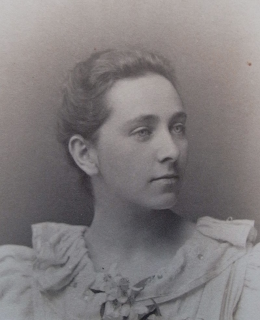
(Pictured: Edith Anne Stoney during her time in Cambridge in the early 1890s)
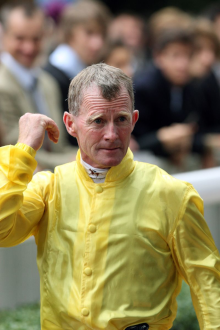
Kinane first comes to prominence as the stable jockey to Liam Browne, winning the 1982 Irish 2000 Guineas and St. James’s Palace Stakes at Ascot Racecourse, both on Dara Monarch, and finishing second in the 1983 Epsom Derby on Carlingford Castle, before moving to Dermot Weld. He is later retained by John Magnier and Aidan O’Brien as stable jockey at Ballydoyle for many years prior to joining leading Irish flat trainer John Oxx. He becomes one of the world’s elite jockeys and excels on the big occasions at Longchamp Racecourse and Epsom Downs Racecourse and is regarded as one of the leading professionals of his sport.
Kinane retires at the end of 2009, a season which is highlighted by his association with Sea The Stars, regarded as one of the greatest racehorses of all time. He breeds the 2007 Epsom Derby winner Authorized.
Kinane is current working for Hong Kong Jockey Club in Europe to select horses suitable for running in Hong Kong. Those horses are resold by Hong Kong Jockey Club in an auction.
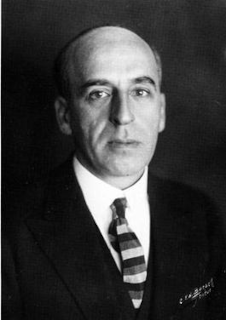
Lester is born on September 28, 1888, in Carrickfergus, County Antrim, as John Ernest Lester, the son of a Protestant grocer Robert Lester and his wife, the former Henrietta Ritchie. Although the town of Carrickfergus is strongly Unionist, he joins the Gaelic League as a youth and is won over to the cause of Irish nationalism. As a young man, he joins the Irish Republican Brotherhood (IRB). He works as a journalist for the North Down Herald and a number of other northern papers before he moves to Dublin, where he finds a job at the Freeman’s Journal. By 1919, he has risen to its news editor.
After the Irish War of Independence, a number of Lester’s friends join the new government of the Irish Free State. He is offered and accepts the position as director of publicity.
Lester marries Elizabeth Ruth Tyrrell in 1920 by whom he has three daughters.
In 1923, Lester joins Ireland’s Department of External Affairs. He is sent to Geneva in 1929 to replace Michael MacWhite as Ireland’s Permanent Delegate to the League of Nations. In 1930, he succeeds in organising Ireland’s election to the Council (or executive body) of the League of Nations for three years. He often represents Ireland at Council meetings and stands in for the Minister for External Affairs. He becomes increasingly involved in the work of the League, particularly in its attempts to bring a resolution to two wars in South America. His work brings him to the attention of the League Secretariat and begins his transformation from national to international civil servant.
When Peru and Colombia have a dispute over a town in the headwaters of the Amazon River, Lester presides over the committee that finds an equitable solution. He also presides over the less-successful committee when Bolivia and Paraguay go to war over the Gran Chaco.
In 1933, Lester is seconded to the League’s Secretariat and sent to Danzig (now Gdańsk, Poland), as the League of Nations’ High Commissioner from 1934 to 1937. The Free City of Danzig is the scene of an emerging international crisis between Nazi Germany and the international community over the issue of the Polish Corridor and the Free City’s relationship with the Third Reich. He repeatedly protests to the German government over its persecution and discrimination of Jews and warns the League of the looming disaster for Europe. He is boycotted by the representatives of the German Reich and the representatives of the Nazi Party in Danzig.
Lester returns to Geneva in 1937 to become Deputy Secretary General of the League of Nations. In 1940, he becomes Secretary General of the body, becoming the League’s leader a year after the beginning of World War II which shows that the League has failed its primary purpose. The League has only 100 employees, including guards and janitors, out of the original 700.
Lester remains in Geneva throughout the war and keeps the League’s technical and humanitarian programs in limited operation for the duration of the war. In 1946, he oversees the League’s closure and turns over the League’s assets and functions to the newly established United Nations.
Despite rumours that he would be prepared to stand for election as President of Ireland, Lester seeks no permanent office and retires to Recess, County Galway, in the west of Ireland, where he dies on June 13, 1959. In its obituary, The Times describes him as an “international conciliator and courageous friend of refugees.”
In August 2010, a room in the Gdańsk City Hall, the building that had been Lester’s residence during his stay, is renamed by Mayor Paweł Adamowicz as the Seán Lester Room.
Patterson is born on October 5, 1938, in Clonmel, County Tipperary. As a boy Patterson performs with his local parish choir and is involved in maintaining the annual tradition of singing with the “Wrenboys.” He sings in the local St. Mary’s Choral Society and at a production of The Pirates of Penzance performed with both his parents. His interests extend beyond music and as a boy he represents Marlfield GAAhurling club, plays tennis at Hillview and golf at the Mountain Road course. He quits school at an early stage to work in the printing business of his mother’s family. He moves to Dublin in 1961 to enroll at the National Academy of Theatre and Allied Arts where he studies acting while at the same time receiving vocal training from Hans Waldemar Rosen. In 1964, he enters the Feis Ceoil, a nationwide music competition, in which he wins several sections including oratorio, lieder and the German Gold Cup.
Patterson gives classical recitals around Ireland and wins scholarships to study in London, Paris and in the Netherlands. While in Paris, he signs a contract with Philips Records and releases his first record, My Dear Native Land. He works with conductors and some of the most prestigious orchestras in Europe including the London Symphony Orchestra and Orchestre de Paris. He also gains a reputation as a singer of Handel, Mozart, and Bach oratorios and German, Italian and French song. He has a long-running programme on RTÉ titled For Your Pleasure.
In the early 1980s Patterson moves to the United States, making his home in rural Westchester County, New York. A resurgence of interest in Irish culture encourages him to turn towards a more traditional Irish repertoire. He adds hymns, ballads, and traditional as well as more popular tunes to his catalogue. In March 1988, he is featured host in a Saint Patrick’s Day celebration of music and dance at New York City’s famous Radio City Music Hall. He also gives an outdoor performance before an audience of 60,000 on the steps of the United States Capitol in Washington, D.C. with the National Symphony Orchestra.
Patterson is equally at home in more intimate settings. His singing in the role of the Evangelist in Bach’s St. John Passion is given fine reviews. Further recordings follow, of Beethoven arrangements, Irish songs, Berlioz songs, Purcell songs and others, all on the Philips label.
Patterson performs sold-out concerts from London’s Royal Albert Hall to New York’s Carnegie Hall, and with his family he presents two concerts at the White House, for presidents Ronald Reagan in 1982 and Bill Clinton in 1995. He records over thirty albums in six languages, wins silver, gold and platinum discs and is the first Irish singer to host his own show in Radio City Music Hall in New York.
Rising to greater prominence with the new popularity of Celtic music in the 1990s, Patterson sees many of his past recordings reissued for American audiences, and in 1998 he stars in the PBS special Ireland in Song. His last album outsells Pavarotti.
In 1999, Patterson learns he has a brain tumor. He has several operations in the following year and his condition appears to stabilise. He is diagnosed with a recurrence of his illness on May 7, 2000. He briefly recuperates and resumes performing. His last performance is on June 4, 2000, at Regis College in the Boston suburb of Weston, Massachusetts. Shortly thereafter he is admitted to the Memorial Sloan Kettering Cancer Center in New York where he lapses into a coma and dies on June 10, 2000, at the age of 61.
Born on December 18, 1895, Roe is the daughter of William Ernest Roe and Anne Lambert Sheilds of Mountrath, County Laois. Her grandfather is Francis Henry Sheilds of Parsonstown (now Birr, County Offaly), owner of the King’s County Chronicle. She is sent first to the local primary school and then to the Preston School in Abbeyleix. Although she attends Trinity College Dublin (TCD), she does not begin her career due to the outbreak of World War I. She joins the St. John’s Ambulance Brigade and serves at the Cambridge Military Hospital and at Aldershot Barracks. In the immediate aftermath, she continues her medical career with the Military Hospital in Bray, County Wicklow. She also spends time touring in Europe visiting museums and beginning her appreciation for medieval art. She is raised Protestant and has done her duty as part of the aristocracy by serving in the war. But the soldiers treat her as Irish and abuse her especially during the Easter Rising of 1916. The result is that she supports nationalism from that point forward. She goes back to TCD and completes her degree in modern languages in 1921. She finally completes her MA in 1924 and begins a teaching career. She spends time working in the Royal School, Dungannon, and Alexandra College, Milltown, Dublin.
In 1926, Roe’s parents need her, and she returns home. She then becomes the County Librarian in Laois. While working as a librarian she is able to study further and, as a rare person with a car, she tours sites and visits schools. One result of her presentations to schools is to inspire Ireland’s first female archaeologist, Ellen Prendergast. In 1940, she retires from the library and moves to Dublin where she is able to buy a house and garden. Apart from her antiquarian work, she is a regular supporter of charities and is honorary secretary of The Queen’s County Protestant Orphan’s Society and actively involved in The Dublin University Mission to Chota Nagpur, India.
Roe becomes a regular contributor to various journals and newspapers including Journal of the Royal Society of Antiquaries of Ireland, An Leabharlann, Béaloideas, Seanchas Ard Mhacha, Carloviana, the The Irish Press and the Leinster Express. From 1965 until 1968 she serves as the president of the Royal Society of Antiquaries of Ireland, the first woman to be elected to the position. She is elected to be a member of the Royal Irish Academy in 1984. She continues touring and lecturing into her nineties.
Roe lives at Santry, Dublin, and later at Oak House, Sussex Road, Dublin. She dies on May 28, 1988, at Grove Nursing Home, Killiney, County Dublin, and is buried beside her parents at St. Peter’s Churchyard, Mountrath, County Laois.
The Royal Society of Antiquaries of Ireland have an annual lecture in her honour and have named one of their lecture rooms after her.