In 1940, Kerins is sworn into the IRA and is appointed to the GHQ staff in May 1942. At the time, the Fianna Fáil government of Éamon de Valera is determined to preserve Irish neutrality during World War II. Therefore, the IRA’s bombing campaign in England, its attacks against targets in Northern Ireland, and its ties to the intelligence services of Nazi Germany are regarded as severe threats to Ireland’s national security. IRA men who are captured by the Gardaí are interned for the duration of the war by the Irish Army in the Curragh Camp in County Kildare.
On the morning of September 9, 1942, Garda Detective Sergeant Denis O’Brien is leaving his home in Ballyboden, Dublin. He is between his front gate and his car when he is cut down with Thompson submachine guns. O’Brien, an Anti-Treaty veteran of the Irish Civil War, had enlisted in the Garda Síochána in 1933. He is one of the most effective Detectives of the Special Branch division, which has its headquarters at Dublin Castle. The shooting greatly increases public feeling against the IRA, particularly as the murder is carried out in full view of his wife.
Following the arrest of Hugh McAteer in October 1942, Kerins is named Chief of Staff of the IRA. Despite a massive manhunt by Gardaí, he remains at large for two years. He stays at a County Waterford home for two weeks while he is on the run, having given his name as Pat Carney. He is captured several months after he leaves the home.
Kerins had previously left papers and guns hidden at Kathleen Farrell’s house in the Dublin suburb of Rathmines. He telephones the house, as he intends to retrieve them. However, Farrell’s telephone had been tapped by the Gardaí. On June 15, 1944, he is arrested in an early morning raid. He is sleeping when the Gardaí enter his bedroom and does not have an opportunity to reach the Thompson submachine gun which is hidden under his bed.
At a trial before the Special Criminal Court in Collins Barracks, Dublin, Kerins is formally charged on October 2, 1944, for the “shooting at Rathfarnham of Detective Dinny O’Brien.” At the end of his trial, the president of the Military Court delays sentence until later in the day to allow Kerins, if he wishes, to make an application whereby he might avoid a capital sentence. When the court resumes, he says, “You could have adjourned it for six years as far as I am concerned, as my attitude towards this Court will always be the same.” He thus deprives himself of the right to give evidence, to face cross-examination, or to call witnesses.
Kerins is the last IRA member to be executed in the Republic of Ireland. He is buried in the prison yard. In September 1948, his remains are exhumed and released to his family. He is buried in the Republican plot at Rath Cemetery, Tralee, County Kerry.
O’Connor is educated in St. Mary’s College, Dublin, and then in Clongowes Wood College, County Kildare, a public school run by the Jesuit order. It is also attended by the man who later condemns O’Connor to death, his close friend Kevin O’Higgins. He studies experimental physics, logic, and metaphysics. He also attends the College of Science, Merrion Street. He takes a BA (1906) and receives a B.Eng (1911). In 1910, he takes his Bachelor of Engineering and Bachelor of Arts degrees at University College Dublin (UCD), then known as the National University. Prominent in the university’s Literary and Historical Society, he advocates militant constitutional nationalism as one of the many society members active in the Young Ireland branch of the United Irish League.
During the subsequent Irish War of Independence (1919-21) O’Connor is Director of Engineering of the Irish Republican Army (IRA), a military organisation descended from the Irish Volunteers. The specialist skills of engineering and signaling are essential to the development of the 5th Battalion, Dublin Brigade. Its men are forbidden frontline duty as their contribution is regarded as vital, their number too small. But units only expand on an incremental local basis, disappointing General Richard Mulcahy.
O’Connor is also involved in the Republican breakout from Strangeways Prison in Manchester, England, on October 25, 1919. Michael Collins takes a particular interest in the escape and actually visits Austin Stack in the prison under a false name to finalise the arrangements. IRA men hold up traffic while a ladder is propped up against the outside of a prison wall. In all six prisoners escape, among them Piaras Beaslaí.
O’Connor refuses to accept the Anglo-Irish Treaty of 1921, which establishes the Irish Free State. It is ratified by a narrow vote in Dáil Éireann, the Irish parliament. He and many like him feel that the Treaty copper-fastens the partition of the six counties of Northern Ireland and undermines the Irish Republic declared in 1916.
On January 10, a meeting is held at O’Connor’s home in Monkstown, Dublin. In attendance are all senior anti-Treaty IRA officers except Liam Mellows. O’Connor is appointed to chair this grouping, known as the Republican Military Council. It is agreed that an IRA convention should be called without delay; failing this, a separate GHQ will be formed. At a further meeting in O’Connor’s office on March 20, a temporary IRA GHQ staff is elected under Liam Lynch as chief of staff. O’Connor remains in charge of engineering.
On March 26, 1922, the anti-Treaty officers of the IRA hold a convention in Dublin, in which they reject the Treaty and repudiate the authority of the Dáil. However, they are prepared to discuss a way forward. The convention meets again on April 9. It creates a new army constitution and places the army under a newly elected executive of 16 men, including O’Connor, that are to choose an army council and headquarters staff. Asked by a journalist if this development means the anti-Treatyites ware proposing a “military dictatorship” in Ireland, O’Connor replies, “You can take it that way if you want.”
On April 14, 1922, O’Connor is one of a number of IRA leaders in a 200-strong force that occupies the Four Courts building in the centre of Dublin in defiance of the Provisional Government. They intend to provoke the British troops, who are still in the country, into attacking them, which they believe will restart the war with Britain and re-unite the IRA against their common enemy. They also occupy other smaller buildings regarded as being associated with the former British administration, such as the Ballast Office and the Freemasons‘ Hall in Molesworth Street, but the Four Courts remains the focus of interest. On June 15, O’Connor sends out men to collect the rifles that belong to the mutineers of the Civic Guards.
Michael Collins tries desperately to persuade the IRA men to leave the Four Courts. At the Third IRA Convention on June 18, the Executive is split over whether the Irish Government should demand that all British troops leave within 72 hours. A motion to this effect, opposed by Lynch, is narrowly defeated, whereupon O’Connor and others leave the meeting to set up a separate GHQ. The IRA effectively splits into two factions opposed to the government.
On June 22, 1922, Sir Henry Wilson is assassinated in London by two IRA men, Reginald Dunne and Joseph O’Sullivan, each a former British soldier. Some now argue that this was done on the orders of Michael Collins, who had been a close friend of Dunne’s in the London Irish Republican Brotherhood (IRB). Prime MinisterDavid Lloyd George writes an angry letter to Collins, which includes the line “…still less can Mr. Rory O’Connor be permitted to remain his followers and his arsenal in open rebellion in the heart of Dublin… organizing and sending out from this centre enterprises of murder not only in the area of your Government…”
On June 28, 1922, after the Four Courts garrison has kidnapped J. J. “Ginger” O’Connell, a general in the National Army, Collins gives orders for the shelling of the Four Courts with borrowed artillery lent by Winston Churchill. The shelling leads to the Four Courts catching fire, damaging parts of the building in addition to destroying numerous government documents. O’Connor is one of 130 men that surrender on June 30, some of whom are arrested and imprisoned in Mountjoy Prison. This incident marks the official start of the Irish Civil War, as fighting breaks out openly around the country between pro- and anti-Treaty factions.
On December 8, 1922, along with three other republicans, Liam Mellows, Richard Barrett and Joe McKelvey, captured with the fall of the Four Courts, O’Connor is executed by firing squad in reprisal for the anti-Treaty IRA’s killing of Free State Teachta Dála (TD) Sean Hales. The execution order is signed by Kevin O’Higgins. O’Connor had been best man at O’Higgins’s wedding on October 27, 1921. Their deaths remain a symbol of the bitterness and division of the Irish Civil War. O’Connor, one of 77 republicans executed by the Provisional Government, is seen as a martyr by the Republican movement in Ireland.
On O’Connor’s execution, the equestrienne Joan de Sales La Terriere, a close friend of his, names her son in his honour. “Rory O’Connor Place” in Arklow is named in his honour. There is also a pub in Crumlin, Dublin, named after him and a housing estate near Dún Laoghaire, County Dublin, called “Rory O’Connor Park.” A Sinn Féincumann (UCD) is named after him.
(Pictured: Rory O’Connor addressing members of the IRA’s Dublin City Brigade at Smithfield, April 1922)
Twomey lives at 6 Sevastopol Street in the Falls district. Known as “Thumper” owing to his short temper and habit of banging his fist on tables, he receives little education and is a bookmaker‘s “runner.” His father is a volunteer in the 1920s. In Belfast he lives comfortably with his wife, Rosie, whom he marries in 1946. Together they have sons and daughters.
Twomey begins his involvement with the Irish Republican Army in the 1930s and is interned in Northern Ireland during the 1940s on the prison ship HMS Al Rawdah and later in Crumlin Road Jail in Belfast. Rosie, his wife, is also held prisoner at the women prison, Armagh Jail, in Northern Ireland. He opposes the left-wing shift of Cathal Goulding in the 1960s, and in 1968, helps set up the breakaway Andersonstown Republican Club, later the Roddy McCorley Society.
In 1969, Twomey is prominent in the establishment of the Provisional Irish Republican Army. By 1972, he is Officer Commanding (OC) of the Provisional IRA Belfast Brigade when it launches its bomb campaign of the city, including Bloody Friday when nine people are killed. During the 1970s, the leadership of the Belfast Brigade of the IRA is largely in the hands of Twomey and Ivor Bell.
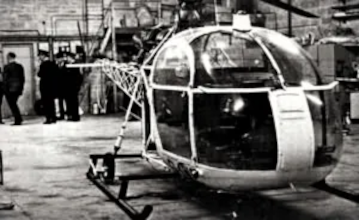
In March 1973, Twomey is first appointed IRA Chief of Staff after the arrest of Joe Cahill. He remains in this position until his arrest in October 1973 by the Garda Síochána. Three weeks later, on October 31, 1973, the IRA organises the helicopter escape of Twomey and his fellow IRA members J. B. O’Hagan and Kevin Mallon, when an active service unit hijacks and forces the pilot at gunpoint to land the helicopter in the training yard of Mountjoy Prison. After his escape, he returns to his membership of IRA Army Council.
By June/July 1974, Twomey is IRA Chief of Staff for a second time. He takes part in the Feakle talks between the IRA and Protestant clergymen in December 1974. In the IRA truce which follows in 1975, he is largely unsupportive and wants to fight on in what he sees as “one big push to finish it once and for all.”
IRA informer Sean O’Callaghan claims that on January 5, 1976, Twomey and Brian Keenan give the go-ahead for the sectarian Kingsmill massacre, when ten unarmed Ulster Protestant workmen are executed by the Provisional IRA in retaliation for a rash of loyalist killings of Catholics in the area. It is Keenan’s view, O’Callaghan claims, that “The only way to knock the nonsense out of the Prods is to be ten times more savage.”
Twomey is dedicated to paramilitarism as a means of incorporating Northern Ireland into the Republic of Ireland. In an interview with French television on July 11, 1977, he declares that although the IRA had waged a campaign for seven years at that point, it can fight on for another 70 against the British state in Northern Ireland and in England. He supports the bombing of wealthy civilian targets, which he justifies on class lines. On October 29, 1977, for example, a no-warning bomb at an Italian restaurant in Mayfair kills one diner and wounds 17 others. Three more people are killed in similar blasts in Chelsea and Mayfair the following month. He says, “By hitting Mayfair restaurants, we were hitting the type of person that could bring pressure to bear on the British government.”
In December 1977, Twomey is captured in Sandycove, Dublin, by the Garda Síochána, who had been tipped off by Belgian police about a concealed arms shipment, to be delivered to a bogus company with an address in the area. They swoop on a house in Martello Terrace to discover Twomey outside in his car, wearing his trademark dark glasses. After a high-speed pursuit, he is recaptured in the centre of Dublin. The Gardaí later find documents in his possession outlining proposals for the structural reorganisation of the IRA according to the cell system. His arrest ends his tenure as IRA chief of staff. In the 1986 split over abstentionism, Twomey sides with the Gerry Adams leadership and remains with the Provisionals.
After a long illness from a heart condition, Twomey dies in Dublin on September 12, 1989. He is buried in the family plot in Milltown Cemetery, Belfast. His funeral is attended by about 2,000 people.
Following the outbreak of the Troubles in the late 1960s, the Provisional IRA conducts an armed campaign that seeks to create a united Ireland by ending Northern Ireland‘s status as part of the United Kingdom. As a result of increasing levels of violence in Northern Ireland, internment without trial is introduced there in August 1971, and in the Republic of Ireland the coalition government led by Fine Gael’s Liam Cosgrave is attempting to curb IRA activity. Fine Gael had come to power on a law-and-order ticket, with a policy of “getting tough on crime.” Suspected IRA members are arrested and accused of IRA membership by a superintendent in the Garda Síochána, a crime under the Offences against the State Acts. They are tried at the juryless Special Criminal Court in Dublin, where the traditional IRA policy of not recognising the court results in a fait accompli as no defence is offered and IRA membership carries a minimum mandatory one-year sentence, resulting in internment in all but name. In September 1973 IRA Chief of Staff Seamus Twomey appears at the Special Criminal Court charged with IRA membership, and states, “I refuse to recognise this British-orientated quisling court.” He is found guilty and receives a five-year sentence. By October 1973 the IRA’s command structure is seriously curbed, with Twomey and other senior republicans J. B. O’Hagan and Kevin Mallon all being held in Mountjoy Prison.
The IRA immediately begins making plans to break Twomey, O’Hagan and Mallon out of the prison. The first attempt involves explosives that had been smuggled into the prison, which are to be used to blow a hole in a door which will give the prisoners access to the exercise yard. From there, they are to scale a rope ladder thrown over the exterior wall by members of the IRA’s Dublin Brigade who are to have a getaway car waiting to complete the escape. The plans when the prisoners cannot gain access to the exercise yard and the rope ladder is spotted, so the IRA begins making new escape plans. The idea of using a helicopter in an escape had been discussed before in a plot to break Gerry Adams out of Long Kesh internment camp but had been ruled out because of faster and more sophisticated British Army helicopters being stationed at a nearby base. The IRA’s GHQ staff approves the plan to break out Twomey, O’Hagan and Mallon, and arrangements are made to obtain a helicopter. A man with an American accent calling himself Mr. Leonard approaches the manager of Irish Helicopters at Dublin Airport, with a view to hiring a helicopter for an aerial photographic shoot in County Laois. After being shown the company’s fleet of helicopters, Leonard arranges to hire a five-seater Alouette II for October 31.
Leonard arrives at Irish Helicopters on October 31 and is introduced to the pilot of the helicopter, Captain Thompson Boyes. Boyes is instructed to fly to a field in Stradbally, in order to pick up Leonard’s photographic equipment. After landing Boyes sees two armed, masked men approaching the helicopter from nearby trees. He is held at gunpoint and told he will not be harmed if he follows instructions. Leonard leaves with one gunman, while the other gunman climbs aboard the helicopter armed with a pistol and an ArmaLite rifle. Boyes is instructed to fly towards Dublin following the path of railway lines and the Royal Canal and is ordered not to register his flight path with Air Traffic Control. As the helicopter approaches Dublin, Boyes is informed of the escape plan and is instructed to land in the exercise yard at Mountjoy Prison.
In the prison’s exercise yard, the prisoners are watching a football match. Shortly after 3:35 p.m. the helicopter swings in to land in the prison yard, with Kevin Mallon directing the pilot using semaphore. A prison officer on duty initially takes no action as he believes the helicopter contains the Minister for Defence, Paddy Donegan. After prisoners surround the eight prison officers in the yard, fights break out as the officers realise an escape attempt is in progress. As other prisoners restrain the officers, Twomey, Mallon and O’Hagan board the helicopter. As the helicopter takes off, in the confusion one officer shouts, “Close the gates, close the fucking gates.” The helicopter flies north and lands at a disused racecourse in the Baldoyle area of Dublin, where the escapees are met by members of the IRA’s Dublin Brigade. Boyes is released unharmed, and the escapees are transferred to a taxi that had been hijacked earlier and are transported to safe houses.
The escape makes headlines around the world and is an embarrassment for Cosgrave’s government, which is criticised for “incompetence in security matters” by opposition party Fianna Fáil. An emergency debate on security is held in Dáil Éireann on November 1.
The IRA releases a statement on the escape, which reads, “Three republican prisoners were rescued by a special unit from Mountjoy Prison on Wednesday. The operation was a complete success, and the men are now safe, despite a massive hunt by Free State forces.” Shortly after the escape Twomey gives an exclusive interview to German magazine Der Spiegel, where the reporter says people throughout Europe are joking about the incident as “the escape of the century.” Irish rebel band the Wolfe Tones writes a song celebrating the escape called “The Helicopter Song,” which is immediately banned by the government yet still tops the Irish Singles Chart after selling twelve thousand copies in a single week.
The escape results in all IRA prisoners being held at Mountjoy Prison and Curragh Camp being transferred to the maximum security Portlaoise Prison. In order to prevent any further escapes, the perimeter of the prison is guarded by members of the Irish Army, and wires are erected over the prison yard to prevent any future helicopter escape. Cosgrave states there will be “no hiding place” for the escapees, and a manhunt involving twenty thousand members of the Irish Defence Forces and Garda Síochána ensues.
Mallon is recaptured at a Gaelic Athletic Association dance in a hotel near Portlaoise on December 10, 1973, and imprisoned in Portlaoise Prison. He escapes from there in a mass break-out on August 18, 1974, when nineteen prisoners escape after overpowering guards and using gelignite to blast through the gates. He is recaptured in Foxrock in January 1975 and returned to Portlaoise Prison. O’Hagan is recaptured in Dublin in early 1975, and also imprisoned in Portlaoise Prison. After the end of his original twelve-month sentence, he is immediately arrested and sentenced to a further two years imprisonment for escaping. Twomey evades recapture until December 2, 1977, when he is spotted sitting in a car in Sandycove by members of the Garda’s Special Branch who are investigating an arms shipment after a tip-off from police in Belgium. He drives away after spotting the officers, before being recaptured in the centre of Dublin after a high-speed car chase. He is also imprisoned in Portlaoise Prison until his release in 1982.
In 2021, Brendan Hughes publishes an autobiography Up Like a Bird, an account of the planning and organisation of the escape, co-authored with Doug Dalby.
Frank Ryan, politician, journalist, intelligence agent and paramilitary activist, is born in the townland of Bottomstown, Elton, County Limerick, on September 11, 1902. A fascinating, somewhat mythical figure, he lives during turbulent times when Ireland finally disposes of tyrannical British rule in Ireland and becomes an icon for socialist republicans in Europe during the 1930s and 40s.
Ryan fights on the Anti-Treaty side in the Irish Civil War (1922-23) and is wounded and interned. In November 1923 he is released and returns to UCD. He secures his degree in Celtic Studies and further secures the editorship of An Phoblacht (The Republic), the newspaper of the anti-Treaty Irish Republican Army (IRA).
The split in the Irish independence party, Sinn Féin, results in regular fist fights between pro and anti-Treaty forces. Cumann na nGaedhael, the pro-Treaty political party in government, recruits the Army Comrades Association (Blueshirts) under former Garda CommissionerEoin O’Duffy to protect their members from anti-Treaty IRA protesters at annual Armistice Day and Wolfe Tone commemorations. Ryan is a forceful orator at these events and is frequently arrested and beaten up by the Gardai. The fractious politics results in Dáil members Sean Hales and Kevin O’Higgins being shot dead in public.
The outbreak of the Spanish Civil War (1936-39) inspires Ryan to lead the first contingent of Irish volunteers to support the Popular Front government of Republican Spain. A brave and inspiring leader, he serves with Italian and German Republican divisions. He is seriously wounded at the Battle of Jarama in February 1937. Following recuperation in Ireland, he is appointed adjutant to republican General José Miaja. During the Aragon Offensive he is captured with 150 of his men in April 1938 and sentenced to death. Irish President, Éamon de Valera, intervenes with General Francisco Franco and Ryan’s sentence is commuted to thirty years. His health suffers severely in Burgos Prison, Spain during his two-year incarceration.
Franco refuses to release Ryan because he is considered his most dangerous prisoner. In August 1940 he is transferred to Berlin, where he is re-united with IRA Chief of StaffSeán Russell. An attempt to return both men to Ireland by U-boat ends with Russell dying from a perforated ulcer. Ryan voluntarily returns to Germany where he serves as the unofficial IRA ambassador for German intelligence. Irishman Francis Stuart, son-in-law of Maud Gonne, who writes some of William Joyce’s propaganda, takes good care of Ryan until his untimely death at a hospital in Loschwitz in Dresden on June 10, 1944.
Ryan’s funeral in Dresden is attended by Elizabeth Clissmann, wife of Helmut Clissmann, and Francis Stuart. Clissmann eventually forwards details of Ryan’s fate to Leopold Kerney in Madrid. According to Stuart and Clissmann, the cause of death is pleurisy and pneumonia.
In 1963, historian Enno Stephan locates Ryan’s grave in Dresden. Three volunteers of the International Brigades, Frank Edwards, Peter O’Connor and Michael O’Riordan travel to East Germany as a guard of honour to repatriate Ryan’s remains in 1979. On June 21, 1979, his remains arrive in Whitefriar Street Carmelite Church, his local church when he lived in Dublin. The church is packed with all shades of Republican and left-wing opinion, as well as those from his past such as the Stuarts, the Clissmanns, Peadar O’Donnell, George Gilmore, and ex-comrades and sympathizers from all over the world. The cortège on its way to Glasnevin Cemetery halts at the GPO in memory of the dead of the 1916 Easter Rising. His coffin is borne to the grave in Glasnevin Cemetery by Irish veterans of the Spanish Civil War, Frank Edwards, Peter O’Connor, Michael O’Riordan and Terry Flanagan. Con Lehane delivers the funeral oration while a piper plays “Limerick’s Lamentation.” He is buried next to Éamonn Mac Thomáis.
Ryan leads a vicarious life in pursuit of human rights, socialism and republicanism. His life story remains more colourful than fiction.
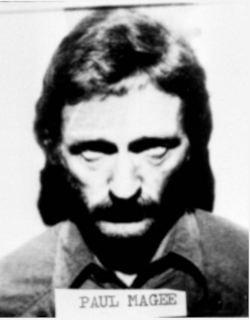
On April 9, 1980, the unit lures the Royal Ulster Constabulary (RUC) into an ambush on Stewartstown Road, killing one constable and wounding two others. On May 2 the unit is planning another attack and has taken over a house on Antrim Road, when an eight-man patrol from the SAS arrive in plain clothes, after being alerted by the RUC. A car carrying three SAS members goes to the rear of the house, and another car carrying five SAS members arrives at the front of the house. As the SAS members at the front of the house exit their car the IRA unit opens fire with the M60 machine gun from an upstairs window, hitting Captain Herbert Westmacott in the head and shoulder, killing him instantly. He is the highest-ranking member of the SAS killed in Northern Ireland. The remaining SAS members, armed with Colt Commando automatic rifles, submachine guns and Browning pistols, return fire but are forced to withdraw. Magee is apprehended by the SAS members at the rear of the house while attempting to prepare the IRA unit’s escape in a transit van, while the other three IRA members remain inside the house. More members of the security forces are deployed to the scene, and after a brief siege the remaining members of the IRA unit surrender.
The trial of Fusco and the other members of the M60 gang begins in early May 1981, with them facing charges including three counts of murder. On June 10 Fusco and seven other prisoners, including Joe Doherty and the other members of the IRA unit, take a prison officer hostage at gunpoint in Crumlin Road Jail. After locking the officer in a cell, the eight take other officers and visiting solicitors hostage, also locking them in cells after taking their clothing. Two of the eight are wearing officer’s uniforms while a third wears clothing taken from a solicitor, and the group moves towards the first of three gates separating them from the outside world. They take the officer on duty at the gate hostage at gunpoint and force him to open the inner gate. An officer at the second gate recognises one of the prisoners and runs into an office and presses an alarm button, and the prisoners run through the second gate towards the outer gate. An officer at the outer gate tries to prevent the escape but is attacked by the prisoners, who escape onto Crumlin Road. As the prisoners are moving towards the car park where two cars are waiting, an unmarked RUC car pulls up across the street outside Crumlin Road Courthouse. The RUC officers open fire, and the prisoners returned fire before escaping in the waiting cars. Two days after the escape, Fusco is convicted in absentia and sentenced to life imprisonment with a minimum recommended term of thirty years.
Fusco escapes across the border into the Republic of Ireland before being arrested in January 1982 and is sentenced to ten years imprisonment for the escape and firearms offences under extra-jurisdictional legislation. A further three years are added to his sentence in 1986 after he attempts to escape from Portlaoise Prison, and he is released in January 1992. Upon his release, he is immediately served with extradition papers from the British government for his return to the Maze Prison in Northern Ireland to serve his sentence for the murder conviction. The extradition is granted by a District Court but Fusco appeals, and in 1995 he wins a legal victory when a judge at the High Court in Dublin rules it would be “unjust, oppressive and invidious” to order his extradition due to the time lag involved. Fusco settles in Tralee with his wife and three children until February 1998, when the Supreme Court of Ireland brings an end to the six-year legal battle by ordering his extradition, but he has already fled on bail and a warrant is issued for his arrest.
Fusco is arrested at a Garda checkpoint in Castleisland, County Kerry, on January 3, 2000. The following day he is being escorted back to Northern Ireland to be handed over to the RUC, when his handover is halted by a successful court appeal by Sinn Féin. The arrest and abortive return of Fusco undermines the Northern Ireland peace process, with Unionist politicians including Ken Maginnis criticising the extradition being halted. Republicans are critical of Fusco’s arrest, with leading Sinn Féin member Martin Ferris stating, “The Irish government should immediately move to rescind the warrant against Angelo Fusco. The action will cause great anger and resentment within the nationalist community,” and graffiti in one republican area reads “Extradite Bloody Sunday war criminals, not Fusco.” On January 6 Fusco is refused bail and remanded to prison in Castlerea, County Roscommon, to await a legal review of his extradition, prompting scuffles outside the court between police and Sinn Féin supporters.
Fusco is freed on bail on March 21 pending the outcome of his legal challenge, and in November 2000 the Irish government informs the High Court that it is no longer seeking to return him to Northern Ireland. This follows a statement from Secretary of State for Northern IrelandPeter Mandelson saying that “it is clearly anomalous to pursue the extradition of people who appear to qualify for early release under the Good Friday Agreement scheme, and who would, on making a successful application to the Sentence Review Commissioners, have little if any of their original prison sentence to serve.” After the court hearing Fusco states, “I’m relieved it’s over,” and that he will continue to live in Tralee with his family and work for Sinn Féin.
In December 2000 Fusco and three other IRA members, including two other members of the M60 gang, are granted a royal prerogative of mercy which allows them to return to Northern Ireland without fear of prosecution.
Cowen is married with four children and is a full-time politician. His father, Bernard Cowen, was also a TD, Senator and Minister of State. His grandfather, Christy Cowen, was an Offaly County Councillor and a member of the Fianna Fáil National Executive. Another relation, Ernest Cowen, was also a member of the Fianna Fáil National Executive having been elected to its Committee of 15.
In July 2020, it emerges that Cowen has a conviction for drunk driving. He is fined €200 and is disqualified from driving for three months. The incident occurs in September 2016, after an All-Ireland football final between Dublin and Mayo. He apologises for his “serious lapse of judgement.” The Garda Síochána Ombudsman Commission (GSOC) is asked by Garda Síochána to investigate the alleged leaking of information concerning Cowen’s drunk driving arrest. He accuses Gardaí of criminality for leaking allegations that he attempted to evade a garda checkpoint before he was caught drunk driving. He admits receiving a ban for drunk drinking but denies attempting to evade Gardaí. He issues a statement that the Garda record was “incorrect” and suggests he will take legal action against The Sunday Times, which first reported the story. He says that the leaks were a flagrant breach of criminal law and “my rights under data protection law” and that they were an “attempt to cause me the maximum personal and political harm.” Fianna Fáil TD Thomas Byrne denies that it was he who leaked news of Cowen’s ban to the press. Eamon Dooley, the longest serving Fianna Fáil member of Offaly County Council, claims that a party member with a “grudge” leaked it to the media.
On July 14, 2020, after he refuses to resign the role of Minister for Agriculture, Cowen is sacked by TaoiseachMicheál Martin due to the controversy surrounding his conviction for drunk driving. In November 2020, it is reported that a barrister is to be questioned by GSOC in relation to the leak. In 2021, GSOC searches a Garda station in Munster in relation to the leak.
In July 2021, Cowen calls on Fianna Fáil to form a new “modern centre-left” alliance with the Labour Party for the next election.
The road and castle are on the northern bank of the Newry River, which marks the border between Northern Ireland and the Republic of Ireland. The Republic’s side of the river, the Cooley Peninsula in County Louth, is an ideal spot from which to launch an ambush. It is thickly wooded, which gives cover to the ambushers, and the river border prevents British forces from giving chase.
On the afternoon of August 27, a British Army convoy of one Land Rover and two four-ton lorries carrying soldiers of the 2nd Battalion, Parachute Regiment is driving from Ballykinlar Barracks to Newry. The British Army is aware of the dangers of using the stretch of road along the Newry River and often declares it out of bounds. However, they sometimes use it to avoid setting a pattern. At 4:40 p.m., as the convoy is driving past Narrow Water Castle, an 800-pound fertiliser bomb, hidden among bales of straw on a parked flatbed trailer, is detonated by remote control by IRA members watching from across the border in County Louth. The explosion catches the last lorry in the convoy, hurling it onto its side and instantly killing six paratroopers, whose bodies are scattered across the road. There are only two survivors amongst the soldiers traveling in the lorry, both of whom receive serious injuries. The lorry’s driver, Anthony Wood (19), is one of those killed. All that remains of his body is his pelvis, welded to the seat by the fierce heat of the blast.
According to the soldiers, immediately after the blast they are targeted by rifle fire from the woods on the Cooley Peninsula on the other side of the border, with this view supported by two part-time firefighters assisting the wounded. Shortly afterwards, the two IRA members arrested by the Garda Síochána and suspected of being behind the ambush, are found to have traces of gunsmoke residue on their hands and on the motorbike they are riding. The IRA’s first statement on the incident, however, denies that any shots had been fired at the troops, and according to Royal Ulster Constabulary (RUC) researchers, the soldiers might have mistaken the sound of ammunition cooking off for enemy gunfire. Nevertheless, at the official inquiry the soldiers declare on oath that they had been fired on.
The surviving paratroopers radio for urgent assistance, and reinforcements are dispatched to the scene by road. A rapid reaction unit is sent by Gazelle helicopter, consisting of Lieutenant Colonel David Blair, commanding officer of the Queen’s Own Highlanders, his signaler Lance Corporal Victor MacLeod, and army medics. Another helicopter, a Wessex, lands to pick up the wounded. Colonel Blair assumes command once at the site.
William Hudson, a 29-year-old from London, is killed by the British Army and his cousin Barry Hudson, a 25-year-old native of Dingle, is wounded when shots are fired across the Newry River into the Republic of Ireland about 3 km from the village of Omeath, County Louth.
The pair are partners in ‘Hudson Amusements’ and had been operating their amusements in Omeath for the duration of the Omeath Gala. When the first explosion is heard across the Lough, the pair go down to the shore to see what is unfolding. The pair makes their way to Narrow Water on the southern side of the border to get a better view of what is happening on the northern side. Barry Hudson is shot in the arm and as he falls to the ground he sees his cousin, who is the son of a coachman at Buckingham Palace, fall to the ground, shot in the head. He dies almost immediately.
The IRA had been studying how the British Army behaves after a bombing and correctly predicts that they would set up an incident command point (ICP) at the stone gateway on the other side of the road. At 5:12 p.m., thirty-two minutes after the first explosion, another 800-pound bomb hidden in milk pails explodes at the gateway, destroying it and hurling lumps of granite through the air. It detonates as the Wessex helicopter is taking off carrying wounded soldiers. The helicopter is damaged by the blast but does not crash.
The second explosion kills twelve soldiers, ten from the Parachute Regiment and the two from the Queen’s Own Highlanders. Lieutenant Colonel Blair is the second Lieutenant Colonel to be killed in the Troubles up until then, following Lieutenant Colonel Corden-Lloyd of the 2nd Battalion Royal Green Jackets in 1978. Only one of Colonel Blair’s epaulettes remains to identify him as his body had been vaporised in the blast. The epaulette is taken from the scene by BrigadierDavid Thorne to a security briefing with Prime MinisterMargaret Thatcher to “illustrate the human factor” of the attack. Mike Jackson, then a major in the Parachute Regiment, is at the scene soon after the second explosion and later describes seeing human remains scattered over the road, in the water and hanging from the trees. He is asked to identify the face of his friend, Major Peter Fursman, still recognisable after it had been ripped from his head by the explosion and recovered from the water by divers from the Royal Engineers.
Press photographer Peter Molloy, who arrives at the scene after the first explosion, comes close to being shot by an angry paratrooper who sees him taking photographs of the dead and dying instead of offering to help the wounded. The soldier is tackled by his comrades. Molloy says, “I was shouted at and called all sorts of things, but I understood why. I had trespassed on the worst day of these fellas’ lives and taken pictures of it.”
The Warrenpoint ambush is a victory for the IRA. It is the deadliest attack on the British Army during the Troubles and the Parachute Regiment’s biggest loss since World War II, with sixteen paratroopers killed. General Sir James Glover, Commander of British forces in Northern Ireland, later says it was “arguably the most successful and certainly one of the best planned IRA attacks of the whole campaign.” The ambush happens on the same day that Lord Mountbatten, a prominent member of the British royal family, is killed by an IRA bomb aboard his boat at Mullaghmore, County Sligo, along with three others.
Republicans portray the attack as retaliation for Bloody Sunday in 1972 when the Parachute Regiment shot dead 13 unarmed civilians during a protest march in Derry. Graffiti appears in republican areas declaring “13 gone and not forgotten, we got 18 and Mountbatten.” The day after the Mountbatten and Warrenpoint attacks, the Ulster Volunteer Force (UVF) retaliates by shooting dead a Catholic man, John Patrick Hardy (43), at his home in Belfast‘s New Lodge estate. Hardy is targeted in the mistaken belief that he is an IRA member.
Very shortly after the ambush, IRA volunteers Brendan Burns and Joe Brennan are arrested by the Gardaí. They are stopped while riding a motorbike on a road opposite Narrow Water Castle. They are later released on bail due to lack of evidence. Burns dies in 1988 when a bomb he is handling explodes prematurely. In 1998, former IRA member Eamon Collins claims that Burns had been one of those who carried out the Warrenpoint ambush. No one has ever been criminally charged.
According to Toby Harnden, the attack “drove a wedge” between the Army and the RUC. Lieutenant General Sir Timothy Creasey, General Officer Commanding Northern Ireland, suggests to Margaret Thatcher that internment should be brought back and that liaison with the Gardaí should be left in the hands of the military. Sir Kenneth Newman, the RUC Chief Constable, claims instead that the British Army practice since 1975 of supplying their garrisons in south County Armagh by helicopter gives too much freedom of movement to the IRA. One result is the appointment of Sir Maurice Oldfield to a new position of Co-ordinator of Security Intelligence in Northern Ireland. His role is to co-ordinate intelligence between the military, MI5 and the RUC. Another is the expansion of the RUC by 1,000 members. Tim Pat Coogan asserts that the deaths of the 18 soldiers hastens the move to Ulsterisation.
A man of intellectual power, O’Higgins is described by William Butler Yeats as “a great man in his pride confronting murderous men.” He is in fact murdered by maverick republicans while on his way to church.
O’Higgins is born in Stradbally, Queen’s County (County Laois since 1922) on June 7, 1892. Educated at University College Dublin, he is apprenticed to his uncle, a lawyer. Following the Easter Rising in 1916, he joins the Sinn Féinnationalist movement and is imprisoned. In 1918, while still in jail, he is elected to Parliament from Queen’s County, and in the next year he becomes assistant to the minister of local government, William Thomas Cosgrave. He goes on to become a prominent member of Cumann na nGaedheal.
As Minister for Justice, O’Higgins establishes the Garda Síochána police force and takes summary measures to restore order following the civil war between the Free State forces and the Irish Republican Army. His role in the execution of 77 republicans in 1922–23 makes him many enemies, as does his sardonic wit, his inflammatory speeches during the civil war, and his curtailment of the liquor trade.
On Sunday, July 10, 1927, O’Higgins is assassinated at the age of 35 on the Booterstown Avenue side of Cross Avenue in Booterstown, a coastal suburb of Dublin, while on his way to Mass at the Church of the Assumption. The assassination is carried out by three anti-Treaty members of the IRA, Timothy Coughlan, Bill Gannon and Archie Doyle, in revenge for O’Higgins’ part in the executions of the 77 IRA prisoners during the Irish Civil War.
None of the three assassins is ever apprehended or charged, but Coughlan, a member of Fianna Fáil as well as the IRA, is killed in 1928 in Dublin by a police undercover agent whom he is attempting to murder. The other two benefit from the amnesty to IRA members issued by Éamon de Valera, upon his assumption of power in 1932. Gannon, who dies in 1965, joins the Communist Party of Ireland and plays a central role in organising Irish volunteers for the Spanish Civil War. Doyle remains a prominent IRA militant and takes part in various acts in the early 1940s. He lives to an old age, dying in 1980, and continues to take pride in having killed O’Higgins.
Ó Súilleabháin is born on the Great Blasket Island on February 19, 1904. Following the death of his mother when he is six months old, he is raised in an institution in Dingle, County Kerry. At the age of eight, he returns to the Great Blasket Island to live with his father, grandfather and the rest of his siblings, and learns the native language.
Ó Súilleabháin is persuaded to write his memoirs by George Derwent Thomson, a linguist and professor of Greek who had come to the island to hear and learn the Irish language. It is Thomson who encourages him to join Garda Síochána in Dublin in 1927 rather than emigrate to the United States as do most of the young people. He is stationed in the Gaeltacht area of Connemara, where he maintains contact with Thomson.
Fiche Blian ag Fás is published in Irish and English in 1933. As one of the last areas of Ireland in which the old Irish language and culture has continued unchanged, the Great Blasket Island is a place of enormous interest to those seeking traditional Irish narratives. Thomson edits and assembles the memoir, and arranges for its translation into English with the help of Moya Llewelyn Davies.
While Fiche Blian ag Fás is received with tremendous enthusiasm by critics, including E. M. Forster, their praise at times has a condescending tone. Forster describes the book as a document of a surviving “Neolithic” culture. Such interest is tied up with romantic notions of the Irish primitive, and thus when Ó Súilleabháin tries to find a publisher for his second book, Fiche Bliain faoi Bhláth (in English, Twenty Years a-Flowering), there is little interest, as this narrative necessarily departs from the romantic realm of turf fires and pipe-smoking wise-women.
In 1934, Ó Súilleabháin leaves the Guards and settles in Connemara. He marries Cáit ní Chatháin of Carraroe on July 10, 1934. They have one daughter, Máirín, and one son, Eoin, a dramatist and writer.
Ó Súilleabháin drowns on June 25, 1950, while swimming off the Connemara coast. He is buried at Barr an Doire near Carraroe. Dylan Thomas commences, but does not finish, a film script of Twenty Years a-Growing. The partially completed film script is published in 1964.