seamus dubhghaill

Promoting Irish Culture and History from Little Rock, Arkansas, USA


Leave a comment

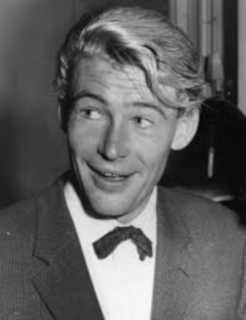
Birth of Peter O’Toole, Stage & Film Actor

peter-o-toole

Peter Seamus O’Toole, British stage and film actor of Irish descent, is born on August 2, 1932, in Leeds, Yorkshire, England. Some sources give his birthplace as Connemara, County Galway. Records from the General Registry Office in Leeds confirm that O’Toole is born in the north England town in 1932.

O’Toole grows up in Leeds and is educated at the Royal Academy of Dramatic Art in London. He is a reporter for the Yorkshire Evening Post in his teens and makes his amateur stage debut at Leeds Civic Theatre. After serving two years in the Royal Navy, he acts with the Bristol Old Vic Company from 1955 to 1958 and makes his London debut as Peter Shirley in George Bernard Shaw’s Major Barbara (1956). He appears with the Shakespeare Memorial Company at Stratford-upon-Avon, Warwickshire, England, in 1960 in highly praised performances as Shylock in The Merchant of Venice and as Petruchio in The Taming of the Shrew, and he plays the lead in Hamlet for the inaugural production of the Royal National Theatre in London in 1963. A prominent film star by this point in his career, he continues to appear on stages throughout the world to great acclaim. He is named associate director of the Old Vic in 1980.

O’Toole makes his motion picture debut in Kidnapped in 1960 and two years later becomes an international star for his portrayal of T.E. Lawrence in David Lean’s epic Lawrence of Arabia (1962). In 1964 he plays Henry II of England in Becket, and he has the title role in Lord Jim (1965). He appears as Henry II again in The Lion in Winter (1968), a film notable for the witty verbal sparring matches between O’Toole and costar Katharine Hepburn. The Ruling Class (1972), a controversial black comedy that has become a cult classic, casts O’Toole as a schizophrenic English earl with a messiah complex.

Personal problems contribute to a decline in his popularity during the 1970s, but he makes a strong comeback in the early 1980s with three well-received efforts. He portrays a duplicitous and domineering movie director in The Stunt Man (1980), and his performance as the Roman commander Lucius Flavius Silva in the acclaimed television miniseries Masada (1981) is hailed as one of the finest of his career. His most popular vehicle during this period is My Favorite Year (1982), an affectionate satire on the early days of television, in which he plays Alan Swann, a faded Errol Flynn-type swashbuckling screen star with a penchant for tippling and troublemaking.

O’Toole subsequently maintains his status with fine performances in such films as the Oscar-winning The Last Emperor (1987), the cult favourite Wings of Fame (1989), and Fairy Tale: A True Story (1997), in which he portrays Sir Arthur Conan Doyle. Notable screen roles in the 21st century included King Priam in the historical epic Troy (2004), an aging romantic in Venus (2006), the voice of a haughty food critic in the animated Ratatouille (2007), and a priest in the historical drama For Greater Glory (2012). In addition, in 2008 he portrays Pope Paul III in the TV series The Tudors.

In 1992 O’Toole publishes a lively memoir, Loitering with Intent: The Child. A second volume, Loitering with Intent: The Apprentice, appears in 1996. He is nominated for an Academy Award eight times — for Lawrence of Arabia, Becket, The Lion in Winter, Goodbye, Mr. Chips (1969), The Ruling Class, The Stunt Man, My Favorite Year, and Venus — but never wins. In 2003 he is awarded an honorary Oscar. He receives an Emmy Award for his performance as Bishop Pierre Cauchon in the television miniseries Joan of Arc (1999).

O’Toole dies on December 14, 2013, at Wellington Hospital in St. John’s Wood, London, at the age of 81. His funeral is held at Golders Green Crematorium in London on December 21, 2013, where his body is cremated in a wicker coffin. His ashes are planned to be taken to Connemara, Ireland. They are being kept at the residence of the President of Ireland, Áras an Uachtaráin, by President Michael D. Higgins, an old friend of O’Toole. His family has stated their intention to fulfill his wishes and take his ashes to the west of Ireland.

Leave a comment

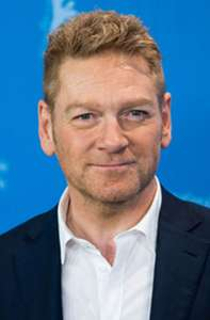
Birth of Kenneth Branagh, Actor, Director & Producer

kenneth-branagh

Sir Kenneth Charles Branagh, British actor, director, producer, and screenwriter, is born in Belfast on December 10, 1960.

Branagh is the middle of three children of working-class Protestant parents Frances (née Harper) and William Branagh, a plumber and joiner who runs a company that specialises in fitting partitions and suspended ceilings. He lives in the Tiger’s Bay area of the city and is educated at Grove Primary School.

At the age of nine, Branagh moves with his family to Reading, Berkshire, England, to escape the Troubles. He is educated at Whiteknights Primary School, then Meadway School, Tilehurst, where he appears in school productions such as Toad of Toad Hall and Oh, What a Lovely War!. He attends the amateur Reading Cine & Video Society (now called Reading Film & Video Makers) as a member and is a keen member of Progress Theatre for whom he is now the patron. He goes on to train at the Royal Academy of Dramatic Art in London and in 2015 succeeds Richard Attenborough as its president.

Branagh has both directed and starred in several film adaptations of William Shakespeare‘s plays, including Henry V (1989) (for which he was nominated for the Academy Award for Best Actor and Academy Award for Best Director), Much Ado About Nothing (1993), Othello (1995), Hamlet (1996) (for which he was nominated for the Academy Award for Best Adapted Screenplay), Love’s Labour’s Lost (2000), and As You Like It (2006).

Branagh stars in numerous other films and television series including Fortunes of War (1987), Woody Allen‘s Celebrity (1998), Wild Wild West (1999), The Road to El Dorado (2000), Conspiracy (2001), Harry Potter and the Chamber of Secrets (2002), Warm Springs (2005), as Major General Henning von Tresckow in Valkyrie (2008), The Boat That Rocked (2009), Wallander (2008–2016), My Week with Marilyn (2011) as Sir Laurence Olivier (nominated for Academy Award for Best Supporting Actor), and as Royal Navy Commander Bolton in the action-thriller Dunkirk (2017). He directs such films as Dead Again (1991), in which he also stars, Swan Song (1992) (nominated for Academy Award for Best Live Action Short Film), Mary Shelley’s Frankenstein (1994) in which he also stars, The Magic Flute (2006), Sleuth (2007), the blockbuster superhero film Thor (2011), the action thriller Jack Ryan: Shadow Recruit (2014) in which he also co-stars, the live-action film Cinderella (2015), and the mystery drama adaptation of Agatha Christie‘s Murder on the Orient Express (2017), in which he also stars as Hercule Poirot.

Branagh narrates the series Cold War (1998), the BBC documentary miniseries Walking with Dinosaurs (1999), Walking with Beasts (2001) and Walking with Monsters (2005). He has been nominated for five Academy Awards, five Golden Globe Awards, and has won three BAFTAs, and an Emmy Award. He is appointed a Knight Bachelor in the 2012 Birthday Honours and is knighted on November 9, 2012. He is awarded the Freedom of the City of his native city of Belfast in January 2018.


Leave a comment

Birth of John Hughes, 1st Archbishop of New York

john-joseph-hughes

John Joseph Hughes, prelate of the Roman Catholic Church in the United States and the fourth Bishop and first Archbishop of the Archdiocese of New York, is born in the hamlet of Annaloghan, near Aughnacloy, County Tyrone in Northern Ireland on June 24, 1797.

Hughes is the third of seven children of Patrick and Margaret (née McKenna) Hughes. He and his family suffer religious persecution in their native land. He is sent with his elder brothers to a day school in the nearby village of Augher, and afterwards attends a grammar school in Aughnacloy. The family emigrates to the United States in 1816 and settles in Chambersburg, Pennsylvania. Hughes joins them there the following year.

After several unsuccessful applications to Mount St. Mary’s College in Emmitsburg, Maryland, he is eventually hired as a gardener at the college. During this time, he befriends Mother Elizabeth Ann Seton, who is impressed by Hughes and persuades the Rector to reconsider his admission. Hughes is subsequently admitted as a regular student of Mount St. Mary’s in September 1820.

On October 15, 1826, Hughes is ordained to the priesthood by Bishop Henry Conwell at St. Joseph’s Church in Philadelphia. His first assignment is as a curate at St. Augustine’s Church in Philadelphia, where he assists its pastor by celebrating Mass, hearing confessions, preaching sermons, and other duties in the parish.

Hughes is chosen by Pope Gregory XVI as the coadjutor bishop of the Diocese of New York on August 7, 1837. He is consecrated bishop at St. Patrick’s Old Cathedral on January 7, 1838, with the title of the titular see of Basilinopolis, by the Bishop of New York, John Dubois, his former Rector.

Hughes campaigns actively on behalf of Irish immigrants and attempts to secure state support for parochial schools. Although this attempt fails, he founds an independent Catholic school system which becomes an integral part of the Catholic Church’s structure at the Third Plenary Council of Baltimore (1884), which mandates that all parishes have a school and that all Catholic children be sent to those schools. In 1841, Hughes founds St. John’s College in New York City which is now Fordham University.

Hughes is appointed Apostolic Administrator of the diocese due to Bishop Dubois’ failing health. As coadjutor, he automatically succeeds Dubois upon the bishop’s death on December 20, 1842, taking over a diocese which covers the entire state of New York and northern New Jersey. He is a staunch opponent of Abolitionism and the Free-Soil movement, whose proponents often express anti-Catholic attitudes. Hughes also founds the Ultramontane newspaper New York Freeman to express his ideas.

Hughes becomes an archbishop on July 19, 1850, when the diocese is elevated to the status of archdiocese by Pope Pius IX. As archbishop, he becomes the metropolitan for the Catholic bishops serving all the dioceses established in the entire Northeastern United States. To the dismay of many in New York’s Protestant upper-class, Hughes foresees the uptown expansion of the city and begins construction of the current St. Patrick’s Cathedral on Fifth Avenue between 50th and 51st Street, laying its cornerstone on August 15, 1858. At the request of President Abraham Lincoln, Hughes serves as semiofficial envoy to the Vatican and to France in late 1861 and early 1862. Lincoln also seeks Hughes’ advice on the appointment of hospital chaplains.

Hughes serves as archbishop until his death. He is originally buried in St. Patrick’s Old Cathedral, but his remains are exhumed in 1882 and re-interred in the crypt under the altar of the new cathedral he had begun.


3 Comments

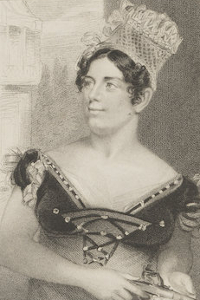
Birth of Stage Actress Julia Betterton Glover

julia-betterton-glover

Julia Betterton Glover, Irish-born stage actress well known for her comic roles in the late 18th and 19th centuries, is born on January 8, 1779, in Newry, in what is now Northern Ireland.

“Betterton” is not her real name, despite her father`s promotion of the fiction. She is born Julianna Butterton, the daughter of the Newry`s theatre manager William Butterton. His venture fails and he decides there will be financial benefit to him if her name is changed to “Betterton,” claiming links to a famous actor and long dead Thomas Betterton. With this deception he and his family travel round the theatres and the young Julia is acclaimed as an infant acting prodigy in York, the West Country, Bath, and elsewhere.

In 1787, she joins the York Circuit under manager Tate Wilkinson and appears as the Page in Thomas Otway‘s The Orphan, as well as the Duke of York with George Frederick Cooke in Richard III. When Cooke is cast as Glumdalca, the Queen of the Giants, in Henry Fielding‘s burlesque play Tom Thumb, Cooke chooses Julia to play the title role.

In 1790, at age nine, she makes her debut in Scotland at the Dumfries Theatre Royal. In 1795 she goes to Bath and plays the parts of Juliet, Imogen, Desdemona, Lady Macbeth, and Lydia Languish. She becomes well known, particularly praised for her comic role as Languish, and news of her success reaches London. A number of job offers are made, but they are declined by her father. He eventually accepts a lucrative offer, taking her salary for himself, for which she makes her London début in 1797 as Percy by Hannah More.

In 1800, her father sells her in marriage to Samuel Glover, the son of an industrial family from Birmingham, for £1, 000, although the money is never paid. Unhappily married, she has eight children, four of whom survive childhood. In 1820, she plays Hamlet at the Lyceum Theatre to critical acclaim. In 1822, she appears as Nurse in Romeo and Juliet at the Theatre Royal, Drury Lane. Her daughter Phyllis plays Juliet. On February 8, 1837, her father, with whom she has had an unhappy relationship, dies.

One of her sons is Edmund Glover and another is William Howard Glover. In 1850, Glover announces her retirement from the stage. After two weeks confined to her bed, she appears at Drury Lane for her farewell benefit performance on July 12, 1850, as Mrs. Malaprop in The Rivals. She is noticeably ill and weak during her performance and is unable to stand to receive her applause at the end of the play. Instead, the curtain rises to reveal Glover seated, surrounded by the rest of the cast. She dies in London four days later on July 16, 1850. She is buried in St. George’s Churchyard Gardens in London.


2 Comments

Birth of Irish Actor Spranger Barry

spranger-barry

Spranger Barry, actor, is born in Skinner’s Row, Dublin, on November 23, 1719. Barry is the son of a silversmith, to whose business he is brought up. He takes over the business but is not successful.

His first appearance on the stage is at the Theatre Royal, Smock Alley, Dublin, on the February 5, 1744, and this engagement at once increases its prosperity. His first London appearance is made in 1746 as Othello at the Theatre Royal, Drury Lane. Here his talents are speedily recognized, and in Hamlet and Macbeth he alternates with David Garrick, arousing the latter’s jealousy by his success as Romeo. This results in his leaving Drury Lane for the Covent Garden Theatre in 1750, accompanied by Susannah Maria Cibber, his Juliet. Both houses simultaneously put on Romeo and Juliet for a series of rival performances, and Barry’s Romeo is preferred by the critics to Garrick’s.

In 1758, Barry opens the Crow Street theatre in Dublin, and later a new theatre in Cork. He stages many successful productions but seems to have lived beyond his means. In 1767 he returns to London to play at the Haymarket Theatre, then under the management of Samuel Foote. As his second wife, he marries in 1768 the actress Ann Street Dancer, and he and Mrs. Barry play under Garrick’s management, Barry appearing in 1767, after ten years absence from the London stage, in Othello, his greatest part. In 1774 they both move to Covent Garden, where Barry remains until his death on January 10, 1777.