seamus dubhghaill

Promoting Irish Culture and History from Little Rock, Arkansas, USA


Leave a comment

Birth of Physicist & Engineer William Thomson

William Thomson, 1st Baron Kelvin, Scots Irish mathematical physicist and engineer, is born in Belfast on June 26, 1824.

At the University of Glasgow, he does important work in the mathematical analysis of electricity and formulation of the first and second laws of thermodynamics and does much to unify the emerging discipline of physics in its modern form. He works closely with mathematics professor Hugh Blackburn in his work. He also has a career as an electrical telegraph engineer and inventor, which propels him into the public eye and ensures his wealth, fame and honour. For his work on the transatlantic telegraph project, he is knighted in 1866 by Queen Victoria, becoming Sir William Thomson. He has extensive maritime interests and is most noted for his work on the mariner’s compass, which had previously been limited in reliability.

Absolute temperatures are stated in units of kelvin in his honour. While the existence of a lower limit to temperature (absolute zero) is known prior to his work, Thomson is widely known for determining its correct value as approximately −273.15 degree Celsius or −459.67-degree Fahrenheit.

Thomson is ennobled in 1892 in recognition of his achievements in thermodynamics, and of his opposition to Irish Home Rule, becoming Baron Kelvin, of Largs in the County of Ayr. He is the first British scientist to be elevated to the House of Lords. The title refers to the River Kelvin, which flows close by his laboratory at the University of Glasgow. His home is the imposing red sandstone mansion Netherhall, in Largs. Despite offers of elevated posts from several world-renowned universities, Thomson refuses to leave Glasgow, remaining Professor of Natural Philosophy for over 50 years, until his eventual retirement from that post. The Hunterian Museum at the University of Glasgow has a permanent exhibition on the work of Thomson including many of his original papers, instruments and other artifacts such as his smoking pipe.

Always active in industrial research and development, he is recruited around 1899 by George Eastman to serve as vice-chairman of the board of the British company Kodak Limited, affiliated with Eastman Kodak.

In November 1907 he catches a chill, and his condition deteriorates until he dies at his Scottish residence, Netherhall, in Largs on December 17.

Lord Kelvin is an elder of St. Columba’s Parish Church (Church of Scotland) in Largs for many years. It is to that church that his remains are taken after his death. Following the funeral service, his body is taken to Bute Hall in his beloved University of Glasgow for a service of remembrance before being taken to London for interment at Westminster Abbey, near the final resting place of Sir Isaac Newton.


Leave a comment

Birth of Painter Daniel Maclise

daniel-maclise

Daniel Maclise, Irish history, literary and portrait painter, and illustrator, is born in Cork, County Cork, on January 25, 1806. He works in London, England for most of his life.

His early education is of the plainest kind, but he is eager for culture, fond of reading, and anxious to become an artist. He later studies at the Cork School of Art.

Maclise exhibits for the first time at the Royal Academy of Arts in 1829. Gradually he begins to confine himself more exclusively to subject and historical pictures, varied occasionally by portraits – such as those of Lord Campbell, novelist Letitia Landon, Charles Dickens, and other of his literary friends. In 1833, he exhibits two pictures which greatly increase his reputation and, in 1835, the Chivalric Vow of the Ladies and the Peacock procure his election as associate of the Academy, of which he becomes full member in 1840. The years that follow are occupied with a long series of figure pictures, deriving their subjects from history and tradition and from the works of William Shakespeare, Oliver Goldsmith, and Alain-René Lesage.

Maclise also designs illustrations for several of Dickens’s Christmas books and other works. Between the years 1830 and 1836 he contributes to Fraser’s Magazine, under the pseudonym of Alfred Croquis, a remarkable series of portraits of the literary and other celebrities of the time – character studies, etched or lithographed in outline, and touched more or less with the emphasis of the caricaturist, which are afterwards published as the Maclise Portrait Gallery (1871). During the rebuilding of the Houses of Parliament in London in 1834–1850 by Charles Barry, Maclise is commissioned in 1846 to paint murals in the House of Lords on such subjects as Justice and Chivalry.

In 1858, Maclise commences one of the two great monumental works of his life, The Meeting of Wellington and Blücher, on the walls of the Palace of Westminster. It is begun in fresco, a process which proves unmanageable. The artist wishes to resign the task, but, encouraged by Prince Albert, he studies in Berlin the new method of water-glass painting, and carries out the subject and its companion, The Death of Nelson, in that medium, completing the latter painting in 1864.

marriageaoifestrongbow

Maclise’s vast painting of The Marriage of Strongbow and Aoife (1854) hangs in the National Gallery of Ireland, Dublin. It portrays the marriage of the main Norman conqueror of Ireland “Strongbow” to the daughter of his Gaelic ally. By the grand staircase of Halifax Town Hall, which is completed in 1863, there is a wall painting by Maclise.

The intense application which he gives to these great historic works, and various circumstances connected with the commission, has a serious effect on Maclise’s health. He begins to shun the company in which he formerly delighted, his old buoyancy of spirits is gone, and in 1865, when the presidency of the Royal Academy is offered to him he declines the honour. He dies of acute pneumonia on April 25, 1870 at his home 4 Cheyne Walk, Chelsea, London.

(Pictured lower right: The Marriage of Strongbow and Aoife)


Leave a comment

Birth of Bryan Guinness, 2nd Baron Moyne

bryan-guinness

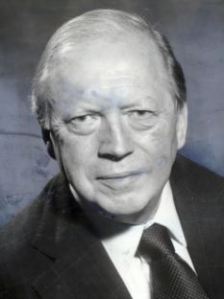
Bryan Walter Guinness, 2nd Baron Moyne, heir to part of the Guinness family brewing fortune, lawyer, poet, and novelist, is born on October 27, 1905.

Guinness is born in London to Walter Edward Guinness, 1st Baron Moyne, son of Edward Guinness, 1st Earl of Iveagh, and Lady Evelyn Stuart Erskine, daughter of Shipley Gordon Stuart Erskine, 14th Earl of Buchan. He attends Heatherdown School, near Ascot in Berkshire, followed by Eton College, and Christ Church, Oxford, and is called to the bar in 1931.

As an heir to the Guinness brewing fortune and a handsome, charming young man, Bryan is an eligible bachelor. One of London’s “Bright Young Things,” he is an organiser of the 1929 “Bruno Hat” hoax art exhibition held at his home in London. Also, in 1929 he marries the Hon. Diana Mitford, one of the Mitford sisters, and has two sons with her. The couple become leaders of the London artistic and social scene and are dedicatees of Evelyn Waugh‘s second novel Vile Bodies. However, they divorce in 1933 after Diana deserts him for British fascist leader Sir Oswald Mosley.

Guinness remarries happily in 1936 to Elisabeth Nelson, of the Nelson publishing family, with whom he has nine children.

During World War II, Guinness serves for three years in the Middle East with the Spears Mission to the Free French, being a fluent French speaker, with the rank of major. Then in November 1944 Guinness succeeds to the barony when his father, posted abroad as Resident Minister in the Middle East by his friend Winston Churchill, is assassinated in Cairo.

After the war, Lord Moyne serves on the board of the Guinness corporation as vice-chairman (1947-1979), as well as the Guinness Trust and the Iveagh Trust, sitting as a crossbencher in the House of Lords. He serves for 35 years as a trustee of the National Gallery of Ireland and donates several works to the gallery. He writes a number of critically applauded novels, memoirs, books of poetry, and plays. With Frank Pakenham he seeks the return of the “Lane Bequest” to Dublin, resulting in the 1959 compromise agreement. He is invested as a Fellow of the Royal Society of Literature.

Lord Moyne dies of a heart attack on July 6, 1992, at Biddesden House, his home in Wiltshire, and is succeeded by his eldest son Jonathan. He is buried at Ludgershall, Wiltshire, England.


Leave a comment

Birth of Henry Vivien Pierpont Conyngham

henry-vivien-pierpont-conyngham

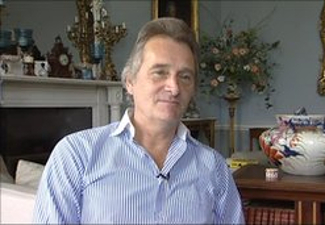
Henry Vivien Pierpont Conyngham, 8th Marquess Conyngham, Anglo-Irish nobleman who holds titles in the Peerages of Ireland and the United Kingdom, is born on May 25, 1951.

The eldest son of Frederick Conyngham, 7th Marquess Conyngham by his wife, Eileen Wren Newsom, he attends Harrow School before studying at Harvard University.

Styled Viscount Slane until 1974 and Earl of Mount Charles from 1974 until 2009, he succeeds his father in the marquessate and other titles in 2009. However, in the Republic of Ireland frequently, and erroneously, he remains referred to as Lord Mountcharles, his former courtesy title. He also inherits the U.K. peerage title Baron Minster, of Minster Abbey in the County of Kent, created in 1821 for his ancestor, the 1st marquess thereby giving the Marquesses Conyngham the automatic right to sit in the British House of Lords until 1999.

As Earl of Mount Charles, he unsuccessfully contests the Louth seat in 1992 for Fine Gael. In 1997 he stands for election to Seanad Éireann for Trinity College Dublin and runs again without success as a Fine Gael candidate for the European Parliament in 2004.

Lord and Lady Conyngham divide their time between Beauparc House and Slane Castle in County Meath. The latter is the family’s principal ancestral seat until it is badly damaged by fire in 1992. The castle has now been restored.

The Marquess Conyngham enjoys a high profile in Ireland as the author of a weekly column in the Daily Mirror. He has been dubbed the rock and roll aristocrat or the rock and roll peer owing to the very successful series of rock concerts he has hosted since 1981, held in the natural amphitheatre on the grounds of Slane Castle. These concerts have included performances by The Rolling Stones, Thin Lizzy, Queen, U2, Bob Dylan, Bruce Springsteen, David Bowie, Guns N’ Roses, Oasis, and Madonna. Lord Conyngham receives the Industry Award at the 2010 Meteor Awards. In his autobiography Public Space–Private Life: A Decade at Slane Castle, he describes his business career and the challenges of being an Anglo-Irish peer in modern Ireland, and how being Anglo-Irish has gradually become more accepted there.


Leave a comment

Assassination of MP for Abingdon, Airey Neave

airey-neaveAirey Middleton Sheffield Neave, British army officer, barrister, and politician, is killed in a car-bomb attack at the House of Commons on March 30, 1979. During World War II, Neave is the first British officer to successfully escape from the German prisoner-of-war camp Oflag IV-C at Colditz Castle. He later becomes Conservative Member of Parliament (MP) for Abingdon.

Neave is killed when a magnetic car-bomb fitted with a ball bearing tilt switch explodes under his Vauxhall Cavalier just before 3:00 PM as he drives out of the Palace of Westminster car park. He loses his right leg below the knee and his left is hanging on by a flap of skin. Neave dies without regaining consciousness at the hospital an hour after being freed from the wreckage. The Irish National Liberation Army (INLA), an illegal Irish republican paramilitary group, claims responsibility for the killing.

Conservative leader Margaret Thatcher leads tributes, saying, “He was one of freedom’s warriors. No one knew of the great man he was, except those nearest to him. He was staunch, brave, true, strong; but he was very gentle and kind and loyal. It’s a rare combination of qualities. There’s no one else who can quite fill them. I, and so many other people, owe so much to him and now we must carry on for the things he fought for and not let the people who got him triumph.”

Labour Prime Minister James Callaghan says, “No effort will be spared to bring the murderers to justice and to rid the United Kingdom of the scourge of terrorism.”

The INLA issues a statement regarding the killing in the August 1979 edition of The Starry Plough, “In March, retired terrorist and supporter of capital punishment, Airey Neave, got a taste of his own medicine when an INLA unit pulled off the operation of the decade and blew him to bits inside the ‘impregnable’ Palace of Westminster. The nauseous Margaret Thatcher snivelled on television that he was an ‘incalculable loss’ — and so he was — to the British ruling class.”

Neave’s death comes just two days after the vote of no confidence which brings down Callaghan’s government and a few weeks before the 1979 general election, which brings about a Conservative victory and sees Thatcher come to power as Prime Minister. Neave’s wife Diana is subsequently elevated to the House of Lords as Baroness Airey of Abingdon.

Neave’s biographer Paul Routledge meets a member of the Irish Republican Socialist Party, the political wing of INLA, who was involved in the killing of Neave and who tells Routledge that Neave “would have been very successful at that job [Northern Ireland Secretary]. He would have brought the armed struggle to its knees.”