seamus dubhghaill

Promoting Irish Culture and History from Little Rock, Arkansas, USA


Leave a comment

Gerry Adams Meets Bill Clinton for the First Time

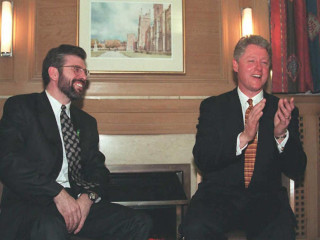
For the United States Congress‘s annual St. Patrick’s Day luncheon on March 16, 1995, Newt Gingrich, the Speaker of the House of Representatives, invites Ireland’s new Taoiseach, John Bruton, to be the main event. However, the first handshake between President Bill Clinton and Gerry Adams, the head of Sinn Féin, the political wing of the Irish Republican Army (IRA), steals the spotlight.

Some of the fifty people at the luncheon, most of them Irish American members of Congress, think Clinton might forgo a handshake because he is under tremendous pressure from Britain’s Prime Minister John Major not to give Adams a warm embrace. But Clinton does not hesitate although the handshake comes after photographers have left the room.

“Gerry was concerned about the protocol of how he should go up to the President, but when he walked up, the President gave him a very big handshake,” says Representative Peter T. King, a Republican from Seaford, Long Island, who sits to the right of Adams at the lunch. After an awkward moment of silence, the room explodes with applause.

The President and the Sinn Féin leader speak for five minutes. Later Adams says, “The engagement was positive, was cordial.”

According to Rep. King, Clinton says he is committed to making the Irish peace effort succeed and, while talking to Adams, puts his fist in front of him and says, “This is going to work.” Adams says Clinton does not urge him to make sure the IRA disarms, something Major asked the President to do. Clinton invites Adams to a White House reception scheduled for the following day and, according to his aides, plans to speak to Major over the weekend in an effort to patch up their differences.

The tone at the luncheon is often light. Clinton jokes that finally he is at a place where people will not criticize him for taking a drink of Guinness. Also, Bruton hails Gingrich as an honorary Irishman, noting that his mother apparently descended from the Doherty clan of County Donegal.

Wearing a white carnation tinged with green, Gingrich gives the Taoiseach a bowl of Georgia peanuts and a book on the history of the United States Capitol. Telling Gingrich that he is not the first person to consider overhauling welfare, Bruton gives him an 1840’s book about welfare reform in Ireland.

Some attendees joke that there are almost as many Kennedys at the luncheon as there are Republicans. There are Senator Edward M. Kennedy and Representative Joseph P. Kennedy, both of Massachusetts, Representative Patrick Kennedy of Rhode Island, and Jean Kennedy Smith, the American Ambassador to Ireland.

The menu would make any Irishman proud: boiled corned beef and cabbage, boiled potatoes, soda bread and lime sherbet.

(From: “Gerry Adams Shakes Hands With Clinton” published in The New York Times, March 17, 1995)


Leave a comment

Death of Mary McShain, Landowner & Benefactor

Mary McShain, Irish American landowner and benefactor, dies at Killarney House in Killarney, County Kerry on December 2, 1998.

McShain is born Mary Horstmann in Philadelphia, Pennsylvania on March 27, 1907. Her parents are Ignatius J. Horstmann and his wife Pauline. She is the fifth of six children. She attends St. Leonard’s Academy in Philadelphia and Rosemont College in Rosemont, Pennsylvania. In 1927 she marries John McShain, building contractor who works on the reconstruction of the White House and the building of the Jefferson Memorial, the Pentagon, and the John F. Kennedy Center for the Performing Arts. They are both interested in horse breeding and racing, establishing a stable of racehorses in 1952. They expand this stable to Ireland in 1955, hiring first Vincent O’Brien and then John Oxx as trainers. Their greatest success is the horse Ballymoss.

The McShains move to Ireland in 1960, buying Killarney House in County Kerry and a large portion of the Kenmare estate, which had been owned by the Earls of Kenmare since the 16th century. They gift Innisfallen Island and the ruins of an abbey to the Irish state in 1973, bestowing guardianship of Ross Island and its castle to the state. For a nominal fee, they turn over the entire estate to the state in 1979, stipulating a life tenancy of the house and some land, with the rest of the land being incorporated into Killarney National Park.

McShain is a Dame of Malta and a Lady of the Grand Cross of the Holy Sepulchre. She receives the Pro Ecclesia et Pontifice cross in 1976. She is awarded two honorary doctorates in 1977, one from La Salle University in Philadelphia and one from her alma mater, Rosemont College.

McShain dies at Killarney House on December 2, 1998. She is buried beside her husband in Holy Cross Cemetery, Philadelphia. Her daughter, Pauline McShain, is a sister of the Society of the Holy Child Jesus and dies on March 8, 2019 due to complications of pneumonia.

(Pictured: John and Mary McShain with Lakes of Killarney in the background sometime in the late 1950s)


Leave a comment

Death of John Dunlap, Printer of the Declaration of Independence

John Dunlap, Irish printer who printed the first copies of the United States Declaration of Independence and one of the most successful Irish American printers of his era, dies in Philadelphia, Pennsylvania on November 27, 1812.

Dunlap is born in 1747 in Strabane, County Tyrone, in what is now Northern Ireland. When he is ten years old, he goes to work as an apprentice to his uncle, William Dunlap, a printer and bookseller in Philadelphia. In 1766, William Dunlap leaves the business in the care of his nephew, who eventually purchases the business. Initially he makes a living by printing sermons, broadsides and handbills. In November 1771, he begins the publication of the Pennsylvania Packet, or General Advertiser, a weekly newspaper. In 1773 he marries Elizabeth Hayes Ellison.

During the American Revolutionary War, Dunlap becomes an officer in the First Troop Philadelphia City Cavalry and sees action with George Washington at the battles of Trenton and Princeton. He continues in the First City Troop after the war, rising to the rank of major, and leading Pennsylvania’s cavalry militia to help suppress the Whiskey Rebellion in 1794.

In 1776, Dunlap secures a lucrative printing contract for the Continental Congress. In July 1776, fighting between the American colonists and the British forces had been going on for over a year. On July 2, the Second Continental Congress votes on the Lee Resolution to secede. Two days later, they approve the final wording of a public declaration regarding their decision, which ultimately comes to be known as the Declaration of Independence. President of Congress John Hancock signs the fair copy with Secretary of Congress Charles Thomson attesting it. That evening Hancock orders Dunlap to print broadside copies of the declaration. He prints perhaps 200 broadsides, since known as the Dunlap broadsides, which are the first published versions of the Declaration.

Dunlap also prints items for Pennsylvania’s revolutionary government. In 1777 he takes over the printing of the Journals of the Continental Congress from Robert Aitken, but loses the contract in 1779 after printing in his newspaper a letter from Thomas Paine that leaks news of the secret French aid to the Americans.

In 1784, Dunlap’s paper becomes a daily with a new title: the North American and United States Gazette. It is not the first daily in the United States as the Pennsylvania Evening Post is the first in 1783, but it becomes the first successful daily.

Continuing to serve the changing needs of the government, Dunlap and his partner David Claypoole print the Constitution of the United States on September 19, 1787 for use by the Constitutional Convention, and later publish it for the first time in the Pennsylvania Packet.

Dunlap’s major financial success comes from real estate speculation. During the American Revolutionary War, he purchases property confiscated from Loyalists who refuse to take Pennsylvania’s new loyalty oath. After the war, he purchases land in Kentucky. By 1795, when he is forty-eight, he is able to retire with a sizable estate. Retirement does not agree with him, however. According to his friend, Dr. Benjamin Rush, he becomes a drunkard in his final years. He dies in Philadelphia on November 27, 1812.


Leave a comment

Birth of Rev. William Corby, Chaplain & Notre Dame President

The Rev. William Corby, American priest of the Congregation of Holy Cross and Union Army chaplain in the American Civil War attached to the Irish Brigade, is born in Detroit, Michigan on October 2, 1833. He serves twice as president of the University of Notre Dame.

Corby is born to Daniel Corby, an Irish immigrant, and his wife Elizabeth, a Canadian. He attends public school until age 16, then joins his father’s real estate business. In 1853, he enrolls in the 10-year-old college of Notre Dame in South Bend, Indiana, and begins study for the priesthood three years later. Following ordination, he teaches at Notre Dame and serves as a local parish priest.

Corby leaves his position at Notre Dame and joins the predominately Catholic Irish Brigade in 1861. He spends the next three years as chaplain of the 88th New York Volunteer Infantry, which is one of the five original regiments in the Irish Brigade. He is perhaps best known for giving general absolution to the Irish Brigade on the second day of the Battle of Gettysburg. Of the Brigade’s original 3,000 men, only about 500 remain. Of the men Corby absolves that day, 27 are killed, 109 are wounded, and 62 are listed as missing. The scene of Corby blessing the troops is depicted in the 1891 painting Absolution under Fire by Paul Wood, and dramatized in the 1993 film Gettysburg. His memoir of the Irish Brigade becomes a best-seller.

Following his service in the Civil War, Corby returns to Notre Dame and serves as its vice-president (1865–1866) and twice as its president (1866–1872, 1877-1881). Under his first administration, enrollment at Notre Dame increases to more than 500 students. In 1869 he opens the law school, which offers a two-year course of study, and in 1871 he begins construction of Sacred Heart Church, today the Basilica of the Sacred Heart, Notre Dame. The institution is still small, and he teaches in the classroom and knows most students and faculty members. In 1869, the entire student body and the faculty present him with the gift of a black horse and, when he leaves the presidency three years later, they present him with a matching carriage.

Corby becomes president again following the short term of Fr. Patrick Colovin. When he returns to the presidency, Notre Dame has not yet become a significant academic institution. His presidency sees the April 1879 fire that destroys the old Main Building of the school. He sends all students home and promises that they will return to a “bigger and better Notre Dame.” He overcomes the $200,000 fire loss and rebuilds the Main Building, which now stands with its “Golden Dome.” During his administration, he also constructs Washington Hall, in which he takes much pride, and starts the construction of St. Edward’s Hall for the minims program.

In addition to his presidency, Corby is also serving as the Holy Cross Provincial, when Rev. Edward Sorin, who had become Superior General of the Congregation, writes to him to tell him that he will have to relinquish one of his positions. He wants to remain president but is overruled by Sorin. Famous throughout the U.S. Catholic world as chaplain for the Irish Brigade, known as the “Fighting Irish,” it may be that the nickname followed Corby back to Notre Dame, where it stuck.

Corby dies at the age of 64 on December 28, 1897 in South Bend, Indiana. He is buried in Holy Cross Cemetery, Notre Dame, Indiana.

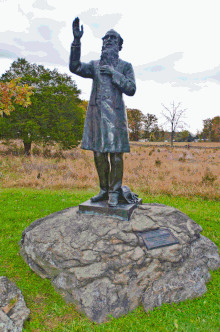
A statue by Samuel Murray, depicting Corby with right hand raised in the gesture of blessing, stands upon the same boulder at the Gettysburg Battlefield on which the priest stood while blessing the troops that second morning of the battle. It is the first statue of a non-general erected on the Gettysburg Battlefield, and is dedicated in 1910.

Corby is widely remembered among military chaplains and celebrated by Irish American fraternal organizations. Corby Hall at Notre Dame is named for him, and a copy of the Gettysburg statue stands outside the building. An organization of Notre Dame alumni is named The William Corby Society.

(Pictured: Statue of Father William Corby by Samuel Murray, Gettysburg Battlefield, Gettysburg, Pennsylvania)


Leave a comment

Death of Michael Flannery, Irish Republican Founder of NORAID

Michael Flannery, Irish republican who fought in the Irish War of Independence and the Irish Civil War, dies in New York City on September 30, 1994. He supports the Provisional Irish Republican Army during The Troubles and is a founder of the Irish Northern Aid Committee (NORAID).

Flannery is born in Cangort, near Brosna, on the border of County Offaly and County Tipperary, on January 7, 1903.

In 1916 Flannery joins the Irish Volunteers alongside his brother Peter, although he does not take part in the Easter Rising. However, he does participate in the Irish War of Independence. Following the outbreak of the Irish Civil War, he fights as part of the Anti-Treaty IRA until his capture by the National Army on November 11, 1922, in Roscrea, County Tipperary. He is imprisoned for nearly a year and a half in Dublin’s Mountjoy Prison (C Wing). While there he witnesses the execution of Anti-Treaty IRA leaders Richard Barrett, Joe McKelvey, Liam Mellows and Rory O’Connor from his cell window. Following a 28-day hunger strike, he is placed in the Curragh Camp until May 1, 1924, when he is finally released, a full year after the end of the civil war.

In February 1927 Flannery immigrates to the United States, settling in Jackson Heights, Queens, New York City. In 1928 he marries Margaret Mary Egan, a Tipperary-born research chemist, who had been educated at University College Dublin and University of Geneva.

Following the creation of Fianna Fáil and their entry into the Irish Parliament Dáil Éireann, Flannery becomes affiliated with Sinn Féin, who had voted to retain their abstentionist policy towards the Dáil and their refusal to acknowledge it as the legitimate government of Ireland. Sinn Féin tasks him with drumming up support for the party in New York. However, following the start of the Great Depression he finds it difficult to focus on politics in the face of mounting poverty. By 1933 finding support for Sinn Féin and the IRA becomes particularly tough when Fianna Fáil expands greatly the range of people eligible for military pensions, which under the previous government had been biased against members of the Anti-Treaty IRA. For the next 40 years Flannery works for the Metropolitan Life Insurance Company.

Upon the onset of The Troubles in Northern Ireland, Flannery is once again drawn into the world of Irish Republicanism. In a response to the mounting violence, he sets up the Irish Northern Aid Committee, or as it became better known as, NORAID. The official purpose of NORAID is to provide funds to the families of imprisoned Irish Republicans and victims of violence. However, opponents level the accusation against the organisation that it is also providing funding directly to the Provisional Irish Republican Army, and perhaps even also supplying firearms.

In 1970 Flannery travels around America and sets up 62 chapters of NORAID. In 1971 he says, “The more coffins sent back to Britain, the sooner this will be all over,” referring to British soldiers.

In 1982 Flannery is indicted, with four other members of NORAID, for arms smuggling, but all defendants are acquitted after their legal defence is able to successfully argue their actions had been sanctioned the CIA.

Four months after the verdict of the arms trial, Flannery is named as Grand Marshal of the Saint Patrick’s Day Parade in New York City. His appointment causes considerable controversy within the Irish American community and several high-profile figures boycott the parade that year, including the Archbishop of New York Terence Cooke.

In 1986 Flannery quietly resigns from NORAID following the decision by Sinn Féin to drop its abstentionist policy in the Republic of Ireland and to recognise Dáil Éireann as the legitimate governing body of Ireland.

Flannery opposes the Northern Ireland peace process, believing that Sinn Féin and the Provisionals have “sold out,” and believes the removal of British troops from Northern Ireland is the only starting point upon which negotiations can begin.

Flannery dies at the age of 92 in New York City on September 30, 1994. He is buried in Mount Saint Mary’s Cemetery in Flushing, Queens, New York.


Leave a comment

The Long Count Fight

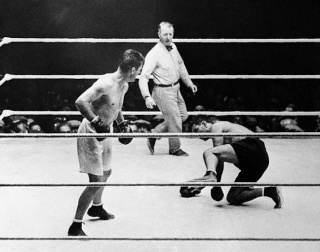
In a battle of Irish Americans, the Long Count Fight, or the Battle of the Long Count, a ten-round professional boxing rematch between world heavyweight champion Gene Tunney and former champion Jack Dempsey takes place at Soldier Field in Chicago, Illinois on September 22, 1927.

“Long Count” is applied to the fight because when Tunney is knocked down in the seventh round the count is delayed due to Dempsey’s failure to go to and remain in a neutral corner. Whether this “long count” actually affects the outcome remains a subject of debate. Tunney ultimately wins the bout in a unanimous decision.

Just 364 days earlier, on September 23, 1926 at Sesquicentennial Stadium in Philadelphia, Pennsylvania, Tunney beats Dempsey in a ten-round unanimous decision to claim the world heavyweight title. This first fight between Tunney and Dempsey is moved out of Chicago because Dempsey learned that Al Capone is a big fan of his, and he does not want Capone to be involved in the fight. Capone reportedly bets $50,000 on Dempsey for the rematch, which fuels false rumors of a fix. Dempsey is favored by odds makers in both fights, largely because of public betting which heavily tilts towards Dempsey.

The rematch held at Chicago’s Soldier Field draws a gate of $2,658,660 (approximately $22 million in today’s dollars). It is the first $2 million gate in entertainment history.

Despite the fact that Tunney had won the first fight by a wide margin on the scorecards, the prospect of a second bout creates tremendous public interest. Dempsey is one of the so-called “big five” sports legends of the 1920s and it is widely rumored that he had refused to participate in the military during World War I. He actually had attempted to enlist in the Army, but had been turned down. A jury later exonerates Dempsey of draft evasion. Tunney, who enjoys literature and the arts, is a former member of the United States Marine Corps. His nickname is The Fighting Marine.

The fight takes place under new rules regarding knockdowns: the fallen fighter has ten seconds to rise to his feet under his own power, after his opponent moves to a neutral corner (i.e., one with no trainers). The new rule, which is not yet universal, is asked to be put into use during the fight by the Dempsey camp, who had requested it during negotiations. Dempsey, in the final days of training prior to the rematch, apparently ignores the setting of these new rules. Also, the fight is staged inside a 20-foot ring, which favors the boxer with superior footwork, in this case Tunney. Dempsey likes to crowd his opponents, and normally fights in a 16-foot ring that offers less space to maneuver.

To this day boxing fans argue over whether Dempsey could or should have won the fight. What is not in dispute is that the public’s affection for Dempsey grew in the wake of his two losses to Tunney. “In defeat, he gained more stature,” wrote The Washington Post‘s Shirley Povich. “He was the loser in the battle of the long count, yet the hero.”

Tunney said that he had picked up the referee’s count at “two,” and could have gotten up at any point after that, preferring to wait until “nine” for obvious tactical reasons. Dempsey said, “I have no reason not to believe him. Gene’s a great guy.”

Dempsey later joins the United States Coast Guard, and he and Tunney become good friends who visit each other frequently. Tunney and Dempsey are both members of the International Boxing Hall of Fame.

In March 2011, the family of Gene Tunney donates the gloves he wore in the fight to the Smithsonian Institution‘s National Museum of American History.


2 Comments

Birth of Michael Corcoran, Union Army General

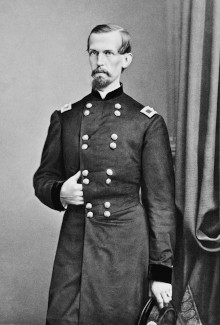
Michael Corcoran, Irish American general in the Union Army during the American Civil War and a close confidant of President Abraham Lincoln, is born in Carrowkeel, near Ballymote, County Sligo, on September 21, 1827. As its colonel, he leads the 69th Infantry Regiment (New York) to Washington, D.C. and is one of the first to serve in the defense of Washington by building Fort Corcoran. He then leads the 69th into action at the First Battle of Bull Run. After promotion to brigadier general, he leaves the 69th and forms the Corcoran Legion, consisting of at least five other New York regiments.

Corcoran is the only child of Thomas Corcoran, an officer in the British Army, and Mary McDonagh. Through his mother, he claims descent from Patrick Sarsfield, hero of the Williamite War in Ireland and leader of the Wild Geese. In 1846 he takes an appointment to the Revenue Police, enforcing the laws and searching for illicit stills and distilling activities in Creeslough, County Donegal. He also joins a guerrilla group called the Ribbonmen.

On August 30, 1849, Corcoran emigrates from Sligo to the United States and settles in New York City where he finds work as a clerk in the tavern owned by John Heaney, whose niece, Elizabeth, he marries in 1854.

Corcoran enlists as a Private in the 69th New York Militia. By 1859 he is appointed colonel of the regiment. The regiment is a state militia unit at the time composed of citizens, not soldiers, and is involved in the maintenance of public order. On October 11, 1860, he refuses to march the regiment on parade for the 19-year-old Prince of Wales, who is visiting New York City at the time, protesting the British imposition of the Irish Famine. He is removed from command and a court martial is pending over that matter when the Civil War begins.

Corcoran also becomes involved in Democratic politics at Tammany Hall. He becomes district leader, a member of the judicial nominations committee, an elected school inspector for his ward, and a member of the Fourteenth Ward General Committee. He is one of the founders of the Fenian Brotherhood in America.

With the outbreak of war, the court martial is dropped and Corcoran is restored to his command because he had been instrumental in bringing other Irish immigrants to the Union cause. He leads the 69th to Washington, D.C. and serves for a while in the Washington defenses building, Fort Corcoran. In July 1861 he leads the regiment into action at the First Battle of Bull Run and is taken prisoner.

While Corcoran is imprisoned, the United States makes threats to execute captured Confederate privateers. Corcoran and several other Union prisoners are selected by lot for execution if the United States carries out its threats against the privateers. This event is known as the Enchantress Affair, but no executions are ever carried out by either side. Corcoran is then offered a parole under the conditions that he does not take up arms against the Confederacy. Intending to resume his place in the Union army upon his release he refuses the offer of parole. He is appointed Brigadier General of volunteers in July and exchanged in August 1862. His role in the Enchantress Affair and his refusal for parole gains him some attention and upon his release he is invited to dinner with President Abraham Lincoln.

In April 1863 Corcoran is involved in an incident that ends with Corcoran shooting and killing Edgar A. Kimball, commander of the 9th New York Volunteer Infantry Regiment. Corcoran attempts to pass through the 9th New York’s area without giving the required password after receiving the challenge from a sentry. When Kimball intervenes on the side of the sentry, Corcoran shoots him. Corcoran is not charged with a crime or reprimanded and continues to serve.

Corcoran returns to the army and sets about recruiting more Irish volunteers. He raises and takes command of what becomes known as the Corcoran Legion. Placed in command of the 1st Division, VII Corps he is engaged in the Battle of Deserted House and takes part in the Battle of Suffolk. In late 1863 he is placed in command of a division in the XXII Corps and returns to serve in the Washington defenses. While riding alone in Fairfax, Virginia he is thrown from a runaway horse and suffers a fractured skull. He dies at the age of 36 at the William Gunnell House on December 22, 1863.

New York City Mayor Michael Bloomberg unveils Ireland’s national monument to the Fighting 69th in Ballymote on August 22, 2006. The monument is sculpted by Philip Flanagan. The inscription around the top of the monument reads “Michael Corcoran 1827–1863” Around the base is inscribed “New York Ballymote Creeslough Bull Run.” Underneath the monument is a piece of steel from the World Trade Center, donated by the family of Michael Lynch, who died in the tower on September 11, 2001. Lynch’s family are also from County Sligo.


Leave a comment

Birth of Frank McCourt, Teacher & Writer

frank-mccourt

Francis “Frank” McCourt, Irish American teacher and writer, is born in New York City‘s Brooklyn borough on August 19, 1930.

McCourt is born to Malachy McCourt, Sr., who falsely claims to have been in the Irish Republican Army (IRA) during the Irish War of Independence, and Irish Catholic mother Angela Sheehan from Limerick. In the midst of the Great Depression, the family moves back to Ireland. Unable to find steady work in Belfast or Dublin and beset by his father’s alcoholism, the family returns to their mother’s native Limerick, where they sink even deeper into poverty.

In October 1949, at the age of 19, McCourt leaves Ireland, taking a boat from Cork to New York City. In 1951, he is drafted during the Korean War and sent to Bavaria for two years initially training dogs, then as a clerk. Upon his discharge from the US Army, he returned to New York City, where he held a series of jobs on docks, in warehouses, and in banks. Using his G.I. Bill education benefits, he talks his way into New York University by claiming he is intelligent and reads a great deal. He is admitted on one year’s probation provided he maintains a B average. He graduates in 1957 from NYU with a bachelor’s degree in English.

A New York city schoolteacher for more than thirty years, McCourt achieves literary fame later in life with his best-selling childhood memoir of the misery and squalor of his childhood, Angela’s Ashes. With a first printing of just 25,000 copies, the book becomes an instant favourite with critics and readers and is perhaps the ultimate case of the non-celebrity memoir, the extraordinary life of an ordinary man.

McCourt wins the annual Pulitzer Prize for Biography or Autobiography in 1997 and one of the annual National Book Critics Circle Awards for the book, which is eventually published in 25 languages and 30 countries. It is a bestseller and makes him a millionaire. Three years later, a movie version of Angela’s Ashes opens to mixed reviews with Northern Irish actor Michael Legge playing McCourt as a teenager.

McCourt is also the author of ‘Tis (1999), which continues the narrative of his life, picking up from the end of Angela’s Ashes and focusing on his life after returning to New York. He subsequently writes Teacher Man (2005) which details his teaching experiences and the challenges of being a teacher.

McCourt writes the book for a 1997 musical entitled The Irish…and How They Got That Way, which features an eclectic mix of Irish music – everything from the traditional Danny Boy to U2‘s I Still Haven’t Found What I’m Looking For.

It is announced in May 2009 that McCourt has been treated for melanoma and that he is in remission, undergoing home chemotherapy. On July 19, 2009, he dies from the cancer, with meningeal complications, at a hospice in Manhattan, New York City.


1 Comment

Death of Poet & Journalist John Boyle O’Reilly

john-boyle-o-reilly

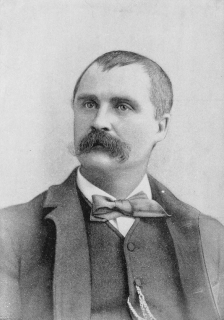
John Boyle O’Reilly, Irish American poet, journalist, author and activist, dies on August 10, 1890, in Hull, Massachusetts, due to accidental poisoning. His literature and work with civil rights have been celebrated throughout the years.

O’Reilly is born on June 28, 1844, at Dowth Castle to William David O’Reilly (1808–1871) and Eliza O’Reilly (née Boyle) (1815–1868) near Drogheda. His father is a headmaster. He is the third of six children. A year after his birth, the Great Famine begins, an event that shapes his life and beliefs. Most of his closest family manage to survive the famine, however many of his classmates lose their lives to the famine.

O’Reilly moves to his aunt’s residence in England as a teenager and becomes involved in journalism and shortly after becomes involved in the military. He leaves the military, however, in 1863 after becoming angry with the military’s treatment of the Irish and returns to Ireland the same year.

In 1864 O’Reilly joins the Irish Republican Brotherhood under an assumed name and is part of the group for two years until he and many others are arrested by authorities in early 1866. After a trial that same year he is sentenced to death, but the sentence is later commuted to 20 years’ penal servitude. In 1867 he is transported to Western Australia and moves to the town of Bunbury where he escapes two years later. He is assisted in escaping by a Fr. Patrick McCabe from Arnaghan, Gowna, County Cavan.

Following his escape O’Reilly moves to Boston, Massachusetts and embarks on a successful writing and journalism career that produces works such as Moondyne (1879) and Songs from the Southern Seas (1873), and poems such as The Cry of the Dreamer and The White Rose and In Bohemia (1886). He becomes a prominent spokesperson for the Irish community and culture through his editorship of the Boston newspaper The Pilot, his prolific writing and his lecture tours.

O’Reilly marries Mary Murphy (1850-1897), a journalist who writes for the Young Crusader under the name of Agnes Smiley, on August 15, 1872, and has four daughters. In the final four years of his life, he suffers various health issues.

On August 9, 1890, O’Reilly takes an early boat to his residence in Hull, Massachusetts. He has been suffering from bouts of insomnia during this time. That evening he takes a long walk with his brother-in-law, John R. Murphy, hoping that physical fatigue will induce the needed sleep. Later on that night he takes some of his wife’s sleeping medicine, which contains chloral hydrate.

In the early morning hours of August 10 his wife wakes up to find O’Reilly unconscious, sitting in a chair with one hand resting on the table near a book and a cigar in the other. She sends a servant for the family’s physician, Dr. Litchfield, and he spends nearly an hour trying to revive him, but O’Reilly dies shortly before 5:00 AM. Public announcements attribute O’Reilly’s death to heart failure but the official death register claims “accidental poisoning.” His memorial service held at Tremont Temple in Boston is a major public event.

The song “Van Diemen’s Land” on U2‘s Rattle and Hum (1988) album refers to and is dedicated to O’Reilly.


Leave a comment

Death of Eoin McKiernan, Scholar of Irish Studies

eoin-mckiernan

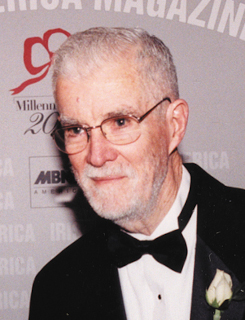
Eoin McKiernan, early scholar in the interdisciplinary field of Irish Studies in the United States and the founder of the Irish American Cultural Institute (IACI), dies in Saint Paul, Minnesota on July 18, 2004. He is credited with leading efforts to revive and preserve Irish culture and language in the United States.

Born John Thomas McKiernan in New York City on May 10, 1915, McKiernan adopts the old Irish form of his name, Eoin, early in his life. While in college, he wins a scholarship to study Irish language in the Connemara Gaeltacht in the west of Ireland. In 1938, he marries Jeannette O’Callaghan, whom he met while studying Irish at the Gaelic Society in New York City. They raise nine children.

McKiernan attends seminary at Cathedral College of the Immaculate Conception and St. Joseph’s College in New York, leaving before ordination. He earns degrees in English and Classical Languages (AB, St. Joseph College, NY, 1948), Education and Psychology (EdM, UNH, 1951), and American Literature and Psychology (PhD, Penn State, 1957). Later in life, he is awarded honorary doctorates from the National University of Ireland, Dublin (1969), the College of Saint Rose, Albany (1984), Marist College, Poughkeepsie (1987) and the University of St. Thomas, Saint Paul (1996).

Passion for Irish culture is the dominant undercurrent of a distinguished teaching career in secondary (Pittsfield, NH, 1947–49) and university levels (State University of New York at Geneseo, 1949–59, and University of St. Thomas in Saint Paul, MN, 1959–72). McKiernan serves as an officer of the National Council of College Teachers of English, is appointed by the Governor of New York to a State Advisory Committee to improve teacher certification standards and serves as a Consultant to the U.S. Department of Education in the early 1960s.

McKiernan suggests to the Irish government in 1938 that a cultural presence in the United States would promote a deeper understanding between the two countries, but he eventually realises that if this is to happen, he will have to lead the way. His opportunity comes in 1962, when he is asked to present a series on public television. Entitled “Ireland Rediscovered,” the series is so popular that another, longer series, “Irish Diary,” is commissioned. Both series air nationwide. The enthusiastic response provides the impetus to establish the Irish American Cultural Institute (IACI) in 1962. In 1972 he resigns from teaching to devote his energy entirely to the IACI.

Under McKiernan’s direction, the IACI publishes the scholarly journal Eire-Ireland, with subscribers in 25 countries, and the informational bi-monthly publication Ducas. The IACI still sponsors the Irish Way (an immersion program for U.S. teenagers), several speaker series, a reforestation program in Ireland (Trees for Ireland), theatre events in both countries and educational tours in Ireland. He continues these educational Ireland tours well into his retirement. At his suggestion, the Institute finances the world premiere of A. J. Potter‘s Symphony No. 2 in Springfield, Massachusetts.

Troubled by the biased reporting of events in Northern Ireland in the 1970s, McKiernan establishes an Irish News Service, giving Irish media and public figures direct access to American outlets. In the 1990s, he is invited by the Ditchley Foundation to be part of discussions aimed at bringing peace to that troubled area and is a participant in a three-day 1992 conference in London dealing with civil rights in Northern Ireland. Organized by Liberty, a London civil rights group, the conference is also attended by United Nations, European Economic Community, and Helsinki representatives.

McKiernan also founds Irish Books and Media, which is for forty years the largest distributor of Irish printed materials in the United States. In his eighth decade, he establishes Irish Educational Services, which funds children’s TV programs in Irish and provided monies for Irish language schools in Northern Ireland. Irish America magazine twice names him one of the Irish Americans of the year. In 1999, they choose him as one of the greatest Irish Americans of the 20th century.

McKiernan dies on July 18, 2004, in Saint Paul, Minnesota. On his death, The Irish Times refers to him as the “U.S. Champion of Irish culture and history . . . a patriarch of Irish Studies in the U.S. who laid the ground for the explosion of interest in Irish arts in recent years.”