seamus dubhghaill

Promoting Irish Culture and History from Little Rock, Arkansas, USA


Leave a comment

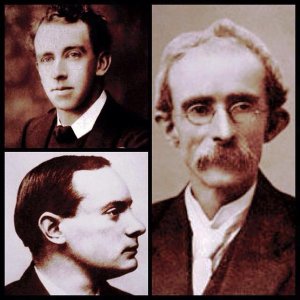
Executions of Patrick Pearse, Thomas Clarke, & Thomas MacDonagh

pearse-clarke-mac-donagh

Patrick Pearse, Thomas Clarke, and Thomas MacDonagh are executed by firing squad in the Stonebreakers’ Yard at Kilmainham Gaol in Dublin on May 3, 1916. Pearse, Clarke, and MacDonagh are three of the seven signatories of the Proclamation of the Irish Republic.

Just three days after the end of the 1916 Easter Rising, the first military courts martial sits on May 2, 1916. Pearse, Clarke, and MacDonagh are immediately sentence to death. The three are taken that evening to the disused Kilmainham Gaol and are shot at dawn the following morning.

Patrick Pearse is born in Dublin in 1879, becoming interested in Irish cultural matters in his teenage years. In 1898, Pearse becomes a member of the Executive Commmittee of the Gaelic League. He graduates from the Royal University of Ireland in 1901 with a degree in Arts and Law. Pearse’s literary output is constant, and he publishes extensively in both Irish and English, becoming the editor of An Claidheamh Soluis, the newspaper of the Gaelic League. He is a keen believer in the value of education, and establishes two schools, Coláiste Éanna and Coláiste Íde, devoted to the education of Irish children through the Irish language.  Pearse is one of the founding members of the Irish Volunteers and the author of the Proclamation of the Irish Republic. He is Commander in Chief of the Irish forces and headquartered in the General Post Office (GPO) during the 1916 Easter Rising.

Thomas Clarke is born on the Isle of Wight in 1857, the son of a soldier in the British army. During his time in America as a young man, he joins Clan na Gael, later enduring fifteen years (1883-1898) of penal servitude for his role in a bombing campaign in London. In 1907, having returned from a second sojourn in America, his links with Clan na Gael in America copper-fastens his importance to the revolutionary movement in Ireland. He holds the post of Treasurer to the Irish Republican Brotherhood (IRB) and is a member of the Supreme Council from 1915. Clarke is the first signatory of the Proclamation of the Irish Republic through deference to his seniority. Clarke is also stationed at the GPO during Easter Week. Clarke tells his wife during his final night that he is relieved he is going to be executed because his greatest dread is that he would be sent back to prison.

Thomas MacDonagh is a native of Tipperary, born in 1878. He spends the early part of his career as a teacher. He moves to Dublin to study and is the first teacher on the staff at St. Enda’s School, the school he helps to found with Patrick Pearse. MacDonagh is well versed in literature, his enthusiasm and erudition earning him a position in the English department at University College Dublin. His play When the Dawn is Come is produced at the Abbey Theatre. He is appointed director of training for the Irish Volunteers in 1914, later joining the Irish Republican Brotherhood (IRB). MacDonagh is appointed to the IRB military committee in 1916. He is commander of the Second Battalion of Volunteers that occupies Jacob’s Biscuit Factory and surrounding houses during the Rising.

Immediately after the executions, Irish Parliamentary Party leader John Redmond warns British Prime Minister Herbert Asquith that “if any more executions take place in Ireland the position will become impossible for any constitutional party or leader.”

Asquith himself warns Sir John Maxwell that “anything like a large number of executions would…sow the seeds of lasting trouble in Ireland.”

These warnings fall upon deaf ears as thirteen additional executions take place in the following days.


Leave a comment

William Gladstone Introduces the First Home Rule Bill

gladstone-introduces-home-rule-bill-1886

William Gladstone introduces the Government of Ireland Bill 1886, commonly known as the First Home Rule Bill, in the Parliament of England on April 8, 1886. It is the first major attempt by a British government to enact a law creating home rule for part of the United Kingdom of Great Britain and Ireland. The bill proposes to create a devolved assembly for Ireland which will govern Ireland in specific areas. The Irish Parliamentary Party under Charles Stewart Parnell has been campaigning for home rule for Ireland since the 1870s.

The Bill, like his Landlord and Tenant (Ireland) Act 1870, is very much the work of Gladstone, who excludes both the Irish MPs and his own ministers from participation in the drafting.

If passed, the 1886 Bill would create a unicameral assembly consisting of two Orders which could meet either together or separately. The first Order would consist of the 28 Irish representative peers plus 75 members elected through a highly restricted franchise. It could delay the passage of legislation for up to 3 years. The second Order would consist of either 204 or 206 members. All Irish MPs would be excluded from Westminster altogether.

Executive power would be possessed by the Lord Lieutenant of Ireland whose executive would not be responsible to either Order.

Britain would still retain control over a range of issues including peace, war, defence, treaties with foreign states, trade, and coinage. No special provision would be made for Ulster. Britain would retain control of the Royal Irish Constabulary (RIC) until it deems it safe for control to pass to Dublin. The Dublin Metropolitan Police would pass to Irish control.

When the bill is introduced, Charles Stewart Parnell has mixed reactions. He says that it has great faults but is prepared to vote for it. In his famous Irish Home Rule speech, Gladstone beseeches Parliament to pass it and grant Home Rule to Ireland in honour rather than being compelled to one day in humiliation. Unionists and the Orange Order are fierce in their resistance. For them, any measure of Home Rule is denounced as nothing other than Rome Rule.

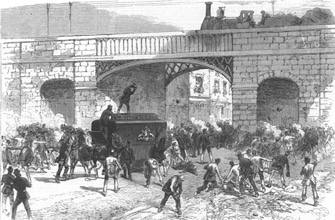
The vote on the Bill takes place on 8 June 1886, after two months of debate. The Government of Ireland Bill is defeated by a vote of 341-311. In the staunchly loyalist town of Portadown, the so-called “Orange Citadel” where the Orange Order is founded in 1795, Orangemen and their supporters celebrate the Bill’s defeat by “Storming the Tunnel.”

Parliament is dissolved on June 26 and the U.K. general election of 1886 is called. Historians have suggested that the 1886 Home Rule Bill was fatally flawed by the secretive manner of its drafting, with Gladstone alienating Liberal figures like Joseph Chamberlain who, along with a colleague, resigned in protest from the ministry, while producing a Bill viewed privately by the Irish as badly drafted and deeply flawed.


Leave a comment

Death of Politician & Journalist Timothy Michael Healy

Timothy Michael “Tim” Healy, Irish nationalist politician, journalist, author, barrister, and one of the most controversial Irish Members of Parliament (MPs) in the House of Commons of the United Kingdom of Great Britain and Ireland, dies in Chapelizod, County Dublin, on March 26, 1931.

Healy is born in Bantry, County Cork, the second son of Maurice Healy, clerk of the Bantry Poor Law Union, and Eliza Healy (née Sullivan). His father is transferred in 1862 to a similar position in Lismore, County Waterford. Timothy is educated at the Christian Brothers school in Fermoy, and is otherwise largely self-educated, in 1869, at the age of fourteen, he goes to live with his uncle Timothy Daniel Sullivan in Dublin.

Healy then moves to England in 1871, working first as a railway clerk and then from 1878 in London as parliamentary correspondent of The Nation, writing numerous articles in support of Charles Stewart Parnell, the newly emergent and more militant home rule leader, and his policy of parliamentary obstructionism. Healy takes part in Irish politics and becomes associated with Parnell and the Irish Parliamentary Party. After being arrested for intimidation in connection with the Irish National Land League, he is promptly elected as member of Parliament for Wexford Borough in 1880.

In Parliament, Healy becomes an authority on the Irish land question. The “Healy Clause” of the Land Act of 1881, which protects tenant farmers’ agrarian improvements from rent increases imposed by landlords, not only makes him popular throughout nationalist Ireland but also wins his cause seats in Protestant Ulster. He breaks with Parnell in 1886 and generally remains at odds with subsequent leaders of the Irish Parliamentary Party, though he is a strong supporter of proposals for Irish Home Rule. Meanwhile, he is called to the Irish bar in 1884 and becomes a queen’s counsel in 1899.

Dissatisfied with both the Liberals and the Irish Nationalists after the Easter Rising in 1916, Healy supports Sinn Féin after 1917. He returns to considerable prominence in 1922 when, on the urging of the soon-to-be Irish Free State’s Provisional Government of W.T. Cosgrave, the British government recommends to King George V that Healy be appointed the first “Governor-General of the Irish Free State,” a new office of representative of the Crown created in the 1921 Anglo-Irish Treaty and introduced by a combination of the Irish Free State Constitution and Letters Patent from the King.

Healy believes that he has been awarded the Governor-Generalship for life. However, the Executive Council of the Irish Free State decides in 1927 that the term of office of Governors-General will be five years. As a result, he retires from the office and public life in January 1928 and publishes his extensive two volume memoirs later in that year. Throughout his life he is formidable because he is ferociously quick-witted, because he is unworried by social or political convention, and because he knows no party discipline. Towards the end of his life, he becomes more mellowed and otherwise more diplomatic.

Healy dies on March 26, 1931, at the age of 75, in Chapelizod, County Dublin. He is buried in Glasnevin Cemetery in Dublin.


Leave a comment

Birth of Thomas James Clarke, Irish Revolutionary Leader

thomas-james-clarke

Thomas James “Tom” Clarke, Irish republican revolutionary leader and arguably the person most responsible for the 1916 Easter Rising, is born to Irish parents on March 11, 1858, at Hurst Castle, Milford-on-Sea, Hampshire, England opposite the Isle of Wight. Clarke’s father, a sergeant in the British Army, is transferred to Dungannon, County Tyrone, in 1865 and it is there that Tom grows up.

In 1878, following the visit to Dungannon of John Daly, Clarke joins the Irish Republican Brotherhood (IRB) and soon becomes head of the local IRB circle. In August, in retaliation to the killing of a man by a member of the Royal Irish Constabulary (RIC), Clarke and other IRB members attack some RIC men in Irish Street but are driven back. Fearing arrest, Clarke flees to the United States.

In 1883, Clarke is sent to London to blow up London Bridge as part of the Fenian dynamite campaign advocated by Jeremiah O’Donovan Rossa. He is arrested along with three others and tried and sentenced to penal servitude for life on May 28, 1883, at London’s Old Bailey. He subsequently serves 15 years in Pentonville and other British prisons. In 1896, a series of public meetings in Ireland call for the release of Clarke and the other four remaining Fenian prisoners.

Following his release in 1898, Clarke moves to Brooklyn, New York where he marries Kathleen Daly, 21 years his junior and niece of John Daly. Clarke works for the Clan na Gael under John Devoy. In 1906, the couple moves to a 30-acre farm in Manorville, New York and purchases another 30 acres in 1907 shortly before returning to Ireland.

In Ireland, Clarke opens a tobacconist shop in Dublin and immerses himself in the IRB which is undergoing a substantial rejuvenation under the guidance of younger men such as Bulmer Hobson and Denis McCullough.

Clarke takes a keen interest when the Irish Volunteers are formed in 1913 but takes no part in the organisation feeling that his criminal record would lend discredit to the Volunteers. With several IRB members taking important roles in the Volunteers, it becomes clear that the IRB will have substantial to total control of the Volunteers. This proves largely to be the case until John Redmond, leader of the Irish Parliamentary Party, demands the Provisional Committee accept 25 additional members of the Party’s choosing, giving IPP loyalists a majority stake. Though most of the hard-liners stand against this, Redmond’s decree is accepted, partially due to the support given by Bulmer Hobson. Clarke never forgives him for what he considers a treasonous act.

Following Clarke’s falling out with Hobson, Sean MacDermott and Clarke become almost inseparable. In 1915, Clarke and MacDermott establish the Military Committee of the IRB to plan what later becomes the Easter Rising. The members are Patrick PearseÉamonn Ceannt, and Joseph Plunkett, with Clarke and MacDermott adding themselves shortly thereafter. When Jeremiah O’Donovan Rossa dies in 1915, Clarke uses his funeral to mobilise the Volunteers and heighten expectation of imminent action. When an agreement was reached with James Connolly and the Irish Citizen Army in January 1916, Connolly is added to the committee. Thomas MacDonagh is added at the last minute in April. These seven men are the signatories of the Proclamation of the Irish Republic, with Clarke as the first signatory.

Clarke is stationed at headquarters in the General Post Office during the events of Easter Week of 1916, where rebel forces are largely composed of Irish Citizen Army members under the command of Connolly. Though he holds no formal military rank, Clarke is recognised by the garrison as one of the commanders and is active throughout the week in the direction of the fight. Following their surrender on April 29, Clarke is held in Kilmainham Gaol until his execution by firing squad on May 3 at the age of 59. He is the second person to be executed following Patrick Pearse.

Before his execution, Clarke asks his wife to give this message to the Irish People:

“I and my fellow signatories believe we have struck the first successful blow for Irish freedom. The next blow, which we have no doubt Ireland will strike, will win through. In this belief, we die happy.”


Leave a comment

The Fenian Rising of 1867

The Fenian Rising of 1867, a rebellion against British rule in Ireland organised by the Irish Republican Brotherhood (IRB), begins in Dublin, Cork, Limerick, Clare, and Tipperary on March 5, 1867.

The Irish Republican Brotherhood is founded in Dublin by James Stephens in 1858. After the end of the American Civil War, the IRB hopes to recruit willing Irish veterans of that war for an insurrection in Ireland aimed at the foundation of an Irish Republic.

In 1865, the Fenians begin preparing for a rebellion by collecting firearms and recruiting men willing to fight. In September 1865, the British move to close down the Fenian newspaper The Irish People and arrest many of the leadership. In 1866, habeas corpus is suspended in Ireland and there are hundreds more arrests of Fenian activists.

In early 1867, prior to the March 5 rising, Thomas J. Kelly, Stephens’ successor as leader of the IRB, tries to launch an insurrection but it proves uncoordinated and fizzles in a series of skirmishes. In February 1867, there is an unsuccessful rising in County Kerry.

The largest of the March 5 engagements takes place at Tallaght, when several hundred Fenians, on their way to the meeting point at Tallaght Hill, are attacked by the Royal Irish Constabulary (RIC) near the police barracks and are driven away after a firefight. A total of twelve people are killed across the country on this day. When it becomes apparent that the coordinated rising that had been planned is not transpiring, most rebels simply go home.

The rising fails as a result of lack of arms and planning, but also because of the British authorities’ effective use of informers. Most of the Fenian leadership is arrested before the rebellion takes place.

Though the Rising of 1867 is unsuccessful, they proclaim an Irish Republic, almost 50 years before the Proclamation of the Irish Republic in Easter 1916. This proclamation sheds some light on early Fenianism as it is centered with the ideas of republican democracy but is, however, flavoured with socialist ideals and a class revolution rather than a nationalist revolution per se. The proclamation claims that their war is “against the aristocratic locusts, whether English or Irish” which denotes that their ideology at this time is in some way embedded in class differences against the landed aristocracy rather than merely against British rule.

The rising itself is a total military failure, but it does have some political benefits for the Fenian movement. There are large protests in Ireland against the execution of Fenian prisoners, many of whose death sentences are, as a result, reprieved. In 1873, the Irish Republican Brotherhood adopts a new constitution, which states that armed rebellion will not be pursued again until it has mass backing from the people. The Fenians cooperate with the Irish National Land League in the land agitation from the 1870s onwards and in the rise of the Irish Parliamentary Party. Not all Fenians agree with the new policy and several breakaway groups emerge that continue to believe in the use of political violence in pursuit of republican objectives.


Leave a comment

John Redmond Elected Leader of the Irish Parliamentary Party

john-redmond-1917

John Edward Redmond, Irish nationalist politician, barrister, and Member of Parliament (MP) in the British House of Commons, is elected leader of the Irish Parliamentary Party on February 6, 1900.

Redmond is born at Ballytrent House, his grandfather’s old family mansion, in Kilrane, County Wexford. As a student at Clongowes Wood College, he exhibits the seriousness that many soon come to associate with him. After finishing at Clongowes, Redmond attends Trinity College, Dublin to study law, but his father’s ill health leads him to abandon his studies before taking a degree and, in 1876, goes to live with him in London. As a clerk in the House of Commons he increasingly identifies himself with the fortunes of Charles Stewart Parnell, one of the founders of the Irish Land League.

Redmond first attends political meetings with Parnell in 1879. Upon the death of his father, a Member of Parliament for Wexford, in 1880, Redmond writes to Parnell asking for adoption as the Nationalist Party, which becomes the Irish Parliamentary Party in 1882, candidate in the by-election to fill the open seat, but is disappointed to learn that Parnell has already promised the next vacancy to his secretary Timothy Healy. When a vacancy arises in New Ross, he wins election unopposed as the Parnellite candidate for the seat. He served as MP for New Ross from 1881 to 1885, for North Wexford from 1885 to 1891 and finally for Waterford City from 1891 until his death in 1918.

In 1890, the Irish Parliamentary Party splits over Parnell’s leadership when his long-standing adultery with Katharine O’Shea is revealed in a spectacular divorce case. Redmond stands by Parnell and works to keep the minority faction active. When Parnell dies in 1891, Redmond takes over leadership of the Parnellite faction of the split party, called the Irish National League (INL). The larger anti-Parnellite group forms the Irish National Federation (INF) under John Dillon.

Through the initiative of William O’Brien and his United Irish League (UIL), the INL and the INF re-unite on February 6, 1900, within the Irish Parliamentary Party. Redmond is elected its chairman, a position he holds until his death in 1918, a longer period than any other nationalist leader with the exceptions of Éamon de Valera and Daniel O’Connell.

The achievement of Home Rule is his life’s goal, having strongly supported William Gladstone’s Home Rule bills of 1886 and 1893. His best opportunity arises when the Irish Parliamentary Party holds the balance of power under H. H. Asquith in the period from 1910 onwards.  Opposition by the Ulster Unionists frustrates his plans, his main worry being that Home Rule will result in the permanent exclusion of at least some of the Ulster counties. He also fears that the activities of the Irish Volunteers might hinder the enactment of Home Rule. To guard against this eventuality, he secures the control of the organisation in June 1914.  He welcomes the Government of Ireland Act, 1914 as the only measure of Home Rule then possible. Its suspension for the duration of the war postpones addressing the issue of partition.

To ensure the success of the war effort and the speedier implementation of Home Rule, Redmond offers the services of the Irish Volunteers for the defence of the country, an offer rejected by the government. By encouraging the Volunteers to join the British army, he splits the organisation. The vast majority, totaling 170,000 and thereafter known as the National Volunteers, follow Redmond, many of them enlisting in the British army.  Those who aspire to an Irish republic or who have lost faith in Home Rule remain as the Irish Volunteers, their numbers now reduced to about 10,000.

Consequently, the 1916 Easter Rising takes him completely by surprise. Committed to keeping Ireland within the Union, he regards the Rising as treason and a “German intrigue.”  He has no sympathy with the leaders or their objective of a republic.  Nevertheless, he pleads for leniency in the House of Commons.

An operation in March 1918 to remove an intestinal obstruction appears to progress well at first, but then he suffers heart failure. He dies a few hours later at a London nursing home on March 6, 1918. One of the last things he says to the Jesuit Father who is with him to the end is, “Father, I am a broken-hearted man.”


Leave a comment

Death of Katharine O’Shea Parnell

katharine-oshea

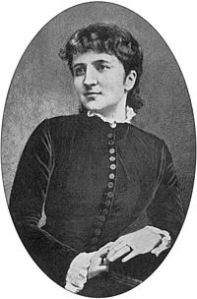
Katharine O’Shea, called Katie O’Shea by friends and Kitty O’Shea by enemies, dies on February 5, 1921 in Littlehampton, England. O’Shea is an English woman of aristocratic background whose decade-long secret affair with Charles Stewart Parnell leads to a widely publicized divorce in 1890 and, ultimately, his political downfall.

Katharine first meets Parnell in 1880, when she is separated from but still legally married to Captain William O’Shea, a Catholic Nationalist Member of Parliament (MP) for County Clare. As a result of her family’s connection to the Liberal Party, she acts as liaison between Parnell and William Gladstone during negotiations prior to the introduction of the First Irish Home Rule Bill in April 1886. During the summer of that year, Parnell moves into her home in Eltham, near the London-Kent border. Parnell fathers three of Katharine’s children.

Captain O’Shea is aware of the relationship and challenges Parnell to a duel in 1881, however, when Parnell accepts the challenge, O’Shea backs down. Initially, O’Shea forbids his ex-wife to see Parnell, although she says that he encourages her in the relationship. O’Shea keeps quiet publicly for several years, possibly in hopes of an inheritance from Katharine’s rich aunt who has been in failing health. When she dies in 1889, however, her money is left in trust to cousins.

Although their relationship is a subject of gossip in London political circles from 1881, later public knowledge of the affair in an England governed by “Victorian morality” with a “nonconformist conscience” creates a huge scandal, as adultery is prohibited by the Ten Commandments.

After the divorce proceedings in November 1890, in which Parnell is named as co-respondent, the court awards custody of Katharine’s two daughters by Parnell to her ex-husband. The divorce and eventual remarriage leads to Parnell being deserted by a majority of his own Irish Parliamentary Party and to his downfall as its leader in December 1890.

Catholic Ireland feels a profound sense of shock when Katharine breaks the vows of her previous Catholic marriage by marrying Parnell on June 25, 1891. The marriage, however, is short-lived. With Parnell’s political life and health essentially ruined, he dies in Katharine’s arms at the age of 45 in Hove, England, on October 6, 1891, less than four months after their marriage. The cause of death is determined to be cancer of the stomach, possibly complicated by coronary heart disease inherited from his grandfather and father.

Katharine publishes a biography of Parnell in 1914 as “Katharine O’Shea (Mrs. Charles Stewart Parnell),” though to her friends she is known as Katie O’Shea. Parnell’s enemies, in order to damage him personally, call her “Kitty O’Shea” because “kitty,” although a Hiberno-English version of Katharine, is also a slang term for a prostitute. After Parnell’s death, Katharine suffers from a nervous breakdown and disappears from public life. She dies on February 5, 1921 after spending her final years moving from rented house to rented house all over the south coast of England. Katharine O’Shea is buried in Littlehampton, Sussex, England.

Captain Henry Harrison, MP, who acts as Parnell’s bodyguard and aide-de-camp, devotes himself after Parnell’s death to the service of his widow. From her he hears a completely different version of the events surrounding the divorce issue from that which had appeared in the press in 1890. This forms the seed of two of Harrison’s later books defending Parnell which are published in 1931 and 1938. They have a major impact on Irish historiography, leading to a more favourable view of Parnell’s role in the O’Shea affair.