seamus dubhghaill

Promoting Irish Culture and History from Little Rock, Arkansas, USA


1 Comment

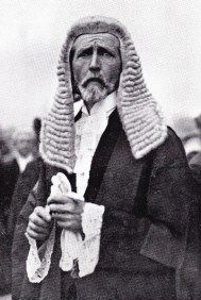
Birth of Barrister Alexander Martin Sullivan

alexander-martin-sullivan

Alexander Martin Sullivan, Irish lawyer best known as the leading counsel for the defence in the 1916 treason trial of Roger Casement, is born in Dublin on January 14, 1871. He is the last barrister in either Ireland or England to hold the rank of Serjeant-at-Law, hence his nickname The Last Serjeant.

A younger son of A.M. Sullivan and Frances Donovan, Sullivan is educated at Ushaw College, Belvedere College, Trinity College, Dublin and King’s Inns. He is called to the Irish Bar in 1892 and practises on the Munster Circuit.

Sullivan is appointed an Irish KC in 1908 and King’s Third Serjeant-at-law (Ireland) in 1912 advancing to Second Serjeant in 1913 and First Serjeant in 1919, the last holder of that position.

A moderate constitutional nationalist and supporter of the Irish Parliamentary Party, Sullivan is a prominent campaigner for the recruitment of Irishmen into the British Army during World War I. His opposition to Sinn Féin republicanism and his prominent role in conducting prosecutions on behalf of the Crown during the Irish War of Independence lead to at least one attempt on his life. As a result, he relocates to England in 1921 and establishes a career at the English Bar, having previously been called to the Middle Temple in 1899. He subsequently becomes a Bencher and Treasurer of Middle Temple. By courtesy, he is always referred to as Serjeant Sullivan, even though that rank no longer exists in England.

Sullivan remains a member of the Irish Bar and returns at least once to appear in the celebrated case of Croker v Croker, where the children of the former leader of Tammany Hall, Richard “Boss” Croker attempt to overturn his will, which leaves his entire estate to their stepmother.

Sullivan is noted as a fearless advocate, who brings to his English practice the robust manners he had learned in the Irish county courts. He does not hesitate to interrupt the judge, and if he feels that he is not receiving a fair hearing, he is quite capable of walking out of Court.

In 1916 Sullivan is retained as lead counsel in the trial of Sir Roger Casement for treason. No English barrister will defend Casement, and Sullivan is persuaded to take the case by George Gavan Duffy, whose wife Margaret is Sullivan’s sister. Despite his rank of Serjeant at law and King’s Counsel at the Irish bar he is only ranked as a junior barrister in England. As the facts relied on by the prosecution are largely undisputed, Sullivan is limited to arguing a technical defence that the Treason Act 1351 only applies to acts committed “within the realm” and not outside it. The Act’s terms had however been expanded by case law over the previous 560 years, and the defence is rejected by the trial judges and by the Court of Criminal Appeal.

Sullivan writes two books: Old Ireland in 1927 and The Last Serjeant in 1952. He retires from legal practice in 1949. He dies on January 9, 1959.


Leave a comment

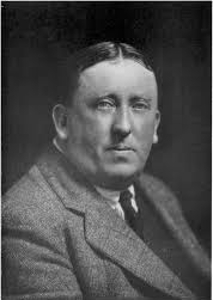
Birth of William Martin Murphy

william-martin-murphy

William Martin Murphy, Irish businessman, journalist and politician, is born on January 6, 1845, in Castletownbere, County Cork. A member of parliament (MP) representing Dublin from 1885 to 1892, he is dubbed “William Murder Murphy” among Dublin workers and the press due to the Dublin Lockout of 1913. He is arguably both Ireland’s first “press baron” and the leading promoter of tram development.

Murphy is educated at Belvedere College. When his father, the building contractor Denis William Murphy dies in 1863, he takes over the family business. His enterprise and business acumen expand the business, and he builds churches, schools and bridges throughout Ireland, as well as railways and tramways in Britain, West Africa and South America.

Murphy is elected as Irish Parliamentary Party MP for Dublin St. Patrick’s at the 1885 general election, taking his seat in the House of Commons of the United Kingdom of Great Britain and Ireland. He is a member of the informal grouping, the “Bantry Band,” a group of politicians who hail from the Bantry Bay area.

When the Irish Parliamentary Party splits in 1890 over Charles Stewart Parnell‘s leadership, Murphy sides with the majority Anti-Parnellites. However, Dublin emerges as a Parnellite stronghold and in the bitter general election of 1892, Murphy loses his seat by over three to one to a Parnellite newcomer, William Field.

Murphy is the principal financial backer of the “Healyite” newspapers the National Press and the Daily Nation. His support for Tim Healy attracts the hostility of the majority anti-Parnellite faction led by John Dillon. He makes two attempts to return to Parliament, at South Kerry in 1895 and North Mayo in 1900, but both are unsuccessful because of Dillonite opposition.

In 1900, Murphy purchases the insolvent Irish Daily Independent from the Parnellites, merging it with the Daily Nation. He re-launches this as a cheap mass-circulation newspaper, which rapidly displaces the Freeman’s Journal as Ireland’s most popular nationalist paper. In 1906, he founds the Sunday Independent newspaper.

Murphy is highly critical of the Irish Parliamentary Party. From 1914 he uses the Irish Independent to oppose the partition of Ireland and advocate Dominion Home Rule involving full fiscal autonomy.

Worried that the trade unions would destroy his Dublin tram system, Murphy leads Dublin employers against the trade unions led by James Larkin, an opposition that culminates in the Dublin Lockout of 1913. This makes him extremely unpopular with many, being depicted as a vulture or a vampire in the workers’ press.

After the 1916 Easter Rising, he purchases ruined buildings in Abbey Street as sites for his newspaper offices, however it is his viewpoints that make him even more unpopular, by calling for the executions of Seán MacDiarmada and James Connolly at a point when the Irish public is beginning to feel sympathy for their cause. He privately disavows the editorial, claiming it had been written and published without his knowledge.

In 1917 Murphy is invited to take part in talks during the Irish Convention which is called to agree terms for the implementation of the suspended 1914 Home Rule Act. However, he discovers that John Redmond is negotiating agreeable terms with Unionists under the Midleton Plan to avoid the partition of Ireland but at the partial loss of full Irish fiscal autonomy. This infuriates Murphy who criticises the intention in his newspaper, which severely damages the Irish Parliamentary Party. However, the Convention remains inconclusive, and the ensuing demise of the Irish party results in the rise of Sinn Féin, whose separatist policies Murphy also does not agree with.

William Martin Murphy dies in Dublin on June 26, 1919. His family controls Independent Newspapers until the early 1970s, when the group is sold to Tony O’Reilly.


Leave a comment

Founding of the Irish National League

The Irish National League (INL), a nationalist political party, is founded on October 17, 1882, by Charles Stewart Parnell as the successor to the Irish National Land League after it was suppressed. Whereas the Land League had agitated for land reform, the National League also campaigns for self-governance or Irish Home Rule, further enfranchisement and economic reforms.

The League is the main base of support for the Irish Parliamentary Party (IPP), and under Parnell’s leadership, it grows quickly to over 1,000 branches throughout the island. In 1884, the League secures the support of the Roman Catholic Church in Ireland. Its secretary is Timothy Harrington who organises the Plan of Campaign in 1886. The Irish League is effectively controlled by the Parliamentary Party, which in turn is controlled by Parnell, who chairs a small group of MPs who vet and impose candidates on constituencies.

In December 1890 both the INL and the IPP split on the issues of Parnell’s long standing family relationship with Katharine O’Shea, the earlier separated wife of a fellow MP, Captain William O’Shea, and their subsequent divorce proceedings. The majority of the League, which opposes Parnell, breaks away to form the “Anti-Parnellite” Irish National Federation (INF) under John Dillon. John Redmond assumes the leadership of the minority Pro-Parnellite (INL) group who remains faithful to Parnell. Despite the split, in the 1892 general election the combined factions still retain the Irish nationalist pro-Home Rule vote and their 81 seats.

Early in 1900 the Irish National League (INL) finally merges with the United Irish League and the Irish National Federation (INF) to form a reunited Irish Parliamentary Party under Redmond’s leadership returning 77 seats in the September 1900 general election, together with 5 Independent Nationalists, or Healyites, in all 82 pro-Home Rule seats.

(Pictured: A hostile Punch cartoon, from 1885, depicting the Irish National League as the “Irish Vampire”, with Parnell’s head)


2 Comments

Unveiling of the Charles Stewart Parnell Statue in Dublin

The statue of Charles Stewart Parnell on Sackville Street, now known as O’Connell Street, is unveiled in Dublin on October 1, 1911. It is one of the last sculptural initiatives in the city before independence.

On January 3, 1882 a resolution is passed by the Dublin City Council to grant the freedom of the city to Parnell. The plan for the Parnell monument is instigated by John Redmond, who succeeded Parnell as leader of the Irish Parliamentary Party, partly as a symbolic gesture to honour the “uncrowned king of Ireland” and to consolidate his aspiration to reunite the constitutionalists under his own leadership. The monument is funded through the efforts of a voluntary body, the Parnell Committee, founded in 1898. It is first proposed to place the monument on the site of the Thomas Moore statue, which would be moved to another location. The City Council refuses to grant this site and directs that the monument be erected on a site near the Rotunda Hospital, where it now stands.

Augustus Saint-Gaudens, an Irish-born sculptor and the most eminent in the art of public monuments in the United States, accepts the commission. It is however to prove a protracted project as the demand for Saint-Gaudens’ work in America is such that completion of the Parnell project is fraught with delays.

For the Parnell monument, Saint-Gaudens makes a scale replica of the buildings and square in Dublin and also a full scale model of the monument in wood in a field near his studio. In 1904 there is a disastrous fire in his studio and only the head of the statue is saved. The original concept is of an 8-foot high bronze figure placed by a bronze table and set against a 30-foot pyramid. However, as this form is already utilised in the Wellington Monument obelisk in Phoenix Park, Saint-Gaudens and architect Henry Bacon propose a triangular shaft almost double the height of the original.

Saint-Gaudens finally presents Parnell in what he considers a noble and calm manner, depicted in an open frock coat, with one hand resting on a table and the other extended dramatically as if making a point at a parliamentary debate. The shaft of the monument is constructed in undecorated ashlar granite.

On October 1, 1911, the monument is unveiled to a large crowd, many of whom had been absent from the foundation stone ceremony, but there are also strikes and marches indicating the unrest to follow.

In June 1913, John Redmond, as Secretary to the Parnell Monument Committee, writes to the City Council requesting the council to take the Monument into their charge on behalf of the Citizens of Dublin. The Council agrees to this request and ever since then the Parnell Monument has been in the care of the Dublin Corporation.

The inscription on the monument reads:

To Charles Stewart Parnell

No Man has a right to fix the
Boundary to the march of a nation
No man has a right
To say to his country
Thus far shat thou
Go and no further
We have never
Attempted to fix
The ne-plus-ultra
To the progress of
Ireland’s nationhood
And we never shall

At the base of the statue the Irish inscription reads:

Go roimhigid Dia Éire da Clainn


Leave a comment

Charles Stewart Parnell’s Famous Speech at Ennis

Charles Stewart Parnell delivers his famous speech at Ennis, County Clare, on September 19, 1880, in which he introduces the term for non-violent protest – boycotting.

Parnell is elected president of Michael Davitt‘s newly founded Irish National Land League in Dublin on October 21, 1879, signing a militant Land League address campaigning for land reform. During the summer of 1880, the Land League, goes into decline but its fortunes are transformed when the House of Lords rejects a moderate measure of land reform. The movement is transformed into a national movement as it spreads into Munster and Leinster. As the movement spreads, crime increases especially in the West. Parnell, who had been elected leader of the Irish Parliamentary Party in May, is very worried about this violence and hopes that the Land League can deflect tenants away from the traditional violence associated with land agitation. He advocates a policy of “moral force” where tenants are to deny all social or commercial contact with anyone who is believed to oppose the aims of the League.

During his speech at Ennis, Parnell asks his audience, “What are you to do with a tenant who bids for a farm from which another has been evicted?” Several voices reply “Shoot him!” and “Kill him!” Parnell responds, “I wish to point out to you a very much better way, a more Christian and charitable way, which will give the lost man an opportunity of repenting. When a man takes a farm from which another has been evicted, you must shun him on the roadside when you meet him, you must shun him in the streets of the town, you must shun him in the shop, you must shun him on the fair green and in the market place, and even in the place of worship, by leaving him alone, by putting him in moral Coventry, by isolating him from the rest of the country, as if he were the leper of old – you must show him your detestation of the crime he committed.”

This type of “moral Coventry” is used in the cast of Captain Charles Cunningham Boycott, a County Mayo land agent, who is isolated by the local people until his nerve breaks. This leads to a new word entering into the English language – boycotting.


Leave a comment

Death of Thomas Croke, Archbishop of Cashel & Emly

Thomas William Croke, the second Catholic Bishop of Auckland in New Zealand (1870–74) and later Archbishop of Cashel and Emly in Ireland, dies on July 22, 1902. He is important in the Irish nationalist movement especially as a Champion of the Irish National Land League in the 1880s. The main Gaelic Athletic Association stadium in Dublin is named Croke Park in his honour.

Croke is born in Castlecor, County Cork, on May 28, 1824. He is educated in Charleville, County Cork, the Irish College in Paris and the Pontifical Irish College in Rome, winning academic distinctions including a Doctor of Divinity with honours. He is ordained in May 1847. Returning to Ireland for a short time he is appointed a Professor in St. Patrick’s, Carlow College. The Irish radical William O’Brien says that Croke fought on the barricades in Paris during the French Revolution of 1848. Croke returns to Ireland and spends the next 23 years working there. In 1858 he becomes the first president of St. Colman’s College, Fermoy, County Cork and then serves as both parish priest of Doneraile and Vicar General of Cloyne diocese from 1866 to 1870. Croke attends the First Vatican Council as the theologian to the Bishop of Cloyne 1870.

Croke gains the good opinion of the Irish ecclesiastical authorities and is rewarded in 1870 by his promotion to Bishop of Auckland in New Zealand. His former professor, Paul Cullen, by then Cardinal Archbishop of Dublin, is largely responsible for filling the Australasian Catholic church with fellow Irishmen. His strong recommendations lead to Croke’s appointment. Croke arrives at Auckland on December 17, 1870, on the City of Melbourne. During his three years as bishop, he restores firm leadership to a diocese left in disarray by his predecessor, Bishop Jean Baptiste Pompallier. He devotes some of his considerable personal wealth to rebuilding diocesan finances and also takes advantage of Auckland’s economic growth following the development of the Thames goldfields to further his aims, ensuring that all surplus income from parishes at Thames and Coromandel is passed on to him, and he institutes a more rigorous system for the Sunday collection at St. Patrick’s Cathedral. He imports Irish clergy to serve the growing Catholic community, and with Patrick Moran, the first Catholic Bishop of the Diocese of Dunedin, he tries unsuccessfully to secure an Irish monopoly on future episcopal appointments in New Zealand. Croke supports separate Catholic schools and their right to state aid and voices his opposition to secular education as Auckland’s Catholic schools are threatened by the provincial council’s Education Act 1872, which helps to create a free, secular and compulsory education system. However, generally, Croke’s image is uncontroversial. On January 28, 1874, after barely three years in office, Croke departs for Europe, on what is ostensibly a 12-month holiday, and he does not return to New Zealand.

Croke becomes a member of the Irish hierarchy when he is translated to be Archbishop of Cashel, one of the four Catholic Irish archbishoprics in 1875. Archbishop Croke is a strong supporter of Irish nationalism, aligning himself with the Irish National Land League during the Land War, and with the chairman of the Irish Parliamentary Party, Charles Stewart Parnell. In an 1887 interview he explains that he had opposed the League’s “No rent manifesto” in 1881, preferring to stop payment of all taxes.

Croke also associates himself with the Temperance Movement of Fr. Theobald Mathew and Gaelic League from its foundation in 1893. Within Catholicism he is a supporter of Gallicanism, as opposed to the Ultramontanism favoured by the Archbishop of Dublin, Cardinal Cullen. His support of nationalism causes successive British governments and Lord Lieutenant of Ireland‘s governments in Dublin to be deeply suspicious of him, as are some less politically aligned Irish bishops.

Following the scandal that erupts over Parnell’s relationship with Katharine O’Shea, the separated wife of fellow MP Captain William O’Shea, Archbishop Croke withdraws from active participation in nationalist politics.

Thomas Croke, 78, dies at the Archbishop’s Palace in Thurles, County Tipperary on July 22, 1902. He is buried at the Cathedral of the Assumption in Thurles. In honour of Croke, his successors as Archbishop of Cashel and Emly traditionally are asked to throw in the ball at the minor Gaelic football and All-Ireland Senior Hurling Championship finals.


Leave a comment

Richard Pigott Exposed as Forger of Phoenix Park Letters

richard-pigott

Richard Pigott, an Irish journalist, is exposed as the forger of The Times Phoenix Park letters on February 10, 1889.

Pigott is born in 1835 in Ratoath, County Meath. As a young man he supports Irish nationalism and works for The Nation and The Tablet before acting as manager of The Irishman, a newspaper founded by Denis Holland. James O’Connor later claims Pigott embezzled funds from the paper and covered his tracks by not keeping written records. Pigott also works for the Irish National Land League, departing in 1883 after accusing its treasurer, Mr. Fagan, of being unable to account for £100,000 of its funds, and for keeping inadequate records. Nothing is done about his accusation, which is publicised in the newspapers, and he turns against the League, which is allied to several Irish nationalist groups including the Irish Parliamentary Party led by Charles Stewart Parnell.

In 1879 Pigott is proprietor of three newspapers, which he soon sells to the Irish Land League, of which Charles Stewart Parnell is president. Hitherto a violent Nationalist, from 1884 Pigott begins to vilify his former associates and to sell information to their political opponents. In an effort to destroy Parnell’s career, Pigott produces fake letters, which purports that Parnell had supported one of the Phoenix Park murders.

The Times purchases Pigott’s forgeries for £1,780 and publishes the most damning letter on April 18, 1887. Parnell immediately denounces it as “a villainous and barefaced forgery.” In February 1889, the Parnell Commission vindicates him by proving that the letters are forgeries. They include misspellings which Pigott has written elsewhere. A libel action instituted by Parnell also vindicates him and his parliamentary career survives the Pigott accusations.

The Commission eventually produces 37 volumes in evidence, covering not just the forgeries but also the surrounding violence that follows from the Plan of Campaign.

After admitting his forgeries to Henry Labouchère, Pigott flees to Spain, and shoots himself in a Madrid hotel room. Parnell then sues The Times for libel, and the newspaper pays him £5,000 in an out-of-court settlement, as well as considerably more in legal fees. When Parnell next enters the House of Commons, he receives a hero’s reception from his fellow Members of Parliament.

(Pictured: Pigott as caricatured by Spy (Leslie Ward) in Vanity Fair, March 1889)


Leave a comment

Birth of Arthur William Conway, UCD President

arthur-william-conway

Arthur William Conway FRS, President of University College Dublin between 1940 and 1947, is born in Wexford, County Wexford, on October 2, 1875.

Conway receives his early education at St. Peter’s College, Wexford and proceeds to enter old University College, Dublin in 1892. He receives his BA degree from the Royal University of Ireland in 1896 with honours in Latin, English, Mathematics, and Natural Philosophy. In 1897, he receives his MA degree with highest honours in mathematics and proceeds to Corpus Christi College, Oxford, becoming University Scholar there in 1901. Also in 1901, he is appointed to the professorship of Mathematical Physics in the old University College and holds the Chair until the creation of the new college in 1909. He also teaches for a short time at St. Patrick’s College, Maynooth.

Conway marries Agnes Christina Bingham on August 19, 1903. They have three daughters and one son.

One of Conway’s students is Éamon de Valera, whom he introduces to quaternions which originate in Ireland. De Valera warms to the subject and engages in research of this novelty of abstract algebra. Later, when de Valera becomes Taoiseach, he calls upon Conway while forming the Dublin Institute for Advanced Studies.

Conway is remembered for his application of biquaternion algebra to the special theory of relativity. He publishes an article in 1911, and in 1912 asserts priority over Ludwik Silberstein, who also applies biquaternions to relativity. This claim is backed up by George Temple in his book 100 Years of Mathematics. In 1947 Conway puts quaternions to use with rotations in hyperbolic space. The next year he publishes quantum mechanics applications which are referred to in a PhD thesis by Joachim Lambek in 1950.

In 1918, Conway is the Irish Parliamentary Party candidate in South Londonderry and in the National University of Ireland, coming in second in both.

Conway continues his scholarship in the field of mathematics and theoretical physics and makes a special study of William Rowan Hamilton. With John Lighton Synge, he edits the first volume of Hamilton’s mathematical papers, and, with A. J. McConnell, he edits the second volume of Hamilton’s mathematical papers. Conway is also active in college life, being appointed Registrar, a position he occupies until his election as president in 1940. He retires in 1947 from the presidency of UCD. In 1953, some of his writings are edited by J. McConnell for publication by the Dublin Institute for Advanced Studies.

He is elected President of the Royal Irish Academy from 1937 to 1940.


Leave a comment

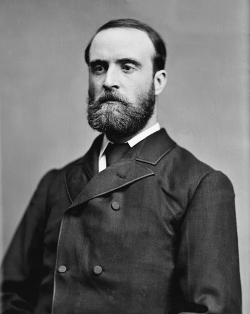
Birth of Charles Stewart Parnell

charles-stewart-parnell

Charles Stewart Parnell, Irish nationalist politician and one of the most powerful figures in the British House of Commons in the 1880s, is born on June 27, 1846, in County Wicklow.

Born into a wealthy and powerful Anglo-Irish Protestant landowning family, Parnell enters the House of Commons in 1875. He is a land reform agitator and becomes leader of the Home Rule League in 1880, insisting on operating independently of the Liberals, and winning great influence by his balancing of constitutional, radical, and economic issues, and by his skillful use of parliamentary procedure. He is imprisoned in Kilmainham Gaol in 1882 but, being a very capable negotiator, is released when he renounces violent extra-Parliamentary action in an informal agreement, the Kilmainham Treaty, with British Prime Minister William Ewart Gladstone. That same year he reforms the Home Rule League as the Irish Parliamentary Party, which he controls minutely as Britain’s first disciplined democratic party.

The hung Parliament of 1885 sees him hold the balance of power between Gladstone’s Liberals and Lord Salisbury‘s Conservatives. His power is one factor in Gladstone’s adoption of Home Rule as the central tenet of the Liberal Party. His reputation peaks in 1889-1890 when letters published in The Times linking him to the Phoenix Park murders of 1882 are shown to have been forged by Richard Pigott. However, the Irish Parliamentary Party splits in 1890 after the revelation of Parnell’s long adulterous love affair, causing many English Liberals, many of them nonconformists, to refuse to work with him, and strong opposition from Catholic bishops. He heads a small minority faction until his death in 1891.

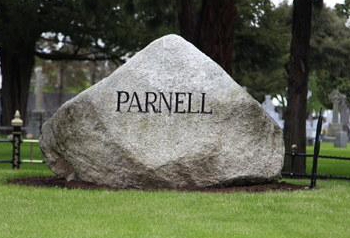
parnell-marker

In describing Parnell, Gladstone says, “I do not say the ablest man; I say the most remarkable and the most interesting. He was an intellectual phenomenon.” Liberal leader H. H. Asquith calls him as one of the three or four greatest men of the 19th century, while Lord Haldane describes him as the strongest man the House of Commons has seen in 150 years. Historian A.J.P. Taylor says, “More than any other man he gave Ireland the sense of being an independent nation.”

Charles Stewart Parnell dies of pneumonia at age 45 in his home at 10 Walsingham Terrace, Hove, England on October 6, 1891, in the arms of his wife Katharine. Though an Anglican, his funeral on October 11 is at the Irish National nondenominational Glasnevin Cemetery in Dublin and is attended by more than 200,000 people. His notability is such that his gravestone of unhewn Wicklow granite, erected in 1940, reads only “Parnell.”


Leave a comment

Birth of Activist & Feminist Hanna Sheehy-Skeffington

hanna-sheehy-skeffington

Johanna Mary “Hanna” Sheehy-Skeffington, Republican activist and feminist, is born in Kanturk, County Cork, on May 24, 1877.

Sheehy is the eldest daughter of Elizabeth McCoy and David Sheehy, an ex-Fenian and Member of Parliament (MP) for the Irish Parliamentary Party, representing South Galway. One of her uncles, Father Eugene Sheehy, is known as the Land League Priest, and his activities land him in prison. He is also one of Éamon de Valera‘s teachers in Limerick. When Hanna’s father becomes an MP in 1887, the family moves to Drumcondra, Dublin.

Sheehy is educated at the Dominican Convent on Eccles Street, where she is a prize-winning pupil. She then enrolls at St. Mary’s University College, a third level college for women established by the Dominicans in 1893, to study modern French and German. She sits for examinations at Royal University of Ireland and receives a Bachelor of Arts degree in 1899, and a Master of Arts Degree with first-class honours in 1902. This leads to a career as a teacher in Eccles Street and an examiner in the Intermediate Certificate examination.

Sheehy marries Francis Skeffington in 1903, and they both take the surname Sheehy Skeffington, which they do not hyphenate but use as a double name. In 1908, they found the Irish Women’s Franchise League, a group aiming for women’s voting rights.

Sheehy-Skeffington gets into numerous scuffles with the law. She is jailed in 1912 for breaking windows of government buildings in support of suffrage as part of an IWFL campaign. That same year she also throws a hatchet at visiting British Prime Minister Herbert Asquith. She loses her teaching job in 1913 when she is arrested and imprisoned for three months after throwing stones at Dublin Castle and assaulting a police officer in a feminist action. While in jail she goes on hunger strike and is released under the Prisoner’s Temporary Discharge of Ill Health Act but is soon rearrested.

Being free from her teaching job enables Sheehy-Skeffington to devote more time to the fight for suffrage. She is influenced by James Connolly and during the 1913 lock-out works with other suffragists in Liberty Hall, providing food for the families of the strikers.

She strongly opposes participation in World War I which breaks out in August 1914 and is prevented by the British government from attending the International Congress of Women held in The Hague in April 1915. The following June her husband is imprisoned for anti-recruiting activities. He is later shot dead during the 1916 Easter Rising after having been arrested by British soldiers.

Sheehy-Skeffington refuses compensation for her husband’s death, which is offered on condition of her ceasing to speak and write about the murder. Rather, she travels to the United States to publicise the political situation in Ireland. In October 1917, she is the sole Irish representative to League for Small and Subject Nationalities where, along with several other contributors, she is accused of pro-German sympathies. She publishes British Militarism as I Have Known It, which is banned in the United Kingdom until after the World War I. Upon her return to Britain she is once again imprisoned, this time in Holloway prison. After release, Sheehy-Skeffington attends the 1918 Irish Race Convention in New York City and later supports the anti-Treaty Irish Republican Army (IRA) during the Irish Civil War.

In 1926, Sheehy-Skeffington becomes a founding member of Fianna Fáil and is elected to the party’s Ard Comhairle. During the 1930s, she is assistant editor of An Phoblacht. In January 1933, she is arrested in Newry for breaching an exclusion order banning her from Northern Ireland. At her trial she says, “I recognize no partition. I recognize it as no crime to be in my own country. I would be ashamed of my own name and my murdered husband’s name if I did…Long live the Republic!” She is sentenced to a month’s imprisonment.

Sheehy-Skeffington is a founding member of the Irish Women Workers’ Union and an author whose works deeply oppose British imperialism in Ireland. Her son, Owen Sheehy-Skeffington, becomes a politician and Irish Senator.

Hanna Sheehy-Skeffington dies in Dublin on April 20, 1946, at the age of 68 and is buried with her husband in Glasnevin Cemetery, Dublin.