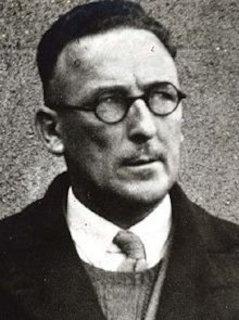
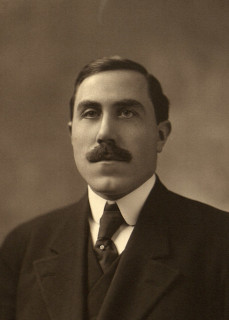
Born on November 3, 1896, in County Roscommon, O’Donovan is an explosives expert and reputedly invents the “Irish War Flour” (named after the flour sacks in which it was smuggled into Dublin aboard ships) and “Irish Cheddar” devices. He subsequently becomes IRA Director of Chemicals in 1921. During the Irish War of Independence, he is imprisoned in Mountjoy Prison and Kilmainham Gaol and later interned in Newbridge, County Kildare.
In addition to fighting in the Irish War of Independence, O’Donovan fights on the Anti-Treaty side during the Irish Civil War. In 1930 he becomes manager at Electricity Supply Board (ESB) headquarters in Dublin.
In August 1938, at the request of IRA Chief of StaffSeán Russell, O’Donovan writes the S-Plan, a bombing campaign targeting the United Kingdom. In his unpublished memoirs he writes that he “conducted the entire training of cadre units, was responsible for all but locally derived intelligence, carried out small pieces of research and, in general, controlled the whole explosives and munitions end” of S-Plan. During this time, he and Russell are the only GHQ members of the old IRA still in the organisation.
As “Agent V-Held”, O’Donovan visits Germany three times in 1939 on behalf of the IRA. On February 28 he negotiates an arms and radio equipment delivery at the Abwehrstelle in Hamburg. On April 26 he concludes a new arms deal with the Abwehrstelle and establishes, with the help of a Breton, a secret courier connection to Ireland via France. On August 23, he receives the last instructions for the event of war.
On February 9, 1940, Abwehr II agent Ernst Weber-Drohl lands at Killala Bay, County Sligo aboard U-37. He is equipped with an ‘Ufa’ transmitter, cash, and instructions for O’Donovan, who by this time is the chief IRA contact for Abwehr I/II. The transmitter is lost upon landing, but when Weber-Drohl reaches O’Donovan at Shankill, Killiney, County Dublin, he is able to deliver new transmission codes, $14,450 in cash, and a message from “Pfalzgraf Section” asking that the IRA concentrate its S-Plan attacks on military rather than civilian targets.
O’Donovan becomes increasingly enamoured of Nazi ideology during this time, and visits Germany three times. In 1942 he writes an article arguing that Ireland’s future lay in an alliance with a victorious Germany and attacks Britain and the United States for being “centres of Freemasonry, international financial control and Jewry.” Even long after the pact with the Germans falls apart, he continues to express his sympathy for the Nazi regime. His son, Gerard O’Donovan, recalls that every Saturday night a visitor would come to the family home and send messages to Germany.
Article 38 of the Constitution of Ireland empowers Dáil Éireann to establish “special courts” with wide-ranging powers when the “ordinary courts are inadequate to secure the effective administration of justice.” The Offences against the State Act 1939 leads to the establishment of the Special Criminal Court for the trial of certain offences. The scope of a “scheduled offence” is set out in the Offences Against the State (Scheduled Offences) Order 1972.
On May 26, 1972, the Government of Ireland exercises its power to make a proclamation pursuant to Section 35(2) of the Offences against the State Act 1939 which leads to the establishment of the Special Criminal Court for the trial of certain offences. The current court is first established by the Dáil under the Offences against the State Act 1939 to prevent the Irish Republican Army (IRA) from subverting Ireland’s neutrality during World War II and the Emergency. The current incarnation of the Special Criminal Court dates from 1972, just after the Troubles in Northern Ireland began.
Although the court is initially set up to handle terrorism-related crime, its remit has been extended and it has been handling more organised crime cases after the Provisional Irish Republican Armyceasefire in the 1990s. For instance, members of the drugs gang which murdered journalistVeronica Guerin were tried in the Special Criminal Court.
Section 35(4) and (5) of the Offences against the State Act 1939 provide that if at any time the Government or the Parliament is satisfied that the ordinary courts are again adequate to secure the effective administration of justice and the preservation of public peace and order, a rescinding proclamation or resolution, respectively, shall be made terminating the Special Criminal Court regime. To date, no such rescinding proclamation or resolution has been promulgated. Following the introduction of a regular Government review and assessment procedure on January 14, 1997, reviews taking into account the views of the relevant State agencies are carried out on February 11, 1997, March 24, 1998, and April 14, 1999, and conclude that the continuance of the Court is necessary, not only in view of the continuing threat to State security posed by instances of violence, but also of the particular threat to the administration of justice, including jury intimidation, from the rise of organised and ruthless criminal gangs, principally involved in drug-related and violent crime.
The Special Criminal Court has been criticised by the Irish Council for Civil Liberties, Amnesty International and the United Nations Commission on Human Rights for its procedures and for being a special court, which ordinarily should not be used against civilians. Among the criticisms are the lack of a jury and the increasing use of the court to try organised “ordinary” crimes rather than the terrorist cases it was originally set up to handle. Critics also argue that the court is now obsolete since there is no longer a serious terrorist threat to the State, although others disagree and cite the continuing violence from dissident republican terrorism, international terrorism and serious gangland crime.
Under the law, the court is authorised to accept the opinion of a Garda Síochána chief-superintendent as evidence that a suspect is a member of an illegal organisation. However, the court has been reluctant to convict on the word of a garda alone, without any corroborating evidence.
The Sinn Féin political party in the past has stated that it is their intention to abolish the Special Criminal Court as they believed it was used to convict political prisoners in a juryless court, however Sinn Féin are no longer in favour of its abolition. Some prominent Sinn Féin members, including Martin Ferris and Martin McGuinness, have been convicted of offences by it. In 1973 McGuinness was tried at the SCC, which he refused to recognise, after being arrested near a car containing 250 pounds (110 kg) of explosives and nearly 5,000 rounds of ammunition. He was convicted and sentenced to six months imprisonment.
(Pictured: The Criminal Courts of Justice complex in Dublin where Special Criminal Court (SCC) sittings are usually held)
The IRA in west Mayo is relatively quiet until January 1921, when Michael Kilroy, described as “a puritanical and ascetic blacksmith” takes over command of the Brigade after Thomas Derrig is arrested by the Royal Irish Constabulary. Kilroy forms a relatively large “flying column” of 40 to 50 men to carry out attacks on Crown forces in the area. On May 6 they suffer a reverse at Islandeady, when a police patrol comes upon the IRA men cutting a road. Three volunteers are killed and two captured.
On May 18, 1921, the IRA decides to attack an RIC/Black and Tan convoy at Kilmeena. Two small-unit attacks are made on the RIC barracks in Newport and Westport to try to draw the police out of their well-defended barracks. One RIC man dies in these attacks.
At 3:00 AM the next day, May 19, the column of 41 IRA men take up position close to Knocknabola Bridge. The British convoy, traveling from Newport to Westport, consists of two Crossleylorries and one Ford touring car and a total of about thirty men. The convoy does not arrive until 3:00 PM and its arrival sparks a two-hour fire-fight. In the battle, one RIC man is wounded and later dies. The British regroup around the house of the parish priest, Father Conroy, and launch a counterattack.
Four IRA volunteers are killed. They are Seamus Mc Evilly, Thomas O’Donnell, Patrick Staunton and Sean Collins. Paddy Jordan of the Castlebar battalion is injured and dies later at Bricens Hospital in Dublin. Seven more IRA men are wounded.
The remainder of the column, carrying their wounded, flee over the mountains to Skerdagh, where they have safe houses. However, the police track them there and, in another exchange of fire, another IRA man is killed, Jim Brown from Newport, along with one RIC Constable and a Black and Tan.
The Black and Tans throw the dead and wounded IRA men onto the street outside the RIC barracks in nearby Westport, causing widespread revulsion among the local people and local police. The Marquis of Sligo, no friend of the republican guerrillas, visits the barracks to complain of their treatment of enemy dead. At the funerals of those killed, in Castlebar, the authorities allow only close family to attend and forbid the draping of the Irish tricolour over the coffins.
The local IRA blames their defeat in the ambush on the failure of an IRA unit from Westport to show up in time.
Kilroy’s column manages to get some revenge for the setback at Kilmeena the following month in an action at Carrowkennedy on June 3, where they kill eight policemen and capture sixteen.
In 1920 twelve RIC Constables, or Peelers as they are called, are stationed in the barracks in Hollyford. They are regarded as the eyes and ears of the British establishment and therefore a thorn in the side of the local IRA. Since the previous year, the IRA has developed a policy of attacking police barracks throughout the country and forcing their closure thereby reducing the flow of information to Dublin Castle.
On the night of May 11, 1920, it is the turn of Hollyford Barracks. The local IRA with its leaders assembles at Phil Shanahan’s house on the Glenough road. At this time Shanahan is a member of the First Dáil, elected from a Dublin constituency as he is living and running a public house there. He fought in the Jacob’s Biscuit Factory under Thomas MacDonagh during the 1916 Easter Rising. It is decided the attack will be led by Ernie O’Malley, an organiser for the IRA who moves around to various Brigades throughout the country. His second in command is Séumas Robinson, commanding officer of the 3rd Tipperary Brigade. Other officers are Seán Treacy, whose mother Bridget Allis is from Lacknacreena, Dan Breen who is quartermaster general (QMG) of the Brigade, Comdt. Tadgh O’Dwyer, Captain Paddy O’Dwyer and Lt. Jim O’Gorman.
Roads are blocked in the vicinity and telephone lines are cut. Robinson and O’Malley, with the help of ladders, get on the roof and with lump hammers break holes in the slates. They then drop hand grenades and petrol in through the holes. They also ignite turf sods soaked in petrol and drop them through the holes. The fire on the upper floor escalates. While all this is happening, Seán Treacy, with his covering party, concentrate their fire on the port holes which keeps the occupants pinned down. The battle goes on all night and, as daylight approaches on the morning of May 12, the attackers have to withdraw without dislodging the police. While they do not achieve their aim to capture guns and ammunition, they do enough damage to ensure the RIC leaves Hollyford immediately never to return.
The next occupants, following the Anglo-Irish Treaty, are the Gárda Síochána in 1948. Various changes in personnel take place in the 1950s until Gárda Maurice Slattery is the only Gárda left in Hollyford. In 1965, after a lifetime in the Gárdí, he retires, and he and his family move to Limerick. He is the last Gárda to serve in Hollyford.
(From: “The Burning of Hollyford Barracks,” Third Tipperary Brigade Memorial (www.thirdtippbrigade.ie), July 12, 2018)
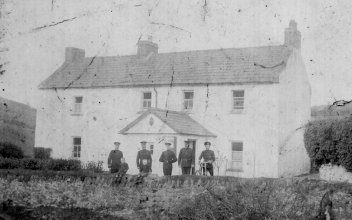
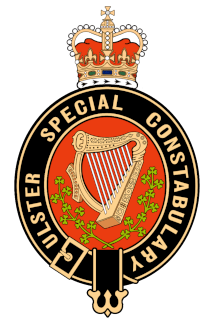
The USC is set up in October 1920, shortly before the partition of Ireland. It is an armed corps, organised partially on military lines and called out in times of emergency, such as war or insurgency. It performs this role most notably in the early 1920s during the Irish War of Independence (1920-22) and the Irish Republican Army (IRA) Border Campaign (1956-1962).
During its existence, 95 USC members are killed in the line of duty. Seventy-two of these are killed in conflict with the IRA in 1921 and 1922. Another eight die in air raids or IRA attacks during World War II. Of the remainder, most die in accidents but two former officers are killed during the Troubles in the 1980s.
The force is almost exclusively Ulster Protestant and as a result is viewed with great mistrust by Catholics. It carries out several revenge killings and reprisals against Catholic civilians during the Irish War of Independence. Unionists generally support the USC as contributing to the defence of Northern Ireland from subversion and outside aggression.
The abolition of the B Specials is a central demand of the Northern Ireland civil rights movement in the late 1960s. On April 30, 1970, the USC is finally stood down as a result of the Hunt Report, produced by a committee headed by John Hunt, Baron Hunt in 1969. Hunt concludes that the perceived bias of the Special Constabulary, whether true or not, has to be addressed. One of his other major concerns is the use of the police force for carrying out military style operations.
It has been argued that the USC’s failure to deal with the 1969 disturbances were due to a failure on behalf of the Northern Ireland government to modernise their equipment, weaponry, training and approach to the job. Upon the disbandment of the USC, many of its members join the newly established Ulster Defence Regiment (UDR), the part-time security force which replaces the B Specials. Unlike the Special Constabulary, the UDR is placed under military control. Other B Specials join the new part-time Reserve of the Royal Ulster Constabulary (RUC). The USC continues to do duties for a month after the formation of the UDR and RUC Reserve to allow both of the new forces time to consolidate.
In the final handover to the Ulster Defence Regiment, the B Specials have to surrender their weapons and uniforms. Despite the government’s concerns about the handover of weapons and equipment, every single uniform and every single weapon is surrendered.
After implementation of the Hunt report, the last night of duties for most B Men is March 31, 1970. On April 1, 1970 the Ulster Defence Regiment begins duties. Initially, the Regiment has 4,000 members who work part-time while the new special constabulary, the RUC Reserve which replaces the B-Specials, initially consists of 1,500 members.
Since disbandment the USC has assumed a place of “almost mythic proportions” within unionist folklore, whereas in the Nationalist community they are still reviled as the Protestant only, armed wing of the unionist government “associated with the worst examples of unfair treatment of Catholics in Northern Ireland by the police force.” An Orange Order lodge is formed to commemorate the disbandment of the force called “Ulster Special Constabulary LOL No. 1970.” An Ulster Special Constabulary Association is also set up soon after the disbandment.
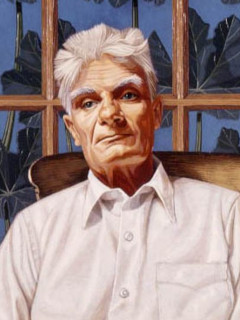
Stuart is born to Irish Protestant parents, Henry Irwin Stuart and Elizabeth Barbara Isabel Montgomery. His father is an alcoholic and kills himself when Stuart is an infant. This prompts his mother to return to Ireland and Stuart’s childhood is divided between his home in Ireland and Rugby School in England, where he boards.
In 1920, at age 17, Stuart becomes a Catholic and marries Iseult Gonne, daughter of Maud Gonne. Her father is the right-wing French politician Lucien Millevoye, with whom Maud Gonne had had an affair between 1887 and 1899. Because of her complex family situation, Iseult is often passed off as Maud Gonne’s niece in conservative circles in Ireland. Iseult has a brief affair with Ezra Pound prior to meeting Stuart. Pound and Stuart both believe in the primacy of the artist over the masses and are subsequently drawn to fascism, Stuart to Nazi Germany and Pound to Fascist Italy.
Gonne and Stuart have a baby daughter who dies in infancy. Perhaps to recover from this tragedy, they travel for a while in Europe but return to Ireland as the Irish Civil War begins. Unsurprisingly given Gonne’s strong opinions, the couple are caught up on the anti-Treaty Irish Republican Army (IRA) side of the fight. Stuart is involved in gun running and is interned following a botched raid.
After independence, Stuart participates in the literary life of Dublin and writes poetry and novels. His novels are successful, and his writing is publicly supported by W. B. Yeats.
Stuart’s time with Gonne is not an entirely happy time as both he and his wife apparently struggle with personal demons and their internal anguish poisons their marriage. In letters to close friend W. B. Yeats, Maud Gonne characterizes Stuart as being emotionally, financially, and physically abusive towards Iseult.
During the 1930s Stuart becomes friendly with German Intelligence (Abwehr) agent Helmut Clissmann and his Irish wife Elizabeth. Clissmann is working for the German Academic Exchange Service and the Deutsche Akademie (DA). He is facilitating academic exchanges between Ireland and the Third Reich but also forming connections which might be of benefit to the Abwehr. Clissmann is also a representative of the NaziAuslandorganisation (AO), the Nazi Party’s foreign organisation, in pre-war Ireland.
Stuart is also friendly with the head of the German Legation in Dublin, Dr. Eduard Hempel, largely as a result of Maud Gonne MacBride’s rapport with him. By 1938 he is seeking a way out of his marriage and the provincialism of Irish life. Iseult intervenes with Clissmann to arrange for Stuart to travel to Germany to give a series of academic lectures in conjunction with the DA. He travels to Germany in April 1939 and visits Munich, Hamburg, Bonn and Cologne. After his lecture tour, he accepts an appointment as lecturer in English and Irish literature at Berlin University to begin in 1940. At this time, under the Nuremberg Laws, the German academic system has barred Jews.
In July 1939, Stuart returns home to Laragh, County Wicklow, and after his plans for traveling to Germany are finalised, he receives a visit from his brother-in-law, Seán MacBride, following the seizure of an IRA radio transmitter on December 29, 1939, which had been used to contact Germany. Stuart, MacBride, Seamus O’Donovan, and IRA Chief of StaffStephen Hayes then meet at O’Donovan’s house. Stuart is told to take a message to Abwehr HQ in Berlin. Upon arrival in Berlin in January 1940, he delivers the IRA message and has some discussion with the Abwehr on conditions in Ireland and the fate of the IRA-Abwehr radio link. Around August 1940, he is asked by Sonderführer Kurt Haller if he will participate in Operation Dove and he agrees, although he is later dropped in favour of Frank Ryan.
Between March 1942 and January 1944 Stuart works as part of the Redaktion-Irland team, reading radio broadcasts containing Nazi propaganda which are aimed at and heard in Ireland. In his broadcasts he frequently speaks with admiration of Adolf Hitler and expresses the hope that Germany will help unite Ireland. He is dropped from the Redaktion-Irland team in January 1944 because he objects to the anti-Soviet material that is presented to him and deemed essential by his supervisors. His passport is taken from him by the Gestapo after this event.
In 1945 Stuart plans to Ireland with a former student Gertrude Meissner. They are arrested and detained by Allied troops. Following their release, Stuart and Meissner live in Germany and then France and England. They marry in 1954 after Iseult’s death and in 1958 they return to settle in Ireland. In 1971 Stuart publishes his best-known work, Black List Section H, an autobiographical fiction documenting his life and distinguished by a queasy sensitivity to moral complexity and moral ambiguity.
In 1996 Stuart is elected a Saoi of Aosdána, a high honour in the Irish art world. Influential Irish language poet Máire Mhac an tSaoi objects strongly, referring to Stuart’s actions during the war and claiming that he holds anti-Semitic opinions. When it is put to a vote, she is the only person to vote for her motion. She resigns from Aosdána in protest, sacrificing a government stipend by doing so. While the Aosdána affair is ongoing, The Irish Times columnist Kevin Myers attacks Stuart as a Nazi sympathiser. Stuart sues for libel and the case is settled out of court. The statement from The Irish Times read out in the High Court accepts “that Mr. Stuart never expressed anti-Semitism in his writings or otherwise.”
For some years before his death Stuart lives in County Clare with his partner Fionuala and in County Wicklow with his son Ian and daughter-in-law Anna in a house outside Laragh village. He dies of natural causes on February 2, 2000, at the age of 97 in County Clare.
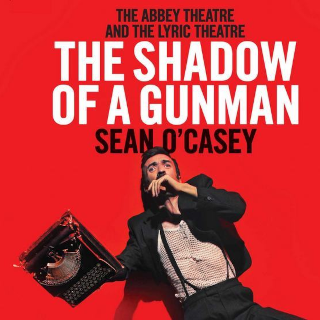
The play is the first in O’Casey’s “Dublin Trilogy” – the other two being Juno and the Paycock (1924) and The Plough and the Stars (1926). It is set in Dublin in May 1920 during the Irish War of Independence and centres on the mistaken identity of a building tenant who is thought to be an Irish Republican Army (IRA) assassin. Each act takes place in Seumus Shield’s room in a tenement in Hilljoy Square.
Donal Davoren is a poet who has come to room with Seumus Shields in a poor, Dublin tenement slum. Many of the residents of the tenement mistake Donal for an IRA gunman on the run. Donal does not refute this notoriety, especially when it wins him the affection of Minnie Powell, an attractive young woman in the tenement. Meanwhile, Seumus’ business partner, Mr. Maguire, drops a bag off at Seumus’ apartment before participating in an ambush in which he is killed. Seumus believes the bag to contain household items for re-sale. The city is put under curfew as a result of the ambush. The Black and Tans raid the tenement and, at that point, Donal and Seumus discover the bag is full of Mills bombs. Minnie Powell takes the bag and hides it in her own room. The Black and Tans find nothing of note in Seumus’ room, but arrest Minnie Powell, who is later shot and killed trying to escape.
In the music video for Northern Irish rock/pop band The Adventures song “Send My Heart” (1984), the lead character is seen trying out for a version of the play.
At the start of the twentieth century, the people of Ireland are divided into two mutually hostile factions. The much larger group (nationalists) are mostly Roman Catholic, identified primarily as Irish, and want some form of Irish home rule or independence from Britain. The smaller group (unionists), concentrated primarily in the province of Ulster, are mostly Protestant, identified primarily as British and are committed to remaining within the United Kingdom. In the years before World War I, both groups establish armed militias intended to enforce their aims and protect their communities from the other side’s militias. The British government resolves to partition Ireland in an effort to alleviate unionists and nationalists, with the six most Protestant counties of Ulster forming Northern Ireland while the rest of Ireland achieves self-rule. This is accepted by most unionists as the best deal they are likely to get, but bitterly disappoints many nationalists, especially those who live in the six counties which become Northern Ireland. Many nationalists on both sides of the border feel that their country has been unjustly divided, and for many decades the Irish government claims that Northern Ireland is rightfully its territory.
Partition is formally established with the Government of Ireland Act 1920. This also establishes the Parliament of Northern Ireland, which comes into being the following year. Partition is followed by high levels of inter-communal violence, especially in Belfast. The Irish Republican Army (IRA), although it spends most of these years fighting in the Irish Civil War, aims to use armed force to end partition and compel the United Kingdom to withdraw sovereignty from Northern Ireland.
The Special Powers Act is presented as being necessary to re-establish peace and law and order in Northern Ireland and enable the government to “take all such steps and issue all such orders as may be necessary for preserving the peace and maintaining order,” although it is specified that the ordinary course of law should be interfered with as little as possible. The Minister of Home Affairs is empowered to make any regulation felt necessary to preserve law and order in Northern Ireland. Anyone who breaks these regulations can be sentenced to up to a year in prison with hard labour, and in the case of some crimes, whipping. A special summary jurisdiction is enabled to hear cases involving such crimes. The Minister of Home Affairs is also permitted to forbid the holding of inquests if he feels this is required to preserve order and peace.
The Schedule to the Act specifies actions which the government can take in order to preserve peace, although the body of the Act enables the government to take any steps at all which it thinks necessary. Actions specified in the Schedule include the closing of licensed premises, the banning in any area of meetings and parades in public places, the closing of roads, the taking of any land or property, and the destruction of any building. The Schedule also forbids the spreading by word of mouth or text any “reports or…statements intended or likely to cause disaffection to subjects of His Majesty.”
Because it is presented as emergency legislation, the Special Powers Act is initially current for only one year and has to be renewed annually. In 1928, however, it is renewed for five years and when this period expires in 1933 the Act is made permanent. According to John Whyte, this happens because, from 1925, nationalist MPs begin sitting in the Stormont parliament which they had initially boycotted. Unsurprisingly, they object strenuously to the renewal of the Act, and it is felt by the Ulster Unionist Party Minister of Home Affairs that it would be better to make the Act permanent than for Parliament annually to “wrangle” over it.
Initially, regulations under the Act are used mostly to curb immediate violence and disorder. One of the most controversial of these is internment without trial, outlined in Paragraph 23 of the Schedule. In the period from May 1922 to December 1924, 700 republicans are interned under the Act.
Political violence declines dramatically by 1925, and the government gradually shifts its emphasis from broad measures designed to return civil order to the province to more preventative regulations aimed at suppressing the threat posed by republican aspirations. Regulations banning meetings and parades and restrictions on the flying of the Irish tricolour become more common. Between 1922 and 1950, the government bans nearly 100 parades and meetings, the vast majority of which are nationalist or republican. No loyalist gathering is ever directly banned under the Act, although a few are caught in blanket bans against parades or meetings in a particular area. From 1922 until 1972, 140 publications are banned, the vast majority of which express republican viewpoints.
After the troubles of the early 1920s has died down, the provision for internment is not used until the IRA’s border campaign of the 1950s, in which several hundred republicans are interned. Following the outbreak of the Troubles in 1968, many within the Protestant community call for the reintroduction of internment. This occurs in 1971 and authorises internment of those suspected to be involved in terrorism. Although there is loyalist as well as republican terrorists at this time, of the 1,981 men interned, only 107 are loyalists.
Internment ends in 1975 but is credited with increasing support and sympathy for the Provisional Irish Republican Army amongst the Catholic community and outside of Northern Ireland. It helps to create political tensions which culminate in the 1981 Irish Hunger Strike and the death of MP Bobby Sands. Imprisonment under anti-terrorism laws specific to Northern Ireland continue until the 1998 Good Friday Agreement, but these laws require the right to a fair trial be respected.
The Act encounters further controversy in the 1970s due to the deployment of the British Army in Northern Ireland and its role in maintaining order and similar policing-style duties. In 1972, the government is forced to amend the Act in order to legalise the detention of internees arrested by soldiers. Martin Meehan had been arrested after escaping from Crumlin Road Gaol and charged with escaping from lawful custody. At his trial he successfully argues that under the Special Powers Act a soldier has no power of arrest and, as such, he has the legal right to escape. He is awarded £800 in compensation for being illegally detained for twenty-three days.
McGarrity’s family grows up in poverty, motivating his need to immigrate later in life. He grows up hearing his father discussing Irish politics, including topics such as the Fenians, the Irish Parliamentary Party (IPP), and Irish Home Rule. By the time he is an adult, he has developed a keen interest in politics himself.
McGarrity immigrates to the United States in 1892 at the age of 18. He is reputed to have walked to Dublin before boarding a cattle boat to Liverpool disguised as a drover, and then sailing to the United States using a ticket belonging to someone else. He settles in Philadelphia, Pennsylvania and becomes successful in the liquor business. His business fails, however, on three occasions, twice due to embezzlement by his business partner.
In 1893 McGarrity joins Clan na Gael, an Irish organisation based in the United States committed to aiding the establishment of an independent Irish state. Clan na Gael had been heavily involved with the Fenian Brotherhood that McGarrity had grown up hearing about, and by the latter half of the 19th century had become a sister organisation of the Irish Republican Brotherhood (IRB). In the decade just before McGarrity joins, Clan na Gael and the Fenian movement had waged the Fenian dynamite campaign, where they attempted to force the British state to make concessions in Ireland by bombing British Infrastructure. However, this had caused a split within Clan na Gael that is not mended until seven years after McGarrity joins when, in 1900, the factions reunite and plead to support “the complete independence of the Irish people, and the establishment of an Irish republic.” In the years that follow the 1880s and 1890s, he is, amongst others, credited with helping to stitch the organisation back together and bring it renewed strength.
McGarrity helps sponsor several Irish Race Conventions and founds and runs a newspaper called The Irish Press from 1918-22 that supports the Irish War of Independence. He is the founder of the Philadelphia chapter of Clan Na Gael.
When Éamon de Valera arrives in the United States in 1919 they strike up an immediate rapport and McGarrity manages de Valera’s tour of the country. He persuades de Valera of the benefits of supporting him and the Philadelphia branch against the New York branch of the Friends of Irish Freedom organisation led by John Devoy and Judge Daniel F. Cohalan. He becomes president of the American Association for the Recognition of the Irish Republic. He christens his newborn son Éamon de Valera McGarrity, although their relationship becomes strained upon de Valera’s entry back into Dáil Éireann in the Irish Free State.
The Irish Civil War sees a split in Clan na Gael just as it had split Sinn Féin back in Ireland. McGarrity and a minority of Clan na Gael members support the anti-treaty side but a majority support the pro-treaty side, including John Devoy and Daniel Cohalan. Furthermore, in October 1920 Harry Boland informs the Clan na Gael leadership that the IRB will be cutting their ties to the Clan unless the IRB is given more influence over their affairs. Devoy and Cohalan resist this, but McGarrity sees the Clan’s connection with the IRB as vital. While McGarrity’s faction is initially labelled “Reorganised Clan na Gael,” they are able to inherit total control of the Clan na Gael name as Devoy is not able to keep effective organisation of the group. In general, however, the in-fighting amongst the Irish on both sides of the Atlantic is quite disheartening for Irish Americans and in the years to come neither pro or anti-treaty sides of Clan na Gael see much in the way of donations.
With the scope of Clan na Gael now narrowed, and Devoy and Cohalan removed from the picture, McGarrity becomes chairman of the organisation. He does not support the founding of Fianna Fáil in 1926 and opposes the party’s entry into the Dáil in 1927. Even after the Irish Civil War, he still supports the idea that a 32-county Irish Republic can be achieved through force. in the spring of 1926, he receives Chief of Staff of the Irish Republican ArmyAndrew Cooney to the United States. Cooney and Clan na Gael formally agree that each organisation will support the other and that Clan na Gael will raise funds, purchase weapons and build support for the IRA in the United States.
Going into the late 1920s though Clan na Gael, as are most Irish American organisations, is struggling. Having limped past the split caused by the Irish Civil War, the rejection of Fianna Fáil has caused a second split in the membership. Many Irish Americans see the IRA and Fianna Fáil as one and the same at that point and Clan na Gael and McGarrity’s hostility to them causes much friction.
By July 1929, the Clan’s membership in one of its strongholds, New York City, is down to just 620 paid members. Then in October of that same year Wall Street crashes and the Great Depression hits. In 1933 McGarrity is left almost bankrupt after he is found guilty of “false bookkeeping entries.” His livelihood is saved when he becomes one of the main ticket agents in the United States for the Irish Hospitals’ Sweepstake. He is a personal friend of Joseph McGrath, one of the founders of the Sweepstake. The sweepstakes allow him to turn his fortunes around.
Despite the trying times of both Clan na Gael and his personal life, McGarrity holds fast in his belief in physical force Irish Republicanism. In 1939 he supports the demand from Seán Russell for the “S-Plan” bombing campaign in Britain, which proves disastrous. He allegedly meets Hermann Göring in Berlin in 1939 to ask for aid for the IRA, which leads indirectly to “Plan Kathleen.”
McGarrity is a lifelong friend of fellow Carrickmore native and avid Republican, Patrick McCartan. When he dies on September 4, 1940, a mass is held in the St. Mary’s Pro-Cathedral in Dublin. He remains an unrepentant physical force republican all his life. A number of McGarrity’s papers are in the National Library of Ireland. He donates his personal Library to Villanova University.
The IRA signs all its statements ‘J.J. McGarrity’ until 1969 when the organisation splits into the ‘Official‘ and ‘Provisional‘ movements. Thereafter the term continues to be used by the Officials while the Provisionals adopt the moniker ‘P.O’Neill.’
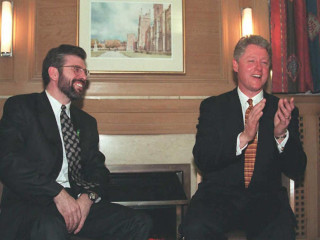
Some of the fifty people at the luncheon, most of them Irish American members of Congress, think Clinton might forgo a handshake because he is under tremendous pressure from Britain’s Prime MinisterJohn Major not to give Adams a warm embrace. But Clinton does not hesitate although the handshake comes after photographers have left the room.
“Gerry was concerned about the protocol of how he should go up to the President, but when he walked up, the President gave him a very big handshake,” says RepresentativePeter T. King, a Republican from Seaford, Long Island, who sits to the right of Adams at the lunch. After an awkward moment of silence, the room explodes with applause.
The President and the Sinn Féin leader speak for five minutes. Later Adams says, “The engagement was positive, was cordial.”
According to Rep. King, Clinton says he is committed to making the Irish peace effort succeed and, while talking to Adams, puts his fist in front of him and says, “This is going to work.” Adams says Clinton does not urge him to make sure the IRA disarms, something Major asked the President to do. Clinton invites Adams to a White House reception scheduled for the following day and, according to his aides, plans to speak to Major over the weekend in an effort to patch up their differences.
The tone at the luncheon is often light. Clinton jokes that finally he is at a place where people will not criticize him for taking a drink of Guinness. Also, Bruton hails Gingrich as an honorary Irishman, noting that his mother apparently descended from the Doherty clan of County Donegal.
Wearing a white carnation tinged with green, Gingrich gives the Taoiseach a bowl of Georgia peanuts and a book on the history of the United States Capitol. Telling Gingrich that he is not the first person to consider overhauling welfare, Bruton gives him an 1840’s book about welfare reform in Ireland.




 seamus dubhghaill