seamus dubhghaill

Promoting Irish Culture and History from Little Rock, Arkansas, USA


Leave a comment

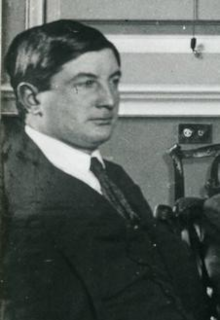
Birth of Terence MacSwiney, Playwright, Author & Lord Mayor of Cork

This image has an empty alt attribute; its file name is terence-macswiney.jpg

Terence James MacSwiney, Irish playwright, author, politician and Sinn Féin Lord Mayor of Cork during the Irish War of Independence, is born at 23 North Main Street, Cork, County Cork, on March 28, 1879.

MacSwiney is one of eight children of John and Mary MacSwiney. His father had volunteered in 1868 to fight as a papal guard against Giuseppe Garibaldi, had been a schoolteacher in London and later opened a tobacco factory in Cork. Following the failure of this business, John MacSwiney emigrates to Australia in 1885, leaving the children in the care of their mother and his eldest daughter.

MacSwiney is educated by the Christian Brothers at the North Monastery school in Cork but leaves at fifteen to help support the family. He becomes an accountancy clerk but continues his studies and matriculates successfully. He continues in full-time employment while he studies at the Royal University (now University College Cork), graduating with a degree in Mental and Moral Science in 1907.

In 1901 MacSwiney helps to found the Celtic Literary Society, and in 1908 he founds the Cork Dramatic Society with Daniel Corkery and writes a number of plays for them. His first play, The Last Warriors of Coole, is produced in 1910. His fifth play, The Revolutionist (1915), takes the political stand made by a single man as its theme.

Described as a sensitive poet-intellectual, MacSwiney’s writings in the newspaper Irish Freedom bring him to the attention of the Irish Republican Brotherhood. He is one of the founders of the Cork Brigade of the Irish Volunteers in 1913 and is President of the Cork branch of Sinn Féin. He founds a newspaper, Fianna Fáil, in 1914, but it is suppressed after only eleven issues. In April 1916, he is intended to be second in command of the Easter Rising in counties Cork and Kerry but stands down his forces on the order of Eoin MacNeill.

Following the rising, MacSwiney is imprisoned by the British Government under the Defence of the Realm Act 1914 in Reading and Wakefield Gaols until December 1916. In February 1917 he is deported from Ireland and imprisoned in Shrewsbury and Bromyard internment camps until his release in June 1917. It is during his exile in Bromyard that he marries Muriel Murphy of the Cork distillery-owning family. In November 1917, he is arrested in Cork for wearing an Irish Republican Army (IRA) uniform, and inspired by the example of Thomas Ashe, goes on a hunger strike for three days prior to his release.

In the 1918 Irish general election, MacSwiney is returned unopposed to the first Dáil Éireann as Sinn Féin representative for Mid Cork, succeeding the Nationalist MP D. D. Sheehan. After the murder of his friend Tomás Mac Curtain, the Lord Mayor of Cork, on March 20, 1920, he is elected as Lord Mayor. On August 12, 1920, he is arrested in Cork for possession of “seditous articles and documents,” and also possession of a cipher key. He is summarily tried by a court on August 16 and sentenced to two years’ imprisonment at Brixton Prison in England.

In prison MacSwiney immediately starts a hunger strike in protest of his internment and the fact that he was tried by a military court. Eleven other Irish Republican prisoners in Cork Jail go on hunger strike at the same time. On August 26, the British Government states that “the release of the Lord Mayor would have disastrous results in Ireland and would probably lead to a mutiny of both military and police in south of Ireland.”

MacSwiney’s hunger strike gains world attention. The British Government is threatened with a boycott of British goods by Americans, while four countries in South America appeal to Pope Benedict XV to intervene. Protests are held in Germany and France as well. An Australian member of Parliament, Hugh Mahon, is expelled from the Parliament of Australia for “seditious and disloyal utterances at a public meeting,” after protesting against the actions of the British Government. Two weeks later, the Spanish Catalan organization Autonomous Center of Employees of Commerce and Industry (CADCI) sends a petition to British Prime Minister David Lloyd George calling for his release and the newspaper of the organization, Acció (Acción in Spanish), begins a campaign for MacSwiney.

Food is often placed near MacSwiney to persuade him to give up the hunger strike. Attempts at force-feeding are undertaken in the final days of his strike. On October 20, 1920, he slips into a coma and dies in London’s Brixton Prison on October 25, after 73 days on hunger strike. His body lay in St. George’s Cathedral, Southwark in London where 30,000 people file past it. Fearing large-scale demonstrations in Dublin, the authorities divert his coffin directly to Cork, and his funeral in the Cathedral of St. Mary and St. Anne on October 31 attracts huge crowds. He is buried in the Republican plot in St. Finbarr’s Cemetery in Cork. Arthur Griffith delivers the graveside oration. His death brings him and the Irish Republican campaign to international attention.


1 Comment

Death of Joseph McGrath, Politician & Businessman

Joseph McGrath, Irish politician and businessman, dies in Ballsbridge, Dublin, on March 26, 1966. He is a Sinn Féin and later a Cumann na nGaedheal Teachta Dála (TD) for various constituencies: Dublin St James’s (1918–1921), Dublin North-West (1921–1923) and Mayo North (1923–1924), and develops widespread business interests.

McGrath is born in Dublin on August 12, 1888. By 1916 he is working with his brother George at Craig Gardiner & Co., a firm of accountants in Dawson Street, Dublin. He works with Michael Collins, a part-time fellow clerk and the two strike up a friendship. In his spare time he works as secretary for the Volunteer Dependents’ Fund.

McGrath soon joins the Irish Republican Brotherhood. He fights in Marrowbone Lane in the 1916 Easter Rising. He is arrested after the rising, and jailed in Wormwood Scrubs and Brixton prisons in England. In the 1918 Irish general election, he is elected as Sinn Féin TD for the Dublin St. James’s constituency, later sitting in the First Dáil. He is also a member of the Irish Republican Army (IRA), and successfully organises many bank robberies during the Irish War of Independence (1919–1921), where a small percentage of the proceeds is retained as a reward by him and his fellow-soldiers. During this time he is interred briefly at Abercorn Barracks but escapes by dressing in army uniform and walking out of the gate with soldiers going on leave. He is eventually recaptured and spends time in jail in Belfast.

In October 1921 McGrath travels with the Irish Treaty delegation to London as one of Michael Collins’ personal staff. When the Provisional Government of Ireland is set up in January 1922, he is appointed Minister for Labour. In the Irish Civil War of 1922–1923, he takes the pro-Treaty side and is made Director of Intelligence, replacing Liam Tobin. In a strongly worded letter, written in red ink, he warns Collins not to take his last, ill-fated trip to County Cork.

McGrath is later put in charge of the police Intelligence service of the new Irish Free State, the Criminal Investigation Department (CID). It is modelled on the London Metropolitan Police department of the same name, but is accused of the torture and killing of a number of republican (anti-Treaty) prisoners during the civil war. It is disbanded at the war’s end with the official reason given that it is unnecessary for a police force in peacetime. He goes on to serve as Minister for Labour in the Second Dáil and the Provisional Government of Ireland. He also serves in the 1st and 2nd Executive Councils holding the Industry and Commerce portfolio.

In September 1922 McGrath uses strikebreakers to oppose a strike by Trade Unionists in the Post Office service, despite having threatened to resign in the previous March of the same year when the government threatened to use British strikebreakers.

In December 1922 McGrath is a reluctant supporter of the government’s decision to execute four high profile IRA prisoners: Liam Mellows, Dick Barrett, Rory O’Connor, and Joe McKelvey.

McGrath resigns from office in April 1924 because of dissatisfaction with the government’s attitude to the Army Mutiny officers and as he says himself, “government by a clique and by the officialdom of the old regime.” By this he means that former IRA fighters are being overlooked and that the Republican goals on all Ireland has been sidelined. He and eight other TDs, who had resigned from Cumann na nGaedheal, resign their seats in the Dáil and form a new political party, the National Party. However, the new party does not contest the subsequent by-elections for their old seats. Instead, Cumann na nGaedheal wins seven of the seats and Sinn Féin wins the other two.

In 1927, McGrath takes a libel case against the publishers of The Real Ireland by poet Cyril Bretherton, a book that claims he is responsible for the abduction and murder of Noel Lemass, the brother of Seán Lemass, in June 1923 during the civil war, as well as a subsequent coverup. He wins the court case. During the 1930s, he and Seán Lemass reconcile and regularly play poker together.

Following his political career, McGrath goes on to become involved in the building trade. In 1925 he becomes labour adviser to Siemens-Schuckert, German contractors for the Shannon hydroelectric scheme near Limerick. He founds the Irish Hospitals’ Sweepstake in 1930, and the success of its sweepstakes makes him an extremely wealthy man. He has other extensive and successful business interests always investing in Ireland and becomes Ireland’s best-known racehorse owner and breeder, winning The Derby with Arctic Prince in 1951.

McGrath dies at his home, Cabinteely House, in Ballsbridge, Dublin on March 26, 1966. Cabinteely House is donated to the state in 1986 and the land is developed as a public park. His son, Patrick W. McGrath, inherits many of his father’s business interests, and also serves as Fine Gael Senator from 1973 to 1977.

(Pictured: Screenshot of a film of Irish politician Joseph McGrath shot in 1922)


Leave a comment

Birth of Gearóid O’Sullivan, Soldier & Politician

Gearóid O’Sullivan, soldier and politician, is born on January 28, 1891, at Coolnagrane, near Skibbereen, County Cork, fourth son among six sons and three daughters of Michael O’Sullivan, farmer, of Loughine, and Margaret Sullivan (née McCarthy) of Coolnagrane.

Christened Jeremiah but known in later life as Gearóid, O’Sullivan is an outstanding pupil at national school and secondary school in Skibbereen. Encouraged by his teachers, he acquires a love of the Irish language. Not yet ten, he joins the Gaelic League in Skibbereen in October 1900. He takes part in the Oireachtas debates of 1909. In 1911 he qualifies at St. Patrick’s College, Dublin, as a national schoolteacher and teaches at Kildorrery, County Cork, but returns to Dublin in 1912 to take up a post at St. Peter’s National School, Phibsborough. He takes an honours degree in Celtic studies at University College Dublin (UCD) (1913), an H.Dip.Ed. (1914), and an M.Ed. (1915). At the same time, he is an organiser and teacher with the Gaelic League, a member of its Keating branch at Parnell Square, Dublin, and a founder of the League’s “fáinne” proficiency badge.

O’Sullivan joins the F Company, 1st Battalion, Dublin Brigade of the Irish Volunteers at their foundation in November 1913, is aide-de-camp to Seán Mac Diarmada during the 1916 Easter Rising and is ordered by Patrick Pearse to raise the flag of rebellion over the General Post Office (GPO) stronghold in Dublin. Interned at Frongoch internment camp in Wales after the rising, he belongs to the Irish Republican Brotherhood (IRB) group of prisoners closely linked with Michael Collins, a proximity that continues throughout the crisis years to follow. Released in the amnesty of December 1916, he intensifies his Volunteer activity, playing a prominent role in Carlow Brigade, for which he is briefly detained while working as a teacher at St. Mary’s Knockbeg College, County Carlow. When the Irish Volunteers become the Irish Republican Army (IRA) in 1919, he is arrested again and goes on hunger strike at Mountjoy Prison, which leads to his release. Active throughout the Irish War of Independence (1919–21) and narrowly avoiding recapture during meetings with Collins, he joins the supreme council of the IRB in November 1921, remaining there for the remainder of his military career.

From February 1920, O’Sullivan replaces Collins as adjutant general of the IRA, a position he retains until the Anglo–Irish Treaty of December 1921 (which he supports), resuming it a month later as a lieutenant general of the new National Army, responsible for personnel and promotions. He is also elected to Dáil Éireann for Carlow–Kilkenny in 1921 and again in 1922, retiring in 1923. His intellectual and organisational abilities guarantee that his position within the army is safe after the death in August 1922 of Collins, to whom he owes much for his initial rise to prominence. On August 28 he is appointed to the newly created army council, whose most draconian prerogative becomes the military execution of republican prisoners.

After the Irish Civil War (1922–23), wholesale demobilisation of officers and other ranks takes place, but O’Sullivan and his council colleagues Richard Mulcahy, Seán Mac Mahon, and Seán Ó Murthuile survive the fiscal axe. Their privileged position angers some officers, led by Major General Liam Tobin, alarmed at the rate of demobilisation and the state’s apparent abandonment of Collins’s republican ideals. Through the Irish Republican Army Organisation, they deplore the devaluation of their pre-treaty IRA service and the retention of certain former British Army officers and instructors. O’Sullivan’s brief time as adjutant general places him in the role of personnel manager. As the Defence Forces (Temporary Provisions) Act, 1923, transforms the National Army into the defence forces of an Irish dominion, he is clearly in the sights of those who disagree with how these forces took shape.

As demobilisation continues and former British personnel become more evident, O’Sullivan and his colleagues become targets of suspicion that a hostile IRB clique had controlled the army council since its formation after the death of Collins. Exaggerated or not, such claims precipitate the army crisis of March 1924, in which O’Sullivan personally orders a raiding party under Colonel Hugo MacNeill to arrest its leaders. To defuse the crisis, he and his army council colleagues are forced to stand down, while the arrested dissidents are summarily retired. The subsequent army inquiry (April–June 1924) absolves him and his colleagues of any wrongdoing, but their active military careers are over. O’Sullivan, however, is for some time secretary of the military service pensions board.

Civilian life treats O’Sullivan well, as he enters a legal career and in 1926 is called to the bar. In 1927 he is appointed Judge Advocate General and remains so until 1932. After the assassination of Minister for Justice Kevin O’Higgins in July 1927, he fills the vacated Dublin County seat in a by-election in August, retaining it at subsequent elections until 1937. In August 1928 he is a Free State delegate to the Empire Parliamentary Association conference in Canada. Openly supporting Gen. Eoin O’Duffy and the short-lived ‘Blueshirts’ vanguard of the fledgling Fine Gael party during 1933–34, he pointedly refuses to surrender his legally held revolver when gardaí demand it as a precaution against a feared Blueshirt coup d’étât. In 1937 he becomes a barrister on the western circuit, and in 1940 commissioner for special purposes of the income tax acts, a post he holds for life.

O’Sullivan lives at St. Kevin’s Park, Dartry, Dublin, where he dies at the age of 57 on March 26, 1948. His military funeral to Glasnevin Cemetery, with his coffin draped in the same flag that had covered the coffin of Michael Collins, reflects his high national profile.

In 1922, O’Sullivan marries Maude Kiernan, sister of Kitty Kiernan and daughter of Peter and Bridget Kiernan, whose family is closely involved with the Irish political leadership, notably Michael Collins and Harry Boland. After Maude’s death he marries Mary Brennan of Belfast. They have three daughters and a son, all of whom survive him. O’Sullivan is commemorated in County Cork by a plaque at Skibbereen town hall.

(From: “O’Sullivan, Gearóid” contributed by Patrick Long, Dictionary of Irish Biography, http://www.dib.ie, shared in line with Creative Commons ‘Attribution’ (CC BY) licencing)


Leave a comment

Birth of Diarmuid O’Hegarty, Civil Servant & Revolutionary

Diarmuid O’Hegarty (Ó hÉigeartuigh), civil servant and revolutionary, is born Jeremiah Stephen Hegarty on December 26, 1892, in Lowertown, Skibbereen, County Cork, the eldest of seven children of Jeremiah Hegarty (1856–1934) and his wife Eileen (née Barry), both teachers. He is educated at the Christian Brothers school, St. Patrick’s Place, Cork, joins the civil service in 1910 and is posted to the Department of Agriculture and Technical Instruction, acquiring invaluable administrative experience as private secretary to T. P. Gill, secretary of the department.

O’Hegarty is a member of the Keating branch of the Gaelic League and the closely associated Teeling circle of the Irish Republican Brotherhood (IRB). In 1913 he becomes secretary and stage manager of a troupe of Gaelic players, Na hAisteoirí, which includes several who later become prominent revolutionaries: Piaras Béaslaí, Gearóid O’Sullivan, Fionán Lynch, and Con Collins. As second lieutenant of F Company, 1st Battalion, Dublin Brigade, Irish Volunteers, during the Easter Rising, he is in charge of barricades in Church Street, Mary Lane, Mary’s Abbey, and Jameson Distillery, an area which sees fierce fighting. Imprisoned in Knutsford (May 1-18), he is released in error and returns to his post in the civil service. On his return he is a key figure in the reorganisation of the Volunteers and IRB, becoming a member of the executive of the IRB’s supreme council along with Michael Collins and Seán Ó Murthuile. He also becomes a central figure in Kathleen Clarke‘s prisoner support group, the Irish Volunteer Dependents Fund, and when it amalgamates with the more moderate Irish National Aid Association to form the INA&VDF in August 1916, he helps to ensure that it is dominated by republicans.

O’Hegarty is very close to Michael Collins and Harry Boland and in 1918 this IRB triumvirate exercises considerable control in the nomination of Sinn Féin candidates for the 1918 Irish general election. In the same year he is dismissed from the civil service for refusing to take the oath of allegiance, but his administrative talents find ample outlet in the secretariat of the revolutionary Dáil and later in the service of the Irish Free State to such an extent that he has been called ‘the civil servant of the revolution’ and ‘the Grey Eminence of the Free State Government.’ As clerk of the First Dáil and secretary to the Dáil cabinet (1919–21), he is largely responsible for its success, organising meetings of the clandestine parliament and coordinating the work of various departments from his offices on the corner of O’Connell Street and Abbey Street and later in Middle Abbey Street. He is determined that the Dáil will demonstrate its worth by ‘functioning as any progressive government would be expected to function.’ He records the minutes and handles all correspondence of the Dáil cabinet. As the conduit through which the Dáil’s ministers communicate, his role is central to the effective operation of government on the run. The influence this gives him within the revolutionary movement is bolstered by his senior role within the IRB and the positions of military significance which he occupies. He is a member of the Volunteer Executive (Jun 1916–Nov 1921), Irish Republican Army (IRA) Director of Communications (Jul 1918–Mar 1920), and Director of Organisation (Mar 1920–Apr 1921). When convicted of illegal assembly and jailed in Mountjoy Prison (Nov 1919–Feb 1920), he immediately wields power within the prison, ordering Noel Lemass off a hunger strike.

O’Hegarty resigns his military duties in April 1921 to concentrate on his work in the Dáil secretariat and serves as secretary to the Irish delegation during the Anglo–Irish Treaty negotiations in London (Oct–Dec 1921). He is a vital voice for the Treaty within the IRB and is appointed secretary to the cabinet of the Provisional Government in 1922, participating in the unsuccessful army unification talks of May 1922. During the Irish Civil War, he is briefly seconded from his civil service post to serve as military governor of Mountjoy Prison (Jul-Aug 1922), where he threatens that prisoners who persist in leaning out of windows and talking to the public outside the prison will be shot. Peadar O’Donnell, who is a prisoner there at the time, remembers him as the focus of much ‘republican bitterness.’ A member of the army council during the Irish Civil War, he serves as Director of Organisation (Jul–Dec 1922) and Director of Intelligence (Dec 1922–May 1923), leaving the army with the rank of lieutenant general on May 1, 1923, to resume his civil service career.

O’Hegarty is secretary to the Executive Council of the Irish Free State (1923–32) and principal private secretary to its president, W. T. Cosgrave. Again, he records the cabinet minutes and is the administrative pivot upon which government turns. He serves as secretary to numerous governmental delegations and is widely praised for his work in this role at the 1926 Imperial Conference and the 1930 Imperial Conference. In 1927 he goes to New York to represent the government at a hearing into the fate of republican funds in the United States. His career is the prime example of the influence of revolutionary veterans within the higher civil service in the early years of the state. After the change of government following the 1932 Irish general election, he is one of the very few senior civil servants who is effectively removed from his position. He is appointed to be a commissioner of public works, becoming chairman in 1949, a position he holds until his retirement in 1957. In 1939–40 he serves on the Economy Committee established by the government to advise on wartime spending, and in 1941 is a member of a tribunal of inquiry into public transport, which is principally concerned with the poor financial state of Great Southern Railways.

On April 27, 1922, with Michael Collins as his best man, O’Hegarty marries Claire Archer, daughter of Edward Archer, a post office telegraph inspector from Dublin, and Susan Archer (née Matthews). Her brother is William (Liam) Archer. They live at 9 Brendan Road, Donnybrook, Dublin.

O’Hegarty dies on March 14, 1958, in Dublin, leaving an estate of £5,441. His papers are in the University College Dublin (UCD) Archives.


Leave a comment

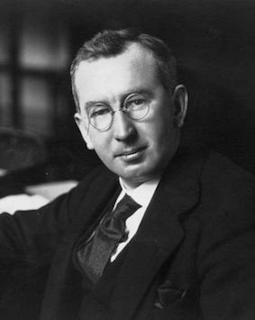
Birth of Jeremiah Joseph “Ginger” O’Connell, Irish Revolutionary

Jeremiah Joseph “Ginger” O’Connell, Irish revolutionary, active in the Irish War of Independence, and later a senior officer in the Defence Forces, is born in Ballina, County Mayo, on December 21, 1887.

O’Connell is born to Jeremiah Ambrose and Winifred O’Connell. He is nicknamed “Ginger” because of his red hair. His father is a national school inspector, so the family lives in Sligo, Derry, Longford and Belfast, and he attends a succession of primary schools. He studies at University College Dublin (UCD) where he receives a BA and a first-class MA. He is a member of the Literary and Historical Society at UCD and has an interest in boxing.

O’Connell is living in Cavan with his father, his sister Mary Margaret, his brother John Aloysius and two servants, Mary Burke and Rose Anne O’Reilly, at the time of the 1911 census, when he is 23. He is working as a Solicitor’s Apprentice, can read and write as well as speak both English and Irish, and is single. His mother is not living as it is recorded that his father is a widower.

O’Connell spends some time in the United States Army, serving with the 69th New York Infantry Regiment between 1912 and 1914. He returns to Ireland in 1914 and joins the Irish Volunteers, becoming Chief of Inspection in 1915. He travels the country organising volunteer corps, as well as contributing to the Irish Volunteer’s journal and delivering lectures on military tactics to both the Volunteers and Fianna Éireann. He also delivers a series of lectures about the famous Irish battles to the Gaelic League in Dublin. He is not a member of the Irish Republican Brotherhood (IRB) as he believes that soldiers should not be a part of secret societies.

At the time the 1916 Easter Rising, O’Connell is operating in Dublin under instruction from Joseph Plunkett. He is dispatched to Cork by Eoin MacNeill to try to prevent the Rising. Following the Rising, he is arrested and held in Frongoch internment camp from April to July 1916. In 1918 he is again arrested and interned, spending time in Wandsworth Prison with Arthur Griffith for the alleged involvement in the fabricated German Plot.

During the Irish War of Independence, O’Connell is a member of the Irish Republican Army (IRA) headquarters staff, as Assistant Director of Training and, after the killing of Dick McKee in 1920, as Director of Training. He coordinates, and is the principal lecturer, for a training course for military officers. The course is run clandestinely in the premises of the Topographical Society on Gardiner Street in Dublin. A sympathetic doorkeeper allows the group in at night when the society is not present. Topics delivered by O’Connell include tactics, ordinance and engineering.

In the IRA split after Dáil Éireann ratifies the Anglo-Irish Treaty, O’Connell takes the pro-Treaty side. He is made Deputy Chief of Staff in the National Army. On June 26, 1922, he is kidnapped by anti-treaty forces in reprisal for the arrest of an anti-treaty officer. His kidnapping is a precipitating factor in the formal outbreak of the Irish Civil War, when government pro-treaty forces two days later attack anti-treaty forces occupying the Four Courts. He survives the fighting and spends the rest of the civil war as General Officer Commanding the Curragh Command.

Following the Irish Civil War, the National Army is reorganised, and as part of that O’Connell is demoted from general to colonel. He subsequently holds a variety of positions: chief lecturer in the army school of instruction (1924–1929); director of no. 2 (intelligence) bureau (1929–1932); OC Irish Army Equitation School (March–June 1932); quartermaster-general (1932–1935) and director of the military archives (1935–1944). He also publishes articles on Irish and foreign military history and tactics in his time as a military historian. He marries Gertrude McGilligan, and they have two children together – one son and one daughter.

O’Connell dies of a heart attack at the age of 56 on February 19, 1944.


Leave a comment

Birth of Richard Barrett, Irish Republican Army Volunteer

Richard Barrett, commonly called Dick Barrett, a prominent Irish Republican Army (IRA) volunteer, is born on December 17, 1889, in Knockacullen (Hollyhill), Ballineen, County Cork. He fights in the Irish War of Independence and on the Anti-Treaty side in the Irish Civil War, during which he is captured and later executed on December 8, 1922.

Barrett is the son of Richard Barrett, farmer, and Ellen Barrett (née Henigan). Educated at Knocks and Knockskagh national schools, he enters the De La Salle College, Waterford, where he trains to be a teacher. Obtaining a first-class diploma, he first teaches at Ballinamult, County Waterford but then returns to Cork in early 1914 to take up a position at the St. Patrick’s Industrial School, Upton. Within months he is appointed principal of Gurrane National School. Devoted to the Irish language and honorary secretary of Knockavilla GAA club, he does much to popularise both movements in the southern and western districts of Cork. He appears to have been a member of the Cork Young Ireland Society.

From 1917, inspired by the Easter Rising, Barrett takes a prominent part in the organisation and operation of the Irish Volunteers and Irish Republican Brotherhood (IRB). By this time, he is also involved with Sinn Féin, in which role he attends the ardfheis at the Mansion House in October 1917 and the convention of the Irish Volunteers at Croke Park immediately afterwards.

Through planning and participating in raids and gunrunning episodes, Barrett comes into close contact with many GHQ staff during the Irish War of Independence, thereby ensuring his own rapid promotion. He is an active Irish Republican Army (IRA) brigade staff officer and occasionally acts as commandant of the West Cork III Brigade. He also organises fundraising activities for the purchase of weapons and for comrades on the run. In July 1920, following the arrest of the Cork III Brigade commander Tom Hales and quartermaster Pat Harte, he is appointed its quartermaster. He is arrested on March 22, 1921, and imprisoned in Cork jail, later being sent to Spike Island, County Cork.

As one of the senior officers held in Spike Island, Barrett is involved in many of the incidents that occur during his time there. After the truce is declared on July 11, 1921, some prisoners go on hunger strike, but he calls it off after a number of days on instructions from outside as a decision had been made that able-bodied men are more important to the cause. In November, Barrett escapes by rowboat alongside Moss (Maurice) Twomey, Henry O’Mahoney, Tom Crofts, Bill Quirke, Dick Eddy and Paddy Buckley.

Following the Irish War of Independence, Barrett supports the Anti-Treaty IRA‘s refusal to submit to the authority of Dáil Éireann (civil government of the Irish Republic declared in 1919). He is opposed to the Anglo-Irish Treaty and calls for the total elimination of English influence in Ireland. In April 1922, under the command of Rory O’Connor, he, along with 200 other hardline anti-treaty men, take over the Four Courts building in the centre of Dublin in defiance of the new Irish government. They want to provoke British troops, who are still in the country, into attacking them. They hope this will restart the war with Britain and reunite the IRA against their common enemy. Michael Collins tries desperately to persuade O’Connor and his men to vacate the building. However, on June 28, 1922, after the Four Courts garrison had kidnapped J. J. O’Connell, a general in the new National Army, Collins’s soldiers shell the Four Courts with British artillery to spark off what becomes known as the Battle of Dublin. O’Connor surrenders following two days of fighting, and Barrett, with most of his comrades, is arrested and held in Mountjoy Gaol. This incident marks the official outbreak of the Irish Civil War, as fighting escalates around the country between pro- and anti-treaty factions.

After the death of Michael Collins in an ambush, a period of tit-for-tat revenge killings ensues. The government implements martial law and enacts the necessary legislation to set up military courts. In November, the government begins to execute Anti-Treaty prisoners, including Erskine Childers. In response, Liam Lynch, the Anti-Treaty Chief of Staff, gives an order that any member of the Dáil who had voted for the ‘murder legislation’ is to be shot on sight.

On December 7, 1922, Teachta Dála (TD) Sean Hales is killed by anti-Treaty IRA men as he leaves the Dáil. Another TD, Pádraic Ó Máille, is also shot and badly wounded in the incident. An emergency cabinet meeting is allegedly held the next day to discuss the assassination of Hales. It is proposed that four prominent members of the Anti-Treaty side currently held as prisoners be executed as a reprisal and deterrent. The names put forward were Barrett, O’Connor, Liam Mellows and Joe McKelvey. It is alleged that the four are chosen to represent each of the four provinces – Munster, Connacht, Leinster and Ulster respectively, but none of the four is actually from Connacht. The executions are ordered by Minister for Justice Kevin O’Higgins. At 2:00 AM on the morning of December 8, 1922, Barrett is awoken along with the other three and informed that they are all to be executed at 8:00 that morning.

Ironies stack one upon the other. Barrett is a member of the same IRA brigade as Hales during the Anglo-Irish War, and they were childhood friends. O’Connor had been best man at O’Higgins’ wedding a year earlier. The rest of Sean Hales’ family remains staunchly anti-Treaty, and publicly denounces the executions. In reprisal for O’Higgins’ role in the executions, the Anti-Treaty IRA kills his father and burns his family home in Stradbally, County Laois. O’Higgins himself dies by an assassin’s hand on July 10, 1927.

The executions stun Ireland, but in terms of halting the Anti-Treaty assassination policy, they have the desired effect. The Free State government continues to execute enemy prisoners, and 77 official executions take place by the end of the war.

Barrett is now buried in his home county, Cork, following exhumation and reinternment by a later government. A monument is erected by old comrades of the West Cork Brigade, the First Southern Division, IRA, and of the Four Courts, Dublin, garrison in 1922 which is unveiled on December 13, 1952, by the Tánaiste Seán Lemass.

A poem about the execution is written by County Galway clergyman Pádraig de Brún.


Leave a comment

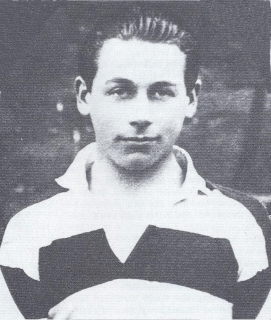
The Hanging of IRA Soldier Kevin Barry

Kevin Gerard Barry, an 18-year-old Irish Republican Army (IRA) soldier, is executed by the British Government on November 1, 1920, during the Irish War of Independence. He is sentenced to death for his part in an attack upon a British Army supply lorry which results in the deaths of three British soldiers.

Barry’s execution inflames nationalist public opinion in Ireland, largely because of his age. The timing of the execution, only seven days after the death by hunger strike of Terence MacSwiney, the republican Lord Mayor of Cork, brings public opinion to a fever-pitch. His pending death sentence attracts international attention, and attempts are made by United States and Vatican officials to secure a reprieve. His execution and MacSwiney’s death precipitate an escalation in violence as the Irish War of Independence enters its bloodiest phase, and Barry becomes an Irish republican martyr.

Barry is born on January 20, 1902, at 8 Fleet Street, Dublin, to Thomas and Mary (née Dowling) Barry. The fourth of seven children, two boys and five sisters, he is baptised in St. Andrew’s Church, Westland Row. As a child he attends the National School in Rathvilly, County Carlow, and the O’Connell Schools in Dublin, before enrolling in the Preparatory Grade at St. Mary’s College, Dublin, in September 1915. He remains at that school until May 31, 1916, when it is closed by its clerical sponsors. With the closure of St. Mary’s College, he transfers to Belvedere College, a Jesuit school in Dublin.

In October 1917, during his second year at Belvedere, Barry joins Company C, 1st Battalion of the Dublin Brigade of the Irish Volunteers. When Company C is later reorganized, he is reassigned to the newly formed Company H, under the command of Captain Seamus Kavanagh. The following year he is introduced by Seán O’Neill and Bob O’Flanagan to the Clarke Luby Club of the Irish Republican Brotherhood (IRB), and at some point in time he is sworn as a member of this secret society which is led by Michael Collins.

Two Dublin Volunteers notice that a British army lorry guarded by an armed party of soldiers makes twice weekly trips to Monk’s Bakery on Church Street to obtain bread. Based on these observations, John Joe Carroll of Company H conducts a reconnaissance of the bakery. In addition to its main entrance on Church Street, he observes that the bakery yard is also accessible by a corridor leading from a shop on North King Street. He concludes that this makes the bakery an attractive site for an ambush.

On the morning of September 20, 1920, Barry goes to Mass, then joins a party of IRA volunteers on Bolton Street in Dublin. Their orders are to ambush a British army lorry as it picks up a delivery of bread from the bakery and capture their weapons. The ambush is scheduled for 11:00 AM, which gives him enough time to take part in the operation and return to class in time for an examination he has at 2:00 PM. The truck arrives late and is under the command of Sergeant Banks.

Armed with a .38 Mauser Parabellum, Barry and members of C Company are to surround the lorry, disarm the soldiers, take the weapons and escape. He covers the back of the vehicle and, when challenged, the five soldiers comply with the order to lay down their weapons. A shot is then fired, possibly a warning shot from an uncovered soldier in the front. Barry and the rest of the ambush party then open fire. His gun jams twice and he dives for cover under the vehicle. His comrades flee and he is left behind. He is then spotted and arrested by the soldiers. One soldier is killed and two other later die of their wounds.

The War Office orders that Barry be tried by court-martial under the Restoration of Order in Ireland Act 1920, which received royal assent on August 9, 1920. Barry is charged on three counts of the murder of Private Marshall Whitehead. In accordance with military procedure the verdict is not announced in court. He is returned to Mountjoy Prison. Later that night the district court-martial officer enters his cell and reads out the sentence: death by hanging. The public learns on October 28 that the date of execution has been fixed for November 1.

Barry is hanged on November 1, 1920, after hearing two Masses in his cell. Canon Waters, who walks with him to the scaffold, writes to Barry’s mother later, “You are the mother, my dear Mrs. Barry, of one of the bravest and best boys I have ever known. His death was one of the most holy, and your dear boy is waiting for you now, beyond the reach of sorrow or trial.”

Barry’s body is buried at 1:30 PM, in a plot near the women’s prison. His comrade and fellow-student Frank Flood is buried alongside him four months later. A plain cross marks their graves and those of Patrick Moran, Thomas Whelan, Thomas Traynor, Patrick Doyle, Thomas Bryan, Bernard Ryan, Edmond Foley and Patrick Maher who are hanged in the same prison before the Anglo-Irish Treaty of July 1921 which ends hostilities between Irish republicans and the British. The men are buried in unconsecrated ground on the jail property and their graves are unidentified until 1934. They become known as the Forgotten Ten by republicans campaigning for the bodies to be reburied with honour and proper rites. On October 14, 2001, the remains of these ten men are given a state funeral and moved from Mountjoy Prison to be re-interred at Glasnevin Cemetery in Dublin.


Leave a comment

Death of John Blake Dillon, Founding Member of Young Ireland

John Blake Dillon, Irish writer and politician who is one of the founding members of the Young Ireland movement, dies in Killiney, County Dublin on September 15, 1866.

Dillon is born on May 5, 1814, in the town of Ballaghaderreen, on the border of counties Mayo and Roscommon. He is a son of Anne Blake and her husband Luke Dillon (d. 1826), who had been a land agent for his cousin Patrick Dillon, 11th Earl of Roscommon. His niece is Anne Deane, who helps to raise his family after his death.

Dillon is educated at St. Patrick’s College, Maynooth, leaving after only two years there, having decided that he is not meant for the priesthood. He later studies law at Trinity College, Dublin, and in London, before being called to the Irish Bar. It is during his time at Trinity College that he first meets and befriends Thomas Davis.

While working for The Morning Register newspaper Dillon meets Charles Gavan Duffy, with whom he and Davis found The Nation in 1842, which is dedicated to promoting Irish nationalism and all three men become important members of Daniel O’Connell‘s Repeal Association, which advocates the repeal of the Act of Union 1800 between Great Britain and Ireland.

The young wing of the party, of which they are key members with William Smith O’Brien and Thomas Francis Meagher, come to be known as Young Ireland and advocate the threat of force to achieve repeal of the Act of Union. This is in contrast to the committed pacifism of O’Connell’s “Old Ireland” wing. This posturing eventually leads to the Young Ireland rebellion of 1848 where a countryside devastated by the Great Famine fails to rise up and support the rebels.

According to fellow Irish nationalist, Justin McCarthy, “…it has been said of him that while he strongly discouraged the idea of armed rebellion and had no faith in the possibility of Ireland’s succeeding by any movement of insurrection, yet when Smith O’Brien risked Ireland’s chances in the open field, he cast his lot with his leader and stood by his side in Tipperary.”

After the failure of Young Ireland’s uprising, Dillon flees Ireland, escaping first to France and, eventually, to the United States, where he serves the New York Bar.

Dillon returns to Ireland on amnesty in 1855 and in 1865 is elected as a Member of Parliament for Tipperary. By now he advocates a Federal union of Britain and Ireland and denounces the violent methods advocated by the Irish Republican Brotherhood or Fenian movement.

Dillon dies of cholera on September 15, 1866, in Killiney, County Dublin, at the age of 52, and is buried in Glasnevin Cemetery in Dublin.

Dillon is the father of John Dillon and grandfather of James Dillon.


Leave a comment

Death of Michael Davitt, Founder of the Irish National Land League

Michael Davitt, Irish republican and agrarian agitator, dies in Elphis Hospital in Dublin from blood poisoning on May 30, 1906. He is the founder of the Irish National Land League, which organizes resistance to absentee landlordism and seeks to relieve the poverty of the tenant farmers by securing fixity of tenure, fair rent, and free sale of the tenant’s interest.

Davitt is born in Strade, County Mayo, on March 25, 1846, the son of an evicted tenant farmer. Following their eviction, the family emigrates to England. In 1856, at the age of 10, he starts work in a cotton mill, where he loses an arm in a machinery accident a year later. As is typical for the era, he does not receive any compensation.

In 1865, Davitt joins the revolutionary Fenian Brotherhood, an international secret society that seeks to secure political freedom for Ireland. He becomes secretary of its Irish analogue, the Irish Republican Brotherhood (IRB), in 1868. Arrested in Paddington Station in London for sending firearms to Ireland on May 14, 1870, he is sentenced to 15 years in Dartmoor Prison and there lays plans to link Charles Stewart Parnell’s constitutional reform with Fenian activism to achieve political-agrarian agitation.

Paroled from prison in 1877, Davitt rejoins the IRB and goes to the United States, where the Fenian movement originated. There he is deeply influenced by Henry George’s ideas about the relationship between land monopoly and poverty.

Back in Ireland, using funds raised by John Devoy and Clan na Gael in the United States, Davitt wins Parnell’s cooperation in organizing the Irish National Land League in 1879, which leads, however, to his expulsion from the supreme council of the IRB in 1880. He is also imprisoned for seditious speeches in 1881 and 1883. He is elected to Parliament representing North Meath in the 1892 United Kingdom general election, but his election is overturned on petition because he had been supported by the Roman Catholic hierarchy. He stands unopposed for North East Cork at a by-election in February 1893, making his maiden speech in favour of the Home Rule Bill in April, which passes the House of Commons but is defeated in the House of Lords in September.

Because of his public championing of Henry George’s theories of land reform, Parnell repudiates him. Davitt actively defends the Nationalists before the Parnell Commission, which meets between 1887 and 1889. When the Irish party splits in 1890 over Parnell’s involvement in Capt. William Henry O’Shea’s divorce case, Davitt is among the first to oppose Parnell’s continuance as leader. He is elected again, for South Mayo in 1895, but resigns in 1899 in protest against the Second Boer War.

Davitt dies in Elphis Hospital, Dublin on May 30, 1906, at the age of 60, from blood poisoning. The fact that the Lord Lieutenant of Ireland attends his funeral is a public indication of the dramatic political journey this former Fenian prisoner has taken. There is no plan for public funeral, and hence Davitt’s body is brought quietly to the Carmelite Friary, Clarendon Street, Dublin. However, the next day over 20,000 people file past his coffin. His remains are taken by train to Foxford, County Mayo, and buried in the grounds of Strade Abbey at Strade, near his place of birth.

Davitt’s book, The Fall of Feudalism in Ireland (1904), is a valuable record of his time.


Leave a comment

Birth of Joseph McGarrity, Irish American Political Activist

Joseph McGarrity, Irish American political activist best known for his leadership in Clan na Gael in the United States and his support of Irish republicanism back in Ireland, is born on March 28, 1874, in Carrickmore, County Tyrone.

McGarrity’s family grows up in poverty, motivating his need to immigrate later in life. He grows up hearing his father discussing Irish politics, including topics such as the Fenians, the Irish Parliamentary Party (IPP), and Irish Home Rule. By the time he is an adult, he has developed a keen interest in politics himself.

McGarrity immigrates to the United States in 1892 at the age of 18. He is reputed to have walked to Dublin before boarding a cattle boat to Liverpool disguised as a drover, and then sailing to the United States using a ticket belonging to someone else. He settles in Philadelphia, Pennsylvania and becomes successful in the liquor business. His business fails, however, on three occasions, twice due to embezzlement by his business partner.

In 1893 McGarrity joins Clan na Gael, an Irish organisation based in the United States committed to aiding the establishment of an independent Irish state. Clan na Gael had been heavily involved with the Fenian Brotherhood that McGarrity had grown up hearing about, and by the latter half of the 19th century had become a sister organisation of the Irish Republican Brotherhood (IRB). In the decade just before McGarrity joins, Clan na Gael and the Fenian movement had waged the Fenian dynamite campaign, where they attempted to force the British state to make concessions in Ireland by bombing British Infrastructure. However, this had caused a split within Clan na Gael that is not mended until seven years after McGarrity joins when, in 1900, the factions reunite and plead to support “the complete independence of the Irish people, and the establishment of an Irish republic.” In the years that follow the 1880s and 1890s, he is, amongst others, credited with helping to stitch the organisation back together and bring it renewed strength.

McGarrity helps sponsor several Irish Race Conventions and founds and runs a newspaper called The Irish Press from 1918-22 that supports the Irish War of Independence. He is the founder of the Philadelphia chapter of Clan Na Gael.

During World War I, while the United States is still neutral, McGarrity is involved in the Hindu–German Conspiracy. He arranges the Annie Larsen arms purchase and shipment from New York to San Diego for India.

When Éamon de Valera arrives in the United States in 1919 they strike up an immediate rapport and McGarrity manages de Valera’s tour of the country. He persuades de Valera of the benefits of supporting him and the Philadelphia branch against the New York branch of the Friends of Irish Freedom organisation led by John Devoy and Judge Daniel F. Cohalan. He becomes president of the American Association for the Recognition of the Irish Republic. He christens his newborn son Éamon de Valera McGarrity, although their relationship becomes strained upon de Valera’s entry back into Dáil Éireann in the Irish Free State.

McGarrity opposes the Anglo-Irish Treaty and travels to Dublin in 1922 and assists the development of the short-lived Collins/De Valera Pact by bringing de Valera and Michael Collins together before the 1922 Irish general election.

The Irish Civil War sees a split in Clan na Gael just as it had split Sinn Féin back in Ireland. McGarrity and a minority of Clan na Gael members support the anti-treaty side but a majority support the pro-treaty side, including John Devoy and Daniel Cohalan. Furthermore, in October 1920 Harry Boland informs the Clan na Gael leadership that the IRB will be cutting their ties to the Clan unless the IRB is given more influence over their affairs. Devoy and Cohalan resist this, but McGarrity sees the Clan’s connection with the IRB as vital. While McGarrity’s faction is initially labelled “Reorganised Clan na Gael,” they are able to inherit total control of the Clan na Gael name as Devoy is not able to keep effective organisation of the group. In general, however, the in-fighting amongst the Irish on both sides of the Atlantic is quite disheartening for Irish Americans and in the years to come neither pro or anti-treaty sides of Clan na Gael see much in the way of donations.

With the scope of Clan na Gael now narrowed, and Devoy and Cohalan removed from the picture, McGarrity becomes chairman of the organisation. He does not support the founding of Fianna Fáil in 1926 and opposes the party’s entry into the Dáil in 1927. Even after the Irish Civil War, he still supports the idea that a 32-county Irish Republic can be achieved through force. in the spring of 1926, he receives Chief of Staff of the Irish Republican Army Andrew Cooney to the United States. Cooney and Clan na Gael formally agree that each organisation will support the other and that Clan na Gael will raise funds, purchase weapons and build support for the IRA in the United States.

Going into the late 1920s though Clan na Gael, as are most Irish American organisations, is struggling. Having limped past the split caused by the Irish Civil War, the rejection of Fianna Fáil has caused a second split in the membership. Many Irish Americans see the IRA and Fianna Fáil as one and the same at that point and Clan na Gael and McGarrity’s hostility to them causes much friction.

By July 1929, the Clan’s membership in one of its strongholds, New York City, is down to just 620 paid members. Then in October of that same year Wall Street crashes and the Great Depression hits. In 1933 McGarrity is left almost bankrupt after he is found guilty of “false bookkeeping entries.” His livelihood is saved when he becomes one of the main ticket agents in the United States for the Irish Hospitals’ Sweepstake. He is a personal friend of Joseph McGrath, one of the founders of the Sweepstake. The sweepstakes allow him to turn his fortunes around.

Despite the trying times of both Clan na Gael and his personal life, McGarrity holds fast in his belief in physical force Irish Republicanism. In 1939 he supports the demand from Seán Russell for the “S-Plan” bombing campaign in Britain, which proves disastrous. He allegedly meets Hermann Göring in Berlin in 1939 to ask for aid for the IRA, which leads indirectly to “Plan Kathleen.”

McGarrity is a lifelong friend of fellow Carrickmore native and avid Republican, Patrick McCartan. When he dies on September 4, 1940, a mass is held in the St. Mary’s Pro-Cathedral in Dublin. He remains an unrepentant physical force republican all his life. A number of McGarrity’s papers are in the National Library of Ireland. He donates his personal Library to Villanova University.

The IRA signs all its statements ‘J.J. McGarrity’ until 1969 when the organisation splits into the ‘Official‘ and ‘Provisional‘ movements. Thereafter the term continues to be used by the Officials while the Provisionals adopt the moniker ‘P.O’Neill.’