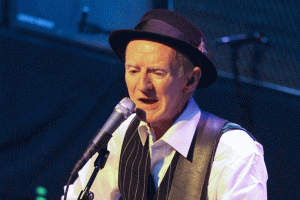
Philip Ryan, Irish singer-songwriter and guitarist professionally known as Philip Chevron and best known as a member of The Pogues, is born on June 17, 1957. He is regarded as one of the most influential figures in Irish punk music.
Chevron grows up in Santry, a suburb of Dublin. Beginning in the late 1970s, he is lead singer and co-founder of the punk rock group The Radiators from Space, receiving some critical acclaim but little widespread popularity or financial success. Following a temporary breakup of the band in 1981, he lives in London for a while where he meets and befriends Shane MacGowan through time spent working together at a record shop. Following the release of the Pogues’ 1984 debut album Red Roses For Me, Chevron is invited to join the band as a temporary replacement for banjo player Jem Finer while on paternity leave. He takes over as guitarist following MacGowan’s decision to concentrate on singing, thereby becoming a full-time member of the band in time for the recording of its second album, Rum, Sodomy and the Lash.
Chevron proves himself as a singer-songwriter, writing the songs Thousands Are Sailing and Lorelei among others. He leaves The Pogues in 1994 following problems with drugs and alcohol. In 2003, he reforms The Radiators (Plan 9) with ex-Pogues bassist Cait O’Riordan. They release the album Trouble Pilgrim in 2006.
In later years, he becomes The Pogues’ unofficial spokesperson and resident expert on the reclusive MacGowan, frequently visiting online fora and directly answering questions from fans. In 2004, he personally oversees the remastering and re-release of The Pogues’ entire back catalogue on CD. He tours regularly with The Pogues, who reunite after a successful reunion tour in 2001.
In June 2007, The Pogues’ website announces that Chevron has been diagnosed with oesophageal cancer. In early 2008, the website announces that Chevron has recovered, and to his surprise and joy, his hearing has returned to almost pre-treatment levels. He embarks on the March 2008 tour of the United States and manages to sing Thousands Are Sailing at each performance. By 2009, Chevron appears to have recovered from the cancer.
However, in May 2013, it is announced that the cancer has returned, and it is “lethal.” In June he stoically tells the Irish Daily Mail, “I am a gay, Irish, Catholic, alcoholic Pogue who is about to die from cancer – and don’t think I don’t know it.” Chevron dies on October 8, 2013, in Dublin at the age of 56. His last public appearance is at the Olympia Theatre in Dublin for a fundraiser in August of that same year.
John McCormack, an Irish tenor celebrated for his performances of the operatic and popular song repertoires and renowned for his diction and breath control, is born in Athlone, County Westmeath, on June 14, 1884.
McCormack receives his early education from the Marist Brothers in Athlone, and later attends Summerhill College in Sligo. He sings in the choir of the old St. Peters church in Athlone under choirmaster Michael Kilkelly. When the family moves to Dublin, he sings in the choir of St. Mary’s Pro-Cathedral where he is discovered by composer Vincent O’Brien. In 1903 he wins the coveted gold medal of the Dublin Feis Ceoil.
Fundraising activities on his behalf enable McCormack to travel to Italy in 1905 to receive voice training by Vincenzo Sabatini in Milan. In 1906, he makes his operatic début at the Teatro Chiabrera, Savona. The next year he begins his first important operatic performance at Covent Garden in Mascagni‘s Cavalleria rusticana, becoming the theatre’s youngest principal tenor.
In less than three years he is singing opera in the United States, as well as beginning a career on the recital stage that makes him one of the most successful singers of all time. In 1917 he becomes a citizen of the United States, his adopted country, where his concert appeal has proven to be nearly universal and unrelenting.
McCormack originally ends his career in 1938 at the Royal Albert Hall in London. However, one year after that farewell concert he is back singing for the Red Cross and in support of the war effort. He concertizes, tours, broadcasts, and records in this capacity until 1943 when failing health forced him to permanently retire.
Ill with emphysema, he purchases a house near the sea at Booterstown, County Dún Laoghaire–Rathdown, just south of Dublin. After a series of infectious illnesses, including influenza and pneumonia, McCormack dies on September 16, 1945. He is mourned by his countrymen, his English public who had taken him to their hearts as well, a vast number of his fellow citizens in the United States, and music lovers all over the world. He is buried in Deansgrange Cemetery.
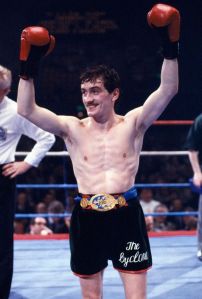
After a successful juvenile boxing career, McGuigan begins his professional boxing career on May 10, 1981, beating Selwyn Bell by knockout in two rounds in Dublin. He wins four out of five additional bouts in 1981. In 1982, McGuigan wins eight fights, seven by knockout, although one of these almost destroys his career and his life. Opposed by Young Ali, on June 14, 1982, McGuigan wins by a knockout in six rounds. Ali falls into a coma and dies five months later.
In 1985, McGuigan meets former world featherweight champion Juan Laporte and wins a 10-round decision. Following one more win, he finally gets his world title attempt when the long reigning WBA featherweight champion, Eusebio Pedroza of Panama, comes to London to put his title on the line at Loftus Road soccer stadium. McGuigan becomes the champion by dropping Pedroza in the seventh round and winning a unanimous fifteen-round decision in a fight refereed by hall of fame referee Stanley Christodoulou. McGuigan and his wife are feted in a public reception through the streets of Belfast that attracts several hundred thousand spectators. Later that year, he is named BBC Sports Personality of the Year, becoming the first person not born in the United Kingdom to win the award.
McGuigan twice successfully defends his title, first against American Bernard Taylor, who is stopped in nine rounds, and then against Dominican Danilo Cabrera in a controversial knock out in fourteen rounds. The fight is stopped after Cabrera bends over to pick up his mouthpiece after losing it, a practice that is allowed in many countries but not in Ireland. Cabrera is not aware of this, and the fight is stopped.
McGuigan’s next defence takes place in Las Vegas in June 1986, where he faces the relatively unknown Steve Cruz of Texas, in a gruelling 15-round title bout under a blazing sun. McGuigan holds a lead halfway through, but suffers dehydration due to the extreme heat and wilts near the end, being dropped in the tenth and fifteenth rounds. He eventually loses the world title, which he never reclaims, in a close decision. After the fight McGuigan requires hospitalisation because of his dehydrated state.
McGuigan retires after the fight but returns to the ring between 1988 and 1989, beating former world title challengers Nicky Perez and Francisco Tomas da Cruz, as well as contender Julio César Miranda, before losing to former EBU featherweight champ and future WBC and WBA super featherweight challenger Jim McDonnell by a technical knockout. After the McDonnell fight he permanently retires from boxing. His record is 32 wins and 3 losses, with 28 knockouts. In January 2005, McGuigan is elected into the International Boxing Hall of Fame.
McGuigan founds and is the current President of the Professional Boxing Association (PBA). He is also the CEO and founder of Cyclone Promotions.
U.S. President Ronald Reagan visits his ancestral home in Ballyporeen, County Tipperary, on June 3, 1984. Reagan’s great-grandfather, Michael Regan, who later changed the spelling of his name, is baptised in the village in 1829. Around 1851, after the Great Famine, he emigrates to London and ultimately the United States in 1857.
Surrounded by throngs of photographers and security people, Reagan slowly makes his way through the tiny village in the bright green hills of County Tipperary. Speaking to 3,000 applauding and cheering visitors gathered under drizzly skies at the main crossroads of Ballyporeen, Reagan explains that until recently he had never known of his roots because his father had been orphaned before reaching the age of six.
“And now,” Reagan tells the exuberant crowd, “thanks to you and the efforts of good people who have dug into the history of a poor immigrant family, I know at last whence I came. And this has given my soul a new contentment. And it is a joyous feeling. It is like coming home after a long journey.”
Reagan, joined by his wife, Nancy, aides, dignitaries, and townspeople worship at the modest Church of the Assumption in Ballyporeen, where his great-grandfather was supposedly baptized in 1829.
After the service, Reagan makes his way down Church Street, shaking the hands of well-wishers. Amid the handshaking, a marching bagpipe corps plays A Nation Once Again and other patriotic tunes.
At the town center, the Reagans visit the pub run by John O’Farrell, who first capitalizes on the news of the President’s lineage and names his establishment “The Ronald Reagan” in 1981. Reagan unveils a plaque for the President Reagan tourist center that is to be built here. While the building housing the pub still stands, the pub closes in 2004 and the following year its fittings and external signage are transported to the Ronald Reagan Presidential Library in Simi Valley, California, where it still stands today.
There is some opposition to Reagan’s visit to Ireland. Authorities keep approximately 600 protesters behind barriers on the outskirts of the village and they are not permitted into the village until after the presidential party had departed. The main focus of the protesters is toward the Reagan administration’s foreign policy, in particular its support of the Contras in Nicaragua.
Maeve Binchy Snell, known as Maeve Binchy, Irish novelist, playwright, short story writer, columnist, and speaker best known for her sympathetic and often humorous portrayal of small-town life in Ireland, is born on May 28, 1939, in Dalkey, County Dublin.
Binchy is the oldest of four children born to William and Maureen (née Blackmore) Binchy. Educated at St. Anne’s, Dún Laoghaire, and later at Holy Child Convent, Killiney, she goes on to study at University College Dublin, where she earns a bachelor’s degree in history. She works as a teacher of French, Latin, and history at various girls’ schools.
A 1963 trip to Israel profoundly affects both her career and her faith. One Sunday, attempting to find the location of the Last Supper, she climbs a mountainside to a cavern guarded by an Israeli soldier. She weeps with despair and the soldier asks, “What’ya expect ma’am – a Renaissance table set for 13?” She replies, “Yes! That’s just what I did expect.” This experience causes her to renounce her Catholic faith and eventually turn to atheism.
In 1968, Binchy joins the staff at The Irish Times, and works there as a writer, columnist, the first Women’s Page editor, and the London editor reporting for the paper from London before returning to Ireland.
Binchy, tall and rather stout, never considers herself to be attractive. She ultimately encounters the love of her life, children’s author Gordon Snell, while recording a piece for Woman’s Hour in London. Their friendship blossoms into a cross-border romance, with her in Ireland and him in London, until she eventually secures a job in London through The Irish Times. They are married in 1977 and eventually return to live in Dalkey, not far from where she had grown up.
In all, Binchy publishes 16 novels, four short-story collections, a play, and a novella. A 17th novel, A Week in Winter, is published posthumously. Her literary career begins with two books of short stories, Central Line (1978) and Victoria Line (1980). She publishes her debut novel Light a Penny Candle in 1982.
Most of Binchy’s stories are set in Ireland, dealing with the tensions between urban and rural life, the contrasts between England and Ireland, and the dramatic changes in Ireland between World War II and the present day. Her books have been translated into 37 languages.
In 2002, Binchy suffers a health crisis related to a heart condition, which inspires her to write Heart and Soul. The book about a heart failure clinic in Dublin and the people involved with it, reflects many of her own experiences and observations in the hospital.
Binchy dies on July 30, 2012, at the age of 73, in a Dublin hospital with her husband at her side. She had suffered from various maladies, including painful osteoarthritis, which results in a hip operation. A month before her death she suffers a severe spinal infection and finally succumbs to a heart attack. Just ahead of that evening’s Tonight with Vincent Browne and TV3‘s late evening news, Vincent Browne and then Alan Cantwell, who respectively anchor these shows, announce to Irish television viewers that Binchy has died earlier in the evening.
Despite being an atheist, Binchy is given a traditional Requiem Mass which takes place at the Church of the Assumption, in her hometown of Dalkey. She is later cremated at Mount Jerome Cemetery and Crematorium.
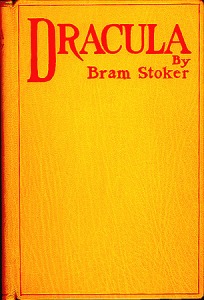
The Gothic horror novel Dracula, written by Bram Stoker of Dublin, is first published on May 26, 1897. The novel tells the story of Dracula’s attempt to move from Transylvania to England so that he may find new blood and spread the undead curse, and of the battle between Dracula and a small group of men and women led by Professor Abraham Van Helsing.
Between 1879 and 1898, Stoker is a business manager for the world-famous Lyceum Theatre in London, where he supplements his income by writing a large number of sensational novels, including the vampire tale Dracula. Parts of the novel are set around the town of Whitby, where he spends summer holidays.
Throughout the 1880s and 1890s, authors such as H. Rider Haggard, Rudyard Kipling, Robert Louis Stevenson, Arthur Conan Doyle, and H. G. Wells write many tales in which fantastic creatures threaten the British Empire. Invasion literature is at a peak, and Stoker’s formula of an invasion of England by continental European influences is very familiar by 1897 to readers of fantastic adventure stories. Victorian readers enjoy Dracula as a good adventure story like many others, but it does not reach its iconic legendary status until later in the 20th century when film versions begin to appear.
Before writing Dracula, Stoker spends seven years researching European folklore and stories of vampires, being most influenced by Emily Gerard‘s 1885 essay Transylvania Superstitions. Later he also claims that he has a nightmare, caused by eating too much crab meat covered with mayonnaise sauce, about a “vampire king” rising from his grave.
Despite being the most widely known vampire novel, Dracula is not the first. It is preceded and partly inspired by Sheridan Le Fanu‘s 1871 Carmilla, about a lesbian vampire who preys on a lonely young woman, and by Varney the Vampire, a lengthy penny dreadful serial from the mid-Victorian period by James Malcolm Rymer. John Polidori creates the image of a vampire portrayed as an aristocratic man, like the character of Dracula, in his tale The Vampyre in 1819.
The Lyceum Theatre where Stoker works between 1878 and 1898 is headed by actor-manager Henry Irving, who is Stoker’s real-life inspiration for Dracula’s mannerisms and who Stoker hopes would play Dracula in a stage version. Irving never does agree to do a stage version, but Dracula’s dramatic sweeping gestures and gentlemanly mannerisms draw their living embodiment from Irving.
The Dead Un-Dead is one of Stoker’s original titles for Dracula, and the manuscript is entitled simply The Un-Dead up until a few weeks before publication. Stoker’s notes for Dracula show that the name of the count is originally “Count Wampyr”, but Stoker becomes intrigued by the name “Dracula” while doing research, after reading William Wilkinson‘s book An Account of the Principalities of Wallachia and Moldavia with Political Observations Relative to Them (London 1820), which he finds in the Whitby Library and consults a number of times during visits to Whitby in the 1890s. The name Dracula is the patronym of the descendants of Vlad II of Wallachia, who takes the name “Dracul” after being invested in the Order of the Dragon in 1431. In the Romanian language, the word dracul can mean either “the dragon” or, especially in the present day, “the devil.”
Dracula is copyrighted in the United States in 1899 with the publication by Doubleday & McClure of New York. However, when Universal Studios purchases the rights, it comes to light that Bram Stoker has not complied with a portion of U.S. copyright law, placing the novel into the public domain. In the United Kingdom and other countries following the Berne Convention on copyrights, the novel is under copyright until April 1962, fifty years after Stoker’s death.
F. W. Murnau‘s unauthorized film adaptation Nosferatu is released in 1922, and the popularity of the novel increases considerably, owing to the controversy caused when Stoker’s widow tries to have the film removed from public circulation. Florence Stoker sues the film company and wins; however, the company is bankrupt, and Stoker only recovers her legal fees and an order by the court for all copies of the film to be destroyed. Some copies survive and find their way into theatres. Eventually, Florence Stoker simply gives up the fight against public displays of the film.
Dracula has been assigned to many literary genres including vampire literature, horror fiction, gothic fiction, and invasion literature. Stoker does not invent the vampire, but he defines its modern form, and the novel has spawned numerous theatrical, film, and television interpretations.
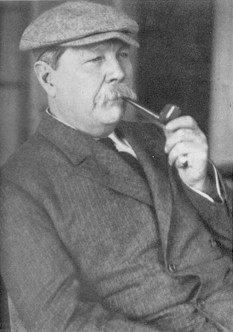
Sir Arthur Ignatius Conan Doyle, British writer and physician, most noted for creating the fictional detective Sherlock Holmes and writing stories about him which are generally considered milestones in the field of crime fiction, is born at 11 Picardy Place, Edinburgh, Scotland, on May 22, 1859.
Doyle’s father, Charles Altamont Doyle, is an Englishman of Irish Catholic descent and his mother, Mary (née Foley), is Irish Catholic. Charles dies in 1893, in the Crichton Royal Hospital, Dumfries, after many years of psychiatric illness. Supported by wealthy uncles, Doyle is sent to the Jesuit preparatory school Hodder Place, Stonyhurst, at the age of nine. He then goes on to Stonyhurst College until 1875. From 1875 to 1876, he is educated at the Jesuit school Stella Matutina in Feldkirch, Austria. Doyle later rejects the Catholic faith and becomes an agnostic. He also later becomes a spiritualist mystic.
From 1876 to 1881 Doyle studies medicine at the University of Edinburgh Medical School. While studying, he begins writing short stories. His first published piece, The Mystery of Sasassa Valley, is printed in Chambers’s Edinburgh Journal on September 6, 1879. After stints as a ship’s doctor and a failed medical practice with former classmate George Turnavine Budd, Doyle arrives in Portsmouth in June 1882 and sets up a medical practice at 1 Bush Villas in Elm Grove, Southsea. The practice is slow to develop and while waiting for patients, Doyle again begins writing fiction. In 1890, Doyle studies ophthalmology in Vienna and moves to London.
A sequel to A Study in Scarlet is commissioned and The Sign of the Four appears in Lippincott’s Magazine in February 1890, the last under agreement with the Ward Lock company. Short stories featuring Sherlock Holmes are published in TheStrand Magazine.
In December 1893, wanting to dedicate more time to historical novels, Doyle has Holmes and Professor Moriarty plunge to their deaths together down the Reichenbach Falls in the The Final Problem. Public outcry, however, leads him to feature Holmes in 1901 in the novel The Hound of the Baskervilles. Holmes is ultimately featured in a total of 56 short stories, the last published in 1927, and four novels by Doyle.
Between 1888 and 1906, Doyle writes seven historical novels, which many critics regard as his best work. He also authors nine other novels and, later in his career between 1912 and 1929, five stories, two of novella length, featuring the irascible scientist Professor Challenger.
Doyle is a supporter of the campaign for the reform of the Congo Free State, led by the journalist E. D. Morel and diplomat Roger Casement. He becomes acquainted with Morel and Casement and, together with Bertram Fletcher Robinson, they inspire several characters in the 1912 novel The Lost World. When Casement is found guilty of treason against the Crown during the 1916 Easter Rising, Doyle tries unsuccessfully to save him from facing the death penalty, arguing that Casement has been driven mad and cannot be held responsible for his actions.
Found clutching his chest in the hall of Windlesham Manor, his house in Crowborough, East Sussex, on July 7, 1930, Doyle dies of a heart attack at the age of 71. At the time of his death there is some controversy concerning his burial place, as he is avowedly not a Christian, but rather considers himself a Spiritualist. He is first buried on July 11, 1930, in Windlesham rose garden. He is later reinterred together with his wife in Minstead churchyard in the New Forest, Hampshire.
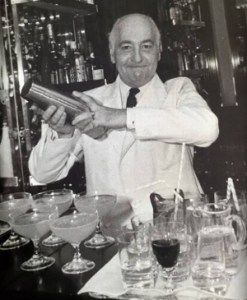
Joe Gilmore, one of the longest running Head Barmen at the Savoy Hotel‘s American Bar, is born in Belfast on May 19, 1922.
The Gilmores own a popular tobacconist shop at the top of the Limestone Road, which remains in business through the Troubles until the mid-1990s. But Gilmore has plans to go places so, at the age of sixteen, he sets out with a friend for London.
His first job is packing rolls of wallpaper at a Sanderson’s factory before moving to a Lyons Corner House as a dish washer with the prospect of getting some decent dinners. He begins training as a barman at London’s La Coquille and The Olde Bell at Hurley, where a chance encounter serving a stylish couple sets the scene for the remarkable life that follows.
At the age of eighteen, Gilmore starts as a trainee barman at The American Bar in 1940 and is appointed Head Barman in 1955, a position he holds until he retires in 1976. Over his years as Head Barman, Gilmore invents numerous cocktails to mark special events and important guests, a longstanding tradition at the American Bar.
Gilmore never forgets his Irish roots or family, and never loses his soft Belfast accent. Joe Gilmore dies at the age of 93 on December 18, 2015. His funeral is arranged by A. France & Son, undertakers to Admiral Nelson and near-neighbours in Lamb Conduit Street for more than 50 years. The Savoy sends their senior management and bar staff in their smart white uniforms.
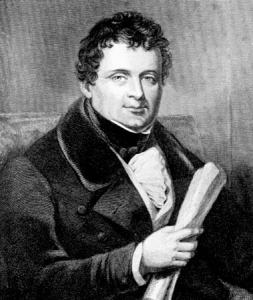
Daniel O’Connell, lawyer who becomes the first great 19th-century Irish nationalist leader and is known as “The Liberator,” dies in Genoa, Italy on May 15, 1847. Throughout his life, he campaigns for Catholic emancipation, including the right for Catholics to sit in the Westminster Parliament and the repeal of the Act of Union which combines Great Britain and Ireland.
Compelled to leave the Roman Catholic college at Douai, France, when the French Revolution breaks out, O’Connell goes to London to study law, and in 1798 he is called to the Irish bar. His forensic skill enables him to use the courts as nationalist forums. Although he has joined the Society of United Irishmen, a revolutionary society, as early as 1797, he refuses to participate in the Irish Rebellion of the following year. When the Act of Union takes effect on January 1, 1801, and abolishes the Irish Parliament, he insists that the British Parliament repeal the anti-Catholic laws in order to justify its claim to represent the people of Ireland. From 1813 he opposes various Catholic relief proposals because the government, with the acquiescence of the papacy, has the right to veto nominations to Catholic bishoprics in Great Britain and Ireland. Although permanent political organizations of Catholics are illegal, O’Connell sets up a nationwide series of mass meetings to petition for Catholic emancipation.
On May 12, 1823, O’Connell and Richard Lalor Sheil found the Catholic Association, which quickly attracts the support of the Irish priesthood and of lawyers and other educated Catholic laymen and which eventually comprises so many members that the government cannot suppress it. In 1826, when it is reorganized as the New Catholic Association, it causes the defeat of several parliamentary candidates sponsored by large landowners. In County Clare in July 1828, O’Connell himself, although as a Catholic ineligible to sit in the House of Commons, defeats a man who tries to support both the British government and Catholic emancipation. This result impresses on the British prime minister, Arthur Wellesley, 1st Duke of Wellington, the need for making a major concession to the Irish Catholics. Following the passage of the Catholic Emancipation Act of 1829, O’Connell, after going through the formality of an uncontested reelection, takes his seat at Westminster.
In April 1835, he helps to overthrow Sir Robert Peel’s Conservative ministry. In the same year, he enters into the “Lichfield House compact,” whereby he promises the Whig Party leaders a period of “perfect calm” in Ireland while the government enacts reform measures. O’Connell and his Irish adherents, known collectively as “O’Connell’s tail,” then aid in keeping the weak Whig administration of William Lamb, 2nd Viscount Melbourne, in office from 1835 to 1841. By 1839, however, O’Connell realizes that the Whigs will do little more than the Conservatives for Ireland, and in 1840 he founds the Repeal Association to dissolve the Anglo-Irish legislative union. A series of mass meetings in all parts of Ireland culminate in O’Connell’s arrest for seditious conspiracy, but he is released on appeal in September 1844 after three months’ imprisonment. Afterward his health fails rapidly, and the nationalist leadership falls to the radical Young Ireland group.
O’Connell dies at the age of 71 of cerebral softening in 1847 in Genoa, Italy, while on a pilgrimage to Rome. His time in prison has seriously weakened him, and the appallingly cold weather he has to endure on his journey is probably the final blow. According to his dying wish, his heart is buried at Sant’Agata dei Goti, then the chapel of the Irish College, in Rome and the remainder of his body in Glasnevin Cemetery in Dublin, beneath a round tower.
Parnell receives her early education at home, later attending the Royal Dublin Society Art School and the South Kensington School of Design.
Following her father’s death in 1859, the family leaves Avondale, living in Dublin, Paris, and London. While studying in London, Parnell attends parliamentary sittings and writes accounts of them for an Irish-American journal. She helps to organize an American fund for the relief of famine in Ireland in 1879–1880.
When it becomes apparent that the men of the Irish National Land League are likely to be arrested, it is suggested that a women’s league in Ireland can take over the work in their absence. Public opinion at the time is against women in politics, but Anna and her sister, Fanny Parnell, establish the Central Land League of the Ladies of Ireland (LLL), of which she becomes organizing secretary and effective leader in January 1881.
When Charles Stewart Parnell and other leaders are imprisoned in 1881, as predicted, the Ladies’ Land League takes over their work. Offices are given to the ladies but they receive very little assistance. The women hold public meetings and encourage country women to be active in withholding rent, in boycotting, and in resisting evictions. They raise funds for the League and for the support of prisoners and their families. They distribute Land League wooden huts for shelter to evicted tenant families and by the beginning of 1882 they have five hundred branches, thousands of women members, and considerable publicity. Fanny Parnell dies in 1882 at the age of thirty three.
After his release from prison, Charles Stewart Parnell dissolves the Ladies’ Land League in August 1882. Anna, whose nationalist fervor exceeds that of her brother, parts with him on bad terms over politics. She lives the rest of her life in the south of England under an assumed name. She writes an angry account of her Land League experiences in Tale of a Great Sham, which is not published until 1986.
Anna Parnell never marries. She drowns at Ilfracombe, Devon, England on September 20, 1911.


 U.S. President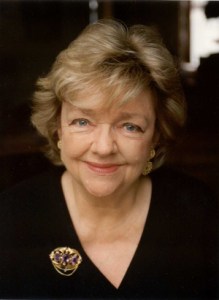

 seamus dubhghaill