Casement is an Irish Protestant who serves as a British diplomat during the early part of the 20th century. He wins international acclaim after exposing the illegal practice of slavery in the Congo and parts of South America. Despite his Ulster Protestant roots, he becomes an ardent supporter of the Irish independence movement and, after the outbreak of World War I, travels to the United States and then to Germany to secure aid for an Irish uprising against the British.
Germany, which is at war with Great Britain, promises limited aid, and Casement is transported back to Ireland in a German submarine. On April 21, 1916, just a few days before the outbreak of the Easter Rising in Dublin, he lands in County Kerry and is picked up by British authorities almost immediately. By the end of the month, the Easter Rising has been suppressed and a majority of its leaders executed.
Casement is tried separately because of his illustrious past but nevertheless is found guilty of treason on June 29. On August 3, he is hanged by John Ellis and his assistants at Pentonville Prison in London. Casement is the last to be executed as a result of the Easter Rebellion.
Seán Ó Riada, Irish composer and arranger of Irish traditional music, is born John Reidy in Cork City on August 1, 1931. Through his incorporation of modern and traditional techniques he becomes the single most influential figure in the revival of Irish traditional music during the 1960s.
Ó Riada’s career begins in 1954 as a music director at Radio Éireann, after which he works at the Abbey Theatre from 1955 to 1962. He lectures in music at University College Cork from 1963 until his death in 1971. He leaves a lasting influence as founder and director of the ensemble Ceoltóirí Chualann beginning in 1961. Ó Riada becomes a household name in Ireland through his participation in Ceoltóirí Chualann, compositions, writings, and broadcasts. His best-known pieces in the classical tradition include Nomos No. 1: Hercules Dux Ferrariae (1957), but he becomes particularly famous for his film scores Mise Éire (1959) and Saoirse? (1960).
In 1963 Ó Riada is appointed lecturer in music at University College Cork. He moves to Cúil Aodha in West Cork, an Irish-speaking area, where he establishes Cór Chúil Aodha, a male voice choir.
He becomes involved in Irish politics and is a friend of several influential leaders. Ó Riada drinks regularly at a local pub which still advertises itself as being his local. He develops cirrhosis of the liver. He is flown to King’s College Hospital in London for treatment and dies there on October 3, 1971, two months after his 40th birthday. He is buried in St. Gobnait‘s graveyard, Baile Bhuirne, County Cork. Willie Clancy played at his funeral.
Two schools are named “Scoil Uí Riada” after him – a Gaelscoil in Kilcock, County Kildare, and another in Bishopstown, Cork City. In 2008, a life-sized statue is erected in the grounds of Sépéil Naomh Gobnait, Cúil Aodha.
Tate is born in Dublin in 1652 and comes from a family of Puritan clergymen. He is the son of Faithful Teate, an Irish clergyman who was rector of Castleterra, Ballyhaise, until his house is burned and his family attacked after he passes on information to the government about plans for the Irish Rebellion of 1641. After living at the provost’s lodgings in Trinity College, Dublin, Faithful Teate moves to England. He becomes the incumbent at East Greenwich around 1650, and “preacher of the gospel” at Sudbury from 1654 to 1658 before returning to Dublin by 1660. He publishes a poem on the Trinity entitled Ter Tria, as well as some sermons, two of which he dedicates to Oliver and Henry Cromwell.
Nahum Teate follows his father to Trinity College, Dublin in 1668, and graduates BA in 1672. By 1676 he moves to London and is writing for a living. He publishes a volume of poems in London in 1677 and becomes a regular writer for the stage. He also adopts the spelling Tate, which remains until his death.
Tate then turns to make a series of adaptations from Elizabethan dramas. His version of William Shakespeare’s Richard II alters the names of the characters and changes the text so that every scene, to use his own words, is “full of respect to Majesty and the dignity of courts.” In spite of these precautions The Sicilian Usurper (1681), as his rewrite is called, is suppressed on the third performance on account of a possible political interpretation.
In 1682, Tate collaborates with John Dryden to complete the second half of his epic poem Absalom and Achitophel. Tate also writes the libretto for Henry Purcell‘s opera Dido and Aeneas, which is given its first known performance in 1689. Tate’s name is also connected with the famous New Version of the Psalms of David (1696), for which he collaborates with Nicholas Brady.
Nahum Tate dies in Southwark, London, England, on July 30, 1715, and is buried at St. George Southwark on August 1, 1715.
The Irish Republican Army (IRA) issues a statement on July 28, 2005, announcing the end of its 36-year armed campaign and its resumption of disarmament. The campaign of armed conflict has a cost 3,500 lives, 1,800 of them at the hands of the Provisionals.
The IRA says its members have been ordered to pursue peaceful means and not to “engage in any other activities whatsoever” – a reference to the low-level paramilitary activities which have angered not just unionists, but the London and Dublin governments. The IRA gives no indication that it will disband.
Sinn Féin president Gerry Adams calls it an “emotional day” and, flanked by senior members of Sinn Féin, speaks directly to IRA volunteers by saying, “National liberation struggles have different phases – a time for struggle, a time for war, and also a time to engage, to put the war behind us all – this is that time.” He declares the IRA statement means the group is now committed to “purely peaceful and democratic methods” and calls it “a direct challenge to the Democratic Unionist Party (DUP) to decide if they want to put the past behind them and make peace with the rest of the people of the island.”
The DUP reserves judgment, although an initial “holding statement” on their website from the party leader, Rev. Ian Paisley, criticises the failure to declare clearly they will end all criminal activity.
TaoiseachBertie Ahern says the British and Irish governments have worked for 11 years for this outcome. He says, “The war is over, the IRA’s armed campaign is over, paramilitarism is over and I believe that we can look to the future of peace and prosperity based on mutual trust and reconciliation and a final end to violence.”
Praising the “clarity” of the IRA statement, British Prime MinisterTony Blair says, “This may be the day when finally, after all the false dawns and dashed hope, peace replaces war, politics replaces terror on the island of Ireland.”
The IRA statement follows the release the previous night of IRA bomber Sean Kelly by the British government “on the expectation” of a move by the terrorist group.
After college at Keele University, Finer travels around Europe and spends some time working on a barge in France. He settles in London and becomes the bass player in a group called The Petals and lives in 32 Burton Street, a house which he sometimes shares with Spider Stacey and Shane MacGowan. Together with James Fearnley they found The Pogues. Primarily a banjoist, he also plays other instruments, including mandola, saxophone, hurdy-gurdy, and the guitar. Apart from Shane MacGowan, Finer is the most prolific composer for the band.
Finer appears on all the band’s albums until their breakup in 1996. He continues working as a musician and composer after leaving The Pogues.
On January 1, 2000, the Finer-composed Longplayer piece of music is started and is designed to last 1,000 years without ever repeating itself. It currently exists in both computer-generated and live versions. Longplayer represents a convergence of many of his concerns, particularly those relating to systems, long-durational processes, and extremes of scale in both time and space.
Finer serves as “Artist in Residence” at the Astrophysics Sub-department of the University of Oxford between October 2003 and June 2005. Finer and Hamburg-based swamp pop legend DM Bob begin recording and performing together in 2005, releasing their album Bum Steer in August of that year and co-producing the debut album by experimental pop band Marseille Figs. In July 2005, Finer wins the PRS Foundation New Music Award on the basis of his proposal to build a device that will automatically “compose” a song of indeterminate length by harnessing the creative force of the weather.
In March 2012, Mobile Sinfonia, a global composition for ringtones is launched, developed during a year Finer spends as a non-resident artist at the University of Bath. This piece concerns mutual invasion of soundscape via ringtones.
Finer is currently working on a number of new projects continuing his interest in long-term sustainability and the reconfiguring of older technologies, including Spiegelei, a spherical camera obscura featuring Finer’s innovative 360-degree projection system and the Supercomputer in Cambridge, a 5-bit mechanical sculpture which will compute minimal musical scores.
Flatley begins dancing lessons at age 11 and, at age 17, is the first American to secure a World Irish Dance title at the World Irish Dance Championships, the Oireachtas Rince na Cruinne. He is also an accomplished flautist, having won twice in the All-Ireland Fleadh Cheoil Concert Flute competitions from 1975-1976.
Flatley is taught dance by Dennis Dennehy at the Dennehy School of Irish Dance in Chicago. After graduating from Brother Rice High School, on Chicago’s Southwest Side, he opens a dance school but later closes it to focus on performing.
In 1978 and 1979 Flatley tours with Green Fields of America and then with The Chieftains in the 1980s. In May 1989, Flatley sets a Guinness Book world record for tapping speed at 28 taps per second, and subsequently breaks his own record in 1998 with 35 taps per second.
Flatley creates and choreographs the original Riverdance and leads the show to great success as the intermission act in the Eurovision Song Contest staged in Ireland on April 30, 1994. Flatley abruptly leaves the show over creative control disputes in October 1995.
Shortly after the Riverdance split, Flatley creates Lord of the Dance, which plays mostly in arenas and stadiums instead of stage theaters. He also puts together a dance production called Feet of Flames in 1998. Flately’s Irish dance show Celtic Tiger opens in July 2005. The show explores the history of the Irish people and Irish emigration to the United States, fusing a wide range of dance styles, including jazz.
Flatley returns to the stage in 2009 for a limited run of the “Hyde Park” version of Feet of Flames in Taiwan. His return is met with multiple standing ovations and the run of shows has to be extended to meet the demand for tickets.
Flatley premiers Lord of the Dance: Dangerous Games at the celebrated Palladium Theatre on London’s West End in 2014 and moves to the Dominion Theatre in 2015 where he makes his final appearance on the West End stage before revisiting another sold out Wembley Arena for his final performance in the United Kingdom.
Flatley embarks on his final tour on February 19, 2016 and performs on stage for the last time at The Colosseum at Caesar’s Palace in Las Vegas, NV, on March 17, 2016. He continues as the show’s creator, producer, and choreographer.
In 1903 the Markieviczes move to Dublin, where Constance’s interests soon turn from art to Irish politics. At age 40, in 1908, she embraces Irish nationalism, joining the revolutionary women’s group Inghinidhe na hÉireann (Daughters of Ireland) and the Sinn Féin political party. The following year she forms Na Fianna Éireann (Soldiers of Ireland), a republican organization loosely based on the Boy Scouts, in which young boys are trained to be nationalist soldiers.
In 1911 she is arrested for demonstrating against King George V’s visit to Ireland. This is just the first of several arrests and imprisonments for Markievicz, whose political activism results in jail time intermittently for the remainder of her life. In 1913–14 she provides food for workers and their families during a labour dispute in which thousands of people are locked out of their workplaces for refusing to reject union membership.
In April 1916 Markievicz takes part in the Easter Rising, the republican insurrection in Dublin against British government in Ireland. After the general surrender, she is arrested and imprisoned. Though many women participate in the uprising, Markievicz is the only one to be court-martialed. She is sentenced to death, but the sentence is commuted to a lifetime of penal servitude on account of her gender. The following year, under a general amnesty, Markievicz is released, but soon finds herself back in jail for supposed participation in a plot against the British government. In December 1918, while still carrying out a prison sentence, Markievicz is elected to the House of Commons as the representative for Dublin’s St. Patrick’s division. Along with the other members of Sinn Féin, she refuses to swear an oath of allegiance to the king and, thus, does not take her seat. Instead, under the leadership of Éamon de Valera, the Irish republicans set up their own provisional government, Dáil Éireann.
After her release from prison, Markievicz serves in the first Dáil Éireann as the minister of labour, a post she holds from 1919 until she is defeated in the 1922 elections. That same year the Irish Free State is established, and Dáil Éireann is incorporated as the lower house of the Oireachtas (Irish parliament). Markievicz is elected to the Dáil in the 1923 general election but, along with the other members of Sinn Féin, she again refuses to swear allegiance to the king and does not take her seat. Instead, she devotes herself to charity work. Markievicz joins de Valera’s Fianna Fáil party on its founding in 1926 and is again elected to the Dáil in 1927 but dies a month later without having taken her seat.
Refused a state funeral by the Free State government, Markievicz is buried at Glasnevin Cemetery, Dublin, and de Valera gives the funeral oration.
Fowke studies at The Royal School Dungannon, County Tyrone, and the Royal Military Academy, Woolwich. He obtains a commission in the Royal Engineers and serves with distinction in Bermuda and Paris. On his return to England, he is appointed architect and engineer in charge of the construction of several government buildings.
Before his sudden death from a burst blood vessel on December 4, 1865, Fowke wins the competition for the design of the Natural History Museum, although he does not live to see it executed. His renaissance designs for the museum are altered and realised in the 1870s by Alfred Waterhouse, on the site of Fowke’s Exhibition building.
A medal is issued by the Royal Engineers in 1865, as a memorial prize for architectural works carried out by members of the corps. With the demise of great architectural works, the prize has transformed into the prize awarded to the top student on the Royal Engineers Clerks of Works course.
Taylor first begins boxing in 1998 at the age of eleven. Her father coaches her and her two older brothers, Lee and Peter, at St. Fergal’s Boxing Club, which operates out of a former boathouse in Bray. At 15, she fights the first officially sanctioned female boxing match in Ireland at the National Stadium and defeats Alanna Audley from Belfast.
Between 1999 and 2005 Taylor attends St. Kilian’s Community School in Bray with her three older siblings. In addition to boxing and playing association football, Taylor also plays Gaelic football and camogie with her local GAA clubs, Bray Emmets and Fergal Ógs. Several American colleges reportedly offer her athletic scholarships while she is still a pupil at St. Killian’s. She opts, however, to attend University College Dublin. Although UCD is well known for sports scholarships, Taylor qualifies via her Leaving Cert results. As her sporting career begins to take off, however, she chooses not to complete her studies at UCD.
Taylor qualifies for the 2012 Summer Olympics in London, the first time women’s boxing has been considered for inclusion. Crowds gather on the streets of her hometown to watch her progress on giant screens erected especially for the occasion.
Taylor’s first appearance at the 2012 Summer Olympics comes on August 6, after a first-round bye. She achieves an impressive 26-15 victory over Great Britain‘s Natasha Jonas, booking her place in the semi-final and guaranteeing her, at least, an Olympic bronze medal.
In the semi-final on August 8, 2012, she proves far too good for Tajikistan‘s Mavzuna Chorieva and wins in a 17-9 victory, booking her place in the final and guaranteeing her of at least a silver medal.
Taylor defeats Russia‘s Sofya Ochigava in the final bout by 10-8 on August 9, 2012, winning the Olympic gold medal and becoming the first ever Olympic female lightweight champion.
On her return to Dublin with the rest of the Olympic squad she gets into the cockpit of the plane and leans out the window waving an Irish flag.
It is the first bombing of a 747 jumbo jetliner. A total of 329 people are killed, including 268 Canadian citizens, 27 Britons, and 24 Indians. The majority of the victims were Canadian citizens of Indian ancestry. The incident is the largest mass murder in Canadian history. It is the deadliest terrorist attack involving an airplane until the September 11, 2001, attacks in the United States in 2001. The bombing of Air India 182 occurs at the same time as the Narita Airport bombing in Japan. Investigators believe that the two plots are linked, and that those responsible are aiming for a double bombing. However, the bomb at Narita explodes before it can be loaded onto a plane.
At 07:14:01 GMT, the crew of Air India 182 “squawked 2005,” a routine activation of its aviation transponder, as requested by Shannon International AirportAir Traffic Control (ATC). The plane then disappears from radar. A bomb in a Sanyo tuner in a suitcase in the forward cargo hold explodes while the plane is at 31,000 feet at 51°3.6′N 12°49′W. It causes rapid decompression and the break-up of the aircraft in mid-air. The wreckage settles in 6,700-feet deep water off the southwest coast of Ireland, 120 miles offshore of County Cork. No “mayday” call is received by Shannon ATC. ATC asks aircraft in the area to try to contact Air India, to no avail. By 07:30:00 GMT, ATC has declared an emergency and requests nearby cargo ships and the Irish Naval Service vessel LÉ Aisling to begin searching for the aircraft.
The bomb kills all 22 crew and 307 passengers. One hundred thirty-two bodies are recovered. The remaining 197 are lost at sea. Eight bodies exhibit “flail pattern” injuries, indicating that they had exited the aircraft before it hit the water. This is a sign that the aircraft had broken up in mid-air. Twenty-six bodies show signs of hypoxia (lack of oxygen). Twenty-five, mostly victims who were seated near windows, show signs of explosive decompression. Twenty-three have signs of “injuries from a vertical force.” Twenty-one passengers are found with little or no clothing.
Canadian law enforcement determines that the main suspects in the bombing are members of the Sikh militant group Babbar Khalsa. The attack is thought to be a retaliation against India for the operation carried out by the Indian Army Operation Blue Star to flush out several hundred Sikh militants who were within the premises of the Golden temple and the surrounding structures ordered by the Indian government, headed by Prime Minister Indira Gandhi. Though a handful of members are arrested and tried, Inderjit Singh Reyat, a Canadian national, remains the only person convicted of involvement in the bombing. Singh pleads guilty in 2003 to manslaughter. He is sentenced to 15 years in prison for building the bombs that exploded aboard Flight 182 and at Narita.
The subsequent investigation and prosecution lasts almost twenty years and is the most expensive trial in Canadian history, costing nearly CAD 130 million. The Governor General-in-Council in 2006 appoints the former Supreme Court Justice John C. Major to conduct a commission of inquiry. His report is completed and released on June 17, 2010. It concludes that a “cascading series of errors” by the government of Canada, the Royal Canadian Mounted Police (RCMP), and the Canadian Security Intelligence Service (CSIS) had allowed the terrorist attack to take place.


 The
The 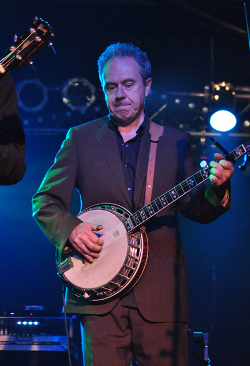


 seamus dubhghaill