seamus dubhghaill

Promoting Irish Culture and History from Little Rock, Arkansas, USA


Leave a comment

President McAleese & Queen Elizabeth II Meet in Belfast

mcaleese-and-queen-elizabeth

President of Ireland Mary McAleese and Queen Elizabeth II shake hands on Northern Ireland soil for the first time on December 9, 2005 — a symbolic milestone following years of peacemaking in this long-disputed British territory.

The British monarch and the Republic of Ireland‘s head of state chat and pose together at Hillsborough Castle, outside Belfast, for an occasion that would have provoked hostility within Northern Ireland’s Protestant majority just a few years earlier. But their trouble-free meeting becomes inevitable once Ireland dropped its territorial claim to Northern Ireland as part of the landmark Good Friday Agreement peace accord of 1998. The visit also fuels speculation the queen could soon make her first official visit to the neighboring Republic of Ireland, where the Irish Republican Army assassinated Lord Louis Mountbatten, the uncle of her husband, Prince Philip, Duke of Edinburgh.

No British monarch has visited the territory of the modern-day Republic of Ireland since George V visited Dublin in 1911, a decade before the island’s partition into a mostly Protestant north that remains within the United Kingdom, and a predominantly Catholic rest of Ireland that gradually gains full independence from Britain.

Camera crews are allowed to film the moment, but not record the sound, when McAleese shakes the queen’s hand at the start of a 20-minute meeting, their fourth since 1998. Previous meetings occurred at Buckingham Palace and on a World War I battlefield site. McAleese later calls it “a very special day for Anglo-Irish relationships” that brings forward the day when the queen will visit the Irish Republic.

McAleese, a Belfast-born Catholic, had made scores of visits to Northern Ireland since being elected to the Irish Republic’s largely symbolic presidency in 1997. As part of her presidential theme of “building bridges,” she regularly invites Protestant groups to her official Dublin mansion and has built impressive diplomatic contacts with northern Protestants.

Before McAleese’s arrival, visits north by an Irish president were rare events that drew public protests from Protestants, who demanded that Ireland remove its territorial claim from its 1937 constitution. The republic’s voters overwhelmingly supported this in a May 1998 referendum, an action completed in December 1999.

The queen has avoided traveling to the Irish Republic, in part, because of security fears following the IRA assassination of Mountbatten in August 1979. He, his daughter-in-law and two teenage boys are killed when the IRA blows up his private boat near his castle in County Sligo. However, Prince Philip and their son, Prince Charles, make several visits to the Irish Republic in the decade following the IRA’s 1994 cease-fire.


Leave a comment

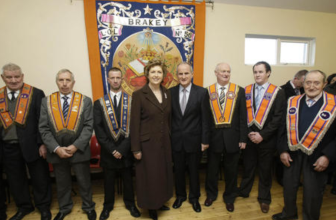
President McAleese Visits Brakey Orange Hall

mcaleese-at-brakey-orange-hallPresident Mary McAleese makes the first official visit by an Irish head of state to an Orange Order hall when she visits Brakey Orange Hall, just outside Bailieborough, County Cavan on November 28, 2008.

Brakey Orange Hall had been destroyed in an arson attack on July 13, 2000, but had since been rebuilt and reopened in 2004. Further extensions and improvements have been made since, with the latest recently completed in time for the occasion.

Approximately 50 local people, many of the men in their orange lapels and other regalia, pack the little hall to honour their guest. Placing the visit in a wider context, McAleese says the “journey of peace-building and peace-making” since the signing of the Belfast Agreement ten years earlier must continue, and calls for a new culture of tolerance and acceptance in both parts of Ireland.

McAleese is welcomed by Cavan County Grand Master Henry Latimer, who praises the financial support for Orange halls in Border counties provided by the Government. He outlines to the President and her husband, Dr. Martin McAleese, the close bond between local communities and Orange halls and the facilities provided for meetings, classes and social events. “Given the widespread nature of such activity, it demonstrates why when halls are damaged, attacked, destroyed or [placed] beyond use for periods of time, the community activity of its related hinterland suffers and is curtailed,” he adds.

McAleese hails the occasion as an example of fresh understanding in relationships between different traditions. “We have taken the first important steps towards ending the bitter culture of ‘either-or,’ of them versus us,” she says. She calls on Irish people everywhere “to build a new culture . . . each accepting that there are different perspectives and practices.”

McAleese praises Latimer as a good Cavan man, a good Irishman and a good Orangeman. The burning of Orange halls, she says, are “intemperate acts of vandalism” which are “a throw-back to another time.”

Appealing for an end to attacks on Orange halls and GAA clubs by arsonists McAleese adds, “I invite them all to stop and think how wonderfully transformed all our lives would be if we were all made as welcome in each other’s homes as I have been made welcome here.”

McAleese receives a bouquet of flowers and a piece of Cavan crystal to mark her visit. She later attends other engagements throughout Cavan.

(From: “President makes first official visit by Irish head of state to an Orange hall” by Dan Keenan, The Irish Times, November 28, 2008)


Leave a comment

Death of Jack Lynch, Politician & Taoiseach of Ireland

jack-lynch

Jack Lynch, Irish politician and Taoiseach of Ireland from 1966 to 1973 and from 1977 to 1979, dies in the Royal Hospital, Donnybrook in Dublin on October 20, 1999.

Lynch is born on August 15, 1917, in Blackpool, on the north side of Cork, County Cork. He is educated at St. Vincent’s Convent on Peacock Lane, and later at the North Monastery Christian Brothers School. He sits his Leaving Certificate in 1936, after which he moves to Dublin and works with the Dublin District Milk Board, before returning to Cork to take up a position in the Circuit Court Office.

Lynch eventually decides on a legal career, is called to the bar (1945), resigns from the civil service, and practices on the Cork circuit. He already enjoys a national reputation as a sports hero having won five All-Ireland medals as a Cork hurler and another as a footballer. He joins Fianna Fáil and wins a seat in Dáil Éireann, the lower house of the Oireachtas, in 1948. He works closely with Éamon de Valera in opposition (1948–51), and de Valera appoints him a parliamentary secretary in 1951–54, minister for the Gaeltacht in 1957, and Minister for Education in 1957–59. When Seán Lemass succeeds de Valera as Taoiseach in 1959, he makes Lynch Minister for Industry and Commerce and in 1965–66 Minister for Finance.

Lemass’s retirement in 1966 causes an internal party conflict over the succession that leads to Lynch’s selection as a compromise candidate, a position he reluctantly accepts. In November of that year, he becomes leader of Fianna Fáil and Taoiseach. In June 1969 he becomes the only Fianna Fáil leader other than de Valera to win an overall majority in a general election. In 1969–1973 Lynch plays an important role when civil unrest leads to the collapse of the government of Northern Ireland and poses a threat to the stability of the Irish state. He fires two cabinet ministers who are suspected of involvement in smuggling arms to the Provisional Irish Republican Army (IRA). He also creates a consensus in Irish party politics on a policy of conciliation and cooperation with the British government in seeking a solution to the Northern Ireland problem based on establishing power-sharing between the unionist majority and the Roman Catholic minority.

In 1972 Lynch wins an 83 percent majority in a referendum on Ireland’s entry into the European Economic Community. On January 1, 1973, Ireland becomes a member. Although he is defeated in the 1973 elections, he again demonstrates his remarkable popularity at the polls in 1977 when Fianna Fáil wins their largest and their last overall majority. In December 1979, however, discouraged by challenges to his authority from party colleagues, he resigns his leadership and soon after retires from politics. He serves on a number of corporate boards after his retirement.

In 1992 Lynch suffers a severe health setback, and in 1993 suffers a stroke in which he nearly loses his sight. Following this he withdraws from public life, preferring to remain at his home with his wife Máirín where he continues to be dogged by ill-health.

Lynch dies in the Royal Hospital, Donnybrook, Dublin on October 20, 1999, at the age of 82. He is honoured with a state funeral which is attended by the President of Ireland Mary McAleese, Taoiseach Bertie Ahern, former Taoisigh John Bruton, Albert Reynolds and Charles Haughey, and various political persons from all parties. The coffin is then flown from Dublin to Cork where a procession through the streets of the city draws some of the biggest crowds in the city’s history. After the Requiem Mass celebrated in his home parish of the Cathedral of St. Mary and St. Anne, Lynch’s friend and political ally, Desmond O’Malley, delivers the graveside oration, paying tribute to Lynch’s sense of decency. He is buried in St. Finbarr’s Cemetery in Cork.


Leave a comment

Birth of Charles Haughey, Taoiseach of Ireland

CREATOR: gd-jpeg v1.0 (using IJG JPEG v62), quality = 90

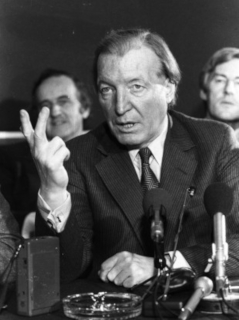
Charles James Haughey, Fianna Fáil leader and Taoiseach of Ireland, is born in Castlebar, County Mayo on September 16, 1925.

Haughey is the third of seven children of Seán Haughey, an officer in the original Irish Republican Army (IRA), and Sarah McWilliams, both natives of Swatragh, County Londonderry. He attends University College Dublin, studying law and accounting. While making a fortune, apparently in real estate, he marries Maureen Lemass, the daughter of future Taoiseach Seán Lemass on September 18, 1951. After several attempts he enters Dáil Éireann (the lower house of the Oireachtas, the Irish parliament) in 1957 as a member of the Fianna Fáil party for the Dublin North-East constituency. He becomes Minister for Justice in 1961 and later Minister for Agriculture and Minister for Finance.

In 1970 Haughey is twice tried for conspiracy to use government funds to procure arms for the outlawed IRA. The first trial is aborted, and he wins acquittal in the second. Dismissed from the government, he remains in the Dáil and gains strong support among his party’s grass roots. When Fianna Fáil is returned to office in 1977, he is made Minister for Health and Minister for Social Welfare. On the resignation of party leader Jack Lynch in 1979, he is elected party leader and becomes Taoiseach. In June 1981 his government falls, but he returns to power briefly in 1982. He becomes Taoiseach again after elections in February 1987, though his government lacks a majority in the Dáil. When Fianna Fáil forms a government with the Progressive Democrats in July 1989, thereby eschewing the party’s traditional rejection of coalition rule, he is made Taoiseach for a fourth time.

Haughey’s first two terms in office are marked by deteriorating relations with Great Britain, a declining economy, and deep divisions within Fianna Fáil. Despite the controversies that plague his government, the charismatic Haughey remains party leader after losing office for a second time in late 1982. During his later terms, he successfully mounts a fiscal austerity program to address Ireland’s financial crisis. In 1992 he resigns and retires after being implicated in a phone tapping scandal of two journalists. He denies the allegations. He remains out of public life until 1997, when an official tribunal of inquiry determines that he had received large sums of money from a prominent businessman while Taoiseach. The Dáil then establishes another tribunal to investigate his financial affairs, and many other irregularities are uncovered. He eventually agrees to pay €6.5 million in back taxes and penalties.

Haughey dies at the age of 80 from prostate cancer, from which he had suffered for a decade, on June 13, 2006, at his home in Kinsealy, County Dublin. He receives a state funeral on June 16. He is buried in St. Fintan’s Cemetery, Sutton, Dublin, following mass at Donnycarney. The then Taoiseach Bertie Ahern delivers the graveside oration. The funeral rites are screened live on RTÉ One and watched by a quarter of a million people. The funeral is attended by President Mary McAleese, the Taoiseach, Bertie Ahern, members of the Oireachtas, many from the world of politics, industry and business. The chief celebrant is Haughey’s brother, Father Eoghan Haughey.


Leave a comment

Irish National Day of Mourning

BERTIE AHERN IRISH RESPONSE TO TERRORIST ATTACK ON UNITED STATES OF AMERICA

The Irish government declares a National Day of Mourning on September 14, 2001. Schools, businesses, and shops are shut down in an unprecedented gesture of sympathy following the attack on the World Trade Center in New York City three days earlier.

Thousands of people queue for hours in front of the United States Embassy in Ballsbridge, Dublin, waiting patiently to sign one of the many books of condolences to be presented to the U.S. government in the aftermath of the attack. At John F. Kennedy’s ancestral home in Dunganstown, County Wexford, the U.S. flag flies at half-mast and the house is closed to visitors.

As it was on the day that Kennedy was assassinated, everyone remembers where they were on September 11. But on September 14 in Ireland, the churches are full and the offices, shops and pubs dark and silent as the country mourns with its American relatives, colleagues and friends.

Bouquets of flowers, teddy bears, candles and messages are left at the Embassy, as thousands stand with heads bowed. The building’s facade is turned into a shrine to those who died in New York, Washington, D.C. and Pennsylvania. There are both tears and applause when 250 firefighters from all over Ireland parade past the Embassy as a mark of respect to the hundreds of firefighters lost in New York. People weep openly as they hear of the casualties and more details emerge of that terrible morning.

The nation prays as industrial and commercial life comes to a halt and offices, government departments and all places of entertainment close for mourning. In every parish and diocese religious services are held, with the biggest, an ecumenical service in Dublin, attended by Taoiseach Bertie Ahern, President Mary McAleese and many other cabinet members. At least 2,000 people attempt to squeeze into St. Mary’s Pro-Cathedral, which holds only 1,500. Outside, a group of U.S. students break into the American national anthem and the crowd falls silent.

The bells of Christ Church Cathedral ring muffled for 90 minutes to mark the occasion, and at 11:00 AM towns and villages fall silent as the people join in a European-wide three minutes of silence. At noon, all trains stop for five minutes, and special services are held in practically every town in the country. In Bray, County Wicklow, so many people show up that the church runs out of communion. A number of people approaching the altar are given a blessing instead.

In Dublin’s universities in the months following the attacks, Irish students who were present in New York at the time are offered free counseling to help them deal with the “nightmares and flashbacks.”

A fund for the families of the victims started by Independent News and Media, which donates the money from the sales of all its newspapers on September 14, reaches more than 120,000 punts. It is given to The American Ireland Fund in the presence of U.S. Ambassador to Ireland, Richard Egan. Money is collected throughout the country for many months.

(From: “Ireland’s National Day of Mourning” by Irish America staff, http://www.irishamerica.com, December/January 2002 | Pictured: Taoisearch Bernie Ahern and Tanaiste Mary Harney with members of the Irish Cabinet sign the book of condolences in the U.S. Embassy in Dublin three days after the terrorist attacks)


Leave a comment

Mikhail Gorbachev Receives Freedom of the City of Dublin

mulcahy-and-gorbachev

Mikhail Gorbachev, the former president of the Soviet Union, becomes the 71st person to receive the Freedom of the City of Dublin at a special meeting in the City Hall on January 9, 2002, following in the footsteps of Pope John Paul II, Nelson Mandela, and members of U2.

“You helped change and enhance the lives of hundreds of millions of people,” the Lord Mayor of Dublin, Cllr. Michael Mulcahy says as he presents the award. “There are few people in the history of the world of whom that can be stated.”

City councillors in their robes assemble for the occasion and the guests include Cardinal Desmond Connell, the Papal Nuncio, Archbishop Giuseppe Lazzarotto, and other members of the diplomatic corps. Gorbachev is also presented with a dove of peace in Waterford Crystal.

In his acceptance speech, the former Communist leader says there have been many events in his life, big and small, joyful and sad. “The event that is happening today in this wonderful hall is very special.”

He says Ireland has taken the right road in emphasising knowledge, education and high technology. He quips that President Mary McAleese had said to him over lunch, “We don’t have any natural resources other than the rain.”

Gorbachev notes that as a Freeman of the City of Dublin he is entitled to graze sheep anywhere in Dublin. He assures his audience he will “buy a flock” to exercise that right. “I have seen some very, very nice places in the Park, near the President’s palace.”

At a news conference in the Mansion House earlier in the day, Gorbachev comes in for sharp questioning from Eoin Ó Murchú, a journalist, who asks “ex-Comrade Gorbachev” if he felt any sense of remorse or guilt when he “stood passively aside” while the Soviet Union was destroyed and ordinary people were reduced to poverty and prostitution. He also queries Gorbachev about his decision to take part in a television commercial for a chain of pizza restaurants.

Ignoring the suggestion that he has demeaned himself by appearing in the television advertisement, Gorbachev replies equally sharply, “My advice to you as a comrade – you used the word ‘comrade’ – is that you too should probably get rid of this kind of ideological straitjacket.”

Gorbachev denies having stood idly by while the USSR was dismantled. Commenting on the Northern Ireland situation he says, “This is one of those processes where people have to make difficult choices. You will see politicians who have a ready-made recipe for everything, in many cases to use force and bombs.”

It was good that, instead of bombing, there was a peace process. Bombing was not a solution and he welcomes the peace efforts being made and the fact that parties are acting “both prudently and responsibly.”

(From The Irish Times, January 10, 2002 | Pictured: Lord Mayor Michael Mulcahy and Mikhail Gorbachev, Doheny & Nesbitt’s Public House, January 8, 2002)


Leave a comment

Birth of Albert Reynolds, Taoiseach & Fianna Fáil Leader

albert-reynolds

Albert Reynolds, politician and businessman, is born in Rooskey, County Roscommon on November 3, 1932. He serves as a Teachta Dála (TD) from 1977 to 2002, Minister for Posts and Telegraphs from 1979 to 1981, Minister for Transport from 1980 to 1981, Minister for Industry and Energy from March 1982 to December 1982, Minister for Industry and Commerce from 1987 to 1988, Minister for Finance from 1988 to 1991, Leader of Fianna Fáil from 1992 to 1994 and as Taoiseach from 1992 to 1994.

Reynolds is educated at Summerhill College in County Sligo and works for a state transport company before succeeding at a variety of entrepreneurial ventures, including promoting dances and owning ballrooms, a pet-food factory, and newspapers. In 1974 he is elected to the Longford County Council as a member of Fianna Fáil. He enters Dáil Éireann, lower house of the Oireachtas, the Irish parliament, in 1977 as a member representing the Longford-Westmeath parliamentary constituency and becomes Minister for Posts and Telegraphs in the Fianna Fáil government of Charles Haughey (1979–81). He is subsequently Minister of Industry and Commerce (1987–88) and Minister for Finance (1988–91) in Haughey’s third and fourth governments. He breaks with Haughey in December 1991 and succeeds him as leader of Fianna Fáil and as Taoiseach in February 1992.

The Fianna Fáil–Progressive Democrats coalition that Reynolds inherits breaks up in November 1992 but, after the general election later that month, he surprises many observers by forming a new coalition government with the Labour Party in January 1993. He plays a significant part in bringing about a ceasefire between the Irish Republican Army (IRA) and unionist paramilitary groups in Northern Ireland in 1994, but he is less effective in maintaining his governing coalition. When this government founders in November 1994, he resigns as Taoiseach and as leader of Fianna Fáil, though he remains acting prime minister until a new government is formed the following month. He unsuccessfully seeks his party’s nomination as a candidate for the presidency of Ireland in 1997. He retires from public life in 2002.

In December 2013, it is revealed by his son that Reynolds is in the final stages of Alzheimer’s disease. Albert Reynolds dies on August 21, 2014. The last politician to visit him is John Major. His funeral is held at Church of the Sacred Heart, in Donnybrook on August 25, 2014. Attendees include President Michael D. Higgins, Taoiseach Enda Kenny, former British Prime Minister John Major, former Social Democratic and Labour Party (SDLP) leader and Nobel Prize winner John Hume, Sinn Féin President Gerry Adams, Secretary of State for Northern Ireland Theresa Villiers, former President of Ireland Mary McAleese, former Taoiseach Liam Cosgrave, Archbishop of Dublin Diarmuid Martin and the Lord Mayor of Dublin Christy Burke. An unexpected visitor from overseas is the frail but vigorous Jean Kennedy Smith, former United States Ambassador to Ireland, who is the last surviving sibling of John Fitzgerald Kennedy. Reynolds is buried at Shanganagh Cemetery with full military honours.


Leave a comment

Death of Dan Keating, Last Survivor of the Irish War of Independence

dan-keating

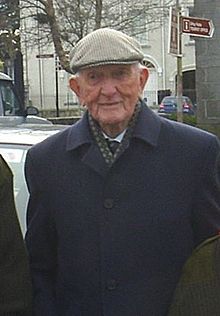
Daniel “Dan” Keating, lifelong Irish republican and patron of Republican Sinn Féin, dies in Knockbrack, County Kerry on October 2, 2007. At the time of his death, he is Ireland’s oldest man and the last surviving veteran of the Irish War of Independence.

Keating is born on January 2, 1902, in Castlemaine, County Kerry. He receives his education in local schools, including the Christian Brothers’ School in Tralee. Tralee is also the place where Keating does his apprenticeship. During this time, he becomes a skillful Gaelic football player in his native Kerry.

Keating joins Fianna Éireann in 1918. In 1920, during the Irish War of Independence, he joins the Boherbee B Company, 3rd Battalion, 1st Kerry Brigade, Irish Republican Army (IRA). He first brings a firearm of a Liverpool Irish soldier of the British Army into a public house in which he works. On April 21, 1921, Royal Irish Constabulary (RIC) Constable Denis O’Loughlin is shot dead in Knightly’s public house in Tralee. Keating, Jimmy O’Connor and Percy Hanafin are suspected of the killing and are forced to go on the run. On June 1, Keating is involved in an ambush between Castlemaine and Milltown which claims the lives of five RIC men. On July 10, a day before the truce between the IRA and British forces, his unit is involved in a gun battle with the British Army near Castleisland. This confrontation results in the deaths of four British soldiers and five IRA volunteers.

Keating opposes the 1921 Anglo-Irish Treaty and fights on the anti-treaty side in the Irish Civil War. He is involved in operations in counties Kerry, Limerick, and Tipperary, before his flying column is arrested by Free State Forces. Keating spends seven months in Portlaoise Prison and the Curragh prison before being released in March 1923.

Keating remains an IRA member for a long time after the Civil War. He is arrested several times during the 1930s on various charges. He is active in London during the 1939/1940 IRA bombing campaign.

In 1933, Keating is involved in an attempt to assassinate the leader of the Irish Blueshirts, Eoin O’Duffy, during a visit to County Kerry. The attack is to happen at Ballyseedy, where Free State forces had carried out the Ballyseedy Massacre during the Irish Civil War. However, the plot fails when the person travelling with O’Duffy refuses to divulge in which car O’Duffy would be riding.

Keating subsequently returns to Dublin and works as a barman in several public houses. He retires and returns to his native Kerry in 1978, living out the rest of his life with relatives in Knockbrack. Until his death he refuses to accept a state pension because he considers the 26-county Republic of Ireland an illegitimate state which usurps the 1916 Irish Republic.

“All the talk you hear these days is of peace. But there will never be peace until the people of the 32 counties elect one parliament without British interference.”

In 2002, Keating refuses the state’s standard €2,500 award to centenarians from President Mary McAleese. After former IRA volunteer George Harrison dies in November 2004, Keating becomes patron of Republican Sinn Féin until his own death. At the time of his death at the age of 105 on October 2, 2007, he is the oldest man in Ireland. He is buried in Kiltallagh Cemetery, Castlemaine.


Leave a comment

Death of Mick Lally, Stage, Film & Television Actor

mick-lally

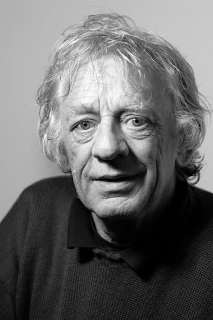
Michael “Mick” Lally, Irish stage, film and television actor, dies in Dublin on August 31, 2010. He departs from a teaching career for acting during the 1970s. Though best known in Ireland for his role as Miley Byrne in the television soap Glenroe, his stage career spans several decades, and he is involved in feature films such as Alexander and the Academy Award-nominated The Secret of Kells. Many reports cite him as one of Ireland’s finest and most recognisable actors.

Born on November 10, 1945, and reared in the Gaeltacht village of Toormakeady, County Mayo, Lally is the eldest of a family of seven children. He goes to the local national school in Toormakeady and then to St. Mary’s College, Galway. After studying at University College Galway, he teaches history and Irish for six years in Archbishop McHale College in Tuam from 1969 to 1975 but quits teaching to pursue his career as a stage actor.

Lally begins his acting career with Taibhdhearc na Gaillimhe, Ireland’s national Irish language theatre, and is a founding member of the Druid Theatre Company. He receives an Irish Times/ESB Theatre Award Nomination for Best Actor for his role in Druid’s production of The Dead School. He also becomes a member of the Field Day Theatre Company, and stars in the company’s 1980 premiere of Brian Friel‘s play Translations. He first plays at the Abbey Theatre in 1977 in a production of Wild Oats and goes on to perform in many other Abbey productions.

In 1982, Lally stars in the TV series The Ballroom of Romance alongside Brenda Fricker. From 1983 he plays the role of Miley Byrne in the RTÉ soap Glenroe, reprising the character that he played earlier in Bracken in 1978. In 1979, he wins a Jacob’s Award for his performance as Miley in Bracken. He also has some musical success when “The By-road to Glenroe” goes to the top of the Irish charts in 1990. He is also involved in voice-over work, including a noted advertisement for Kilmeaden Cheese during the 1990s. Other TV appearances include roles in Tales of Kinvarna, The Year of the French and Ballykissangel.

In 1994, Lally plays the character Hugh in The Secret of Roan Inish, and in 1995 portrays Dan Hogan in the film adaptation of Maeve Binchy‘s Circle of Friends. Other film roles included Poitín, Our Boys, The Outcasts, A Man of No Importance and others. In later years, he provides the voice of Brother Aidan in the Academy Award-nominated The Secret of Kells, an animated film directed by Tomm Moore.

Lally appears in several TV advertisements encouraging elderly people to “release the equity tied up in their homes” during the Celtic Tiger.

Mick Lally dies on the morning of August 31, 2010, after a short stay in the hospital. The cause of death is reported as heart failure, arising from an underlying emphysema condition. His funeral takes place in Dublin on September 2, 2010. The Irish Examiner comments that the “nation has lost one of its favourite uncles.” Personalities from TV, film, theatre and politics attend, while President of Ireland Mary McAleese sends a letter and Lally receives a standing ovation at the end.


Leave a comment

Death of John Patrick Wilson, Fianna Fáil Politician

john-wilson

John Patrick Wilson, Fianna Fáil politician who serves as Tánaiste from 1990 to 1993, dies in Beaumont, Dublin on July 9, 2007, the day after his 84th birthday. He also serves as Minister for Defence and Minister for the Gaeltacht (1992-1993), Minister for the Marine (1989-1992), Minister for Tourism and Transport (1987-1989), Minister for Communications (March 1987), Minister for Posts and Telegraphs (March-December 1982), Minister for Education (1977-1981) and Teachta Dála (TD) for Cavan (1973-1992).

Wilson is born in Kilcogy, County Cavan on July 8, 1923. He is educated at St. Mel’s College in Longford, the University of London and the National University of Ireland. He graduates with a Master of Arts in Classics and a Higher Diploma in Education. He is a secondary school teacher at Saint Eunan’s College and Gonzaga College and also a university lecturer at University College, Dublin (UCD) before he becomes involved in politics. He is also a Gaelic footballer for Cavan GAA and wins two All-Ireland Senior Football Championship medals with the team, one in 1947 at the Polo Grounds in New York City. He is a member of the teachers’ trade union, the Association of Secondary Teachers Ireland and serves as president of the association.

Wilson is first elected to Dáil Éireann at the 1973 general election for the Cavan constituency, for Cavan–Monaghan in 1977 and at each subsequent election until his retirement after the dissolution of the 26th Dáil Éireann in 1992. He is succeeded as Fianna Fáil TD for Cavan-Monaghan by his special advisor, Brendan Smith, who goes on to serve as Minister for Agriculture, Fisheries and Food from 2008 to 2011. In 1977 Jack Lynch appoints Wilson to Cabinet as Minister for Education. He goes on to serve in each Fianna Fáil government until his retirement, serving in the governments of Jack Lynch, Charles Haughey and Albert Reynolds.

In 1990 Wilson challenges Brian Lenihan for the Fianna Fáil nomination for the 1990 presidential election. Lenihan wins the nomination but fails to be elected President and is also sacked from the government. Wilson is then appointed Tánaiste. He remains in the cabinet until retirement in 1993. Although the 26th Dáil Éireann is dissolved in December 1992, he serves in Government until the new government takes office.

Following his retirement from politics, Wilson is appointed the Commissioner of the Independent Commission for the Location of Victims’ Remains by Bertie Ahern. This position entails involvement with members of the Provisional Irish Republican Army (IRA) to assist in finding the bodies of the disappeared who were murdered by the Provisional IRA during The Troubles.

John Wilson dies at St. James Hospital, Dublin on July 9, 2007, one day after his 84th birthday. His funeral takes place at the Good Shepherd Church at Churchtown, Dublin. President Mary McAleese is one of a number of prominent figures among the mourners, while Taoiseach Bertie Ahern is represented by his Aide-de-Camp.