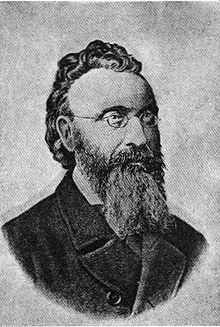
Anthony Malone, Irish lawyer and politician, is born on December 5, 1700, the eldest son of Richard Malone of Baronston, County Westmeath, and Marcella, daughter of Redmond Molady. Edmund Malone is his nephew, and a younger brother, Richard Malone (1706–1759), is MP for Fore from 1741.
Malone makes a successful career as a lawyer. From 1727 to 1760, and again from 1769 to 1776, he represents the county of Westmeath, and from 1761 to 1768 the borough of Castlemartyr, in the Irish parliament. In 1740 he is appointed Serjeant-at-law, but is dismissed from office in 1754 for opposing the claim of the crown to dispose of unappropriated revenue. In 1757 he is made Chancellor of the Exchequer of Ireland, but his attitude in council in regard to the Money Bill of 1761 leads to his again being removed from office. His treatment is regarded as too severe by William Pitt, 1st Earl of Chatham, and Malone, who draws a distinction between advice offered in council and his conduct in parliament, introduces the measure as chairman of the committee of supply. He is shortly afterwards granted a patent of precedence at the bar, but is charged with having sold his political principles for money.
Malone supports John Monck Mason‘s bill for enabling Roman Catholics to invest money in mortgages on land. In 1762 he is appointed, with Sir Richard Aston, to try the Whiteboys of Munster. They agree in ascribing the rural violence to local and individual grievances.
Malone dies at the age of 75 on May 8, 1776. At one time, a marble bust of him adorned Baronston House. By his will, made in July 1774, he leaves all his estates in the counties of Westmeath, Roscommon, Longford, Cavan, and Dublin to his nephew, Richard Malone, 1st Baron Sunderlin as he became, eldest son of his brother Edmund. On his death in 1816 the right of succession is disputed.
The Representation of the People Act 1918, passed on February 6, 1918, extends the franchise in parliamentary elections, also known as the right to vote, to women aged 30 and over who reside in the constituency or occupied land or premises with a rateable value above £5, or whose husbands do.
In March 1918, the Liberal Party MP for Keighley dies, causing a by-election on April 26. There is doubt as to whether women are eligible to stand for parliament. Nina Boyle makes known her intention to stand as a candidate for the Women’s Freedom League at Keighley and, if refused, to take the matter to the courts for a definitive ruling. After some consideration, the returning officer states that he is prepared to accept her nomination, thus establishing a precedent for women candidates. However, he rules her nomination papers invalid on other grounds: one of the signatories to her nomination is not on the electoral roll and another lives outside the constituency. The Lords of Appeal in Ordinary are asked to consider the matter and conclude that the Great Reform Act 1832 had specifically banned women from standing as parliamentary candidates and the Representation of the People Act had not changed that.
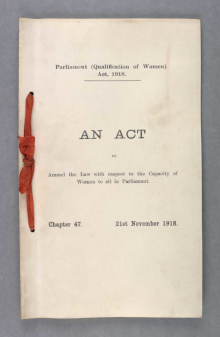
Parliament hurriedly passes the Parliament (Qualification of Women) Act in time to enable women to stand in the general election of December 1918. The act consists of only 27 operative words: “A woman shall not be disqualified by sex or marriage for being elected to or sitting or voting as a Member of the Commons House of Parliament.”
The first woman to take her seat in the House of Commons is Nancy Astor on December 1, 1919. She is elected as a Coalition Conservative MP for Plymouth Sutton on November 28, 1919, taking the seat her husband had vacated.
Mowlam is a lecturer in the Political Science Department at the University of Wisconsin–Milwaukee in 1977 and at Florida State University in Tallahassee from 1977 to 1979. During her time in Tallahassee, someone breaks into her apartment. She suspects that it is Ted Bundy, the serial killer and rapist who is thought to have murdered at least 35 young women and attacked several others. She returns to England in 1979 to take up an appointment at the University of Newcastle upon Tyne.
Having failed to win selection for the 1983 general election, Mowlam is selected as Labour candidate for the safe seat of Redcar after James Tinn stands down. She takes the seat in the 1987 general election, becoming the Labour spokesperson on Northern Ireland later that year. Together with Shadow Chancellor John Smith, she is one of the architects of Labour’s “Prawn Cocktail Offensive” dedicated to reassuring the UK’s financial sector about Labour’s financial rectitude.
Mowlam joins the Shadow Cabinet when John Smith becomes leader of the Labour Party in 1992, holding the title of Shadow Secretary of State for National Heritage. During this time, she antagonises both monarchists and republicans by calling for Buckingham Palace to be demolished and replaced by a “modern” palace built at public expense. Later, her willingness to speak her mind, often without regard to the consequences, is seen as her greatest strength by her supporters.
Following Smith’s death in 1994, Mowlam, alongside Peter Kilfoyle, becomes a principal organiser of Tony Blair‘s campaign for the Labour leadership. After his victory, Blair makes her Shadow Secretary of State for Northern Ireland. She initially resists being appointed to the position, preferring an economic portfolio, but, after accepting it, she throws her weight into the job.
Mowlam oversees the negotiations which lead to the 1998 Good Friday Agreement. She is successful in helping to restore an Irish Republican Army (IRA) ceasefire and including Sinn Féin in multi-party talks about the future of Northern Ireland. In an attempt to persuade the Ulster loyalists to participate in the peace process, she pays an unprecedented and potentially dangerous visit to loyalist prisoners in HM Prison Maze, meeting convicted murderers face-to-face and unaccompanied.
Mowlam witnesses the Good Friday Agreement signing in 1998, which leads to the temporary establishment of a devolved power-sharing Northern Ireland Assembly. However, an increasingly difficult relationship with Unionist parties means her role in the talks is ultimately taken over by Tony Blair and his staff.
Mowlam’s deteriorating relationship with Unionists is the key reason she is replaced by Peter Mandelson as Northern Ireland Secretary in October 1999. Her move to the relatively lowly position of Minister for the Cabinet Office possibly involves other factors, notably her health and her popularity. On September 4, 2000, she announces her intention to retire from Parliament and relinquishes her seat at the 2001 general election.
Five months before the 1997 general election, Mowlam is diagnosed with a brain tumor, a fact that she tries to keep private. She appears to suffer from balance problems as a result of her radiotherapy. According to her husband, she falls on July 30, 2005, receiving head injuries and never regaining consciousness. Her living will, in which she asks not to be resuscitated, is honoured. On August 12, 2005, Mowlan is moved to Pilgrims Hospice in Canterbury, Kent, where she dies seven days later, on August 19, 2005, aged 55.
Mowlam is an atheist and is cremated in Sittingbourne on September 1, 2005 at a non-religious service conducted by Reverend Richard Coles, formerly of the 1980s band The Communards. Half of her ashes were scattered at Hillsborough Castle, the Secretary of State for Northern Ireland’s official residence, and the other half in her former parliamentary constituency of Redcar.
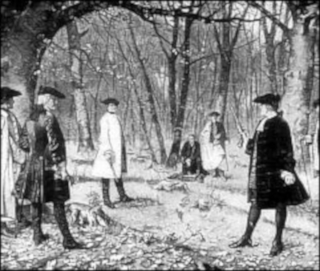
In a duel at Mullingar on October 17, 1738, Arthur Rochfort, Member of Parliament (MP) for County Westmeath, shoots Dillon Pollard Hampson in the stomach. Hampson, a former Junior Grand Warden of the Grand Lodge of Irish Freemasons, recovers.
In 18th century Ireland if one considers himself to be a gentleman and is insulted by someone of similar status, one doesn’t take it lying down or file a lawsuit in court. The preferred method to avenge the insult is to challenge the insulter to a duel and attempt to shoot or stab him to death.
One of the more quarrelsome gentlemen of the first half of the 18th century is Arthur Rochfort, a Westmeath grandee whose family had occupied land around Mullingar since the 13th century. The town of Rochfortbridge is named after them.
Rochfort is a justice of the peace, a man who exercises considerable power over the lesser orders from the bench. In 1737 he is challenged to a duel by one Thomas Nugent. Nugent’s beef is that Rochfort had (properly) jailed one of his servants for poaching and carrying arms. Nothing comes of the challenge because the authorities get wind of it and prosecute Nugent before he can do any damage. They were not going to accept having one of their magistrates shot up by an argumentative aristocrat.
Rochfort has another quarrel the following year on October 17, this one with an influential member of the Freemasons, Dillon Hampson Pollard. In the shootout that follows Rochfort hits his opponent in the stomach. Fortunately, Pollard recovers although he dies of natural causes two years later.
Rochfort’s own end was quite ignominious. As it happens he is the proud owner of two irascible, litigious and obnoxious brothers, Robert and George. Robert goes on to become the 1st Earl of Belvedere and builds Belvedere House outside Mullingar.
The first issue of The Nation, an Irish nationalist weekly newspaper, is published on October 15, 1842. It is printed at 12 Trinity Street, Dublin until January 6, 1844. The paper is later published at 4 D’Olier Street from July 13, 1844, until July 28, 1848, when the issue for the following day is seized and the paper suppressed. It is published again in Middle Abbey Street on its revival in September 1849.
John Mitchel joins the staff of The Nation in the autumn of 1845. On Mitchel’s frequent trips from Banbridge, County Down to Dublin, he had come in contact with the Repeal members who gathered about The Nation office and in the spring of 1843, he becomes a member of the Repeal Association. For the next two years he writes political and historical articles and reviews for The Nation. He covers a wide range of subjects, including the Irish Potato Famine, on which he contributes some influential articles which attract significant attention.
Mitchel resigns his position as lead writer for The Nation in 1847 because he comes to regard as “absolutely necessary a more vigorous policy against the English Government than that which William Smith O’Brien, Charles Gavan Duffy and other Young Ireland leaders were willing to pursue.” Upon his resignation he starts his own paper, The United Irishman.
Women also write for The Nation and publish under pseudonyms such as Speranza (Jane Elgee, Lady Wilde, Oscar Wilde‘s mother), Eithne (Marie Thompson) and Eva (Mary Eva Kelly, who would marry Kevin Izod O’Doherty.
The role played by some of its key figures in the paper in the ill-fated Young Ireland Rebellion of 1848 cement the paper’s reputation as the voice of Irish radicalism. Dillon is a central figure in the revolt and is sentenced to death, the sentence later commuted. He flees Ireland, escaping first to France and, eventually, to the United States, where he serves the New York Bar.
The Nation continues to be published until 1900, when it merges with the Irish Weekly Independent. Later political figures associated with the paper included Timothy Daniel Sullivan and J.J. Clancy.
Parnell dies of pneumonia at half-past eleven on the night of October 6 at his residence at 10 Walsingham Terrace, Aldrington, near Brighton, England. He dies in the arms of his wife Katherine whom he had married just five months earlier.
Prior to the funeral, Parnell’s body lay in state for several hours and his death is the primary topic of conversation around Dublin. The belief that his demise would close the chasm in the Irish ranks is no longer tenable. His death makes it too wide even to be bridged. His old opponents may have felt inclined to forget and forgive, but this spirit is crushed almost before it is born, and his old adherents are simply ferocious in their enmity.
The city is astir at an unusually early hour, and there is a crowd of thousands in and around the Westland Row Station before seven o’clock. In front, as a guard of honor, stands a body of the Gaelic Athletic Association, armed with camans, around which are bound crape and green ribbon. It is nearly eight o’clock when Parnell’s body is placed in a hearse drawn by four black horses. The Gaels march in front. Thousands join the cortège, which includes several bands and fife corps.
Though an Anglican, Parnell’s funeral at the Irish National nondenominational Glasnevin Cemetery in Dublin is attended by more than 200,000 people. His notability is such that his gravestone of unhewn Wicklow granite, erected in 1940, reads only “Parnell.”
Parnell is buried amid warring elements and in the presence of an immense assemblage. As a scene of great but suppressed excitement, and of still greater impressiveness, the funeral and its surroundings will never be forgotten by those who witness it, and it will long furnish a landmark in history for Ireland.
Steele is born in Dublin on March 12, 1672, to Richard Steele, an attorney, and Elinor Symes (née Sheyles). He is largely raised by his uncle and aunt, Henry Gascoigne and Lady Katherine Mildmay. A member of the Protestant gentry, he is educated at Charterhouse School, where he first meets Addison. After starting at Christ Church, Oxford, he goes on to Merton College, Oxford, then joins the Life Guards of the Household Cavalry in order to support King William‘s wars against France. He is commissioned in 1697 and rises to the rank of captain within two years. He leaves the army in 1705, perhaps due to the death of the 34th Foot’s commanding officer, Robert Lucas, 3rd Baron Lucas, which limits his opportunities of promotion.
Steele is a member of the Kit-Kat Club. Both Steele and Addison become closely associated with Child’s Coffee-house in St. Paul’s Churchyard.
Steele’s first published work, The Christian Hero (1701), attempts to point out the differences between perceived and actual masculinity. Written while he is serving in the army, it expresses his idea of a pamphlet of moral instruction.
Steele writes a comedy that same year titled The Funeral. This play meets with wide success and is performed at Theatre Royal, Drury Lane, bringing him to the attention of the King and the Whig party. Next, he writes The Lying Lover, one of the first sentimental comedies, but a failure on stage. In 1705, he writes The Tender Husband with contributions from Addison, and later that year writes the prologue to The Mistake, by John Vanbrugh, also an important member of the Whig Kit-Kat Club with Addison and Steele.
The Tatler, Steele’s first journal, first appears on April 12, 1709, and appears three times a week. He writes this periodical under the pseudonym Isaac Bickerstaff and gives Bickerstaff an entire, fully developed personality. The Tatler is closed down to avoid the complications of running a Whig publication that had come under Tory attack.
While at Drury Lane, Steele writes and directs the sentimental comedyThe Conscious Lovers, which is an immediate hit. However, he falls out with Addison and with the administration over the Peerage Bill (1719), and in 1724 he retires to his second wife’s homeland of Wales. He remains in Carmarthen after his wife’s death, dying there on September 1, 1729. He is buried there at St. Peter’s Church. During restoration of the church in 2000, his skull is discovered in a lead casket, having previously been accidentally disinterred during the 1870s.
(Pictured: Portrait of Sir Richard Steele by Jonathan Richardson)
The Intermediate Education Act, enacted on August 16, 1878, grants female students the right to participate in public competitive examinations, take university degrees and to enter into careers and professions.
From the early 1870s there had been a growing demand in Ireland for a competitive examinations system which would allow Catholics in particular to enter for the newly created jobs in the Civil Service and for careers in the professions. In response to this pressure, the Irish Intermediate Education Bill is introduced to parliament in 1878. It provides an Examining Board with an annual sum of £32,500 per annum which would cover money prizes for pupils and results fees for schools. Students with the highest marks can gain valuable exhibitions worth up to £50. However, these provisions only apply to boys.
The Bill is in its final stages in parliament, when Isabella Tod of the North of Ireland Women’s Suffrage Society, arrives with a small delegation of women backed by a handful of Irish MPs, to demand that girls should also be included in the provisions of the Bill. Fortunately, attitudes among a majority of English MPs are favourable to the inclusion of girls in the Bill. The most influential of these MPs is William Ewart Gladstone, the leader of the Liberal Party, who believes the proposal to admit women to the benefits of the Bill is reasonable and fair. Although not in favour of giving women the vote, he is prepared to admit that “we have on the whole done rather less than justice to women as compared to men” when it comes to education.
Charles Henry Meldon, MP for Kildare, strongly objects to what he calls “the victory” which the inclusion of girls would give to the advocates of women’s rights, “whose object was not that there should be a limited measure dealing specially with the education of women, but that the same education should be given to girls as given to men.”
Richard O’Shaughnessy, the only Home Rule MP on Isabella Tod’s delegation, assures Meldon that the question at stake is not one of women’s rights but simply of their education and that the object of the amendment “was nothing more nor less than to educate the women of Ireland that they may be better able to discharge their duties as daughters, wives and mothers.”
So, despite the strong objections of most Irish Home Rule MPs, girls are included in the Intermediate Examination Act. Isabella Tod at a meeting in Dublin to promote the extension of the franchise to women thanks O’Shaughnessy and James Stansfield for their support but declares, “We could not help feeling how easy our task would have been if each of these members had owed some votes to women and felt a distinct responsibility to them.”
There is unease felt about public competitive examinations for girls in Ireland. Some believe that the competitive idea should be carefully excluded from the examinations for women. The ladies present at the suffrage meeting are also urged to press the government to avoid publishing the names of girls in order of merit.
This attitude helps explain why it is felt that girls are not ready to compete on an equal basis with boys. In December 1878, the Intermediate Board decides that girls will compete among themselves for the money prizes. A money prize is offered for every ten pupils who pass. These prizes are, therefore, allocated proportionately according to the numbers of boys and of girls who enter for the examinations. During the first twenty years of the Intermediate examinations, three quarters of the entrants are boys and only one quarter are girls. Girls’ schools, especially convent schools, are particularly handicapped because they have few teachers who know Latin or Greek and extra marks are allotted for other traditional boys’ subjects such as mathematics.
The Intermediate examinations have three levels: Junior, Middle and Senior Grades with strict age limits of under 16, 17 and 18 years of age respectively. This represents a problem for girls’ schools since many girls come late to second level schools, being often 14 or 15 years of age.
The fact that public opinion in Ireland is at first generally against such examinations for girls and that many girls have neither the opportunity nor the means to take immediate advantage of the Act, does not alter its crucial importance as a catalyst for changing the role of women in Irish society.
(Pictured: Isabella Tod, Museums and Galleries of Northern Ireland, content from Discovering Women in Irish History, http://womeninhistory.scoilnet.ie)
Broderick sits in the Irish House of Commons for Midleton from 1692 to 1693, for County Cork from 1695 to 1699 and again from 1703 to 1713, and for Midleton again from 1715 to 1727. He is appointed to the Privy Council of Ireland on May 10, 1695. He is removed on July 17, 1711, but reappointed on September 30, 1714.
Local laws have to be adjusted, ergo the ‘Light Locomotives (Ireland) Bill’ is passed on March 27, 1903. Kildare and other local councils draw attention to their areas, while Queen’s County (now County Laois) declares that every facility will be given and the roads placed at the disposal of motorists during the proposed race. Eventually Kildare is chosen, partly on the grounds that the straightness of the roads will be a safety benefit. As a compliment to Ireland the British team chooses to race in Shamrock green which thus becomes known as British racing green, although the winning Napier of 1902 had been painted Olive green.
There is considerable public concern about safety after the 1901 Paris-Bordeaux Rally, in which at least eight people had been killed, and severe crashes during the May 24, 1903 Paris-Madrid race where more than 200 cars competed over a distance of 800 miles but which had to be halted at Bordeaux because there had been so many fatalities. To allay these fears, the 1903 race is held over a closed course which is carefully prepared for the event, and is marshaled by 7,000 police officers assisted by troops and club stewards, with strict instructions to keep spectators off the roads and away from corners. The route consists of two loops that comprise a figure of eight, the first being a 52-mile loop that includes Kilcullen, the Curragh, Kildare, Monasterevin, Ballydavis (Port Laoise), Stradbally and Athy, followed by a 40-mile loop through Castledermot, Carlow, and Athy again. The race starts at the Ballyshannon cross-roads near Calverstown.
The official timekeeper of the race is T. H. Woolen of the Automobile Club of Great Britain and Ireland. Ninety one chronographs for timing the race are supplied by the Anglo-Swiss firm Stauffer Son & Co. of La Chaux-de-Fonds and London. Competitors are started at seven-minute intervals and have to follow bicycles through the “control zones” in each town. The 328-mile race is won by the famous Belgian Camille Jenatzy, driving a Mercedes in German colours.