seamus dubhghaill

Promoting Irish Culture and History from Little Rock, Arkansas, USA


Leave a comment

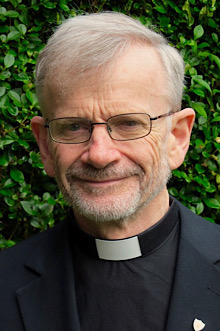
Birth of Alan McGuckian, Bishop of Down and Connor

Alexander Aloysius “Alan” McGuckianSJ, the 33rd Bishop of Down and Connor, is born on February 25, 1953, in CloughmillsCounty Antrim, Northern Ireland.

McGuckian is the youngest of six children to Brian McGuckian and his wife Pauline (née McKenna). He is named after his uncle, also Alexander Aloysius McGuckian, who dies five month before he is born. Yet another uncle, Daniel McGuckian, is a priest of the Diocese of Down and Connor and serves as parish priest of Cushendun and then Randalstown until his death in 1980. His father is a successful pig farmer who, alongside his brothers, develops the world’s biggest pig farm.

Two of McGuckian’s brothers are also Jesuit priests, while another brother is a businessman. Both of his sisters predecease him.

McGuckian attends primary school in Cloughmills and secondary school at St. MacNissi’s College, before beginning studies in Irish language and scholastic philosophy at Queen’s University, Belfast (QUB) in 1971, where he is a near-contemporary of future brother bishop Dónal McKeown. He first visits Ranafast, County Donegal, in 1968, and has since become a regular visitor to the Donegal Gaeltacht.

After one year in Belfast, McGuckian enters the Jesuit novitiate at Manresa House in Clontarf, Dublin, during which time he completes a Bachelor of Arts in Latin and Spanish from University College Dublin (UCD) between 1974 and 1977, a Bachelor of Philosophy from Milltown Institute of Theology and Philosophy between 1977 and 1979, and a Master of Divinity and a Licentiate of Sacred Theology from Regis College, Toronto, between 1981 and 1985. He subsequently completes a Master of Arts in Irish translation from Queen’s University, Belfast.

McGuckian is ordained to the priesthood on June 22, 1984, and makes his final profession on February 15, 1997.

Following ordination, McGuckian spends four years as a teacher in Clongowes Wood College and vocations director for the Jesuits, before undertaking a six month period of spiritual renewal in southern India and serving in a shanty town in Quezon CityPhilippines.

McGuckian returns to Ireland in 1992, where he is appointed director of the Jesuit Communication Centre, during which he develops Sacred Space, a website which allows people to pray at their computer, in 1999, and Catholic news service CatholicIreland.net in 2004.

McGuckian also serves as editor of both An Timire and Foilseacháin Ábhair Spioradálta, later translating the autobiography of Ignatius of Loyola into Irish under the title Scéal an Oilithrigh. He also co-authors the drama 1912 – A Hundred Years On with Presbyterian historian Philip Orr in 2011, which looks at the experiences of the Ulster Covenant and the wider Home Rule movement from both nationalist and unionist perspectives.

McGuckian also serves as chaplain to many of the Gaelscoileanna in the Diocese of Down and Connor, and subsequently as chaplain to Ulster University campuses in Belfast and Jordanstown. Following the publication of the Living Church Report, which outlines the findings of a synodal process within the diocese, he is appointed by Noël Treanor in 2012 to set up and lead the Living Church Office, whose aim is to realise the hopes and aspirations expressed in the report and subsequently in the upcoming diocesan pastoral plan.

McGuckian is also appointed diocesan director of formation for the permanent diaconate in 2014, and also works during his directorship of the Living Church Office to establish pastoral communities across the diocese, through fostering a culture of co-responsibility for the mission of the Church between clergy and lay people.

McGuckian is appointed Bishop-elect of Raphoe by Pope Francis on June 9, 2017. His appointment makes him the first member of the Jesuits to be appointed a bishop in Ireland.

McGuckian is consecrated by the Archbishop of Armagh and Primate of All IrelandEamon Martin, on August 6, 2017, in the Cathedral of St. Eunan and St. ColumbaLetterkenny. He uses the name and title Alan Mac Eochagáin, C. Í. when ministering in the Gaeltacht.

In an interview with The Irish Catholic in September 2019, McGuckian says that having a home is as fundamental as the right to life and education, and that the Government must be “pushed” to enshrine a right to housing in the Constitution of Ireland. He also joins a number of church leaders in the West of Ireland on September 16, 2021, in calling on the Irish government to offer reparations to homeowners whose properties are affected by defective concrete blocks.

In an interview with The Irish Catholic in February 2021, McGuckian takes issue with the view held by political leaders that public worship is deemed to be “non-essential” during the COVID-19 pandemic in the Republic of Ireland. Quoting Pope Francis, who states that “the right to worship must be respected, protected and defended by civil authorities like the right to bodily and physical health,” he expresses a need to let political leaders know that public worship is not only central, but also “utterly essential.”

Following a fatal explosion in Creeslough, County Donegal, on October 7, 2022, McGuckian refers to the explosion as “the darkest day in Donegal,” adding that the local community is “living through a nightmare of shock and horror.” He also concelebrates at the Funeral Masses of each of the victims, describing the fact that the parish church would be holding two funerals in the space of three hours as “surreal.”

McGuckian is appointed Bishop of Down and Connor by Pope Francis on February 2, 2024. In his first address following his appointment, he expresses his hope that the restoring of the Northern Ireland Executive will help the most vulnerable in society.


Leave a comment

Death of Francis Browne, Irish Jesuit & Photographer

Francis Patrick Mary Browne, distinguished Irish Jesuit and a prolific photographer, dies in Dublin on July 7, 1960. His best-known photographs are those of the RMS Titanic and its passengers and crew taken shortly before its sinking in 1912. He is decorated as a military chaplain during World War I.

Browne is born to a wealthy family in 1880 at Buxton House, Cork, County Cork, the youngest of the eight children of James and Brigid (née Hegarty) Browne. His mother is the niece of William Hegarty, Lord Mayor of Cork, and a cousin of Sir Daniel Hegarty, the first Lord Mayor of Cork. She dies of puerperal fever eight days after his birth. After the death of his father in a swimming accident at Crosshaven on September 2, 1889, he is raised and supported by his uncle, Robert Browne, Bishop of Cloyne, who buys him his first camera shortly before the younger man embarks on a tour of Europe in 1897.

Browne spends his formative years at Bower Convent, Athlone (1888–91), Belvedere College (1891–92), Christian Brothers College, Cork (1892–1893), St. Vincent’s Castleknock College (1893–97), graduating in 1897. He goes on the aforementioned tour of Europe, where he begins taking photographs.

Upon his return to Ireland, Browne joins the Jesuits and spends two years in the novitiate at St. Stanislaus College, Tullabeg, County Offaly. He attends the Royal University of Ireland, Dublin, where he is a classmate of James Joyce, who features him as Mr. Browne the Jesuit in Finnegans Wake. In 1909, he visits Rome with his uncle and brother, a bishop and priest respectively, during which they have a private audience with Pope Pius X with the Pope allowing Browne to take his photograph. He studies theology at the Milltown Institute of Theology and Philosophy in Dublin from 1911 to 1916.

In April 1912 Browne receives a present from his uncle: a ticket for the maiden voyage of RMS Titanic from Southampton, England, to Queenstown, Ireland, via Cherbourg, France. He travels to Southampton via Liverpool and London, boarding the RMS Titanic on the afternoon of April 10, 1912. He is booked in cabin A-37 on the Promenade Deck. He takes dozens of photographs of life aboard RMS Titanic on that day and the next morning. He captures the last known images of many crew and passengers, including captain Edward J. Smith, gymnasium manager T. W. McCawley, engineer William Parr, Major Archibald Butt, writer Jacques Futrelle and numerous third-class passengers whose names are unknown.

During his voyage on the RMS Titanic, Browne is befriended by an American millionaire couple who are seated at his table in the liner’s first-class dining saloon. They offer to pay his way to New York and back in return for him spending the voyage to New York in their company. He telegraphs his superior, requesting permission, but the reply is an unambiguous “GET OFF THAT SHIP – PROVINCIAL.”

Browne leaves the RMS Titanic when she docks in Queenstown and returns to Dublin to continue his theological studies. When the news of the ship’s sinking reaches him, he realises that his photos would be of great interest, and he negotiates their sale to various newspapers and news cartels. They appear in publications around the world. The Eastman Kodak Company subsequently gives him free film for life, and he often contributes to The Kodak Magazine. It is unknown what type of camera he used to shoot the famous photos aboard RMS Titanic.

After his ordination on July 31, 1915, Browne completes his theological studies. In 1916, he is sent to Europe to join the Irish Guards as a chaplain. He serves with the Guards until the spring of 1920, including service at the Battle of the Somme and at Locre, Wytschaete, Messines Ridge, Paschendaele, Ypres, Amiens and Arras in Flanders.

Browne is wounded five times during the war, once severely in a gas attack. He is awarded the Military Cross (MC) on June 4, 1917 “for distinguished service in the field”. He is awarded a bar to his MC on February 18, 1918. He is also awarded the Croix de Guerre by France.

Browne takes many photographs during his time in Europe. One, which he calls “Watch on the Rhine,” is considered a classic image of World War I. He assembles a collection of his war photographs in an album named after his most famous photograph and distributes copies to his colleagues in the Guards.

After the war, Browne returns to Dublin, where, in 1922, he is appointed superior of Gardiner Street Church in Dublin. Ill health dogs him, however, and in 1924 it is thought that he would recover more quickly in warmer climes. He is sent on an extended visit to Australia. He takes his camera along, photographing life aboard ship and in Cape Town, South Africa, where he breaks his voyage.

On his way back to Ireland, Browne visits Ceylon, Aden, Suez, Saloniki, Naples, Toulon, Gibraltar, Algeciras, and Lisbon, taking photographs of local life and events at every stop. It is estimated that he takes more than 42,000 photographs during his life.

Browne resumes office as the Superior of Saint Francis Xavier Church, Dublin, upon his return. In 1929 he is appointed to the Retreats and Mission staff of the Irish Jesuits. His work entails preaching at missions and religious retreats all over Ireland. As most of this work is necessarily performed on evenings and Sundays, he has considerable time to indulge in his hobby during the daytime. He takes photographs of many parishes and towns in Ireland, and also photographs in London and East Anglia during his ecclesiastical travels to England.

Browne dies in Dublin on July 7, 1960, and is buried in the Jesuit plot in Glasnevin Cemetery in Dublin. His negatives lay forgotten for 25 years after his death. They are found by chance in 1985 when Father Edward E. O’Donnell discovers them in a large metal trunk, once belonging to Browne, in the Irish Jesuit archives. “When the trunk was opened in 1985, people compared him to the greats like Henri Cartier-Bresson and Robert Doisneau, but his work predated theirs by decades,” archivist David Davison later recalls.

O’Donnell brings the negatives to the attention of several publishers. The RMS Titanic photographs are published in 1997 as Father Browne’s Titanic Album with text by E. E. O’Donnell (Fr. Eddie O’Donnell). In all, at least 25 volumes of Browne’s photographs have now been published. The features editor of The Sunday Times of London calls this “the photographic equivalent to the discovery of the Dead Sea Scrolls.” Many of these books have become best-sellers, the latest being the Centenary Edition of Father Browne’s Titanic Album in 2012 by Messenger Publications, Dublin.

The Irish province of the Jesuits, the owner of the negatives pursuant to Browne’s will, engage photographic restoration specialists David and Edwin Davison to preserve and catalogue the fragile and unstable negatives. The Davisons make copies of every negative and are in the process of transferring every usable image to a digital format for future generations. The Davisons later acquire the rights to the photographs and still own the rights as Davison & Associates.