seamus dubhghaill

Promoting Irish Culture and History from Little Rock, Arkansas, USA


Leave a comment

Birth of Máire Mhac an tSaoi, Diplomat, Poet & Memoirist

Máire Mhac an tSaoi, Irish civil service diplomat, writer of Modernist poetry in the Dingle Peninsula dialect of Munster Irish, a memoirist, and a highly important figure within modern literature in Irish, is born Máire MacEntee in Dublin on April 4, 1922. Along with Seán Ó Ríordáin and Máirtín Ó Direáin, she is, in the words of Louis de Paor, “one of a trinity of poets who revolutionised Irish language poetry in the 1940s and 50s.” She has a lifelong passion for the Irish language and is one of the leading authorities on Munster Irish.

Mhac an tSaoi’s father, Seán MacEntee, is born in Belfast and is a veteran of the Irish Volunteers during the 1916 Easter Rising and the subsequent Irish War of Independence, and of the Anti-Treaty Irish Republican Army (IRA) during the Irish Civil War. He is also a founding member of Fianna Fáil, a long-serving TD and Tánaiste in the Dáil. Her mother, Margaret Browne (or de Brún) of County Tipperary, is also an Irish republican and a distinguished Celticist who teaches courses in Irish literature in the Irish language at Alexandra College and University College Dublin (UCD).

Mhac an tSaoi is influenced by her stays in the Dingle Peninsula in County Kerry with her uncle, Monsignor De Brún, at his parish of Dún Chaoin. Monsignor de Brún, similarly to his sister, is a distinguished linguist and Celticist, the literary translator of Homer, Dante Alighieri, Sophocles, and Jean Racine into Modern Irish, “and one of the most distinguished literary figures of his time.”

Mhac an tSaoi studies Modern Languages and Celtic Studies at UCD, before going to further research at the Dublin Institute for Advanced Studies and at the University of Paris. She writes the famous work of Christian poetry in Munster Irish, Oíche Nollag (“Christmas Eve”), when she is only 15-years of age.

Mhac an tSaoi spends two years studying in post-war Paris (1945–47) before joining the Irish diplomatic service and is working at the Irish embassy in Madrid when she commits herself to writing poetry in Irish following her discovery of the works of Federico García Lorca.

She remains a prolific poet and is credited, along with Seán Ó Ríordáin and Máirtín Ó Direáin, with reintroducing literary modernism into Irish literature in the Irish language, where it had been dormant since the 1916 execution of Patrick Pearse, in the years and decades following World War II. Her poetry draws on the vernacular spoken by the native Irish speakers of the Munster Gaeltacht of West Kerry during the first half of the twentieth century. Formally, she draws on the song metres of the oral tradition and on older models from the earlier literary tradition. In later work, she explores looser verse forms but continues to draw on the remembered dialect of Dún Chaoin and on a scholarly knowledge of the older literature.

Mhac an tSaoi is elected to Aosdána in 1996 but resigns in 1997 after Francis Stuart is elevated to the position of Saoi. She had voted against Stuart because of his role as an Abwehr spy and in radio propaganda broadcasts from Nazi Germany aimed at neutral Ireland during World War II.

In 2001, she publishes an award-winning novel A Bhean Óg Ón… about the relationship between the 17th-century County Kerry poet and Irish clan chief Piaras Feiritéar and Meg Russell, the woman for whom he composed some of the greatest works of love poetry ever written in the Irish language.

Her poems Jack and An Bhean Óg Ón are both featured on the Leaving Certificate Irish course, at both Higher and Ordinary Levels, from 2006 to 2010. Her literary translation of Rainer Maria Rilke‘s Duino Elegies from Austrian German into the Irish language is published in 2013.

Mhac an tSaoi marries Irish politician, writer, and historian Conor Cruise O’Brien in a Roman Catholic wedding Mass in Dublin in 1962. This makes her the stepmother to O’Brien’s children from his 1939 civil marriage. Her mother is deeply embarrassed by the exposure of the relationship and staunchly opposes the match, as she has long been a close friend of O’Brien’s Presbyterian first wife. Despite their subsequent marriage, the exposure of their extramarital relationship ends Mhac an tSaoi’s diplomatic and civil service career. They later adopted two children, Patrick and Margaret.

She then lives with her husband in New York City, where he becomes a professor at New York University (NYU) after the Congo Crisis destroys O’Brien’s diplomatic career. He is long blamed by the United Nations for the escalation of the Congo Crisis.

Mhac an tSaoi and her husband, who is then serving as Albert Schweitzer Professor of the Humanities at NYU, are both staunchly opposed to the Vietnam War. They are both arrested by the New York City Police Department (NYPD), along with Dr. Benjamin Spock and Beat Generation poet Allen Ginsberg, during an allegedly violent protest outside a United States military induction centre in New York City on December 5, 1967. Afterward, during an interview with The New York Times, she accuses the NYPD of using excessive force both during and after her husband’s arrest.

She later returns with O’Brien to live in Dublin, where she attends another protest rally against the Vietnam War along O’Connell Street in 1969.

Mhac an tSaoi dies peacefully at the age of 99 on October 16, 2021, at home where she has been cared for by her daughter Margaret.

2 Comments

Birth of Thomas MacGreevy, Poet & Former Director of the National Gallery of Ireland

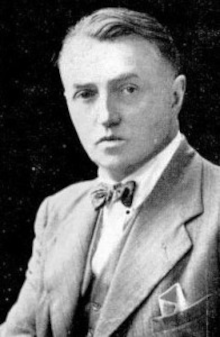
Thomas MacGreevy, a pivotal figure in the history of Irish literary modernism, is born on October 26, 1893, in Tarbert, County Kerry. A poet, he is also director of the National Gallery of Ireland from 1950 to 1963 and serves on the first Irish Arts Council (An Chomhairle Ealaíon).

MacGreevy is the son of a policeman and a primary school teacher. At age 16, he joins the British Civil Service as a boy clerk.

At the outbreak of World War I, MacGreevy is promoted to an intelligence post with the Admiralty. He enlists in 1916 and sees active service at the Ypres Salient and the Somme, being wounded twice. After the war, he studies at Trinity College, Dublin, in whose library his papers are now held. He then becomes involved in various library organisations, begins publishing articles in Irish periodicals, and writes his first poems.

In 1924, MacGreevy is first introduced to James Joyce in Paris. The following year he moves to London, where he meets T. S. Eliot and begins writing for The Criterion and other magazines. He also begins publishing his poetry.

In 1927, MacGreevy moves to Paris to teach English at the École normale supérieure. Here he meets Samuel Beckett and resumes his friendship with Joyce. His essay The Catholic Element in Work In Progress is published in 1929 in Our Exagmination Round His Factification for Incamination of Work In Progress, a book intended to help promote Joyce’s Finnegans Wake. Along with Beckett, he is one of those who signs the Poetry is Vertical manifesto which appears in issue 21 of transition. In 1931, he produces critical studies of both Eliot and Richard Aldington.

In 1934, Poems is published in London and New York City. The work shows that MacGreevy has absorbed the lessons of Imagism and of The Waste Land, but also demonstrates that he has brought something of his own to these influences. The book is admired by Wallace Stevens and the two poets become regular correspondents.

Unfortunately, although MacGreevy continues to write poetry, this is the only collection published in his lifetime. Since his death there have been two Collected Poems issued, one in 1971 and an edited edition collecting his published and unpublished poetry published twenty years later.

In 1929 MacGreevy begins working at Formes, a journal of the fine arts. He also publishes a translation of Paul Valéry‘s Introduction à la méthode de Léonard de Vinci as Introduction to the Method of Leonardo da Vinci. In the mid-1930s, he moves back to London and earns his living lecturing at the National Gallery there.

From 1938 to 1940 MacGreevy is the chief art critic for The Studio. He publishes several books on art and artists, including Jack B. Yeats: An Appreciation and an Interpretation and Pictures in the Irish National Gallery (both 1945), and Nicolas Poussin (1960).

MacGreevy is a lifelong Roman Catholic. His faith informs both his poetry and his professional life. On returning to Dublin during World War II, he writes for both the Father Mathew Record and the Capuchin Annual and joins the editorial board of the latter.

MacGreevy is director of the National Gallery of Ireland from 1950–63. Although to many he seems a surprising choice, his latent talents as an administrator are brought to the fore. He is instrumental in bringing to the gallery such ideas as a lecture series and in-house restoration, which are commonplace abroad. It is through his persistent requests to the government that an extension to the gallery is approved. Unfortunately, the demands of the position take its toll. He has two heart attacks in 1956 and 1957 and ill health forces him to retire in 1963.

During his last years MacGreevy begins writing poetry again. He also begins his memoirs, which he never completes. He is admitted to the Portobello Nursing Home in Dublin for what is to be a minor operation in March 1967. He dies from heart failure on Saint Patrick’s Day eve, March 16, 1967.


Leave a comment

Birth of Denis Devlin, Poet & Diplomat

denis-devlin

Denis Devlin, poet, translator, and career diplomat, is born in Greenock, Scotland of Irish parents on April 15, 1908. Along with Samuel Beckett and Brian Coffey, he is one of the generation of Irish modernist poets to emerge at the end of the 1920s.

Devlin and his family return to live in Dublin in 1918. He studies at Belvedere College and, from 1926, as a seminarian for the Roman Catholic priesthood at Clonliffe College. As part of his studies he attends a degree course in modern languages at University College Dublin (UCD), where he meets and befriends Brian Coffey. Together they publish a joint collection, Poems, in 1930.

In 1927, Devlin abandons the priesthood and leaves Clonliffe. He graduates with his BA from UCD in 1930 and spends that summer on the Blasket Islands to improve his spoken Irish. Between 1930 and 1933, he studies literature at the University of Munich and the Sorbonne in Paris, meeting, amongst others, Beckett and Thomas MacGreevy. He then returns to UCD to complete his MA thesis on Michel de Montaigne.

Devlin joins the Irish Diplomatic Service in 1935 and spends a number of years in Rome, New York and Washington, D.C.. During this time he meets the French poet Saint-John Perse, and the Americans Allen Tate and Robert Penn Warren. He goes on to publish a translation of Exile and Other Poems by Saint-John Perse, and Tate and Warren edit his posthumous Selected Poems.

Since his death on August 21, 1959, there have been two Collected Poems published; the first in 1964 is edited by Coffey and the second in 1989 by J.C.C. Mays.

Devlin’s personal papers are held in University College Dublin Archives. His niece goes on to become writer Denyse Woods.


Leave a comment

Death of Denis Devlin, Poet & Diplomat

denis-devlin

Denis Devlin, one of the major figures and influences of modern and modernist Irish poetry, dies in Dublin on August 21, 1959. Along with Samuel Beckett and Brian Coffey, he is one of the generation of Irish modernist poets to emerge at the end of the 1920s. He is also a career diplomat.

Devlin is born in Greenock, Scotland of Irish parents on April 15, 1908. His family returns to live in Dublin in 1918. He studies at Belvedere College and, from 1926, as a seminarian for the Roman Catholic priesthood at Clonliffe College. As part of his studies, he attends a degree course in modern languages at University College Dublin (UCD), where he meets and befriends Brian Coffey. Together they publish a joint collection, Poems, in 1930.

In 1927, Devlin abandons the priesthood and leaves Clonliffe College. He graduates from UCD with his BA in 1930 and spends that summer on the Blasket Islands to improve his spoken Irish. Between 1930 and 1933, he studies literature at Ludwig Maximilian University of Munich and the University of Paris, meeting, amongst others, Beckett and Thomas MacGreevy. He then returns to UCD to complete his MA thesis on Michael de Montaigne.

Devlin joins the Irish Diplomatic Service in 1935 and spends a number of years in Rome, New York and Washington, D.C. During this time, he meets the French poet Saint-John Perse, and the Americans Allen Tate and Robert Penn Warren. He goes on to publish a translation of Exile and Other Poems by Saint-John Perse, and Tate and Warren edit his posthumous Selected Poems.

Denis Devlin dies suddenly at the age of 51 in Dublin on August 21, 1959. Since his death, there have been two Collected Poems published; the first in 1964 is edited by Coffey and the second in 1989 by J.C.C. Mays.

Devlin’s personal papers are held in University College Dublin Archives.