According to author Tony Geraghty, British authorities learn of the first horizontal mortar produced by the Provisional IRA, the Mark 12, in 1985. The weapon is recovered after an incident in which three IRA volunteers are killed by security forces. The launcher suffers from the limitation of a heavy recoil, which makes the handling of the device difficult. One British intelligence report says that while the launcher is quite crude, the grenade is made of “a number of components which require a high standard of machine manufacturing.” The projectile has a warhead of 40 ounces (1.1 kg) of Semtex and TNT. It is used basically as a standoff weapon, in which the grenade is lofted over the security bases’ fences or against armoured vehicles. The mortar has an effective range of 70 yards, within which it can pierce an armour plate or destroy a sangar.
Later in the conflict the IRA develops the Mark 16, a new version with improved armour-piercing capabilities, usually referred to as a “projected recoilless improvised grenade.”
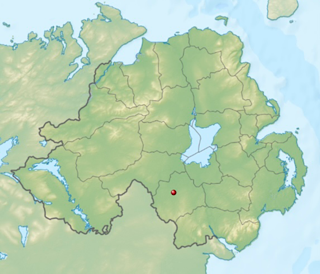
On the evening of March 1, 1991, a two-vehicle mobile patrol belonging to the 2nd Battalion, Ulster Defence Regiment is approaching the western outskirts of Armagh on Killylea road. When driving along Mullacreevie housing estate, the two Land Rovers are held by temporary traffic lights at roadworks. Unknown to them, an IRA unit from the North Armagh Brigade has set a Mark 12 launcher on a hump of earth in the front garden of a house beside the lights. After the incident, IRA sources describe the device as a “directional missile.”
When the first Land Rover pulls off after the lights turn green, the mortar ‘s improvised grenade is fired by command-wire from the backyard of the house by IRA members concealed behind a digger. The projectile hits the coachwork, blowing away both sides and the roof of the military vehicle. Witnesses report that the Land Rover was “ripped apart.” The soldiers inside are immediately assisted by fellow UDR members, who help to drag the wounded out of the shattered wreckage.
Private Paul Sutcliffe, a 32-year-old Englishman who has served for four years with the Duke of Wellington’s Regiment before becoming a UDR soldier in 1989, dies on the spot. The driver, Private Roger Love, a 20-year-old from Portadown, succumbs to his injuries three days later. Two other servicemen are maimed by the explosion. One of them suffers severe chest wounds, and loses the use of one arm; the other has a leg amputated below the knee.
The ambush at Mullacreevie is the first time that a Mark 12 mortar is used successfully.
Roger Love’s family donates the deceased soldier’s kidneys after they authorize the medical staff to disconnect the life-supporting machine. A UDR party attends Paul Sutcliffe’s funeral at his hometown of Barrowford, Lancashire, the only UDR military funeral held outside Northern Ireland. His ashes are scattered in the Mourne Mountains.
Another horizontal mortar attack on a UDR mobile patrol takes place on November 6, when Private Michael Boxall is killed in Bellaghy, County Londonderry, after the Land Rover he is riding on is hit by a Mark 12 grenade. A fellow soldier loses one eye in the attack. Incidentally, constable Erik Clarke, another Englishmen who had also served in the British Army in Northern Ireland from 1973 to 1978, is killed that year by the same kind of weapon while riding on a combined Royal Ulster Constabulary (RUC) – British Army mobile patrol in an early Mark 12 attack. The incident takes place on September 17 at Swatragh, County Londonderry. Clarke had married a local woman and later joined the RUC.
The Mark 12 mortar is used by the IRA until 1993, when it is superseded by the Mark 16. The Mark 16 is fired on eleven occasions by the IRA from late 1993 to early 1994.
By early 1978, the British Army forces involved in Operation Banner have recently replaced their aging Bell H-13 Sioux helicopters for the more versatile Aérospatiale Gazelles. The introduction of the new machines increases the area covered on a reconnaissancesortie as well as the improved time spent in airborne missions. In the same period, the Provisional IRA receives its first consignment of M60 machine guns from the Middle East, which are displayed by masked volunteers during a Bloody Sunday commemoration in Derry. Airborne operations are crucial for the British presence along the border, especially in south County Armagh, where the level of IRA activity means that every supply and soldier has to be ferried in and out of their bases by helicopter since 1975.
The Royal Green Jackets have been in South Armagh since December 1977, and have already seen some action. Just a few days after arrival, two mortar rounds hit the C Company base at Forkhill, injuring a number of soldiers. In the aftermath of the attack, two Royal Ulster Constabulary (RUC) officers are wounded by a booby trap while recovering the lorry where the mortar tubes are mounted. Two days later, a patrol near the border suffers a bomb and gun attack, leaving the commanding sergeant with severe head wounds. The sergeant is picked up from the scene by helicopter. He is later invalided from the British Army as a result of his injuries.
On January 17, 1978, a Royal Green Jackets observation post deployed around the village of Jonesborough begins to take heavy fire from the “March Wall,” which draws parallel with the Irish border to the east, along the Dromad woods. The soldiers return fire, but the short distance to the border and the open ground prevents them from advancing.
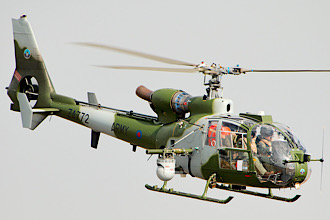
The Commanding Officer, Lieutenant Colonel Ian Corden-Lloyd, along with Captain Philip Schofield and Sergeant Ives fly from the battalion base at Bessbrook Mill to assess the situation and provide information to the troops. They are escorted by a Scout helicopter with an Airborne Reaction Force (ARF), comprising a medic and three soldiers from the 2nd Battalion Light Infantry. While hovering over the scene of the engagement, the Aérospatiale Gazelle receives a barrage of 7.62 mm tracer rounds. The pilot loses control of the aircraft during a turn at high speed to avoid the stream of fire. The Aérospatiale Gazelle hits a wall and crashes in a field, some 2 km from Jonesborough. According to the crew and passengers of the Scout, the Aérospatiale Gazelle hits the ground twice after losing power, with its rotor blades trashing into the soil following the second impact, and then cartwheels across the field. The Scout lands the ARF while still under IRA fire. The soldiers rush to the wrecked helicopter, some 100 metres away from the site of the initial crash.
Corden-Lloyd is killed and the other two passengers are wounded. The machine comes to rest on its right side. The pilot remains trapped inside the wreckage, but he survives thanks to his helmet. The IRA later claim they had shot at the helicopter with an M60 machine gun. The IRA unit vanishes into the Dromad woods to the Republic of Ireland. Some Gardaí witness the attack from the other side of the border.
The gun battle and Aérospatiale Gazelle shootdown is displaced from the headlines by the deaths of twelve civilians in the La Mon restaurant bombing on the same day, some of whom are burned to death. Initially the British Army downplays the IRA’s claim as published by An Phoblacht, that the helicopter was shot down, on the basis that no hits were found on the wreckage, but finally they acknowledged that the IRA action had caused the crash.
The death of Corden-Lloyd, a former Special Air Service officer, is deeply regretted by the British Army, who regarded him as promising. He is awarded a posthumous mentioned in despatches “in recognition of gallant and distinguished service in Northern Ireland.” In 1973, Irish republicans had accused Corden-Lloyd and his subordinates of brutality against Belfast Catholics during an earlier tour of the Royal Green Jackets in 1971, at the time of Operation Demetrius.
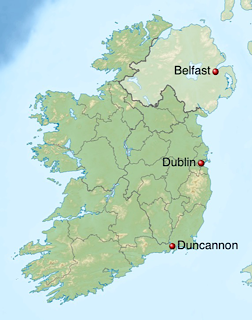
At the outbreak of the Irish Rebellion of 1641, most of south-eastern Ireland falls to the Catholic insurgents. Roughly 1,000 rebels blockade Duncannon, which is heavily fortified and contains an English garrison of about 300 men. Around 150 of the English troops are killed in forays against the Irish at nearby Redmond’s Hall, but without siege artillery, or expertise in siege warfare, the rebels are unable to take Duncannon.
Hostilities continue throughout 1642, as the Irish, now organised as the Irish Confederacy raid the town’s hinterland. As in much of Ireland, the conflict is bitter. In one incident, Laurence Esmonde, 1st Baron Esmonde, the Royalist commander, hangs 16 Irish prisoners who have been taken at nearby Ramsgrange. In response, the Irish execute 18 English prisoners whom they have been holding.
In 1643, because of his need for troops to fight in the English Civil War, Charles I signs a ceasefire with the Irish Confederates. As a result, hostilities between Duncannon and the Catholic-held surrounding area are suspended.
However, in 1644, the English garrison of Cork, under Murrough O’Brien, 1st Earl of Inchiquin, unhappy with the Royalist truce with the Irish Confederates, declares for the English Parliament, who are to remain hostile to Irish Catholic forces throughout the 1640s. Esmonde, under pressure from elements of his garrison, also changes to the side of Parliament and effectively re-declares war on the Catholic Confederates. His motives are unclear: though he is a Protestant convert, the Esmonde family are Anglo-IrishRoman Catholics, and he owes his entire advancement to the Crown.
Duncannon is a strategically important town for two reasons. Firstly, it has formidable defences. Secondly and more importantly, its guns overlook the sea route to Waterford and New Ross, two of the most important Catholic-held towns and also ports at which the Confederates receive military aid from Catholic Europe.
Needing to keep this channel open and also fearing the presence of an English garrison deep in their territory, the Confederates’ Supreme Council in Kilkenny despatches Thomas Preston, general of their Leinster Army, to take Duncannon in January 1645. Preston has at his disposal 1,300 men, four cannons and a mortar. The mortar, the first of its kind to be used in Ireland has been donated by Spain the previous year and is commanded by a French military engineer named Nicholas La Loue. La Loue had served with Preston in Flanders and is chief of engineering in the Leinster Army.
Duncannon possesses formidable defences. For one thing, it is located on a peninsula and can only be approached from the north, the other three sides jutting out into the sea. Just off the town are docked four Parliamentarian ships, which are supplying Duncannon with food and reinforcements. Secondly, it possesse two lines of fortifications, the outer line being a more modern low deep rampart protected by a dry ditch and the inner wall being a medieval curtain wall, complete with three towers. However, it has two grave weaknesses, first, it is overlooked by a hill to the north, from which an attacker can fire into the town and, secondly, the water supply is located outside the walls.
Preston arrives at Duncannon on January 20 and proceeds to construct a ring of trenches which cut off Duncannon on its landward side. From the hill that overlooks the town to the north, his guns are able to fire on a squadron of four Parliamentarian ships that are docked off Duncannon and providing the town with supplies. The flagship, the Great Louis, is badly damaged, its mast wrecked by cannon fire, and it takes several more hits from the mortar as it tries to get away. The ship sinks in deep water, drowning its crew and 200 soldiers who are on board.
Having cut off Duncannon’s supply from the sea, Preston proceeds to dig saps closer to the walls, the ultimate aim being to bring his cannon close enough to the walls in order to blast a breach and open the way for an assault. His engineers also dig a mine underneath one of the town’s bastions. All the while, the town’s defenders are kept under a bombardment by the mortar and, as the Confederate troops get closer to the walls, by sharpshooters. On March 12, one such sniper kills the fort’s second in command, one Captain Lurcan, who is hit in the head by a bullet.
On March 16, by which time the Irish trenches are “within pistol shot of the walls,” Preston orders the mine to be exploded, opening a breach in Duncannon’s outer walls. The Irish infantry then assault the town, but are beaten off with some losses. The following day, Saint Patricks Day, Preston tries again and this time his troops succeed in taking the town’s outer, more modern walls but are stopped at Duncannon’s inner, medieval ramparts. They succeed in occupying one of the town’s towers for an hour before being beaten back. Geoffrey Baron, a Confederate politician, who keeps a diary of the siege, reports that 24 Irish soldiers are killed in the two assaults.
At this point, Preston summons Esmonde to surrender, before he has to “proceed to extremities.” This is a delicate threat, implying that if the town falls to an assault, its defenders will be put to the sword – as is customary in contemporary siege warfare. Esmonde is also advised to surrender by the Parliamentarian vice admiral, William Smith, who is anchored offshore with seven ships, but cannot break through to relieve the town. In a letter that reaches Esmonde on March 11, Smith warns him that “if the rebels take the fort by storming it, they will undoubtedly put you all to death…you should agree with thy adversary while thou art in the way.” Esmond has Smith’s letter publicly read to his troops after the assaults of March 16-17 to discourage those who favour holding out.
Alongside the risk of massacre, the English garrison is also very low on gunpowder and water. The town’s only source of fresh water, a well, is behind the Confederate siege lines.
In light of these facts, Esmonde formally surrenders Duncannon to Preston on March 18. The Confederates take possession of the town but its garrison is allowed to march away to Youghal, which is in Protestant hands. However, they have to leave behind the town’s 18 artillery pieces. Esmonde himself dies a feways after the end of the siege. Preston goes on to briefly besiege Youghal, but bad weather, a lack of supplies and squabbling with James Tuchet, 3rd Earl of Castlehaven, the Confederate Munster general, puts an end to his campaign for the winter.
The siege is of importance in that it reopens the sea route into Waterford and eliminates a hostile English garrison in Confederate territory. Preston, who had for many years been the Spanish military governor of Leuven, is highly experienced in siege warfare and his conduct of the siege draws widespread praise. Not only does he take the town, but he does so at a relatively low cost. Sixty-seven Confederate soldiers die in the siege, of whom roughly 30 die of disease. Given that the campaign is conducted in mid-winter, in an age when disease routinely kills many more soldiers than combat, this represents a considerable logistical achievement on the part of the Irish general.
The Great Lewis, the Parliamentarian ship sunk during the siege, is rediscovered in 1999 and raised in 2004.
The battle consists of ten days of fighting in the countryside around Kilmallock in County Limerick, in which the National Army of the Irish Free State, advancing south from Limerick city, find their path blocked by anti-Treaty IRA troops, dug into a number of villages at Bruff, Bruree and Patrickswell. The fighting end with the retreat of the anti-Treaty fighters and the occupation of Kilmallock by Free State forces.
The prelude to the battle is the fall of Limerick city to Free State forces. The Republican forces in the city under Liam Deasy withdraw from their positions after a week of fighting and concentrate in Kilmallock and the nearby towns of Bruff and Bruree. The Free State forces, advancing south from the city, find their path blocked by the Republicans dug in at the three hilltop towns.
The National Army’s attempt to break through this position produces the only “line battle” of the war with the two sides facing each other along clear front-lines. The Kilmallock-Bruff-Bruree triangle sees some of the war’s most intense fighting.
Whereas in the fighting in Dublin, Limerick and Waterford, Free State troops equipped with artillery overcome Anti-Treaty resistance relatively easily, at Kilmallock they have a much harder time. The main reason for this is that the Free State troops, most of whom are new recruits, are facing some of the best of the IRA forces without an advantage in numbers or firepower. General Eoin O’Duffy complains of shortage of arms and ammunition. He estimates that while his forces have about 1,300 rifles, the Republicans could muster over 2,000. He is also critical of the quality of the troops at his disposal, whom he describes as, “a disgruntled, undisciplined and cowardly crowd.”
The Republicans know this and are confident of success. Nevertheless, the Republican commanders have their own issues with logistical support and lack of co-operation between forces from different counties. Deasy’s command includes Volunteers from counties Limerick itself, Cork and Kerry, all of whom have their own commanders. They have three improvised armoured cars, some mortars and heavy machine guns but no artillery.
O’Duffy draws up plans for the advance on Kilmallock with the assistance of his second-in-command Major GeneralW. R. E. Murphy who had been a lieutenant colonel in World War I. His experience in the trenches has a major effect on his approach – pre-disposing him to cautious advances and use of trenches for cover.
The Republican forces have the better of the first clashes. On Sunday, July 23, Free State forces take Bruff and begin their advance on Kilmallock, but are twice beaten back by determined Republican resistance. The following day, the Republicans manage to retake Bruff in a counter-attack, taking 76 prisoners. As a result of this setback, O’Duffy calls off the advance for the time being and waits for reinforcements.
National Army forces quickly retake Bruff after reinforcements arrive. However, things get worse for the National Army as the week goes on. They make slow progress in taking the Republican strongpoints, and their casualties also mount. On Tuesday, July 25, a unit of the Dublin Guard under Tom Flood is ambushed on a narrow road. They fight their way clear, but only after losing four men. Three more Free State soldiers are killed two days later. On July 30, Major General Murphy launches an attack to take Bruree. The Dublin Guards attack the town from the southeast, supported by armoured cars and an 18-pound field gun. The Republicans hold out for five hours until Free State artillery is brought into action. At least 13 Free State soldiers and nine Anti-Treaty fighters are killed in the action and more are wounded before the Free State troops secure Bruree.
The Republican commander, Deasy, knows how important Bruree is to the defence of Kilmallock and draws up plans to recapture the town using three armoured cars, trench mortars and machine guns. On August 2, Republicans capture Patrickswell south of Limerick. The armoured cars then attack Bruree, taking Free State forces by surprise. One car attacks Commandant Flood’s headquarters at the Railway Hotel. The Commandant and his men manage to escape out the back of the building under the cover of Lewis gun fire. The second armoured car rams the front door of another post in the school house, which persuades the twenty-five troops inside to surrender.
However, when Free State reinforcements, along with armoured cars arrive, the Republican counter-attack stalls. The Free State reinforcements are led by Commandant General Seamus Hogan, who personally leads his forces, riding in the armoured car nicknamed “The Customs House.” Having failed to secure the surrender of the town, Republican forces retreat.
Having held Bruree against a Republican counterattack, Free State forces prepare to capture Kilmallock itself, but anticipate there will be heavy fighting. Republican Adjutant General Con Moloney comments on August 2, “Up to yesterday we have had the best of the operations there [the Kilmallock area]. There will, I fear, be a big change there now as the enemy have been reinforced very considerably.” In the 3rd Western Division area they have all but disbanded, unwilling to fight Free Staters, destroy roads, and now discouraged by the Catholic church.
On Thursday, August 3, a force of 2,000 Free State troops, backed up by armoured cars and artillery, advance on Kilmallock from Bruree, Dromin and Bulgaden. Seven hundred troops arrive the next day with an armoured car and a field gun. By Saturday, the town is surrounded by Free State forces. The Dublin Guard are also on hand to prevent Republican forces from escaping. Three miles away, Free State artillery is deployed and shells Republican forces on Kilmallock Hill and Quarry Hill. The two hills are soon controlled by Free State forces.
The National Army has, therefore, assembled sufficient force to smother resistance at Kilmallock. They are still, however, expecting hard fighting before they take the town. To their surprise, when the Free State troops enter the town, they encounter only light resistance from a Republican rearguard (volunteers from Cork). Most of the Republican troops have already abandoned their positions and retreated to Charleville.
They departed not because the Free State troops are stronger, but because they have been outflanked by Free State seaborne landings on the coasts of County Kerry and County Cork on August 2 and 8 respectively. The landings in Cork and Kerry force Commandant General Deasy to release units from this area to return home to their own areas. Although the landings in Cork occur after the retreat from Kilmallock, the subsequent loss of brigades from Cork adds to Commandant General Deasy’s problems. The final phase of the fighting in County Limerick comes when the Free State advance south is held up at Newcastle West. Another day of heavy fighting ensues in which the National Army troops have to bring up armoured cars and artillery to dislodge the Republicans, who reportedly lose up to 12 men before they retreat in the direction of Cork.
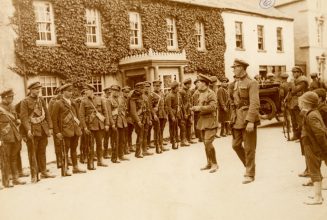
(Pictured: National Army troops lined up for a roll call during the Irish Civil War with local children casting an eye over the proceedings)
Godert de Ginkel, the commanding general of William III‘s army, begins a ten-day siege of Athlone on June 20, 1691. Athlone is besieged twice during the Williamite War in Ireland (1689–91). The town is situated in the centre of Ireland on the River Shannon and commands the bridge crossing the river into the Jacobite-held province of Connacht. For this reason, it is of key strategic importance.
The army of William III first besieges Athlone in 1690, shortly after their defeat of the main Jacobite army at the Battle of the Boyne. James Douglas and about 7,500 troops attempt to take the town, but the Jacobite garrison’s commander, Colonel Richard Grace, refuses to surrender. Lacking siege artillery, Douglas is forced to withdraw after a week.
In the summer of the following year, the Williamite army, having regrouped at Mullingar under the command of Dutch general Godert de Ginkel, marches via Ballymore to make a second attempt on Athlone.
The Jacobite commander, Charles Chalmot de Saint-Ruhe, marches his main field army from its winter quarters in Limerick to meet the threat. He draws up his force to the west of the town. Other Jacobite troops man fortifications in the ruins of the “English Town,” the eastern half of Athlone, along with a garrison in the “Irish Town” on the western bank. This arrangement is intended to allow the Jacobites to fight a staggered, drawn-out defence, though the advantage is reduced by high ground on the Leinster bank of the Shannon and the fact that the river is running exceptionally low at the time.
Jacobite defences are also hampered by disagreements between James’s Viceroy, Richard Talbot, 1st Earl of Tyrconnell, Saint-Ruhe, and Jacobite general Patrick Sarsfield. When Talbot asserts his seniority and offers advice on the defences to Saint-Ruhe, the latter refuses to recognise Talbot’s command, while Sarsfield sends him a message that his pavilion ropes will be cut if he does not leave immediately. Though Talbot surmises that a large number of the best Jacobite troops will side with him, he chooses to depart for Limerick rather than split the army.
Ginkel opens an assault on the eastern part of Athlone on June 20, which causes the Jacobites to retreat to the west bank of the river, dismantling the bridge in the process. Colonel Grace, who had been superseded as garrison commander by the French officer d’Usson, is killed in a bombardment at the western end of the bridge on the same day.
The Jacobite forces in the western half of Athlone, led by Major-General Thomas Maxwell, a Scottish Catholic, initially hold off the Williamite assault. There is fierce fighting centred on the bridge over the Shannon. The Williamites try to lay planks over the partially wrecked structure, which the Irish Jacobite troops manage to destroy despite coming under intense fire. One such Jacobite sortie, by a small group of volunteers from Maxwell’s dragoon regiment led by a Sergeant Custume or Costy, all of whom are killed, later passes into Irish folklore as an example of bravery. Several attempts by the Williamites to storm the bridge are repulsed with heavy losses.
The Williamite bombardment of the western, Connacht, side of the town is intense, with over 12,000 cannonballs and 600 bombs or mortars fired into the town. John Stevens, serving in the Grand Prior’s Regiment, records that “with the balls and bombs flying so thick, that spot was hell on earth.” During the ten-day bombardment, 32 heavy cannon and mortars fire one shot every minute. Athlone suffers the heaviest bombardment of any city in Britain and Ireland up to this point.
While developing a plan to storm the bridge, Ginkel identifies another potential crossing point at a ford to the south. To test the crossing, on the morning of June 29 he orders a Danish quartermaster and two privates, under sentence of death for cowardice, to ford the river while troops fire over their heads to give the impression they are deserting. All three ford to the western bank and return safely, whereupon Ginkel sends a force of grenadiers, 2,000 strong, to cross there and attack the Jacobite positions from the rear.
Following an argument between Saint-Ruhe and the garrison commander d’Usson, the fortifications on the western side of the city have not been levelled, as Talbot had suggested some days earlier. Saint-Ruhe does not issue an order to demolish them until June 29, apparently believing it impossible that a city could be taken with a relieving army so close by. They remain standing a day later, and a party of Ginkel’s grenadiers hurry to occupy them and raise the drawbridge there, holding off counterattacks from Saint-Ruhe’s army until the main Williamite force can be brought up. Saint-Ruhe detaches two brigades under Major-General John Hamilton to dislodge the Williamites, but after approximately an hour and a half of intense fighting, the Jacobites retreat.
The breakthrough of the Williamites forces the remains of the Jacobite garrison, who have been awaiting reinforcement from the main Jacobite force under Saint-Ruhe, to hastily abandon their positions in Athlone. Maxwell is captured. Accusations of treachery are later levelled at him, partly as he had been a supporter of Talbot’s faction. Saint-Ruhe withdraws into County Galway, passing through Ballinasloe. The Jacobites lose around 1,000 men at Athlone, though the highest estimates suggest losses of over 2,000, including colonels McGuinness, McMahon and O’Gara, in addition to Grace.
Ginkel continues to march toward Limerick, unaware of the position of Saint-Ruhe. On the morning of July 12, the Williamites are confronted by the main Jacobite army drawn up in a strong defensive position at Aughrim. In the ensuing Battle of Aughrim, Ginkel inflicts a crushing defeat on them, effectively ending Jacobite resistance in Ireland.
(Pictured: The powerful Williamites army attack, illustration by Victor Ambrus)
The bombing takes place at a time when the Northern Ireland Office arranges multi-party talks, known as the Brooke/Mayhew talks, on the future of Northern Ireland. Sinn Féin members are not invited to attend because of their links with the IRA, which prevents them from being recognised as a “constitutional” party. The talks end in failure soon after.
Built in 1972, the barracks house two companies of the 2nd Battalion, Ulster Defence Regiment (UDR). Seen as an outpost, it sits on the dividing line between a Protestant area and a Catholic area. Although the military barracks itself had not been attacked by the IRA previously, seven UDR soldiers from the base had already been killed during the Troubles.
At 11:30 PM, a driverless truck loaded with 2,500 lb (1,100 kg) of a new type of homemade explosive is rolled down a hill at the rear of the barracks and crashes through the perimeter fence. According to a witness, a UDR lance corporal who alerts the base, the truck is a Mercedes, and a Toyota HiAce van carrying at least two men acts as a support vehicle. The men are seen outside the parked van, masked and armed, one with a handgun and the other with a submachine gun. This same witness alerts the base believing the IRA team are about to carry out a mortar attack, and debris thrown up on the roof by the lorry as it plunges down the hill is misinterpreted by some inside the base as a mortar projectile. Automatic fire is heard by other witnesses just before the main blast. A Reuters report claims that IRA members trigger the bomb by firing upon the driverless vehicle. It is later determined that the lorry had been stolen the day before in Kingscourt, County Cavan, in the Republic of Ireland.
The blast leaves a crater 200 ft. (61 m) deep and throws debris and shrapnel as far as 300 yards (270 m). The explosion can be heard over 30 miles (48 km) away, as far as Dundalk. This is the biggest bomb detonated by the IRA up to this point. Most of the UDR base is destroyed by the blast and the fire that follows. At first, a massive mortar attack is suspected. Some livestock are killed and windows broken around the nearby Mossfield housing as a result of the explosion. The cars parked outside the base are obliterated. Ceilings are brought down and the local primary school is also damaged.
The barracks is usually manned by eight soldiers, but at the time there are 40 people in the complex, attending a social event. Three UDR soldiers – Lance Corporal Robert Crozier (46), Private Sydney Hamilton (44) and Private Paul Blakely (30) – are killed and ten are wounded. Two of them are caught by the explosion when they come out to investigate after a sentry gives the alarm. A third dies inside the base. Four civilians are also wounded. The Provisional IRA claims responsibility two days later.
The base is never rebuilt. It had outlived its operational usefulness and a decision had already been taken to close it down. The decision not to rebuild the compound raises some controversy among unionists. A memorial stone is erected by the main entrance road with the names of the UDR soldiers killed over the years while serving in Glenanne.
In 1985 the IRA’s East Tyrone Brigade, commanded by Patrick J. Kelly, begins a campaign of destroying remote RUC stations and preventing anyone from rebuilding them, to create no-go zones. On December 7, 1985, it launches an attack on the RUC barracks in Ballygawley, County Tyrone, destroying the base and killing two RUC officers.
On January 22, 1986, the East Tyrone Brigade fires mortars at the Ulster Defence Regiment (UDR) base in Dungannon, County Tyrone, injuring two UDR soldiers and damaging the base. Just over a week later, on February 1, it carries out a large van bomb attack on the RUC base at Coalisland, County Tyrone, damaging the base and several houses and shops.
The Birches base attack is a complex attack that involves several units, including teams of lookouts, an armed team and bomb-makers as well as a team to carry out a diversionary attack. A diversionary bomb attack is staged at Pomeroy to draw security forces away from the real target at the Birches. Another team hijacks a JCB digger, getaway vehicles and scout cars at Washing Bay.
The digger is used to deliver the bomb to its target. The IRA does not expect any resistance as the RUC station is unmanned at the time of the attack. The IRA first rakes the base with automatic gunfire while the digger, with the bomb in its bucket, is driven through the high wire perimeter fence which had been constructed to protect the base from grenade or mortar attack. The digger is most likely driven by young IRA volunteer Declan Arthurs from Galbally, County Tyrone, who has experience driving diggers on his family’s farm. A volunteer then lights a fuse, and the bomb explodes after the IRA hads retreated to safety in a waiting van. The blast destroys most of the base and also damages nearby buildings, blowing the roof off a pub across the road. The IRA team then makes its getaway. According to journalist Mark Urban, the armed members of the unit evade British security force roadblocks by escaping in a boat across Lough Neagh.
About 35 people are reportedly involved in the Birches attack, from planning, executing the attack and creating an escape route. A partially disabled American tourist and six local civilians are slightly injured in the blast.
A member of the British security forces tells Mark Urban of the attack: “The Birches RUC station was destroyed by the bomb, creating problems for the authorities about how to re-build it. The Tyrone IRA was able to combine practical skills such as bomb-making and the welding needed to make mortars with considerable resources. Its members went on operations carrying the latest assault rifles and often wore body-armour similar to that used by the security forces, giving them protection against pistol or sub-machine-gun fire. By 1987 they had also succeeded in obtaining night-sights, allowing them to aim weapons or observe their enemy in darkness.”
The IRA unit’s next major target is the RUC station at Loughgall, which is attacked in the same manner. This operation is a disaster for the IRA as the IRA unit is ambushed by the Special Air Service (SAS). The entire IRA unit of eight, along with a Catholic civilian, are shot dead. Many of those IRA volunteers killed at Loughgall had taken part in the Birches attack, like Pádraig McKearney, Jim Lynagh and Patrick J. Kelly.
In the early 1970s, after the onset of the Troubles, the Provisional IRA launches a campaign aimed at forcing the British to withdraw from Northern Ireland.
The IRA, particularly its South Armagh Brigade, has repeatedly attacked the British Army and RUC with home-made mortars, but with limited success. Between 1973 and early 1978 a total of 71 mortar attacks are recorded, but none cause direct British Army or RUC deaths. There are only two deadly mortar attacks before 1985. The first is on March 19, 1979, when Private Peter Woolmore of the Queen’s Regiment is killed in a mortar attack on Newtownhamilton British Army base. The second is on November 12, 1983, when a RUC officer is killed and several hurt in a mortar attack on Carrickmore RUC base.
The attack is jointly planned by members of the South Armagh Brigade and an IRA unit in Newry. The homemade mortar launcher, dubbed the ‘Mark 10,’ is bolted onto the back of a Fordlorry that had been hijacked in Crossmaglen.
Shortly after 6:30 PM on February 28, nine shells are launched from the lorry, which had been parked on Monaghan Street, about 250 yards from the base. At least one 50-lb. shell lands on a portacabin containing a canteen, where many officers are having their evening tea break. Nine police officers are killed and 37 people are hurt, including 25 civilian police employees, the highest death toll inflicted on the RUC in its history. The nine dead officers range in age from 19 to 41, seven male and two female, seven Protestants and two Catholics. Another shell hits the observation tower, while the rest land inside and outside the perimeter of the base.
The day is dubbed “Bloody Thursday” by the British press. British prime ministerMargaret Thatcher calls the attack “barbaric,” while Ireland’s Taoiseach, Garret FitzGerald, says it is “cruel and cynical,” and pledges the help of the Irish security forces to catch those responsible. Although not involved in the attack, Newry IRA member Eamon Collins is arrested shortly afterwards and interrogated. After five days of questioning, Collins breaks under interrogation and turns supergrass, leading to more than a dozen arrests of other IRA members. The attack prompts calls from unionist politicians to “increase security,” and the British government launches a multi-million pound programme of construction to protect bases from similar attacks. This involves installing reinforced roofs and building blast-deflecting walls around the base of buildings.
After the successful attack in Newry, the IRA carries out a further nine mortar attacks in 1985. On September 4, an RUC training centre in Enniskillen is attacked. Thirty cadets narrowly escape death due to poor intelligence-gathering by the IRA unit responsible. The cadets are expected to be in bed sleeping, but are instead eating breakfast when the bombs land. In November 1986, the IRA launches another attack on the RUC base in Newry, but the bombs fall short of their target and land on houses. A four-year-old Catholic girl is badly wounded and another 38 people are hurt, prompting the IRA to admit that “this incident left us open to justified criticism.”
Beginning in the 1990s, operations at the Corry Square base are progressively shifted to a new facility on the outskirts of Newry. The base is closed in 2002, and a park occupies the site today.
(Pictured: Destroyed cars and remains of the Newry RUC Corry Square police Station in Catherine Street taken the day after the attack by the Provisional IRA using homemade mortar bombs)
During the Troubles, as part of its armed campaign against British rule in Northern Ireland, the Provisional Irish Republican Army repeatedly uses homemade mortars against targets in Northern Ireland. The IRA carries out many attacks in England, but none involve mortars. In December 1988, items used in mortar construction and technical details regarding the weapon’s trajectory are found during a raid in Battersea, South West London, by members of the Metropolitan Police Anti-Terrorist Branch. In the late 1980s, British Prime Minister Margaret Thatcher is top of the IRA’s list for assassination, following the failed attempt on her life in the Brighton hotel bombing.
Security around Downing Street is stepped up following increased IRA activity in England in 1988. Plans to leave a car bomb on a street near Downing Street and detonate it by remote control as Thatcher’s official car is driving by had been ruled out by the IRA Army Council owing to the likelihood of civilian casualties.
The Army Council instead sanctions a mortar attack on Downing Street and, in mid-1990, two IRA members travel to London to plan the attack. One is knowledgeable about the trajectory of mortars and the other, from the IRA’s Belfast Brigade, is familiar with their manufacture. An active service unit (ASU) purchases a Ford Transit van and rents a garage, and an IRA co-ordinator procures the explosives and materials needed to make the mortars. The IRA unit begins making the mortars and cutting a hole in the roof of the van for the mortars to be fired through. Once preparations are complete, the two IRA members return to Ireland, as the IRA leadership considers them valuable personnel and does not wish to risk them being arrested in any follow-up operation by the security services. In November 1990, Thatcher unexpectedly resigns from office, but the Army Council decides the planned attack should still go ahead, targeting her successor, John Major. The IRA plans to attack when Major and his ministers are likely to be meeting at Downing Street and wait until the date of a planned cabinet meeting is publicly known.
On arrival, the driver parks the van and leaves the scene on a waiting motorcycle. Several minutes later, at 10:08 AM, as a policeman is walking towards the van to investigate it, three mortar shells are launched from a Mark 10 homemade mortar, followed by the explosion of a pre-set incendiary device. This device is designed to destroy any forensic evidence and set the van on fire. Each shell is four and a half feet long, weighs 140 pounds, and carries a 40-pound payload of the plastic explosiveSemtex. Two shells land on Mountbatten Green, a grassed area near the Foreign and Commonwealth Office. One explodes and the other fails to detonate. The third shell explodes in the back garden of 10 Downing Street, 30 yards from the office where the cabinet is meeting. Had the shell struck 10 Downing Street itself, it is likely the entire cabinet would have been killed. On hearing the explosion, the cabinet ducks under the table for cover. Bomb-proof netting on the windows of the cabinet office muffle the force of the explosion, which scorches the back wall of the building, smashes windows and makes a crater several feet deep in the garden.
Once the sound of the explosion and aftershock has died down, the room is evacuated, and the meeting reconvenes less than ten minutes later in the Cabinet Office Briefing Rooms (COBR). No members of the cabinet are hurt, but four people receive minor injuries, including two police officers injured by flying debris. Immediately after the attack, hundreds of police officers seal off the government district, from the Houses of Parliament to Trafalgar Square. Until 6:00 PM, civilians are kept out of the area as forensic experts combed the streets and government employees are locked in behind security gates.
The IRA claims responsibility for the attack with a statement issued in Dublin, saying, “Let the British government understand that, while nationalist people in the six counties [Northern Ireland] are forced to live under British rule, then the British Cabinet will be forced to meet in bunkers.” John Major tells the House of Commons that “Our determination to beat terrorism cannot be beaten by terrorism. The IRA’s record is one of failure in every respect, and that failure was demonstrated yet again today. It’s about time they learned that democracies cannot be intimidated by terrorism, and we treat them with contempt.” Leader of the OppositionNeil Kinnock also condemns the attack, stating, “The attack in Whitehall today was both vicious and futile.” The head of the Metropolitan Police Anti-Terrorist Branch, Commander George Churchill-Coleman, describes the attack as “daring, well planned, but badly executed.”
A further statement from the IRA appears in An Phoblacht, with a spokesperson stating “Like any colonialists, the members of the British establishment do not want the result of their occupation landing at their front or back doorstep … Are the members of the British cabinet prepared to give their lives to hold on to a colony? They should understand the cost will be great while Britain remains in Ireland.” The attack is celebrated in Irish rebel culture when the band The Irish Brigade releases a song titled “Downing Street,” to the tune of “On the Street Where You Live,” which includes the lyrics “while you hold Ireland, it’s not safe down the street where you live.”
Donal Billings of St. Bridget’s Court in Drumlish, County Longford, a 66-year-old man who put a bomb on a bus during Britain’s Queen Elizabeth‘s visit to Ireland in May 2011, is convicted on December 15, 2016 at the Special Criminal Court of possessing explosives and is sentenced to eight-and-a-half years in prison.
Justice Tony Hunt describes it as an outrageous, dangerous and highly irresponsible act, which recklessly exposed the 31 people on the bus, as well as the emergency services, to the very significant risk of injury or death. He says it was no thanks to Billings that this did not occur.
The court hears that on May 16, 2011, following a phone call to LongfordGarda station, gardaí stopped a bus travelling from Ballina to Dublin at Maynooth. They find a well-made bomb in a bag in the luggage hold with gunpowder, petrol, a timing power unit, battery and a fuse, which if it had exploded could have caused seriously injured or killed the passengers and driver. Threats were also made that there were bombs on another bus and at the Sinn Féin headquarters in Dublin but none were found.
Billings is identified as the caller though phone records, notes, a SIM card and a mobile phone. Two days later he makes another call saying that two mortars have been left in Dublin Castle set for 8:00 PM, during the State banquet for the queen. “I am a member of the Republican Brotherhood Squad A”, he says. “This is for the Queen of Blood, War in Iraq.” Because of the first bomb, the threat is taken very seriously, but no more explosive devices are found.
Two days later a third call threatens there are two more bombs in the toilets in Cork Airport, but again nothing is found.
Billings is identified as a suspect that day and put under surveillance before being arrested at a supermarket car park in Longford. He tells gardaí he had found the SIM card in the car park.
Following the trial, during which interpreters are used to translate proceedings into Irish, Billings is convicted of making bomb threats and possessing explosives. He has previous convictions for possessing explosives in Northern Ireland in 1973 and is sentenced to eight years in prison. He also spent four years in Libya.
(From: “Man sentenced over bomb on bus during Queen Elizabeth’s visit,” RTÉ.ie, the website of Raidió Teilifís Éireann, Thursday, December 15, 2016)





 seamus dubhghaill