seamus dubhghaill

Promoting Irish Culture and History from Little Rock, Arkansas, USA


Leave a comment

Birth of Diarmuid O’Hegarty, Civil Servant & Revolutionary

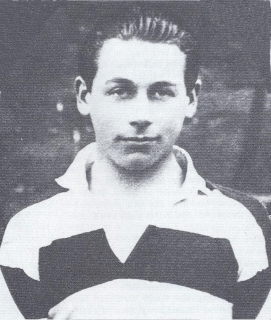
Diarmuid O’Hegarty (Ó hÉigeartuigh), civil servant and revolutionary, is born Jeremiah Stephen Hegarty on December 26, 1892, in Lowertown, Skibbereen, County Cork, the eldest of seven children of Jeremiah Hegarty (1856–1934) and his wife Eileen (née Barry), both teachers. He is educated at the Christian Brothers school, St. Patrick’s Place, Cork, joins the civil service in 1910 and is posted to the Department of Agriculture and Technical Instruction, acquiring invaluable administrative experience as private secretary to T. P. Gill, secretary of the department.

O’Hegarty is a member of the Keating branch of the Gaelic League and the closely associated Teeling circle of the Irish Republican Brotherhood (IRB). In 1913 he becomes secretary and stage manager of a troupe of Gaelic players, Na hAisteoirí, which includes several who later become prominent revolutionaries: Piaras Béaslaí, Gearóid O’Sullivan, Fionán Lynch, and Con Collins. As second lieutenant of F Company, 1st Battalion, Dublin Brigade, Irish Volunteers, during the Easter Rising, he is in charge of barricades in Church Street, Mary Lane, Mary’s Abbey, and Jameson Distillery, an area which sees fierce fighting. Imprisoned in Knutsford (May 1-18), he is released in error and returns to his post in the civil service. On his return he is a key figure in the reorganisation of the Volunteers and IRB, becoming a member of the executive of the IRB’s supreme council along with Michael Collins and Seán Ó Murthuile. He also becomes a central figure in Kathleen Clarke‘s prisoner support group, the Irish Volunteer Dependents Fund, and when it amalgamates with the more moderate Irish National Aid Association to form the INA&VDF in August 1916, he helps to ensure that it is dominated by republicans.

O’Hegarty is very close to Michael Collins and Harry Boland and in 1918 this IRB triumvirate exercises considerable control in the nomination of Sinn Féin candidates for the 1918 Irish general election. In the same year he is dismissed from the civil service for refusing to take the oath of allegiance, but his administrative talents find ample outlet in the secretariat of the revolutionary Dáil and later in the service of the Irish Free State to such an extent that he has been called ‘the civil servant of the revolution’ and ‘the Grey Eminence of the Free State Government.’ As clerk of the First Dáil and secretary to the Dáil cabinet (1919–21), he is largely responsible for its success, organising meetings of the clandestine parliament and coordinating the work of various departments from his offices on the corner of O’Connell Street and Abbey Street and later in Middle Abbey Street. He is determined that the Dáil will demonstrate its worth by ‘functioning as any progressive government would be expected to function.’ He records the minutes and handles all correspondence of the Dáil cabinet. As the conduit through which the Dáil’s ministers communicate, his role is central to the effective operation of government on the run. The influence this gives him within the revolutionary movement is bolstered by his senior role within the IRB and the positions of military significance which he occupies. He is a member of the Volunteer Executive (Jun 1916–Nov 1921), Irish Republican Army (IRA) Director of Communications (Jul 1918–Mar 1920), and Director of Organisation (Mar 1920–Apr 1921). When convicted of illegal assembly and jailed in Mountjoy Prison (Nov 1919–Feb 1920), he immediately wields power within the prison, ordering Noel Lemass off a hunger strike.

O’Hegarty resigns his military duties in April 1921 to concentrate on his work in the Dáil secretariat and serves as secretary to the Irish delegation during the Anglo–Irish Treaty negotiations in London (Oct–Dec 1921). He is a vital voice for the Treaty within the IRB and is appointed secretary to the cabinet of the Provisional Government in 1922, participating in the unsuccessful army unification talks of May 1922. During the Irish Civil War, he is briefly seconded from his civil service post to serve as military governor of Mountjoy Prison (Jul-Aug 1922), where he threatens that prisoners who persist in leaning out of windows and talking to the public outside the prison will be shot. Peadar O’Donnell, who is a prisoner there at the time, remembers him as the focus of much ‘republican bitterness.’ A member of the army council during the Irish Civil War, he serves as Director of Organisation (Jul–Dec 1922) and Director of Intelligence (Dec 1922–May 1923), leaving the army with the rank of lieutenant general on May 1, 1923, to resume his civil service career.

O’Hegarty is secretary to the Executive Council of the Irish Free State (1923–32) and principal private secretary to its president, W. T. Cosgrave. Again, he records the cabinet minutes and is the administrative pivot upon which government turns. He serves as secretary to numerous governmental delegations and is widely praised for his work in this role at the 1926 Imperial Conference and the 1930 Imperial Conference. In 1927 he goes to New York to represent the government at a hearing into the fate of republican funds in the United States. His career is the prime example of the influence of revolutionary veterans within the higher civil service in the early years of the state. After the change of government following the 1932 Irish general election, he is one of the very few senior civil servants who is effectively removed from his position. He is appointed to be a commissioner of public works, becoming chairman in 1949, a position he holds until his retirement in 1957. In 1939–40 he serves on the Economy Committee established by the government to advise on wartime spending, and in 1941 is a member of a tribunal of inquiry into public transport, which is principally concerned with the poor financial state of Great Southern Railways.

On April 27, 1922, with Michael Collins as his best man, O’Hegarty marries Claire Archer, daughter of Edward Archer, a post office telegraph inspector from Dublin, and Susan Archer (née Matthews). Her brother is William (Liam) Archer. They live at 9 Brendan Road, Donnybrook, Dublin.

O’Hegarty dies on March 14, 1958, in Dublin, leaving an estate of £5,441. His papers are in the University College Dublin (UCD) Archives.

Leave a comment

Birth of Frank Flood, One of the “Forgotten Ten”

Francis Xavier Flood, known as Frank Flood, a 1st Lieutenant in the Dublin Active Service Brigade during the Irish War of Independence, is born at 6 Emmet Street, Dublin on December 1, 1901. He is executed by the British authorities in Mountjoy Prison and is one of the ten members of the Irish Republican Army commonly referred to as the Forgotten Ten.

Flood is the son of policeman John Flood and Sarah Murphy. The 1911 census lists the family living at 15 Emmet Street. He is one of ten children consisting of nine brothers and one sister, most of whom are heavily involved in the Independence movement. He attends secondary school at O’Connell School in Dublin and wins a scholarship to study engineering at University College Dublin (UCD) where he is an active member of UCD’s famous debating forum, the Literary and Historical Society. He passes his first- and second-year engineering exams with distinction. At the time of his arrest, he is living with his family at 30 Summerhill Parade, Dublin.

Flood is captured, together with Thomas Bryan, Patrick Doyle, Bernard Ryan and Dermot O’Sullivan, while attacking a lorry-load of Dublin Metropolitan Police at Drumcondra on January 21, 1921. All of the men are found in possession of arms and a grenade is discovered in Flood’s pocket. On February 24, 1921, he is charged by court-martial, with high treason/levying war against the King, and is one of six men executed by hanging on March 14, 1921, in Mountjoy Prison, Dublin. At nineteen years of age, he is the youngest of the six. No members of any of the six families are allowed to attend the execution in the yard at Mountjoy Prison.

Flood is a close personal friend of Kevin Barry and asks that he be buried as close as possible to him. He had taken part in the September 1920 ambush during which Barry had been arrested and had been involved in the planning of several aborted attempts to rescue him. He remains buried at Mountjoy Prison, together with nine other executed members of the Irish Republican Army known as The Forgotten Ten, until he is given a state funeral and reburied at Glasnevin Cemetery on October 14, 2001, after an intense campaign led by the National Graves Association.

Students of University College Dublin establish the Frank Flood Shield, an annual debating competition, in his memory. Flood and the other five men executed on March 14, 1921, are commemorated in Thomas MacGreevy‘s poem “The Six who were Hanged.”

The bridge over the River Tolka in Drumcondra at Millmount Avenue/Botanic Avenue is named Droichead Frank Flood on March 14, 2018.


Leave a comment

Birth of Seamus O’Donovan, IRA Volunteer & Nazi Collaborator

James O’Donovan, a leading volunteer in the Irish Republican Army (IRA) and Nazi collaborator also known as Séamus or Jim O’Donovan, is born on November 3, 1896, in County Roscommon. He is best known for his contacts with the Abwehr military intelligence of Nazi Germany.

O’Donovan is an explosives expert and reputedly invents the “Irish War Flour” (named after the flour sacks in which it was smuggled into Dublin aboard ships) and “Irish Cheddar” devices. He subsequently becomes IRA Director of Chemicals in 1921. During the Irish War of Independence, he is imprisoned in Mountjoy Prison and Kilmainham Gaol and later interned in Newbridge, County Kildare.

In addition to fighting in the Irish War of Independence, O’Donovan fights on the Anti-Treaty side during the Irish Civil War. In 1930 he becomes manager at Electricity Supply Board (ESB) headquarters in Dublin.

In August 1938, at the request of IRA Chief of Staff Seán Russell, O’Donovan writes the S-Plan, a bombing campaign targeting the United Kingdom. In his unpublished memoirs he writes that he “conducted the entire training of cadre units, was responsible for all but locally derived intelligence, carried out small pieces of research and, in general, controlled the whole explosives and munitions end” of S-Plan. During this time, he and Russell are the only GHQ members of the old IRA still in the organisation.

As “Agent V-Held”, O’Donovan visits Germany three times in 1939 on behalf of the IRA. On February 28 he negotiates an arms and radio equipment delivery at the Abwehrstelle in Hamburg. On April 26 he concludes a new arms deal with the Abwehrstelle and establishes, with the help of a Breton, a secret courier connection to Ireland via France. On August 23, he receives the last instructions for the event of war.

On February 9, 1940, Abwehr II agent Ernst Weber-Drohl lands at Killala Bay, County Sligo aboard U-37. He is equipped with an ‘Ufa’ transmitter, cash, and instructions for O’Donovan, who by this time is the chief IRA contact for Abwehr I/II. The transmitter is lost upon landing, but when Weber-Drohl reaches O’Donovan at Shankill, Killiney, County Dublin, he is able to deliver new transmission codes, $14,450 in cash, and a message from “Pfalzgraf Section” asking that the IRA concentrate its S-Plan attacks on military rather than civilian targets.

O’Donovan becomes increasingly enamoured of Nazi ideology during this time, and visits Germany three times. In 1942 he writes an article arguing that Ireland’s future lay in an alliance with a victorious Germany and attacks Britain and the United States for being “centres of Freemasonry, international financial control and Jewry.” Even long after the pact with the Germans falls apart, he continues to express his sympathy for the Nazi regime. His son, Gerard O’Donovan, recalls that every Saturday night a visitor would come to the family home and send messages to Germany.

In 1940, O’Donovan is involved in setting up Córas na Poblachta, a minor Irish republican political party which proves unsuccessful.

O’Donovan dies in Dublin on June 4, 1979.


Leave a comment

The Hanging of IRA Soldier Kevin Barry

Kevin Gerard Barry, an 18-year-old Irish Republican Army (IRA) soldier, is executed by the British Government on November 1, 1920, during the Irish War of Independence. He is sentenced to death for his part in an attack upon a British Army supply lorry which results in the deaths of three British soldiers.

Barry’s execution inflames nationalist public opinion in Ireland, largely because of his age. The timing of the execution, only seven days after the death by hunger strike of Terence MacSwiney, the republican Lord Mayor of Cork, brings public opinion to a fever-pitch. His pending death sentence attracts international attention, and attempts are made by United States and Vatican officials to secure a reprieve. His execution and MacSwiney’s death precipitate an escalation in violence as the Irish War of Independence enters its bloodiest phase, and Barry becomes an Irish republican martyr.

Barry is born on January 20, 1902, at 8 Fleet Street, Dublin, to Thomas and Mary (née Dowling) Barry. The fourth of seven children, two boys and five sisters, he is baptised in St. Andrew’s Church, Westland Row. As a child he attends the National School in Rathvilly, County Carlow, and the O’Connell Schools in Dublin, before enrolling in the Preparatory Grade at St. Mary’s College, Dublin, in September 1915. He remains at that school until May 31, 1916, when it is closed by its clerical sponsors. With the closure of St. Mary’s College, he transfers to Belvedere College, a Jesuit school in Dublin.

In October 1917, during his second year at Belvedere, Barry joins Company C, 1st Battalion of the Dublin Brigade of the Irish Volunteers. When Company C is later reorganized, he is reassigned to the newly formed Company H, under the command of Captain Seamus Kavanagh. The following year he is introduced by Seán O’Neill and Bob O’Flanagan to the Clarke Luby Club of the Irish Republican Brotherhood (IRB), and at some point in time he is sworn as a member of this secret society which is led by Michael Collins.

Two Dublin Volunteers notice that a British army lorry guarded by an armed party of soldiers makes twice weekly trips to Monk’s Bakery on Church Street to obtain bread. Based on these observations, John Joe Carroll of Company H conducts a reconnaissance of the bakery. In addition to its main entrance on Church Street, he observes that the bakery yard is also accessible by a corridor leading from a shop on North King Street. He concludes that this makes the bakery an attractive site for an ambush.

On the morning of September 20, 1920, Barry goes to Mass, then joins a party of IRA volunteers on Bolton Street in Dublin. Their orders are to ambush a British army lorry as it picks up a delivery of bread from the bakery and capture their weapons. The ambush is scheduled for 11:00 AM, which gives him enough time to take part in the operation and return to class in time for an examination he has at 2:00 PM. The truck arrives late and is under the command of Sergeant Banks.

Armed with a .38 Mauser Parabellum, Barry and members of C Company are to surround the lorry, disarm the soldiers, take the weapons and escape. He covers the back of the vehicle and, when challenged, the five soldiers comply with the order to lay down their weapons. A shot is then fired, possibly a warning shot from an uncovered soldier in the front. Barry and the rest of the ambush party then open fire. His gun jams twice and he dives for cover under the vehicle. His comrades flee and he is left behind. He is then spotted and arrested by the soldiers. One soldier is killed and two other later die of their wounds.

The War Office orders that Barry be tried by court-martial under the Restoration of Order in Ireland Act 1920, which received royal assent on August 9, 1920. Barry is charged on three counts of the murder of Private Marshall Whitehead. In accordance with military procedure the verdict is not announced in court. He is returned to Mountjoy Prison. Later that night the district court-martial officer enters his cell and reads out the sentence: death by hanging. The public learns on October 28 that the date of execution has been fixed for November 1.

Barry is hanged on November 1, 1920, after hearing two Masses in his cell. Canon Waters, who walks with him to the scaffold, writes to Barry’s mother later, “You are the mother, my dear Mrs. Barry, of one of the bravest and best boys I have ever known. His death was one of the most holy, and your dear boy is waiting for you now, beyond the reach of sorrow or trial.”

Barry’s body is buried at 1:30 PM, in a plot near the women’s prison. His comrade and fellow-student Frank Flood is buried alongside him four months later. A plain cross marks their graves and those of Patrick Moran, Thomas Whelan, Thomas Traynor, Patrick Doyle, Thomas Bryan, Bernard Ryan, Edmond Foley and Patrick Maher who are hanged in the same prison before the Anglo-Irish Treaty of July 1921 which ends hostilities between Irish republicans and the British. The men are buried in unconsecrated ground on the jail property and their graves are unidentified until 1934. They become known as the Forgotten Ten by republicans campaigning for the bodies to be reburied with honour and proper rites. On October 14, 2001, the remains of these ten men are given a state funeral and moved from Mountjoy Prison to be re-interred at Glasnevin Cemetery in Dublin.


Leave a comment

The 1923 Mountjoy Prison Hunger Strike

On October 13, 1923, following the end of the Irish Civil War, Michael Kilroy, OC of the Irish Republican Army (IRA) prisoners in Mountjoy Prison, announces a mass hunger strike by 300 prisoners. It soon spreads to other jails and within days 7,033 republicans are on hunger strike.

On the same day, the prisoners in Kilmainham Gaol go on hunger strike, and Ernie O’Malley writes eloquently of it in his book on the Civil War, The Singing Flame. He notes that “practically all volunteered; some were exempted, including myself, but I refused this concession.”

Previously, the Irish Free State government had passed a motion outlawing the release of prisoners on hunger strike. Dan Downey had died in the Curragh on June 10, and Joseph Witty, only 19 years old, also died in the Curragh on September 2. However, because of the large numbers of Republicans on strike, at the end of October the Government sends a delegation to Newbridge Camp to speak with IRA leaders there.

It soon becomes apparent that they are not there to negotiate the strikers’ demands, but rather to give the prisoners the Government’s message: “we are not going to force-feed you, but if you die we won’t waste coffins on you; you will be put in orange boxes and you will be buried in unconsecrated ground.”

O’Malley writes, “Any action was good, it seemed, and everyone was more cheerful when the hunger strike began. We listened to the tales of men who had undergone previous strikes and we, who were novices, wondered what it would be like. We laughed and talked, but in the privacy of our cells, some, like myself, must have thought what fools we were, and have doubted our tenacity and strength of will. I looked into the future of hunger and I quailed.”

All negotiations to curtail the strike are abandoned and the strike goes forward. Poorly planned, within weeks many are going off strike, but by the end of October, there are still 5,000 on strike. O’Malley does not know what effect the strike will have, but he feels he cannot ‘let the side down.’ “Hunger striking was an unknown quantity for me. I did not approve of it. I was frankly afraid, but I could not see boys of sixteen and eighteen take their chance whilst I could eat and be excused. Now, even though one thought one’s death could be of use, there was no passive acceptance. It was a challenge, a fight, and again resistance was built up……The mind would suffer more than the body. The struggle in the end would be between body and spirit.”

On November 20, Denis “Denny” Barry dies in the Newbridge Camp, and Andrew Sullivan dies in Mountjoy on November 22.

When Barry dies, the Bishop of Cork, Daniel Cohalan, refuses to let his body lie in a Cork church. When Terence MacSwiney died on hunger strike in 1921, Bishop Cohalan had written in The Cork Examiner, “I ask the favour of a little space to welcome home to the city he laboured for so zealously the hallowed remains of Lord Mayor Terence MacSwiney. For the moment, it might appear that he has died in defeat. Was Robert Emmet’s death in vain? Did Pearse and the other martyrs for the cause of Irish freedom die in vain? We bow in respect before his heroic sacrifice. We pray the Lord may have mercy on his soul.”

At the death of Denis Barry two years later, the very same Bishop Cohalan writes, “Republicanism in Ireland for the last twelve months has been a wicked and insidious attack on the Church and on the souls of the faithful committed to the Church by the law of the Catholic Church.” Denis Barry is not afforded a Catholic burial.

With the deaths of Barry and Sullivan drawing no positive response or concessions from the Free State government, the IRA command orders the strikes ended on November 23.

O’Malley writes that the strike ended with no promises of release, “we had been defeated again.” While the strike itself fails to win releases, it does begin a slow start of a programme of release of prisoners, the State being worried about the political impact of more deaths, though some prisoners remain in jail until as late as 1932.

O’Malley, writing of Tom Derrig who is in Mountjoy, relates that one of the strikers there, on the last day of the strike, had asked a doctor, “What day of the strike is this?” The doctor replies, “The forty-first.” The striker says, “Be cripes! We bate Christ by a day!”

(From: Stair na hÉireann | History of Ireland, http://www.stairnaheireann.net)


Leave a comment

Birth of John Keegan “Leo” Casey, the Poet of the Fenians

John Keegan “Leo” Casey, Irish poet, orator and republican known as the Poet of the Fenians, is born in Mount Dalton, County Westmeath on August 22, 1846. He is famous as the writer of the song “The Rising of the Moon” and as one of the central figures in the Fenian Rising of 1867. He is imprisoned by the English and dies on Saint Patrick’s Day in 1870.

Casey is born to a teacher during the height of the Great Famine of 1846. Eight years later he moves to Gurteen, near Ballymahon in County Longford, when his father is given the post of headmaster at the local school. His work would come to be closely associated with Ballymahon.

As a teenager Casey works as an assistant to his father and is expected to follow him into teaching. However, he is disillusioned by the insufficiently nationalistic nature of the curriculum and spends a great deal of time writing poetry. It is at this time, reputedly at the age of fifteen, that he writes his best-known song, “The Rising of the Moon,” which commemorates the Irish Rebellion of 1798.

Following the increasing popularity of his songs and ballads at nationalist gatherings, Casey moves to Dublin in the 1860s and becomes active in the Fenian movement. He is a major contributor to The Nation newspaper, for which he assumes his pen name of ‘Leo.’

In 1866, at the age of 20, Casey publishes a collection of poems, entitled A Wreath of Shamrocks. Most of the poems therein had already been published elsewhere, primarily in The Nation. The further fame engendered by the success of the book leads him to be sought after as a speaker. He addresses mass rallies in Dublin, Liverpool and London that year, in the lead up to the Fenian Rising in 1867.

When the uprising fails, Casey is imprisoned without trial for eight months in Mountjoy Prison. He is released on the understanding that he would leave for Australia and not return to Ireland. However, he chooses to stay on in Summerhill, Dublin in disguise, living as a Quaker and continuing to write and publish in secret.

Casey marries Mary Josephine Briscoe in January 1868 and they have a son Michael, who dies shortly after birth in October 1869. Casey’s health had been broken by the treatment he had received in prison. He falls from a cab on or near O’Connell Bridge in the centre of Dublin in 1870. He dies from his injuries on St. Patrick’s Day, March 17, 1870.

Following his death, Casey is buried in Glasnevin Cemetery. The newspapers report that between fifty and one hundred thousand mourners walk in his funeral procession.


Leave a comment

Birth of Gilbert Potter, District Inspector of the Royal Irish Constabulary

Gilbert Norman Potter, a District Inspector of the Royal Irish Constabulary, is born in Dromahair, County Leitrim on July 10, 1887. He is executed by the Irish Republican Army (IRA) on April 27, 1921, in reprisal for the British execution of Irish republican Thomas Traynor.

Potter receives his commission as District Inspector on April 27, 1901, having completed his cadetship at the Depot, Phoenix Park, Dublin. His first assignment is to Castlepollard, County Westmeath. During the 1909 ITGWU strike in Cork, he is temporarily posted there from Dublin and is also involved in policing the August 14 marches in Portadown. Having had charge of No. 4 Company at the Depot, he is assigned to Cahir in 1912.

On April 23, 1921, District Inspector Potter is captured by the 3rd Tipperary Brigade, IRA, following the Hyland’s Cross Ambush. This occurs near Curraghcloney, close to the village of Ballylooby. The ambush party is initially made up of a combination of the 1st and 2nd Flying Columns 3rd Tipperary Brigade. This is the largest force assembled to date by the Tipperary IRA in anticipation of a major battle. However, the convoy of military lorries that is expected never materialises. Dan Breen and Con Moloney return to Battalion Headquarters, while Seán Hogan‘s Column withdraws northward in the direction of the Galtee Mountains.

As Dinny Lacey‘s No.1 Column prepares to leave towards the south, a small party of British soldiers accompanying two horse-drawn carts unexpectedly approaches from Clogheen and are immediately fired upon. Amid some confusion Lacey’s scattered men withdraw southwards towards the Knockmealdown Mountains. One British soldier, Frank Edward Conday, is fatally wounded and two others from the relieving party are wounded.

By chance, Potter, who is returning by car from police duties at Ballyporeen, drives into a section of the withdrawing No.1 Column. Although in civilian attire, he is recognised by one of the IRA Volunteers and taken prisoner. As part of a new strategy, he is held as a hostage for the safe release of Thomas Traynor, an IRA volunteer and father of ten young children, then under sentence of death at Mountjoy Gaol. The IRA offers to release Potter in exchange for Traynor’s release. Traynor is executed. Traynor has since been honoured by the Irish state as one of “The Forgotten Ten.”

The Column, under sporadic fire from soldiers, alerted at the nearby Clogheen barracks, follow the contours of the mountains to the village of Newcastle. Losing their pursuers, they stay for a period of time at the townland of Glasha. Here Potter is detained in an out-building of a farm which is regularly used by the IRA as a safe house. From there the party is guided into the Nire Valley by a contingent of local Waterford Volunteers and on to the Comeragh Mountains.

Accounts from Rathgormack, County Waterford suggest he is kept for at least one night at a nearby Ringfort before being taken down the hill to a field then owned by Powers of Munsboro, where he meets his ultimate fate. At 7:00 PM, on April 27, following news of Traynor’s execution by hanging, he is shot to death, and hastily buried in a shallow grave on the banks of the River Clodiagh. A diary he kept during his period of captivity and some personal effects and farewell letters, are returned anonymously to his wife. It is the first confirmation she has that he has been killed. The artifacts are later lost when his son’s ship is torpedoed in 1942, during World War II.

(Pictured: Photo of District Inspector Gilbert Potter R.I.C. that appeared in the Press during his time in captivity)


Leave a comment

Death of Séamus O’Donovan, IRA Volunteer & Nazi Collaborator

James O’Donovan, a leading volunteer in the Irish Republican Army (IRA) and Nazi collaborator also known as Séamus or Jim O’Donovan, dies in Dublin on June 4, 1979. He is best known for his contacts with the Abwehr military intelligence of Nazi Germany.

Born on November 3, 1896, in County Roscommon, O’Donovan is an explosives expert and reputedly invents the “Irish War Flour” (named after the flour sacks in which it was smuggled into Dublin aboard ships) and “Irish Cheddar” devices. He subsequently becomes IRA Director of Chemicals in 1921. During the Irish War of Independence, he is imprisoned in Mountjoy Prison and Kilmainham Gaol and later interned in Newbridge, County Kildare.

In addition to fighting in the Irish War of Independence, O’Donovan fights on the Anti-Treaty side during the Irish Civil War. In 1930 he becomes manager at Electricity Supply Board (ESB) headquarters in Dublin.

In August 1938, at the request of IRA Chief of Staff Seán Russell, O’Donovan writes the S-Plan, a bombing campaign targeting the United Kingdom. In his unpublished memoirs he writes that he “conducted the entire training of cadre units, was responsible for all but locally derived intelligence, carried out small pieces of research and, in general, controlled the whole explosives and munitions end” of S-Plan. During this time, he and Russell are the only GHQ members of the old IRA still in the organisation.

As “Agent V-Held”, O’Donovan visits Germany three times in 1939 on behalf of the IRA. On February 28 he negotiates an arms and radio equipment delivery at the Abwehrstelle in Hamburg. On April 26 he concludes a new arms deal with the Abwehrstelle and establishes, with the help of a Breton, a secret courier connection to Ireland via France. On August 23, he receives the last instructions for the event of war.

On February 9, 1940, Abwehr II agent Ernst Weber-Drohl lands at Killala Bay, County Sligo aboard U-37. He is equipped with an ‘Ufa’ transmitter, cash, and instructions for O’Donovan, who by this time is the chief IRA contact for Abwehr I/II. The transmitter is lost upon landing, but when Weber-Drohl reaches O’Donovan at Shankill, Killiney, County Dublin, he is able to deliver new transmission codes, $14,450 in cash, and a message from “Pfalzgraf Section” asking that the IRA concentrate its S-Plan attacks on military rather than civilian targets.

O’Donovan becomes increasingly enamoured of Nazi ideology during this time, and visits Germany three times. In 1942 he writes an article arguing that Ireland’s future lay in an alliance with a victorious Germany and attacks Britain and the United States for being “centres of Freemasonry, international financial control and Jewry.” Even long after the pact with the Germans falls apart, he continues to express his sympathy for the Nazi regime. His son, Gerard O’Donovan, recalls that every Saturday night a visitor would come to the family home and send messages to Germany.

In 1940, O’Donovan is involved in setting up Córas na Poblachta, a minor Irish republican political party which proves unsuccessful.

O’Donovan dies in Dublin on June 4, 1979.


Leave a comment

Ireland Awarded the 2003 Special Olympics World Summer Games

On March 31, 1999, Ireland is selected as the location for the 2003 Special Olympics World Summer Games. It is the first time the event has been staged outside the United States. The organising committee, which is formed in 1999 following the success of the bid, is chaired by entrepreneur Denis O’Brien. The chief executive is Mary Davis.

The Games are hosted in Dublin, with participants staying in 177 towns, cities and villages and the Aran Islands in the lead up to the Games before moving to Dublin for the events. Events are held from June 21-29, 2003 at many venues including Morton Stadium, the Royal Dublin Society, the National Basketball Arena, all in Dublin. Croke Park serves as the central stadium for the opening and closing ceremonies, even though no competitions take place there. Belfast is the venue for roller skating events at the King’s Hall, as well as the Special Olympics Scientific Symposium held on June 19-20.

Approximately 7,000 athletes from 150 countries compete in the Games in 18 official disciplines and three exhibition sports. The participants from Kosovo are the region’s first team at an international sporting event. A 12-member team from Iraq receives special permission to attend the games, despite ongoing war in their home nation. This is the largest sporting event held in 2003.

The opening ceremony is held in Croke Park and features an array of stars and is hosted by Patrick Kielty. The ceremony is officially opened by President of Ireland Mary McAleese and attended by Taoiseach Bertie Ahern. Performances include U2, The Corrs and the largest Riverdance troupe ever assembled on one stage. There are 75,000 athletes and spectators in attendance at the opening ceremonies. Irish and international celebrities such as Arnold Schwarzenegger and Jon Bon Jovi walk with the athletes, with Muhammad Ali as a special guest and Manchester United and Republic of Ireland football player Roy Keane taking the athletes oath with one of the Special Olympians. Nelson Mandela officially opens the Games.

The Games Flame is lit at the culmination of the Law Enforcement Torch Run, in which more than 2,000 members of the Garda Síochána and the Police Service of Northern Ireland participate. This is a series of relays carrying the Special Olympics Torch, the “Flame of Hope,” from Europe to the Games’ official opening.

The 2003 Games are the first to have their opening and closing schemes broadcast on live television, and Raidió Teilifís Éireann provides extensive coverage of the events through their ‘Voice of the Games’ radio station which replaces RTÉ Radio 1 on medium wave for the duration of the event. There is also a nightly television highlight programme. A daily newspaper, the Games Gazette, was published for each day of the Games.

Among the activities carried out during the Games are thorough medical checks on the athletes, some of whom have previously undiagnosed conditions uncovered, as some of the athletes come from countries with limited medical facilities or have difficulty communicating their symptoms.

Among the contributors to the Games is the Irish Prison Service. Prisoners from Mountjoy Prison, Midlands Prison, Wheatfield Prison and Arbour Hill Prison construct podiums and make flags, towels, signs, benches and other equipment.


Leave a comment

Ballinalee Raid in Search of Seán Mac Eoin

The Royal Irish Constabulary (RIC) raid a cottage near Ballinalee, County Longford, on January 7, 1921, looking for Seán Mac Eoin. Mac Eoin opens fire from the cottage, killing District Inspector Thomas McGrath, wounding a constable, and escaping.

Mac Eoin is a soldier and eventual politician of the Fine Gael party. He is commonly referred to as the “Blacksmith of Ballinalee.” He is born John Joseph McKeon on September 30, 1893, at Bunlahy, Granard, County Longford, the eldest son of Andrew McKeon and Catherine Treacy. He joins the United Irish League in 1908. His Irish nationalist activities begin in earnest in 1913, when he joins the Clonbroney Company of the Irish Volunteers. Late that year he is sworn into the Irish Republican Brotherhood and joins the Granard circle of the organization.

Mac Eoin comes to prominence in the Irish War of Independence as leader of an Irish Republican Army (IRA) flying column. On November 4, 1920, his column holds the village of Ballinalee situated on the Longford Road between Longford and Granard. They stand against superior British forces, forcing them to retreat and abandon their ammunition. In a separate attack on November 8, he leads his men against the RIC at Ballinalee. An eighteen-year-old Constable Taylor is killed. Constable E. Shateford and two others are wounded. The story is that the small garrison sings “God Save the King” as they take up positions to return fire.

On the afternoon of January 7, 1921, a joint RIC and British Army patrol consisting of ten policemen led by an Inspector, with a security detachment of nine soldiers, appears on Anne Martin’s street. Mac Eoin’s own testimony at his trial, which is not contested by any parties present, states, “I was at the table writing when I was informed of the advance of the party. My account books were left in this house for safety. I was in partial uniform, wearing Sam Browne belt and revolver with two Mills No. 4 bombs in my pocket. Owing to some females being in the house, I had to get out as I could not endanger them by putting up a defence in the house, and as this Officer and Police Force had already signified to my sister and mother their intention to shoot me on sight, I decided to give them a run for their money. I stepped out on the street, about three paces directly in front of the oncoming force and opened fire with my revolver. The leading file fell, and then the second file in the gateway brought their rifles to the ready. I then threw a bomb and jumped back behind the porch to let it burst. When it had burst and the smoke had lifted, I saw that the whole force had cleared away, save the officer who was dead or dying on the street.” The casualties from this incident are District Inspector Thomas McGrath killed, and a police constable wounded.

Mac Eoin is captured at Mullingar railway station in March 1921, imprisoned and sentenced to death for the murder of RIC District Inspector McGrath in the shooting at Anne Martin’s street in January 1921. Michael Collins organises a rescue attempt in June 1921. Six IRA Volunteers, led by Paddy Daly and Emmet Dalton, capture a British armoured car and, wearing British Army uniforms, gain access to Mountjoy Prison. However, Mac Eoin is not in the part of the jail they believed and, after some shooting, the party retreats.

Within days, Mac Eoin is elected to Dáil Éireann at the 1921 Irish elections, as a TD for Longford–Westmeath. He is eventually released from prison, along with all other members of the Dáil, after Collins threatens to break off treaty negotiations with the British government unless he is freed. It is rumoured that Sean Mac Eoin serves as the best man at Collins’ wedding.