seamus dubhghaill

Promoting Irish Culture and History from Little Rock, Arkansas, USA


Leave a comment

Death of Osborn Bergin, Irish Language & Literature Scholar

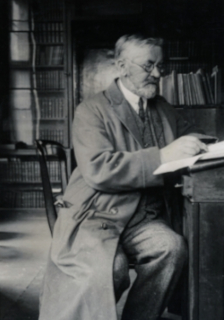
Osborn Joseph Bergin, a scholar of the Irish language and early Irish literature, dies in a nursing home in Dublin at the age of 76 on October 6, 1950.

Bergin is born in Cork, County Cork on November 26, 1873, the sixth child and eldest son of Osborn Roberts Bergin and Sarah Reddin. He is educated at Queen’s College Cork, now University College Cork. He then goes to Germany for advanced studies in Celtic languages, working with Heinrich Zimmer at the Friedrich Wilhelm University in Berlin, now the Humboldt University of Berlin, and later with Rudolf Thurneysen at the University of Freiburg, where he writes his dissertation on palatalization in 1906. He then returns to Ireland and teaches at the School of Irish Learning and at University College Dublin (UCD).

Within one year of becoming Director of the School of Irish Studies in the Dublin Institute for Advanced Studies, Bergin resigns both the senior professorship and his office of director. The reason for his resignation is never made public.

Bergin, who never uses the name Joseph except when signing with his initials, does not seem to have felt the need of institutional religion, and during his lifetime, he rarely attends religious services. He develops Irish nationalist sympathies and remains a firm nationalist all his life but without party affiliations. From the number of Irish speakers living in Cork, he quickly masters the spoken Irish of West Munster. By 1897, his knowledge of spoken and literary Modern Irish is so strong that he is appointed lecturer in Celtic in Queen’s College, Cork. It is during this time that he becomes an active member of the Gaelic League.

Bergin publishes extensively in the journal for Irish scholarship, Ériu. He is best known for his discovery of Bergin’s Law, which states that while the normal order of a sentence in Old Irish is verb-subject-object, it is permissible for the verb, in the conjunct form, to be placed at the end of the sentence. His friend Frank O’Connor writes humorously that while he discovers the law “he never really believed in it.” He writes poetry in Irish and makes a number of well-received translations of Old Irish love poetry.

Bergin is celebrated in Brian O’Nolan‘s poem Binchy and Bergin and Best, originally printed in the Cruiskeen Lawn column in The Irish Times and now included in The Best of Myles. He is noted for his feuds with George Moore and William Butler Yeats, but he enjoys a lifelong friendship with George William Russell. Frank O’Connor describes Bergin’s eccentricities affectionately in his memoir My Father’s Son.

Osborn Bergin dies in a nursing home in Dublin at the age of 76 on October 6, 1950, having never married. He is buried in St. Finbarr’s Cemetery, Cork. He leaves the valuable contents of his library – over 1,200 volumes on philology and other scholarly subjects, many with important annotations – and a collection of personal papers to the Royal Irish Academy (RIA). There is a portrait of Bergin at UCD.


Leave a comment

Death of Sir Thomas de Rokeby, Justiciar of Ireland

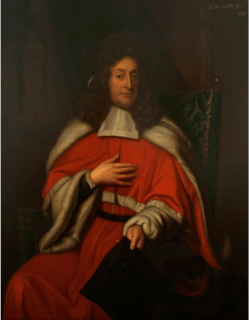
Sir Thomas de Rokeby, a soldier and senior Crown official in fourteenth-century England and Ireland, who serves as Justiciar of Ireland, dies on April 23, 1357. He is appointed to that office to restore law and order to Ireland, and has considerable early success in this task, but he is recalled to England after the military situation deteriorates. He is later re-appointed Justiciar, and returns to Ireland to take up office, but dies soon afterwards.

The Rokebys are a prominent landowning family from Mortham in North Yorkshire. He is probably the son of Thomas de Rokeby, who dies in 1318. His nephew, also named Thomas, the son of his brother Robert, is closely associated with him in his later years and the elder Thomas is often called “l’oncle” to distinguish him from his nephew.

Rokeby first comes to public attention in 1327 when, after his return from prison in Scotland, he receives the thanks of the new King Edward III for being the squire who had first pointed out the approach of the Scots army during the invasion of the previous July. As a reward he is knighted and given lands worth £100 a year. He sees action against the Scots regularly between 1336 and 1342 and has charge of Stirling Castle and Edinburgh Castle while they are held by the English. He is High Sheriff of Yorkshire from 1342 to 1349. He is one of the English commanders at the Battle of Neville’s Cross in 1346, and it is said, “gave the Scots such a draught as they did not care to taste again.” He is then entrusted with bringing King David II of Scotland as a captive to London, and he receives further grants of land as a reward for his good services.

In 1349 Rokeby is appointed Justiciar of Ireland, and given a large armed retinue to accompany him, as it is recognised by the English Crown that “Ireland is not in good plight or good peace.” While there is some surprise at the appointment of an old soldier to such a sensitive political position, the more informed view is that Rokeby is well suited to the task of enforcing justice by military force. He arrives in December and makes a quick circuit of the south of Ireland, mainly to keep watch on the powerful but troublesome magnate Maurice FitzGerald, 1st Earl of Desmond.

Rokeby is praised by his contemporaries for his regard for justice and his zeal in checking extortion by Crown officials. He undertakes a general overhaul of the Irish administration, aimed particularly at the detection and prevention of corruption and the removal of incompetent officials. Arguably he shows excessive zeal in arresting and imprisoning the Lord High Treasurer of Ireland, Robert de Emeldon, a man who enjoys the King’s personal regard. Admittedly the charges against Emeldon are very serious, including rape, robbery and manslaughter, but the King, out of regard for their long friendship and Emeldon’s record of good service to the Crown in Ireland, had already pardoned Emeldon for killing one Ralph de Byrton, a knight, in 1336. Emeldon is once more pardoned and quickly released.

In November 1351 Rokeby holds a Great Council at Kilkenny. It deals partly with the problem of official corruption already mentioned, partly with the problem of defence of the Pale, and partly with the question of intermarriage and other close contacts between the Anglo-Irish and the Old Irish. Otway-Ruthven notes that little of the legislation is new, apart from the application to Ireland of the English Statute of Labourers of 1351, and that much of it is repeated in the better-known Statutes of Kilkenny of 1366.

In 1353 the Clan MacCarthy of Muskerry, the dominant clan in central County Cork, who had until then been loyal to the English Crown, rebels. Rokeby shows considerable skill in crushing the uprising and succeeds in replacing the rebellious head of the clan, Dermot MacCarthy, with his more compliant cousin Cormac. Cormac’s descendants gain great wealth, extensive lands and the title Earl of Clancarty.

This promising state of good order does not last long. A rebellion by the O’Byrne Clan of Wicklow in 1354 is followed by a general uprising headed by the MacMurrough-Kavanagh dynasty. Although Muirchearteach MacMurrough-Kavanagh, the self-styled King of Leinster, is captured and executed, Rokeby suffers several military defeats. He is unable to suppress the O’Byrnes’ rebellion, and other risings take place in Tipperary, Kildare and Ulster.

Rokeby, now an ageing and discouraged man, is recalled in 1355. His replacement, rather surprisingly, is that Earl of Desmond whom it had been one of his main tasks to keep in check. Desmond dies a year later on July 26, 1356. Rokeby is reappointed Justiciar, and returns to Ireland, only to die soon afterwards on April 23, 1357 at Kilkea Castle.

Rokeby is married and his wife is named Juliana, but little else is known of her. They have no children, and his estates pass to his nephew, the younger Thomas.

(Pictured: Portrait of Sir Thomas de Rokeby, painting by Godfried Schalcken)


Leave a comment

City of Londonderry Established by Royal Charter

walls-of-londonderry

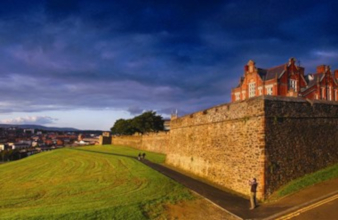
A charter incorporates Derry as the city of Londonderry on March 29, 1613 and also creates the new county of Londonderry. Despite the official name, the city is more usually known as simply Derry, which is an anglicisation of the Old Irish Daire, which in modern Irish is spelled Doire, and translates as “oak-grove/oak-wood.” The name derives from the settlement’s earliest references, Daire Calgaich (“oak-grove of Calgach”). The name is changed from Derry in 1613 during the Plantation of Ulster to reflect the establishment of the city by the London guilds.

Ulster is finally brought under the control of Elizabeth I’s government at the beginning of the 17th century following a long struggle between the Tudor monarchy and the Gaelic chieftains. This follows the defeat of the chieftains at the Siege of Kinsale in 1601 after a war lasting nine years. Although the Gaelic chieftains are allowed to remain on their land, their positions have been weakened. A group of them leave Ireland for the continent in 1607, never to return. The “Flight of the Earls”, as it is known, is seen as treason by James I’s government and their lands are confiscated. This important event opens the way for James I to further increase his control over Ulster by settling tens of thousands of settlers from England, Scotland and Wales on the confiscated lands.

Surveying and planning for the plantation take place during 1608 and 1609 and the plantation proper begins in 1610. The towns of Derry and Coleraine, as well as much of the lands that are to become County Londonderry, are granted to the City of London Corporation, which is charged with planting them.

The Society of the Governor and Assistants, London, of the New Plantation in Ulster, within the realm of Ireland, known after the Restoration as the Irish Society, is formed in 1609 by the City of London, to manage the estates which it has been obliged very reluctantly to take on. The Irish Society takes charge of the overall management of the Irish estates, with direct control of the new city of Derry and of the town of Coleraine.

The City of London livery companies are required to take on estates in the surrounding County of Londonderry. The Great Twelve livery companies bear the heaviest financial burden. The county is divided among them into twelve “proportions,” distributed by the drawing of lots. The Great Twelve are in turn supported by a number of minor companies, so that thirty livery companies in all have Irish estates derived from their participation in James I’s scheme for the plantation of Ulster.

However, the first phase of the existence of the Irish Society is short-lived. The Great Parchment Book is compiled in the late 1630s when Charles I claims the estates as forfeit after a politically motivated case in Star Chamber rules that the Londoners have not fulfilled their obligations of plantation.

The City of Londonderry is very much a product of the plantation and plays a pivotal role in safeguarding the plantation. Its walls, which are still intact today, repulse sieges in 1641, 1649 and 1689.

By the end of the 17th century, Ulster, which had been the most Gaelic part of Ireland, has become the most “British.” The plantation creates Ulster we know today with its socio-economic base, its religious and political diversity, and its shared heritage.

The archives of the Irish Society and the City of London livery companies are held by the City of London at London Metropolitan Archives and Guildhall Library respectively.


Leave a comment

Birth of Irish Language Scholar Osborn Bergin

CREATOR: gd-jpeg v1.0 (using IJG JPEG v62), quality = 100

Osborn Joseph Bergin, a scholar of the Irish language and early Irish literature, is born in Cork, County Cork on November 26, 1873.

Bergin is the sixth child and eldest son of Osborn Roberts Bergin and Sarah Reddin, and is educated at Queen’s College Cork, now University College Cork. He then goes to Germany for advanced studies in Celtic languages, working with Heinrich Zimmer at the Friedrich Wilhelm University in Berlin, now the Humboldt University of Berlin, and later with Rudolf Thurneysen at the University of Freiburg, where he writes his dissertation on palatalization in 1906. He then returns to Ireland and teaches at the School of Irish Learning and at University College Dublin.

Within one year of becoming Director of the School of Irish Studies in the Dublin Institute for Advanced Studies, Bergin resigns both the senior professorship and his office of director. The reason for his resignation is never made public.

Bergin, who never uses the name Joseph except when signing with his initials, does not seem to have felt the need of institutional religion, and during his lifetime, he rarely attends religious services. He develops Irish nationalist sympathies and remains a firm nationalist all his life but without party affiliations. From the number of Irish speakers living in Cork, he quickly masters the spoken Irish of West Munster. By 1897, his knowledge of spoken and literary Modern Irish is so strong that he is appointed lecturer in Celtic in Queen’s College, Cork. It is during this time that he becomes an active member of the Gaelic League.

Bergin publishes extensively in the journal for Irish scholarship, Ériu. He is best known for his discovery of Bergin’s Law, which states that while the normal order of a sentence in Old Irish is verb-subject-object, it is permissible for the verb, in the conjunct form, to be placed at the end of the sentence. His friend Frank O’Connor writes humorously that while he discovers the law “he never really believed in it.” He writes poetry in Irish and makes a number of well-received translations of Old Irish love poetry.

Bergin is celebrated in Brian O’Nolan‘s poem Binchy and Bergin and Best, originally printed in the Cruiskeen Lawn column in The Irish Times and now included in The Best of Myles. He is noted for his feuds with George Moore and William Butler Yeats, but he enjoys a lifelong friendship with George William Russell. Frank O’Connor describes Bergin’s eccentricities affectionately in his memoir My Father’s Son.

Osborn Bergin dies in a nursing home in Dublin at the age of 76 on October 6, 1950, having never married.


Leave a comment

Birth of Kuno Meyer, Scholar of Celtic Philology

kuno-meyer

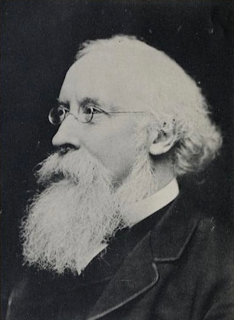
Kuno Meyer, German scholar distinguished in the field of Celtic philology and literature, is born in Hamburg, Germany on December 20, 1858. He was considered first and foremost a lexicographer among Celtic scholars but is known by the general public in Ireland rather as the man who introduced them to Selections from Ancient Irish Poetry (1911). His brother was the distinguished classical scholar, Eduard Meyer.

Meyer studies in Hamburg at the Gelehrtenschule des Johanneums. He spends two years in Edinburgh, Scotland, as a teenager (1874–1876) learning English. From 1879, he attends Leipzig University, where he is taught Celtic scholarship by Ernst Windisch. He receives his doctorate for his thesis Eine irische Version der Alexandersage, an Irish version of the Romance of Alexander, in 1884.

Meyer then takes up the post of lecturer in Teutonic languages at the new University College, Liverpool, the precursor of the University of Liverpool, which is established three years earlier.

Meyer continues to publish on Old Irish and more general topics on the Celtic languages, as well as producing textbooks for German. In 1896, he founds and edits, jointly with Ludwig Christian Stern, the prestigious Zeitschrift für celtische Philologie. He also cofounds Archiv für celtische Lexicographie in 1898 with Whitley Stokes, producing three volumes from 1900 to 1907.

In 1903, Meyer founds the School of Irish Learning in Dublin, and the next year creates its journal Ériu of which he is the editor. Also in 1904, he becomes Todd Professor in the Celtic Languages at the Royal Irish Academy. In October 1911, he follows Heinrich Zimmer as Professor of Celtic Philology at Friedrich Wilhelm University in Berlin. The following year, a volume of Miscellany is presented to him by pupils and friends in honour of his election, and he is made a freeman of both Dublin and Cork.

At the outbreak of World War I, Meyer leaves Europe for the United States, where he lectures at Columbia University, University of Illinois at Urbana-Champaign, and elsewhere. A pro-German speech he gives in December 1914 to Clan na Gael on Long Island causes outrage in Britain and some factions among the Irish, and as a result, he is removed from the roll of freemen in Dublin and Cork and from his Honorary Professorship of Celtic at Liverpool. He also resigns as Director of the School of Irish Learning and editor of Ériu. Harvard University also had extended an invitation to Meyer to lecture on campus, but it subsequently cancels the invitation in the fall of 1914 on account of Meyer’s propagandist activity.

Meyer nevertheless accepts candidacy for the post of exchange professor at Harvard, at the recommendation of German professors there. However, when the April 1915 issue of The Harvard Advocate awards first prize to an anti-German satirical poem “Gott mit Uns” written by an undergraduate, Meyer sends the university and the press a letter of protest, rebuking the faculty members who served as judges for failure to exercise neutrality. Meyer also declines his candidacy from the exchange professorship in the letter. In a reply, President Abbott Lawrence Lowell says, in explaining Harvard’s policy, that freedom of speech includes pro-German and pro-Allied voices alike.

Meyer is injured in a railway collision in 1915 and meets 27-year-old Florence Lewis while he is recovering in a California hospital. They marry shortly afterwards. He returns to Germany in 1917 and dies in Leipzig on October 11, 1919.

Posthumously, in 1920, Meyer’s name is restored, both by Dublin and Cork, in their Rolls of Honorary Freemen. The restoration occurs on April 19, 1920, in Dublin, where Sinn Féin had won control of the City Council three months earlier, rescinding the decision taken in 1915 by the Irish Parliamentary Party. The restoration in Cork follows on May 14, 1920.