seamus dubhghaill

Promoting Irish Culture and History from Little Rock, Arkansas, USA


Leave a comment

Death of John O’Mahony, Founder of the Fenian Brotherhood

john-omahony

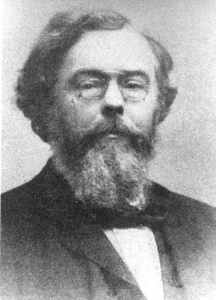
John Francis O’Mahony, Gaelic scholar and the founding member of the Fenian Brotherhood in the United States, sister organisation to the Irish Republican Brotherhood, dies in New York City on February 7, 1877.

O’Mahony is born in 1816 in Kilbeheny, County Limerick. His father and uncle were members of the Society of United Irishmen and took part in the Irish Rebellion of 1798. On the death of an elder brother, he inherits a property which yields £300 per annum. He enters Trinity College, Dublin, where he studies Sanskrit, Hebrew, and Irish. He becomes an accomplished Gaelic scholar, and later teaches Greek and Latin, and contributes articles to Irish and French journals. He leaves Trinity without getting a degree.

In 1843, O’Mahony joins Daniel O’Connell‘s movement for the Repeal of the Acts of Union 1800, but quickly becomes dissatisfied with the lack of progress and joins the Young Ireland movement which William Smith O’Brien leads and takes part in the failed Young Ireland Rebellion of 1848. His participation in the rebellion obligates him to leave Ireland, and he settles for a time in Paris, where he lives in great poverty. In 1854, he joins John Mitchel in New York City, and takes part in the Emigrant Aid Association, the Emmet Monument Association, and other Irish organisations.

In 1857, O’Mahony publishes History of Ireland, by Geoffrey Keating, D. D., translated from the Original Gaelic, and Copiously Annotated (New York, 1857). O’Mahony’s notes are copied from John O’Donovan‘s translations of Annals of the Four Masters, and it is on this ground that Hodges & Smith procures an injunction against the sale of the book in the United Kingdom. The mental strain to which O’Mahony is subjected in the preparation of this work, which brings him no pecuniary gain, affects his reasoning and he is removed by his friends for a short time to a lunatic asylum.

In 1860, O’Mahony organises the Fenian Brotherhood, also known as the Irish Republican Brotherhood. The object of the association is to secure the freedom of Ireland. The name is probably derived from O’Mahony’s Gaelic studies, the Fenians having been a military body in pagan Ireland, celebrated in the songs of Ossian. The organisation of the new society is completed at conventions that are held in Chicago in 1864 and in Cincinnati in January 1865.

At the time of the Cincinnati convention, O’Mahony holds the rank of colonel of the 69th Regiment of New York State Militia, recruited mainly from the ranks of the Brotherhood, which has also furnished a large proportion of Thomas Francis Meagher‘s Irish Brigade, Michael Corcoran‘s legion, and Irish regiments engaged in the American Civil War. The rapid growth in membership of the Fenian Brotherhood renders it impossible for O’Mahony to retain the colonelcy of the 69th regiment, which he has held for some time. He resigns in order to give all his attention to the spread of Fenianism.

The close of the civil war in the spring of 1865 gives a great impetus to the Fenians, owing to the number of Irish American soldiers that are disbanded and anxious to see service elsewhere. Money pours into the Fenian exchequer. Many differences occur between O’Mahony and James Stephens and the Central Council relative to the policy to be pursued for the attainment of their object, but O’Mahony remains president of the organisation for several years. He does not take any part personally in the attempted insurrection in Ireland or in the raids on Canada, although his advice counts for much in these enterprises.

He devotes the last years of his life to literary pursuits, but suffers from ill health, and he has a hard struggle to secure the bare means for subsistence. However, visionary may have been his objectives, he is honest, and although thousands have passed through his hands, he is often at a loss for a dollar. When his poverty is discovered, he declines to receive assistance in any form. He dies in New York City on February 7, 1877, and soon after his death his remains are returned to Ireland and interred with the honors of a public funeral in Glasnevin Cemetery in Dublin.


Leave a comment

Birth of George Sigerson, Physician & Writer

george-sigerson

George Sigerson, Irish physician, scientist, writer, politician, and poet, is born at Holy Hill, near Strabane in County Tyrone on January 11, 1836. He is a leading light in the Irish Literary Revival of the late 19th century in Ireland.

Sigerson is the son of William and Nancy (née Neilson) Sigerson and has three brothers, James, John and William, and three sisters, Ellen, Jane, and Mary Ann. He attends Letterkenny Academy but is sent by his father, who developed the spade mill and who played an active role in the development of Artigarvan, to complete his education in France.

He studies medicine at the Queen’s College, Galway, and Queen’s College, Cork, and takes his degree in 1859. He then goes to Paris where he spends some time studying under Jean-Martin Charcot and Duchenne de Boulogne. Sigmund Freud is one of his fellow students.

Sigerson returns to Ireland and opens a practice in Dublin, specializing in neurology. He continues to visit France annually to study under Charcot. His patients included Maud Gonne, Austin Clarke, and Nora Barnacle. He lectures on medicine at the Catholic University of Ireland and is professor of zoology and later botany at the University College Dublin.

His first book, The Poets and Poetry of Munster, appears in 1860. He is actively involved in political journalism for many years, writing for The Nation. Sigerson and his wife Hester are by now among the dominant figures of the Gaelic Revival. They frequently hold Sunday evening salons at their Dublin home to which artists, intellectuals, and rebels alike attend, including John O’Leary, W.B. Yeats, Patrick Pearse, Roger Casement, and 1916 signatory Thomas MacDonagh. Sigerson is a co-founder of the Feis Ceoil and President of the National Literary Society from 1893 until his death. His daughter, Dora, is a poet who is also involved in the Irish literary revival.

Nominated to the first Seanad Éireann of the Irish Free State, Sigerson briefly serves as the first chairman on December 11-12, 1922, before the election of James Campbell, 1st Baron Glenavy. Sigerson dies at his home at 3 Clare Street, Dublin, on February 17, 1925, at the age of 89, after a short illness. On February 18, 1925, the day after his death, the Seanad Éireann pays tribute to him.

The Sigerson Cup, the top division of third level Gaelic football competition in Ireland is named in his honour. Sigerson donates the salary from his post at UCD so that a trophy can be purchased for the competition. In 2009, he is named in the Sunday Tribune‘s list of the “125 Most Influential People In GAA History.” The cup is first presented in 1911, with the inaugural winners being UCD GAA.


Leave a comment

Death of Irish Painter Sir John Lavery

john-lavery

Sir John Lavery, Irish painter best known for his portraits and wartime depictions, dies of natural causes at the age of 84 in Kilmoganny, County Kilkenny, on January 10, 1941.

Born in Belfast on March 20, 1856, Lavery attends Haldane Academy in Glasgow in the 1870s and the Académie Julian in Paris in the early 1880s. He returns to Glasgow and is associated with the Glasgow School. In 1888 he is commissioned to paint the state visit of Queen Victoria to the Glasgow International Exhibition of Science, Art and Industry. This launches his career as a society painter, and he moves to London soon thereafter. In London he becomes friends with James McNeill Whistler and is clearly influenced by him.

Like William Orpen, Lavery is appointed an official artist in World War I. Ill-health, however, prevents him from travelling to the Western Front. A serious car crash during a Zeppelin bombing raid also keeps him from fulfilling this role as war artist. He remains in Britain and mostly paints boats, aeroplanes, and airships. During the war years he is a close friend of H.H. Asquith‘s family and spends time with them at their Sutton Courtenay Thames-side residence, painting their portraits and idyllic pictures like Summer on the River (Hugh Lane Gallery).

After the war Lavery is knighted and in 1921 he is elected to the Royal Academy of Arts.

michael-collins-love-of-ireland

During this time, he and his wife, Hazel, are tangentially involved in the Irish War of Independence and the Irish Civil War. They give the use of their London home to the Irish negotiators during the negotiations leading to the Anglo-Irish Treaty. After Michael Collins is assassinated, Lavery paints Michael Collins, Love of Ireland, now in the Hugh Lane Gallery. In 1929, Lavery makes substantial donations of his work to both the Ulster Museum and the Hugh Lane Gallery and in the 1930s he returns to Ireland. He receives honorary degrees from the University of Dublin and Queen’s University Belfast. He is also made a free man of both Dublin and Belfast. A long-standing member of Glasgow Art Club, Lavery exhibits at the club’s annual exhibitions, including its exhibition in 1939 in which his The Lake at Ranelagh is included.

Sir John Lavery dies in Rossenarra House, Kilmoganny, County Kilkenny on January 10, 1941, and is interred in Putney Vale Cemetery.


Leave a comment

Birth of Lucien Bull, Pioneer in Chronophotography

lucien-bullLucien Bull, a pioneer in chronophotography, is born in Dublin on January 5, 1876. Chronophotography is defined as “a set of photographs of a moving object, taken for the purpose of recording and exhibiting successive phases of motion.”

Born in Dublin to British father, Cornelius Bull, and French mother, Gabrielle Joune, Bull lives his younger years in Dublin where he attends school and lives at home with his parents. In 1894, Bull moves to France to visit his aunts. After several months, Bull eventually settles in the area and becomes an assistant to Étienne-Jules Marey in 1895. At the time, Marey is working on the cinematographic, which is a camera that is shaped like a rifle and takes pictures of moving objects from a rotating plate. This eventually becomes known as the “gun camera.”

This camera is designed to investigate the study of motion. Basically, the “gun camera” is designed to take an object in motion and snap still shots. By taking these still shots, each movement made by the object is captured and then studied to analyze movement patterns that were unable to be studied before. The first successful film is taken in 1904 when Bull is able to film the flight of a fly at 1,200 frames per second.

As a result of Marey’s death in May 1904, Bull becomes head of the Marey Institute, which forms part of the Collège de France. While remaining with the Marey Institute, Bull is naturalized as a French citizen in 1931. After a few years, Bull eventually introduces a few papers on a wide variety of subjects ranging from spark illuminations, high-speed motion-picture photography, original studies of insect and bird flight, and electrocardiography and muscle and heart functions.

In 1933, Bull is put in charge of research, National Office of Research and Invention in France. In 1948 he becomes President of the Institute of Scientific Cinematography in Paris. His work is eventually listed by Dr. W. Hinsch in Research Film for December 1953.

Lucien Bull dies in Paris on August 25, 1972.


Leave a comment

Birth of Irish Revolutionary Maud Gonne

maud-gonne

Maud Gonne, Irish revolutionary, romantic muse for William Butler Yeats, and mother to Nobel Peace Prize-winner Seán MacBride, is born at Tongham, England on December 21, 1866.

Gonne is born into a distinguished and wealthy family, and her father serves as an army captain. Her mother dies of tuberculosis when she is a child, and she and her sister are raised and educated by a French nanny. This cosmopolitan upbringing is furthered by travels throughout Europe with her father, then a military attaché.

In 1884, Gonne’s father dies of typhoid fever, and she receives a considerable inheritance. After moving to France to be with her aunt, she meets and falls in love with right wing politician Lucien Millevoye. Though he is already married, he instills Gonne with his political passions. She begins a nearly lifelong fight for Irish freedom from England and the release of political prisoners. She and Millevoye have two children, one of whom survives, before their relationship ends.

Moved by the plight of those evicted in the Land Wars, Gonne continues to campaign for the Irish nationalist cause. While living in Paris, she is introduced to Fenianism by John O’Leary, a veteran of the Young Ireland Rebellion of 1848. In 1889, O’Leary introduces her to a man whose infatuation with her would last most of his life, poet William Butler Yeats. She begins a relationship with Yeats, though she refuses his many marriage proposals. She is the inspiration for many of Yeats’s poems. In 1900, she founds the Daughters of Ireland, which provides a home for Irish nationalist women.

In 1918, Gonne is arrested for being a political agitator. She becomes severely ill in prison and after her release, she begins a crusade for improved conditions for Ireland’s political prisoners. In 1903, she marries Major John MacBride, who had led the Irish Transvaal Brigade against the British in the Second Boer War, in Paris in 1903. After the birth of their son, Seán, Gonne and her husband agree to end their marriage. She demands sole custody of their son but MacBride refuses, and a divorce case begins in Paris on February 28, 1905. The only charge against MacBride substantiated in court is that he was drunk on one occasion during the marriage. A divorce is not granted, and MacBride is given the right to visit his son twice weekly.

The couple’s son, Seán MacBride, is active in politics in Ireland and in the United Nations. He is a founding member and Chairman of Amnesty International and is awarded the Nobel Peace Prize in 1974.

Gonne dies in Clonskeagh on April 27, 1953, at the age of 86 and is buried in Glasnevin Cemetery, Dublin. Maud Gonne’s autobiography, A Servant of the Queen, is published in 1938.


Leave a comment

Samuel Beckett Awarded the 1969 Nobel Prize for Literature

samuel-beckett

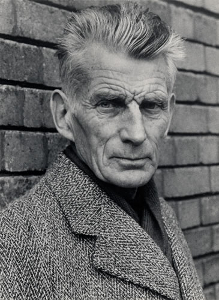
Samuel Barclay Beckett, Irish avant-garde novelist, playwright, theatre director, and poet, is awarded the Nobel Prize in Literature on October 23, 1969. Beckett lives in Paris for most of his adult life and writes in both English and French. He is widely regarded as among the most influential writers of the 20th century. He is elected Saoi of Aosdána in 1984.

Beckett’s work offers a bleak, tragicomic outlook on human existence, often coupled with black comedy and gallows humour, and becomes increasingly minimalist in his later career. He is considered one of the last modernist writers, and one of the key figures in what Martin Esslin calls the “Theatre of the Absurd.” Waiting for Godot is generally regarded as his best-known play.

In October 1969 while on holiday in Tunis with his wife Suzanne, Beckett hears that he has won the Nobel Prize for Literature. Anticipating that her intensely private husband would be saddled with fame from that moment on, Suzanne calls the award a “catastrophe.” In true ascetic fashion, he gives away all of the prize money. While Beckett does not devote much time to interviews, he sometimes meets the artists, scholars, and admirers who seek him out in the anonymous lobby of the Hotel PLM St. Jacques in Paris near his Montparnasse home. Although Beckett is an intensely private man, a review of the second volume of his letters by Roy Foster in the December 15, 2011 issue of The New Republic reveals Beckett to be not only unexpectedly amiable but frequently prepared to talk about his work and the process behind it.

Confined to a nursing home and suffering from emphysema and possibly Parkinson’s disease, Beckett dies on 22 December 22, 1989, just five months after the passing of Suzanne. The two are interred together in the Cimetière du Montparnasse in Paris and share a simple granite gravestone that follows Beckett’s directive that it should be “any colour, so long as it’s grey.”

Of all the English-language modernists, Beckett’s work represents the most sustained attack on the realist tradition. He opens up the possibility of theatre and fiction that dispense with conventional plot and the unities of time and place in order to focus on essential components of the human condition.

On December 10, 2009, a new bridge across the River Liffey in Dublin is opened and named the Samuel Beckett Bridge in his honour. Reminiscent of a harp on its side, it is designed by the celebrated Spanish architect Santiago Calatrava, who also designed the James Joyce Bridge further upstream. The newest ship of the Irish Naval Service, the LÉ Samuel Beckett (P61), is named for Beckett. An Ulster History Circle blue plaque in his memory is located at Portora Royal School, Enniskillen, County Fermanagh.


Leave a comment

Birth of Oscar Wilde

oscar-wilde

Oscar Fingal O’Flahertie Wills Wilde, playwright, novelist, essayist, and poet, is born on October 16, 1854, at 21 Westland Row, Dublin, now home of the Oscar Wilde Centre, Trinity College. After writing in different forms throughout the 1880s, he becomes one of London‘s most popular playwrights in the early 1890s. He is remembered for his epigrams, his novel The Picture of Dorian Gray, his plays, as well as the circumstances of his imprisonment and early death.

Wilde’s parents are successful Anglo-Irish Dublin intellectuals. Their son becomes fluent in French and German early in life. At university, Wilde read Greats and proves himself to be an outstanding classicist, first at Dublin, then at Magdalen College, Oxford. He becomes known for his involvement in the rising philosophy of aestheticism, led by two of his tutors, Walter Pater and John Ruskin. After university, Wilde moves to London into fashionable cultural and social circles.

As a spokesman for aestheticism, Wilde tries his hand at various literary activities. He publishes a book of poems, lectures in the United States and Canada on the new “English Renaissance in Art,” and then returns to London where he works prolifically as a journalist. Known for his biting wit, flamboyant dress and glittering conversation, Wilde becomes one of the best-known personalities of his day.

At the turn of the 1890s, he refines his ideas about the supremacy of art in a series of dialogues and essays, and incorporates themes of decadence, duplicity, and beauty into his only novel, The Picture of Dorian Gray (1890). The opportunity to construct aesthetic details precisely, and combine them with larger social themes, draws Wilde to write drama. He writes Salome (1891) in French in Paris, but it is refused a licence for England due to the absolute prohibition of Biblical subjects on the English stage. Unperturbed, Wilde produces four society comedies in the early 1890s, which make him one of the most successful playwrights of late Victorian London.

At the height of his fame and success, while his masterpiece, The Importance of Being Earnest (1895), is still on stage in London, Wilde has the John Douglas, 9th Marquess of Queensberry prosecuted for libel. The Marquess is the father of Wilde’s lover, Lord Alfred Douglas. The charge carries a penalty of up to two years in prison. The trial unearths evidence that causes Wilde to drop his charges and leads to his own arrest and trial for gross indecency with men. After two more trials he is convicted and imprisoned for two years’ penal labour.

In 1897, in prison, he writes De Profundis, which is published in 1905, a long letter which discusses his spiritual journey through his trials, forming a dark counterpoint to his earlier philosophy of pleasure. Upon his release he leaves immediately for France, never to return to Ireland or Britain. There he writes his last work, The Ballad of Reading Gaol (1898), a long poem commemorating the harsh rhythms of prison life.

Wilde dies destitute of cerebral meningitis in Paris on November 30, 1900. at the age of 46. He is initially buried in the Cimetière parisien de Bagneux outside Paris. In 1909 his remains are disinterred and transferred to Père Lachaise Cemetery, inside the city.


Leave a comment

Death of Novelist Edith Anna Œnone Somerville

edith-somerville

Edith Anna Œnone Somerville, Irish novelist who habitually signs herself as “E. Œ. Somerville,” dies at Castletownshend, County Cork, at the age of 91 on October 8, 1949. She writes in collaboration with her second cousin, Violet Florence Martin, who writes under the pseudonym Martin Ross. Together they publish a series of fourteen stories and novels under the pseudonym Somerville and Ross, the most popular of which are The Real Charlotte and Some Experiences of an Irish R. M., published in 1899.

The eldest of eight children, Somerville is born on the island of Corfu, then part of the United States of the Ionian Islands, a British protectorate where her father is stationed. A year later, her father retires to Drishane, Castletownshend, County Cork, where Somerville grows up. She receives her primary education at home, and then attends Alexandra College in Dublin. In 1884 she studies art in Paris, and then spends a term at the Westminster School of Art in Dean’s Yard, Westminster. At home, riding and painting are her absorbing interests.

In January 1886, she meets her second cousin, Violet Martin, and their literary partnership begins the following year. Their first book, An Irish Cousin, appears in 1889, under the names Geilles Herring (from the maiden name of her ancestor, the wife of Sir Walter de Somerville of Linton and Carnwath) and Martin Ross, though the pen names are dropped after the first edition. In 1898, Edith Somerville goes to paint at the Etaples art colony, accompanied by Violet. There they profit from their stay by conceiving together the stories later gathered in Some Experiences of an Irish R. M., completed the following year. By the time Violet dies in 1915, they have published fourteen books together. Her cousin’s death stuns Edith, who continues to write as “Somerville and Ross,” claiming that they keep in contact through spiritualist séances.

Somerville is a devoted sportswoman who in 1903 has become master of the Carbery West Foxhounds. She is also active in the suffragist movement, corresponding with Dame Ethel Smyth. She is in London still recovering from the shock of Violet’s death when the 1916 Easter Rising breaks out. On May 9 she writes a letter to The Times, blaming the British government for the state of affairs in Ireland. After that she tends towards Nationalism and, as an adept musician at parties, she specializes in Irish tunes and Nationalist songs.

She has exhibitions of her pictures in Dublin and in London between 1920 and 1938 and is active as an illustrator of children’s picture books and sporting picture books.

In 1936, her brother Henry Boyle Townsend Somerville, a retired Vice-Admiral in the Royal Navy, is killed by the Irish Republican Army (IRA) at the family home of Castletownshend. She finishes his book Will Mariner after his death.


Leave a comment

Birth of Patrick d’Arcy, Scientist & Soldier

patrick-darcy

Patrick d’Arcy, scientist and soldier in the Irish Brigade of France, is born in Kitulla, County Galway, on September 27, 1725.

The d’Arcy family, who are Catholics, suffer under the Penal Laws. In 1739 d’Arcy is sent to Paris for his education. He is tutored in mathematics by Jean-Baptiste Clairaut, and becomes a friend of Jean-Baptiste’s son, Alexis-Claude Clairaut, who is a brilliant young mathematician. d’Arcy makes original contributions to dynamics. He is best known for his part in the discovery of the principle of angular momentum, in a form which is known as “the principle of areas,” which he announces in 1746.

Perhaps seeking more adventure than an academic life can provide, d’Arcy enlists in the French army. He fights in Germany in the regiment of Condé and serves as an aide-de-camp to Marshal Saxe at the Battle of Fontenoy. He obtains the title of “Count” in the French nobility and is a generous patron of Irish refugees in France. He sails for Scotland in 1745, attempting to fight in “Bonnie” Prince Charlie‘s rising, but his ship is captured, and he is taken prisoner.

After his release, d’Arcy returns to France where he continues both his scientific and military careers. In addition to his contributions to dynamics, he performs research on artillery and electricity. One of his experiments on visual perception, reported in 1765, is often referenced. It involves a rotating disk on which a burning coal ember is placed. When the disk is spun at an angular velocity exceeding seven revolutions per second, a full circle of light is perceived. This and other experiments make d’Arcy the first person to demonstrate the illusion of a moving image, although Joseph Plateau greatly elaborates on this initial finding.

Patrick d’Arcy is elected to the Academie Royale des Sciences in 1749. He died from cholera in Paris on October 18, 1779.


Leave a comment

Death of Countess Constance Georgine Markievicz

markievicz-funeral-procession

Countess Constance Georgine Markievicz, née Gore-Booth, Irish politician, revolutionary nationalist, and suffragette, dies on July 15, 1927, in Sir Patrick Dun’s Hospital, Dublin, of complications related to appendicitis.

Constance Gore-Booth is born into the Anglo-Irish aristocracy and grows up at her family’s estate, Lissadell House, in County Sligo. Constance enrolls at London’s Slade School of Fine Art in 1893. In the late 1890s she travels to Paris, where she meets Count Casimir Dunin-Markievicz of Poland. They are married in 1900.

In 1903 the Markieviczes move to Dublin, where Constance’s interests soon turn from art to Irish politics. At age 40, in 1908, she embraces Irish nationalism, joining the revolutionary women’s group Inghinidhe na hÉireann (Daughters of Ireland) and the Sinn Féin political party. The following year she forms Na Fianna Éireann (Soldiers of Ireland), a republican organization loosely based on the Boy Scouts, in which young boys are trained to be nationalist soldiers.

In 1911 she is arrested for demonstrating against King George V’s visit to Ireland. This is just the first of several arrests and imprisonments for Markievicz, whose political activism results in jail time intermittently for the remainder of her life. In 1913–14 she provides food for workers and their families during a labour dispute in which thousands of people are locked out of their workplaces for refusing to reject union membership.

In April 1916 Markievicz takes part in the Easter Rising, the republican insurrection in Dublin against British government in Ireland. After the general surrender, she is arrested and imprisoned. Though many women participate in the uprising, Markievicz is the only one to be court-martialed. She is sentenced to death, but the sentence is commuted to a lifetime of penal servitude on account of her gender. The following year, under a general amnesty, Markievicz is released, but soon finds herself back in jail for supposed participation in a plot against the British government. In December 1918, while still carrying out a prison sentence, Markievicz is elected to the House of Commons as the representative for Dublin’s St. Patrick’s division. Along with the other members of Sinn Féin, she refuses to swear an oath of allegiance to the king and, thus, does not take her seat. Instead, under the leadership of Éamon de Valera, the Irish republicans set up their own provisional government, Dáil Éireann.

After her release from prison, Markievicz serves in the first Dáil Éireann as the minister of labour, a post she holds from 1919 until she is defeated in the 1922 elections. That same year the Irish Free State is established, and Dáil Éireann is incorporated as the lower house of the Oireachtas (Irish parliament). Markievicz is elected to the Dáil in the 1923 general election but, along with the other members of Sinn Féin, she again refuses to swear allegiance to the king and does not take her seat. Instead, she devotes herself to charity work. Markievicz joins de Valera’s Fianna Fáil party on its founding in 1926 and is again elected to the Dáil in 1927 but dies a month later without having taken her seat.

Refused a state funeral by the Free State government, Markievicz is buried at Glasnevin Cemetery, Dublin, and de Valera gives the funeral oration.