Smith is born at 174 South Street, New York City, on December 30, 1873, and raised in the Fourth Ward on the Lower East Side of Manhattan. He resides there for his entire life. His mother, Catherine (née Mulvihill), is the daughter of Maria Marsh and Thomas Mulvihill, who are immigrants from County Westmeath, Ireland. His father, baptised Joseph Alfred Smith in 1839, is a Civil War–veteran and the son of Emanuel Smith, an Italian marinaro.
Although Smith remains personally untarnished by corruption, he — like many other New York Democrats — is linked to the notorious Tammany Hallpolitical machine that controls New York City politics during his era. He serves in the New York State Assembly from 1904 to 1915 and holds the position of Speaker of the Assembly in 1913. He also serves as sheriff of New York County from 1916 to 1917. He is first elected governor of New York in 1918, loses his 1920 bid for re-election, and is elected governor again in 1922, 1924, and 1926. He is the foremost urban leader of the efficiency movement in the United States and is noted for achieving a wide range of reforms as the New York governor in the 1920s.
Smith is the first Roman Catholic to be nominated for president of the United States by a major party. His 1928 presidential candidacy mobilizes both Catholic and anti-Catholic voters. Many Protestants, including German AmericanLutherans and Southern Baptists, fear his candidacy, believing that the Pope in Rome would dictate his policies. He is also a committed “wet” (i.e., an opponent of Prohibition in the United States) and as New York governor, he repeals the state’s prohibition law. As a “wet,” he attracts voters who want beer, wine and liquor without having to deal with criminal bootleggers, along with voters who are outraged that new criminal gangs have taken over the streets in most large and medium-sized cities. Incumbent RepublicanSecretary of CommerceHerbert Hoover is aided by national prosperity, the absence of American involvement in war and anti-Catholic bigotry, and he defeats Smith in a landslide in 1928.
Smith then enters business in New York City and becomes involved in the construction and promotion of the Empire State Building. He seeks the 1932 Democratic presidential nomination but is defeated by Franklin D. Roosevelt, his former ally and successor as governor of New York. During the Roosevelt presidency, he becomes an increasingly vocal opponent of Roosevelt’s New Deal.
Smith is an early and vocal critic of the Nazi regime in Germany. He supports the Anti-Nazi boycott of 1933 and addresses a mass-meeting at Madison Square Garden against Nazism in March 1933. His speech is included in the 1934 anthology Nazism: An Assault on Civilization. In 1938, he takes to the airwaves to denounce Nazi brutality in the wake of Kristallnacht. His words are published in The New York Times article “Text of the Catholic Protest Broadcast” of November 17, 1938.
Like most New York City businessmen, Smith enthusiastically supports American military involvement in World War II. Although he is not asked by Roosevelt to play any role in the war effort, he is an active and vocal proponent of FDR’s attempts to amend the Neutrality Act in order to allow “Cash and Carry” sales of war equipment to be made to the British. He speaks on behalf of the policy in October 1939, to which FDR responds directly: “Very many thanks. You were grand.”
Smith is memorialized by The Alfred E. Smith Foundation, founded by CardinalFrancis Spellman. Today it is a significant fund raiser for charity. Each election year, presidential candidates are expected to attend, make witty remarks, and profound commentary about Smith. In 2008, then candidate Barack Obama speaks eloquently of “a man who fought for many years to give Americans nothing more than fair shake and a chance to succeed. He touched the lives of millions as a result.”
(Pictured: Official Gubernatorial portrait of Alfred E. “Al” Smith by Douglas Volk)
Allen is born on July 6, 1936, in a nursing home at 37 Lower Leeson Street, Dublin, the youngest of three sons of (Gerard John) Cullen Tynan Allen, journalist, manager of The Irish Times, and raconteur, and his wife Jean Ballantyne (née Archer), an English-born nurse. His paternal grandmother, Nora Tynan O’Mahony, is the first women’s features editor of the Freeman’s Journal, and the poet Katharine Tynan is his great-aunt. Allen loses half a finger on his left hand in a childhood accident which becomes a favourite theme (and occasional prop) in his shows.
After initially attending Beaumont convent school, Allen goes to Firhousenational school, County Dublin, near the family residence outside Templeogue. For a period during World War II, he lives with his mother and brothers at Keenagh, County Longford, where they had moved for fear that Dublin might be targeted by air raids. On returning to Dublin, he goes to Terenure College, run by the Carmelite fathers. His reminiscences in later life often centre on memories of frequent and sadistic corporal punishment, and warnings from priests that adolescent male sexuality is a device of Satan leading straight to hell. His resentment is formative in his lifelong and outspoken atheism.
Allen, who is close to his father, is severely affected emotionally by his death in 1948, after which his relations with the school deteriorate further. The discovery that his father’s drinking and gambling had left the family heavily indebted means that, notwithstanding assistance from journalistic friends, his elder brothers are obliged to leave school and work as journalists to support the family. Restless and even more discontented at school than previously, he often plays truant to visit museums and art galleries. Expelled from Terenure College, he briefly attends the Catholic University School before leaving school at the age of 16. After working as a clerk for the Irish Independent, in 1954 he becomes a journalist on the Drogheda Argus, reporting weddings and gymkhanas. He later attributes this career path to the contemporary tradition of following a family profession.
Moving to London but failing to secure a job on a Fleet Street newspaper, Allen follows his brother John by becoming a “redcoat” attendant at Butlin’s holiday camps in Filey (Yorkshire), Skegness, Margate, and Brighton, performing various functions and telling jokes and stories during intervals between stage acts. In the winters he sells educational toys in Sheffield. Acquiring an agent, he becomes a professional comedian, adopting the stage name Dave Allen. He initially works the declining club and variety circuit, later claiming that he had toured with the last old-style nude tableaux show. In 1959, he makes his first television appearance on the BBC talent show New Faces and realises that television is the medium of the future. He tours with pop singer Helen Shapiro in 1963 and 1964, joined in the latter year by an emerging support band, the Beatles. At this period, he models himself on American stand-up comedians such as Jerry Lewis, focusing his act on discrete gags leading up to a punchline.
While performing in support of the singer Helen Traubel in Australian nightclubs, Allen often reminisces to her off stage about his early life. Traubel suggests that he incorporate such material into his act. Such is the genesis of his mature style of rambling absurdist monologues, which he describes as influenced by the Irish storytelling tradition in general, and his father’s stories in particular. After appearing in Melbourne and Sydney, he becomes the host of a ninety-minute chat show, Tonight with Dave Allen, on Sydney-based Channel 9. Eighty-four episodes are recorded of what becomes one of Australian television’s most successful programmes ever, its popularity boosted by the rumour that he is having an affair with singer Eartha Kitt, his hilarious interviews with eccentrics, and the frequent deployment of dangerous animals onstage.
Allen marries the English actress Judith Stott in Australia on March 9, 1964, a divorcée with one son. They have two children, including the comedian Ed Allen (Edward James Allen). After separating in 1980, the couple divorces in 1983. Returning to England in December 1964 to be with his wife, he establishes a reputation there through well-received performances as a compère at the televised Sunday Night at the London Palladium (1967) and The Blackpool Show (1966). After a slot as resident comedian on The Val Doonican Show (1965–67), he obtains his first stand-alone show, Tonight with Dave Allen, in 1967 on ITV, a mixture of sketches with the monologues for which he becomes best known. He usually performs seated on a barstool, smoking a cigarette, and sipping from a presumed glass of whiskey (actually ginger ale), while musing on the oddities of life, often expressing his suspicion of authority figures. His signature farewell phrase is “Goodnight, and may your God go with you.”
On BBC television Allen headlines two programmes: The Dave Allen Show (1968–69), and Dave Allen at Large (1971–79). He writes much of his own material, compulsively scouring newspapers for items that he can work into his act. He resists suggestions that he should move to an early evening slot, as this would entail restrictions on his material. In the 1970s and 1980s he tours widely with a one-man stage show, “An evening with Dave Allen,” containing more “adult” material than would be allowed on television at the time. His stage performances are less well-received in the United States than elsewhere.
Allen’s treatment of sex and religion involves him in frequent controversies. Priests and the confessional are frequent targets. In 1975, he provokes widespread protests from Catholics over a sketch in which the pope, played by Allen himself, and his cardinals perform a striptease on the steps of St. Peter’s Basilica. In 1977, his shows are banned from RTÉ. In 1984, the British anti-indecency campaigner Mary Whitehouse formally complains about his televised act, with particular reference to a simulated post-coital conversation. As with many stage comedians, his angry and outspoken stage persona contrasts with a reserved offstage life. He keeps his stage persona distinct from his private life and does not allow his children to attend his shows.
Allen gives occasional straight performances, notably in Edna O’Brien‘s plays A Pagan Place (1972) and Flesh and Blood (1985); in the dual roles of Captain Hook and Mr. Darling in a production of Peter Pan (1973); and in Alan Bennett‘s television play One Fine Day (1979). He has a supporting role in the Australian comedy film Squeeze a Flower (1970). He also presents several documentaries, notably Dave Allen in the Melting Pot (1969); surveying life in New York City, he discusses racism and drug addiction and conducts one of the first television interviews with openly gay men. Other documentaries for ITV include Dave Allen in Search of the Great English Eccentric (1974), and Dave Allen (1978), which deals with American eccentrics. Long fascinated with ghost stories, he publishes an anthology of horror stories, A Little Night Reading (1974).
In the 1980s, Allen is regarded by many fans of the new, politically engaged “alternative comedians” as old-fashioned. His leisurely style contrasts with their quick-fire delivery, and some of his references to the Irish and other ethnic groups are seen as demeaning. He makes a partial television comeback with a six-part BBC One series, Dave Allen (1990), using considerably more outspoken material than he had previously deployed on television.
In 1993, Allen appears in a six-part series for the new ITV London franchise, Carlton Television. Thereafter he moves into semi-retirement, partly because of health problems, while continuing to make guest television appearances. At the British Comedy Awards he is named best comedy performer (1993) and is granted a lifetime achievement award (1996). He occasionally releases videos of older material “to keep myself in the style to which I had become accustomed – a bit of an Irish retirement, actually.” He maintains tight editorial control over his recordings, having been annoyed when his first television shows were chopped and changed when re-broadcast by American networks. They are released on DVD after his death. He presents a six-part BBC series based on his old material, The Unique Dave Allen (1998). After giving his last performance on BBC Radio 4 in 1999, he retires and devotes himself to his hobby as an amateur painter.
After a seventeen-year relationship, Allen marries secondly Karin Stark, a theatrical producer, on December 9, 2003. Their one son is born three weeks after Allen dies peacefully in his sleep as a result of sudden arrhythmic death syndrome on March 10, 2005, in Kensington, London.
A selection of his routines, edited by Graham McCann, is published as The Essential Dave Allen (2005). His obituarists see him as prefiguring the aggressive mocking of authority by the alternative comedians who had once criticised him, and as paving the way for such irreverent and anti-deferential satire of political and religious authority as Not the Nine O’Clock News and Father Ted. The widespread use of the monologue by Irish dramatists such as Conor McPherson in the first decade of the twenty-first century also owes something to his influence.
(From: “Allen, Dave” by Patrick Maume, Dictionary of Irish Biography, http://www.dib.ie, June 2011)
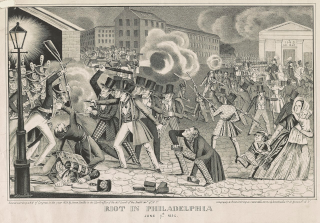
On July 3, Father John Patrick Dunn of the Church of St. Philip Neri in the Southwark District is warned that the church might be attacked during an upcoming parade held by the Native American Party. The Native American Party, a nativist political party, plans to hold a large parade the next day on Independence Day.
Five of the muskets placed in St. Philip Neri’s Church are discovered to be defective and are sent back to the Frankford Arsenal to be repaired. No violence occurs before or during the parade, but on July 5, a nativist mob numbering in the thousands gathers at the church after some observe five defective muskets being returned to the church. They then demand that the sheriff remove the weapons, while Father Dunn and volunteers rally to protect the church. Sheriff Morton McMichael and two aldermen search the church and remove twelve muskets. After leaving the church, the sheriff urges the crowd to disperse and leaves a volunteer posse to guard the church. The mob remains, and a man injured in the May riots makes a speech to the crowd, calling for a second search of the church. The sheriff, an alderman, and seventeen nativists enter the church and find three armed men, fifty-three muskets, ten pistols, a keg of gunpowder and ammunition. To avoid inciting the mob, the sheriff decides not to remove the armaments, and the search party stays in the church. Just after midnight, July 6, Major General Patterson orders a company of city guards to clear the streets. After the crowd disperses, the arms found within the church are removed.
By midday, the crowds return around St. Philip Neri’s Church. GeneralGeorge Cadwalader orders the crowds to disperse, but they do not. By the evening, the sheriff arrives with a 150-strong posse. Throughout the evening, the military presence grows, and three cannons are stationed on the streets. The soldiers clear the streets near the church, despite being pelted with rocks by the mob. Responding to the rock throwers, General Cadwalader orders a cannon to be fired at the crowd on Third Street. Former U.S. CongressmanCharles Naylor begs the general not to fire. He and several others are arrested and held within the church. By the morning of July 7, most of the soldiers have left, but the crowds, led by an alderman and the sheriff, return and demand that the remaining guard release Naylor. Everyone except Naylor is released. The crowds grow, and a cannon is brought from a nearby wharf and used to threaten the church. After further negotiations, Naylor is released and carried home to cheers on people’s shoulders.
After Naylor is brought home, the mob attacks the church, damaging a wall with the cannon. A second cannon is brought from the wharfs and fired at the church, after which the mob pelts the building with rocks and break in through a side door. The soldiers fire on the men breaking into the church, who promptly retreat. After retreating, the nativists negotiate with the guard, who agrees to withdraw, allowing the nativists to guard the church. The crowd pelts the soldiers with rocks and some soldiers fire back, which only incites the mob further. The mob forces its way into the church, causing extensive damage to the interior. After about an hour, a group of twenty men organizes themselves to guard St. Philip Neri’s, and the mob leaves the church.
By the evening, a large number of soldiers arrive with orders to clear the streets, only to be stoned in the process. After a captain is attacked, the order is given to fire on the mob, which results in seven fatalities and nine injuries. Not long after, people with muskets and cannons arrive and fierce fighting breaks out between the soldiers and the mob. The fighting lasts for several hours, with the soldiers being fired upon from alleyways and the windows of nearby buildings. The soldiers bring in two cannons of their own and fire on the mob. The mob returns fire using their own cannons, armed with items such as nails, chains, knives and broken bottles. In an attempt to capture the mob’s cannons, soldiers charge one cannon’s position, only to be knocked off their horses by a rope tied across the street. The cannons are all eventually captured, and by early morning on July 8, the fighting has ended.
At least fifteen people, including rioters and soldiers, are killed in the riot, and at least fifty people are injured. Under Governor Porter’s orders, state troops continue to arrive in the city in the days afterward, but no further violence takes place. An estimated 5,000 militia are used to stop violence. Troops begin to withdraw from the city on July 10, and the church takes over responsibility from the district of Southwark of protecting the church on July 11. As with the May riots, a grand jury blames the Irish Catholics for the riots but supports the military’s response to the violence.
The riots gain national attention and condemnation. The riots are used as an issue in the 1844 U.S. Presidential election, the Democratic Party condemning the growing Native American Party and the Whig Party, which the Democrats accuse of involvement in the nativist movement. In Philadelphia, the Native American Party ends up making a strong showing in the city’s October election.
On July 11, 1844, Philadelphia passes an ordinance that gives the city a battalion of artillery, a regiment of infantry, and at least one full troop of cavalry to preserve peace within the city when necessary. The difficulty of quelling the riots and other crime leads the Pennsylvania General Assembly to pass an 1845 act that requires Philadelphia, the township of Moyamensing and the unincorporated districts of Spring Garden, Northern Liberties, and Penn to maintain a police force of one man per 150 taxable inhabitants. In 1850, another act is passed that establishes that the Philadelphia police force will police the city and seven surrounding districts. The inability to maintain order effectively in Philadelphia’s suburbs is an important argument for the consolidation of the city in 1854.
After the riots, Bishop Kenrick ends his efforts to influence the public education system and begins encouraging the creation of Catholic schools, with 17 being founded by 1860. The friars of the Church of St. Augustine sue the city of Philadelphia for not providing the church with adequate protection, claiming $80,000 in damages. The city argues that the friars cannot claim their civil rights were violated, as the Order of Saint Augustine is a foreign organization under the Pope. Furthermore, the city argues that the friars took a vow of poverty and cannot be property owners. The Augustinians end up proving the Order is incorporated in 1804 and is awarded $45,000. The church is rebuilt in 1848.
(Pictured: “Riot in Philadelphia,” lithograph by H. Bucholzer, 1844, Library of Congress)
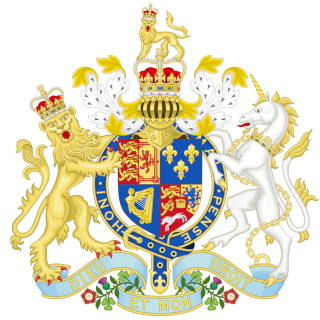
Before the Act, a number of “Penal laws” had been enacted in Britain and Ireland, which varied between the jurisdictions from time to time but effectively excluded those known to be Roman Catholics from public life.
By this Act, an oath is imposed, which besides a declaration of loyalty to the reigning sovereign, contains an abjuration of the Pretender, and of certain doctrines attributed to Roman Catholics, such as that excommunicated princes may lawfully be murdered, that no faith should be kept with heretics, and that the Pope has temporal as well as spiritual jurisdiction in Great Britain.
Those taking this oath are exempted from some of the provisions of the Popery Act 1698. Although it does not grant freedom of worship, it allows Catholics to join the army and purchase land if they take an oath of allegiance. The section as to taking and prosecuting priests is repealed, as well as the penalty of perpetual imprisonment for keeping a school. Roman Catholics are also enabled to inherit and purchase land, nor is an heir who conformed to the Established church any longer empowered to enter and enjoy the estate of his “papist” kinsman.
The passing of this act is the occasion of the Gordon Riots (1780) in which the violence of the mob is especially directed against William Murray, 1st Earl of Mansfield, who had objected to various prosecutions under the statutes now repealed.
The Treaty of Limerick, which actually consists of two treaties, is ratified by William III of England, widely known as William of Orange, on February 24, 1692.
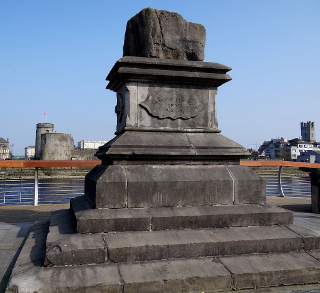
The Treaty is signed on October 3, 1691 ending the Williamite War in Ireland between the Jacobites and the supporters of William of Orange. Reputedly they are signed on the Treaty Stone, an irregular block of limestone which once served as a mounting block for horses. This stone is now displayed on a pedestal in Limerick, County Limerick, put there to prevent souvenir hunters from taking pieces of it. Because of the treaty, Limerick is sometimes known as the Treaty City.
After his victory at the Battle of the Boyne in July 1690, William III issues the Declaration of Finglas which offers a pardon to Jacobite soldiers but excludes their senior officers from its provisions. This encourages the Jacobite leaders to continue fighting and they win a major victory during the 1691 Siege of Limerick. However, defeats the following year at the Battle of Aughrim and the second siege of Limerick leave the Williamites victorious. Nonetheless the terms they offer to Jacobite leaders at Limerick are considerably more generous than those a year earlier at Finglas.
One treaty, the Military Articles, deals with the treatment of the disbanded Jacobite army. This treaty contains twenty-nine articles. Under the treaty, Jacobite soldiers in formed regiments have the option to leave with their arms and flags for France to continue serving under James II of England in the Irish Brigade. Some 14,000 Jacobites choose this option. Individual soldiers wanting to join the French, Spanish or Austrian armies also emigrate in what becomes known as the Flight of the Wild Geese. The Jacobite soldiers also have the option of joining the Williamite army. One thousand soldiers chose this option. The Jacobite soldiers thirdly have the option of returning home which some 2,000 soldiers choose.
The second treaty, the Civil Articles, which contains thirteen articles, protects the rights of the defeated Jacobite landed gentry who choose to remain in Ireland, most of whom are Catholics. Their property is not to be confiscated so long as they swear allegiance to William III and Mary II, and Catholic noblemen are to be allowed to bear arms. William requires peace in Ireland and is allied to the Papacy in 1691 within the League of Augsburg.
It is often thought that the Treaty of Limerick is the only treaty between Jacobites and Williamites. A similar treaty had been signed on the surrender of Galway on July 22, 1691, but without the strict loyalty oath required under the Treaty of Limerick. The Galway garrison had been organised by the mostly-Catholic landed gentry of counties Galway and Mayo, who benefited from their property guarantees in the following century.
(Pictured: The Treaty Stone on which the Treaty of Limerick may have been signed)
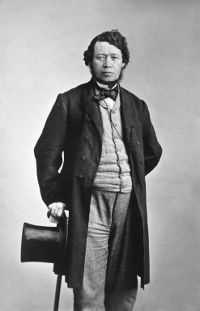
McGee grows up a Catholic Irishman who hates the British rule of Ireland and works for a peasant revolution to overthrow British rule and secure Irish independence. He escapes arrest and flees to the United States in 1848, where he reverses his political beliefs. He becomes disgusted with American republicanism and democracy, and becomes intensely conservative in his politics and in his religious support for the Pope.
McGee moves to Canada in 1857 and works hard to convince the Irish Catholics to cooperate with the Protestant British in forming a Confederation that will make for a strong Canada in close alliance with Britain. His fervor for Confederation garners him the title “Canada’s first nationalist.” He fights the Fenians in Canada, who are Irish Catholics who hate the British and resemble his younger self politically. McGee succeeds in helping create the Canadian Confederation in 1867.
On April 7, 1868, McGee, having participated in a parliamentary debate that goes on past midnight, walks back to the boarding house where he is staying. McGee is opening the door to Trotter’s Boarding House in Ottawa when he is shot by someone waiting for him on the inside. Several people run to the scene, however there is no sign of the assassin. It is later determined that McGee is assassinated with a shot from a handgun by Patrick J. Whelan. He is to date the only Canadian victim of political assassination at the federal level.
McGee is given a state funeral in Ottawa and interred in a crypt at the Cimetière Notre Dame des Neiges in Montreal. His funeral procession in Montreal draws an estimated crowd of 80,000 out of a total city population of 105,000.
Patrick J. Whelan, a Fenian sympathiser and a Catholic, is accused, tried, convicted, and hanged for the crime on February 11, 1869, in Ottawa. The jury is decisively swayed by the forensic evidence that Whelan’s gun had been fired shortly before the killing, together with the circumstantial evidence that he had threatened and stalked McGee. Historian David Wilson points out that forensic tests conducted in 1972 show that the fatal bullet is compatible with both the gun and the bullets that Whelan owned. Wilson concludes, “The balance of probabilities suggests that Whelan either shot McGee, or was part of a hit-squad, but there is still room for reasonable doubt as to whether he was the man who actually pulled the trigger.”
The government of Canada’s Thomas D’Arcy McGee Building stands near the site of the assassination. The case is dramatised in the Canadian play Blood on the Moon by Ottawa actor/playwright Pierre F. Brault. The assassination of McGee is also a major component of Away, a novel about Irish immigration to Canada by Canadian novelist Jane Urquhart.
The Treaty of Limerick, which actually consists of two treaties, is signed on October 3, 1691, ending the Williamite War in Ireland between the Jacobites and the supporters of William III of England, widely known as William of Orange. Reputedly they are signed on the Treaty Stone, an irregular block of limestone which once served as a mounting block for horses. This stone is now displayed on a pedestal in Limerick, put there to prevent souvenir hunters from taking pieces of it. Because of the treaty, Limerick is sometimes known as the Treaty City.
After his victory at the Battle of the Boyne in July 1690, William III issues the Declaration of Finglas which offers a pardon to Jacobite soldiers but excludes their senior officers from its provisions. This encourages the Jacobite leaders to continue fighting and they win a major victory during the 1691 Siege of Limerick. However, defeats the following year at the Battle of Aughrim and the second siege of Limerick leave the Williamites victorious. Nonetheless the terms they offer to Jacobite leaders at Limerick are considerably more generous than those a year earlier at Finglas.
One treaty, the Military Articles, deals with the treatment of the disbanded Jacobite army. This treaty contains twenty-nine articles. Under the treaty, Jacobite soldiers in formed regiments have the option to leave with their arms and flags for France to continue serving under James II of England in the Irish Brigade. Some 14,000 Jacobites choose this option. Individual soldiers wanting to join the French, Spanish or Austrian armies also emigrate in what becomes known as the Flight of the Wild Geese. The Jacobite soldiers also have the option of joining the Williamite army. One thousand soldiers chose this option. The Jacobite soldiers thirdly have the option of returning home which some 2,000 soldiers choose.
The second treaty, the Civil Articles, which contains thirteen articles, protects the rights of the defeated Jacobite landed gentry who choose to remain in Ireland, most of whom are Catholics. Their property is not to be confiscated so long as they swear allegiance to William III and Mary II, and Catholic noblemen are to be allowed to bear arms. William requires peace in Ireland and is allied to the Papacy in 1691 within the League of Augsburg.
It is often thought that the Treaty of Limerick is the only treaty between Jacobites and Williamites. A similar treaty had been signed on the surrender of Galway on July 22, 1691, but without the strict loyalty oath required under the Treaty of Limerick. The Galway garrison had been organised by the mostly Catholic landed gentry of counties Galway and Mayo, who benefited from their property guarantees in the following century.
(Pictured: The Treaty Stone on which the Treaty of Limerick may have been signed)
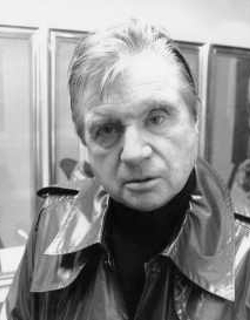
Bacon is born in Dublin on October 28, 1909. He is best known for his depictions of popes, crucifixions and portraits of close friends. His abstracted figures are typically isolated in geometrical cage like spaces, set against flat, nondescript backgrounds. Bacon says that he sees images “in series,” and his work typically focuses on a single subject for sustained periods, often in triptych or diptych formats. His output can be broadly described as sequences or variations on a single motif, beginning with the 1930s Pablo Picasso-informed Furies, moving on to the 1940s male heads isolated in rooms or geometric structures, the 1950s screaming popes, and the mid-to-late 1950s animals and lone figures, the 1960s portraits of friends, the nihilistic 1970s self-portraits, and the cooler more technical 1980s late works.
Bacon takes up painting in his late 30s, having drifted as an interior decorator, bon vivant and gambler. He says that his artistic career was delayed because he spent too long looking for subject matter that could sustain his interest. His breakthrough comes with the 1944 triptych Three Studies for Figures at the Base of a Crucifixion, which seals his reputation as a uniquely bleak chronicler of the human condition. From the mid-1960s he mainly produces portraits of friends and drinking companions, either as single or triptych panels. Following the 1971 suicide of his lover, George Dyer, his art becomes more sombre, inward-looking and preoccupied with the passage of time and death. The climax of this later period is marked by masterpieces, including Study for Self-Portrait (1982) and Study for a Self-Portrait—Triptych, 1985–86.
Despite his bleak existentialist outlook, solidified in the public mind through his articulate and vivid series of interviews with David Sylvester, Bacon in person is highly engaging and charismatic, articulate, well-read and unapologetically gay. He is a prolific artist, but nonetheless spends many of the evenings of his middle age eating, drinking and gambling in London‘s Soho with like-minded friends such as Lucian Freud, John Deakin, Muriel Belcher, Henrietta Moraes, Daniel Farson, Tom Baker, and Jeffrey Bernard.
After Dyer’s suicide he largely distances himself from this circle, and while his social life is still active and his passion for gambling and drinking continues, he settles into a platonic and somewhat fatherly relationship with his eventual heir, John Edwards. The art critic Robert Hughes describes him as “the most implacable, lyric artist in late 20th-century England, perhaps in all the world” and along with Willem de Kooning as “the most important painter of the disquieting human figure in the 50’s of the 20th century.” Bacon is the subject of two Tate retrospectives and a major showing in 1971 at the Grand Palais.
While on holiday in Madrid in 1992, Francis Bacon is admitted to the Handmaids of Maria, a private clinic, where he is cared for by Sister Mercedes. His chronic asthma, which has plagued him all his life, has developed into a respiratory condition and he is unable to talk or breathe very well. He dies of a heart attack on April 28, 1992, after attempts to resuscitate him fail.
Bacon bequeaths his estate, then valued at £11 million, to John Edwards and Brian Clark, executors. In 1998 the director of the Hugh Lane Gallery in Dublin secures the donation of the contents of Bacon’s chaotic studio at 7 Reece Mews, South Kensington. The contents of his studio are moved and reconstructed in the gallery. Most of his works remain in the Hugh Lane in Dublin today.
Since his death his reputation and market value have grown steadily, and his work is among the most acclaimed, expensive and sought-after. In the late 1990s a number of major works, previously assumed destroyed, including early 1950s popes and 1960s portraits, reemerge to set record prices at auction. In 2013 his Three Studies of Lucian Freud sets the world record as the most expensive piece of art sold at auction.
James Henthorn Todd, biblical scholar, educator, and Irish historian, is born in Rathfarnham, a Southside suburb of Dublin, on April 23, 1805. He is noted for his efforts to place religious disagreements on a rational historical footing, for his advocacy of a liberal form of Protestantism, and for his endeavours as an educator, librarian, and scholar in Irish history.
Todd is the son of Charles Hawkes Todd, a professor of surgery, and Eliza Bentley, and is the oldest of fifteen children. Noted physician Robert Bentley Todd is among his younger brothers. His father dies a year after he receives a B.A. from Trinity College, Dublin in 1825, diminishing his prospects for success. However, he is able to remain at the college by tutoring and editing a church periodical.
Todd obtains a premium in 1829, and two years later is elected Fellow, taking deacon’s orders in the same year. From that time until 1850, when he becomes a Senior Fellow, he is among the most popular tutors in Trinity College.
Todd takes priest’s orders in 1832. He begins publishing in earnest, including papers on John Wycliffe, church history, and the religious questions of his day. He is Donnellan Lecturer in 1838 and 1839, publishing works related to the Antichrist in which he opposes the views of the more extreme of his co-religionists who apply this term to the Roman Catholicism and the Pope. In 1840 he graduates Doctor of Divinity.
In 1837 Todd is installed Treasurer at St. Patrick’s Cathedral in Dublin and becomes Precentor in 1864. His style of preaching is described as simple and lucid, and his sermons interesting. He co-founds Saint Columba’s College in 1843, a school which promotes the Irish language for those who intend to take orders, as well as promoting the principles of the Church of Ireland.
In 1849 Todd is made Regius Professor of Hebrew at Trinity, and a Senior Fellow the following year. In 1852 he is appointed Librarian, and working alongside John O’Donovan and Eugene O’Curry, he classifies and arranges the collection of manuscripts. When his office receives money, he spends it on the acquisition of manuscripts and rare books, and he deserves much credit for the library’s high ranking as one of the chief libraries of Europe.
Todd’s secular achievements are no less remarkable. In 1840 he co-founds the Irish Archaeological Society and acts as its honorary secretary. He is elected a member of the Royal Irish Academy and strives actively to acquire transcripts and accurate accounts of Irish manuscripts from foreign libraries. He is honorary secretary from 1847 to 1855, and president from 1856 to 1861. In 1860 he is given an ad eundem degree at the University of Oxford.
Todd is a notable person among notable people. His work is widely respected and cited. Among his friends and acquaintances are lawyer and poet Sir Samuel Ferguson, Conservative Member of Parliament (MP) and Roman Catholic convert Edwin Wyndham-Quin, fellow historian William Reeves, artist Sir George Petrie, and the Stokes family (physician father William, future lawyer and Celticist son Whitley, and future antiquarian daughter Margaret).
James Henthorn Todd dies at his house in Rathfarnham on June 28, 1869, and is buried in the churchyard of St. Patrick’s Cathedral.
McGee, born on April 13, 1825 in Carlingford, County Louth, grows up a Catholic Irishman who hates the British rule of Ireland and works for a peasant revolution to overthrow British rule and secure Irish independence. He escapes arrest and flees to the United States in 1848, where he reverses his political beliefs. He becomes disgusted with American republicanism and democracy, and becomes intensely conservative in his politics and in his religious support for the Pope.
McGee moves to Canada in 1857 and works hard to convince the Irish Catholics to cooperate with the Protestant British in forming a Confederation that will make for a strong Canada in close alliance with Britain. His fervor for Confederation garners him the title “Canada’s first nationalist.” He fights the Fenians in Canada, who are Irish Catholics who hate the British and resemble his younger self politically. McGee succeeds in helping create the Canadian Confederation in 1867.
On 7 April 1868, McGee, having participated in a parliamentary debate that goes on past midnight, walks back to the boarding house where he is staying. McGee is opening the door to Trotter’s Boarding House in Ottawa when he is shot by someone waiting for him on the inside. Several people run to the scene, however there is no sign of the assassin. It is later determined that McGee is assassinated with a shot from a handgun by Patrick J. Whelan.
McGee is given a state funeral in Ottawa and interred in a crypt at the Cimetière Notre Dame des Neiges in Montreal. His funeral procession in Montreal draws an estimated crowd of 80,000 out of a total city population of 105,000.
Patrick J. Whelan, a Fenian sympathiser and a Catholic, is accused, tried, convicted, and hanged for the crime on February 11, 1869, in Ottawa. The jury is decisively swayed by the forensic evidence that Whelan’s gun had been fired shortly before the killing, together with the circumstantial evidence that he had threatened and stalked McGee. Historian David Wilson points out that forensic tests conducted in 1972 show that the fatal bullet is compatible with both the gun and the bullets that Whelan owned. Wilson concludes, “The balance of probabilities suggests that Whelan either shot McGee, or was part of a hit-squad, but there is still room for reasonable doubt as to whether he was the man who actually pulled the trigger.”
The government of Canada’s Thomas D’Arcy McGee Building stands near the site of the assassination. The case is dramatised in the Canadian play Blood on the Moon by Ottawa actor/playwright Pierre Brault. The assassination of McGee is also a major component of Away, a novel about Irish immigration to Canada by Canadian novelist Jane Urquhart.




 seamus dubhghaill