seamus dubhghaill

Promoting Irish Culture and History from Little Rock, Arkansas, USA


Leave a comment

Death of Dorothy Macardle, Writer, Playwright, Journalist

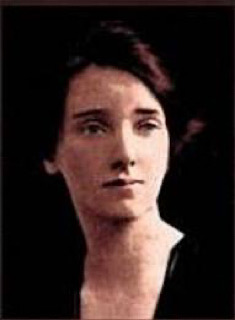
Dorothy Macardle, Irish writer, novelist, playwright, journalist and non-academic historian, dies in Drogheda, County Louth, on December 23, 1958. Associated throughout her life with Irish republicanism, she is a founding member of Fianna Fáil in 1926 and is considered to be closely aligned with Éamon de Valera until her death, although she is vocal critic of how women are represented in the 1937 constitution created by Fianna Fáil. She is also unable to respect de Valera’s attitudes adopted during World War II. Her book, The Irish Republic, is one of the more frequently cited narrative accounts of the Irish War of Independence and its aftermath, particularly for its exposition of the anti-treaty viewpoint.

Macardle is born in Dundalk, County Louth, on March 7, 1889, into a wealthy brewing family famous for producing Macardle’s Ale. Her father, Sir Thomas Callan Macardle, is a Catholic who supports John Redmond and the Irish Home Rule movement, while her mother, Lucy “Minnie” Macardle, comes from an English Anglican background and is politically a unionist. Lucy converts to Catholicism upon her marriage to Thomas. Macardle and her siblings are raised as Catholics, but Lucy, who is politically isolated in Ireland, “inculcated in her children an idealised view of England and an enthusiasm for the British empire“. She receives her secondary education in Alexandra College, Dublin—a school under the management of the Church of Ireland—and later attends University College Dublin (UCD). Upon graduating, she returns to teach English at Alexandra where she had first encountered Irish nationalism as a student. This is further developed by her first experiences of Dublin’s slums, which “convinced her that an autonomous Ireland might be better able to look after its own affairs” than the Dublin Castle administration could.

Between 1914 and 1916, Macardle lives and works in Stratford-upon-Avon in Warwickshire, England. There, her encounters with upper-class English people who express anti-Irish sentiment and support keeping Ireland in the British Empire by force further weakens her Anglophilia. Upon the outbreak of World War I, she supports the Allies, as does the rest of her family. Her father leads the County Louth recruiting committee while two of her brothers volunteer for the British Army. Her brother, Lieutenant Kenneth Callan Macardle, is killed at the Battle of the Somme, while another brother, Major John Ross Macardle, survives the war and earns the Military Cross. While Macardle is a student, the Easter Rising occurs, an experience credited for a further divergence of her views regarding republicanism and her family.

Macardle is a member of the Gaelic League and later joins both Sinn Féin and Cumann na mBan in 1917. In 1918, she is arrested by the Royal Irish Constabulary (RIC) while teaching at Alexandra.

On January 19, 1919, Macardle is in the public gallery for the inaugural meeting of the First Dáil and witnesses it declare unilateral independence from the United Kingdom, which is ultimately the catalyst for the Irish War of Independence.

By 1919 Macardle has befriended Maud Gonne MacBride, the widow of the 1916 Easter Rising participant John MacBride, and together the two work at the Irish White Cross, attending to those injured in the war. It is during this period she also becomes a propagandist for the nationalist side.

In December 1920, Macardle travel to London to meet with Margot Asquith, the wife of the former British prime minister H. H. Asquith, hoping to establish a line of communication between the Irish and British governments. It is during this trip that she comes into contact with Charlotte Despard, sister of the Lord Lieutenant of Ireland John French. Despard takes the pro-Irish side in the war and returns with Macardle to Dublin.

Following the signing of the Anglo-Irish Treaty in December 1921, Macardle takes the anti-treaty side in the ensuing Irish Civil War. Alongside Gonne MacBride and Despard, she helps found the Women Prisoners’ Defence League, which campaigns and advocates for republicans imprisoned by the newly established Irish Free State government. It is also during this same time that she begins working alongside Erskine Childers in writing for anti-treaty publications An Phoblacht and Irish Freedom.

In October 1922, Despard, Gonne MacBride and Macardle are speaking at a protest on O’Connell Street, Dublin against the arrest of Mary MacSwiney, a sitting Teachta Dála, by the Free State when Free State authorities move to break it up. Rioting follows and Free State forces open fire, resulting in 14 people being seriously wounded while hundreds of others are harmed in the subsequent stampede to flee. Following the event, Macardle announces she is going to pursue support of the Anti-treaty side full-time in a letter to Alexandra College, which ultimately leads to her dismissal on November 15, 1922. In the following days Macardle is captured and imprisoned by the Free State government and subsequently serves time in both Mountjoy Prison and Kilmainham Gaol, with Rosamond Jacob as her cellmate. During one point at her time in Kilmainham, Macardle is beaten unconscious by male wardens. She becomes close friends with Jacob and shares a flat with her in Rathmines later in the 1920s.

The Irish Civil War concludes in the spring of 1923, and Macardle is released from prison on May 9.

Following the Irish Civil War, Macardle remains active in Sinn Féin and is drawn into the camp of its leader Éamon de Valera and his wife Sinéad. She travels alongside the de Valeras as they tour the country and she is a frequent visitor to their home. As the trust between Macardle and de Valera develops, de Valera asks her to travel to County Kerry to investigate and document what later becomes known as the Ballyseedy massacre of March 1923, in which a number of unarmed republican prisoners are reportedly killed in reprisals. She obliges, and by May 1924 she has compiled a report that is released under the title of The Tragedies of Kerry.” Immediately upon the release of the report, the Minister for Defence Richard Mulcahy sets up an inquiry in June 1924 to carry out a separate investigation by the government. However, the government’s inquiry comes to the conclusion there had been no wrongdoing committed. Her book The Tragedies of Kerry remains in print and is the first journalistic historical account of the Irish Civil War from those on the republican side detailing Ballyseedy, Countess Bridge and various other incidents that occur in Kerry during this time.

In 1926, Éamon de Valera resigns as President of Sinn Féin and walks out of the party following a vote against his motion that members of the party should end their policy of abstentionism against Dáil Éireann. De Valera and his supporters, including Macardle, form the new political party Fianna Fáil in May 1926, with Macardle immediately elected to the party’s National Executive|Ard Chomhairle, one of six female members out of twelve on the original party National Executive, the others being Hanna Sheehy-SkeffingtonKathleen Clarke, Countess Constance Markievicz and Linda Kearns. Macardle is made the party’s director of publicity. However, she resigns from Fianna Fáil in 1927 when the new party endorses taking their seats in Dáil Eireann. Nevertheless, her views remain relatively pro-Fianna Fáil and pro-de Valera.

Macardle recounts her civil war experiences in Earthbound: Nine Stories of Ireland (1924). She continues as a playwright for the next two decades. In her dramatic writing, she uses the pseudonym Margaret Callan. In many of her plays a domineering female character is always present. This is thought to be symbolic of her own relationship with her own mother. Her parents’ marriage had broken up as her mother returned to England and her father raised the children with servants in Cambrickville and they were sent away for school. This female character holds back the growth and development of the younger female character in Dorothy’s plays and writings. 

By 1931, Macardle takes up work as a writer for The Irish Press, which is owned by de Valera and leans heavily toward supporting Fianna Fáil and Irish republicanism in general. In addition to being a theatre and literary critic for the paper, she also occasionally writes pieces of investigative journalism such as reports on Dublin’s slums. In the mid-1930s she also becomes a broadcaster for the newly created national radio station Radio Éireann.

In 1937, Macardle writes and publishes the work by which she is best known, The Irish Republic, an in-depth account of the history of Ireland between 1919 until 1923. Because of the book, political opponents and some modern historians consider her to have been a hagiographer toward de Valera’s political views. In 1939 she admits, “I am a propagandist, unrepentant and unashamed.” Overall, however, the book is well-received, with reviews ranging from “glowing” to measured praise. She is widely praised for her research, thorough documentation, range of sources and narration of dramatic events, alongside reservations about the book’s political slant. The book is reprinted several times, most recently in 2005. Éamon de Valera considers The Irish Republic the only authoritative account of the period from 1916 to 1926, and the book is widely used by de Valera and Fianna Fáil over the years and by history and political students. She spends seven years writing the book in a cottage in DelganyCounty Wicklow, and it is a day-by-day account of the history of the events in Ireland from 1919 to 1923 recorded in painstaking detail together with voluminous source material.

In 1937, de Valera’s Fianna Fáil government is able to create a new Constitution of Ireland following a successful referendum. However, there is widespread criticism of the new Constitution from women, particularly republican women, as the language of the new Constitution emphasises that a woman’s place should be in the home. Macardle is among them, deploring what she sees as the reduced status of women in this new Constitution. Furthermore, she notes that the new Constitution drops the commitment of the 1916 Proclamation of the Irish Republic to guarantee equal rights and opportunities “without distinction of sex” and writes to de Valera questioning how anyone “with advanced views on the rights of women” can support it. DeValera also finds her criticising compulsory Irish language teaching in schools.

The entire matter of the new Constitution leads Macardle to join Hanna Sheehy-Skeffington’s Women’s Social and Progressive League.

While working as a journalist with the League of Nations in the late 1930s, Macardle acquires a considerable affinity with the plight of Czechoslovakia being pressed to make territorial concessions to Nazi Germany. Believing that “Hitler‘s war should be everybody’s war,” she disagrees with de Valera’s policy of neutrality. She goes to work for the BBC in London, develops her fiction and, in the war’s aftermath, campaigns for refugee children – a crisis described in her book Children of Europe (1949). In 1951, she becomes the first president of the Irish Society of Civil Liberties.

Macardle dies of cancer on December 23, 1958, in a hospital in Drogheda, at the age of 69. Though she is somewhat disillusioned with the new Irish State, she leaves the royalties from The Irish Republic to her close friend Éamon de Valera, who had written the foreword to the book. De Valera visits her when she is dying. She is accorded a state funeral, with de Valera giving the oration. She is buried in Sutton, Dublin.

Leave a comment

Birth of Kevin Barry, IRA Volunteer & Medical Student

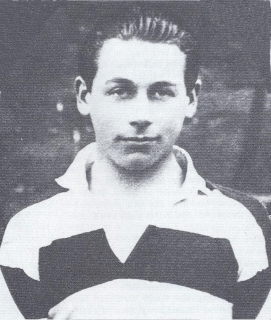
Kevin Gerard Barry, Irish Republican Army (IRA) volunteer and medical student, is born on January 20, 1902, at 8 Fleet Street, Dublin. He becomes the first Irish republican to be executed by the British Government since the leaders of the Easter Rising.

Barry is the fourth of seven children born to Thomas Barry, dairyman, and Mary Barry (née Dowling), both originally from northeast County Carlow. His father dies of heart disease on February 8, 1908, at the age of 56. His mother then moves the family to the family’s farm at Tombeagh, Hacketstown, County Carlow, while retaining the family’s townhouse on Fleet Street. As a child he goes to the National School in Rathvilly. In 1915, he is sent to live in Dublin and attends the O’Connell Schools for three months, before enrolling in the Preparatory Grade at St. Mary’s College, Rathmines, in September 1915. He remains at that school until May 31, 1916, when it is closed by its clerical sponsors. With the closure of St. Mary’s College, he transfers to Belvedere College, a Jesuit school in Dublin. He joins the Irish Volunteers, the forerunner of the IRA, while still at Belvedere College, and enters University College Dublin (UCD) in 1919 to study medicine.

As a member of 1st Battalion, Dublin Brigade of the Irish Volunteers, he takes part in a successful raid for arms on the military post in King’s Inns, Dublin, on June 1, 1920. Within only six minutes the raiders secure rifles, light machine guns, and large quantities of ammunition, and depart the site with no casualties. He also takes part in an abortive attempt to burn Aughavanagh House, Aughrim, County Wicklow in July 1920, and an attack on a British ration party in Church Street, Dublin, on September 20, with the aim of seizing arms. The final operation fails. Gunfire breaks out, three soldiers of around Barry’s own age are killed or fatally wounded, and he becomes the first Volunteer to be captured in an armed attack since 1916.

During interrogation, Barry is threatened with a bayonet and is mistreated. A general court-martial on October 20, which he refuses to recognise, condemns him to death for murdering the three soldiers, although one of the bullets taken from Private Marshall Whitehead’s body is a .45 calibre, while all witnesses state that Barry was armed with a .38 Mauser Parabellum. Despite widespread appeals on grounds of both clemency and expediency, the cabinet in London and officials in Dublin decide separately against a reprieve, probably because of its likely effect on the morale of soldiers and police.

On October 28, the Irish Bulletin, the official propaganda newspaper produced by Dáil Éireann‘s Department of Publicity, publishes Barry’s statement alleging torture. The headline reads English Military Government Torture a Prisoner of War and are about to Hang him. The Irish Bulletin declares Barry to be a prisoner of war, suggesting a conflict of principles is at the heart of the conflict. The British do not recognise a war and treat all killings by the Irish Republican Army (IRA) as murder. The public learns on this day that the date of execution has been fixed for November 1.

He was hanged in Mountjoy Prison, Dublin, on November 1, after hearing two Masses in his cell. The timing of the execution, only seven days after the death by hunger strike of Terence MacSwiney, the republican Lord Mayor of Cork, brings public opinion to a fever-pitch. He is buried in unconsecrated ground on the jail property. His comrade and fellow student Frank Flood is buried alongside him four months later. A plain cross marks their graves and those of Patrick Moran, Thomas Whelan, Thomas Traynor, Patrick Doyle, Thomas Bryan, Bernard Ryan, Edmond Foley and Patrick Maher who are hanged in the same prison before the Anglo-Irish Treaty of July 1921 which ends hostilities between Irish republicans and the British. The graves go unidentified until 1934. They become known as the Forgotten Ten by republicans campaigning for the bodies to be reburied with honour and proper rites. On October 14, 2001, the remains of the ten men are given a state funeral and moved from Mountjoy Prison to be re-interred at Glasnevin Cemetery in Dublin.

Barry is the first person to be tried and executed for a capital offence under the Restoration of Order in Ireland Act 1920, passed twelve weeks earlier. Together with his youth, this makes him a republican martyr celebrated in many ballads and verses. The best-known, set to a tune popular with British servicemen, is recorded by the American singer Paul Robeson, among others. A memorial stained-glass window by Richard King of the Harry Clarke Studio is later installed in the former UCD council chamber (afterward called the Kevin Barry Room), Earlsfort Terrace, Dublin.


Leave a comment

The Brookeborough Royal Ulster Constabulary Barracks Attack

An Irish Republican Army (IRA) unit attacks Brookeborough Royal Ulster Constabulary (RUC) barracks on January 1, 1957, in one of the most famous incidents of the IRA’s Operation Harvest (Border campaign). Two IRA men are killed as they attack Brookeborough police station in County Fermanagh. The attack is a military disaster for the IRA, but it proves a major propaganda coup.

The two dead men, Seán South and Fergal O’Hanlon, are hailed as republican martyrs. Their funerals are attended by thousands of people and their lives immortalised in republican ballads.

The Brookeborough raid is the central action in the IRA’s border campaign of 1956-62, yet it is over and done within a matter of minutes. The aim is to unite Ireland by setting up “liberated zones” in Northern Ireland and overthrowing the Stormont government. The campaign is preceded by a series of raids carried out by republican splinter group Saor Uladh. An attack on Rosslea police station in County Fermanagh in November 1955 results in the death of Saor Uladh member Connie Green.

Royal Ulster Constabulary (RUC) officer Gordon Knowles finds himself on the sharp end of the assault as the republicans blow the front wall from the barracks. “I was blown right across the guard room,” he says. “The only thing I felt was like somebody hitting me in the back and that was the bullet going in through the left-hand side of the spine, round the back of the spine and lodging one inch from the back. They shone a torch in my face and said: ‘Oh, let’s go, he’s had it.'”

Knowles is lucky to be alive as medical staff discover thirteen bullet holes in his body. He recovers to resume his police career and still carries bullet splinters in his body to this day.

The Brookeborough raid, involving fourteen IRA men, is planned along identical lines to the Rosslea attack, with very different results. The IRA aims to explode a bomb in front of the police station and to seize RUC weapons.

Just two days previously, the police suffer their first death of the border campaign when Constable John Scally is killed in an attack on Derrylin barracks, another County Fermanagh border station.

Ahead of the Brookeborough attack, the men gather at the County Monaghan family home of Fergal O’Hanlon, who takes part in the raid. O’Hanlon’s sister Pádraigín Uí Mhurchadha describes the scene. “I remember Fergal, on the night, saying to my mother ‘These men, give them a good meal because there are faces here tonight you won’t see again.’ Now it turned out that he happened to be one of the men that she would not see again.”

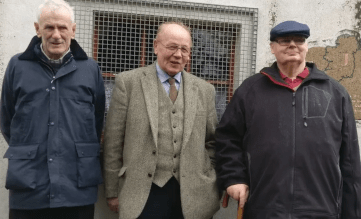
The BBC has recently spoken to three of the IRA men involved the raid.

Micheal Kelly, now in his 80s, has never given an interview before about his role in the attack. “The objective was to attack the barracks, take their guns from them and if necessary, if we had the time and space, to actually destroy the barracks,” he says.

Phil O’Donoghue is also part of the IRA unit. Today, he is honorary president of the 32 County Sovereignty Movement, which is believed to be closely aligned to the Real IRA. He insists the Brookeborough operation was about taking arms rather than killing police officers. “We had strict orders – under no circumstances were we to take on the B Specials (Ulster Special Constabulary) or RUC. We were, if at all possible, to try and take their weapons but we were not in any way to attack them.”

The IRA men arrive in Brookeborough in a stolen tipper lorry, but the driver is unfamiliar with the village and stops in the wrong place. Paddy O’Regan, from Dublin, is in the back of the lorry. His job is to assist Seán South in operating a Bren light machine gun. “When the truck actually stopped, and I got up off the floor and looked over the side of the truck I was looking into a shop – no sign of a barracks.” It is the first in a series of errors – the bomb placed by the station door fails to explode.

Barry Flynn, who has written a history of the border campaign, says he saw Brookeborough as a kind of tragic fiasco. “It became like the Keystone Cops,” he says. “There were a number of grenades thrown at the police station when they found it. One bounced back underneath the lorry and actually damaged the lorry very badly.”

RUC Sgt. Kenneth Cordner is quick to react to the attack. The truck is eventually parked up close to the barracks, allowing Sgt. Cordner a clear field of fire from an upstairs window. Using a Sten sub-machine gun, he opens up with deadly effect on the IRA men below.

Paddy O’Regan is wounded in the ensuing firefight. “We started to return fire on the barracks,” he says. “And after a while I looked down and I saw Seán South lying flat on his face and I felt two thumps in my hip. I knew I was wounded but it didn’t hurt particularly bad. It’s just like somebody hit you a couple of digs and it was just my hips started going numb.”

The order is given to withdraw, according to ex-IRA man Micheal Kelly. “Fergal, the last thing I heard him say, ‘Oh, my legs, oh, my legs!’ He was shot in the legs and bled to death. Seán South, I would say, was dead at this stage.”

The attackers flee across the border leaving the two dead men at a remote farm building where they are found by police.

Bobbie Hanvey is a well-known broadcaster and photographer. In 1957 he is just twelve years old and living across the road from the Brookeborough barracks. He remembers hiding under a bed with two of his friends as the attack unfolded. “The bedroom lit up – it was like daylight with the flames coming out of the guns. That image and the sounds of those guns and that experience has stayed with me to the present day – I’ll never forget it.”

Historian Barry Flynn explains that the Brookeborough raid is also a symbolic moment for the republican movement. The lives of the dead IRA men are subsequently remembered in two famous ballads, “Seán South from Garryowen” and the “Patriot Game.”

“People were writing the songs and, regardless of what was going to happen in the rest of the campaign, the names of Seán South and Fergal O’Hanlon were there forever as the martyrs of Brookeborough”, says Flynn.

The border campaign never again reaches the intensity of the Brookeborough incident, but police officers and IRA men continue to die. The IRA calls a ceasefire in 1962. By then it is clear that its strategy for overthrowing the Stormont government has failed.

(From: “Brookeborough: Failed IRA attack and republican legend” by Robin Sheeran and Bernadette Allen, BBC News NI, http://www.bbc.com, February 22, 2019 | Pictured: Ex-IRA men Micheal Kelly, Phil O’Donoghue and Paddy O’Regan who have a role in the Brookeborough raid)


Leave a comment

Birth of Tom Hales, IRA Volunteer & Fianna Fáil Politician

Thomas Hales, Irish Republican Army (IRA) volunteer and Fianna Fáil politician, is born in Knocknacurra House, Ballinadee, near Bandon, County Cork, on March 5, 1892.

Hales is born on a family farm owned by his father, Robert Hales, an activist in the Irish Land War and a reputed member of the Irish Republican Brotherhood (IRB) and his wife, Margaret (née Fitzgerald). He is the sixth of nine children (five sons and four daughters). He is educated at Ballinadee national school and Warner’s Lane school, Bandon. After leaving school he works at Harte’s timber yard, Bandon.

Hales joins and is involved with the Irish Volunteers movement from its inception in November 1913. Elected a delegate at the Volunteer national convention in the Abbey Theatre in 1915, he is among the majority who vote for the election of the national executive.

Hales is a part of a group of volunteers who are mobilised and plan to rise up in Cork during the 1916 Easter Rising. He sends a number of dispatches to Cork requesting further instructions. However, they receive last minute orders to stand down and there is no uprising in Cork to match that in Dublin. The Volunteers give up their arms and are later arrested.

By May 1916, Hales and his brothers, Seán, Bob, and William, are fighting with the IRA in west Cork during the Irish War of Independence. Terence MacSwiney is arrested in Hales’ home on May 3, 1916, and Hales himself escapes and goes on the run. He states that he was listed as “wanted” in the Hue and Cry police gazette.

In 1918, Hales takes part in a raid on a British gunboat and holds 25 armed Royal Irish Constabulary (RIC) members prisoner at Snugmore Castle. He takes part in a decoy in assisting his elder brother, Seán, to escape after his arrest in connection with the German Plot. He is elected Battalion Commandant of the 1st (Bandon) Battalion (1917–19), and Brigade Commandant of Cork 3rd Brigade, IRA, in January 1919.

In December 1919, Hales takes part in an ambush against the RIC at Kilbrittain and Bandon and is involved in the manufacture of gunpowder for IRA munitions. By this point he is the commander of the Third Cork Brigade of the IRA. In July 1920, he along with Harte is arrested by soldiers from the Essex Regiment.

The pair are taken to a nearby military barracks, where they are severely beaten while being interrogated by officers of the regiment. Hales has his fingernails pulled out, an event that later inspires a scene in the film The Wind That Shakes the Barley. However, neither Hales nor Harte give up any information and are eventually sent to a military hospital to recuperate. Hales is tried and is eventually sentenced to two years’ penal servitude, which he serves in Pentonville and Dartmoor prisons in England. He is commander of the Irish prisoners at Pentonville, but is released following a general amnesty after the Anglo-Irish Treaty in December 1921. According to Tom Barry, Harte suffers brain damage and goes insane before dying in Broadmoor Hospital.

A fifth Hales brother, Donal, settles in Genoa from 1913, and is appointed Irish Consular and Commercial Agent for Italy in February 1919. In this capacity he plays a leading propaganda role. Several letters from Michael Collins to Donal Hales still exist which are used by Hales to promote international awareness of the Irish conflict in Italian publications. Donal oversees a failed attempt to import a substantial number of Austrian weapons and ammunition captured from World War I, from Genoa in the spring of 1921, through the person of Gabriele D’Annunzio.

During the Irish Civil War, Tom and Seán Hales fight on opposite sides, with Hales fighting against the Anglo-Irish Treaty with the Anti-Treaty IRA while Seán joins the newly formed National Army of the Irish Free State. While the bothers end up on opposite sides of the war, they never openly criticise one another for their rival political stances.

Hales is elected to the anti-Treaty IRA executive in March 1922, but resigns in June over a proposal to prevent the Free State’s first general election in June 1922. He resumes his old rank during the Irish Civil War as commander of Cork 3 Brigade.

During the Irish Civil War in July 1922, Hales takes part in the raid and capture of Skibbereen Barracks and Ballineen by anti-Treaty forces. He is also involved in a skirmish with Free State troops at Newcestown. He is arrested in November 1922 and imprisoned first in Cork and then at the Curragh. He is released in December 1923, having taken part in a hunger strike for fourteen days. He mentions in his application for a military pension that he was a member of the Supreme Council of the IRB at this time.

In December 1922, Hales’s brother Seán is assassinated by the anti-Treaty IRA in Dublin, in reprisal for the Free State government’s execution of IRA prisoners. Hales later applies to the Irish government for a service pension under the Military Service Pensions Act, 1934 and is awarded nine years’ service in 1935 at Grade B for his service with the Irish Volunteers and the IRA between April 1, 1917, and September 30, 1923.

Hales is elected to Dáil Éireann as a Fianna Fáil Teachta Dála (TD) for the Cork West constituency at the 1933 Irish general election. He resigns from Fianna Fáil in June 1936 stating he cannot support their policy on interning IRA members. He fails to retain his seat as an independent candidate at the 1937 Irish general election. He also unsuccessfully contests the 1944 Irish general election as an independent candidate and the 1948 Irish general election as a candidate for Clann na Poblachta, receiving 2,287 votes (7.93%).

Hales makes his living as farmer. A member of the Mallow area board of the beet growers’ association from 1934 to 1942, he is also connected with other farming organisations. He marries Ann Lehane from Tirelton, Macroom, on April 30, 1927. They have five children, Seán, Robert, Thomas, Eileen, and Margaret.

Hales dies on April 29, 1966, at St. Finbarr’s Hospital, Cork, and is buried at St. Patrick’s Cemetery, Bandon.


Leave a comment

Publication of the First Issue of “The United Irishman”

john-mitchel

John Mitchel, Irish nationalist activist, author, and political journalist, publishes the first issue of The United Irishman on February 12, 1848.

Mitchel is one of the great propagandists of his day, although the causes he espouses often place him on the wrong side, he is loved and loathed in equal measure. He is one of the few Irishmen to have incurred the wrath of the British government and of the Federal administration of the United States.

Mitchel is born near Dungiven, County Derry in what is now Northern Ireland on November 3, 1815. The son of a Presbyterian clergyman, he creates his own pulpit in a series of journalistic enterprises in Dublin, Tennessee, Virginia and New York.

Mostly raised in Newry, County Down, Mitchel’s first political association is with the Young Ireland movement of the 1840s and the famous The Nation newspaper, founded by Charles Gavan Duffy, Thomas Davis and John Blake Dillon in 1842. But long before the abortive Young Ireland Rebellion of 1848 he has moved on, finding the editorial policies of The Nation rather too bland for his tastes.

Inflamed by the suffering he witnesses on a trip to Galway, it is Mitchel, more than any other writer or politician, who shapes the nationalist perception of an Gorta Mór (Great Famine):

“I could see, in front of the cottages, little children leaning against a fence when the sun shone out for they could not stand, their limbs fleshless, their bodies half-naked, their faces bloated yet wrinkled, and of a pale, greenish hue… I saw Trevelyan’s claw in the vitals of those children: his red tape would draw them to death: in his government laboratory he had prepared for them the typhus poison.”

Responding to such writing, Ireland simmers, angry and ready for rebellion. Fearful of Mitchel’s power, London’s Punch magazine emphasises his international standing by portraying him as an Irish monkey challenging the Great British Lion. The Times thunders against him. When Mitchel produces his own republican newspaper, The United Irishman, which, in its inaugural edition, claims that “the world was weary of Old Ireland and also of Young Ireland” thus attacking both Daniel O’Connell and his younger antagonists with the same broadsword. He aims to be an equal opportunities offender and succeeds admirably.

The United Irishman sells out and is shut down by the British authorities after a mere sixteen issues. In order to silence Mitchel, to rob him of his heroic status and his possible martyrdom, the British government passes the Treason Felony Act 1848, which seeks to treat treason as a common crime. He is later tried before an elegantly and efficiently packed jury, found guilty of treason-felony, and deported to Van Diemen’s Land (Tasmania). The result is one of the greatest works of Irish political history, The Jail Journal, in which Mitchel writes about his own experience of deportation and advocates a far more militaristic approach to Ireland’s “English problem” than would have been popular heretofore.

Mitchel is acclaimed by Patrick Pearse, who declares The Jail Journal to be “the last of the four gospels of the New Testament of Irish nationality, the last and the fieriest and the most sublime.” Éamon de Valera reveres Mitchel, and when in 1943 he imagines Ireland as “the home of a people who valued material wealth only as a basis for right living, of a people who, satisfied with frugal comfort, devoted their leisure to the things of the spirit,” he too is delving into The Jail Journal for his inspiration.

(From: #OTD in 1848 – John Mitchel Publishes First United Irishman, Stair na hÉireann | History of Ireland)


Leave a comment

The Irish Republican Army S-Plan

s-plan-coventry-attack

The S-Plan or Sabotage Campaign or England Campaign, an Irish Republican Army (IRA) campaign of bombing and sabotage against the civil, economic, and military infrastructure of the United Kingdom, begins on January 16, 1939, and lasts until March 1940. The campaign is conceived by Seamus O’Donovan in 1938 at the request of then IRA Chief of Staff Seán Russell. It is believed that Russell and Joseph McGarrity devised the strategy in 1936.

The S-Plan contains many precise instructions for acts of destruction which have as their object the paralysis of all official activity in England and the greatest possible destruction of British defence installations. It divides the IRA campaign into two main lines: propaganda and offensive (military) action.

Operations are strictly concentrated on the island of Britain, in and around centres of population where IRA volunteers can operate freely without drawing attention. No attacks on targets in Northern Ireland or other areas under British control are planned as part of the S-Plan.

Sources of funding for the campaign are not known, but once the campaign is operational, the weekly expenses for operations in the field amount to approximately £700. Operational units are expected to raise any money needed themselves, and the men who act within IRA teams are unpaid and expected to support themselves while on missions.

On January 12, 1939, the IRA Army Council sends an ultimatum, signed by Patrick Fleming, to British Foreign Secretary Lord Halifax. The communiqué duly informs the British government of “The Government of the Irish Republic’s” intention to go to “war.”

On Sunday, January 15, with no reply from the British Government, a proclamation is posted in public places throughout Ireland announcing the IRA’s declaration of war on Britain. This proclamation is written by Joseph McGarrity, leader of Clan na Gael in the United States, and is signed by six members of the Army Council – Stephen Hayes, Patrick Fleming, Peadar O’Flaherty, George Oliver Plunkett, Larry Grogan and Seán Russell.

The five deaths during the Coventry bombing on August 25, 1939, effectively ends the campaign. By late 1940 the introduction of the Treason Act 1939 and the Offences Against the State Act 1939 in Ireland, and the Prevention of Violence (Temporary Provisions) Act in Britain lead to many IRA members interned in Ireland, arrested in Britain, or deported from Britain. The granting of extra powers to the Irish Justice Minister under the Emergency Powers Act in January 1940 leads to 600 IRA volunteers being imprisoned and 500 interned during the course of World War II alone.

The final figures resulting from the S-Plan are cited as 300 explosions, ten deaths and 96 injuries.

(Pictured: The aftermath of an IRA bike bomb in Coventry on August 25, 1939)