seamus dubhghaill

Promoting Irish Culture and History from Little Rock, Arkansas, USA


Leave a comment

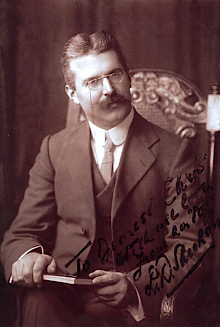
Birth of D. D. Sheehan, Nationalist Politician & Labour Leader

Daniel Desmond (‘D. D.’) Sheehan, Irish nationalist, politicianlabour leader, journalistbarrister and author, is born on May 28, 1873, at Dromtariffe, Kanturk, County Cork.

The eldest of the three sons and one daughter of Daniel Sheehan, tenant farmer, and his wife, Ellen (née Fitzgerald). He is educated at the local primary school. In his book Ireland since Parnell (1921) he states that witnessing the ragged poverty of labourers’ and smallholders’ children who attended the school made him determined to do something for the poor. The family’s Fenian tradition and his parents’ eviction from their holding in 1880 form his early years. At the age of sixteen he becomes a schoolteacher.

In 1890, Sheehan takes up journalism, serving as correspondent of the Kerry Sentinel and special correspondent of the Cork Daily Herald in Killarney. He also becomes correspondence secretary to the Kanturk trade and labour council, which campaigns on behalf of agricultural labourers. He manages to get reports of meetings into the Cork papers, and this helps the rapid spread of the association, which in 1890 becomes the Irish Democratic Trade and Labour Federation, under the leadership of Michael Davitt. It is, however, fatally disrupted by the Parnell split. While Sheehan continues to admire Davitt, and despite the pre-split Irish party leadership having opposed the federation as a threat to Charles Stewart Parnell‘s leadership, he becomes a Parnellite, and always remembers his only meeting with Parnell at Tralee, when the chief is presented with a loyal address (drafted by Sheehan) from his Killarney supporters. After Parnell’s death and the defeat of the Second Home Rule Bill, he temporarily drops out of Irish politics.

Following his marriage on February 6, 1894, to Mary Pauline O’Connor of Tralee, Sheehan joins the staff of the Glasgow Observer in pursuit of journalistic experience, then becomes editor of the Catholic News in Preston, Lancashire. In 1898, he returns to Ireland and works on various papers, including the Cork Constitution, before serving as editor of the Skibbereen-based Cork County Southern Star (1899–1901), where his Parnellism brings him into conflict with the Bishop of Ross, Denis Kelly. He expresses sympathy for the newly founded United Irish League (UIL), established by William O’Brien in Connacht with the dual aim of representing western smallholders and using a new land agitation as a vehicle for Irish Party reunion. He does not, however, join the UIL himself.

In August 1894, the Clonmel solicitor J. J. O’Shee, anti-Parnellite MP for West Waterford from 1895, forms the Irish Land and Labour Association (ILLA) to agitate on behalf of agricultural labourers and small tenant farmers. Its appearance reflects the breakdown of the centralised party discipline which had existed before the Parnell split, and recognition that the land war’s prime beneficiaries had been large and middle-sized tenant farmers rather than the nation as a whole. On returning from Britain in 1898, Sheehan throws himself into organising the ILLA and becomes its president. In 1900 there are 100 branches, mostly in Cork, Tipperary, and Limerick. The Irish Party leadership look on this organisation with some suspicion.

At the 1900 United Kingdom general election in Ireland Sheehan seeks the Irish Parliamentary Party (IPP) nomination for South Cork but was defeated by Edward Barry. After the death of Dr Charles Tanner, however, he succeeds in obtaining the IPP nomination for the constituency of Mid Cork, despite the party leadership’s attempts to deny recognition to ILLA branches in order to hand the nomination to its favoured candidate. Sheehan is elected unopposed on May 17, 1901. At the age of 28, he is the youngest Irish member of parliament. Although he has been admitted to the party, his position as a labour representative and his perceived independent base make him something of an outsider.

From October 1904 Sheehan allies himself with O’Brien, writing regularly for the latter’s weekly a The Irish People. Redmondites accuse him of opportunism, but he always maintains that his personal inclination as an old Parnellite has been towards John Redmond and that his support for O’Brien derives from the older man’s willingness from 1904 to identify himself with the labourers’ campaign. Although their alliance originally likely contains elements of expediency, Sheehan and O’Brien develop a deep personal friendship.

Sheehan’s support for O’Brien leads to a split in the ILLA in 1906, with Tipperary and Waterford branches following O’Shee and Redmond, and Sheehan retaining the support of his Cork base and of some branches in Limerick and Kerry. He serves on the Cork advisory committee which represents tenant interests in land purchase negotiations under the Wyndham Land Act. It’s policy of “conference plus business” combines an offer to negotiate with willing landlords and a threat of agitation against those unwilling to give satisfactory terms. His faction of the ILLA becomes the basis for the grassroots organisation of O’Brien’s followers, and sporadic attempts, financed by O’Brien, are made to spread it outside its Munster base. Both factions of the ILLA claim credit for the passage of the 1906 and 1911 Labourers’ (Ireland) Acts which provide for the allocation of cottages and smallholdings to labourers. In Cork and some other parts of Munster these buildings become popularly known as “Sheehan’s cottages,” a term which long outlives Sheehan’s political career. He also helps to bring about the creation of a “model village” at Tower, near Blarney, the result of cooperation between the local ILLA branch and the rural district council.

At the 1906 general election the Redmond leadership attempts to avoid an open split by allowing O’Brien’s supporters to return unopposed. However, the continuing conflict between the two factions rapidly leads to a formal break. Shortly after the election Sheehan is excluded from the IPP, and thereby deprived of the parliamentary stipend paid to MPs with insufficient resources to maintain themselves. With the support of O’Brien and the small group of O’Brienite MPs, he maintains that the party has no right to exclude an elected MP willing to take the party pledge. After resigning his seat to which he was re-elected without opposition on December 31, 1906, he demands readmission to the party and mounts an unsuccessful lawsuit demanding payment of the stipend. He is subsequently supported from the proceeds of collections outside church gates on Sundays.

Sheehan and the other O’Brienite MPs are readmitted to the party in 1908 as part of an attempt at general reconciliation after the disruptions following the rejection of the Irish Council Bill. Dissensions rapidly reappear over Augustine Birrell‘s 1909 land act, which the O’Brienites see as wriggling out of the financial responsibilities accepted by the British government in the Wyndham land act and as sabotaging land purchase, since landlords will not accept the terms offered. Sheehan’s section of the ILLA is denied official recognition and thereby prevented from sending delegates to a party convention called to consider the bill. At the convention, groups of “heavies”recruited from Joseph Devlin‘s Ancient Order of Hibernians (AOH) exclude delegates with Cork accents, while O’Brienite speakers are howled down. This leads to the formation in March 1909 of the All-for-Ireland League (AFIL), a body based on the existing O’Brienite organisation and advocating O’Brien’s policy of gradually implementing home rule through step-by-step cooperation with moderate unionist supporters of devolution. Although O’Brien’s temporary retirement for health reasons in April 1909 leads to the suspension of the AFIL, it is revived in response to an attempted purge of the O’Brienite MPs by the leadership and by O’Brien’s reappearance in response to the January 1910 general election. Sheehan writes regularly for its paper, the Cork Free Press.

In the general election the O’Brienites hold their seats while two Cork Redmondites are displaced. Sheehan is re-elected for Mid Cork, defeating the Redmondite W. G. Fallon in a campaign marked by widespread rioting and impassioned clerical denunciations of Sheehan. Fallon subsequently attempts to get up a “red scare” against the ILLA. The Cork ILLA later splits over Sheehan’s slightly erratic leadership. While the split is initially personality-driven, the breakaway faction, led by Patrick Bradley and centred in east Cork, moves back toward alignment with Redmond. At the December 1910 election the AFIL consolidates its position in Cork, but is defeated everywhere else. Sheehan retains his Mid Cork seat against a local candidate but is defeated in a simultaneous contest in East Limerick. He is also defeated when he stands for Cork County Council in June 1911, though the AFIL wins control of that body.

Sheehan studies law at University College Cork (UCC) (1908–09), where he is an exhibitioner and prizeman, and at King’s Inns, where he graduated with honours. He is called to the bar in 1911 and practised on the Munster circuit. In 1913–14 he is active in the AFIL’s attempts to avert partition by trying to recruit sections of British political opinion in favour of a conference between the parties. He becomes vice-chairman of the Imperial Federation League. This receives considerable attention among the British political classes but contributes to the decline of the AFIL’s electoral base. The policy of conciliation has been driven to a considerable extent by the belief that it is the only way of achieving home rule. The abolition of the House of Lords’ veto and the introduction of the third home rule bill by the Asquith government undercuts this argument and increases Redmond’s prestige, while AFIL denunciations of Redmondism are seen as driven by personal resentment and playing into the hands of unionists. The decision of the AFIL MPs to abstain from supporting the bill on its final passage through the House of Commons in 1914 as a protest against the prospect of a partition-based compromise is represented by Redmondites as a vote against home rule itself and contributed to AFIL loss of Cork County Council in June 1914.

On the outbreak of World War I, Sheehan supports O’Brien in calling for Irish enlistment for foreign service. In November 1914, at the age of forty-two, he enlists himself and is gazetted as a lieutenant in the Royal Munster Fusiliers. It is claimed that he is almost single-handedly responsible for raising the 9th (service) battalion of this regiment. Three of his sons also enlist. Two of his sons are killed in action with the Royal Flying Corps, and a daughter is disabled by injuries received in an air raid while serving as a nurse. In the spring and summer of 1915 he organises and leads recruiting campaigns in Cork, Limerick, and Clare. This is part of a nationwide drive for recruits, aimed in particular at the farming community, which reflects the realisation that the war is going to last much longer than expected.

In 1915, Sheehan is promoted to the rank of captain and serves with his battalion on the Loos-en-Gohelle salient and at the Battle of the Somme, contributing a series of articles from the trenches to the London Daily Express. Various ailments, including deafness caused by shellfire, and hospitalisation necessitate his transfer to the 3rd Royal Munster Fusiliers (Reserve) Battalion, and he resigns his commission on January 13, 1918, due to ill health. In April 1918 he speaks at Westminster against the bill extending conscription to Ireland, threatening to resist it by force. One of his last parliamentary speeches (in October 1918) is in support of a bill providing land grants for Irish ex-servicemen. With the growth of Sinn Féin and the virtual demise of the AFIL, his position in Cork grows increasingly untenable. The Sheehan family faces intimidation and are obliged to leave their home on the Victoria Road for London, where he has secured the Labour Party nomination for the LimehouseStepney division of the East End, later represented by Clement Attlee.

Sheehan is unsuccessful in the 1918 United Kingdom general election, and is obliged to leave politics after a financially disastrous involvement in an Achill Island mining company leads to his bankruptcy. Unable to practise at the bar because of the hearing loss caused by his war service, he returns to journalism and becomes editor and publisher of The Stadium, a daily newspaper for sportsmen. In 1921, shortly before the Anglo-Irish truce, he publishes Ireland since Parnell, a history of recent events heavily dependent on the writings of O’Brien but incorporating some personal reminiscences. It concludes by blaming the outbreak of the IRA guerrilla campaign on provocation by Crown forces, denouncing reprisals, and pleading for British recognition of Dáil Éireann and dominion home rule for an undivided Ireland.

Sheehan moves to Dublin in 1926 after hearing that the threats against him have been lifted. His wife, who has never fully recovered from the stresses and bereavements she has experienced since 1914, dies soon afterward. Sheehan himself becomes managing editor of Irish Press and Publicity Services and, in 1928, publisher and editor of the South Dublin Chronicle. The paper gives critical support to the Irish Labour Party, publishes campaigning articles on slum conditions, and advocates housing reform. In September 1930, he is an unsuccessful Labour candidate for Dublin County Council. In the 1930s, as his health deteriorates further, he works as coordinator for the ex-servicemen’s group the Old Comrades’ Association, editing both northern and southern editions of its annual journal. In 1942, he offers himself to Richard Mulcahy as a Fine Gael candidate for Cork South-East, but is turned down. He dies on November 28, 1948, while visiting his daughter at Queen Anne Street, London. Both he and his wife are buried in Glasnevin Cemetery.

(From: “Sheehan, Daniel Desmond (‘D. D.’)” by Patrick Maume, Dictionary of Irish Biography, http://www.dib.ie, October 2009)
Leave a comment

Death of Jim Larkin, Union Leader & Socialist Activist

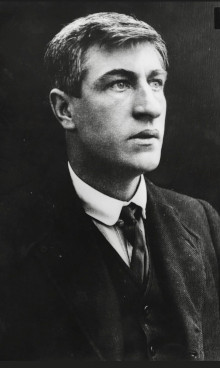
James (Jim) Larkin, Irish trade union leader and socialist activist, dies in his sleep in Dublin on January 30, 1947. He is one of the founders of the Irish Labour Party, the Irish Transport and General Workers’ Union (ITGWU), the Workers’ Union of Ireland and the Irish Citizen Army (ICA).

Larkin is born to Irish parents in Liverpool, England, on January 21, 1876. He and his family later move to a small cottage in Burren, County Down. Growing up in poverty, he receives little formal education and begins working in a variety of jobs while still a child.

In 1905, Larkin is one of the few foremen to take part in a strike on the Liverpool docks. He is elected to the strike committee, and although he loses his foreman’s job as a result, his performance so impresses the National Union of Dock Labourers (NUDL) that he is appointed a temporary organiser.

Larkin moves to Belfast in 1907 to organise the city’s dock workers for the NUDL. He succeeds in unionising the workforce, and as employers refuse to meet the wage demands, he calls the dockers out on strike in June. Carters and coal men soon join in, the latter settling their dispute after a month.

In 1908, Larkin moves south and organises workers in Dublin, Cork, and Waterford, with considerable success. His involvement, against union instructions, in a dispute in Dublin results in his expulsion from the NUDL. The union later prosecutes him for diverting union funds to give strike pay to Cork workers engaged in an unofficial dispute. After trial and conviction for embezzlement in 1910, he is sentenced to prison for a year. This is widely regarded as unjust, and the Lord Lieutenant of Ireland, Lord Aberdeen, pardons him after he has served three months in prison.

After his expulsion from the NUDL, Larkin founds the Irish Transport and General Workers’ Union (ITGWU) at the end of December 1908. The organisation exists today as the Services Industrial Professional & Technical Union (SIPTU). In early 1909, Larkin moves to Dublin, which becomes the main base of the ITGWU and the focus of all his future union activity in Ireland.

In June 1911, Larkin establishes a newspaper, The Irish Worker and People’s Advocate, as a pro-labour alternative to the capitalist-owned press. In 1912, in partnership with James Connolly, Larkin helps form the Irish Labour Party.

In early 1913, Larkin achieves some successes in industrial disputes in Dublin. Two major employers, Guinness and the Dublin United Tramway Company, are the main targets of Larkin’s organising ambitions. The chairman of the Dublin United Tramway Company, industrialist and newspaper proprietor William Martin Murphy, is determined not to allow the ITGWU to unionise his workforce. On August 15, he dismisses 40 workers he suspects of ITGWU membership, followed by another 300 over the next week. On August 26, 1913, the tramway workers officially go on strike.

The resulting industrial dispute is the most severe in Ireland’s history. Employers in Dublin engage in a sympathetic lockout of their workers when the latter refuses to sign the pledge, employing blackleg labour from Britain and from elsewhere in Ireland. Guinness, the largest employer in Dublin, refuses the employers’ call to lock out its workers but it sacks 15 workers who struck in sympathy.

For seven months the lockout affects tens of thousands of Dublin workers and employers, with Larkin portrayed as the villain by Murphy’s three main newspapers, the Irish Independent, the Sunday Independent, and the Evening Herald, and by other bourgeois publications in Ireland. The lockout eventually concludes in early 1914 when calls by James Connolly and Larkin for a sympathetic strike in Britain are rejected by the British Trades Union Congress (TUC). Larkin’s attacks on the TUC leadership for this stance also lead to the cessation of financial aid to the ITGWU.

Some months after the lockout ends, Larkin leaves for the United States. He intends to recuperate from the strain of the lockout and raise funds for the union. Once there he becomes a member of the Socialist Party of America and is involved in the Industrial Workers of the World union (the Wobblies). He becomes an enthusiastic supporter of the Soviet Union and is expelled from the Socialist Party of America in 1919 along with numerous other sympathisers of the Bolsheviks during the Red Scare of that year.

Upon his return to Ireland in April 1923, Larkin receives a hero’s welcome and immediately sets about touring the country meeting trade union members and appealing for an end to the Irish Civil War. In September 1923, Larkin forms the Irish Worker League (IWL), which is soon afterwards recognised by the Communist International as the Irish section of the world communist movement.

James Larkin dies in his sleep on January 30, 1947, in the Meath Hospital in Dublin. Fr. Aloysius Travers, OFM, who had administered last rites to James Connolly in 1916, also administers extreme unction to Larkin. His funeral mass is celebrated by the Catholic Archbishop of Dublin, John Charles McQuaid, who had visited him in hospital before he died, and thousands line the streets of the city as the hearse passes through on the way to Glasnevin Cemetery.

Today a statue of “Big Jim” stands on O’Connell Street in Dublin, completed by Oisín Kelly and unveiled in 1979.


Leave a comment

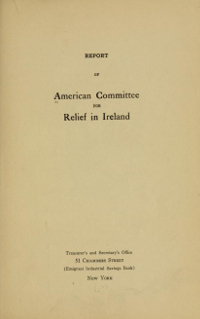
Founding of the American Committee for Relief in Ireland

american-committee-for-relief-in-irelandThe American Committee for Relief in Ireland (ACRI) is founded through the initiative of Dr. William J. Maloney and others on December 16, 1920, with the intention of giving financial assistance to civilians in Ireland who have been injured or suffer severe financial hardship due to the ongoing Irish War of Independence.

The Committee is only one of several U.S. based philanthropic organisations that emerge following World War I with a view to influencing the post-war settlement from their perspective of social justice, economic development and long term stability in Europe. Some of them concentrate their efforts on events in Ireland, and while activists of Irish ethnicity are well represented, membership is far from confined to Americans of Irish heritage. Apart from the ACRI, bodies such as the American Commission on Irish Independence and the American Commission on Conditions in Ireland raise money and attempt to influence U.S. foreign policy in a manner sympathetic to the goal of Irish secession from the United Kingdom.

This period of Irish political radicalism coincides with a Red Scare in the United States. Jim Larkin, an Irish trade unionist, who has been closely associated with James Connolly in Ireland and with the Wobblies in the U.S., is serving a five-year sentence in Sing Sing prison for promoting his socialist agenda. While his political views differ fundamentally from most of the Sinn Féin leadership, Irish republicanism is seen by many of the American establishment as based on a questionable ideology. During the Irish War of Independence, the activities of Irish-American fund-raising organisations are viewed with suspicion and kept under close scrutiny by the intelligence services including J. Edgar Hoover, head of the General Intelligence Division of the Federal Bureau of Investigation. U.S. policy towards Irish concerns, initially hostile or at best indifferent, become somewhat less so following the 1920 U.S. presidential election and the landslide victory of Warren G. Harding over James M. Cox.

Following the burning of parts of Cork on December 11, 1920 by elements of the British security forces known as the Black and Tans, approaches are made by the city’s Lord Mayor, Donal O’Callaghan, to the American Red Cross for humanitarian assistance. The society, having taken advice from President Woodrow Wilson, the British embassy, the Foreign Office and the British Red Cross, decline at this time to act on his appeal. Numerous organisations and committees across the United States, operating independently in raising humanitarian aid money for Ireland realise that their funds will not be channelled through the U.S. Committee of the Red Cross and so another distribution channel is needed.

Five days after the inferno at Cork, a widely publicised meeting takes place at the Banker’s Club in New York City. It is organised by William Maloney with the intention of establishing a single nationwide organisation. It will have as its goal, explicitly and solely for the purpose of humanitarian relief, the raising and distribution in Ireland of $10 million. The body which soon emerges styles itself “The American Committee for Relief in Ireland.” One of its founding members, Levi Hollingsworth Wood, approaches a Dublin-based businessman and fellow Quaker, James Douglas, requesting his assistance in the local distribution of the funds on a non-partisan basis. In Ireland, Douglas speaks with Laurence O’Neill, the Lord Mayor of Dublin, who in turn contacts senior members of Sinn Féin to inform them of the wishes of the American Committee. These meetings culminate in the establishment of the Irish White Cross, for the purpose of local distribution of the Committee’s funds.


Leave a comment

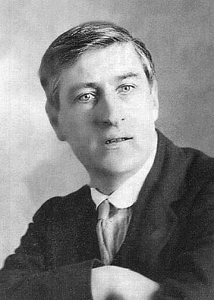
Birth of Union Leader Jim Larkin

james-larkin

James (Jim) Larkin, Irish trade union leader and socialist activist, is born to Irish parents in Liverpool, England, on January 21, 1876. He and his family later move to a small cottage in Burren, County Down. Growing up in poverty, he receives little formal education and begins working in a variety of jobs while still a child.

In 1905, Larkin is one of the few foremen to take part in a strike on the Liverpool docks. He is elected to the strike committee, and although he loses his foreman’s job as a result, his performance so impresses the National Union of Dock Labourers (NUDL) that he is appointed a temporary organiser.

Larkin moves to Belfast in 1907 to organise the city’s dock workers for the NUDL. He succeeds in unionising the workforce, and as employers refuse to meet the wage demands, he calls the dockers out on strike in June. Carters and coal men soon join in, the latter settling their dispute after a month.

In 1908, Larkin moves south and organises workers in Dublin, Cork, and Waterford, with considerable success. His involvement, against union instructions, in a dispute in Dublin results in his expulsion from the NUDL. The union later prosecutes him for diverting union funds to give strike pay to Cork workers engaged in an unofficial dispute. After trial and conviction for embezzlement in 1910, he is sentenced to prison for a year. This is widely regarded as unjust, and the Lord Lieutenant of Ireland, Lord Aberdeen, pardons him after he has served three months in prison.

After his expulsion from the NUDL, Larkin founds the Irish Transport and General Workers’ Union (ITGWU) at the end of December 1908. The organisation exists today as the Services Industrial Professional & Technical Union (SIPTU). In early 1909, Larkin moves to Dublin, which becomes the main base of the ITGWU and the focus of all his future union activity in Ireland.

In June 1911, Larkin establishes a newspaper, The Irish Worker and People’s Advocate, as a pro-labour alternative to the capitalist-owned press. In 1912, in partnership with James Connolly, Larkin helps form the Irish Labour Party.

In early 1913, Larkin achieves some successes in industrial disputes in Dublin. Two major employers, Guinness and the Dublin United Tramway Company, are the main targets of Larkin’s organising ambitions. The chairman of the Dublin United Tramway Company, industrialist and newspaper proprietor William Martin Murphy, is determined not to allow the ITGWU to unionise his workforce. On August 15, he dismisses 40 workers he suspects of ITGWU membership, followed by another 300 over the next week. On August 26, 1913, the tramway workers officially go on strike.

The resulting industrial dispute is the most severe in Ireland’s history. Employers in Dublin engage in a sympathetic lockout of their workers when the latter refuses to sign the pledge, employing blackleg labour from Britain and from elsewhere in Ireland. Guinness, the largest employer in Dublin, refuses the employers’ call to lock out its workers but it sacks 15 workers who struck in sympathy.

For seven months the lockout affects tens of thousands of Dublin workers and employers, with Larkin portrayed as the villain by Murphy’s three main newspapers, the Irish Independent, the Sunday Independent, and the Evening Herald, and by other bourgeois publications in Ireland. The lock-out eventually concludes in early 1914 when calls by James Connolly and Larkin for a sympathetic strike in Britain are rejected by the British Trades Union Congress (TUC). Larkin’s attacks on the TUC leadership for this stance also lead to the cessation of financial aid to the ITGWU.

Some months after the lockout ends, Larkin leaves for the United States. He intends to recuperate from the strain of the lockout and raise funds for the union. Once there he becomes a member of the Socialist Party of America and is involved in the Industrial Workers of the World union (the Wobblies). He becomes an enthusiastic supporter of the Soviet Union and is expelled from the Socialist Party of America in 1919 along with numerous other sympathisers of the Bolsheviks during the Red Scare of that year.

Upon his return to Ireland in April 1923, Larkin receives a hero’s welcome and immediately sets about touring the country meeting trade union members and appealing for an end to the Irish Civil War. In September 1923, Larkin forms the Irish Worker League (IWL), which is soon afterwards recognised by the Communist International as the Irish section of the world communist movement.

James Larkin dies in his sleep on January 30, 1947, in the Meath Hospital. Fr. Aloysius Travers, OFM, who had administered last rites to James Connolly in 1916, also administers extreme unction to Larkin. His funeral mass is celebrated by the Catholic Archbishop of Dublin, John Charles McQuaid, who had visited him in hospital before he died, and thousands line the streets of the city as the hearse passes through on the way to Glasnevin Cemetery.