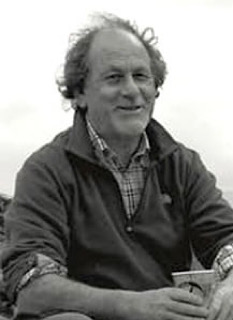
Ó Muirthile is educated at cork, taking a BA in Irish and French at UCC. His Irish is acquired at school and from sojourns in the Gaeltacht of West Kerry. He is a member of a group of poets at UCC in the late 1960s who choose Irish as a creative medium and are closely associated with the modernist poetry journal Innti, founded by fellow poet Michael Davitt. They are influenced by the work of Cork poet Seán Ó Ríordáin, by the musician and composer Seán Ó Riada, and by popular American culture.
Greg Delanty, writing for Poetry International, claims that a fundamental achievement of Ó Muirthile and other members of the Innti group was to adapt the language to a contemporary urban landscape in a way that reflected the counterculture of the sixties.
Ó Muirthile has been described as a poet of immense formal and musical mastery who reads deeply into the classical and neo-classical poetry of the Irish language. He studies French literature as a student and this influences his work. He translates poetry by Guillaume Apollinaire, François Villon, Jacques Prévert and Anne Hébert.
Ó Muirthile’s first collection of poetry is Tine Chnámh (1984). This receives the Irish American Cultural Institute’s literary award and an Oireachtas prize for poetry. He subsequently publishes a number of other collections. In 1996, he receives the Butler Award for his novel Ar Bhruach na Laoi. Several plays by him have been staged. From 1989 to 2003 he writes a weekly column, “An Peann Coitianta,” for The Irish Times. Poems by him have been translated into English, German, French, Italian, Hungarian and Romanian.
Two of Ó Muirthile‘s poems, Meachán Rudaí and Áthas, have been put to music by the Irish/American group The Gloaming and featured on their third studio album The Gloaming 3.
Criostóir Mac Aonghusa, teacher, author, critic, and campaigner for the Irish language, is born on December 13, 1905, in Gort an Ghabhainn, Banagher, King’s County (now County Offaly), son of Francis McGuiness (surname thus on his birth certificate), farmer, and his wife, Rosanna (née Egan). He is educated at La Sainte Foi, Banagher, Reachra national school, Shannonbridge, and Naas CBS. He qualifies as a primary school teacher from De La Salle Training College, Waterford, in 1926 and has the distinction of being the first person to sit all exams through the medium of Irish. He graduates BA at University College Galway (UCG) in 1933 and his further education includes a diploma in Spanish literature from University of Barcelona and an MA on the Irish scholar Tomás Ó Máille.
Mac Aonghusa’s teaching career begins in 1926 when he becomes headmaster on Inis Treabhair, County Galway, spending fourteen months there. Afterwards he transfers to Gort Mór, Rosmuc, County Galway, where he continues teaching until 1962. He remains an active member of Cumann na Múinteoirí Náisiúnta throughout his life. Between 1962 and 1972 he is employed as an ad-hoc examiner at the civil service commission. An active member of Fianna Fáil, he helps to organise the party in County Galway in the 1920s and 1930s and is elected a member of Galway County Council in 1934.
Mac Aonghusa is a prominent advocate of the Irish language and together with his close friend Máirtín Ó Cadhain and another Connemara schoolteacher, Seosamh Mac Mathúna, founds Cumann na Gaeltachta to agitate for the civil rights of the Gaeltacht communities and of Irish speakers in general. He is one of the main campaigners for the establishment of the Rath Carn Gaeltacht in County Meath and forms part of the delegation that meets Éamon de Valera on November 11, 1932, and receives from him a promise to provide land in County Meath for that purpose. The Gaeltacht is established in 1935. Mac Aonghusa continues to support the project throughout his life and is involved in further campaigns relating to the area, including the recognition of Rath Carn’s Gaeltacht status. He is also an active member of Conradh na Gaeilge in the 1940s and is later involved in the campaign for the establishment of an Irish-language television broadcasting service.
Mac Aonghusa is a prolific writer and begins publishing short stories and articles from 1926 onward. His contributions appear in An tÉireannach, An Phoblacht, The Irish Tribune, An Stoc, and Ar Aghaidh. From 1948, he is a regular contributor to Feasta and his essays and reviews on Máirtín Ó Cadhain’s works appear in Comhar. He is a member of several literary organisations, including Cumann na Scríbhneoirí and the Galway Literary Society. His first book, An Cladóir agus scéalta eile, appears in 1952. Between 1963 and 1972 he is a contributor to The Irish Press and works also as a literary journalist. An essay on Pádraic Ó Conaire earns him a prize from Acadamh Liteartha na hÉireann.
Mac Aonghusa speaks a number of European languages including German, Spanish, French, Romanian, and Greek and travels widely throughout Europe. In the early 1970s he lives in Russia, and a collection of essays entitled Ó Rosmuc go Rostov is published in 1972. For health reasons he lives in Málaga, Spain, from the middle of the 1970s until 1987. While there, RTÉ produces a documentary on his life entitled Ó Ros Muc go Malaga.
Mac Aonghusa dies on April 9, 1991, in Portiuncula General Hospital, Ballinasloe, County Galway, and is interred in Clonmacnoise. In 1930 he marries Mairéad Ní Lupain, a nurse from Annaghvane in Connemara, and has four children, Proinsias (1933), Micheál (1937), Róisín (1939), and Máirín (1944). The couple separates in the 1940s. Proinsias follows in his father’s footsteps as a writer and journalist and becomes president of Conradh na Gaeilge and chairman of Bord na Gaeilge.
(From: “Mac Aonghusa, Criostóir” by Lesa Ní Mhunghaile, Dictionary of Irish Biography, http://www.dib.ie, October 2009)


 seamus dubhghaill