seamus dubhghaill

Promoting Irish Culture and History from Little Rock, Arkansas, USA


Leave a comment

Birth of Kathleen Behan, Irish Republican & Folk Singer

Kathleen Behan (née Kearney), Irish republican and folk singer, and mother of Irish authors BrendanBrian and Dominic, is born on September 18, 1889, at 49 Capel StreetDublin.

She is the fifth child and youngest daughter of pork butcher and grocer, John Kearney (1854–97), and his wife Kathleen Kearney (née McGuinness) (1860–1907). She has four brothers and two sisters. Her father is from Rosybrook, County Louth and her mother is from Rathmaiden, Slane, County Meath, both coming from prosperous farming families. Her father has a business on Lower Dorset Street, with a grocery, pub and a row of houses. Owing to his own poor management, by the time she is born he has a smaller business on Dolphin’s Barn Lane. Following his death in 1897, she and her sisters are placed in the Goldenbridge orphanage at Inchicore by their mother. She is there from 1898 to 1904 where she becomes an avid reader. When she leaves, she rejoins her family in a one-room tenement flat on Gloucester Street.

Her oldest sibling, Peadar Kearney, is an ardent republican who writes the lyrics to the song that becomes the Irish national anthem, ”Amhrán na bhFiann”(English: “The Soldier’s Song”). It is through him that she meets a printer’s compositor and member of the Irish Volunteers, Jack Furlong. They marry in 1916. She is an active member of Cumann na mBan, and serves as a courier to the General Post Office, Dublin and other outposts during the 1916 Easter Rising. At the same time, Furlong fights in the Jacob’s factory garrison. The couple has two sons: Roger Casement (Rory) Furlong (1917–87) and Sean Furlong (born March 1919). Sean is born six month’s after she is widowed when Furlong dies in the Spanish flu epidemic of 1918. She lives with her mother-in-law, who is also a republican and seamstress who makes Irish Volunteer uniforms. She is arrested for running an Irish Republican Army (IRA) safe house. She works for a short time for Maud Gonne as a housekeeper, where she meets W. B. Yeats and Sarah Purser. A study painted of her by Purser (above) is now in the National Gallery of Ireland entitled The Sad Girl. From 1918 to 1922 she works as a clerk in the Dublin Corporation, while also a caretaker in the Harcourt Street branch of the Irish White Cross republican aid association.

In 1922 she marries Stephen Behan, house painter, trade unionist and fellow republican. The couple has four sons and one daughter: Brendan (b. 1923), Seamus (b. 1925), Brian (b. 1926), Dominic (b. 1928), and Carmel (b. 1932). Brendan is born while his father is imprisoned during the Irish Civil War, and Behan claims that Michael Collins gives her money while she is pregnant. Stephen’s mother owns three slum tenements, so the Behans live rent-free in a one-room basement flat at 14 Russell Street. Owing to her disdain at gossiping on the house steps, she is nicknamed “Lady Behan” by her neighbours. When Stephen’s mother dies in 1936, the Behans moved to a newly built council house in Crumlin, living at 70 Kildare Road. The family finds the new house far from work and school, and the local area devoid of community.

The family experiences extreme poverty frequently, owing to Stephen’s unemployment and during the nine month long building strike of 1936. Behan attempts to claim a pension as her first husband had served in 1916, but her application is rejected. She had said the exposure to flour had effected Furlong’s lungs negatively. It is declined as she had remarried before the enactment of the Army Pensions Act 1923. Despite their circumstances, the house attracts conversation, music, books and politics. The Behan’s republican, socialist, labour activist and anti-clericalism have a strong effect on their sons, particularly Brendan and Dominic. Such is the volume of radical meetings that take place at the Behan home, it is dubbed “the Kremlin” by their neighbours, and a “madhouse” by Stephen. During The Emergency of 1939 to 1945 she fights against local shopkeepers who ignore price controls, and is labelled as “red” for her anti-Franco and pro-Stalin sympathies. Her reply to the branding of her as such is “I’m not red, I’m scarlet.”

From the 1950s onwards, Behan shares international fame with her sons Dominic and Brendan. She often travels to London to see their plays, eventually appearing on British and Irish television and cultivating her own following. She is badly injured when she is struck by a motorcycle, a day before Stephen’s death in 1967. Owing to the effect of these injuries, she moves in 1970 to the Sacred Heart Residence of the Little Sisters of the Poor, Sybil Hill, Raheny.

In 1981, she records an album When All the World Was Young. Taped conversations of her reminiscences are made into an autobiographic book, Mother of all the Behans, by her son Brian in 1984. A one-woman stage adaptation of the book by Peter Sheridan and starring Rosaleen Linehan is acclaimed in Ireland, Britain and North America.

Behan dies in the nursing home in Raheny on April 26, 1984, and is buried in Dean’s Grange Cemetery.

(Pictured: Portrait of Kathleen Behan by Sarah Purser, National Gallery of Ireland)


Leave a comment

The Flight of the Earls

On September 4, 1607, Hugh O’Neill, Earl of Tyrone, and Rory O’Donnell, 1st Earl of Tyrconnell, and about ninety followers depart from Lough Swilly for the European continent. It is known in Irish history as the “Flight of the Earls.” Their permanent exile is a watershed event in Irish history, symbolizing the end of the old Gaelic order.

After the defeat at the Siege of Kinsale in 1601, Hugh Roe O’Donnell of Tyrconnell travels to Spain to seek support from Philip III. Unsuccessful, he dies in Spain and is succeeded by his younger brother Rory O’Donnell.

The O’Neills and O’Donnells retain their lands and titles, although with much-diminished extent and authority. However, the countryside is laid bare in a campaign of destruction in 1602, which induces famine in 1603. Hugh O’Neill, Earl of Tyrone, is pardoned under the terms of the Treaty of Mellifont in March 1603 and submits to the crown.

When King James VI and I takes the English throne in 1603, he quickly proceeds to issue pardons for the Irish lords and their rebel forces. Already reigning as king of Scotland, he has a better understanding of the advantages from working with local chiefs in the Scottish Highlands. However, as in other Irish lordships, the 1603 peace involves O’Neill losing substantial areas of land to his cousins and neighbors, who would be granted freeholds under the English system, instead of the looser arrangements under the former Brehon law system. This is not a new policy but is a well-understood and longstanding practice in the Tudor conquest of Ireland.

On September 10, 1602, the Prince of Tyrconnell has already died, allegedly assassinated, in Spain, and his brother succeeds him as 25th Chieftain of the O’Donnell clan. He is later granted the Earldom of Tyrconnell by King James I on September 4, 1603, and restored to a somewhat diminished scale of territories in Tyrconnell on February 10, 1604.

In 1605, the new Lord Deputy of Ireland, Sir Arthur Chichester, begins to encroach on the former freedoms of the two Earls and The Maguire, enforcing the new freeholds, especially that granted in North Ulster to the O’Cahan chief. The O’Cahan had formerly been important subjects of the O’Neills and required protection; in turn, Chichester wants to reduce O’Neill’s authority. O’Cahan has also wanted to remove himself from O’Neill’s overlordship. An option is to charge O’Neill with treason if he does not comply with the new arrangements. The discovery of the Gunpowder Plot in the same year makes it harder for Catholics to appear loyal to both the crown and the papacy. A lengthy legal battle however finds in O’Neill’s favor.

By 1607, O’Neill’s allies the Maguires and the Earl of Tyrconnell are finding it hard to maintain their prestige on lower incomes. They plan to seek Spanish support before news of the Battle of Gibraltar arrives. When their ship drops anchor, O’Neill seems to have joined them on impulse. He had three options:

  • Flee with his friends and hope for a reinvasion by Spain
  • Go to London and stay at court until his grievances are redressed
  • Do nothing and live on a reduced income as a large landowner in Ulster

Fearing arrest, they choose to flee to Continental Europe, where they hope to recruit an army for the invasion of Ireland with Spanish help. However, earlier in 1607 the main Spanish fleet in Europe had been defeated by the Dutch in the Battle of Gibraltar. But the oft-repeated theory that they are all about to be arrested contradicts writer Tadhg Ó Cianáin, the main historical source on the Flight, who says at the start of his account that O’Neill heard news of the ship anchored at Rathmullen on Thursday September 6, and “took his leave of the Lord Justice (Chichester) the following Saturday.” They had been meeting at Slane for several days, and there is no proof that warrants for his arrest have been drawn up, nor is it a hurried departure.

Also, as the Anglo-Spanish War (1585–1604) has been ended by the Treaty of London in 1604, King Philip III of Spain wants to remain at peace with England under its new Stuart dynasty. As a part of the peace proposals, a Spanish princess is to marry James’ son, Henry, though this never happens. Spain had also gone bankrupt in 1598. Tyrone ignores all these realities, remains in Italy, and persists with his invasion plan until his death in exile in 1616.

The earls set sail from Rathmullan, a village on the shore of Lough Swilly in County Donegal, with some of the leading Gaelic families in Ulster. Several leave their wives behind, hoping either to return or retrieve them later. They travel down Lough Swilly on a French ship. Their departure is the end of the old Gaelic order, in that the earls are descended from Gaelic clan dynasties that had ruled their parts of Ulster for centuries. They finally reach the Continent on October 4, 1607.

Their destination is Spain, but they disembark in France. The party proceeds overland to Spanish Flanders, some remaining in Leuven, while the main party continues to Italy. Tadhg Ó Cianáin subsequently describes the journey in great detail. While the party is welcomed by many important officials in the Spanish Netherlands, he makes no mention of any negotiations or planning between the earls and the Spanish to start a new war to regain the earls’ properties.

James I soon plants the O’Neill and O’Donnell lands with Protestant settlers, helping to sow the seeds of the present “Troubles.” O’Donnell dies in Rome in 1608 and O’Neill dies there also in 1616.

Ó Cianáin’s diary is important as the only continuous and contemporaneous account of the Flight. Its original title, Turas na dTaoiseach nUltach as Éirinn – the departure of the Chiefs of Ulster from Ireland – has been changed since the creation of the more dramatic phrase “Flight of the Earls” to the latter’s modern literal translation, Imeacht na nIarlaí.

The Flight of the Earls is a watershed event in Irish history, as the ancient Gaelic aristocracy of Ulster goes into permanent exile. Despite their attachment to and importance in the Gaelic system, the Earls’ ancestors had accepted their Earldoms from the English-run Kingdom of Ireland in the 1540s, under the policy of surrender and regrant. Some historians argue that their flight is forced upon them by the fallout from the Tudor conquest of Ireland, while others that it is an enormous strategic mistake that clears the way for the Plantation of Ulster.

From 1616, a number of bards outside Ulster have a poetic debate in the “Contention of the bards” and one of the arguments celebrates King James’s Gaelic-Irish Milesian ancestry through Malcolm III of Scotland. So, it is debatable whether the Gaelic order has ended or is evolving.

(Pictured: A bronze sculpture commemorating the Flight in Rathmullan, County Donegal)


Leave a comment

Birth of Poet Francis Edward Ledwidge

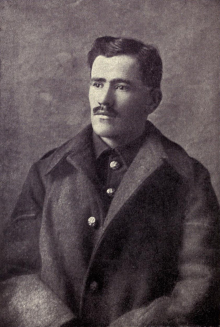
Francis Edward Ledwidge, Irish poet sometimes known as the “poet of the blackbirds,” is born on August 19, 1887, to a poor family in Slane, County Meath. He is later also known as a World War I war poet.

Ledwidge starts writing at an early age and is first published in a local newspaper at the age of fourteen. Finding work as a labourer and miner, he is also a trade union activist and a keen patriot and nationalist, associated with Sinn Féin. He becomes friendly with a local landowner, the writer Lord Dunsany, who gives him a workspace in the library of Dunsany Castle and introduces him to literary figures including William Butler Yeats and Katharine Tynan, with whom he has a long-term correspondence. He is elected to a local authority post and helps organise the local branch of the Irish Volunteers, while Dunsany edits and helps him secure publication for a first volume of his poetry.

Having sided with the faction of the Irish Volunteers which oppose participation in the war, he enlists in the Royal Inniskilling Fusiliers in October 1914, and continues to write poetry on assignment, sending work to Lord Dunsany and to family and other friends. The poems he writes on active service reveal his pride at being a soldier, as he believes, in the service of Ireland. He often wonders whether he would find a soldier’s death.

On July 31, 1917, a group from Ledwidge’s battalion of the Royal Inniskilling Fusiliers are road-laying in preparation for an assault during the Third Battle of Ypres, near the village of Boezinge, Ypres Salient, Belgium.

According to Irish author and lecturer Alice Curtayne, “Ledwidge and his comrades had been toiling since the early morning at roadmaking. The army’s first need was men; their second, guns; their third roads. These latter consisted mainly of heavy beech planks bolted together, which could be rapidly laid down. No advance could be supported in that sodden land without a sufficiency of these communications tracks, six or seven feet wide. Supplies were conveyed by pack mules over the wooden paths. Survivors concur in placing the road work done by B Company that day one mile northeast of Hellfire Corner, so called because it was very exposed to German shelling. There was a violent rainstorm in the afternoon, shrouding the region in a gray monochrome. Sullenly, the enemy’s long-range guns continued to fling their shells far behind the lines. Roadwork could not be suspended, however, as the tracks were in use as fast as they were laid down. Tea was issued to the men and drenched to the skin, they stopped to swallow it. A shell exploded beside Ledwidge, and he was instantly killed.”

A Roman Catholic military chaplain, Father Devas, is the first on the scene. That night, Father Devas writes in his diary, “Crowds at Holy Communion. Arranged for service but washed out by rain and fatigues. Walk in rain with dogs. Ledwidge killed, blown to bits, at Confession yesterday and Mass and Holy Communion this morning. R.I.P.”

Ledwidge is first buried at Carrefour de Rose, and later re-interred in the nearby Artillery Wood Military Cemetery, at Boezinge, where the Welsh poet Hedd Wyn, who was killed in action on the same day, also lies buried.

Dunsany arranges for the publication of more of Ledwidge’s poems, and a collected edition in 1919. Further poems, from the archives at Dunsany Castle and some material held by family, are later published by Ledwdige’s biographer, Alice Curtayne, and by one of the Ledwidge memorial societies. Ledwidge is selected as one of twelve prominent war poets for the exhibition Anthem for Doomed Youth at the Imperial War Museum in London in 2002, and memorialised at an event in Inchicore, Dublin, in 2017, with his work set to music by Anúna. A museum of his life and work is opened in his birthplace cottage in 1982. Some of his manuscripts are held in the National Library of Ireland and more in the archives of Dunsany Castle.


Leave a comment

Death of Irish Poet Francis Edward Ledwidge

Francis Edward Ledwidge, Irish poet from County Meath, sometimes known as the “poet of the blackbirds,” is killed in action He was later also known as a World War I war poet. He was killed in action on July 31, 1917, at the Battle of Pilckem Ridge near Boezinge, Ypres Salient, Belgium.

Born on August 19, 1887, to a poor family in Slane, County Meath, Ledwidge starts writing at an early age, and is first published in a local newspaper at the age of fourteen. Finding work as a labourer and miner, he is also a trade union activist and a keen patriot and nationalist, associated with Sinn Féin. He becomes friendly with a local landowner, the writer Lord Dunsany, who gives him a workspace in the library of Dunsany Castle and introduces him to literary figures including William Butler Yeats and Katherine Tynan, with whom he has a long-term correspondence. He is elected to a local authority post and helps organise the local branch of the Irish Volunteers, while Dunsany edits and helps him secure publication for a first volume of his poetry.

Having sided with the faction of the Irish Volunteers which oppose participation in the war, he enlists in the Royal Inniskilling Fusiliers in October 1914, and continues to write poetry on assignment, sending work to Lord Dunsany and to family and other friends. The poems he writes on active service reveal his pride at being a soldier, as he believes, in the service of Ireland. He often wonders whether he would find a soldier’s death.

On July 31, 1917, a group from Ledwidge’s battalion of the Royal Inniskilling Fusiliers are road-laying in preparation for an assault during the Third Battle of Ypres, near the village of Boezinge, northwest of Ypres.

According to Irish author and lecturer Alice Curtayne, “Ledwidge and his comrades had been toiling since the early morning at roadmaking. The army’s first need was men; their second, guns; their third roads. These latter consisted mainly of heavy beech planks bolted together, which could be rapidly laid down. No advance could be supported in that sodden land without a sufficiency of these communications tracks, six or seven feet wide. Supplies were conveyed by pack mules over the wooden paths. Survivors concur in placing the road work done by B Company that day one mile northeast of Hellfire Corner, so called because it was very exposed to German shelling. There was a violent rainstorm in the afternoon, shrouding the region in a gray monochrome. Sullenly, the enemy’s long-range guns continued to fling their shells far behind the lines. Roadwork could not be suspended, however, as the tracks were in use as fast as they were laid down. Tea was issued to the men and, drenched to the skin, they stopped to swallow it. A shell exploded beside Ledwidge and he was instantly killed.”

A Roman Catholic military chaplain, Father Devas, is the first on the scene. That night, Father Devas writes in his diary, “Crowds at Holy Communion. Arranged for service but washed out by rain and fatigues. Walk in rain with dogs. Ledwidge killed, blown to bits; at Confession yesterday and Mass and Holy Communion this morning. R.I.P.”

Ledwidge is first buried at Carrefour de Rose, and later re-interred in the nearby Artillery Wood Military Cemetery, at Boezinge, where the Welsh poet Hedd Wyn, who was killed in action on the same day, also lies buried.

Dunsany arranges for the publication of more of Ledwidge’s poems, and a collected edition in 1919. Further poems, from the archives at Dunsany Castle and some material held by family, are later published by Ledwdige’s biographer, Alice Curtayne, and by one of the Ledwidge memorial societies. Ledwidge is selected as one of twelve prominent war poets for the exhibition Anthem for Doomed Youth at the Imperial War Museum in London in 2002, and memorialised at an event in Inchicore, Dublin, in 2017, with his work set to music by Anúna. A museum of his life and work is opened in his birthplace cottage in 1982. Some of his manuscripts are held in the National Library of Ireland and more in the archives of Dunsany Castle.


Leave a comment

Death of Peadar Kearney, Composer & Irish Republican

peadar-kearney

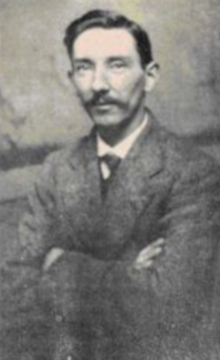
Peadar Kearney, Irish republican and composer of numerous rebel songs, dies in Inchicore, Dublin on November 24, 1942. In 1907 he writes the lyrics to “The Soldier’s Song” (“Amhrán na bhFiann“), now the Irish national anthem. He is the uncle of Irish writers Brendan Behan, Brian Behan, and Dominic Behan.

Kearney was born on December 12, 1883, at 68 Lower Dorset Street, Dublin, above one of the two grocer’s shops owned by his father, John Kearney, originally from Funshog, Collon, County Louth. His mother, Katie (née McGuinness), is from Rathmaiden, Slane, County Meath. He is educated at the Model School, Schoolhouse Lane and St. Joseph’s Secondary C.B.S. in Fairview. He hears Willie Rooney give nationalist lectures on history in the Mechanics’ Institute. For a short time, he attends Belvedere College. Following the death of his father, he is left to support his mother and five younger siblings. He has various menial jobs for three years before being apprenticed to a house painter.

In 1901, the death of Willie Rooney prompts Kearney to join the Willie Rooney Branch of the Gaelic League. He joins the Irish Republican Brotherhood in 1903. He teaches night classes in Irish and numbers Seán O’Casey among his pupils. He finds work with the National Theatre Society and in 1904 is one of the first to inspect the derelict building that becomes the Abbey Theatre. He assists with props and performs occasional walk-on parts at the Abbey until 1916.

Kearney is a co-founder of the Irish Volunteers in 1913 and takes part in the Howth and Kilcoole gun runnings in 1914. In the Easter Rising of 1916 he fights at Jacob’s biscuit factory under Thomas MacDonagh, abandoning an Abbey Theatre tour in England to take part in the Rising. He escapes before the garrison is taken into custody.

Kearney is also active in the Irish War of Independence. On November 25, 1920, he is captured at his home in Summerhill, Dublin and is interned first in Collinstown Camp in Dublin and later in Ballykinler Camp in County Down.

A personal friend of Michael Collins, Kearney at first takes the Free State side in the Irish Civil War but loses faith in the Free State after Collins’s death. He takes no further part in politics, returning to his original trade of house painting.

Kearney’s songs are highly popular with the Irish Volunteers (which later becomes the Irish Republican Army) in the 1913–1922 period. Most popular is “The Soldier’s Song.” He pens the original English lyrics in 1907 and his friend and musical collaborator Patrick Heeney composes the music. The lyrics are published in 1912 and the music in 1916. After 1916 it replaces “God Save Ireland” as the anthem of Irish nationalists. The Irish Free State is established in 1922 and formally adopts the anthem in 1926.

Other well-known songs by Kearney include “Down by the Glenside,” “The Tri-coloured Ribbon,” “Down by the Liffey Side,” “Knockcroghery” (about the village of Knockcroghery) and “Erin Go Bragh” (Erin Go Bragh is the text on the Irish national flag before the adoption of the tricolour).

Peadar Kearney dies in relative poverty in Inchicore on November 24, 1942. He is buried in Glasnevin Cemetery in Dublin.


Leave a comment

The Battle of Ashbourne

fingal-brigade-ira

As the end of the 1916 Easter Rising becomes increasingly apparent and the rebels in Dublin are being squeezed harder and harder by the British forces, the rebels outside the city achieve a small victory on Friday, April 28, 1916, in what comes to be known as the Battle of Ashbourne.

The Battle of Ashbourne is a direct confrontation and gun battle between up to 70 members of the Royal Irish Constabulary (RIC) and about 37 Irish Volunteers, led by Thomas Ashe and Richard Mulcahy. It is one of the few engagements outside of Dublin city centre and is, in contrast to the main Rising in Dublin, a successful one.  It is also an example of the guerilla warfare that becomes a normal method of operation during the Irish War of Independence.

After the Volunteers battalion is mobilized on Easter Sunday, they are split into smaller groups, known as flying columns, and are sent north of Dublin city towards Ashbourne. Their mission is to destroy the railway line near Batterstown and disrupt the movement of British troops into the city. They set out by bicycles, mostly armed with shotguns. After raiding a number of barracks in the area, cutting communications, and collecting rifles, they reach the Cross of the Rath at Ashbourne.

There they are met with a barricade that has been hastily erected by the RIC members stationed in the barracks nearby. The RIC constables quickly surrender and are sent to the barracks to order a full surrender, but they do not return. The Volunteers take up positions across the road while James O’Connor and Ashe try to break in the door. The constables begin firing from the upper windows of the building and a gun battle breaks out.

The fighting intensifies as RIC reinforcements arrive from Navan, Dunboyne, and Slane. Two Volunteers, John Crennigan and Thomas Rafferty, are fatally wounded. When District Inspector Gray is killed, the constables surrender and are taken prisoner. The Volunteers gather their arms and ammunition while Ashe warns the constables that they will be shot if they take up arms against the Irish people again.

In total, fourteen people are killed in the battle – two Volunteers, eight RIC members, two civilians driving the RIC cars, and two innocent civilians caught in the crossfire. Many more are injured.

The Volunteers’ victory is short lived, however, as in the early afternoon of the next day Ashe receives word of the surrender in Dublin. He demobilises the battalion and sends the men home. Many, including O’Connor, are arrested within days and interned in Wakefield Prison and Frongoch Internment Camp.

Ashe eventually spends time in jail for his role in the uprising and is jailed again in 1917. He begins a hunger strike on September 20, demanding POW status. Ashe dies after just five days on hunger strike from injuries received while being force-fed. The manner of his death outrages the Irish population.

As a side note, Thomas Ashe is a cousin of actor Gregory Peck.