seamus dubhghaill

Promoting Irish Culture and History from Little Rock, Arkansas, USA


Leave a comment

Birth of Ciarán Cannon, Former Fine Gael Politician

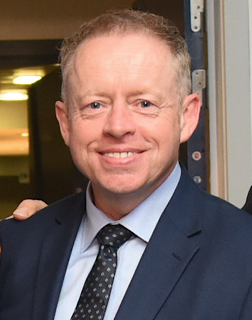
Ciarán Cannon, former Fine Gael politician who serves as a Teachta Dála (TD) for the Galway East constituency from 2011 to 2024, is born on September 19, 1965, in Galway, County Galway. He previously serves as a Senator for the Progressive Democrats and is the last elected leader of that party. He serves as a Minister of State from 2011 to 2014 and again from 2017 to 2020. He serves as a Senator from 2007 to 2011, after being nominated by the Taoiseach.

Before entering politics, Cannon is a planning official for Galway City Council and Dublin City Council, as well as CEO and secretary of the Irish Pilgrimage Trust. In 2002, he is honoured as one of the Galway People of the Year.

As a member of the Progressive Democrats, Cannon is elected to Galway County Council in the 2004 Irish local elections, to represent the Loughrea local electoral area, with 1,307 first preferences. He is an unsuccessful candidate at the 2007 Irish general election in Galway East. He is nominated by the Taoiseach Bertie Ahern to the 23rd Seanad in 2007.

Cannon is elected as Leader of the Progressive Democrats in April 2008. He is the first leader of the party to sit as a Senator while serving as leader. At his first press conference as party leader, he states that he believes “there was passion, commitment, talent and knowledge within the PDs’ ranks to stage a big comeback.”

However, after speculation increases that Noel Grealish, one of the two Progressive Democrat TDs, intends to leave the party, Cannon announces in September 2008 that a party conference will be held on November 8, 2008, at which he will recommend that the party disband. The delegates present at the conference vote 201–161 to agree with this recommendation.

On March 24, 2009, Cannon announces his decision to resign the leadership of the Progressive Democrats and joins Fine Gael the same day. At the 2011 Irish general election, he is one of two Fine Gael TDs elected in Galway East.

On March 10, 2011, Cannon is appointed by the coalition government led by Enda Kenny as Minister of State at the Department of Education and Skills with responsibility for Training and Skills. He is dropped as a minister in a reshuffle on July 15, 2014. At the 2016 Irish general election, he is elected to the third seat in Galway East.

On June 20, 2017, Cannon is appointed by the minority government led by Leo Varadkar as Minister of State at the Department of Foreign Affairs and Trade with responsibility for the Diaspora and International Development. He calls for a “No” vote in the 2018 referendum to allow legislation on abortion.

In 2019, in recognition of his work in education, Cannon is appointed as a UNICEF global champion for education. He is one of seven Generation Unlimited Champions who advocates worldwide for the development of UNICEF’s Gen U programme.

At the 2020 Irish general election, Cannon is elected to the second seat in Galway East. He continues to serve as a minister of state until the formation of a new government on June 27, 2020.

On March 19, 2024, Cannon announces that he will not contest the next general election, blaming a “toxicity in politics.”

Cannon is a musician and songwriter, and recently collaborated with Irish folk singer Seán Keane and others on songwriting projects. One of his co-compositions, “Nature’s Little Symphony,” is performed in Dublin by the RTÉ Concert Orchestra as part of the national Cruinniú celebrations on Easter Monday 2017. Both “Nature’s Little Symphony” and another of his compositions, “Gratitude,” are featured on the album Gratitude recorded by Keane and the RTÉ Concert Orchestra in 2018. On the August 10, 2018, Cannon plays piano with Keane and the RTÉ Concert Orchestra as part of a sold-out performance at the National Concert Hall. In 2019, he composes “An Túr,” a short piano instrumental to celebrate the birthday of W. B. Yeats.

In 2021 Cannon is commissioned to compose the soundtrack to a poem by Emily Cullen as part of the national commemoration of the signing of the Anglo-Irish Treaty in 1921.

In March 2024, Cannon begins presenting The Grey Lake Cafe, a radio show on Loughrea Community Radio featuring his own musical choices, and interviews with public figures who have a passion for music.

Cannon is also an avid cyclist and cycling safety advocate. He specialises in endurance cycling challenges and on June 19, 2021, he cycles Ireland end to end, a distance of 575 km, in 23 hours and 23 minutes, to raise money for charity.

On July 2, 2021, Cannon is involved in a road traffic collision and suffers serious injuries. On July 2, 2022 he marks the first anniversary of the incident by cycling 500 km around the border of County Galway. Marking the same date in 2023, he cycles 935 km (581 mi) in 56 hours, covering all 32 counties of the island of Ireland while fundraising for Hand In Hand, a charity that supports families challenged by childhood cancer.


Leave a comment

Death of Joe Lynch, Comedy & Drama Actor

Joseph Laurence Lynch, Irish actor who has a long career in both comedy and drama, dies on August 1, 2001, in Alicante, Spain. He provides voice work for children’s animated series, in particular Chorlton and the Wheelies. He is also a singer and songwriter, performing in the film Johnny Nobody (1961). He also records work by other songwriters, including Leo Maguire‘s “The Whistling Gypsy” and Dick Farrelly‘s “Cottage by the Lee,” one of his biggest 1950s recordings.

Born in Mallow, County Cork, on July 16, 1925, Lynch attends the North Monastery Christian Brothers School. He has a number of other jobs before moving into acting and broadcasting full time.

Initially acting part-time with the Cork Shakespearean Company and at the Cork Opera House, by 1947 Lynch is acting full-time.

Lynch is a founding member of the Radio Éireann Players and appears in productions of Teresa Deevy plays among others. During the 1950s he is responsible for a Radio Éireann show Living with Lynch, broadcast on Sunday nights, the first comedy series on Radio Éireann. Between 1967–81, he acts onstage with the Abbey Theatre.

Lynch appears in the popular ABC/Thames Television sitcom Never Mind the Quality, Feel the Width (1968–70), and its spin-off feature film in 1973. Other notable film roles include The Siege of Sidney Street (1960), The Running Man (1963), Girl with Green Eyes (1964), The Face of Fu Manchu (1965), Ulysses (1967), Loot (1970), The Mackintosh Man (1973), The Outsider (1980), If You Go Down in the Woods Today (1981) and Eat the Peach (1986). In the 1970s, he makes regular guest appearances as Elsie Tanner‘s boyfriend in the long-running Granada Television soap Coronation Street.

In 1962, and again in 1977, Lynch wins a Jacob’s Award for his acting on RTÉ television.

By 1979, Lynch is back in Ireland, and makes his first appearances as Dinny Byrne in the RTÉ soap Bracken. Later the Byrne character would feature in the long-running RTÉ soap Glenroe.

Lynch quits Glenroe after he claims to have been “shamefully treated” and offered “small potatoes” when he asked for a pay rise. He is also upset that he is not to get a pension. RTÉ disputes those claims. He criticised RTÉ for preventing him from doing other acting work alongside Glenroe. “I was terrible restricted in RTÉ, they wouldn’t let me off for anything, even commercials.”

Lynch voices the main antagonist, Grundel the Toad, in the Don Bluth film Thumbelina, his final audio work before his death seven years later.

Lynch dies suddenly on August 1, 2001, in Alicante, Spain, where he had been living since leaving Glenroe.


Leave a comment

Birth of Ernest Roland Ball, Singer & Songwriter

Ernest Roland Ball, American singer and songwriter, most famous for composing the music for the song “When Irish Eyes Are Smiling” in 1912, is born in Cleveland, Ohio, on July 22, 1878. He is not himself Irish.

Ball receives formal music training at the Cleveland Conservatory.

Ball’s growing career is much buoyed when James J. Walker, then a state senator of New York, asks him to write music for some lyrics he had written. He does, and the song “Will You Love Me In December as You Do In May?” becomes a hit. Walker later becomes known as “Dapper Jimmy Walker,” Mayor of New York City, a fortunate event for Ball’s career.

Ball accompanies singers, sings in vaudeville and writes sentimental ballads, mostly with Irish themes. He collaborates with Chauncey Olcott on many songs including “When Irish Eyes are Smiling,” for which Olcott writes the lyrics. He writes other Irish favorites including “Mother Machree,” “A Little Bit of Heaven,” “Dear Little Boy of Mine” and “Let the Rest of the World Go By.” “Mother Machree” is made popular by the famous Irish tenor, John McCormick. He also works with J. Keirn Brennan on songs like “For Dixie and Uncle Sam” and “Good Bye, Good Luck, God Bless You.”

Ball becomes a charter member of the American Society of Composers, Authors and Publishers (ASCAP) in 1907, and writes many American standards. He is also a fine pianist, and his playing is preserved on several piano roll recordings he makes for the Vocalstyle Music Company, based in Cincinnati in his home state of Ohio.

Ernest Ball dies on May 3, 1927, just after walking off stage at the Yost Theater in Santa Ana, California while on tour with “Ernie Ball and His Gang,” an act starring Ball and a male octet. He is posthumously inducted into the Songwriters Hall of Fame in 1970.

A 1944 musical Irish Eyes Are Smiling tells the story of Ball’s career and stars Dick Haymes and June Haver. His grandson is the guitar string entrepreneur Ernie Ball, great-grandson is singer-songwriter/content producer Sherwood Ernest Ball, and his great-great-granddaughters are actress Hannah Marks and singer/songwriter Tiare’ Ball.


Leave a comment

Birth of Kian Egan, Pop Singer, Songwriter & Musician

Kian John Francis Egan, Irish pop singer, songwriter and musician, best known as a member of pop group Westlife, is born on April 29, 1980, in Sligo, County Sligo. Westlife has released twelve albums, embarked on thirteen world tours, and won numerous awards, becoming one of the most successful musical groups of all time.

Egan is born to Kevin Egan and Patricia Egan (née Moore). He is the fifth of their seven children. He attends Summerhill College secondary school in Sligo, where he meets fellow band members Mark Feehily and Shane Filan. He is the cousin of Filan’s wife, Gillian Walsh. Before Westlife, he works at a jeans store.

In his early musical years, Egan is part of a rock band named Skrod. He can play at least five musical instruments, including guitar, piano, and drums. He is a grade 8 pianist and was taught piano by his brother Gavin Egan, a university music graduate and full-time teacher of music in the UK. Before he is in Westlife, he is part of a pop group called Six as One, which later changes its name to IOYOU, with fellow Westlife members Mark Feehily and Shane Filan, alongside Graham Keighron, Michael “Miggles” Garrett and Derrick Lacey.

After IOUYOU is signed by Louis Walsh, its lineup changes to include Egan, Mark Feehily, Shane Filan and two new members – Nicky Byrne and Brian McFadden. The band’s name changes to Westside and later to Westlife. Westlife splits up in 2012 after a Greatest Hits Tour.

During a year long hiatus from Westlife in 2008, Egan launches a new venture with Louis Walsh to put together and co-manage girlband, Wonderland, which includes Jodi Albert, who on May 8, 2009, becomes Egan’s wife. Wonderland’s debut album reaches number 6 on the Irish Albums Chart and number 8 on the UK Albums Chart, however, just four months later, they are dropped by Mercury Records and eventually split up.

In June 2012, Egan announces in an interview with the Sunday Life that he is “looking at doing a TV show with Sky on surfing.” Later reports suggest that the show would be eight episodes long and would broadcast on Sky One later in the year.

In July 2012, Egan presents the British programme This Morning’s Hub on a regular basis, standing in for the regular hosts. Later that year, every Friday morning in October, he begins giving reports on another British programme, This Morning, about the remaining contestants in the ninth series of The X Factor, before the competition’s live shows that weekend.

On October 21, 2012, Egan co-presents the revamped version of Surprise Surprise, but does not return the following year.

In 2013, Egan appears on the thirteenth series of I’m A Celebrity…Get Me Out Of Here! He is ultimately crowned King Of The Jungle, which contributes to an invitation to being signed by Rhino Records to create his Home album.

In January 2014, Egan signs with Rhino Records of Warner Music Group and his debut album Home is released on March 14 of that year in Ireland and March 17 in the UK. His debut single “Home“, a cover of a song by the band Daughtry, has its first exclusive play on BBC Radio 2 on lunch time with Terry Wogan‘s show. The album peaks at number 2 on the Irish Albums Chart and number 9 on the UK Albums Chart. In May 2014, he releases the second single from the album, “I’ll Be,” a cover of the track by Edwin McCain.

In October 2018, Westlife announces the group’s reunion as a four-piece. In 2019, the group headlines “The Twenty Tour,” named in honour of Westlife’s 20th anniversary since its formation and the release of its first single, “Swear It Again,” in 1999. In addition to touring, Westlife also releases new music. “Hello My Love,” the first single from the group’s upcoming album, debuts on The Graham Norton Show in January 2019.

Egan is one of four coaches on The Voice of Ireland. However, his dreams of winning the show go to tatters as he throws his lot in with Jim Devine from Northern Ireland. This immediately puts him at a disadvantage to the other contestants as, ahead of the final, viewers in Northern Ireland cannot download his single, the tally of which contributes to his vote. He is left fuming and in need of support from Sharon Corr as he expresses his opinion on the unfairness of it all and has “huge rows” about it but to no avail.

Egan and his wife and three sons live in Strandhill, County Sligo. He is ranked number five on Ireland’s Sexiest Man of 2014. As of 2017, his net worth is 18 million euros.


Leave a comment

Birth of Irish poet Seán Mac Falls

Irish poet Seán Mac Falls is born on November 18, 1957. Belonging to no group or movement and operating outside of literary fashions, his brand of symbolist poetry can, at first reading, appear difficult. His use of allusion, startling diction and subtle punning display submerged metaphor in his work. The overall effect is a fresh implementation of Imagism.

Mac Falls has written seven books of poetry and several chapbooks. His first collection of poems, 20 Poems (2001), wins praise from Yale University critic Harold Bloom and Oxford University don John Carey, who compares the poet to W. B. Yeats. Several of the poems are Pushcart Prize nominations and are reprinted in eminent magazines in the United States and United Kingdom, including Poet Lore, The Lyric, Agenda, The London Magazine and Stand Magazine.

Mac Falls publishes a second book, entitled The Blue Falcon, in 2005. His latest book of verse is titled Garden Theology (2022).

At the age of fifty, a reflective time in his life, Mac Falls purchases an historic, 100-year-old farmhouse property on the Olympic Peninsula in Washington State, overlooking Vancouver Island on the Salish Sea, with a sweeping view across the Strait of Juan de Fuca to Mount Baker. He is seeking a “Gentle House” with the peace and solitude he seeks in which to write. In the ensuing years he desires to share this experience and, looking ahead, establish an artist residency.

In order to preserve and extend the space that proves so generative, Mac Falls’s gift to the writing community is a place for poets, playwrights, painters, filmmakers and songwriters to co-mingle and create and collaborate.

Mac Falls, in collaboration with the esteemed non-profit Tupelo Press, establishes Gentle House as a retreat and ongoing residency for artists with an original founding gift, the property, cottages and a substantial poetry library. During 2022-23, Gentle House will transition to a 501(c)(3) nonprofit literary arts organization. Gentle House continues to subsist on the generosity of Mac Falls’s founding gift, supplemented by a fundraising program that began in earnest in 2021, and is growing each year.


2 Comments

Death of Francis Arthur Fahy, Songwriter & Poet

francis-arthur-fahy

Francis Arthur Fahy, Irish nationalist, songwriter and poet, dies on April 1, 1935. He is probably best remembered as the composer of the evergreen “The Ould Plaid Shawl”. He collaborates with various composers, including Alicia Adélaide Needham, an associate of the Royal Academy of Music.

Fahy is born in Kinvara, County Galway, on September 29, 1854 into a family of seventeen, eight of whom survive. His father, Thomas, comes from the Burren area and his mother, Celia Marlborough, is born near Gort, County Galway.

In 1896, Fahy becomes president of the emerging Conradh na Gaeilge (Gaelic League) in London, a position he holds until 1908. He is also a long time member of the London Irish Literary Society. Described as a small, brisk man, his enthusiasm and energy knows no bounds. His most memorable poems and songs include “The Ould Plaid Shawl,” “The Queen of Connemara,” the original “Galway Bay,” and “The Tide Full In.” His publications include The Child’s Irish Song Book (1881), The Irish Reciter (1882), Irish History in Rhyme (1882) and Irish Songs and Poems (1887).

Fahy retires from the Civil Service at the age of 65. He dies at the age of 81 on April 1, 1935.


Leave a comment

Birth of Samuel Lover, Songwriter, Novelist & Painter

samuel-lover-1

Samuel Lover, Irish songwriter, composer, novelist, and a painter of portraits, chiefly miniatures, is born at 60 Grafton Street in Dublin on February 24, 1797. He is also known as “Ben Trovato” (“well invented”) and is the grandfather of Victor Herbert. He is noted as saying, “When once the itch of literature comes over a man, nothing can cure it but the scratching of a pen.”

Lover goes to school at Samuel Whyte’s at 79 Grafton Street, now home to Bewley’s café. By 1830 he is secretary of the Royal Hibernian Academy and lives at 9 D’Olier Street. In 1835 he moves to London and begins composing music for a series of comic stage works. To some of them, like the operetta Il Paddy Whack in Italia (1841), he contributes both words and music, for others he merely contributes a few songs.

Lover produces a number of Irish songs, of which several – including The Angel’s Whisper, Molly Bawn, and The Four-leaved Shamrock – attain great popularity. He also writes novels, of which Rory O’Moore and Handy Andy are the best known, and short Irish sketches which, with his songs, he combines into a popular entertainment called Irish Nights or Irish Evenings. With the latter, he tours North America between 1846 and 1848. He joins with Charles Dickens in founding Bentley’s Magazine.

Lover’s grandson is composer Victor Herbert whose mother is Lover’s daughter Fanny. Herbert is best remembered for his many successful musicals and operettas that premier on Broadway. As a small child he lives with the Lovers in a musical environment following the divorce of his mother.

Samuel Lover dies on July 6, 1868, in Saint Helier on the island of Jersey. A memorial in St. Patrick’s Cathedral, Dublin summarises his achievements:

“Poet, painter, novelist and composer, who, in the exercise of a genius as distinguished in its versatility as in its power, by his pen and pencil illustrated so happily the characteristics of the peasantry of his country that his name will ever be honourably identified with Ireland.”


Leave a comment

Birth of Jimmy Kennedy, Songwriter & Lyricist

jimmy-kennedy-1

James Kennedy, songwriter and lyricist, is born on July 20, 1902, near Omagh, County Tyrone in what is now Northern Ireland. He puts words to existing music such as “The Teddy Bears’ Picnic” and “My Prayer” and co-writes with composers Michael Carr, Wilhelm Grosz and Nat Simon, among others. In a career spanning more than fifty years, he writes some 2,000 songs, of which over 200 become worldwide hits and about 50 are all-time popular music classics.

Kennedy’s father, Joseph Hamilton Kennedy, is a policeman in the Royal Irish Constabulary (RIC). While growing up in the village of Coagh, Kennedy writes several songs and poems. He is inspired by local surroundings — the view of the Ballinderry River, the local Springhill House and the plentiful chestnut trees on his family’s property, as evidenced in his poem Chestnut Trees. He later moves to Portstewart, a seaside resort in County Londonderry.

Kennedy graduates from Trinity College, Dublin, before teaching in England. He is accepted into the Colonial Service, as a civil servant, in 1927.

While awaiting a Colonial Service posting to the colony of Nigeria, Kennedy embarks on a career in songwriting. His first success comes in 1930 with “The Barmaid’s Song”, sung by Gracie Fields. Fellow lyricist Harry Castling introduces him to Bert Feldman, a music publisher based in London‘s “Tin Pan Alley“, for whom he starts to work. In the early 1930s he writes a number of successful songs, including “Oh, Donna Clara” (1930), “My Song Goes Round the World” (1931), and “The Teddy Bears’ Picnic” (1933), in which he provides new lyrics to John Walter Bratton‘s tune from 1907.

In 1934, Feldman turns down Kennedy’s song “Isle of Capri“, but it becomes a major hit for a new publisher, Peter Maurice. He writes several more successful songs for Maurice, including “Red Sails in the Sunset” (1935), inspired by beautiful summer evenings in Portstewart, Northern Ireland, “Harbour Lights” (1937) and “South of the Border” (1939), inspired by a holiday picture postcard he receives from Tijuana, Mexico and written with composer Michael Carr. He and Carr also collaborate on several West End shows in the 1930s, including London Rhapsody (1937). “My Prayer,” with original music by Georges Boulanger, has English lyrics penned by Kennedy in 1939. It is originally written by Boulanger with the title “Avant de Mourir” in 1926.

During the early stages of World War II, while serving in the British Army‘s Royal Artillery, where he rises to the rank of Captain, Kennedy writes the wartime hit, “We’re Going to Hang out the Washing on the Siegfried Line.” His hits also include “Cokey Cokey” (1945), and the English lyrics to “Lili Marlene.” After the end of the war, his songs include “Apple Blossom Wedding” (1947), “Istanbul (Not Constantinople)” (1953), and “Love Is Like a Violin” (1960). In the 1960s he writes the song “The Banks of the Erne'”, for recording by his friend from the war years, Theo Hyde, also known as Ray Warren.

Kennedy is a patron of the Castlebar Song Contest from 1973 until his death in 1984 and his association with the event adds great prestige to the contest.

Kennedy wins two Ivor Novello Awards for his contribution to music and receives an honorary degree from the New University of Ulster. He is awarded the OBE in 1983 and, in 1997, is posthumously inducted into the Songwriter’s Hall of Fame.

Jimmy Kennedy dies in Cheltenham on April 6, 1984, at the age of 81. He is interred in Taunton, Somerset.


Leave a comment

Death of Novelist Arthur Henry Ward

arthur-henry-wardArthur Henry “Sarsfield” Ward, prolific English novelist better known as Sax Rohmer, dies on June 1, 1959. He is best remembered for his series of novels featuring the master criminal Dr. Fu Manchu.

Born in Birmingham to a working class family on February 15, 1883, Ward initially pursues a career as a civil servant before concentrating on writing full-time. He works as a poet, songwriter and comedy sketch writer for music hall performers before creating the Sax Rohmer persona and pursuing a career writing fiction.

Like his contemporaries Algernon Blackwood and Arthur Machen, Ward claims membership to one of the factions of the qabbalistic Hermetic Order of the Golden Dawn. He also claims ties to the Rosicrucians, but the validity of his claims has been questioned. His doctor and family friend Dr R. Watson Councell may have been his only legitimate connection to such organisations.

Ward’s first published work comes in 1903, when the short story “The Mysterious Mummy” is sold to Pearson’s Weekly. His main literary influences are Edgar Allan Poe, Arthur Conan Doyle and M. P. Shiel.

Ward gradually transitions from writing for music hall performers to concentrating on short stories and serials for magazine publication. In 1909 he marries Rose Elizabeth Knox. He publishes his first book Pause! anonymously in 1910.

After penning Little Tich in 1911 as ghostwriter for the famous music hall entertainer of the same name, Ward issues the first Fu Manchu novel, The Mystery of Dr. Fu-Manchu, serialised from October 1912 to June 1913. It is an immediate success. The Fu Manchu stories, together with his more conventional detective series characters — Paul Harley, Gaston Max, Red Kerry, Morris Klaw and the Crime Magnet — make him one of the most successful and well-paid authors of the 1920s and 1930s. In the 28 years from 1931 to 1959, he adds no fewer than 10 new books to the Fu Manchu series.

Other works by Ward include The Orchard of Tears (1918), The Quest of the Sacred Slipper (1919), Tales of Chinatown (1922) and Brood of the Witch-Queen as well as numerous short stories.

Ward’s work is banned in Nazi Germany, causing him to complain that he could not understand such censorship, stating “my stories are not inimical to Nazi ideals.”

After World War II, Ward and his wife move to New York, only returning to London shortly before his death. He dies on June 1, 1959 at the age of 76, due to an outbreak of Influenza A virus subtype H2N2.


Leave a comment

Birth of Chauncey Olcott, Actor, Singer & Songwriter

chauncey-olcott

John Chancellor “Chauncey” Olcott, American stage actor, songwriter and singer of Irish descent, is born in Buffalo, New York on July 21, 1858. His mother, Margaret (née Doyle), is a native of Killeagh, County Cork.

In the early years of his career Olcott sings in minstrel shows, before studying singing in London during the 1880s. Lillian Russell plays a major role in helping make him a Broadway star. When the producer Augustus Pitou approaches him in 1893 to succeed William J. Scanlan as the leading tenor in sentimental operettas on Irish themes, Olcott accepts and performs pseudo-Irish roles for the remainder of his career.

Olcott combines the roles of tenor, actor, lyricist and composer in many productions. He writes the complete scores to Irish musicals such as Sweet Inniscara (1897), A Romance of Athlone (1899), Garrett O’Magh (1901), and Old Limerick Town (1902). For other productions he collaborates with Ernest Ball and George Graff, Jr. in works such as The Irish Artist (1894), Barry of Ballymore (1910), Macushla (1912), and The Isle o’ Dreams (1913). There are some twenty such works between 1894 and 1920.

Olcott is a good songwriter who captures the mood of his Irish American audience by combining melodic and rhythmic phrases from traditional Irish music with melancholy sentiment. Some numbers from his musicals become very popular, such as “My Wild Irish Rose” from A Romance of Athlone, “Mother Machree” from Barry of Ballymore, and “When Irish Eyes Are Smiling” from The Isle o’ Dreams. Sometimes he uses tunes from others, such as that of the title song from Macushla from Irish composer Dermot Macmurrough (pseudonym of Harold R. White) or Too Ra Loo Ra Loo Ral (Irish Lullaby) by James Royce Shannon for his production Shameen Dhu (1914).

In 1925, a serious illness forces Olcott to retire, and he moves to Monte Carlo, Monaco where he dies of pernicious anemia on March 18, 1932. His body is brought home and interred in the Woodlawn Cemetery in The Bronx, New York City.

Olcott’s life story is told in the 1947 Warner Bros. motion picture My Wild Irish Rose starring Dennis Morgan as Olcott. The film’s plot is based on the biography by Olcott’s widow, Rita Olcott, Song in His Heart (1939).

In 1970, Olcott is posthumously inducted into the Songwriters Hall of Fame.