seamus dubhghaill

Promoting Irish Culture and History from Little Rock, Arkansas, USA


Leave a comment

Death of Gaelic Footballer Seán Purcell

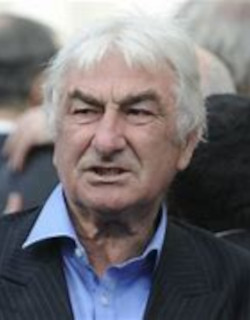
Seán Purcell, Gaelic footballer who plays at senior level for the Galway county football team, dies in Blackrock, Dublin, on August 27, 2005, following a short illness.

Best known as a centre half-forward, Purcell plays in most outfield positions during his career. In 2009, he is named in the Sunday Tribune‘s list of the “125 Most Influential People in GAA History.”

Born in the family home on the Dublin Road, Tuam, County Galway, on December 17, 1928, the son of John Purcell, journalist and newsagent, and his wife Norah (née Kilkenny). He is educated at the Presentation Convent, Tuam Christian Brothers School and St. Jarlath’s College. He plays in the St. Jarlath’s College side that wins the Hogan Cup in 1947, beating St. Patrick’s Grammar School, Armagh, in the final at Croke Park in Dublin. His nickname “The Master” originates when he teaches at Strawberry Hill National School in Dunmore.

Purcell’s footballing career spans three decades, from the 1940s to the 1960s. He forms a successful on-field partnership with Frank Stockwell at Galway, culminating in the team winning their fourth All-Ireland championship in 1956 and leading to their nickname as the “Terrible Twins.”

Further successes in which Purcell is involved include winning the National Football League title in 1957, three Railway Cups, one of which he captains, the 1950 Sigerson Cup, appearances with the Combined Universities side and ten county titles with the Tuam Stars, including seven in a row from 1954 to 1960.

Purcell’s involvement in the GAA continues long after his playing days as he serves in a number of positions as team mentor and administrator in Galway.

In 1984, the GAA’s centenary year, Purcell is named on the GAA Football Team of the Century and the organisation’s Football Team of the Millennium in 1999. In 1984, the Sunday Independent invites readers to vote for their Team of the Century. Purcell wins more votes than any other player. In 1991, he is inducted into the All-Stars All-Time Hall of Fame. In 2003, he is named on the St. Jarlath’s All Stars team.

Purcell dies on August 27, 2005, at the age of 76, following a short illness at the Blackrock Clinic, County Dublin. He is buried in the Athenry Road graveyard at Tuam.

Purcell marries Rita Shannon in 1961. They have four daughters and two sons before the marriage ends. His son, Robert Purcell, marries Tessa Robinson, daughter of former Irish President Mary Robinson, in 2005. His grandson, Simon Carr, is a professional tennis player. Another grandson, Sam McCartan, has played Gaelic football at senior level for Westmeath. His teenage grandson, Rory Purcell, dies in 2022.

Leave a comment

John Boland Becomes First Irish Olympic Gold Medal Winner

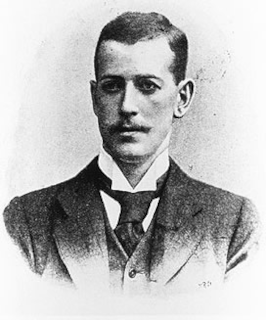
On March 30, 1896, an Irishman wins an Olympic gold medal for the first time when John Mary Pius Boland triumphs in tennis at the first modern Olympics, which take place in Athens, Greece. In addition to being a gold medalist tennis player, he is an Irish Nationalist politician and Member of Parliament (MP) in the House of Commons of the United Kingdom of Great Britain and Ireland and as member of the Irish Parliamentary Party (IPP) for South Kerry from 1900 to 1918.

Boland is born on September 16, 1870, at 135 Capel Street, Dublin, to Patrick Boland, businessman, and Mary Donnelly. Following the death of his mother in 1882, he is placed with his six siblings under the guardianship of his uncle, Nicholas Donnelly, auxiliary bishop of Dublin.

Boland is educated at two private Catholic schools, the Catholic University School, Dublin, and Birmingham Oratory in Birmingham, England, where he becomes head boy. His secondary education at the two schools help give him the foundation and understanding to play an influential role in the politics of Great Britain and Ireland at the beginning of the 20th century, when he is a member of the Irish Parliamentary Party, which pursues constitutional Home Rule.

In 1892, Boland graduates with a BA from London University. He studies for a semester in Bonn, Germany, where he is a member of Bavaria Bonn, a student fraternity that is member of the Cartellverband. He studies law at Christ Church, Oxford, graduating with a BA in 1896 and MA in 1901. Although called to the Bar in 1897, he never practises.

Boland is the first Olympic champion in tennis for Great Britain and Ireland at the first modern Olympics, which take place in Athens in 1896. He visits his friend Thrasyvoulos Manos in Athens during the Olympics, and Manos, a member of the organising committee, enters Boland in the tennis tournament. He promptly wins the singles tournament, defeating Friedrich Traun of Germany in the first round, Evangelos Rallis of Greece in the second, Konstantinos Paspatis of Greece in the semifinals, and Dionysios Kasdaglis of Greece in the final.

Boland then enters the doubles event with Traun, the German runner whom he had defeated in the first round of the singles. Together, they win the doubles event. They defeat Aristidis and Konstantinos Akratopoulos of Greece in the first round, have a bye in the semifinals, and defeat Demetrios Petrokokkinos of Greece and Dimitrios Kasdaglis in the final. When the Union Jack and the German flag are run up the flagpole to honour Boland and Traun’s victory, Boland points out to the man hoisting the flags that he is Irish, adding “It [the Irish flag]’s a gold harp on a green ground, we hope.” The officials agreed to have an Irish flag prepared.

Following a visit to County Kerry, Boland becomes concerned about the lack of literacy among the native population. He also has a keen interest in the Irish Language.

Boland’s patriotic stand is well received in nationalist circles in Ireland. This and a lifelong friendship with John Redmond gain for him an invitation to stand as a candidate for the Irish Parliamentary Party in the safe seat of South Kerry, which he holds from 1900 to 1918. He is unopposed in the general elections of 1900 and 1906, and the first of 1910. In the second election of 1910 he is challenged by a local man, T. B. Cronin, who stands as an independent nationalist in the interest of William O’Brien. Boland stands down at the 1918 United Kingdom general election.

In 1908, Boland is appointed a member of the commission for the foundation of the National University of Ireland (NUI). From 1926 to 1947, he is General Secretary of the Catholic Truth Society. He receives a papal knighthood, becoming a Knight of St. Gregory in recognition for his work in education. In 1950, he is awarded an honorary Doctor of Law by the NUI.

Boland marries Eileen Moloney at SS Peter and Edward, Palace Street, Westminster, on October 22, 1902, the daughter of an Australian Dr. Patrick Moloney. They have one son and five daughters. His daughter Honor Crowley succeeds her husband Frederick Crowley upon his death sitting as Fianna Fáil TD for South Kerry from 1945 until her death in 1966. His daughter Bridget Boland is a playwright who notably writes The Prisoner and co-writes the script for Gaslight, and, among other books, co-authors Old Wives’ Lore for Gardeners with her sister, Maureen Boland.

Boland dies at his home, 40 St George’s Square, in London on Saint Patrick’s Day, March 17, 1958.


Leave a comment

Birth of John Boland, Politician & Olympic Medalist

John Mary Pius Boland, Irish Nationalist politician, is born at 135 Capel Street, Dublin, on September 16, 1870. He serves as a Member of Parliament (MP) in the House of Commons of the United Kingdom of Great Britain and Ireland and as a member of the Irish Parliamentary Party for South Kerry (1900–1918). He is also noteworthy as a gold medalist tennis player at the first modern Olympics in Athens in 1896.

Boland is born to Patrick Boland (1840–1877), businessman, and Mary Donnelly. Following the death of his mother in 1882, he is placed with his six siblings under the guardianship of his uncle Nicholas Donnelly, auxiliary bishop of Dublin.

Boland is educated at two private Catholic schools, one Irish, the second English, and both of whose existence and evolution are influenced by John Henry Newman – the Catholic University School, Dublin, and The Oratory School, Birmingham. His secondary education at the two schools helps give him the foundation and understanding to play an influential role in the politics of Great Britain and Ireland at the beginning of the 20th century, when he is a member of the Irish Parliamentary Party which pursues constitutional Home Rule.

In 1892 Boland graduates with a BA from London University. He studies for a semester in Bonn, Germany, where he is a member of Bavaria Bonn, a student fraternity that is member of the Cartellverband. He studies law at Christ Church, Oxford, graduating with a BA in 1896 and MA in 1901. Although called to the Bar in 1897, he never practises.

Boland is the first Olympic champion in tennis for Great Britain and Ireland at the first modern Olympics, which takes place in Athens in 1896. He visits his friend Thrasyvoulos Manos in Athens during the Olympics, and Manos, a member of the organising committee, enters Boland in the tennis tournament. Boland promptly wins the singles tournament, defeating Friedrich Traun of Germany in the first round, Evangelos Rallis of Greece in the second, Konstantinos Paspatis of Greece in the semifinals, and Dionysios Kasdaglis of Greece in the final.

Boland then enters the doubles event with Traun, the German runner whom he had defeated in the first round of the singles. Together, they win the doubles event. They defeat Aristidis and Konstantinos Akratopoulos of Greece in the first round, have a bye in the semifinals, and defeat Demetrios Petrokokkinos of Greece and Dimitrios Kasdaglis in the final. When the Union Flag and the German flag are run up the flagpole to honour Boland and Traun’s victory, Boland points out to the man hoisting the flags that he is Irish, adding “It’s a gold harp on a green ground, we hope.” The officials agree to have an Irish flag prepared.

Following a visit to Kerry, Boland becomes concerned about the lack of literacy among the native population, as he also has a keen interest in the Irish language.

In 1908, Boland is appointed a member of the commission for the foundation of the National University of Ireland (NUI). From 1926 to 1947, he is General Secretary of the Catholic Truth Society. He receives a papal knighthood, becoming a Knight of St. Gregory in recognition for his work in education, and in 1950 he is awarded an honorary doctorate of Laws by the NUI.

Boland marries Eileen Moloney (1876–1937), daughter of an Australian Dr. Patrick Moloney, at SS Peter and Edward, Palace-street, Westminster, on October 22, 1902. They have one son and five daughters. His daughter Honor Crowley (née Boland) succeeds her husband, Frederick Crowley, upon his death sitting as Fianna Fáil TD for South Kerry from 1945 until her death in 1966. His daughter Bridget Boland is a playwright who writes The Prisoner.

Boland dies at the age of 87 at his home in London on Saint Patrick’s Day, March 17, 1958.


Leave a comment

Birth of Humanitarian John O’Shea

John O’Shea, founder and former CEO of GOAL, an Irish non-governmental organization devoted to assisting the poorest of the poor, is born in Limerick, County Limerick on February 28, 1944.

O’Shea’s father, a banker, moves the family to Dublin when he is age 11. He is schooled in CBC Monkstown and is a sports fanatic playing rugby at school and a keen golfer and tennis player in Monkstown. He remains a keen fan of rugby, tennis and golf, playing tennis every Saturday and also giving opinions on Irish sports to radio and newspapers. He goes on to study Economics, English and Philosophy at University College Dublin (UCD) and has a career as a sports journalist in the Evening Press for many years after meeting Tim Pat Coogan while studying.

In 1977, O’Shea begins his charitable organisation with a 10,000 punts donation for a feeding project in Calcutta after which he founds GOAL. The charity has a major sporting backbone. John McEnroe, Pat Cash and Gordon D’Arcy are amongst the sport stars to have become “Goalies”(volunteers).

In its 36 years of operation, GOAL has distributed €790 million and has had over 1,400 volunteers. It has operated in over 50 countries worldwide. O’Shea cites watching the “Goalies” working around the world as the best part of his years involved in the charity. He believes that governments of developed countries should be far more involved in the distribution of aid.

A sometimes controversial figure, O’Shea is known for his forthright public statements, particularly when he feels political correctness is getting in the way of assisting those in need, and a hands on approach to tackling poverty related issues. He has been criticised by some in the INGO community for advocating military invasion and intervention in Sudan by the United States, UK and NATO, under the guise of humanitarian intervention. He has also been critical of perceived inaction by the UN in humanitarian crises in conflict zones and of governmental aid agencies in giving aid directly to allegedly corrupt African governments. He has advocated using private companies to provide aid and military forces to directly force aid on countries. Most other Irish Aid agencies disagree stating that every type of aid channels must be used and have described his policies as recolonisation.

In 2012, O’Shea is asked to slow down by his doctor. In November 2012, former Fianna Fáil politician, Barry Andrews, is appointed chief executive of GOAL.

O’Shea’s list of achievements and awards include the People of the Year Awards 1987 and 1992, The Ballygowan Outstanding Achievement Award 1988, MIR Award 1992, The Late Late Show Tribute 1995 and 2007, Texaco Outstanding Achievement Award 1995 and the Tipperary International Peace Award 2003, Ernst & Young Social Entrepreneur of the Year 2005.

In 2008, O’Shea is conferred with an honorary doctorate of laws from the University of Notre Dame in recognition of his work. He is shortlisted in the top 40 of the 2010 RTÉ poll to find Ireland’s Greatest person.

O’Shea currently gives talks at NUI Galway and interpersonal skills class UCD. He has become involved with the university for a few years where he shares his story. He is an advocate for social (non-profit) entrepreneurs and tries to convince students to go down that path.


Leave a comment

Birth of Sophie Mary Peirce-Evans, Irish Aviator

lady-heath

Sophie Mary Peirce-Evans, Lady Heath, Irish aviator, is born on November 10, 1896, in Knockaderry, County Limerick, near the town of Newcastle West. She is one of the best-known women in the world for a five-year period from the mid-1920s.

When Peirce-Evans is one year old, her father, John Peirce-Evans, bludgeons her mother, Kate Theresa Dooling, to death with a heavy stick. He is found guilty of murder and declared insane. She is taken to the home of her grandfather in Newcastle West where she is brought up by two maiden aunts, who discourage her passion for sports.

After schooldays in Rochelle School in Cork, Princess Garden Belfast and St. Margaret’s Hall on Mespil Road in Dublin, where she plays hockey and tennis, Peirce-Evans enrolls in the Royal College of Science for Ireland. The college is designed to produce the educated farmers which the country then needs. One of the few women in the college, she duly takes a top-class degree in science, specialising in agriculture. She also plays with the college hockey team and contributes to a student magazine, copies of which are held in the National Library of Ireland.

Before becoming a pilot, Peirce-Evans has already made her mark. She spends two years as a dispatch rider during World War I, based in England and later France. By that time, she has married the first of her three husbands, Major William Elliot Lynn, and, as Sophie Mary Eliott-Lynn, is one of the founders of the Women’s Amateur Athletic Association after her move to London in 1922. She is Britain’s first women’s javelin champion and sets a disputed world record for the high jump. Alleging cruelty, her marriage to Elliot Lynn ends in divorce.

In 1925, Elliot-Lynn takes her first flying lessons and two years later becomes the first woman to hold a commercial flying licence in Britain. Along the way, she set records for altitude in a small plane and later a Shorts seaplane and is the first woman to parachute from an aeroplane.

In an era when the world has gone aviation-mad due to the exploits of Charles Lindbergh and Amelia Earhart, Elliot-Lynn is more than able to hold her own. “Britain’s Lady Lindy,” as she is known in the United States, makes front-page news as the first pilot, male or female, to fly a small open-cockpit aircraft from Cape Town to London. A scale model of the plane is on display at The Little Museum of Dublin. She writes about the experience later in the book Woman and Flying, which she co-authors with Stella Wolfe Murray. After her great flight from the Cape, she takes a mechanic’s qualification in the United States, the first woman to do so.

On October 11, 1927, Peirce-Evans marries Sir James Heath at Christ Church in Mayfair, London, and assumes the title Lady Heath. In July 1928, she spends a few weeks volunteering as a co-pilot with a civil airline, KLM. She is hoping to be appointed to the newly created Batavia route, which would make her the first female pilot with a commercial airline. The world is not ready for female pilots and her hope is not fulfilled.

In 1929, just when her fame is at its height, with her life a constant whirl of lectures, races and long-distance flights, Lady Heath is badly injured in a crash just before the National Air Races in Cleveland, Ohio. Before the accident Lady Heath applies for American citizenship, intending to remain in the United States where she has made a good living on the lecture circuit and as an agent for Cirrus engines. She is never the same after her accident.

Lady Heath divorces Sir James Heath in Reno, Nevada in January 1930. On 12 November 12, 1931, in Lexington, Kentucky, she marries G.A.R Williams, a horseman and pilot of Caribbean origin. They return to Ireland, and she becomes involved in private aviation, briefly running her own company at Kildonan, near Dublin in the mid-1930s, and helping produce the generation of pilots that would help establish the national airline Aer Lingus.

Lady Heath dies in St Leonard’s Hospital, Shoreditch, London on May 9, 1939, following a fall inside a double-decker tram. Although alcoholism had been a problem in previous years, a pathologist finds no evidence of alcohol but detailed evidence of an old blood clot which might have caused the fall. On May 15, 1939, according to newspaper reports, her ashes are scattered over Surrey from an aircraft flown by her estranged husband although legend has it that her ashes are returned to Ireland where they are scattered over her native Newcastle West.