seamus dubhghaill

Promoting Irish Culture and History from Little Rock, Arkansas, USA


Leave a comment

Death of Charles Lever, Novelist & Raconteur

Charles James Lever, Irish novelist and raconteur, dies of heart failure on June 1, 1872, at Trieste, Italy. According to Anthony Trollope, his novels are just like his conversation.

Lever is born in Amiens Street, Dublin, on August 31, 1806. He is the second son of James Lever, an architect and builder, and is educated in private schools. His escapades at Trinity College, Dublin (1823–1828), where he earns a degree in medicine in 1831, are drawn on for the plots of some of his novels. The character Frank Webber in the novel Charles O’Malley is based on a college friend, Robert Boyle, who later becomes a clergyman. He and Boyle earn pocket-money singing ballads of their own composing in the streets of Dublin and play many other pranks which he embellishes in the novels Charles O’Malley, Con Cregan and Lord Kilgobbin.

Before seriously embarking upon his medical studies, Lever visits Canada as an unqualified surgeon on an emigrant ship. Arriving in Canada, he journeys into the backwoods, where he is affiliated to a tribe of Native Americans but has to flee because his life is in danger, as later his character Bagenal Daly does in his novel The Knight of Gwynne.

Back in Europe, Lever pretends he is a student from the University of Göttingen and travels to the University of Jena and then to Vienna. He loves German student life and several of his songs, such as “The Pope He Loved a Merry Life,” are based on student-song models. His medical degree earns him an appointment to the Board of Health in County Clare and then as a dispensary doctor in Portstewart, County Londonderry, but his conduct as a country doctor earns him the censure of the authorities.

In 1833 Lever marries his first love, Catherine Baker, and in February 1837, after varied experiences, he begins publishing The Confessions of Harry Lorrequer in the recently established Dublin University Magazine. Before Harry Lorrequer appears in volume form (1839), he has settled on the strength of a slight diplomatic connection as a fashionable physician in Brussels.

In 1842 Lever returns to Dublin to edit the Dublin University Magazine and gathers round him a typical coterie of Irish wits. In June 1842 he welcomes William Makepeace Thackeray, the author of The Snob Papers, to Templeogue, four miles southwest of Dublin, on his Irish tour. The O’Donoghue and Arthur O’Leary (1845) make his native land an impossible place for Lever to continue in. Thackeray suggests London, but Lever requires a new field of literary observation and anecdote. His creative inspiration exhausted, he decides to renew it on the continent. In 1845 he resigns his editorship and goes back to Brussels, whence he starts upon an unlimited tour of central Europe in a family coach. Now and again, he halts for a few months and entertains to the limit of his resources in some ducal castle or other which he hires for an off season.

Depressed in spirit as Lever is, his wit is unextinguished. He is still the delight of the salons with his stories, and in 1867, after a few years’ experience of a similar kind at La Spezia, he is cheered by a letter from Lord Derby offering him the more lucrative consulship of Trieste. The $600 annual salary does not atone to Lever for the lassitude of prolonged exile. Trieste, at first “all that I could desire,” became with characteristic abruptness “detestable and damnable.”

Lever’s depression, partly due to incipient heart disease, partly to the growing conviction that he is the victim of literary and critical conspiracy, is confirmed by the death of his wife on April 23, 1870, to whom he is tenderly attached. He visits Ireland in the following year and seems alternately in high and low spirits. Death had already given him one or two runaway knocks, and, after his return to Trieste, he fails gradually, dying suddenly, however, and almost painlessly, from heart failure on June 1, 1872, at his home, Villa Gasteiger. His daughters, one of whom, Sydney, is believed to have been the real author of A Rent in a Cloud (1869), are well provided for.


Leave a comment

Opening of the Volta Electric Theatre in Dublin

Under the managership of the writer James Joyce, Ireland’s first cinematographic theatre, the Volta Electric Theatre (later renamed the Lyceum Picture Theatre), opens at 45 Mary Street in Dublin on December 20, 1909. The site has since been demolished and is occupied today by a department store.

In the early 1900s, demand for moving pictures is fierce and cinemas are springing up all over the world. After visiting Trieste, Joyce is determined to bring a cinema to Ireland. After receiving the backing of his Italian friends, he sets up the Cinematograph Volta on Mary Street. It opens its doors on December 20, 1909. The opening night features an eclectic program, with the comedy Deviled Crab, the mystery Bewitched Castle, La Pourponièrre, The First Paris Orphanage, and The Tragedy of Beatrice Cency. A popular actor is Charlie Chaplin.

Joyce soon becomes disillusioned with the venture, as the cinema mainly shows films from Europe and Italy, which are largely shunned by Dubliners at the time. After seven months, Joyce withdraws his involvement and the cinema is sold to the British Provincial Cinema Company. The cinema remains open until 1919.

In 1921, it is reopened as the Lyceum Picture Theatre following alterations which increase seating from 420 to 600. In the 1940s, Capitol and Allied Theatres Ltd. acquires the cinema. However, it closes its doors for the last time in 1948. Although it survives almost 40 years, the cinema is rarely successful.

Penneys, a fast fashion retailer and subsidiary of the British food processing and retail company Associated British Foods, purchases the building along with adjacent shops and builds a department store on the demolished site. For many years the site of Ireland’s first cinema is unknown to many as there is no plaque to commemorate it. However, on June 12, 2007, a plaque is unveiled on the original site marking the significance of 45 Mary Street.

A connection between the name and cinema in Ireland still remains. Volta is a streaming service for mainly Irish content.


Leave a comment

Birth of Charles Lever, Novelist & Raconteur

Charles James Lever, Irish novelist and raconteur, is born in Amiens Street, Dublin, on August 31, 1806. According to Anthony Trollope, his novels were just like his conversation.

Lever is the second son of James Lever, an architect and builder, and is educated in private schools. His escapades at Trinity College, Dublin (1823–1828), where he earns a degree in medicine in 1831, are drawn on for the plots of some of his novels. The character Frank Webber in the novel Charles O’Malley is based on a college friend, Robert Boyle, who later becomes a clergyman. He and Boyle earn pocket-money singing ballads of their own composing in the streets of Dublin and play many other pranks which he embellishes in the novels Charles O’Malley, Con Cregan and Lord Kilgobbin.

Before seriously embarking upon his medical studies, Lever visits Canada as an unqualified surgeon on an emigrant ship. Arriving in Canada, he journeys into the backwoods, where he is affiliated to a tribe of Native Americans but has to flee because his life is in danger, as later his character Bagenal Daly does in his novel The Knight of Gwynne.

Back in Europe, Lever pretends he is a student from the University of Göttingen and travels to the University of Jena and then to Vienna. He loves German student life and several of his songs, such as “The Pope He Loved a Merry Life,” are based on student-song models. His medical degree earns him an appointment to the Board of Health in County Clare and then as a dispensary doctor in Portstewart, County Londonderry, but his conduct as a country doctor earns him the censure of the authorities.

In 1833 Lever marries his first love, Catherine Baker, and in February 1837, after varied experiences, he begins publishing The Confessions of Harry Lorrequer in the recently established Dublin University Magazine. Before Harry Lorrequer appears in volume form (1839), he has settled on the strength of a slight diplomatic connection as a fashionable physician in Brussels.

In 1842 Lever returns to Dublin to edit the Dublin University Magazine and gathers round him a typical coterie of Irish wits. In June 1842 he welcomes William Makepeace Thackeray, the author of The Snob Papers, to Templeogue, four miles southwest of Dublin, on his Irish tour. The O’Donoghue and Arthur O’Leary (1845) make his native land an impossible place for Lever to continue in. Thackeray suggests London, but Lever requires a new field of literary observation and anecdote. His creative inspiration exhausted, he decides to renew it on the continent. In 1845 he resigns his editorship and goes back to Brussels, whence he starts upon an unlimited tour of central Europe in a family coach. Now and again, he halts for a few months and entertains to the limit of his resources in some ducal castle or other which he hires for an off season.

Depressed in spirit as Lever is, his wit is unextinguished. He is still the delight of the salons with his stories, and in 1867, after a few years’ experience of a similar kind at La Spezia, he is cheered by a letter from Lord Derby offering him the more lucrative consulship of Trieste. The $600 annual salary does not atone to Lever for the lassitude of prolonged exile. Trieste, at first “all that I could desire,” became with characteristic abruptness “detestable and damnable.”

Lever’s depression, partly due to incipient heart disease, partly to the growing conviction that he is the victim of literary and critical conspiracy, is confirmed by the death of his wife on April 23, 1870, to whom he is tenderly attached. He visits Ireland in the following year and seems alternately in high and low spirits. Death had already given him one or two runaway knocks, and, after his return to Trieste, he fails gradually, dying suddenly, however, and almost painlessly, from heart failure on June 1, 1872, at his home, Villa Gasteiger. His daughters, one of whom, Sydney, is believed to have been the real author of A Rent in a Cloud (1869), are well provided for.

Leave a comment

Original “Ulysses” Manuscript Goes on Display in Dublin

CREATOR: gd-jpeg v1.0 (using IJG JPEG v80), quality = 82

The original manuscript of James Joyce‘s Ulysses arrives in its “spiritual home” for the first time on June 13, 2000 when it goes on display at the Chester Beatty Library on the grounds of Dublin Castle in Dublin, the city that inspired the novel.

Spidery sentences penned on yellowing paper and littered with scribbled alterations make up the first draft of what many scholars consider to be the most influential work of fiction of the 20th century. It is the centerpiece of a Joyce exhibition at the Chester Beatty library which runs through the end of September 2000.

Derick Dreher, director of the Rosenbach Museum and Library in Philadelphia, Pennsylvania, where the manuscript has been kept since 1924, says it marks the homecoming of a work which is “quintessentially Irish.” He adds, “People are amazed that it has never been here before. The novel captures the essence of Dublin and yet was composed entirely on foreign soil and then sold in America.”

Dreher says that Joyce’s handwriting is so bad it is hard to make out what is written on many of the pages. Joyce left Dublin with servant girl, Nora Barnacle, in 1904 and writes Ulysses in Trieste, Zürich and Paris between 1914 and 1921. Ultimately, he marries Barnacle in 1931.

The novel traces the wanderings of a young writer, Stephen Dedalus, and advertisement canvasser, Leopold Bloom, on June 16, 1904, the day on which Joyce first goes out with Barnacle. He sells the manuscript to New York City lawyer and art patron, John Quinn, for $12,000 before its publication in 1921.


Leave a comment

Birth of James Joyce, Novelist, Short Story Writer & Poet

james-joyce

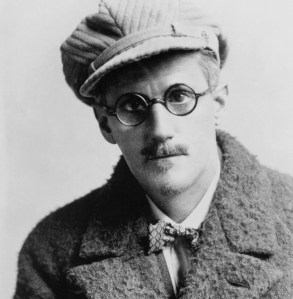
James Augustine Aloysius Joyce, Irish novelist, short story writer, and poet, is born in 41 Brighton Square, Rathgar, Dublin on February 2, 1882. He contributes to the modernist avant-garde and is regarded as one of the most influential and important authors of the 20th century.

Joyce is one of the ten children of Mary Jane “May” Murray and John Stanislaus Joyce, a professional singer and later rate-collector from a bourgeois Catholic family. He attends Clongowes Wood College, a Jesuit boarding school, until 1891, when his father’s financial worries mean they can no longer afford to send him there. He is temporarily home-schooled and spends a short time at a Christian Brothers school, before starting at Belvedere College, a Jesuit day school run by his old Clongowes headmaster, Father John Conmee.

Much of Joyce’s childhood is influenced by his charismatic, but increasingly alcohol-dependent and difficult father, whose ongoing financial troubles led to regular domestic upheaval. However, John Joyce’s passions, eccentricities, as well as his gift as a singer are celebrated in his son’s work. The death of the Irish Home Rule movement leader Charles Stewart Parnell in 1891 is a watershed moment in Joyce’s life and is the subject of an inflammatory argument during a Christmas dinner, in which John Joyce and his friend John Kelly passionately defend Parnell from the accusations of the pious Elizabeth Conway. Joyce recreates the scene in A Portrait of the Artist as a Young Man, portraying Kelly’s character, Mr. Casey, crying loudly with a “sob of pain,” “Poor Parnell! … My dead king!”

Joyce attends University College Dublin in 1899-1902, where he studies modern languages, with Latin and logic. In 1902 he goes to Paris with an intent of studying medicine but discovers, on arrival, that he does not have the necessary qualifications. He constantly struggles for money, relying on irregular work as a teacher, bank employee, cinema-owner and tweed-importer, and on patrons and supporters such as Harriet Shaw Weaver and Ezra Pound.

Joyce returns to Ireland in 1903 after his mother falls ill. She dies in August 1903. He refuses to take the sacraments or kneel at her deathbed, and the guilt he later feels is depicted in Ulysses when the ghost of Stephen’s mother returns to haunt him. On June 16, 1904, he meets Nora Barnacle, the woman with whom he spends the rest of his life. By autumn, he is convinced of the impossibility of remaining in Ireland and persuades Nora to travel with him. They arrive in Paris on October 9, 1904. He would not return to Ireland to live. He cultivates a sense of himself as an exile, living in Trieste, Zürich, Rome and Paris.

Joyce’s first publication in 1907 is the poetry collection Chamber Music. When he sends Pound a revised first chapter of Portrait of an Artist as a Young Man, along with the manuscript of his short story collection Dubliners, Pound arranges for Portrait to be published serially in the modernist magazine The Egoist between 1914 and 1915. His short story collection, Dubliners, had been delayed by years of arguments with printers over its contents, but is also published in 1914.

Joyce then begins work on Ulysses, an experimental account of a single day in Dublin. The novel is serialised between 1918 and 1920, but full publication is delayed due to problems with American obscenity laws. The work is finally published in book form by his friend Sylvia Beach in Paris in 1922. His play Exiles is first performed in German in 1919, and English in 1926. His last novel, Finnegans Wake (1939), is an innovative language experiment that contains over 40 languages and a huge variety of popular and arcane references.

On January 11, 1941, Joyce undergoes surgery in Zürich for a perforated duodenal ulcer. He falls into a coma the following day. He awakes at 2:00 AM on January 13, 1941, and asks a nurse to call his wife and son, before losing consciousness again. They are en-route when he dies 15 minutes later, less than a month short of his 59th birthday. He is buried in the Fluntern Cemetery, Zürich.


Leave a comment

The Death of James Augustine Aloysius Joyce

james-joyce

James Augustine Aloysius Joyce, considered to be one of the most influential writers in the modernist avant-garde of the early 20th century, dies in Zurich, Switzerland, following surgery for a perforated ulcer on January 13, 1941.

Joyce is born on February 2, 1882, in the wealthy Rathgar suburb of Dublin. The family is initially well off as Dublin merchants with bloodlines that connected them to old Irish nobility in the country. James’ father, John Stanislaus Joyce, is a fierce Irish Catholic patriot and his political and religious influences are most evident in Joyce’s two key works A Portrait of the Artist as a Young Man (1916) and Ulysses (1922).

The Joyce family is repeatedly forced to move to more modest residences due to their steadily diminishing wealth and income. John Joyce’s habitual unemployment as well as his drinking and spending habits make it difficult for the Joyces to retain their social standing. As a young man, Joyce is sent away to the renowned Clongowes Wood College in County Kildare in 1888, a Jesuit institution regarded as the best preparatory school in Ireland. The Clongowes school figures prominently in Joyce’s work, specifically in the story of his recurring character Stephen Dedalus. Joyce earns high marks both at the Clongowes School and at Belvedere College in Dublin where he continues his education. At this point in his life, it seems evident that Joyce is to enter the priesthood, a decision that would please his parents. However, as Joyce makes contact with various members of the Irish Literary Renaissance, his interest in the priesthood wanes. Joyce becomes increasingly critical of Ireland and its conservative elements, especially the Church.

Against his mother’s wishes, Joyce leaves Ireland in 1902 to pursue a medical education in Paris and does not return until the following year upon receiving news of his mother’s debilitation and imminent death. After burying his mother, Joyce continues to stay in Ireland, working as a schoolteacher at a boys’ school, another autobiographical detail that recurs in the story of Stephen Dedalus. After barely spending a year in Dublin, Joyce returns to the Continent, drifting in and out of medical school in Paris before taking up residence in Zurich. It is during this period that Joyce begins writing professionally.

In 1905, Joyce completes a collection of eight stories entitled Dubliners, although it is not actually printed until 1913. During these frustrating and impoverished years, Joyce heavily relies upon the emotional support of Nora Barnacle, his unmarried Irish lover, as well as the financial support of his younger brother, Stanislaus Joyce. Both Nora and Stanislaus remain as protective, supporting figures for the duration of Joyce’s life. During the eight years between Dubliners‘ completion and publication, Joyce and Barnacle have two children, a son named Giorgio, and a daughter named Lucia.

Joyce’s next major work, A Portrait of the Artist as a Young Man, appears in serialized form in 1914 and 1915. Joyce is “discovered” by Ezra Pound and the complete text is printed in New York City in 1916, and in London in 1917. It is with the assistance of Pound, a prominent literary figure of the time, that Joyce comes into contact with Harriet Shaw Weaver, who serves as both editor and patron while Joyce writes Ulysses.

When Ulysses is published in Paris in 1922, many immediately hail the work as genius. With his inventive narrative style and engagement with multiple philosophical themes, Joyce has established himself as a leading Modernist. The novel charts the passage of one day, June 16, 1904, as depicted in the life of an Irish Jew named Leopold Bloom, who plays the role of a Ulysses by wandering through the streets of Dublin. Despite the fact that Joyce is writing in self-imposed exile, living in Paris, Zurich, and Trieste while writing Ulysses, the novel is noted for the incredible amount of accuracy and detail regarding the physical and geographical features of Dublin.

Similar in theme to Joyce’s previous works, Ulysses examines the relationship between the modern man and his myth and history, focusing on contemporary questions of Irish political and cultural independence, the effects of organized religion on the soul, and the cultural and moral decay produced by economic development and heightened urbanization. While Joyce is writing it, there is serious doubt as to whether Ulysses will be completed. Midway through his writing, Joyce undergoes the first of eleven eye operations to salvage his ever-worsening eyesight. At one point, a disappointed Joyce casts the bulk of his manuscript into the fire, but Nora Barnacle immediately rescues it.

While Ulysses is hailed by some, the novel is banned in both the United Kingdom and the United States on obscenity charges. It is not until 1934 that Random House wins a court battle that grants permission to print and distribute Ulysses in the United States. The novel is legalized in Britain two years later.

By this time, Joyce is approaching the end of his public career and has concluded work on his final novel, Finnegan’s Wake (1939). Considered to be far more baffling and convoluted than Ulysses, Finnegan’s Wake is a critical failure. At the outbreak of World War II, Joyce remains in Paris until he is forced to move, first to Vichy, and then to Switzerland. On January 13, 1941, Joyce dies of a stomach ulcer at the age of 58 and is buried in Zurich’s Fluntern Cemetery.