seamus dubhghaill

Promoting Irish Culture and History from Little Rock, Arkansas, USA


Leave a comment

The Sack of Wexford

sack-of-wexford

The Sack of Wexford takes place on October 11, 1649, during the Cromwellian conquest of Ireland, when the New Model Army under Oliver Cromwell takes Wexford town in southeastern Ireland. The English Parliamentarian troops break into the town while the commander of the garrison, David Synnot, is trying to negotiate a surrender, massacring soldiers and civilians alike. Much of the town is burned and its harbour is destroyed. Along with the Siege of Drogheda, the sack of Wexford is still remembered in Ireland as an infamous atrocity.

Wexford is held by Irish Catholic forces throughout the Irish Confederate Wars. In the Irish Rebellion of 1641, over 1,500 local men muster in the town for the rebels. In 1642, Lord Mountgarret, the local Commander of the Confederate Catholic regime, orders Protestants to leave Wexford.

Wexford is also the base for a fleet of Confederate privateers, who raid English Parliamentary shipping and contribute 10% of their plunder to the Confederate government based in Kilkenny. In 1642, Parliamentary ships begin throwing captured Wexford sailors overboard with their hands tied. In reprisal, 150–170 English prisoners are kept in Wexford and threatened with death if such killing continued.

In 1648, the Confederates and Royalists in Ireland sign a treaty joining forces against the English Parliament. After Cromwell’s landing in Ireland in August 1649, therefore, Wexford is a key target for the Parliamentarians, being an important port for the Royalist alliance and a base for the privateers.

Cromwell arrives at Wexford on October 2, 1649 with about 6,000 men, eight heavy siege guns, and two mortars. The town’s garrison initially consists of 1,500 Confederate soldiers under David Synnot. However, the morale of the town is low and many of the civilians in Wexford want to surrender. Synnot, however, strings out surrender negotiations with Cromwell insisting on several conditions for surrender that Cromwell does not countenance, including the free practice of the Catholic religion, the evacuation of the garrison with their arms, and the free passage of the privateer fleet to a friendly port.

Negotiations are reopened when Cromwell’s guns blast two breaches in the walls of Wexford castle, opening the prospect of an assault on the town. However, while negotiations are still ongoing, the town is unexpectedly stormed and sacked on October 11, 1649.

Stafford, the English Royalist captain of Wexford Castle, surrenders the castle for reasons that have never been determined. The troops of the New Model Army, on their own initiative, immediately assault the walls of the town, causing the Confederate troops to flee in panic from their positions. The Parliamentarians pursue them into the streets of Wexford, killing many of the town’s defenders. Several hundred, including David Synnot, the town governor, are shot or drowned as they try to cross the River Slaney. Estimates of the death toll vary. Cromwell himself believes that over 2,000 of the town’s defenders have been killed compared with only 20 of his troops. Several Catholic priests, including seven Franciscans are killed by the Roundheads. Much of the town, including its harbour, is burned and looted. As many as 1,500 civilians are also killed in the sacking. This figure is difficult to corroborate but most historians accept that many civilians are killed in the chaos surrounding the fall of Wexford.

The destruction of Wexford is so severe that it can not be used either as a port or as winter quarters for the Parliamentarian forces. One Parliamentarian source therefore describes the sack as “incommodious to ourselves.” Cromwell reports that the remaining civilians have “run off” and asks for soldiers to be sent from England to repopulate the town and reopen its port.
Leave a comment

Birth of Arthur William Conway, UCD President

arthur-william-conway

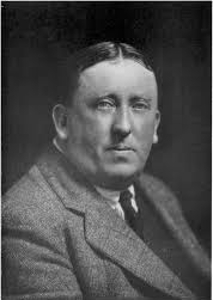
Arthur William Conway FRS, President of University College Dublin between 1940 and 1947, is born in Wexford, County Wexford, on October 2, 1875.

Conway receives his early education at St. Peter’s College, Wexford and proceeds to enter old University College, Dublin in 1892. He receives his BA degree from the Royal University of Ireland in 1896 with honours in Latin, English, Mathematics, and Natural Philosophy. In 1897, he receives his MA degree with highest honours in mathematics and proceeds to Corpus Christi College, Oxford, becoming University Scholar there in 1901. Also in 1901, he is appointed to the professorship of Mathematical Physics in the old University College and holds the Chair until the creation of the new college in 1909. He also teaches for a short time at St. Patrick’s College, Maynooth.

Conway marries Agnes Christina Bingham on August 19, 1903. They have three daughters and one son.

One of Conway’s students is Éamon de Valera, whom he introduces to quaternions which originate in Ireland. De Valera warms to the subject and engages in research of this novelty of abstract algebra. Later, when de Valera becomes Taoiseach, he calls upon Conway while forming the Dublin Institute for Advanced Studies.

Conway is remembered for his application of biquaternion algebra to the special theory of relativity. He publishes an article in 1911, and in 1912 asserts priority over Ludwik Silberstein, who also applies biquaternions to relativity. This claim is backed up by George Temple in his book 100 Years of Mathematics. In 1947 Conway puts quaternions to use with rotations in hyperbolic space. The next year he publishes quantum mechanics applications which are referred to in a PhD thesis by Joachim Lambek in 1950.

In 1918, Conway is the Irish Parliamentary Party candidate in South Londonderry and in the National University of Ireland, coming in second in both.

Conway continues his scholarship in the field of mathematics and theoretical physics and makes a special study of William Rowan Hamilton. With John Lighton Synge, he edits the first volume of Hamilton’s mathematical papers, and, with A. J. McConnell, he edits the second volume of Hamilton’s mathematical papers. Conway is also active in college life, being appointed Registrar, a position he occupies until his election as president in 1940. He retires in 1947 from the presidency of UCD. In 1953, some of his writings are edited by J. McConnell for publication by the Dublin Institute for Advanced Studies.

He is elected President of the Royal Irish Academy from 1937 to 1940.


1 Comment

The Battle of Bunclody

county-wexford-1798

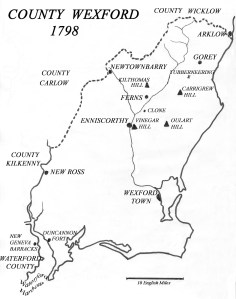
During the Irish Rebellion of 1798, the Battle of Bunclody, or Newtownbarry as it is called at the time, takes place on June 1, 1798 when a force of some 5,000 rebels led by Catholic priest Fr. Mogue Kearns attack the garrison at Bunclody as part of the Wexford rebels campaign against border garrisons.

The garrison is forewarned of the approaching rebels and have prepared defensive outposts facing the rebel line of advance. The rebel army occupies high ground to the west and stations an artillery piece, captured in their victory over the military at the Battle of Three Rocks, facing the approaches to town. As the bulk of the rebel army forms for the attack, their gunners open an accurate fire on the exposed lines of soldiers who retreat into the cover of the town.

Seizing the moment, the rebels quickly move in, forcing the garrison to flee across the bridge into County Carlow but crucially, fail to occupy this approach to the town. The rebels now have an almost bloodless victory and numbers of them began to celebrate, roaming the town in search of plunder and enemies. As rebel discipline begins to waver, trapped units of yeomen, some of whom have barricaded themselves into their own houses, open fire on the unsuspecting rebels milling in the streets outside.

Meanwhile, the garrison has paused in their retreat and, upon hearing the sound of gunfire from the town, turn about and launch a surprise attack back across the bridge, which catches the rebels, distracted by the unexpected pockets of resistance, completely by surprise. In the rout that follows, 400 of the rebels are killed and their army is scattered for the loss of no more than half a dozen of the military.


Leave a comment

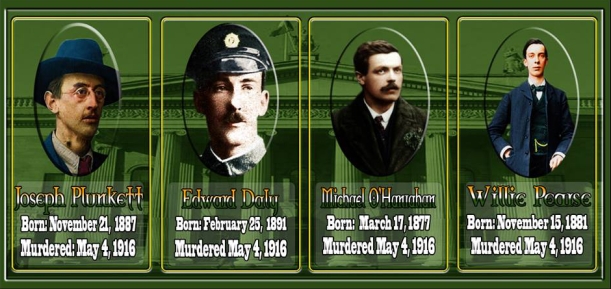
Executions of Edward Daly, Michael O’Hanrahan, Joseph Mary Plunkett, & William Pearse

plunkett-daly-ohanrahan-pearse

The executions of leaders and participants of the 1916 Easter Rising by the British continue as Edward Daly, Michael O’Hanrahan, Joseph Mary Plunkett, and William Pearse are executed by firing squad in the Stonebreakers Yard at Kilmainham Gaol in Dublin on May 4, 1916.

Edward Daly is born in Limerick in 1891 to a family that has a history of republican activity. His uncle, John Daly, had taken part in the rebellion of 1867. Edward Daly leads the First Battalion during the 1916 Easter Rising, which raids the Bridewell and Linenhall Barracks, eventually seizing control of the Four Courts. A close friend of Tom Clarke, their ties are made even stronger by the marriage of Clarke to Daly’s sister.

Michael O’Hanrahan is born in Wexford in 1877. As a young man, O’Hanrahan shows great promise as a writer, becoming heavily involved in the promotion of the Irish language. He founds the first Carlow branch of the Gaelic League, and publishes two novels, A Swordsman of the Brigade and When the Norman Came. Like many of the other executed leaders, he joins the Irish Volunteers from their inception and is second in command to Thomas MacDonagh at Jacob’s Biscuit Factory during the Rising, although this position is largely usurped by the arrival of John MacBride.

Joseph Mary Plunkett is born in Dublin in 1887, the son of a papal count. Plunkett is initially educated in England, though he returns to Ireland and graduates from University College Dublin in 1909. After his graduation, Plunkett spends two years traveling due to ill health, returning to Dublin in 1911. Plunkett shares Thomas MacDonagh’s enthusiasm for literature and is an editor of the Irish Review. Along with MacDonagh and Edward Martyn, he helps to establish an Irish national theatre. He joins the Irish Volunteers in 1913, subsequently gaining membership of the Irish Republican Brotherhood in 1914. Plunkett travels to Germany to meet Roger Casement in 1915. During the planning of the Rising, Plunkett is appointed Director of Military Operations, with overall responsibility for military strategy. Plunkett is stationed in the General Post Office during the Rising. Seven hours prior to his execution, Plunkett marries his sweetheart, Grace Gifford, in the prison chapel.

William “Willie” Pearse, the younger brother of Patrick, is born in Dublin in 1881. Willie shares his brother’s passion for an independent Ireland. He assists Patrick in running St. Enda’s School. The two brothers are extremely close and fight alongside each other in the General Post Office. He is not one of the planners of the revolt, nor is he one of its commanders. Willie is merely one of the soldiers involved with the Dublin actions. No other participant in Dublin whose actions or responsibilities are similar to Willie’s is executed in the days following the Rising, save perhaps John MacBride, whose earlier service with the Boers probably marks him for death. It seems likely that the sole reason Willie is executed by the British government is for the crime of being Patrick’s brother. It is repugnant British excesses such as this that soon reverse the Irish people’s initially negative opinion of the 1916 Easter Rising.


Leave a comment

Death of Diarmait Mac Murchada, Irish King of Leinster

diarmait-mac-murchada

Diarmait Mac Murchada, Irish King of Leinster whose appeal to the English for help in settling an internal dispute leads to the Anglo-Norman invasion and conquest of Ireland by England, dies on May 1, 1171, of “an insufferable and unknown disease.”

Mac Murchada is born around 1110, the son of Donnchad mac Murchada, King of Leinster and Dublin. His father is killed in battle in 1115 by his cousin Sigtrygg Silkbeard, king of the Dublin Vikings, and is buried by them in Dublin along with the body of a dog which is considered to be a huge insult.

After the death of Énna Mac Murchada, his older brother, Mac Murchada unexpectedly becomes King of Leinster. This is opposed by the High King of Ireland, Toirdelbach Ua Conchobair, who fears that Mac Murchada will become a rival. Toirdelbach sends one of his allied Kings, the belligerent Tigernán Ua Ruairc, to conquer Leinster and oust the young Mac Murchada. Ua Ruairc goes on a brutal campaign slaughtering the livestock of Leinster and thereby trying to starve the province’s residents. Mac Murchada is ousted from his throne but is able to regain it with the help of Leinster clans in 1132. Two decades of an uneasy peace followed between Ua Conchobair and Mac Murchada. In 1152 he even assists the High King in a raid of the land of Ua Ruairc who has become a renegade.

As King of Leinster, between 1140–70, Mac Murchada commissions Irish Romanesque churches and abbeys at Baltinglass, Glendalough, Ferns, and Killeshin. He sponsors convents at Dublin, two at Aghade, County Carlow, and at Kilculliheen near Waterford city. He also sponsors the successful career of churchman St. Lorcán Ua Tuathail and presides at the synod of Clane in 1161 when Ua Tuathail is installed as archbishop of Dublin.

In 1166, Ireland’s new High King and Mac Murchada’s only ally, Muirchertach Ua Lochlainn, has fallen and a large coalition led by Mac Murchada’s arch enemy, Tigernán Ua Ruairc, marches on Leinster. The High King deposes Mac Murchada from the throne of Leinster, and he flees to Wales and from there to England and France seeking the support of Henry II of England in the recruitment of soldiers to reclaim his kingship. Henry authorises Mac Murchada to seek help from the soldiers and mercenaries in his kingdom. Those who agreed to help include Richard de Clare (Strongbow) and half-brothers Robert FitzStephen and Maurice FitzGerald.

In Mac Murchada’s absence, Ruaidrí Ua Conchobair, son of Mac Murchada’s former enemy, the High King Toirdelbach Ua Conchobair, has become the new High King of Ireland.

Mac Murchada brings an advance party of adventurers back to Ireland in 1167, recaptures Wexford, and waits for Strongbow to arrive. From his base in Wales, Strongbow launches an offensive in 1170, capturing Waterford and Dublin, taking control of the East coast, much to the dismay of the Gaelic Chieftains and Ua Conchobair. To cement the alliance, Mac Murchada marries his daughter, Aoife, to Strongbow, in Christ Church Cathedral in Dublin 1170.

The Irish Chieftains do not allow the invaders to settle, however, and they are continually attacked and harassed. It begins to appear likely that they will be driven from Ireland. However, they receive support from Henry II, who has become concerned about the amount of power and influence that Strongbow is amassing in Ireland. The subsequent domination of South Wales by the Normans is a result of the need to keep supply lines into Eastern Ireland open.

Mac Murchada dies on May 1, 1171, leaving Strongbow to declare himself King of Leinster. Mac Murchada is buried in the Cathedral graveyard of Ferns village.


Leave a comment

Postponement of the Easter Rising

general-post-office

On Saturday, April 22, 1916, the Easter Rising, originally planned for the following day, Easter Sunday, is postponed for one day.

At dawn a messenger from the Kerry Volunteers arrives in Dublin and informs James Connolly, Commandant of the Dublin Brigade, that Roger Casement had been arrested in County Kerry the previous day during a failed attempt to smuggle arms into Ireland on board the German ship Aud. A meeting of the Military Council is hastily organised, and the decision is made not to inform Chief-of-Staff of the Irish Volunteers, Eoin MacNeill, about Casement’s arrest.

Later in the morning, after attempting to escape the area, Karl Spindler, captain of the Aud, makes the decision to scuttle his ship after it is intercepted by the Royal Navy. Although Spindler and the crew are rescued, the armaments on board the Aud are lost. By early afternoon the Military Council is made aware of the loss of their arms shipment.

At 6:00 PM, Sean Fitzgibbon, Colm O’Loughlin, and Michael Joseph O’Rahilly arrive at Woodtown Park and inform MacNeill of the arrests and the loss of the Aud. After confronting Patrick Pearse at St. Enda’s School, a bilingual school for boys founded by Pearse, MacNeill and others, including O’Rahilly and Bulmer Hobson, gather at the house of Seumas O’Kelly on Rathgar Road and a decision is made to issue countermanding orders cancelling the Rising planned for Easter Sunday. To make sure that the countermanding order is received and understood, James Ryan is sent overnight to Cork, Colm O’Loughlin to Dundalk and Coalisland, Sean Fitzgibbon to Waterford, and Min Ryan to Wexford. O’Rahilly travels to Limerick, Kerry, Cork, and Tipperary. This succeeds in delaying the rising for only one day, although it greatly reduces the number of Volunteers who turn out.

During the evening, Major-General Sir Lovick Friend, General Officer Commanding of British forces in Ireland, travels to London on leave in wake of the capture of the Aud believing that any potential insurgency has been stopped. Chief Secretary Augustine Birrell is also in London having attended a Cabinet meeting. Both men remain in London through Easter, leaving Under Secretary Matthew Nathan as the most senior British official remaining in Dublin. Lord Lieutenant of Ireland, Ivor Churchill Guest, 1st Viscount Wimborne, urges Nathan to order the arrest of a large number of rebel leaders however he is unwilling to do so without the authorisation of Chief Secretary Birrell.


Leave a comment

Death of Richard de Clare, 2nd Earl of Pembroke

strongbow-effigy-christ-church-dublin

Richard de Clare, 2nd Earl of Pembroke, Lord of Leinster, Justiciar of Ireland, and Cambro-Norman lord notable for his leading role in the Norman invasion of Ireland, dies in Dublin on April 20, 1176. Like his father, he is also commonly known by his nickname “Strongbow.”

As the son of Gilbert de Clare, 1st Earl of Pembroke, Richard succeeds to his father’s estates after his death in 1148 but is deprived of the title by King Henry II of England in 1154 for siding with King Stephen of England against Henry’s mother, the Empress Matilda. He sees an opportunity to reverse his bad fortune in 1168 when he meets Diarmait Mac Murchada, the deposed King of Leinster.

In 1167, Diarmait Mac Murchada is deprived of the Kingdom of Leinster by the High King of Ireland, Ruaidrí Ua Conchobair. To recover his kingdom, Mac Murchada solicits help from King Henry II of England. Henry provides a letter of comfort for willing supporters of Mac Murchada’s cause in his kingdom. However, after his return to Wales, he fails to rally any forces to his standard. He eventually meets Richard de Clare and other barons of the Welsh Marches. Mac Murchada comes to an agreement with de Clare where, for the Earl’s assistance with an army the following spring, he can have Mac Murchada’s eldest daughter, Aoife, in marriage and the succession to Leinster.

Mac Murchada and Richard de Clare raise a large army, which includes Welsh archers and arranges for Raymond FitzGerald to lead it. The force takes the Ostman towns of Wexford, Waterford, and Dublin in rapid succession between 1169 and 1170. Richard de Clare, however, is not with the first invading party and arrives later, in August 1170.

In May 1171, Diarmait Mac Murchada dies and his son, Donal MacMurrough-Kavanagh claims the kingdom of Leinster in accordance with his rights under the Brehon Laws. Richard de Clare also claims the kingship in the right of his wife. At this time, Strongbow sends his uncle, Hervey de Montmorency, on an embassy to Henry II, which is necessary to appease the King who is growing restive at the count’s increasing power. Upon his return, de Montmorency conveys the King’s terms – the return of Richard de Clare’s lands in France, England, and Wales as well as leaving him in possession of his Irish lands. In return, Richard de Clare surrenders Dublin, Waterford, and other fortresses to the English king. Henry’s intervention is successful and both the Gaelic and Norman lords in the south and east of Ireland accept his rule. Richard de Clare also agrees to assist Henry II in his upcoming war in France.

Richard de Clare dies on April 20, 1176, of an infection in his leg or foot. He is buried in Holy Trinity Church in Dublin with his uncle-in-law, Lorcán Ua Tuathail, Archbishop of Dublin, presiding. King Henry II takes all of Strongbow’s lands and castles for himself and places a royal official in charge of them.


Leave a comment

Birth of 4th Archbishop of Sydney Michael Kelly

archbishop-michael-kelly

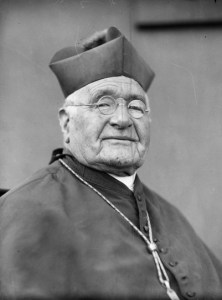
Michael Kelly, Australian Roman Catholic clergyman and the fourth Archbishop of Sydney, is born on February 13, 1850.

Born in Waterford, to master mariner James Kelly and the former Mary Grant, Kelly is educated at Christian Brothers in Enniscorthy and the Classical Academy in New Ross.

Kelly receives his seminary formation at St. Peter’s College in Wexford and the Irish College in Rome. He is ordained at Enniscorthy on November 1, 1872, by Bishop Thomas Furlong.

Kelly serves on the staff of the House of Missions in Wexford and is made vice-Rector of the Irish College in Rome in 1891. In 1894, he is made head of Irish College. Kelly also becomes a leader in the temperance movement.

archbishop-kelly-statue

Elected Archbishop of Achrida in Partibus Infidelium and coadjutor cum jure successionis of Sydney on July 20, 1901, Kelly is Consecrated Coadjutor Archbishop on August 15, 1901, at St. Joachim’s Church, Rome, by Cardinal Francesco Satolli.

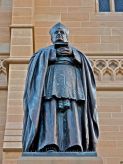
Kelly succeeds to the See of Sydney on August 16, 1911, upon the death of Cardinal Patrick Francis Moran. Kelly continues his crusade for temperance in Australia. Fund-raising for schools is undertaken by Kelly, and it is estimated £12,000,000 is spent on scholastic and church properties from the time of Kelly’s arrival in Sydney until his death. St. Mary’s Cathedral is completed in 1928, and statues of Kelly and Moran stand in the main portal.

Kelly is named Bishop Assistant at the Papal Throne and Count of the Holy Roman Empire on June 25, 1926. Kelly dies in Sydney on March 8, 1940, at the age of 90. He is buried in the Kelly Memorial Chapel in the crypt of St. Mary’s Cathedral.