seamus dubhghaill

Promoting Irish Culture and History from Little Rock, Arkansas, USA


Leave a comment

Death of Dan Breen, Irish Patriot & Politician

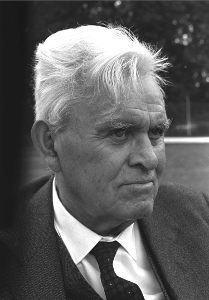
Irish republican Dan Breen (1967)

Daniel “Dan” Breen, volunteer in the Irish Republican Army during the Irish War of Independence and the Irish Civil War, dies in Dublin on December 27, 1969. In later years, he was a Fianna Fáil politician.

Breen is born in Grange, Donohill parish, County Tipperary, on August 11, 1894. His father dies when he is six, leaving the family very poor. He is educated locally before becoming a plasterer and later a linesman on the Great Southern Railways.

Breen is sworn into the Irish Republican Brotherhood in 1912 and the Irish Volunteers in 1914. On January 21, 1919, the day the First Dáil meets in Dublin, Breen takes part in the Soloheadbeg Ambush. The ambush party of eight men, led by Seán Treacy, attacks two Royal Irish Constabulary (RIC) men who are escorting explosives to a quarry. The two policemen, James McDonnell and Patrick O’Connell, are fatally shot during the incident. The ambush is considered to be the first incident of the Irish War of Independence.

During the conflict, the British put a £1,000 price on Breen’s head, which is later increased to £10,000. He quickly establishes himself as a leader within the Irish Republican Army (IRA). He is known for his courage. On May 13, 1919 he helps rescue his comrade Seán Hogan at gunpoint from a heavily guarded train at Knocklong station in County Limerick. Breen, who is wounded, remembers how the battalion is “vehemently denounced as a cold-blooded assassins” and roundly condemned by the Catholic Church. After the fight, Treacy, Séamus Robinson, and Breen meet Michael Collins in Dublin, where they are told to make themselves scarce although they do not necessarily agree.

Breen and Sean Treacy shoot their way out through a British military cordon in the northern suburb of Drumcondra (Fernside). They escape, only for Treacy to be killed the next day. Breen is shot at least four times, twice in the lung.

The British reaction is to make Tipperary a “Special Military Area,” with curfews and travel permits. Volunteer GHQ authorises entrerprising attacks on barracks. The British policy forces Breen and Treacy to retreat to Dublin. They join Michael Collins’ Squad of assassins, later known as the Dublin Guard, and Dublin becomes the centre of the war.

Breen is present in December 1919 at the ambush in Ashtown beside Phoenix Park in Dublin where Martin Savage is killed while trying to assassinate the Lord Lieutenant of Ireland, Viscount John French. The IRA hides behind hedges and a dungheap as the convoy of vehicles drives past. They have been instructed to ignore the first car but this contains their target, Lord French. Their roadblock fails as a policeman removes the horse and cart intended to stop the car.

Breen utterly rejects the Anglo-Irish Treaty, which makes him, like many others, angry and embittered. In the June 1922 elections Breen is nominated as a candidate by both the pro- and anti-Treaty sides, but is not elected.

Breen is elected to Dáil Éireann at the 1923 general election as a Republican anti-Treaty Teachta Dála (TD) for the Tipperary constituency. Following the Anglo-Irish Treaty, Breen joins the Anti-Treaty IRA in the civil war, fighting against those of his former comrades in arms who support the Treaty. He is arrested by the National Army of the Irish Free State and interned at Limerick Prison. He spends two months there before going on hunger strike for six days followed by a thirst strike of six days, prompting his release.

Breen writes a best-selling account of his guerrilla days, My Fight for Irish Freedom, in 1924. He represents Tipperary from the Fourth Dáil in 1923 as a Republican with Éamon de Valera and Frank Aiken. He is defeated in the June 1927 general election and travels to the United States where he opens a prohibition speakeasy. In 1932 he returns to Ireland and regains his seat as a member of Fianna Fáil in the Dáil at that year’s general election. During World War II he is said to hold largely pro-Axis views. He represents his Tipperary constituency without a break until his retirement at the 1965 election.

Breen dies in Dublin on December 27, 1969 and is buried in Donohill, near his birthplace. His funeral is the largest seen in west Tipperary since that of his close friend and comrade-in-arms Seán Treacy at Kilfeacle in October 1920. An estimated attendance of 10,000 mourners assemble in the tiny hamlet, giving ample testimony to the esteem in which he was held.

Breen is the subject of a 2007 biography Dan Breen and the IRA by Joe Ambrose.


Leave a comment

Death of IRA Chief of Staff Cathal Goulding

cathal-goulding

Cathal Goulding, former Chief of Staff of the Irish Republican Army and the Official IRA, dies in Dublin on December 26, 1998.

Goulding is born on January 2, 1923, one of seven children born on East Arran Street, north Dublin to an Irish republican family. As a teenager Goulding joins Fianna Éireann, the youth wing of the Irish Republican Army (IRA). He joins the IRA in 1939. In December of that year, he takes part in a raid on Irish Army ammunition stores in Phoenix Park, Dublin. In November 1941 he is gaoled for a year in Mountjoy Prison for membership in an unlawful organisation and possession of IRA documents. Upon his release in 1942, he is immediately interned at the Curragh Camp, where he remains until 1944.

In 1945, he is involved in the attempts to re-establish the IRA which has been badly affected by the authorities in both the Irish Free State and Northern Ireland. He is among twenty-five to thirty men who meet at O’Neill’s Pub, Pearse Street, to try to re-establish the IRA in Dublin. He organises the first national meeting of IRA activists after the World War II in Dublin in 1946 and is arrested along with John Joe McGirl and ten others and sentenced to twelve months in prison when the gathering is raided by the Garda Síochána.

Upon his release in 1947, Goulding organises IRA training camps in the Wicklow Mountains and takes charge of the IRA’s Dublin Brigade in 1951. In 1953, Goulding, along with Seán Mac Stíofáin and Manus Canning, is involved in an arms raid on the Officers Training Corps armoury at Felsted School, Essex. The three are arrested and sentenced to eight years’ imprisonment, but are released in 1959 after serving only six years at Pentonville, Wakefield, and Stafford prisons. During his time in Wakefield prison, he befriends EOKA members and Klaus Fuchs, a German-born spy who has passed information about the U.S. nuclear programme to the Soviet Union, and becomes interested in the Russian Revolution.

In 1959, Goulding is appointed IRA Quartermaster General and in 1962 he succeeds Ruairí Ó Brádaigh as IRA Chief of Staff. In February 1966, together with Sean Garland, he is arrested for possession of a revolver and ammunition. In total, Goulding spends sixteen years of his life in British and Irish jails.

Goulding is instrumental in moving the IRA to the left in the 1960s. He argues against the policy of abstentionism and develops a Marxist analysis of Irish politics. He believes the British state deliberately divides the Irish working class on sectarian grounds to exploit them and keep them from uniting and overthrowing their bourgeois oppressors. This analysis is rejected by those who later go on to form the Provisional IRA after the 1969 IRA split.

Goulding remains chief of staff of what becomes known as the Official IRA until 1972. Although the Official IRA, like the Provisional IRA, carries out an armed campaign, Goulding argues that such action ultimately divides the Irish working class. After public revulsion regarding the shooting death of William Best, a Catholic from Derry who is also a British soldier, and the bombing of the Aldershot barracks, the Official IRA announces a ceasefire in 1972.

Goulding is prominent in the various stages of Official Sinn Féin‘s development into the Workers’ Party. He is also involved in the anti-amendment campaign in opposition to the introduction of a constitutional ban on abortion along with his partner, Dr. Moira Woods. However, in 1992, he objects to the political reforms proposed by party leader Proinsias De Rossa and remains in the Workers’ Party after the formation of Democratic Left. He regards the Democratic Left as having compromised socialism in the pursuit of political office.

In his later years, Goulding spends much of his time at his cottage in Raheenleigh near Myshall, County Carlow. He dies of cancer in his native Dublin and is survived by three sons and a daughter. He is cremated and his ashes scattered, at his directive, at the site known as “the Nine Stones” on the slopes of Mount Leinster.


Leave a comment

Assassination of Irish American John Fitzgerald Kennedy

kennedy-assassination

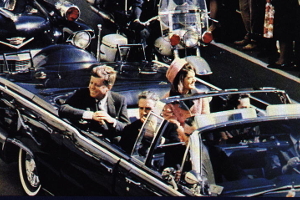
John Fitzgerald Kennedy, the 35th President of the United States, is assassinated at 12:30 PM CST (18:30 UTC) on Friday, November 22, 1963, in Dealey Plaza, Dallas, Texas. Kennedy is the first Roman Catholic president of the United States and descendant of immigrants from Ireland.

At 12:30 PM CST, as Kennedy’s uncovered 1961 Lincoln Continental four-door convertible limousine enters Dealey Plaza, Nellie Connally, the First Lady of Texas, turns around to President Kennedy, who is sitting behind her, and comments, “Mr. President, you can’t say Dallas doesn’t love you,” to which President Kennedy acknowledges by saying “No, you certainly can’t.” These are the last words ever spoken by John F. Kennedy.

From Houston Street, the presidential limousine makes the planned left turn onto Elm Street, allowing it access to the Stemmons Freeway exit. As it turns onto Elm, the motorcade passes the Texas School Book Depository. Shots are fired at Kennedy as the motorcade continues down Elm Street. About 80% of the witnesses recall hearing three shots.

A minority of the witnesses recognize the first gunshot they hear as weapon fire, but there is hardly any reaction to the first shot from a majority of the people in the crowd or those riding in the motorcade. Many later say they heard what they first thought to be a firecracker, or the backfire of a vehicle, just after the President started waving.

Within one second of each other, Kennedy, Texas Governor John Connally, and First Lady Jacqueline Kennedy, all turn abruptly from looking to their left to looking to their right. Connally, like the President a World War II military veteran, testifies that he immediately recognizes the sound of a high-powered rifle. He also testifies that when his head is facing about 20 degrees left of center, he is hit in his upper right back by a bullet he does not hear fired. After Connally is hit he shouts, “Oh, no, no, no. My God. They’re going to kill us all!”

Mrs. Connally testifies that just after hearing a loud, frightening noise that comes from somewhere behind her and to her right, she turns toward President Kennedy and sees him with his arms and elbows raised high, with his hands in front of his face and throat. She then hears another gunshot and then Governor Connally yelling. Mrs. Connally then turns away from Kennedy toward her husband, at which point another gunshot sounds and she and the limousine’s rear interior are covered with fragments of skull, blood, and brain.

According to the Warren Commission and the House Select Committee on Assassinations, as President Kennedy waves to the crowds on his right with his right arm upraised on the side of the limo, a shot enters his upper back, penetrates his neck, slightly damages a spinal vertebra and the top of his right lung, and exits his throat nearly centerline just beneath his larynx, nicking the left side of his suit tie knot. He raises his elbows and clenches his fists in front of his face and neck, then leans forward and left. Mrs. Kennedy, facing him, then puts her arms around him in concern.

A second shot strikes the President as the presidential limousine is passing in front of the John Neely Bryan north pergola concrete structure. Both the Warren Commission and the House Select Committee on Assassinations concludes that the second shot to hit the president enters the rear of his head and passing in fragments through his head, created a large, roughly oval hole on the rear, right side. The president’s blood and fragments of his scalp, brain, and skull land on the interior of the car, the inner and outer surfaces of the front glass windshield and raised sun visors, the front engine hood, the rear trunk lid, the follow-up Secret Service car and its driver’s left arm, and motorcycle officers riding on both sides of the President behind him.

After the President has been shot in the head, Mrs. Kennedy begins to climb out onto the back of the limousine, though she later has no recollection of doing so. United States Secret Service Special Agent Clint Hill, who is riding on the left front running board of the follow-up car, believes she is reaching for something, perhaps a piece of the President’s skull. He jumps onto the back of the limousine while at the same time Mrs. Kennedy returns to her seat. He clings to the car as it exits Dealey Plaza and accelerates, speeding to Parkland Memorial Hospital.

After Mrs. Kennedy crawls back into her limousine seat, both Governor Connally and Mrs. Connally hear her say more than once, “They have killed my husband,” and “I have his brains in my hand.”

The staff at Parkland Hospital’s Trauma Room 1 who treat President Kennedy observe that his condition is “moribund,” meaning that he has no chance of survival upon arriving at the hospital. George Burkley, the President’s personal physician, states that a gunshot wound to the skull is the cause of death. Burkley signs President Kennedy’s death certificate.

At 1:00 PM, CST (19:00 UTC), after all heart activity has ceased and after Father Oscar Huber has administered last rites, the President is pronounced dead.


Leave a comment

Birth of Bryan Guinness, 2nd Baron Moyne

bryan-guinness

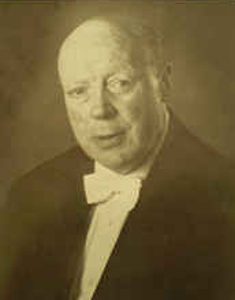
Bryan Walter Guinness, 2nd Baron Moyne, heir to part of the Guinness family brewing fortune, lawyer, poet, and novelist, is born on October 27, 1905.

Guinness is born in London to Walter Edward Guinness, 1st Baron Moyne, son of Edward Guinness, 1st Earl of Iveagh, and Lady Evelyn Stuart Erskine, daughter of Shipley Gordon Stuart Erskine, 14th Earl of Buchan. He attends Heatherdown School, near Ascot in Berkshire, followed by Eton College, and Christ Church, Oxford, and is called to the bar in 1931.

As an heir to the Guinness brewing fortune and a handsome, charming young man, Bryan is an eligible bachelor. One of London’s “Bright Young Things,” he is an organiser of the 1929 “Bruno Hat” hoax art exhibition held at his home in London. Also, in 1929 he marries the Hon. Diana Mitford, one of the Mitford sisters, and has two sons with her. The couple become leaders of the London artistic and social scene and are dedicatees of Evelyn Waugh‘s second novel Vile Bodies. However, they divorce in 1933 after Diana deserts him for British fascist leader Sir Oswald Mosley.

Guinness remarries happily in 1936 to Elisabeth Nelson, of the Nelson publishing family, with whom he has nine children.

During World War II, Guinness serves for three years in the Middle East with the Spears Mission to the Free French, being a fluent French speaker, with the rank of major. Then in November 1944 Guinness succeeds to the barony when his father, posted abroad as Resident Minister in the Middle East by his friend Winston Churchill, is assassinated in Cairo.

After the war, Lord Moyne serves on the board of the Guinness corporation as vice-chairman (1947-1979), as well as the Guinness Trust and the Iveagh Trust, sitting as a crossbencher in the House of Lords. He serves for 35 years as a trustee of the National Gallery of Ireland and donates several works to the gallery. He writes a number of critically applauded novels, memoirs, books of poetry, and plays. With Frank Pakenham he seeks the return of the “Lane Bequest” to Dublin, resulting in the 1959 compromise agreement. He is invested as a Fellow of the Royal Society of Literature.

Lord Moyne dies of a heart attack on July 6, 1992, at Biddesden House, his home in Wiltshire, and is succeeded by his eldest son Jonathan. He is buried at Ludgershall, Wiltshire, England.


Leave a comment

Birth of Pianist Charles Lynch

charles-lynch

Charles Edgeworth Cagney Lynch, Irish pianist who premiers works by several important 20th-century composers, is born in Parkgariff, County Cork, on October 22, 1906.

Lynch’s father is a British army colonel and his mother comes from a well-known Cork business dynasty, the Suttons. While still a young boy, the family moves to Greenock in western Scotland and it is there, at the Tontine Hotel, that the young pianist gives his first public recital at the age of nine. When he is fifteen, he wins a scholarship to the Royal Academy of Music in London, where he studies under York Bowen and, later, Egon Petri.

Lynch becomes a popular recitalist in London during the 1920s and 1930s. He gives the first performance in England of Sergei Rachmaninoff‘s Piano Sonata No. 2 in B flat minor, having been coached beforehand by the composer. Sir Arnold Bax‘s Fourth Piano Sonata (1932) is dedicated to the 26-year-old Lynch, whom Bax later describes as “Ireland’s most imaginative pianist.” In addition to concert recitals he broadcasts regularly with the BBC and, in 1937, acts as assistant to Sir Thomas Beecham at Covent Garden. Lynch is the Ballet Rambert‘s pianist for many years, having helped Marie Rambert form the company.

A pacifist, Lynch returns to Ireland following the outbreak of World War II, where he becomes the country’s premier concert pianist. During this phase of his career he premiers a number of works by leading Irish composers, including Brian Boydell‘s Sonata for Cello and Piano (1945) and Sean Ó Riada‘s Nomos No. 4 (1959). Lynch also performs in the world première of English composer Ernest John Moeran‘s Cello Sonata in A minor, given in Dublin in May 1947. He is joined by the composer’s wife, cellist Peers Coetmore.

In February 1971 at Trinity College, Dublin, he plays the entire set of Franz Liszt‘s transcriptions of Beethoven’s symphonies over four successive Saturday evenings.

Lynch continues to give public recitals throughout Ireland until shortly before his death at the age of 77. He also lectures in music at University College Cork and gives masterclasses at the Cork School of Music. In 1982, Lynch receives a doctorate in music from the National University of Ireland.

Lynch’s technique is remarkable for the stillness with which he sits, making the most difficult of music seem almost technically unremarkable. His recorded legacy is small, but includes music by Samuel Barber, Ernest John Moeran‘s Violin Sonata (with Geraldine O’Grady, violin) as well as music by Irish composers such as Aloys Fleischmann.

Toward the end of his life he lives in very reduced circumstances. He dies in Cork on September 15, 1984 at St. Finbarr’s Hospital and is buried near Sir Arnold Bax in St. Finbarr’s Cemetery, Glasheen Road, Cork.


Leave a comment

Birth of Professor James Francis “Frank” Pantridge

frank-pantridge

Professor James Francis “Frank” Pantridge, physician and cardiologist from Northern Ireland, is born in Hillsborough, County Down, on October 3, 1916. Pantridge transforms emergency medicine and paramedic services with the invention of the portable defibrillator.

Pantridge is educated at Friends’ School Lisburn and Queen’s University Belfast, graduating in medicine in 1939. During World War II he serves in the British Army and is commissioned into the Royal Army Medical Corps as a lieutenant on April 12, 1940. He is awarded the Military Cross during the Fall of Singapore, when he becomes a POW. He serves much of his captivity as a slave labourer on the Burma Railway. When he is freed at the end of the war, Pantridge is emaciated and has contracted cardiac beriberi. He suffers from ill-health related to the disease for the remainder of his life.

After Pantridge’s liberation he works as a lecturer in the pathology department at Queen’s University, and then wins a scholarship to the University of Michigan, where he studies under Dr. F.N. Wilson, a cardiologist and authority on electrocardiography.

Pantridge returns to Northern Ireland in 1950 and is appointed as cardiac consultant to the Royal Victoria Hospital, Belfast and professor at Queen’s University, where he remains until his retirement in 1982. There he establishes a specialist cardiology unit whose work becomes well known.

By 1957, Pantridge and his colleague, Dr. John Geddes, introduce the modern system of cardiopulmonary resuscitation (CPR) for the early treatment of cardiac arrest. Further study leads Pantridge to the realization that many deaths result from ventricular fibrillation which needs to be treated before the patient is admitted to hospital. This leads to his introduction of the mobile coronary care unit (MCCU), an ambulance with specialist equipment and staff to provide pre-hospital care.

To extend the usefulness of early treatment, Pantridge goes on to develop the portable defibrillator, and in 1965 installs his first version in a Belfast ambulance. It weighs 70 kg and operates from car batteries. By 1968 he has designed an instrument weighing only 3 kg, incorporating a miniature capacitor manufactured for NASA.

His work is backed up by clinical investigations and epidemiological studies in scientific papers, including an influential 1967 The Lancet article. With these developments, the Belfast treatment system, often known as the “Pantridge Plan”, becomes adopted throughout the world by emergency medical services. The portable defibrillator becomes recognised as a key tool in first aid, and Pantridge’s refinement of the automated external defibrillator (AED) allows it to be used safely by members of the public.

Although he is known worldwide as the “Father of Emergency Medicine,” Frank Pantridge is less acclaimed in his own country, and is saddened that it takes until 1990 for all front-line ambulances in the United Kingdom to be fitted with defibrillators.

He died in Hillsborough at the age of 88 on Boxing Day, December 26, 2004. He never married.


Leave a comment

Death of Paddy Devlin, Northern Ireland Labour Activist

paddy-devlin

Paddy Devlin, Irish social democrat and Labour activist, former Stormont Member of Parliament (MP), a founder of the Social Democratic and Labour Party (SDLP), and member of the 1974 Power Sharing Executive, dies in Belfast’s Mater Hospital on August 15, 1999, after a long illness.

Devlin is born into a highly political household in the Pound Loney in the Lower Falls of West Belfast on March 8, 1925, and lives in the city for almost all his life. His early activism is confined to Fianna Éireann and then the Irish Republican Army (IRA) and as a result he is interned in Crumlin Road Gaol during the World War II. He leaves the republican movement upon his release.

After the war, and in search of work, he spends some time in Portsmouth working as a scaffolder and in Coventry working in the car industry. In Coventry he becomes interested in Labour and trade union politics and briefly joins the British Labour Party.

Returning to Belfast in 1948 Devlin helps establish the Irish Labour Party there after the Northern Ireland Labour Party (NILP) splits on the issue of partition. He later beats Gerry Fitt to win a seat on the city council. Later Catholic Action claims the Irish Labour Party is infested with communists and ensures the party is effectively wiped-out causing Devlin to lose his seat.

In the mid 1960s Devlin joins the revived NILP and beats Harry Diamond for the Falls seat in Stormont. Devlin then goes on, with Fitt, John Hume, Austin Currie, and others to found the SDLP in 1970. He is later involved, at the request of William Whitelaw, the Secretary of State for Northern Ireland, in ensuring safe passage for Gerry Adams for talks with the British government in 1973. He is a member of the Northern Ireland Assembly, 1973 and Minister of Health and Social Services in the power-sharing Executive from January 1, 1974, to May 28, 1974.

In 1978 Devlin establishes the United Labour Party, which aims to be a broad-based Labour formation in Northern Ireland. He stands under its label for the European Parliament in 1979 but polls just 6,122 first preferences (1.1% of those cast) and thereby loses his deposit.

In 1987 Devlin, together with remnants of the NILP and others, establishes Labour ’87 as another attempt at building a Labour Party in Northern Ireland by uniting the disparate groups supporting labour and socialist policies but it too meets with little or no success. In 1985 he loses his place on Belfast City council.

Devlin suffers from severe diabetes and throughout the 1990s suffers a series of ailments as his health and sight collapse.


3 Comments

Birth of Flying Ace Thomas Falcon Hazell

thomas-falcon-hazell

Thomas Falcon Hazell, fighter pilot with the Royal Flying Corps and later the Royal Air Force during World War I, is born in Roundstone, County Galway, on August 7, 1892. Hazell scores 43 victories in 1917–1918 making him the fifth most successful British “flying ace” of the war, the third most successful Irish-born pilot behind Edward Mannock and George McElroy, and the only pilot to survive the war from both groups.

Upon the outbreak of the war in August 1914, Hazell volunteers for service as a private with the South Irish Horse. On October 10 he is commissioned as second lieutenant in the 7th Battalion, Royal Inniskilling Fusiliers. As part of the 49th Brigade in the 16th (Irish) Division, the 7th Inniskillings are initially based at Tipperary, where Hazell is promoted to lieutenant on June 4, 1915. The regiment lands in France in February 1916.

Soon afterwards Hazell transfers to the Royal Flying Corps. In April and May he is assigned to No. 5 Reserve Squadron, based at Castle Bromwich. He is appointed a flying officer on June 5 and survives a severe crash before completing his training. He eventually joins No. 1 Squadron on the Western Front. Flying Nieuport 17 Scouts, he shoots down 20 enemy aircraft between March and August 1917, being appointed a flight commander with the acting rank of captain on May 25, and is awarded the Military Cross on July 26.

After serving as an instructor at the Central Flying School in 1918, he takes command of “A” Flight, No. 24 Squadron, flying the S.E.5a. On August 22, 1918, Hazell shoots down an observation balloon despite its escort of seven Fokker D.VIIs. The escort is led by German ace Ernst Udet, who attacks and riddles Hazell’s petrol tank, propeller, and two longerons with bullets. In spite of this Hazell fights his way back, eyes full of petrol, and lands safely. Udet thinks he has forced the British pilot to crash and actually claims him as his 60th victory. Hazell finishes the war with 43 confirmed kills, the top British surviving ace of the war (excluding Dominion airmen). Hazell is twice awarded the Distinguished Flying Cross. On June 11, 1927, he returns to the RAF Depot at Uxbridge and is placed on the retired list on July 20, 1927, at his own request.

In 1944, at the age of 52, Hazell becomes the commander of “D” Company, 24th (Tettenhall) Battalion, South Staffordshire Home Guard during the later part of World War II.

Hazell dies in Newport, County Mayo, on September 4, 1946, and is buried at the Burrishoole Church of Ireland Cemetery there. In 2014 his grave, which had been largely forgotten and neglected, is restored, repaired, and re-dedicated in a ceremony on August 4, 2014, the 100th anniversary of the declaration of World War I.


Leave a comment

The 1996 Manchester Bombing

manchester-bombing-1996

The Provisional Irish Republican Army (IRA) detonates a powerful 3,300-pound truck bomb on Corporation Street in the centre of Manchester, England, at 11:17 AM on June 15, 1996. The biggest bomb detonated in Great Britain since World War II, it targets the city’s infrastructure and economy and causes widespread damage, estimated by insurers at £700 million.

The IRA sends telephone warnings about 90 minutes before the bomb is detonated. The area is evacuated but the bomb squad, using a remote-controlled device, is unable to defuse the bomb in time. More than 200 people are injured, but there are no fatalities. At the time, England is hosting the UEFA Euro ’96 football championships and a match between Russia and Germany is to take place in Manchester the following day.

The Marks & Spencer store, the sky bridge connecting it with the Arndale Centre, and neighbouring buildings are destroyed. The blast creates a mushroom cloud which rises 1,000 feet into the sky. Glass and masonry are thrown into the air and people are showered by falling debris behind the police cordon a half mile away. A search of the area for casualties is confused by mannequins blasted from shop windows, which are sometimes mistaken for bodies.

Since 1970 the Provisional IRA has been waging a campaign aimed at forcing the British government to negotiate a withdrawal from Northern Ireland. Although Manchester has been the target of IRA bombs before 1996, it has not been subjected to an attack of this scale. The IRA had ended its seventeen-month ceasefire in February 1996 with a similarly large truck bomb attack on the London Docklands.

The bombing is condemned by John Major‘s government, the opposition, and by individual members of parliament (MPs) as a “sickening”, “callous,” and “barbaric” terrorist attack. Early on, Major states that, “This explosion looks like the work of the IRA. It is the work of a few fanatics and…causes absolute revulsion in Ireland as it does here.” Sinn Féin is criticised by Taoiseach John Bruton for being “struck mute” on the issue in the immediate aftermath. The President of the United States, Bill Clinton, states he is “deeply outraged by the bomb explosion” and joins Bruton and Major in “utterly condemning this brutal and cowardly act of terrorism.” On June 20, 1996, the IRA claims responsibility for the bombing and states that it “sincerely regretted” causing injury to civilians.

Several buildings near the explosion are damaged beyond repair and have to be demolished, while many more are closed for months for structural repairs. Most of the rebuilding work is completed by the end of 1999, at a cost of £1.2 billion, although redevelopment continues until 2005. The perpetrators of the attack have not been caught and Greater Manchester Police concede it is unlikely that anyone will ever be charged in connection with the bombing.


Leave a comment

Birth of Irish Novelist Maeve Binchy

maeve-binchy

Maeve Binchy Snell, known as Maeve Binchy, Irish novelist, playwright, short story writer, columnist, and speaker best known for her sympathetic and often humorous portrayal of small-town life in Ireland, is born on May 28, 1939, in Dalkey, County Dublin.

Binchy is the oldest of four children born to William and Maureen (née Blackmore) Binchy. Educated at St. Anne’s, Dún Laoghaire, and later at Holy Child Convent, Killiney, she goes on to study at University College Dublin, where she earns a bachelor’s degree in history. She works as a teacher of French, Latin, and history at various girls’ schools.

A 1963 trip to Israel profoundly affects both her career and her faith. One Sunday, attempting to find the location of the Last Supper, she climbs a mountainside to a cavern guarded by an Israeli soldier. She weeps with despair and the soldier asks, “What’ya expect ma’am – a Renaissance table set for 13?” She replies, “Yes! That’s just what I did expect.” This experience causes her to renounce her Catholic faith and eventually turn to atheism.

In 1968, Binchy joins the staff at The Irish Times, and works there as a writer, columnist, the first Women’s Page editor, and the London editor reporting for the paper from London before returning to Ireland.

Binchy, tall and rather stout, never considers herself to be attractive. She ultimately encounters the love of her life, children’s author Gordon Snell, while recording a piece for Woman’s Hour in London. Their friendship blossoms into a cross-border romance, with her in Ireland and him in London, until she eventually secures a job in London through The Irish Times. They are married in 1977 and eventually return to live in Dalkey, not far from where she had grown up.

In all, Binchy publishes 16 novels, four short-story collections, a play, and a novella. A 17th novel, A Week in Winter, is published posthumously. Her literary career begins with two books of short stories, Central Line (1978) and Victoria Line (1980). She publishes her debut novel Light a Penny Candle in 1982.

Most of Binchy’s stories are set in Ireland, dealing with the tensions between urban and rural life, the contrasts between England and Ireland, and the dramatic changes in Ireland between World War II and the present day. Her books have been translated into 37 languages.

In 2002, Binchy suffers a health crisis related to a heart condition, which inspires her to write Heart and Soul. The book about a heart failure clinic in Dublin and the people involved with it, reflects many of her own experiences and observations in the hospital.

Binchy dies on July 30, 2012, at the age of 73, in a Dublin hospital with her husband at her side. She had suffered from various maladies, including painful osteoarthritis, which results in a hip operation. A month before her death she suffers a severe spinal infection and finally succumbs to a heart attack. Just ahead of that evening’s Tonight with Vincent Browne and TV3‘s late evening news, Vincent Browne and then Alan Cantwell, who respectively anchor these shows, announce to Irish television viewers that Binchy has died earlier in the evening.

Despite being an atheist, Binchy is given a traditional Requiem Mass which takes place at the Church of the Assumption, in her hometown of Dalkey. She is later cremated at Mount Jerome Cemetery and Crematorium.