seamus dubhghaill

Promoting Irish Culture and History from Little Rock, Arkansas, USA


Leave a comment

“The Riordans” Ends 15 Year Run

the-riordans-title-cardThe Riordans, a drama about life in a rural Irish village and the most successful serial in the history of Raidió Teilifís Éireann (RTÉ), running from 1965 to 1979, comes to an end on May 11, 1979. It is the second Irish soap opera made by RTÉ (then called Telefís Éireann).

In 1964 the fledgling Telefís Éireann launches Tolka Row, a soap opera set in a working class part of Dublin. Its success is immediate, with its actors becoming household names. One year later, aware that Ireland is still a largely rural country, and of the immense popularity of rural-based radio shows on RTÉ Radio (then called Radio Éireann), Telefís Éireann decides to create a new rural soap opera, set on a family farm. Located in Dunboyne, The Flathouse, owned by the Connolly family, is the setting for this programme.

The show is called The Riordans after the name of the central family, who are two middle-aged parents, Tom Riordan and his wife Mary Riordan, together with their oldest son, Benjy and other siblings, including brother Michael and sister Jude, all of whom except Benjy have left farming for other careers and have more adventurous personal lives.

The Riordans is set in the fictional townland of Leestown in County Kilkenny and proves to be a revolutionary television programme, both in Ireland and internationally. Its most dramatic innovation is in the use of Outside Broadcast Units (OBUs) to film most of each episode on location in the countryside. This is a marked innovation. Previously soap operas had all been studio-based, with even supposed exterior filming all done with studio sets built in sound stages. This breaks the mould of broadcasting in the soap opera genre and inspires the creation of its British equivalent, Emmerdale Farm (now called Emmerdale) by Yorkshire Television in 1972. In 1975 The Riordans begins to be filmed and transmitted in colour, having been available in monochrome only up to then.

The show undergoes a number of changes in the mid-1970s, most notably moving from a half-hour to one-hour format, as well as a change in theme tune. The decision of actor Tom Hickey to leave the series causes some problems. His character, Benjy is not killed off but goes abroad “on the missions.” While the show has declined somewhat from its heyday, it still regularly battles with The Late Late Show to top the TAM ratings. The production team is surprised when one episode, which unusually departs from the 1970s and focuses on Tom Riordan as a young man in the 1930s at a family céilí, is critically acclaimed by the media and many older viewers, who view it as an accurate representation of life on an Irish farm in the 1930s and 1940s.

With its considerable popularity, large cast of respected actors and high production values, and its central location on the schedules of RTÉ 1, few expect the show to be axed, let alone so suddenly. There is considerable surprise, and a lot of criticism, when the new Director of Programming at RTÉ, Muiris Mac Conghail, decides that the show has run its course and so axes it in May 1979. Part of the justification is cost as it is one of RTÉ’s most expensive shows to produce.

(Pictured: The Riordans title card)

Leave a comment

The Ballymanus Mine Disaster

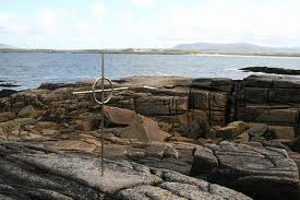
ballymanus-mine-memorialThe Ballymanus mine disaster occurs on May 10, 1943 on a beach at Ballymanus, County Donegal when local villagers attempt to bring ashore an unexploded naval mine. Seventeen men and boys between 13 and 34 are killed in the explosion. Another two die later.

According to contemporary reports, the mine is spotted by a number of people, including a local coastguard and two local youths who wade out and tie ropes around it in an attempt to haul it ashore. They are then joined by other men and boys from the local area but as it is being hauled along the beach it is believed to strike a rock and explode, killing 17 people instantly. Two more die in the hospital soon afterwards. More than 40 houses in the nearby village are damaged by the blast. The explosion is so loud it is heard over 40 miles away in Letterkenny.

The scene on the beach is one of devastation. Parts of bodies lay everywhere, which makes identification difficult. Army personnel from Rockhill, outside Letterkenny, have the job of collecting the limbs and scattered bodies and bringing them to a local hall.

Ireland is officially neutral during World War II, and there would not be the same level of awareness amongst the public of the dangers of unexploded ordnance as in countries involved in the conflict. Other commentators note that 15 other mines are made safe in Donegal in the same year, that local senior Garda Síochána members are aware of the mine at least 3 hours before the explosion and are expected to secure a cordon around any reported mines. However, while some effort is made to advise the community of the dangers, the additional actions prescribed in the standing orders had not been taken.

(Pictured: Ballymanus Mine Memorial, Mullaghduff, Donegal)


Leave a comment

Birth of John Brougham, Actor & Dramatist

john-brougham

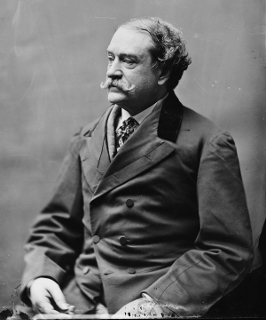
John Brougham, Irish American actor and dramatist, is born in Dublin on May 9, 1814.

Brougham’s father is an amateur painter and dies young. His mother is the daughter of a Huguenot, whom political adversity has forced into exile. He is the eldest of three children. Both of his siblings die in youth, and the father being dead, and the widowed mother left penniless, he is reared in the family and home of an uncle.

Brougham is prepared for college at an academy at Trim, County Meath, twenty miles from Dublin, and subsequently is sent to the University of Dublin. There he acquires classical learning and forms interesting and useful associations and acquaintances. He also becomes interested in private theatricals. He falls in with a crowd that puts on their own shows, cast by drawing parts out of a hat. Though he most always trades off larger roles so he can pay attention to his studies, he takes quite an interest in acting. He is a frequent attendant, moreover, at the Theatre Royal in Hawkins Street.

Brougham is educated with the intention of his becoming a surgeon and walks the Peth Street Hospital for eight months. However, misfortune comes upon his uncle, so he is obliged to provide for himself. Before leaving the university he, by chance, becomes acquainted with the actress Lucia Elizabeth Vestris.

Brougham goes to London in 1830 and, after a brief experience of poverty, suddenly determines to become an actor. He is destitute of everything except fine apparel, and he has actually taken the extreme step of offering himself as a cadet in the service of the East India Company. But, being dissuaded by the enrolling officer, who lends him a guinea and advises him to seek other employment, and happening to meet with a festive acquaintance, he seeks recreation at the Tottenham Theatre where Madame Vestris is acting.

Brougham’s acquaintance with Madame Vestris leads to him being engaged at the theatre, and he thus makes his first appearance on the London stage in July in Tom and Jerry, in which he plays six characters. In 1831 he is a member of Madame Vestris’s company and writes his first play, a burlesque. He remains with Madame Vestris as long as she and Charles Mathews retain Covent Garden Theatre, and he collaborates with Dion Boucicault in writing London Assurance, the role of Dazzle being one of those with which he becomes associated. His success at small or “low” comic roles such as Dazzle earn him the nickname “Little Johnny Brougham,” a moniker which he embraces, and which boosts his popularity with working-class audiences.

In 1840 Brougham manages the Lyceum Theatre, for which he writes several light burlesques, but in 1842 he moves to the United States, where he becomes a member of William Evans Burton‘s company, for which he writes several comedies, including Met-a-mora; or, the Last of the Pollywogs, a parody of John A. Stone and Edwin Forrest’s Metamora; or The Last of the Wamponoags, and Irish Yankee; or, The Birthday of Freedom.

Later Brougham is the manager of Niblo’s Garden, and in 1850 opens Brougham’s Lyceum, which, like his next speculation, the lease of the Bowery Theatre, is not a financial success, despite the popularity of such works as Po-ca-hon-tas; or, The Gentle Savage. He is later connected with James William Wallack‘s and Augustin Daly‘s theatres and writes plays for both.

In 1860 Brougham returns to London, where he adapts or writes several plays, including The Duke’s Motto for Charles Fechter. In November 1864 he appears at the Theatre Royal in his native Dublin in the first performance of Dion Boucicault’s Arrah-na-Pogue with Boucicault, Samuel Johnson and Samuel Anderson Emery in the cast.

After the American Civil War Brougham returns to New York City. Brougham’s Theatre is opened in 1869 with his comedies Better Late than Never and Much Ado About a Merchant of Venice, but this managerial experience is also a failure due to disagreements with his business partner, James Fisk. He then takes to playing the stock market. His last appearance onstage is in 1879 as “O’Reilly, the detective” in Boucicault’s Rescued.

John Brougham dies in Manhattan on June 7, 1880.


4 Comments

Birth of John Pitt Kennedy, Engineer & Agricultural Reformer

john-pitt-kennedy-gravesite

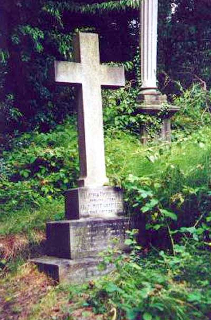
Lieutenant-Colonel John Pitt Kennedy, British military engineer, agricultural reformer and civil servant, is born at Carndonagh, County Donegal on May 8, 1796.

Kennedy is educated at Foyle College, Derry, and the Royal Military Academy, Woolwich, becoming lieutenant in the Royal Engineers in 1815. Four years afterwards, he is sent to Malta, and thence to Corfu. He superintends the construction of a canal at Lefkada in 1820, serves next under Sir Charles James Napier at Cephalonia building lighthouses, roads, and quays, and is sub-inspector of militia in the Ionian Islands (1828–31).

During a period in India Kennedy meets Sir Charles James Napier and when he returns to Ireland he sets up agricultural schools designed to improve the economy of the country. One is at Cloghan near Ballybofey, and another at Eglinton near Derry. He becomes a farm manager and marries Anna, daughter of Sir Charles Styles, who owns large estates around Ballybofey, in 1838. Kennedy′s methods of improving the condition of the agricultural classes are indicated by the title of his work, Instruct; Employ; Don’t Hang Them: or Ireland Tranquilized without Soldiers and Enriched without English Capital (1835). He writes several others of similar nature, and as inspector general for Irish education (1837), as secretary to the Devon Commission (1843), and to the Famine Relief Committee (1845), his labours are unceasing in behalf of his native land.

Kennedy returns to the army in 1849 as military secretary to Sir Charles Napier and accompanies him to India, where he builds the military road named after him and extending from Kalka via Shimla to Kunawur and Tibet. He publishes British Home and Colonial Empire (1865–69), as well as a number of technical works relating to his Indian career. He also serves as District Grandmaster of Bengal.

John Pitt Kennedy dies in 1879 and is buried in Highgate Cemetery (East) in Highgate, London Borough of Camden, Greater London, England.

(Pictured: John Pitt Kennedy gravesite in Highgate Cemetery, London)


18 Comments

Execution of James Cotter the Younger

cotter-family-burial-spot

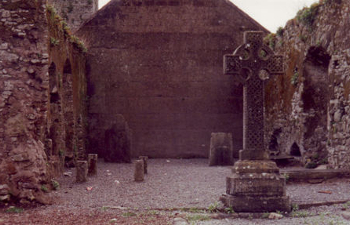
James Cotter the Younger, the son of Sir James Fitz Edmond Cotter who had commanded King James‘s Irish Army forces in the Counties of Cork, Limerick, and Kerry, and Eleanor/Ellen Plunkett, daughter of Matthew, 7th Baron Louth, is executed on May 7, 1720, for high treason in supporting the Jacobite cause. His death is seen by many, especially within the Catholic population of Ireland, as a form of political assassination.

At the time of his death Cotter is seen, like his father before him, as the natural leader of the Catholics of Cork. He is also a prominent patron of poetry and other literature in the Irish language. The Irish text Párliament na mBan or ‘The Parliament of Women’ is dedicated by its author, Domhnall Ó Colmáin,’ to a young James Cotter in 1697. As one of the few major landowners of the Catholic faith remaining in Ireland, and as a man of known Jacobite and Tory sympathies he is distrusted by the authorities. He is also held in suspicion by those of his landed neighbours who are part of the Protestant Ascendancy and of Whiggish political views. Amongst his overt political actions, he is believed to play a leading part in the instigation of the election riots of 1713 in Dublin. His trial, ostensibly for rape, is a cause célèbre at the time and widely seen as an example of judicial murder.

Though married, Cotter has a reputation as a ladies’ man. His wealth allows him to flaunt his independence of the Protestant ruling class and anti-Catholic laws of Ireland. These characteristics, allied to his political activities, lead to his downfall. He makes an enemy of a powerful neighbour, Alan Brodrick, 1st Viscount Midleton. Brodrick, it appears, arranges that Cotter be accused of abducting and raping a young Quaker woman named Elizabeth Squibb, reported by some to have been Cotter’s mistress. When news of this trumped-up or exaggerated charge reaches Cork City, the Quakers of the town live in fear of their lives for many weeks. Believing the charge cannot hold up in court, Cotter gives himself up to the Cork sheriff.

The judge presiding on the case is Sir St. John Brodrick who, as a close relative of James Cotter’s accuser, is hardly impartial. The jury has also been packed as all twelve of its members are justices of the peace. The trial takes place in a period of heightened rumour of Jacobite invasion. A large number of arms for cavalry are found in Cork which triggers a scare until it is discovered that they are government owned and intended for a local militia unit. James Cotter is held in jail, though bail has been granted, and is convicted of the crime.

A bizarre element in Cotter’s downfall are the pleas for mercy expressed by both the jury which has convicted him and Elizabeth Squibb, his alleged victim. Attempts to gain a pardon in Dublin are proceeding and a stay of execution is sent, however, the hanging is deliberately brought forward, and the stay does not arrive in time. Cotter has attempted to escape and spends the night before his execution in chains. The gallows erected for the execution are destroyed by some of the citizens of Cork and the hanging is extemporised using a rope attached to a metal staple in a vertical post. James Cotter is hanged in Cork City on May 7, 1720. News of his execution triggers widespread riots on a national scale. He is buried in his family’s vault at Carrigtwohill.

Some have seen the death of James Cotter as the working of a family feud. His father had been intimately involved in the assassination of the regicide John Lisle in Switzerland (1664). The wife of the Lord Lieutenant of Ireland at the time of James Cotter’s trial is a granddaughter of John Lisle.

Up to twenty poems in Gaelic survive which reflect the widespread dismay felt at James Cotter’s execution, including ones by Éadbhard de Nógla, son of his close friend, the lawyer Patrick Nagle.

(Pictured: The Cotter Family burial vault in Carrigtwohill)


Leave a comment

Birth of Explorer Robert O’Hara Burke

robert-o'hara-burke

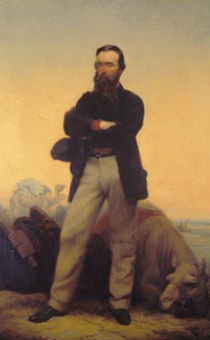
Robert O’Hara Burke, Irish soldier and police officer who achieves fame as an Australian explorer, is born in St. Clerens, County Galway on May 6, 1821. He is the leader of the ill-fated Burke and Wills expedition which is the first expedition to cross Australia from south to north.

Burke is the second of three sons of James Hardiman Burke, an officer in the British army 7th Royal Fusiliers, and Anne Louisa Burke (nee O’Hara).

Burke enters the Royal Military Academy, Woolwich in May 1835. In December 1836 he fails his probationary exam and goes to Belgium to further his education. In 1841, he enters the Austrian army and spends most of his time posted to northern Italy. Towards the end of 1847 he suffers health problems and ultimately resigns from the Austrian army in June 1848.

After returning to Ireland in 1848, he joins the Irish Constabulary (later the Royal Irish Constabulary). He does his cadet training at Phoenix Park Depot in Dublin between November 1849 and January 1850. At the end of 1850 he transfers to the Mounted Police in Dublin.

Burke emigrates to Australia, arriving in Hobart, Tasmania on February 12, 1853, and promptly sails for Melbourne. On April 1, 1853, he joins the recently established Victoria Police force.

After the South Australian explorer John McDouall Stuart reaches the centre of Australia, the South Australian parliament offers a reward of £2,000 for the promotion of an expedition to cross the continent from south to north, generally following Stuart’s route. In June 1860, Burke is appointed to lead the Victorian Exploring Expedition with William John Wills, his third-in-command, as surveyor and astronomical observer.

The expedition leaves Melbourne on August 20, 1860, with a total of 19 men, 27 camels and 23 horses. They reach Menindee on September 23, 1860, where several people resign.

Cooper Creek, 400 miles further on, is reached on November 11, 1860, by the advance group, the remainder being intended to catch up. After a break, Burke decides to make a dash to the Gulf of Carpentaria, leaving on December 16, 1860. William Brahe is left in charge of the remaining party. The small team of Burke, William Wills, John King and Charley Gray reach the mangroves on the estuary of the Flinders River, near where the town of Normanton now stands, on February 9, 1861. They never see open ocean due to flooding rains and swamps.

Already weakened by starvation and exposure, progress on the return journey is slow and hampered by the tropical monsoon downpours of the wet season. Gray dies four days before they reach the rendezvous at Cooper Creek. The other three rest for a day when they bury him. They eventually reach the rendezvous point on April 21, 1861, nine hours after the rest of the party had given up waiting and left, leaving a note and some food, as they have not been relieved by the party supposed to be returning from Menindee.

Burke’s party attempts to reach Mount Hopeless, the furthest outpost of pastoral settlement in South Australia, which is closer than Menindee, but fail and return to Cooper Creek. While waiting for rescue Wills dies of exhaustion and starvation. Soon after, Burke also dies, at a place now called Burke’s Waterhole on Cooper Creek in South Australia. The exact date of Burke’s death is uncertain but has generally been accepted to be June 28, 1861.

King survives with the help of Aborigines until he is rescued in September by Alfred William Howitt. Howitt buries Burke and Wills before returning to Melbourne. In 1862 Howitt returns to Cooper Creek and disinters Burke and Wills, taking them first to Adelaide and then by steamer to Melbourne where they are laid in state for two weeks. On January 23, 1863, Burke and Wills receive a State Funeral and are buried in Melbourne General Cemetery. Ironically, on that same day John McDouall Stuart and his companions, having successfully completed the south-north crossing, are received back at a large ceremony in Adelaide.


Leave a comment

Ireland Becomes Founder Member of the Council of Europe

council-of-europe-logo

On May 5, 1949, Ireland becomes one of ten founder members of the Council of Europe, an international organisation whose stated aim is to uphold human rights, democracy and the rule of law in Europe.

The Council of Europe currently has 47 member states, covers approximately 820 million people and operates with an annual budget of approximately half a billion euros.

The organisation is distinct from the 28-nation European Union (EU), although it is sometimes confused with it, partly because the EU has adopted the original European Flag which was created by the Council of Europe in 1955, as well as the European Anthem. No country has ever joined the EU without first belonging to the Council of Europe, which is an official United Nations Observer.

Unlike the EU, the Council of Europe cannot make binding laws, but it does have the power to enforce select international agreements reached by European states on various topics. The best known body of the Council of Europe is the European Court of Human Rights, which enforces the European Convention on Human Rights.

The Council’s two statutory bodies are the Committee of Ministers, comprising the foreign ministers of each member state, and the Parliamentary Assembly, composed of members of the national parliaments of each member state. The Commissioner for Human Rights is an independent institution within the Council of Europe, mandated to promote awareness of and respect for human rights in the member states. The Secretary General heads the secretariat of the organisation. Other major CoE bodies include the European Directorate for the Quality of Medicines.

The headquarters of the Council of Europe are in Strasbourg, France. English and French are its two official languages. The Committee of Ministers, the Parliamentary Assembly and the Congress also use German, Italian, Russian, and Turkish for some of their work.


Leave a comment

The Death of Art Ó Laoghaire

art-o-laoghaire

Art Ó Laoghaire, an Irish Roman Catholic and captain in the Hungarian Hussars Regiment of the army of Maria Theresa of Austria, is killed by soldiers near Millstreet, County Cork on May 4, 1773.

Ó Laoghaire marries Eibhlín Dubh Ní Chonaill, aunt of Daniel O’Connell, in 1767. She has been a widow from the age of 15 and is now 23. They have three children, Cornelius, Fiach and a third who apparently does not survive infancy.

Having returned home to Rathleigh House near Macroom, Cork, the hot-tempered Ó Laoghaire becomes involved in a feud with a protestant landowner and magistrate, Abraham Morris of Hanover Hall, Macroom. When Morris is High Sheriff of County Cork in 1771, he lays charges against Ó Laoghaire following his alleged attack on Morris and the wounding of his servant on July 13, 1771, at Hanover Hall. In October of that year, Ó Laoghaire is indicted in his absence, and Morris offers a 20-guinea reward for his capture.

The feud between the two men continues and in 1773, Morris demands that Ó Laoghaire sell him the fine horse that Ó Laoghaire had brought back from his service in the Austro-Hungarian army for £5. The Penal Laws state that no Catholic might own a horse worth more than £5 and could be forced to sell a more valuable one on demand to any Protestant at this price. Ó Laoghaire refuses to sell and challenges Morris to a duel, which Morris declines. Morris uses, or misuses, his position as magistrate to persuade his fellow magistrates to proclaim Ó Laoghaire an outlaw, who can then legally be shot on sight. Morris leads a contingent of soldiers that track Ó Laoghaire down to Carrignanimma on May 4, 1773. He gives the order to fire on Ó Laoghaire. The first shot, which kills him, is fired by a soldier called Green.

Morris and the soldiers are held to be guilty of Ó Laoghaire’s murder by a coroner’s inquest on May 17, but Morris is acquitted of the murder by Cork magistrates on September 6, 1773. Morris is shot in Cork on July 7 by Ó Laoghaire’s brother Cornelius, who sees Morris at a window of a house in Hammond’s Lane where he is lodging. He fires three shots, wounding Morris. The shots are not immediately fatal, but Morris dies in September 1775, presumably as the result of the shooting. The soldier Green is decorated for his “gallantry.”

Ó Laoghaire’s wife Eibhlín Dubh Ní Chonaill composes the long poem “Caoineadh Airt Uí Laoghaire” (Lament for Art O’Leary), mourning his death and calling for revenge.

Ó Laoghaire’s tomb at Kilcrea Friary has the epitaph likely composed by his widow:

Lo Arthur Leary, generous, handsome, brave,
Slain in his bloom lies in this humble grave.


Leave a comment

Birth of Bing Crosby

bing-crosby

Harry Lillis “Bing” Crosby Jr., American singer and actor and descendant of Irish immigrants, is born on May 3, 1903, in Tacoma, Washington. His trademark warm bass-baritone voice makes him one of the best-selling recording artists of all time, selling over one billion analog records and tapes, as well as digital compact discs and downloads around the world.

Crosby’s parents are Harry Lillis Crosby Sr. (1870–1950), a bookkeeper of English descent, and Catherine Helen “Kate” (née Harrigan; 1873–1964), a second-generation Irish American. An ancestor, Simon Crosby, emigrates to America in the 17th century, and one of his descendants marries a descendant of Mayflower passenger William Brewster.

The first multimedia star, from 1931 to 1954 Crosby is a leader in record sales, radio ratings, and motion picture grosses. His early career coincides with technical recording innovations such as the microphone. This allows him to develop a laid-back, intimate singing style that influences many of the popular male singers who follow him, including Perry Como, Frank Sinatra, Dick Haymes, and Dean Martin. Yank, the Army Weekly magazine says that he is the person who has done the most for American soldiers’ morale during World War II.

The biggest hit song of Crosby’s career is his recording of Irving Berlin‘s “White Christmas,” which he introduces on a Christmas Day radio broadcast in 1941. The song then appears in his 1942 movie Holiday Inn. His record hits the charts on October 3, 1942, and rises to No. 1 on October 31, where it stays for eleven weeks.

In 1948, American polls declare him the “most admired man alive,” ahead of Jackie Robinson and Pope Pius XII. Also in 1948, Music Digest estimates that his recordings fill more than half of the 80,000 weekly hours allocated to recorded radio music.

Crosby wins an Academy Award for Best Actor for his role as Father Chuck O’Malley in the 1944 motion picture Going My Way and is nominated for his reprise of the role in The Bells of St. Mary’s opposite Ingrid Bergman the next year, becoming the first of six actors to be nominated twice for playing the same character. In 1963, he receives the first Grammy Global Achievement Award. He is one of 33 people to have three stars on the Hollywood Walk of Fame, in the categories of motion pictures, radio, and audio recording.

Crosby influences the development of the postwar recording industry. After seeing a demonstration of an early Ampex reel-to-reel tape recorder he places a large order for their equipment and convinces ABC to allow him to tape his shows. He becomes the first performer to pre-record his radio shows and master his commercial recordings onto magnetic tape. Through the medium of recording, he constructs his radio programs with the same directorial tools and craftsmanship (editing, retaking, rehearsal, time shifting) used in motion picture production, a practice that becomes an industry standard. In addition to his work with early audio tape recording, he helps to finance the development of videotape, purchases television stations, breeds racehorses, and co-owns the Pittsburgh Pirates baseball team.

On October 13, 1977, Crosby flies alone to Spain to play golf and hunt partridge. The following day, at the La Moraleja Golf Course near Madrid, he plays 18 holes of golf. As Crosby and his party head back to the clubhouse, Crosby says, “That was a great game of golf, fellas.” At about 6:30 PM, he collapses about 20 yards from the clubhouse entrance and dies instantly from a massive heart attack. At Reina Victoria Hospital he is administered the last rites of the Catholic Church and is pronounced dead. On October 18, following a private funeral Mass at St. Paul’s Catholic Church in Westwood, he is buried at Holy Cross Cemetery in Culver City, California. A plaque is placed at the golf course in his memory.


Leave a comment

Birth of Patrick Hillery, Sixth President of Ireland

patrick-hillery

Patrick John Hillery, Irish politician and the sixth President of Ireland, is born in Spanish Point, County Clare on May 2, 1923. He serves two terms in the presidency and, though widely seen as a somewhat lacklustre President, is credited with bringing stability and dignity to the office. He also wins widespread admiration when it emerges that he has withstood political pressure from his own Fianna Fáil party during a political crisis in 1982.

Hillery is educated locally at Milltown Malbay National school before later attending Rockwell College. At third level he attends University College Dublin where he qualifies with a degree in medicine. Upon his conferral in 1947 he returns to his native town where he follows in his father’s footsteps as a doctor.

Hillery is first elected at the 1951 general election as a Fianna Fáil Teachta Dála (TD) for Clare and remains in Dáil Éireann until 1973. During this time, he serves as Minister for Education (1959–1965), Minister for Industry and Commerce (1965–1966), Minister for Labour (1966–1969) and Minister for Foreign Affairs (1969–1973).

Following Ireland’s successful entry into the European Economic Community in 1973, Hillery is rewarded by becoming the first Irishman to serve on the European Commission, serving until 1976 when he becomes President. In 1976 the Fine GaelLabour Party National Coalition under Liam Cosgrave informs him that he is not being re-appointed to the Commission. He considers returning to medicine; however, fate takes a turn when Minister for Defence Paddy Donegan launches a ferocious verbal attack on President Cearbhall Ó Dálaigh, calling him “a thundering disgrace” for referring anti-terrorist legislation to the courts to test its constitutionality. When a furious President Ó Dálaigh resigns, a deeply reluctant Hillery agrees to become the Fianna Fáil candidate for the presidency. Fine Gael and Labour decide it is unwise to put up a candidate in light of the row over Ó Dálaigh’s resignation. As a result, Hillery is elected unopposed, becoming President of Ireland on December 3, 1976.

When Hillery’s term of office ends in September 1983, he indicates that he does not intend to seek a second term, but he changes his mind when all three political parties plead with him to reconsider. He is returned for a further seven years without an electoral contest. After leaving office in 1990, he retires from politics.

Hillery’s two terms as president, from 1976 to 1990, end before the 1998 Good Friday Agreement, which sets terms for an end to violence in Northern Ireland. But he acts at crucial moments as an emollient influence on the republic’s policies toward the north and sets a tone that helps pave the way for eventual peace.

Patrick Hillery dies on April 12, 2008, in his Dublin home following a short illness. His family agrees to a full state funeral for the former president. He is buried at St. Fintan’s Cemetery, Sutton, Dublin. In the graveside oration, Tánaiste Brian Cowen says Hillery was “A humble man of simple tastes, he has been variously described as honourable, decent, intelligent, courteous, warm and engaging. He was all of those things and more.”