seamus dubhghaill

Promoting Irish Culture and History from Little Rock, Arkansas, USA


Leave a comment

Death of Robert Briscoe, Fianna Fáil Politician

Robert Emmet Briscoe, Fianna Fáil politician who serves as a Teachta Dála (TD) in the Oireachtas from 1927 to 1965, dies on March 11, 1969.

Briscoe is born in Dublin on September 25, 1894, the son of Abraham William Briscoe and Ida Yoedicke, both of whom are Lithuanian-Jewish immigrants. The original family name in Lithuania is believed to have been Cherrick or Chasen. His brother Wolfe Tone Briscoe is named after Theobald Wolfe Tone, one of the leaders of the Irish Rebellion of 1798. His father is the proprietor of Lawlor Briscoe, a furniture factory on Ormond Quay which makes, refurbishes, imports, exports and sells furniture, trading all over Ireland and abroad.

Briscoe is active in the Irish Republican Army (IRA) and Sinn Féin during the Irish War of Independence and accompanies Éamon de Valera to the United States. He speaks for the Sinn Féin cause at public meetings there and is adamant that being a “Hebrew” does not lessen his Irishness. He is sent by Michael Collins to Germany in 1919 to be the chief agent for procuring arms for the IRA. While in Germany in 1921 he purchases a small tugboat named Frieda to be used in transporting guns and ammunition to Ireland. On October 28, 1921, the Frieda slips out to sea with Charles McGuinness at the helm and a German crew with a cargo of 300 guns and 20,000 rounds of ammunition. Some sources cite this shipment as “the largest military shipment ever to reach the IRA” consisting of 1,500 rifles, 2,000 pistols and 1.7 million rounds of ammunition. On November 2, 1921, the Frieda successfully lands its cargo near Waterford Harbour.

In June 1922 during the Irish Civil War, Briscoe is involved in an incident with fellow anti-treaty IRA members who attack pro-treaty politician Darrell Figgis at his home. They enter the house and assault Figgis, cutting off his well-prized beard in the process. This traumatises Figgis’ wife Millie, who had been under the impression Briscoe and his fellow assistants had come to kill Figgis. In November 1924 Millie commits suicide, expressing in a suicide note that she was suffering from depression as a result of the 1922 attack. Figgis himself commits suicide in 1926.

In his biography, Briscoe recalls an incident of being recognised by a pro-Treaty opponent during the Civil War. He merely turns and walks away, confident that his enemy will not shoot him in the back.

Elected to the Dáil in the newly independent Ireland, Briscoe works with Patrick Little to bring through a law limiting the interest that can be charged by moneylenders and also, as he writes, “made it illegal for a married woman to borrow money without the knowledge and consent of her husband, for these foolish ones are always the easiest prey of the moneylenders.”

During World War II, Briscoe, at this time a member of Dáil Éireann, comes under close scrutiny from the Irish security services. His support for Zionism and his lobbying on behalf of refugees is considered potentially damaging to the interests of the state by officials from the Department of Justice. He is an admirer and friend of Ze’ev Jabotinsky and his campaign to liberate the Jews. Between 1939 and 1940, he along with John Henry Patterson, a former commander of both the Zion Mule Corps and later the 38th Battalion of the Royal Fusiliers, are involved in fund raising for the Irgun in the United States. Jabotinsky while head of Irgun visits Dublin to receive training in guerrilla warfare tactics against the British under the instruction of Briscoe. During the period Briscoe describes himself as the “Chair of Subversive Activity against England.” He wishes for Ireland to give asylum to Jews fleeing Nazi Germany but does so discreetly in order not to be accused of compromising the neutrality policy of the Fianna Fáil government.

After World War II Briscoe acts as a special advisor to Menachem Begin in the transformation of Irgun from a paramilitary group to a parliamentary political movement in the form of Herut in the new Israeli state. The party later becomes Likud. As he had already been a key figure in the formation in his own Fianna Fáil party out of the Anti-treaty IRA post Irish independence but not before a bitter Civil War, he prompts Begin to make the transition immediately after the Altalena Affair in order to avoid a similar civil conflict.

Briscoe serves in Dáil Éireann for 38 years and is elected 12 times in the Dublin South and from 1948, Dublin South-West constituencies. He retires at the 1965 Irish general election, being succeeded by his son, Ben, who serves for a further 37 years. In 1956, he becomes the first Jewish Lord Mayor of Dublin, although he is not the first Jewish Mayor in Ireland. That title belongs to William Annyas, who was elected Mayor of Youghal, County Cork in 1555. He serves a one-year term and is re-elected in 1961. His son Ben is also a Fianna Fáil TD, and he too serves as Lord Mayor of Dublin from 1988–1989.

Briscoe’s memoir, For the Life of Me, is published in 1958.

Leave a comment

Birth of Maureen O’Sullivan, Irish Independent Politician

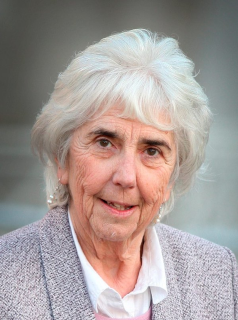
Maureen O’Sullivan, former Irish Independent politician who serves as a Teachta Dála (TD) for the Dublin Central constituency from 2009 to 2020, is born in East Wall, Dublin, on March 10, 1951.

O’Sullivan is educated locally at Mount Carmel school. After completing a BA at University College Dublin (UCD), she then goes on to work as an English and History teacher and guidance counsellor in a secondary school in Baldoyle, a position she holds for thirty years.

O’Sullivan is a member of Tony Gregory‘s local political organisation in the 1970s, first canvassing for him and later serving as his election agent. She is co-opted onto Dublin City Council for the North Inner City local electoral area from September 2008 to June 2009, after the retirement of Mick Rafferty. After the death of Tony Gregory, she wins the resulting by-election which is held on the same day as the local elections where she also wins a seat on Dublin City Council, for the North Inner City local electoral area. Marie Metcalfe is co-opted to take the seat due to the dual mandate rule. Subsequently Anna Quigley replaces Metcalfe on Dublin City Council, who is in turn replaced by Mel MacGiobúin in March 2014. MacGiobúin fails to be elected at the local elections held in May.

O’Sullivan is re-elected to the Dáil at the 2011 Irish general election. She joins the Dáil technical group which gives independents and minor parties more speaking time in Dáil debates. She describes a proposal for political gender quota legislation as “tokenistic” and that women are able to get themselves nominated for election.

In December 2015, O’Sullivan and fellow independent TDs Clare Daly and Mick Wallace each put forward offers of a €5,000 surety for a 23-year-old man being prosecuted under terrorism legislation in the Special Criminal Court in Dublin charged with membership of an illegal dissident republican terrorist organisation.

After the 2016 Irish general election O’Sullivan unsuccessfully stands for election as Ceann Comhairle. She joins a technical group aligned with Independents 4 Change, while remaining outside the Independents 4 Change party. She is criticised by the brother of late TD Tony Gregory, over an allegedly false claim made in her election literature.

On January 16, 2020, O’Sullivan announces she will not be standing in the 2020 Irish general election in February.


Leave a comment

Death of M. E. Francis, Novelist & Playwright

Mary Elizabeth Blundell (née Sweetman), prolific Irish novelist and playwright who writes under the pen name M. E. Francis, dies on March 9, 1930. She is described as the best-known female novelist of the day.

Blundell is born in 1859 in Killiney Park, County Dublin to Margaret and Michael James Sweetman. The family moves to Brussels in 1873 and she spends her summers in Switzerland. Her family is quite artistic. Her sisters are poet Elinor Sweetman and writer Agnes Castle (aka Mrs. Egerton Castle). Her uncle is the novelist, William Sweetman. She marries her husband, Francis Blundell, on November 18, 1879, and moves to Little Crosby, Lancashire, North West England, where his family has been notable Catholics since the 16th century. They have three children: Francis Nicholas Blundell, Conservative politician, and writers Margaret Elizabeth Clementina Mary Blundell and Agnes Mary Frances Blundell.

Blundell’s husband dies after only five years of marriage. She had written her first story, True Joy, when she was just eight years old and has a publication in the Irish Monthly the day of her wedding. She takes up writing professionally after her husband’s death. In later life she writes in collaboration with her daughters. She later retires to Dorset.

The Ireland of her youth, the Lancashire of her married life, and the Dorset of her retirement provide backgrounds for many of her volumes of fiction.


Leave a comment

Birth of Anne Bonny, Irish Pirate

Anne Bonny, Irish pirate operating in the Caribbean and one of a few female pirates in recorded history, is said to be born in Old Head of Kinsale, near Cork, Kingdom of Ireland on March 8, 1697.

Bonny is the daughter of servant woman Mary Brennan and Brennan’s employer, lawyer William Cormac. Official records and contemporary letters dealing with her life are scarce, and most modern knowledge stems from Captain Charles Johnson‘s A General History of the Robberies and Murders of the most notorious Pyrates.

Bonny’s father, William Cormac, first moves to London to get away from his wife’s family, and he begins dressing his daughter as a boy and calling her “Andy.” When Cormac’s wife discovers William has taken in his illegitimate daughter and is bringing her up to be a lawyer’s clerk and dressing her as a boy, she stops giving him an allowance. Cormac then moves to the Province of Carolina, taking along his former serving girl, the mother of Bonny. At first, the family has a rough start in their new home, but Cormac’s knowledge of law and ability to buy and sell goods soon finances a townhouse and eventually a plantation just out of town. Bonny’s mother dies when she is 12. Her father attempts to establish himself as an attorney but does not do well. Eventually, he joins the more profitable merchant business and accumulates a substantial fortune.

It is recorded that Bonny has red hair and is considered a “good catch” but may have have a fiery temper as, at age 13, she supposedly stabs a servant girl with a knife. She marries a poor sailor and small-time pirate named James Bonny. He hopes to win possession of his father-in-law’s estate, but Bonny is disowned by her father. He does not approve of James Bonny as a husband for his daughter, and he kicks Anne out of their house. There is a story that Bonny sets fire to her father’s plantation in retaliation, but no evidence exists in support.

Sometime between 1714 and 1718, Bonny and her husband move to Nassau, on the island of New Providence, known as a sanctuary for English pirates called the Republic of Pirates. Many inhabitants receive a King’s Pardon or otherwise evade the law. It is also recorded that, after the arrival of Governor Woodes Rogers in the summer of 1718, James Bonny becomes an informant for the governor. He reports to Governor Rogers about the pirates in the area, which results in a multitude of these pirates being arrested. Bonny dislikes the work her husband does for Governor Rogers.

While in the Bahamas, Bonny begins mingling with pirates in the taverns. She meets John “Calico Jack” Rackham, and he becomes her lover. He offers money to her husband if he would divorce her, but her husband refuses and apparently threatens to beat Rackham. She and Rackham escape the island together, and she becomes a member of Rackham’s crew. She disguises herself as a man on the ship, and only Rackham and Mary Read are aware that she is a woman until it becomes clear that she is pregnant. Rackham then lands her at Cuba where she gives birth to a son. She then rejoins Rackham and continues the pirate life, having divorced her husband and married Rackham while at sea. Bonny, Rackham, and Read steal the ship William, then at anchor in Nassau harbor, and put out to sea. Rackham and the two women recruit a new crew. Their crew spends years in Jamaica and the surrounding area. Bonny takes part in combat alongside the men, and Governor Rogers names her in a “Wanted Pirates” circular published in The Boston News-Letter.

In October 1720, Rackham and his crew are attacked by a sloop captained by Jonathan Barnet under a commission from Nicholas Lawes, Governor of Jamaica. Most of Rackham’s pirates put up little resistance, as many of them are too drunk to fight. They are taken to Jamaica where they are convicted and sentenced by Governor Lawes to be hanged. According to Johnson, Bonny’s last words to Rackham are: “Had you fought like a man, you need not have been hang’d like a dog.”

Read and Bonny both “pleaded their bellies“, asking for mercy because they are pregnant, and the court grants them a stay of execution until after they give birth. Read dies in prison, most likely from a fever from childbirth. A ledger from a church in Jamaica lists her burial on April 28, 1721, “Mary Read, pirate.”

There is no record of Bonny’s release, and this has fed speculation as to her fate. A ledger lists the burial of an “Ann Bonny” on December 29, 1733, in the same town in Jamaica where she was tried. Charles Johnson writes in his book: “She was continued in Prison, to the Time of her lying in, and afterwards reprieved from Time to Time; but what is become of her since, we cannot tell; only this we know, that she was not executed.”

Other sources have stated that she may have returned to the United States after her imprisonment, dying in South Carolina in April 1782.


Leave a comment

Death of Supreme Court Judge Adrian Hardiman

Adrian Hardiman, Irish judge who serves as a Judge of the Supreme Court of Ireland from 2000 to 2016, dies in Portobello, Dublin, on March 7, 2016. He writes a number of important judgments while serving on the Court. He also presides, as does each Supreme Court judge on a rotating basis, over the Court of Criminal Appeal.

Hardiman is born on May 21, 1951, in Coolock, Dublin. His father is a teacher and President of the Association of Secondary Teachers, Ireland (ASTI). He is educated at Belvedere College, Dublin, and University College Dublin, where he studies history, and the King’s Inns. He is president of the Student Representative Council at UCD and Auditor of the Literary and Historical Society (UCD) and wins The Irish Times National Debating Championship in 1973.

Hardiman is married to Judge Yvonne Murphy, from County Donegal, a judge of the Circuit Court between 1998 and 2012, who conducts important inquiries relating to sex abuse including the Murphy Report and the Cloyne Report. She serves as chair of the Mother and Baby Homes Commission of Investigation. They have three sons, Eoin, who is a barrister and has been a member of the Mountjoy Prison Visiting Committee, Hugh, who is a personal assistant to Minister for Justice, Equality and Law Reform Michael McDowell, and Daniel, a doctor.

Hardiman joins Fianna Fáil while a student in University College Dublin and stands unsuccessfully for the party in the local elections in Dún Laoghaire in 1985. In 1985, he becomes a founder member of the Progressive Democrats but leaves the party when he is appointed to the Supreme Court. He remains very friendly with the former party leader and ex-Tánaiste, Michael McDowell, who is a close friend at college, a fellow founding member of the party, and best man at his wedding.

Hardiman is called to the Irish Bar in 1974 and receives the rare honour of being appointed directly from the Bar to Ireland’s highest court. Prior to his elevation to the Supreme Court in 2000, he has a successful practice as a barrister, focusing on criminal law and defamation.

Politically, Hardiman supports the liberal side in Ireland’s debates over abortion, being active in the “anti-amendment” campaign during the 1982 Abortion Referendum and later represents the Well Woman Centre in the early 1990s. After his death, he is described by Joan Burton as a liberal on social issues. But he could be an outspoken opponent of Political Correctness, such as when he rejects the Equality Authority‘s attempt to force Portmarnock Golf Club to accept women as full members. He also believes that certain decisions, such as those involving public spending, are better left to elected politicians rather than unelected judges, regardless of how unpopular that might sometimes be in the media (which he tends to hold in low esteem) and among what he describes as the “chattering classes.”

Hardiman’s concern for individual rights is not confined to Ireland. In February 2016, he criticizes what he describes as the radical undermining of the presumption of innocence, especially in sex cases, by the methods used in the UK‘s Operation Yewtree inquiry into historical sex allegations against celebrities, and he also criticizes “experienced lawyer” and then United States presidential candidate Hillary Clinton for allegedly declaring in January that “every accuser was to be believed, only to amend her view when asked if it applied to women who had made allegations against her husband”, former U.S. President Bill Clinton.

In a tribute following his death in 2016, President Michael D. Higgins says Justice Hardiman “was one of the great legal minds of his generation”, who was “always committed to the ideals of public service.” He is described as a “colossus of the legal world” by Chief Justice Susan Denham.

One commentator writes that “Hardiman’s greatest contribution …was the steadfast defence of civil liberties and individual rights” and that “He was a champion of defendants’ rights and a bulwark against any attempt by the Garda Síochána to abuse its powers.”


Leave a comment

Knocknagoshel Booby Trapped Mine Attack

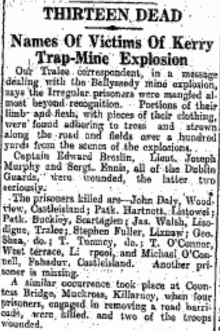
Five Free State soldiers, including three officers are killed by a booby trapped mine while clearing a road in Knocknagoshel, County Kerry, on March 6, 1923, during the Irish Civil War. Another soldier is badly wounded. National Army commander Paddy Daly issues a memorandum that Republican prisoners are to be used to clear mined roads from now on.

A party of eight Free State soldiers are sent to investigate a tip-off about an Irish Republican Army (IRA) arms dump. The tip-off is a ruse devised by the local IRA brigade to lure the enemy into a trap. At about 2:00 AM as they move stones to investigate the location where arms are allegedly buried, a mine explodes. Body parts are “strewn in all directions.” Paddy O’Connor, Michael Galvin, Laurence O’Connor, Michael Dunne and Edward Stapleton die instantly and a sixth is so badly injured, his legs are amputated. The IRA members who set the mine are hiding in a dugout about a mile away. The Knocknagoshel explosion represents the highest daily death toll among the Free State army in over six months.

Retaliation is swift and ferocious. Over the following two weeks, nineteen Republican prisoners die in County Kerry at the hands of the Free State. Knocknagoshel prompts an army statement that any future barricades or obstructions on the roads will be removed by republican prisoners. In his letter to officers in the Kerry Command, Brigadier Paddy O’Daly insists that “the taking out of prisoners is not to be regarded as a reprisal, but as the only alternative left us to prevent the wholesale slaughter of our men.” The implementation of O’Daly’s instructions is immediate and hugely repercussive.

On the night after the explosion, and in a move which reverberateds politically for generations, nine republican prisoners in Ballymullen Barracks in Tralee are taken to Ballyseedy on the Tralee to Killorglin road to clear a pile of rubble blocking the road. The nine, who had already been interrogated and abused in revenge for Knocknagoshel, are driven to the scene. It is suggested that one of the reasons these nine are selected from a wider group of prisoners is that they have no known links to the Catholic clergy or hierarchy so as not to antagonise the church which is actively and vocally supportive of the Free State and its leadership.

The army had planted a bomb in the rubble. They tie the prisoners by the wrists and their shoelaces and detonate the device. Eight of the nine are blown to pieces and killed instantly. The ninth, Stephen Fuller of Fahavane, Kilflynn, is thrown a considerable distance by the force of the explosion and, despite his injuries, manages to flee with the only eyewitness account of the incident.

When the dismembered remains of the eight dead men are placed in coffins and returned to their families at Ballymullen Barracks, there follows a “frenzy.” It is alleged that O’Daly orders the army band to play ragtime music as the bodies are handed over to the families at the gates of the barracks. The families react furiously, throwing stones at the soldiers and smashing the army coffins on the ground as they place the deceased in coffins they had brought themselves.

The funerals which follow prompted an outcry of condemnation of the actions of the Free State Army. As a result, it is decided that henceforth, prisoners who die in military custody in the Kerry Command areas will be buried by troops where they die rather than in their own parish. This is, as T. Ryle Dwyer argues, “tantamount to approving the barbarities that we being perpetrated and merely telling the soldiers to cover up their vile acts properly.”

Meanwhile, the police authorities move quickly to absolve themselves of any connections with the deaths at Ballyseedy on the basis that it was not reported to the Civic Guard in Kerry. The area is under an 11:00 PM curfew at the time and no patrols are undertaken after this hour. However, the superintendent Tralee notes, “In any event, in the Ballyseedy area at that time there were a considerable number of Irregulars, which rendered it unsafe for the Guards to patrol there.”

(From: “Body parts were ‘strewn in all directions’ – the bloody climax of the Civil War in Kerry” by Owen O’Shea, http://www.owenoshea.ie, March 7, 2021)


2 Comments

Birth of Irish Composer John McLachlan

Irish composer John McLachlan is born in Dublin on March 5, 1964.

McLachlan is the son of the writer Leland Bardwell, and studies at the Dublin Institute of Technology (DIT) Conservatory of Music and Drama (1982–86), the Royal Irish Academy of Music (1989–97), and Trinity College Dublin (BA 1988). He studies composition with William York, Robert Hanson and Kevin Volans. He holds a Ph.D. in musicology from Trinity College (1999) for a study of the relationship between analysis and compositional technique in the post-war avant-garde.

McLachlan writes numerous articles for The Journal of Music in Ireland (2000–10). He is executive director of the Association of Irish Composers (1998–2012), and in 2007 he is elected to Aosdána.

McLachlan is the featured composer in the RTÉ National Symphony Orchestra‘s “Horizons” series in 2003 and 2008. He also represents Ireland at international festivals, including the ISCM World Music Days in Slovenia in 2003 and Croatia in 2005. In 2006, his work Grand Action is commissioned as a test-piece for the AXA Dublin International Piano Competition.

McLachlan’s musical aesthetic is largely shaped by a desire to impart a sense of narrative and expectation to his music without recourse to pastiche rhetorical devices. A critic writes of a recording of McLachlan’s piano piece Nine: “The style of each little piece sends one’s imagination and musical memory reeling, some of them evoking French Impressionism, some jazzy in feel, some reminiscent of the miniatures for piano of Webern, and none of them in any way, shape or form derivative.” Much of his music is structured in contrasting and suddenly changing block-like sections of homogeneous material. The material within these sections is propelled by a rigorous focus on subtle rhythmic and melodic permutations, which result in both surface opacity and gradually increasing tension.

McLachlan’s works have been performed in the United States, Peru, Japan, South Africa, Britain, France, Italy, Germany, Holland, Switzerland, Finland, Denmark, Portugal, Spain, Romania, Moldova, Slovenia, Croatia, and around Ireland, with broadcasts in several of these countries. Performers who have played his music include the National Symphony Orchestra of Ireland, Opera Theatre Company, the National Chamber Choir, Concorde, Sequenza, Traject, Archaeus, the Pro Arte Orchestra, Antipodes, Ensemble Nordlys, The Fidelio Trio, The ConTempo Quartet and Trio Arbós as well as many prominent soloists including Ian Pace, John Feeley, Mary Dullea, Darragh Morgan, Satoko Inoue and David Adams.

McLachlan is also known as a broadcaster and writer on contemporary music, with many published articles.

McLachlan now lives in Inishowen, County Donegal.


Leave a comment

Birth of Emmet Dalton, Soldier & Film Producer

James Emmet Dalton MC, Irish soldier and film producer, is born in Fall River, Massachusetts, on March 4, 1898. He serves in the British Army in World War I, reaching the rank of captain. However, on his return to Ireland he becomes one of the senior figures in the Dublin Brigade of the Irish Republican Army (IRA) which fights against British rule in Ireland.

Dalton is born to Irish American parents James F. and Katharine L. Dalton. The family moves back to Ireland when he is two years old. He grows up in a middle-class Catholic background in Drumcondra in North Dublin and lives at No. 8 Upper St. Columba’s Road. He is educated by the Christian Brothers at O’Connell School in North Richmond Street. He joins the nationalist militia, the Irish Volunteers, in 1913 and the following year, though only fifteen, is involved in the smuggling of arms into Ireland.

Dalton joins the British Army in 1915 for the duration of the Great War. His decision is not that unusual among Irish Volunteers, as over 20,000 of the National Volunteers join the British New Army on the urgings of Nationalist leader John Redmond. His father, however, disagrees with his son’s decision. He initially joins the 7th battalion of the Royal Dublin Fusiliers (RDF) as a temporary 2nd Lieutenant. By 1916 he is attached to the 9th Battalion, RDF, 16th (Irish) Division under Major-General William Hickie, which contains many Irish nationalist recruits.

During the Battle of the Somme in September 1916, Dalton is involved in bloody fighting during the Battle of Ginchy, in which over 4,000 Irishmen are killed or wounded. He is awarded the Military Cross for his conduct in the battle. Afterwards he is transferred to the 6th Battalion, Leinster Regiment, and sent to Thessaloniki then Palestine, where he commands a company and then supervises a sniper school in el-ʻArīsh. In 1918 he is re-deployed again to France, and in July promoted to captain, serving as an instructor.

On demobilisation in April 1919, Dalton returns to Ireland. There, finding that his younger brother Charlie had joined the IRA, he himself follows suit. He later comments on the apparent contradiction of fighting both with and against the British Army by saying that he had fought for Ireland with the British and fought for Ireland against them.

Dalton becomes close to Michael Collins and rises swiftly to become IRA Director of Intelligence and is involved in The Squad, the Dublin-based assassination unit. On May 14, 1921, he leads an operation with Paddy Daly that he and Collins had devised. It is designed to rescue Gen. Seán Mac Eoin from Mountjoy Prison using a hijacked British armoured car and two of Dalton’s old British Army uniforms.

Dalton follows Collins in accepting the Anglo-Irish Treaty in 1922 and is one of the first officers, a Major General, in the new National Army established by the Irish Provisional Government of the Irish Free State. The Treaty is opposed by much of the IRA and Civil War between pro and anti-treaty factions eventually results.

Dalton is in command of troops assaulting the Four Courts in the Battle of Dublin which marks the start of the war in June 1922. At Collins’ instigation he, as Military liaison officer with the British during the truce, takes control of the two 18 pounder guns from the British that are trained on the buildings. He becomes commander of the Free State Army under Richard Mulcahy‘s direction. He is behind the Irish Free State offensive of July–August 1922 that dislodges the Anti-Treaty fighters from the towns of Munster. He proposes seaborne landings to take the Anti-Treaty positions from the rear and he commands one such naval landing that takes Cork in early August. In spite of firm loyalty to the National Army, he is critical of the Free State’s failure to follow up its victory, allowing the Anti-Treaty IRA to regroup resuming the guerrilla warfare started in 1919.

On August 22, 1922, he accompanies Collins in convoy, touring rural west Cork. The convoy is ambushed near Béal na Bláth and Collins is killed in the firefight. He had advised Collins to drive on, but Collins, who is not an experienced combat veteran, insists on stopping to fight.

Dalton is married shortly afterwards, on October 9, 1922, to Alice Shannon in Cork’s Imperial Hotel. By December 1922 he has resigned his command in the Army. He does not agree with the execution of republican prisoners that mark the latter stages of the Civil War. After briefly working as clerk of the Irish Senate, Seanad Éireann, he leaves the job to work in the movie industry.

Over the following forty years, Dalton works in Ireland and the United States in film production. In 1958 he founds Irish Ardmore Studios in Bray, County Wicklow. His company helps produce films such as The Blue Max, The Spy Who Came In from the Cold and The Lion in Winter, all of which are filmed in Ireland. His daughter is Irish actress Audrey Dalton.

Dalton dies in his daughter Nuala’s house in Dublin on March 4, 1978, his 80th birthday, never having seen the film that Cathal O’Shannon of RTÉ had made on his life. During the making of the film, they visit the battlefields in France, Kilworth Camp in Cork, Béal Na Bláth, and other places that Dalton had not visited since his earlier years. He wishes to be buried as near as possible to his friend Michael Collins in Glasnevin Cemetery in Dublin and is buried there in March 1978 after a military funeral. None of the ruling Fianna Fáil government ministers or TDs attend.

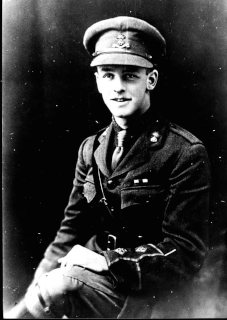
(Pictured: Dalton photographed in lieutenant’s uniform, Royal Dublin Fusiliers, taken circa. 1914-1918)


Leave a comment

Birth of Irish Writer Aidan Higgins

Aidan Higgins, Irish writer of short stories, travel pieces, radio drama and novels, is born on March 3, 1927, in Celbridge, County Kildare. Among his published works are Langrishe, Go Down (1966), Balcony of Europe (1972) and the biographical Dog Days (1998). His writing is characterised by non-conventional foreign settings and a stream of consciousness narrative mode. Most of his early fiction is autobiographical – “like slug trails, all the fiction happened.”

Higgins attends local schools and Clongowes Wood College, a private boarding school. In the early 1950s he works in Dublin as a copywriter for the Domas Advertising Agency. He then moves to London and works in light industry for about two years. He marries Jill Damaris Anders in London on November 25, 1955. From 1960, he sojourns in southern Spain, South Africa, Berlin and Rhodesia. In 1960 and 1961 he works as scriptwriter for Filmlets, an advertising firm in Johannesburg. These journeys provide material for much of his later work, including his three autobiographies, Donkey’s Years (1996), Dog Days (1998) and The Whole Hog (2000).

His upbringing in a landed Catholic family provides material for Higgins first novel, Langrishe, Go Down (1966). The novel is set in the 1930s in a run-down “big house” in County Kildare, inhabited by the last members of the Langrishe family, three spinster sisters, Catholics, living in not-so-genteel poverty in a once-grand setting. One sister, Imogen, has an affair with a German intellectual, Otto Beck, which transgresses the moral code of the time, bringing her a brief experience of happiness. Otto’s intellectual pursuits contrast with the moribund cultural life of mid-20th century Ireland. The book is awarded the James Tait Black Memorial Prize for fiction and is later adapted as a BBC Television film by British playwright Harold Pinter, in association with RTÉ. Langrishe, Go Down also receives the Irish Academy of Letters Award.

Higgins second major novel is Balcony of Europe, taking its name from a feature of the Spanish fishing village, Nerja Andalusia, where it is set. The novel is carefully crafted, and rich in embedded literary references, using Spanish and Irish settings and various languages, including Spanish and some German, in its account of the daily life in the beaches and bars of Nerja of a largely expatriate community. The protagonist, an artist called Dan Ruttle, is obsessed with his friend’s young American wife, Charlotte, and by the contrast between his life among a cosmopolitan artistic community in the Mediterranean, and his Irish origins. The book is re-edited in collaboration with Neil Murphy and published by Dalkey Archive Press in 2010, with the Irish material cut and the affair between Dan Ruttle and Charlotte foregrounded.

Higgins later novels include widely acclaimed Bornholm Night Ferry and Lions of the Grunwald. Various writings have been collected and reprinted by the Dalkey Archive Press, including his three-volume autobiography, A Bestiary, and a collection of fiction, Flotsam and Jetsam, both of which demonstrate his wide erudition and his experience of life and travel in South Africa, Germany and London which gives his writing a largely cosmopolitan feel, utilising a range of European languages in turns of phrase.

Higgins lives in Kinsale, County Cork, from 1986 with the writer and journalist Alannah Hopkin. They are married in Dublin in November 1997. He is a founder member of Irish artists’ association Aosdána. He dies on December 27, 2015, in Kinsale.


Leave a comment

Birth of Elizabeth Dillon, Diarist and Nationalist

Elizabeth Dillon, an Irish diarist and nationalist, is born Elizabeth Mathew in England on March 2, 1865.

Dillon is the eldest of five children of Sir James Charles Mathew and Elizabeth Blackmore Mathew. Her family is related to the Butler family, but she does not visit Ireland until 1886. Living in Queen’s Gate Gardens, Kensington, London, she is educated at home. From a young age she attends the ladies’ gallery of the House of Commons, while mixing a busy social life with charitable works.

Dillon begins keeping a diary in 1879, which she continues to write until her death. Her ancestor, Mary Mathew, is also a diarist and keeps the diary for the discipline of the daily activity. She soon begins to write for the love of it, and some have surmised she wrote with the intention her diaries would be read by others. She attends lectures in Old English and literature at King’s College, London from late 1882 to 1884, and begins to learn Irish in 1893.

Dillon’s father supports land reform in Ireland, chairs the evicted tenants commission in 1892, and is a huge influence on her politics. She makes her first political reference on February 25, 1883, when she notes the arrest of the Invincibles, and she then regularly comments on land reform. She travels to Ireland for the first time in August 1886, staying in Killiney, County Dublin. In October 1886, she meets John Dillon and begins to follow the Plan of Campaign so that she can discuss it with him during his visits to the Mathew house in London.

During this time, John Dillon is deeply immersed in politics and is imprisoned on a number of occasions. Being a careful follower of Irish politics, she becomes an anti-Parnellite. She confronts John Dillon in autumn 1895 about their relationship, saying that they can no longer meet as they had become the subject of gossip. He proposes within two weeks, and they are married on November 21, 1895, in Brompton Oratory. They are busy and often apart, with Dillon spending time in a warm climate due to his ill health. She tries to accompany him when she can, but the couple’s large family makes that difficult. They have one daughter and five sons, John Dillon (1896-1970), Anne Elizabeth Dillon (born October 29, 1897), Theobald Wolfe Tone (1898-1946), Myles, James, and Brian.

Finances are strained until John’s uncle Charles bequeaths him his house, 2 North Great George’s Street, Dublin in 1898, and a business in Ballaghaderreen, County Mayo is bequeathed him by a cousin, Anne Deane, in 1905. Dillon runs the business successfully, while also carrying out duties as a politician’s wife such as opening the Belfast ladies’ branch of the United Irish League in June 1905. Her busy life results in her neglecting her diary.

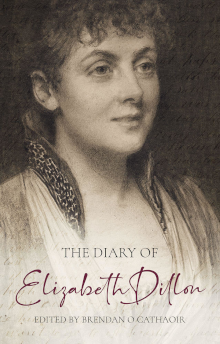
Dillon dies on May 14, 1907, in Dublin, having given birth to a stillborn daughter that morning. Pneumonia is given as the cause of death, but it could have been medical incompetence. She is buried in the family vault in Glasnevin Cemetery. Her husband writes of her death in June 1907, A short narrative of the illness and death of my dearest love. Trinity College Dublin holds her diary and correspondence. Her diaries, edited by Brendan Ó Cathaoir, are published in 2019.