seamus dubhghaill

Promoting Irish Culture and History from Little Rock, Arkansas, USA


Leave a comment

Death of Cecil Ffrench Salkeld, Painter, Printmaker, Critic & Writer

Cecil Ffrench Salkeld, Irish painter, printmaker, critic and writer dies in Dublin on May 11, 1969.

Salkeld is born in Assam, India on July 9, 1904. His parents are Henry Lyde Salkeld, a member of the Indian Civil Service (ICS), and Blanaid Salkeld (née Mullen), a poet. He returns to Ireland with his mother in 1910 following the death of his father in 1909. He attends Mount St. Benedict’s, Gorey, County Wexford, and the Dragon School in Oxford, England. He wins a scholarship to Oundle School in Oundle, North Northhamptonshire, but returns to Dublin where he enters the Dublin Metropolitan School of Art in 1919 to study under Seán Keating and James Sleator. He marries Irma Taesler in Germany in 1922. They have two daughters, Celia and Beatrice. The latter marries Brendan Behan in 1954.

Salkeld works in tempera and oil, as well as etching and wood engraving. In 1921 he travels to Germany to study under Ewald Dulberg at the Kassell Kunstschule. He attends the Union of Progressive International Artists in Düsseldorf in May 1922, and is exhibited at the Internationale Kunstausstellung. Upon his return to Dublin in 1924, he holds his first solo exhibition in the Society of Dublin Painters gallery. He becomes a member of the Dublin Painters in 1927. With Francis Stuart, he co-edits the first two issues of To-morrow in 1924. His studio is in a converted labourer’s cottage at Glencree, County Wicklow. He also exhibits with the New Irish Salon and the Radical Painters’ Group.

Salkeld wins the 1926 Royal Dublin Society‘s Taylor scholarship, and has his first exhibited work with the Royal Hibernian Academy (RHA) in 1929. He lives in Berlin for a year in 1932. He exhibits in Daniel Egan’s Gallery in Dublin in 1935. He has a wide circle of literary friends, including Samuel Beckett and Flann O’Brien. In O’Brien’s At Swim-Two-Birds, the character of Michael Byrne is designed for Salkeld, reflecting his debilitating alcoholism. He also teaches at the Dublin Metropolitan School of Art, teaching artists such as Reginald Gray.

From 1937 to 1946 Salkeld runs a private press called Gayfield Press. This is co-founded with his mother, and operates from a garden shed at their home, 43 Morehampton Road. The press is a small Adana wooden hand press. He illustrates her 1938 The Engine Left Running, as well as Ewart Milne‘s Forty North Fifty West (1938) and Liam O’Flaherty‘s Red Barbara and Other Stories (1928). In 1951, he loans the press to Liam and Josephine Miller to found the Dolmen Press.

Salkeld’s most famous public work is his 1942 three-part mural in Davy Byrne’s pub. He is a co-founder of the Irish National Ballet School in the 1940s in his capacity as a pianist. In 1946 he is appointed an associate member of the RHA. In 1953 his play Berlin Dusk is staged at 37 Theatre Club, Dublin. During the 1950s he is a broadcaster with Radio Éireann as well as a director of cultural events for An Tóstal. He dies on May 11, 1969 in St. Laurence’s Hospital, Dublin.

The National Gallery of Ireland holds a portrait by Salkeld of his daughter, Celia.

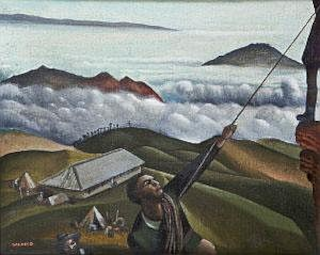
(Pictured: “The Climber” by Cecil Ffrench Salkeld, oil on canvas)


Leave a comment

Birth of Composer Siobhán Cleary

Siobhán Cleary, composer, is born in Dublin on May 10, 1970. Her most successful compositions are her orchestral works Alchemy and Cokaygne and her choral piece Theophilus Thistle and the Myth of Miss Muffett. Her opera Vampirella is first performed in Dublin in March 2017. She is a member of Aosdána.

Cleary starts to compose from an early age, often writing pieces while she is supposed to be practising at the piano. When she begins to study music at Maynooth University, she is initially inspired by Luciano Berio‘s Sinfonia, and soon afterwards by the works of the Irish composer Gerald Barry, the Frenchman Olivier Messiaen and the Hungarian György Ligeti. She continues her studies at Queen’s University Belfast and Trinity College, Dublin. In addition, she follows courses in composition with the Italian composer Franco Donatoni and the Dutchman Louis Andriessen and receives private tuition from the American Tom Johnson and the South African Kevin Volans. She also studies film scoring with the Italian composer Ennio Morricone and the American Don Brandon Ray.

Inspired by the alchemists’ Opus Alchymicum which describes how cheaper metals are transmuted into gold, Cleary’s orchestral work Alchemy (2001) is, like the stages in the Opus, presented in four parts: it evolves from the slow nigrendo, the moderate albedo, the strong citronatus, and the burning rubedo. The work is performed by the RTÉ National Symphony Orchestra in January 2002.

Cleary’s tone poem Cokaygne (2009), which, like Alchemy, is commissioned by RTÉ for the National Symphony Orchestra, is based on a poem and old sources which evoke a land of extreme luxury and contentment. The elaborately orchestrated piece is performed by the RTÉ National Symphony Orchestra in November 2009, Vladimir Altschuler conducting. It is performed by the RTÉ National Symphony Orchestra once again in June 2016, this time under the baton of Alan Buribayev.

Cleary’s choral work Theophilus Thistle and the Myth of Miss Muffett (2010), commissioned by the Cork International Choral Festival, is first performed in April 2011 by Chamber Choir Ireland directed by Paul Hillier. The work is based on a series of tongue twisters and other strange combinations of words popular in various European languages and dialects, moving from Italy, through Germany and Spain, finishing in Ireland. In 2013, it is performed twice by Chamber Choir Ireland in Dublin and Cork in connection with Ireland’s presidency of the European Union. The journalist and music critic Terry Blain comments on the choir’s “dazzingly virtuosic performance” in Belfast in 2013, qualifying the piece as “a tour de force of 21st century vocal chicanery, a clever and richly entertaining composition.” Theophilus Thistle is also performed the same year in the United States as part of the “Imagine Ireland” festival.

The chamber opera Vampirella with a libretto by Katy Hayes is first performed by students from the Royal Irish Academy of Music and the Lir National Academy of Dramatic Art at Dublin’s Smock Alley Theatre in March 2017. Based on a short story by Angela Carter telling how a young English soldier is seduced by a vampire countess, it is directed by Conor Hanratty and conducted by Andrew Synnott. Michael Dervan of The Irish Times finds the electronic sounds in the score particularly effective, commenting, “Perhaps this is a case of a genuinely electronic opera trying to break out of a more conventional mold.”

In 1996, Cleary receives a young artists award from Pépinières européennes pour jeunes artistes, followed in 1997 by the first prize in the Arklow Music Festival Composers’ Competition. In 2008, she is invited to become a member of Aosdána, an Irish association of creative artists.


Leave a comment

Birth of William Ireland de Courcy Wheeler, Surgeon

William Ireland de Courcy Wheeler, surgeon, is born on May 9, 1879, in Dublin, fourth son among six sons and four daughters of William Ireland de Courcy Wheeler, a distinguished doctor, and Frances Victoria Wheeler (née Shaw), cousin of George Bernard Shaw.

Wheeler is educated at Trinity College Dublin (TCD) and loses an eye as a result of an accident but overcomes the disability. He wins a moderatorship, a medal, and prizes and graduates BA (1899) in anatomy, natural science, and experimental science and, following postgraduate study in Berne, an MB, B.Ch., and MD (1902). The following year he receives the Dublin University Biological Association’s medal for his paper Deaths under chloroform. He is appointed demonstrator and assistant to the professor of the TCD anatomy department before becoming honorary surgeon (1904–32) to Mercer’s Hospital, Dublin. He is also attached to several other institutions including the Rotunda Hospital and the National Children’s Hospital. An outstanding teacher, he attracts large numbers to his clinical classes and lectures in surgery to postgraduates at TCD.

Ambitious and abounding in self-confidence, Wheeler dedicates all his indomitable energy and time to his work, is a frequent visitor to foreign clinics, becomes a skilled general surgeon and a specialist in orthopaedics, and earns an international reputation. During World War I he serves in the Royal Army Medical Corps (RAMC) and from 1915 converts his private hospital, 33 Upper Fitzwilliam Street, into the Dublin Hospital for Wounded Officers and makes it available to the St. John’s Ambulance brigade and the British Red Cross. He acts as honorary officer in charge and is also surgeon to the Duke of Connaught‘s Hospital for Limbless Soldiers, and honorary surgeon to the forces in Ireland.

In 1916, Wheeler visits the western front, tours the hospitals in Boulogne, and is attached to a casualty clearing station at Remy Siding near Ypres. Returning to Dublin on the request of Robert Jones, he organises the Dublin Military Orthopaedic Centre, Blackrock, where he serves as surgeon (1916–21). His advice is widely sought, and he serves on several committees, including the War Office Council of Consulting Surgeons (1917) and the Ministry of Pensions Medical Advisory Council on Artificial Limbs. Promoted to lieutenant colonel in 1918, he receives the General Service Medal and is twice mentioned in dispatches, having courageously treated wounded soldiers under fire during the 1916 Easter Rising. Appointed surgeon-in-ordinary to the lord-lieutenant, he is knighted in 1919.

Principal founder of the Dublin Hospitals’ Club (1922), Wheeler publishes two textbooks, A Handbook of Operative Surgery (1906) and Selected Papers on Injuries and Diseases of Bone (1928). He contributes numerous authoritative papers on a variety of surgical subjects to professional journals and edits the chapter on general surgery in the Medical Annual from 1916 to 1936. Inspector of examinations for the Medical Research Council of Ireland, he is external examiner to universities in Ireland and Scotland. Interested in hospital policy and nursing, he advocates the federation of the smaller hospitals and is chairman of the City of Dublin Nursing Institute. Fellow (1905) and council member (1906), he follows in his father’s footsteps and is elected president (1922–24) of the Royal College of Surgeons in Ireland. He is also president of the Dublin University Biological Association and of the surgical section of the Royal Academy of Medicine in Ireland and is awarded an honorary ChM from Cairo University in 1928.

Troubled and bewildered by the political situation in Ireland, Wheeler is persuaded by Rupert Guinness, 2nd Earl of Iveagh, to accept the position of visiting surgeon (1932) to the new hospital at Southend-on-Sea, Essex, to which Iveagh had donated £200,000. The departure of such a leading figure in Irish medical circles is widely regretted. His posts in London include surgeoncies to All Saints Hospital for Genito-Urinary Diseases and to the Metropolitan Ear, Nose, and Throat Hospital. The diversity of his interests and his general competence make him a valued member of the editorial staff of several journals including the British Journal of Surgery, the British Journal of Urology, and the American Journal of Surgery, Gynaecology, and Obstetrics. He is also a member of the American Editors Association. He enjoys many affiliations with America, where he is well known and honoured by being elected honorable fellow of the American College of Surgeons and selected as their John B. Murphy orator (1932), and by election as honorary member and president of the Post Graduate Assembly of North America. An active member of the British Medical Association, he is president of the Leinster branch (1925–26) and of the Orthopaedic section (1933), vice-president of the Surgical section (1930, 1932), and chairman of the council and president of the Metropolitan Counties Branch (1938). President of the Irish Medical Schools and Graduates Association, he is awarded their Arnott gold medal in 1935.

During World War II Wheeler serves as consultant surgeon to the Royal Navy in Scotland, with the rank of rear admiral (1939–43) and is posted to Aberdeen. Strong-minded, unconventional, and often controversial, he has a gift for friendship, is charming and good-humoured, and excels in the art of the after-dinner speech. Immensely proud of Dublin’s medical and surgical traditions, he always eagerly returned to Ireland, where he planned to retire and write his memoirs.

Wheeler dies suddenly on September 11, 1943, at his home in Aberdeen and is cremated at the Aberdeen crematorium. As a memorial to his father, he bequeaths his library and that of his father to the Royal College of Surgeons in Ireland, and also leaves a fund for the Sir William Wheeler memorial medal in surgery.


Leave a comment

Birth of Roddy Doyle, Novelist, Dramatist & Screenwriter

Roddy Doyle, novelist, dramatist and screenwriter known for his unvarnished depiction of the working class in Ireland, is born in Dublin on May 8, 1958. His distinctively Irish settings, style, mood, and phrasing make him a favourite fiction writer in his own country as well as overseas.

Doyle grows up in a middle-class family in Kilbarrack. His mother, Ita Bolger Doyle, is a first cousin of the short story writer Maeve Brennan. After majoring in English and geography at University College Dublin, he teaches those subjects for fourteen years at Greendale Community School, a Dublin grade school. During the summer break of his third year of teaching, he begins writing seriously. In the early 1980s he writes a heavily political satire, Your Granny’s a Hunger Striker, but it is never published.

Doyle publishes the first editions of his comedy The Commitments (1987; film 1991) through his own company, King Farouk, until a London-based publisher takes over. The work is the first installment of his internationally acclaimed The Barrytown Trilogy novels, which also include The Snapper (1990; film 1993), and The Van (1991; film 1996). The series centres on the ups and downs of the never-say-die Rabbitte family, who temper the bleakness of life in an Irish slum with familial love and understanding.

Doyle’s fourth novel, Paddy Clarke Ha Ha Ha (1993), wins the 1993 Booker Prize. Set in the 1960s in a fictional working-class area of northern Dublin, the book examines the cruelty inflicted upon children by other children. The protagonist, 10-year-old Paddy Clarke, fears his classmates’ ostracism, especially after the breakup of his parents’ marriage. In 1994 he writes the BBC miniseries Family, which generates heated controversy throughout conservative Ireland. The program sheds harsh light on a family’s struggle with domestic violence and alcoholism and portrays the bleaker side of life in a housing project, the same venue he had used in the more comedic Barrytown novels. The Woman Who Walked into Doors (1996) and its sequel, Paula Spencer (2006), concern the ramifications of domestic abuse and alcoholism.

A Star Called Henry (1999) centres on an Irish Republican Army (IRA) soldier named Henry Smart and his adventures during the Easter Rising. Smart’s further adventures are detailed in Oh, Play That Thing (2004), which follows him as he journeys through the United States, and The Dead Republic (2010), which chronicles his return to Ireland. In Smile (2017) a lonely middle-aged man looks back on his life, especially his troubled childhood. His next novel, Love (2020), follows two old friends as they spend a night drinking and looking back at their lives. The Deportees and Other Stories (2007), Bullfighting (2011), and Life Without Children (2021) are short-story collections. He also writes a number of books for children, including Wilderness (2007) and A Greyhound of a Girl (2011).

In 1987 Doyle marries Belinda Moller, granddaughter of former Irish President Erskine Childers. They have three children – Rory, Jack and Kate.

In the television series Father Ted, the character Father Dougal Maguire‘s unusual sudden use of (mild) profanities, such as saying “I wouldn’t know, Ted, you big bollocks!,” is blamed on his having “been reading those Roddy Doyle books again.”


2 Comments

Founding of An Óige, the Irish Youth Hostel Association

An Óige, or the Irish Youth Hostel Association (IYHA), a non-profit organisation providing youth hostel accommodation across the Republic of Ireland, is established on May 7, 1931.

An Óige is founded by an organising committee which includes Thekla Beere, Shane Bodkin, and Chalmers (Terry) Trench. Its first youth hostel is opened at Lough Dan, near Roundwood, in County Wicklow. An Óige is formed as a membership-based organisation and is now a member of Hostelling International.

An Óige, the Irish Youth Hostel Association, has a number of charitable aims. These include to support a “love and appreciation of the countryside” by providing “simple hostel accommodation for [people] whilst on their travels,” to foster an appreciation of Irish culture and heritage, to co-operate with Irish organisations which seek to preserve the countryside and walking routes, and to foster associations with similar organisations in other countries.

As of 2017, the organisation operates 24 youth hostels in the Republic of Ireland. In May 2019, An Oige closes the Dublin International Youth Hostel, which is then its main/headquarters facility and reportedly accounts for 60% of its revenue at the time. By late 2019, An Óige is running eighteen hostels, with franchise rights to a further ten. During 2020, all hostels remain closed as part of the response to the COVID-19 pandemic in Ireland.

An Óige is a registered charitable organization in Ireland.

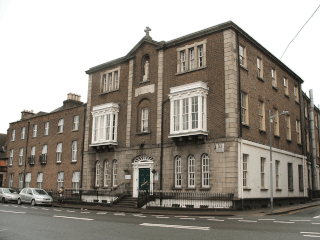
(Pictured: An Óige’s headquarters hostel, on Mountjoy Street in Dublin, closed in 2019)


Leave a comment

Death of Dúnán, First Bishop of Dublin

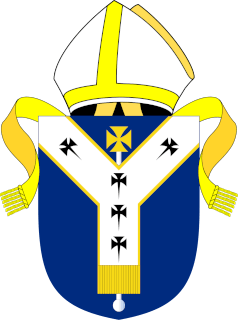
Dúnán, the first bishop of Dublin, appointed under Dublin‘s Hiberno-Norse kings, dies on May 6, 1074. He is known also as Donatus or Donat. The diocese is put on a regular basis, in 1028, at the request of Sigtrygg Silkbeard. In his obituary in the Annals of Ulster, Dúnán is described as “chief bishop of the foreigners.”

It has been traditionally said that Dúnán was consecrated by Æthelnoth, the Archbishop of Canterbury. This is now disputed, with scholars saying that his successor, Gilla Patráic, was the first to be consecrated in this way.

Dúnán is an Easterling or Östman, and the first of the line of prelates who occupy the see. James Ware, who mentions several so-called bishops of Dublin of an earlier date, is supported by the Martyrology of Donegal, but John Lanigan is of opinion that there are no sufficient grounds for so regarding them, except in the case of Siadhal or Sedulius, who appears to have been a bishop. Dúnán is, however, termed abbot of Dublin in the Annals of the Four Masters (AD 785), and from this it would seem he is only a monastic bishop. Diocesan episcopacy has not been established in Ireland in his time. Dúnán, therefore, must be regarded as the first bishop of Dublin in the modern sense of the title.

The Annals of the Four Masters term him “ardeasbog”, which Dr. John O’Donovan translates archbishop, but James Henthorn Todd points out that the correct rendering of the word is “chief or eminent bishop,” and that it includes no idea of jurisdiction. His diocese is comprised within the walls of the city, beyond which the Danish power does not extend.

The chief event of Dúnán’s life appears to be the foundation of the Cathedral of the Holy Trinity, commonly called Christ Church, or more properly its endowment and reorganisation in accordance with the views of the Danish settlers. For it appears, from an inquisition held in the reign of Richard II, that a church is “founded and endowed there by divers Irishmen whose names were unknown, time out of mind, and long before the conquest of Ireland.” This ancient site is bestowed on Dúnán by Sitric, king of the Danes of Dublin, and with it “sufficient gold and silver” for the erection of the new church, and as an endowment he grants him “the lands Bealduleek, Rechen, and Portrahern, with their villains, corn, and cattle.”

Sitric, according to the annalist Tigernach Ua Braín, had gone over the sea in 1035, probably for the sake of religious retirement, leaving his nephew as king of Dublin in his place. This is three years before Dúnán’s appointment, and as the king dies in 1042, it must be when he becomes a monk, if Tigernach is right, that he makes the grant referred to, and therefore the new foundation of Christ Church appears to have taken place between 1038 and 1042.

The site is described in the Black Book of Christ Church as “the voltæ i.e. arches founded by the Danes before the arrival of Saint Patrick in Ireland, and it is added that Saint Patrick celebrated mass in an arch or vault which has been since known by his name.” This story, as it stands, cannot be accepted as authentic history, for Saint Patrick died according to the usual belief in 490, whereas the earliest mention of Danes in Ireland is in 795. In the recent discovery made at Christ Church of a crypt hitherto unknown, some very ancient work is found, which is probably part of the buildings. If so, they may be the remains of the ecclesiastical structures originally occupied by the abbots of Dublin. The legendary connection of the place with Saint Patrick belongs to the period when, as Dr. O’Donovan observes, “the christian Danes refused to submit to the ecclesiastical jurisdiction of Armagh, and when it was found useful by the Danish party to have it believed that their ancestors had been settled in Dublin as early as the fifth century, and were converted to christianity by Saint Patrick.”

When the church is built, and the secular canons by whom it is to be served are installed, Dúnán furnishes it with a liberal supply of relics, of which a list is given in the Book of Obits of Christ Church, published by Dr. Todd. Other buildings erected by him are the church of St. Michael (now the Synod House), hard by the cathedral, and a palace for himself and his successors. He enters into a correspondence with Lanfranc on some ecclesiastical questions about which he desires information. Lanfranc’s answer is preserved, and is published by Archbishop James Ussher. It is highly probable that this deference to the Archbishop of Canterbury may have something to do with the claim put forward by the latter in a synod held in 1072, two years before Dúnán’s death, in which, on the supposed authority of Bede, he asserts his supremacy over the church of Ireland – a claim which Dúnán’s successor admits in the most explicit manner at his consecration in Canterbury Cathedral.

Dunan died on May 6, 1074, and is buried in Christ Church, at the right-hand side of the altar. There is another who also bears the alternative name of Donat (1085), but he is more generally known as Dungus.


Leave a comment

Birth of Monsignor James Horan

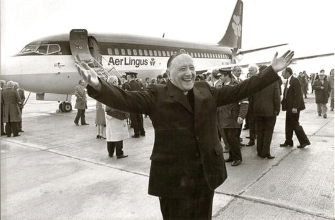
James Horan is born in Partry, County Mayo, on May 5, 1911. He is a parish priest of Knock, County Mayo. He is most widely known for his successful campaign to bring an airport to Knock, his work on Knock Basilica, and is also credited for inviting Pope John Paul II to visit Knock Shrine in 1979.

Educated at St. Jarlath’s College, Tuam, Horan trains for the priesthood in St. Patrick’s College, Maynooth. He is ordained in 1936, and his first post is in Glasgow, where he remains for three years. Having served as chaplain on an ocean liner and briefly in Ballyglunin, County Galway, he becomes curate in Tooreen, a small townland close to Ballyhaunis, County Mayo. While there, he organises the construction of a dance hall, which becomes a popular local amenity. He secures financing for the project by collecting £8,000 on a tour of American cities. After also serving in Cloonfad, County Roscommon, he is transferred to Knock in 1963, where he becomes parish priest in 1967. He is troubled by the struggles of daily life and mass emigration in the west of Ireland, and he works to improve the living standards of the local community.

While stationed at Knock, Horan oversees the building of a new church for Knock Shrine, which is dedicated in 1976. The shrine is the stated goal of Pope John Paul II’s visit in 1979. The pope travels to Knock as part of a state visit to Ireland, marking the centenary of the famous Knock apparitions. Horan works with Judy Coyne to organise the papal visit. He is responsible for the refurbishment of the church grounds, along with the construction of a huge church, with a capacity of 15,000. This newly constructed church is given the status of basilica by the pope. The day after the papal visit, Horan begins his campaign to build an international airport in Barnacuige, a small village near Charlestown, County Mayo.

Critics regard the idea of an airport on a “foggy, boggy site” in Mayo as unrealistic, but funding is approved by then Taoiseach Charles Haughey, who performs the official opening in May 1986, five years after work commenced. Although Horan had secured IR£10,000,000 in funding from Haughey, following the Fianna Fáil party’s defeat in the general election of 1982, his funding is cut, with the airport unfinished. He raises the IR£4,000,000 shortfall by holding a “Jumbo Draw.” This large lottery succeeds in raising the required revenue, but only after a painstaking tour of several countries, including Australia and the United States. This takes its toll on the ageing Horan and leads to his death shortly after the completion of the airport. The airport is originally known as Horan International Airport but is now officially referred to as Ireland West Airport Knock.

Horan dies on August 1, 1986, while on a pilgrimage to Lourdes, just a few months after the official opening of the airport. His remains are flown into Knock, the first funeral to fly into the airport he had campaigned for. He is buried in the grounds of the Knock Basilica. His life and work are chronicled in a musical written by Terry Reilly and local broadcaster Tommy Marren, entitled A Wing and a Prayer. It premières in The Royal Theatre in Castlebar, County Mayo, on November 25, 2010.


Leave a comment

Birth of Political Cartoonist Ian Knox

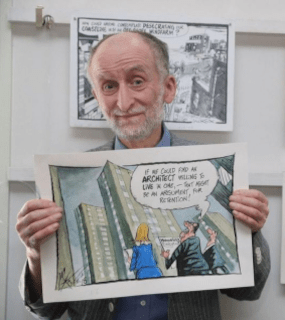
Ian Knox, political cartoonist for The Irish News, is born on May 4, 1943, in Belfast, Northern Ireland. He also draws cartoons for the BBC Northern Ireland political show Hearts and Minds.

Knox trains as an architect at Edinburgh College of Art in Scotland from 1963 to 1967 and Heriot-Watt University in Edinburgh from 1967 to 1968 and works as an architect before establishing himself as a cartoonist. He works in animation from 1970 to 1975 for Halas & Batchelor in London, Potterton Productions in Montreal, and Kotopoulis Productions in Toronto. He then joins Red Weekly and Socialist Challenge as a political cartoonist, as well as contributing to various children’s comics for IPC Media from 1975 to 1988.

Knox signs much of his political work “Blotski,” and he and Republican News cartoonist Brian Moore, better known as “Cormac,” work together as “Kormski,” drawing the anti-clerical strip “Dog Collars” for Fortnight magazine. Since 1989 he has been the editorial cartoonist for The Irish News, a nationalist newspaper based in Belfast. Since 1996 he has contributed the “As I See It” feature to Hearts and Minds on BBC2 Northern Ireland. From 1997 to 1998 he is political cartoonist for Ireland on Sunday.

Knox cites Ronald Searle, David Low, John Glashan, Victor Weisz, Steve Bell, Pat Oliphant and Charles Addams among those who have influenced him.


Leave a comment

Passage of the Constitution (Removal of Oath) Act 1933

The Constitution (Removal of Oath) Act 1933 (act no. 6 of 1933, previously bill no. 2 of 1932), an Act of the Oireachtas of the Irish Free State amending the Constitution of the Irish Free State and the Constitution of the Irish Free State (Saorstát Eireann) Act 1922, is passed on May 3, 1933. The Act removes the Oath of Allegiance required of members of the Oireachtas and of non-Oireachtas extern ministers.

The oath, pledging allegiance to the Constitution and fidelity to George V as King of Ireland, is required by the Anglo-Irish Treaty signed in 1921, and has been the symbolic focus of Irish republican opposition to the Treaty in the 1922–23 Irish Civil War. When Fianna Fáil is founded in 1926 by veterans of the losing anti-Treaty side in the Civil War, abolishing the oath is a core aim. It is a main item in the manifesto for its successful 1932 Irish general election campaign, after which it forms a minority government whose first action is to introduce the Constitution (Removal of Oath) Bill 1932. Seanad Éireann has more ex-unionists and others conciliatory towards the United Kingdom and vote to reject the bill unless the Treaty can be amended by agreement. After the 1933 Irish general election, the Fianna Fáil majority government is able to override the Seanad and enact the law.

As well as amending the Constitution, the 1933 act also amends the Constitution of the Irish Free State (Saorstát Eireann) Act 1922, which had both created the Constitution in Irish law and also prohibited any Constitutional amendment incompatible with the Treaty. Since the Free State cannot unilaterally amend the Treaty, Fianna Fáil amends the 1922 act to remove the Treaty’s precedence over the Constitution. Later constitutional amendments are also incompatible with the terms of the Treaty, in particular by weakening and ultimately abolishing the office of Governor-General of the Irish Free State. There is legal controversy over whether the Oireachtas has the power to amend the 1922 act, because it had been passed by the Third Dáil sitting as a constituent assembly before the Oireachtas had come into being. In 1935 the Judicial Committee of the Privy Council (JCPC) in London rules that, in British law, the Oireachtas does have the power, under the Statute of Westminster 1931. Irish jurisprudence takes issue with many of the assumptions underlying the 1935 decision.

The question is rendered moot with the adoption of the Constitution of Ireland in 1937 which repeals the Free State Constitution. The 1933 act is itself repealed as spent by the Statute Law Revision Act 2016.

(Pictured: Great Seal of the Irish Free State)


Leave a comment

Birth of Mathematician William McFadden Orr

William McFadden Orr, mathematician, is born May 2, 1866, at Ballystockart, Comber, County Down, in what is now Northern Ireland.

Orr is the eldest son of Fletcher Blakely Orr of Ballystockart, a unitarian farmer and millowner, and Elizabeth Orr, daughter of David Lowry, farmer, of Ballymacashin, County Down. He attends a local national school, spends two years at an intermediate school in Newtownards, and then attends Methodist College Belfast (MCB). He wins a Royal University of Ireland (RIU) scholarship in mathematics in 1883 and graduates in 1885 from Queen’s College Belfast, a constituent college of the RUI. He then matriculates at St. John’s College, Cambridge, where he is Senior Wrangler in 1888 and comes in first in part two of the Mathematical Tripos in 1889. Two years later he is elected to a fellowship at St. John’s, and the same year is appointed professor of applied mathematics at the Royal College of Science for Ireland in Dublin. When the Royal College is merged with University College Dublin (UCD) in October 1926, he becomes professor of pure and applied mathematics, a position he holds until his retirement in 1933.

Orr’s 1909 publication Notes on Thermodynamics for Students is seen as epitomising his style of teaching, with its emphasis on logical rigour and clear statement of underlying assumptions. Known for his generosity to staff and students who encounter difficulties, he is nonetheless a strict disciplinarian who abhors idleness and valued stoicism. He is elected Fellow of the Royal Society (FRS) in 1909 and is awarded an honorary degree of D.Sc. from Queen’s University Belfast (QUB) in 1919.

In 1892, Orr marries Elizabeth Campbell of Melbourne, Australia, whose father, Samuel Campbell, is from County Down. They live at 19 Pembroke Road, Dublin, and have three daughters. He dies at Douglas, Isle of Man on August 14, 1934, and is interred in Mount Jerome Cemetery, Dublin. He is survived by his two daughters.

(From: “Orr, William McFadden” contributed by Paul Rouse, Dictionary of Irish Biography, http://www.dib.ie)