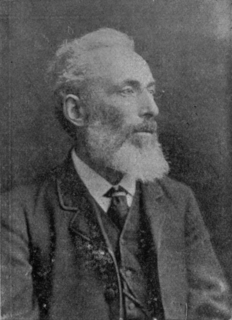
Webb is the first child and only son of the three children of Richard Davis Webb (1805-1872) and Hannah Waring Webb (1810-1862). The family runs a printing shop in Dublin and belongs to a Quaker group that supports reforms such as suffrage, the abolition of slavery and anti-imperialism. The family press prints booklets for many of these causes and, in turn, their regular customers grow to include other similar organisations, including the Irish Protestant Home Rule Association and the Ladies’ Land League, an organisation founded by Fanny and Anna Parnell in 1880 that advocates on behalf of poor tenant farmers.
Webb is interested in literature and history and begins to write A Compendium of Irish Biography. In 1865, he begins to take a more active interest in Irish politics. He is inspired by the Fenians, although he believes in non-violence and the Fenians of that time believe that Ireland can only gain independence through an armed revolution. He is first elected to the House of Commons of the United Kingdom on February 24, 1890, when he wins a by-election for the West Waterford constituency. He is again returned for West Waterford in the 1892 United Kingdom general election, this time as an anti-Parnellite MP. In December 1883, he resigns from the position of Land League treasurer, complaining of Parnell’s “autocratic management of funds.”
Webb’s family takes an interest in the welfare of British colonies and are outspoken opponents of the opium traffic into China. He is a close friend of Dadabhai Naoroji, a key member of the Indian National Congress, who is also a friend of other Irish nationalists including Michael Davitt and Frank Hugh O’Donnell. Naoroji is elected, as a member of the Liberal Party, in 1892, the year of the Liberal landslide to the Finsbury Central Westminster seat. While O’Donnell attempts to involve Naoroji in Irish politics, Webb is invited by Naoroji to preside over the Indian National Congress in 1894.
Webb is a supporter of Anti-Caste, Britain’s first anti-racism journal which fellow Quaker activist Catherine Impey founds in 1888. He is able to rally subscribers and activists for the journal around the world. For example, although he is not a regular subscriber, he and Dadabhai Naoroji co-sign a letter with others to request support for a new association, The Society for the Furtherance of Human Brotherhood.
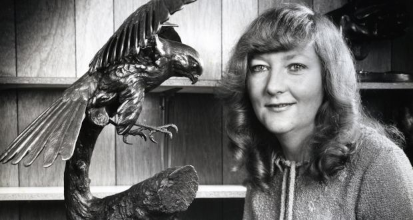
Rynhart is born Jeanne Scuffil in Dublin on March 17, 1946, to Kathleen Connolly and Frederick Scuffil, a sign writer for the Guinness Brewery. She is an apprentice to George Collie RHA for two years and then attends the National College of Art and Design, graduating in 1969 before moving to Coventry, England, where she continues her studies in fine art and sets up a studio with sculptor John Letts. She returns to Ireland in 1981, moving to Ballylickey, near Bantry in County Cork, where she establishes the Rynhart Fine Art gallery and workshop with her husband, Derek.
One of the first bronze craft studios in Ireland, the Rynhart pieces include both small figurative cold cast bronze sculptures of flower sellers, fishermen, horses, sailing boats and musical instruments as well as bronze life-size statues, smelted in a foundry. Her busts of Oscar Wilde and Jonathan Swift are in the Dublin Writers Museum and a Rynhart bust of James Joyce is in New York Public Library.
Rynhart creates the Molly Malone statue for the 1988 Dublin Millennium celebrations. The statue is controversial at the time of its unveiling due to the statue’s revealing dress. Registrar of Aosdána, Adrian Munnelly, writes to the An Bord Fáilte criticising it. The statue is defended by the Lord Mayor of DublinBen Briscoe. Rynhart herself writes in The Irish Times that the clothing and appearance are accurate for women of that era. The statue has since become one of the most popular tourist attractions in Dublin and is fondly regarded by locals.
In 1994, Rynhart’s daughter Audrey joins the business. In 2010, Audrey and her husband, Les Elliott, take over the running of the business which is now based in their studio in Glengarriff, County Cork. From then onwards, Rynhart continues to do some modelling work but has largely retired.
Rynhart dies on June 9, 2020, aged 74, in Schull Community Hospital, Cork, following a short illness. She is buried in the Abbey Cemetery, Bantry, and is survived by her husband, Derek, daughter, Audrey, son, Barry, and grandchildren, Lydia and Sophie.
Murphy’s father is Nicholas Murphy and her mother Mary Gertrude Purcell of Carrigmore, in Montenotte, Cork. She is sent away to school, to a convent in Sussex, England.
At Christmas 1915 Murphy attends an evening at the Fleischmann home where she meets Terence MacSwiney. Her family does not want the couple involved and does not approve of her growing interest in nationalism and socialism. In 1917 she marries MacSwiney in St. Joseph’s Church, Bromyard, Herefordshire, while he is interned due to his involvement in the Easter Rising of 1916. Her bridesmaid is Geraldine O’Sullivan, and his best man is Richard Mulcahy. The couple had waited until she had come of age at 25 so that she is financially independent of her parents. They have a daughter, Máire MacSwiney Brugha.
MacSwiney sees very little of her husband during their married life as he is often arrested. He dies due to his hunger strike on October 25, 1920, as Lord Mayor of Cork. Her husband’s death has a huge impact on her life, being a public event as well as a personal loss. She completes a lecture and interview tour of the United States, over nine months, with his sister Mary. She is the first woman to be given the Freedom of New York City, in 1922.
MacSwiney begins to suffer from depression and takes her daughter to Germany, leaving her there while she travels Europe. She eventually loses custody of her child and by 1934 she no longer has any involvement in her daughter’s life.
MacSwiney spends a lot of time in Paris, where she continues to be engaged with politics, typically those of left-wing, including communist, groups. She becomes involved with Pierre Kaan and they have a daughter, Alix, who is born on May 5, 1926, in Germany. Kaan is sent to a concentration camp by the Gestapo and dies on May 18, 1945, as a result of his treatment there.
MacSwiney is critical of American foreign policy on Vietnam, calling the United States a “world imperialist power.”
MacSwiney never resolves her relationships with either her own daughter or her family. She is paid a pension as the widow of Terence MacSwiney from 1950. She is living in Tonbridge in Kent with her daughter near the end of her life. She dies on October 26, 1982, at Oakwood Hospital in Barming Heath near Maidstone.
Coigly is born in August 1761 in Kilmore, County Armagh, second son of James Coigly, farmer, and Louisa Coigly (née Donnelly). In the absence of seminary education in penal Ireland, he serves an apprenticeship with a local parish priest. He is ordained to the priesthood at Dungannon, County Tyrone, in 1785 and goes on to study at the Irish College in Paris, where he takes the unprecedented step of initiating legal proceedings against his superior, John Baptist Walsh, which ends in a compromise after the intervention of the Archbishop of Paris. Coigly, who has been described as “no friend of the revolution,” leaves France in October 1789, after a narrow escape from a revolutionary mob.
Coigly returns to Ireland where he holds a curacy in Dundalk from 1793–96. He finds the inhabitants of County Armagh engaged in a civil war, and religion made the pretext – the Armagh disturbances. There is no suggestion that his religious views are not orthodox. He sees himself not as a politician, but as a priest attempting to reconcile parties. He quickly immerses himself in the politics of the region, riding through Ulster in an attempt to unite Catholic and dissenter. Yet, while he represents his efforts in 1791–93 as an isolated effort to restore peace, there is little doubt that his mission merges into the “uniting business” of Theobald Wolfe Tone, Samuel Neilson, and John Keogh. Almost certainly a Defender, he represents a key link between that organisation and the United Irishmen. He cooperates in their efforts to expose the tyranny of the Orange Order, and his profile is heightened, in late 1796, after the arrest of the Ulster leadership of the United Irishmen. He becomes particularly conspicuous in 1797 and, with a general election in the offing, possibly writes an influential anonymous pamphlet, A view of the present state of Ireland (London, 1797), attributed by Francis Plowden to Arthur O’Connor.
More significantly, Coigly makes several forays to England to forge alliances between the United Irishmen and British radicals. In 1796 he carries communications from the secret committee of England to the French directory, and makes at least two crossings to France in 1797, endeavouring to rekindle French interest in Ireland after the failure of the French expedition to Ireland in December 1796. His final mission in February 1798 ends in disaster when he is arrested at Margate, as he prepares to cross to France along with John Binns and Arthur O’Connor.
The arrests electrify government circles, since O’Connor is publicly associated with the Whig opposition. No effort is spared to secure his conviction, including the manipulation of the jury. Yet while O’Connor is acquitted, Coigly is found guilty of high treason and sentenced to die, on the slender evidence of seditious papers found in his coat pocket. The administration immediately attempts to reverse this embarrassment. Coigly is offered his life in return for the incrimination of O’Connor, and the vicar apostolic refuses him final absolution unless he obliges. His refusal seals his fate.
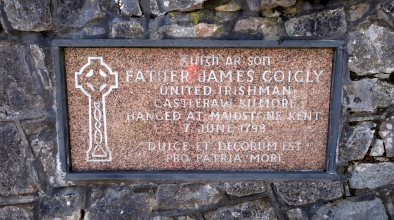
Awaiting execution, Coigly pens a propagandist narrative of his life for publication. It appears in three editions, which Benjamin Binns claims has a circulation of 40,000 copies. In it the priest condemns his judicial murder, Lord Camden, his ‘Irish Sanhedrim,’ and the Orange Order. He is executed on June 7, 1798, at Penenden Heath, Maidstone. His death is overtaken by the outbreak of the Irish Rebellion of 1798. Forgotten in the general narrative history of 1798, his social radicalism and diplomatic missions set him among the most significant Irish radicals of the 1790s.
On June 7, 1998, a memorial was unveiled to Coigly in the cemetery at St. Patrick’s Cathedral in Armagh. In the oration, Monsignor Réamonn Ó Muirí reads from a letter Coigly wrote from prison. While he assured Irish Catholics of his attachment to “the principles of our holy religion”, Coigly addressed himself to Irish Presbyterians.
(From: “Coigly (Coigley, Quigley, O’Coigley), James” by Dáire Keogh, Dictionary of Irish Biography, http://www.dib.ie)
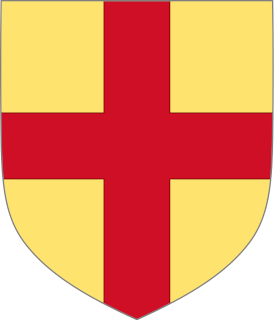
De Burgh is summoned to Parliament from December 10, 1327 to June 15, 1328 by writs addressed to Willelmo de Burgh. In 1331 he is appointed Lord Lieutenant of Ireland for a year.
In February 1332, at Greencastle, near the mouth of Lough Foyle, de Burgh has his cousin, Sir Walter Liath de Burgh, starved to death. In revenge, Sir Walter’s sister, Gylle de Burgh, wife of Sir Richard de Mandeville, plans his assassination.
On June 6, 1333, William de Burgh is killed by de Mandeville, Sir John de Logan, and others. The Annals of the Four Masters note that “William Burke, Earl of Ulster, was killed by the English of Ulster. The Englishmen who committed this deed were put to death, in divers ways, by the people of the King of England; some were hanged, others killed, and others torn asunder, in revenge of his death.”
De Burgh’s widow, Maud, flees to England, where she remarries, is again widowed in 1346, and then becomes an Augustinian canoness at Campsey Priory in Suffolk, where she is buried. Upon his death, the various factions of the de Burghs, now called Burke, began the Burke Civil War for supremacy.
The Scots Covenanters land an army in Ulster in 1642 to protect the Scottish settlers there from the massacres that follow the Irish Rebellion of 1641. They land at Carrickfergus and link up with Sir Robert Stewart and the Laggan Army of Protestant settlers from County Donegal in northwest Ulster. The Covenanters clear northeastern Ulster of Irish rebels by 1643 but are unable to advance south of mid-Ulster, which is held by Owen Roe O’Neill, the general of the Irish Confederate Ulster army.
In 1646, Monro leads a force composed of Scottish Covenanter regiments and Ulster settlers’ armies into Confederate-held territory. According to some accounts, this is the first step in a drive to take the Confederates’ capital at Kilkenny. Other sources say it is only a major raid. The combined force is about 6,000 strong. Monro has ten regiments of infantry, of whom six are Scottish and four are English or Anglo-Irish, and 600 Ulster Protestant cavalry. Stewart and the Laggan Army are slated to join Monro’s force in the attack, however, on the day of the battle the Laggan Army is in Clogher, nearly 30 kilometres away. O’Neill, who is a very cautious general, had previously avoided fighting pitched battles. However, he has just been supplied by the Papal Nuncio to Ireland, Giovanni Battista Rinuccini, with muskets, ammunition and money with which to pay his soldiers’ wages. This allows him to put over 5,000 men into the field, an army slightly smaller than his enemy’s. The Covenanters have six cannons, whereas the Confederates have none.
Monro assumes that O’Neill will try to avoid his army and has his soldiers march 24 kilometres to intercept the Irish force at Benburb, in modern south County Tyrone. Gerard Hayes-McCoy writes, “many of them must have been close to exhaustion before the battle began.” Monro’s men draw up with their backs to the River Blackwater, facing O’Neill’s troops who are positioned on a rise.
The battle begins with Monro’s artillery firing on the Irish position, but without causing many casualties. Monro’s cavalry then charges the Irish infantry but are unable to break the Confederates’ pike and musket formation. When this attack fails, O’Neill orders his infantry to advance, pushing the Monro’s forces back into a loop of the river by the push of pike. It is noted that the Irish pikes have longer shafts and narrower heads than those of their opponents, meaning that they outreach them and are “better to pierce.” At this point, the fatigue of Monro’s troops is apparent as they are gradually pushed back until their formation collapses in on itself. The Confederate infantry then breaks Monro’s disordered formation with a musket volley at point-blank range and falls in amongst them with swords and scians (Irish long knives). Monro and his cavalry flee the scene, as, shortly after, does his infantry. A great many of them are cut down or drowned in the ensuing pursuit. Monro’s losses are estimated to be between 2,000 and 3,000 men, killed or wounded. The Irish casualties are estimated to be 300.
O’Neill’s victory means that the Covenanters are no longer a threat to the Confederates, but they remain encamped around Carrickfergus for the rest of the war. O’Neill does not follow up his victory but takes his army south to intervene in the politics of the Irish Confederation. In particular, he wants to make sure that the treaty the Supreme Council of the Confederates has signed with the English Royalists will not be ratified.
Treacy is known as a tenacious runner who does not have an especially sharp final kick in track races. In the 1978 European Athletics Championships in Prague, he places 11th in the fast 10,000-metre race and fourth in the slow and tactical 5,000-metre race, losing to Italy‘s Venanzio Ortis by just three tenths of a second. In the 5,000-metre final, he lingers behind Great Britain‘s Nick Rose on the final back straight just after Rose drops from the lead group.
In the 1980 Summer Olympics in Moscow, Treacy collapses in his 10,000-metre heat with only 200 metres left, a victim of heat paralysis and dehydration. Because he was running in fourth place when he collapses and because only the top four runners qualify directly for the final from the three heats, his collapse allows Finnish four-time Olympic champion Lasse Virén, who had been trailing him, to qualify directly for the final. Having recovered from his heat-induced collapse, Treacy places seventh in the 5,000-metre final of those Olympics.
In the 1984 Summer Olympics in Los Angeles, California, Treacy places ninth in the 10,000-metre final before crowning his athletics career with a silver medal in the men’s marathon. Winner Carlos Lopes of Portugal is largely unchallenged for much of the race, with Treacy down the field until entering the top six around the 20-kilometre mark. He continues to work his way up the rankings until entering Los Angeles Memorial Coliseum just behind second-place English athlete Charlie Spedding. He overtakes Spedding with 150m to go, during which the Irish television commentary of Jimmy Magee lists the previous Irish Olympic medal winners up to that time, before culminating, “And for the 13th time, an Olympic medal goes to John Treacy from Villierstown in Waterford, the little man with the big heart.” His silver medal places Ireland 33rd on the medals table.
After the Los Angeles Olympics, Treacy runs competitively until 1995, retiring following a road race held in his honour in Waterford, attended by the other two medalists from the 1984 Olympic marathon, Carlos Lopes and Charlie Spedding. While he does not win any more major international championships medals, he does win the 1992 Los Angeles Marathon. At the 1986 European Athletics Championships in Stuttgart, he places sixth in the 10,000-metre race. In the 1987 World Championships in Athletics in Rome, he places twenty-sixth in the 10,000-metre race and thirteenth in the 5,000-metre final. He fails to finish the marathon at the 1988 Summer Olympics in Seoul and places 51st in his final Olympic games, the 1992 Summer Olympics in Barcelona in 1992. He wins the 1993 Dublin Marathon.
Treacy is currently chief executive of Sport Ireland, a statutory authority that oversees, and partly funds, the development of sport within Ireland . He is married to Fionnuala and they have four children: Caoimhe, Deirdre, Sean, and Conor.
Lynch returns to Ireland in 1909, where he starts training as a teacher in St Patrick’s College, Dublin. He graduates in 1911 as a primary school teacher. In April 1912 he begins working as a national schoolteacher at St. Michan’s School, Dublin, becomes an active member of the Keating branch of the Gaelic League, and is recruited into the Irish Republican Brotherhood (IRB) by Seán Mac Diarmada. He also joins the Irish Volunteers in 1913, and becomes captain of F Company, 1st Battalion, Dublin Brigade. With Piaras Béaslaí he founds Na hAisteoirí, a drama company dedicated to the production of plays in Irish, with many of its members fighting during the 1916 Easter Rising. In the months before the rising Lynch temporarily stands down from the Volunteers after his school manager tells him he will be sacked if he does not. Learning that a rising was imminent, he rejoins the Volunteers, and over the Easter weekend commands the detachment that guards Bulmer Hobson to prevent him from interfering with Volunteer mobilisation. During the rising he is involved in heavy fighting in the North King Street area and is subsequently imprisoned.
Held at Lewes Prison, Lynch is released under the general amnesty. In August 1916 he is reimprisoned for making an inflammatory speech, and in September leads the Mountjoy Prisonhunger strike with Austin Stack and Thomas Ashe. He is released in November following a further hunger strike at Dundalk prison. He is imprisoned again in May 1918 on the same charge during the ‘German Plot’ allegations and is released in August 1919, after which he helps to plan the escape of other prisoners.
Elected a Sinn FéinTD for South Kerry in December 1918 and for Kerry–Limerick West in May 1921, Lynch serves as assistant secretary to the Anglo-Irish Treaty delegation in London (October–December 1921), where he is largely responsible for organising the living arrangements at the two Irish headquarters. A supporter of the treaty, he addresses Pro-Treaty rallies with Michael Collins, and from January to August 1922 is Minister for Education with the Provisional Government, at the same time as Michael Hayes is Minister for Education for Dáil Éireann. Possible conflict is avoided by the pragmatic division of duties, under which Hayes takes responsibility for intermediate and higher education, and Lynch for primary education. It is also left for Lynch to clarify the relationship between the new Provisional Government and the board of commissioners of intermediate education, which is not abolished until 1923. These developments, however, are overshadowed by the beginning of the Irish Civil War, where military considerations take precedence over civic responsibilities.
Required to serve in the army, in July 1922 Lynch is appointed a vice-commandant of the south-western division with the rank of commandant-general, commanding a unit of Dublin soldiers in County Kerry, where on occasion he has to endure being ambushed, leading a fellow commandant to note ironically that his constituents do not seem to think much of him. However, the reluctance of former colleagues to attack him possibly ensure his survival during the war. Frank Henderson of Dublin’s No. 1 brigade of the Irish Republican Army (IRA) tells Ernie O’Malley of his reluctance to become involved in reprisal shootings after Free State executions, commenting, “I didn’t like that order. I could have shot Eamonn Duggan and Fionán Lynch, for they went home every night drunk, but I left them alone.”
After the Irish Civil War Lynch is elected a Cumann na nGaedheal TD for Kerry, a seat he holds until 1937, after which he represents the constituency of Kerry South (1937–44). He serves as Minister for Fisheries (1922–28) and Minister for Lands and Fisheries (1928–32) and retains his interest in education. He supports the Irish National Teachers‘ Organisation policy on the Irish language during the 1920s, commenting that he is entirely opposed to attempting to teach subjects through Irish where Irish is not the known language.
In 1931 Lynch qualifies as a barrister. After Fianna Fáil comes to power and during the rise of the Blueshirts he speaks at public meetings with Eoin O’Duffy, and they are attacked by a crowd in Tralee in October 1933. After the fall of O’Duffy and the reorganisation of Fine Gael, W. T. Cosgrave appoints a front bench designed to represent the various groups in the party, which witness former ministers, including Desmond FitzGerald, Patrick Hogan, and Lynch, relegated to the back benches. Lynch serves as Leas-Cheann Comhairle of the Dáil (1938–39). Having built up a legal practice, he retires from politics in October 1944 and is subsequently appointed a circuit court judge in the north-west district, retiring from the bench in 1959.
Lynch dies suddenly at his home in Dartry, County Dublin, on June 3, 1966, shortly after celebrating the 50th anniversary of the Easter Rising. He is survived by his wife Brighid (née Slattery), a native of Tralee, and by their five sons and one daughter. His papers are on permanent loan to Kerry County Library archives.
(From: “Lynch, Fionán (Finian)” by Diarmaid Ferriter, Dictionary of Irish Biography, http://www.dib.ie)
Butler is born in Cambrai, France, the youngest daughter of Walter Butler, 16th Earl of Ormonde, of Garryricken, County Tipperary, and his wife, Ellen (née Morres), of Latargh, County Tipperary. Her family are members of the old Catholic gentry, and her father is the sole lineal representative of James Butler, 2nd Duke of Ormonde. In 1740 her family returns to the Garryricken estate, where she spends part of her childhood. She is educated by the English Benedictine nuns of the convent of Our Lady of Consolation in Cambrai, where her Jacobite grand-aunt is a pensioner. Reared in the liberal and anti-clerical environment at Cambrai, she is open about her opposition to Irish Catholicism. She is also well read in literature.
By the time Butler returns to Ireland, her brother John has claimed the family titles and is recognised as 17th Earl of Ormonde. Though he never uses the title, his sisters are recognised as the daughters of an earl. As the family is impoverished, and she is not disposed to marriage, a decade is passed in unhappiness. Then in 1768 the thirteen-year-old Sarah Ponsonby arrives in Kilkenny to attend a local school. Following her visit to the Butler home at Kilkenny Castle, and despite the difference in age, the two form an immediate friendship and correspond secretly, having discovered their mutual interest in the arts and Jean-Jacques Rousseau‘s ideal of pastoral retirement.
Ponsonby, on finishing school, is sent to live with relatives at the nearby Woodstock Estate, and there is subject to the uninvited attention of a middle-aged guardian. Butler is discontented with her life and the prospects of her family’s wish to send her back to Cambrai, so the two plan to leave their difficulties behind and settle in England. In their first attempt to flee in March 1778, they leave for Waterford disguised as men and wielding pistols, but their families manage to catch up with them. Butler is then sent to the home of her brother-in-law Thomas ‘Monarch’ Kavanagh of Borris, County Carlow, but makes a second, successful attempt and runs away to find Ponsonby at the Woodstock Estate. Her persistence wins out when both families finally capitulate and accept their plans to live together.
The two set out for Wales in May 1778 and, after an extensive tour of Wales and Shropshire, eventually settle in Llangollen Vale, where they rent a cottage which is renamed Plas Newydd. They are accompanied by Mary Carryl, a former servant of the Woodstock household, who remains in their service until her death in 1809. Having made a deliberate decision to retire from the world, they spend the greater part of their days corresponding with friends, reading, building up a large library and making alterations to Plas Newydd, which takes on a fashionable Gothic look. Their garden, landscaped under their direction, becomes a popular attraction for visitors. Butler meticulously records their daily routine in a series of journals, some of which are now lost.
Their seclusion, eccentricities, semi-masculine dress and short-cropped powdered hair gain them notoriety, and it becomes fashionable to call on them. Their numerous and illustrious visitors include Hester Lynch Piozzi, Charles and Erasmus Darwin, Sir Walter Scott, Sir Arthur Wellesley, the Duke of Gloucester and Josiah Wedgwood. In 1792 they entertain Pamela Sims, later that year to become the wife of Lord Edward FitzGerald, and her mother Madame de Genlis. Following the arrest of Edward FitzGerald in 1798, Pamela and her suite flee to London and on May 27 pass through Llangollen, where the events in Dublin are already known. On hearing that Pamela FitzGerald is staying in the local inn, Butler and Ponsonby invite her to call in. However, when Pamela wishes to stay for the day, their apprehension of Jacobinism leads them to persuade her “principally for her own sake and a little for [our] own to proceed as fast and as incognito as possible for London.”
Both Anna Seward and William Wordsworth, who stay at Plas Newydd, write poems celebrating their friendship, and Lord Byron sends them a copy of The corsair. Owing to her support of the Bourbons, Butler is sent the Croix St. Louis, which she wears about her neck. Their celebrity does have its drawbacks: an article in the General Evening Post of July 24, 1790, entitled ‘Extraordinary female affection’, suggests indirectly that their relationship is unnatural. Butler is particularly angered by this publicity and appeals to Edmund Burke for legal advice. Their retirement is also continually dogged by financial difficulties. They live mainly off their respective allowances and Butler’s royal pension, granted through the influence of Lady Frances Douglas, but spend beyond their means and are often in debt. To add to their problems, Butler receives no mention in her father’s will. However, the Gothic eccentricities of their cottage, which they succeed over time in purchasing, and garden attract even the interest of Queen Charlotte.
Though it is claimed that neither woman spent a night away from Plas Newydd, in January 1786 they stay with their friends the Barretts of Oswestry, and that September they visit Sir Henry Bridgeman of Weston Park, near Staffordshire. In June 1797 they take their only holiday, at the coastal resort of Barmouth. Despite their isolation they are well informed about international events and society gossip. The Irish serjeant-at-law Charles Kendal Bushe recalls how they gave him all the news of Dublin, London, Cheltenham, and Paris. In later years Butler’s eyesight deteriorates, preventing her from keeping her journal. She is secretly painted as an old woman with Ponsonby by Lady Mary Leighton and sketched by Lady Henrietta Delamere. A distinctive, anonymous silhouette shows the two generously proportioned women in traditional riding habits (National Portrait Gallery, London).
Butler dies on June 2, 1829, and is buried alongside Mary Carryl at St. Collen’s Church in Llangollen. Sarah Ponsonby is subsequently buried with them.
(From: “Butler, Lady (Charlotte) Eleanor” by Frances Clarke, Dictionary of Irish Biography, http://www.dib.ie)
On June 1, 1866, a group of Fenian soldiers cross the border from the United States into Canadian territory. The events of the so-called Fenian invasion of Canada leave the organisation utterly discredited and cause much dismay among Irish American communities.
The roots of the invasion go back to 1865 when the Fenians in the United States break into two factions, one headed by William Roberts and the other by John O’Mahony, a founding member of the Fenian Brotherhood in the United States. It is the Roberts wing which proposes a Fenian invasion of Canada. A number of facts are put forward by Roberts and others in support of this plan. In 1865 there are tens of thousands of battle-hardened Irish veterans of the American Civil War, as well as many officers from both the Union and Confederate armies. It is initially proposed to utilise these soldiers for an incursion into Canada that would be timed to coincide with a revolution in Ireland, thus causing Great Britain to be engaged in two widely separated theatres of war.
When it becomes apparent that the hoped-for rising in Ireland is not going to take place, the goal of the invasion is changed. The Fenians now hope that they can engineer a border incident that will entangle British forces in a war with the United States.
At the time the U.S. Government has a fractious relationship with their British counterparts, a remnant of the British Empire‘s partiality towards the Confederacy during the American Civil War. During the war the British Government comes close to granting diplomatic recognition to the Confederacy and British shipyards provide raiding vessels such as the notorious USS Alabama to the South. While this ill-feeling is unlikely to lead to full-scale conflict, the U.S. Government is in no mood to provide any aid to the British in Canada. PresidentAndrew Johnson is aware of the Fenian’s plans but does little to hinder them.
The two competing Fenian factions launch separate operations. In April 1866, the O’Mahony wing attempts to seize Campobello Island near New Brunswick but the Fenian attackers are easily dispersed by U.S. naval forces. The Roberts wing launches its attack on Canada under the command of a civil war veteran, General John Charles O’Neill, on June 1, 1866.
General O’Neill leads a force of over one thousand men into Canadian territory near Fort Erie, Ontario. His invading army has some initial success, winning two engagements including the so-called Battle of Ridgeway with around ten fatalities (with a similar number on the Canadian side). O’Neill’s troops keep their discipline and local civilians are respected, as are Canadian prisoners of war. One soldier, Lance Corporal William Ellis, later writes, “the Fenians treatment of myself and the other prisoners was kind and considerate in the extreme.”
Yet, O’Neill is aware that far larger Canadian forces are approaching and on June 3 feels it prudent to take his army back to American territory, while they await reinforcements. However, the U.S. government is now fearful that events are spiralling out of control. Once back across the border, O’Neill’s army is met by American troops who intervene to prevent the Fenians from making any further attacks. Over the following days the Fenian army is broken up by American forces. O’Neill is arrested by U.S. Marshals and temporarily incarcerated. A second, smaller, incursion into Canada follows on June 6 but this, too, makes little headway. This second Fenian army is also broken up by U.S. forces when back on American soil. By June 8 the Fenian invasion of Canada is over.
The whole invasion demonstrates the futility of the Fenian strategy. It proves that the Canadians would fight to preserve their territory and that they could mobilise thousands of their population to do so. There is little hope that the Fenians could muster the required number of troops necessary to seize and then to hold Canadian territory. Most importantly, there could be no doubt now that the U.S. Government would not, despite its tempestuous relationship with the British Empire, offer any support to a Fenian invasion. Nor would the U.S. Government allow itself to be embroiled in a border war with British or Canadian forces. Nevertheless, these lessons are ignored by some Fenians for whom the idea of attacking Canada is a worthwhile objective over the following few years.
In 1870 another convention takes place amid more internal wrangling within the Brotherhood. There, a decision is made to launch a new attack on Canada. Once again John O’Neill commands the Fenians, among whose army is John Boyle O’Reilly, a young journalist. O’Reilly makes detailed reports on the invasion, an event that proves disastrous for Fenianism in the United States.





 seamus dubhghaill