seamus dubhghaill

Promoting Irish Culture and History from Little Rock, Arkansas, USA


Leave a comment

Death of Mark Fulton, Loyalist & Loyalist Volunteer Force Leader

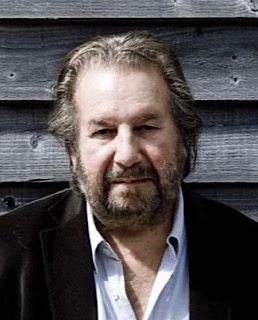
Mark Fulton, a Northern Irish loyalist and leader of the Loyalist Volunteer Force (LVF), is found hanged in his cell at Maghaberry Prison on June 10, 2002, an apparent suicide, while awaiting trial on charges of conspiracy to murder a man from a rival loyalist paramilitary organisation.

Fulton is born in PortadownCounty Armagh in 1961, one of the children of Jim Fulton, a former British soldier who works as a window cleaner. His mother, Sylvia (née Prentice), comes from a family of wealthy car dealers. He grows up in the working class Protestant Killycomain area.

Following the outbreak of the Troubles in the late 1960s, Fulton’s father becomes a member of the Ulster Defence Association (UDA). According to journalist Susan McKay, senior Ulster Volunteer Force (UVF) members Robin “the Jackal” Jackson and Harris Boyle are frequent visitors to the Fulton home in the early 1970s. Jackson, one of the alleged leaders of the gang which carried out the 1974 Dublin car bombings, becomes the commander of the UVF’s Mid-Ulster Brigade in July 1975. Four days later, Boyle is blown up after placing a bomb on the Miami Showband’s minibus after the band is stopped at a bogus checkpoint by UVF gunmen, and three band members shot dead.

Fulton leaves school early and promptly joins the Mid-Ulster UVF, being sworn in at the age of 15. His early activity includes being part of the UVF gang that opens fire on a Craigavon mobile sweetshop on March 28, 1991, killing two teenaged girls and one man, all Catholics. The attack is allegedly planned by Robin Jackson.

In the early 1990s, Billy Wright, also from Portadown, takes over command of the UVF Mid-Ulster Brigade from Jackson. The Mid-Ulster Brigade, founded in 1972 by its first commander, Billy Hanna, operates mainly in the Lurgan and Portadown areas. Fulton soon becomes Wright’s closest associate and right-hand man and has an “extreme fixation and obsession over Wright.” He even has an image of Wright tattooed over his heart.

Fulton is alleged to have perpetrated twelve sectarian killings in the 1990s, and reportedly is implicated in many other attacks. His victims are often questioned about their religion prior to their killings, and sometimes they are killed in front of their families. He is very violent and has a quick temper. Wright is the only person who is able to control him. A Royal Ulster Constabulary (RUC) detective who knows both of them says that whenever they are stopped by the police in the 1990s, Wright is “coolness personified,” while Fulton rage’s, shouts and makes threats.

Although he is brought up in the Church of Ireland religion, Fulton is a follower of the Reverend Ian Paisley, founder and moderator of the Free Presbyterian Church of Ulster. In appearance he is heavily tattooed and is known for his habit of always wearing a waistcoat.

The Mid-Ulster Brigade calls themselves the “Brat Pack,” which journalist Martin O’Hagan of the Sunday World altered to “Rat Pack.” After the nickname of “King Rat” is given to Wright by local Ulster Defence Association commander Robert John Kerr as a form of pub bantering, O’Hagan takes to describing Wright by that term. This soubriquet is thereafter used by the media, much to Wright’s fury. This leads him to issue threats against O’Hagan and all journalists who work for the newspaper. The unit initially welcomes the Combined Loyalist Military Command ceasefire in October 1994; however, things change drastically over the next few years.

Following the order given in August 1996 by the UVF’s Brigade Staff (Belfast leadership) for Wright and the Portadown unit of the Mid-Ulster Brigade to stand down, Fulton remains loyal to Wright and defies the order. This comes after the Mid-Ulster UVF’s killing of a Catholic taxi driver, Michael McGoldrick, while the UVF are on ceasefire. After Wright defies a UVF order to leave Northern Ireland, he forms the breakaway Loyalist Volunteer Force, taking the members of the officially-disbanded Portadown unit with him, including Fulton.

Fulton, as Wright’s deputy, assumes effective control of the LVF when Wright is sent to the Maze Prison in March 1997. When Wright is shot dead by the Irish National Liberation Army (INLA) in December 1997, in a prison van while being taken to the Maze’s visitor block, Fulton assumes control of the LVF. He is deeply affected by Wright’s death, and reportedly spends many nights alone by his grave. In May 1998, the LVF calls a ceasefire. It is accepted by the Northern Ireland Office six months later.

Fulton is arrested in 1998 after shooting at an off-duty soldier in Portadown. He is heavily intoxicated at the time and sentenced to four years imprisonment. While he is out on compassionate leave in early 1999, he allegedly organises the killing of Catholic lawyer Rosemary Nelson. During the Drumcree standoff, Nelson had represented the Catholic Portadown residents who opposed the Orange Order‘s march through the predominantly nationalist Garvaghy area. She is blown up by a car bomb on March 15, 1999, outside her home in Lurgan. The bomb is allegedly made by a man from the Belfast UDA but planted by Fulton’s associates acting on his orders.

Colin Port, the Deputy Chief Constable of  Norfolk Constabulary who heads the investigation into Nelson’s death, says “without question” Fulton is the person who had masterminded her killing. Although he is back in prison at the time, he is excited when he hears the news of her death on the radio. He is linked to the killing by police informers but not forensics. It is also revealed that prior to his own death, Wright had threatened to kill Nelson in the belief she had defended Irish Republican Army (IRA) volunteers. Fulton is released from prison in April 2001.

On June 10, 2002, Fulton, who has been held on remand in HM Prison Maghaberry since December 2001, is found dead in his prison cell with a leather belt around his neck. He is found on his bed rather than hanging from the ceiling, leading to speculation that his death had been accidentally caused by autoerotic asphyxiation. Friends claim he had expressed suicidal thoughts due to both his failure to recover from his close friend Wright’s death, as well as his fears that he was suffering from stomach cancer. Some reports suggest his unstable mental state had seen him stand down as leader several weeks before his death, with the LVF’s power base transferred to Belfast. He was also afraid that rival loyalist inmates wished to kill him inside the prison.

At the time of his death, Fulton is awaiting trial, having been charged with conspiracy to murder Rodney Jennett, a member of a rival loyalist paramilitary organisation, in connection with an ongoing feud. He leaves behind his wife, Louise and two children, Lee and Alana. His funeral is attended by 500 mourners, including a number of senior loyalist paramilitaries, including Johnny Adair and John White, who act as pallbearers alongside Fulton’s brother Jim and son, Lee. After a service at St. Columba’s Parish Church, he is interred in Kernan Cemetery in Portadown.

Leave a comment

Death of Columba, Founder of the Monastery of Iona

Columba (or Colum Cille), Irish abbot and missionary evangelist credited with spreading Christianity in what is today Scotland at the start of the Hiberno-Scottish mission., dies on June 9, 597.

He is born into the Cenél Conaill, a branch of the Northern Uí Néill, then Ireland’s most powerful dynasty. His place of birth is reputedly Gartan in modern day County Donegal, though there is no contemporary evidence for this.

His is the son of Fedlimid, who is said to be a great-grandson of Niall Nóigiallach, and his wife Eithne. The Irish form of his name, Colum Cille, has been taken to mean ‘Dove of the Church’. He is fostered and baptised by a priest named Cruithnechán, who lives near his birthplace. It is reputed that he undergoes schooling in bardic studies. His biographer, Adomnán (c. 624–704), states that he receives monastic training under a bishop whom he names variously as Findbarr or Finnio, who can most likely be identified as Finnian of Movilla. Otherwise little is known of his early life.

Adomnán states that Columba leaves Ireland in his forty-second year. Later tradition records that his departure is an act of penitence for instigating the battle of Cúl Dreimhne in 561, supposedly because he surreptitiously copies a Psalter lent to him by his former master, Finnian. Adomnán simply states, however, that he leaves Ireland to become a “pilgrim for Christ.” He probably also wishes to sever himself from the secular concerns arising from his family connections. Whatever the reason, he remains in Scotland for the rest of his life, returning to Ireland only on a few occasions.

His choice of Iona, an island off the Ross of Mull on the western coast of Scotland, as a monastic refuge is influenced by the contacts that his family has with the kingdom of Dál Riata and its rulers. Certainly it is under Dál Riata patronage that he subsequently founds the island monasteries of Campus Lunge (on Tiree) and Hinba, which more recent opinion takes to have been the island of Colonsay. He also founds churches in Inverness, probably following on his meeting with and likely conversion of Bridei I, king of the Picts. All of Iona’s foundations, on both sides of the Irish Sea, are under the headship of the abbot of the mother-house, and many of the abbots of the most important houses of the paruchia of Iona are of Columba’s kin-group. Although many foundations elsewhere in Scotland and in Northumbria are later attributed to him, it is doubtful whether Iona evangelises outside of Ireland, Dál Riata and Pictland. Yet there can be no doubt of his political influence. He “ordains” Áedán king of Dál Riata, and his influence and connections enable him to strengthen the alliance between the Uí Néill and Dál Riata.

One of the few, if not the only, times he leaves Scotland is toward the end of his life, when he returns to Ireland to found the monastery at Durrow.

According to traditional sources, Columba dies in Iona on Sunday, June 9, 597, and is buried by his monks in the abbey he created. However, Dr. Daniel P. McCarthy disputes this and assigns a date of 593 to Columba’s death. The Annals record the first raid made upon Iona in 795, with further raids occurring in 802, 806 and 825. Columba’s relics are finally removed in 849 and divided between Scotland and Ireland.

Colmcille is one of the three patron saints of Ireland, after Patrick and Brigid of Kildare. He is the patron saint of the city of Derry, where he founded a monastic settlement in c. 540. The Catholic Church of Saint Colmcille’s Long Tower, and the Church of Ireland St. Augustine’s Church both claim to stand at the spot of this original settlement. The Church of Ireland Cathedral, St. Columb’s Cathedral, and the largest park in the city, St. Columb’s Park, are named in his honour. The Catholic Boys’ Grammar School, St. Columb’s College, has him as Patron and namesake.

St. Columba’s National School in Drumcondra is a girls’ school named after the saint.

St. Colmcille’s Primary School and St. Colmcille’s Community School are two schools in Knocklyon, Dublin, named after him, with the former having an annual day dedicated to the saint on June 9.

The town of Swords, Dublin is reputedly founded by Colmcille in 560 AD. St. Colmcille’s Boys’ National School and St. Colmcille’s Girls’ National School, both located in the town of Swords, are also named after the Saint as is one of the local Gaelic teams, Naomh Colmcille.

The Columba Press, a religious and spiritual book company based in Dublin, is named after Colmcille.

Aer Lingus, Ireland’s national flag carrier has named one of its Airbus A330 aircraft in commemoration of the saint (reg: EI-DUO).

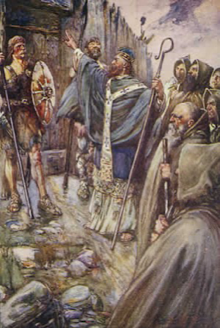
(Pictured: Columba banging on the gate of Bridei, son of Maelchon, King of Fortriu)


Leave a comment

John Mitchel Escapes from Van Diemen’s Land

John Mitchel, Irish nationalist writer and political journalist, escapes from Van Diemen’s Land (modern-day Tasmania, Australia) on June 8, 1853, with the assistance of Patrick James (“Nicaragua”) Smyth, an agent of the New York Irish Directory.

Mitchel is born in Camnish, near Dungiven, County Derry on November 3, 1815, the son of a Presbyterian minister. At the age of four, he is sent to a classical school, run by an old minister named Moor, nicknamed “Gospel Moor” by the students. He reads books from a very early age. When a little over five years old, he is introduced to Latin grammar by his teacher and makes quick progress. In 1830, not yet 15 years old, he enters Trinity College, Dublin (TCD) and obtains a law degree in 1834.

In the spring of 1836, Mitchel meets Jane Verner, the only daughter of Captain James Verner. Though both families are opposed to the relationship, they become engaged in the autumn and are married on February 3, 1837, by the Rev. David Babington in Drumcree Church, the parish church of Drumcree.

Mitchel works in a law office in Banbridge, County Down, where he eventually comes into conflict with the local Orange Order. He meets Thomas Davis and Charles Gavan Duffy during visits to Dublin. He joins the Young Ireland movement and begins to write for The Nation. Deeply affected by the misery and death caused by the Great Famine, he becomes convinced that nothing will ever come of the constitutional efforts to gain Irish freedom. He then forms his own paper, United Irishman, to advocate passive resistance by Ireland’s starving masses.

In May 1848, the British tire of Mitchel’s open defiance. Ever the legal innovators in Ireland, they invent a crime especially for the Young Irelanders – felony-treason. They arrest him for violating this new law and close down his paper. A rigged jury convicts him, and he is deported first to Bermuda and then to Australia. However, on June 8, 1853, he escapes to the United States.

Mitchel works as a journalist in New York City and then moves to the South. When the American Civil War erupts, he is a strong supporter of the Southern cause, seeing parallels with the position of the Irish. His family fully backs his commitment to the Southern cause. He loses two sons in the war, one at the Battle of Gettysburg in 1863 and another at the Battle of Fort Sumter in 1864, and another son loses an arm. His outspoken support of the Confederacy causes him to be jailed for a time at Fort Monroe, where one of his fellow prisoners is Confederate President Jefferson Davis.

In 1874, the British allow Mitchel to return to Ireland and in 1875 he is elected in a by-election to be a member of the Parliament of the United Kingdom representing the Tipperary constituency. However, his election is invalidated on the grounds that he is a convicted felon. He contests the seat again in the resulting by-election and is again elected, this time with an increased vote.

Unfortunately, Mitchel, one of the staunchest enemies to English rule of Ireland in history, dies in Newry on March 20, 1875, and is buried there. Thirty-eight years later, his grandson, John Purroy Mitchel, is elected Mayor of New York City.


Leave a comment

Birth of Frank Duff, Lay Catholic & Author

Francis Michael Duff, Irish authorlay Catholic and founder of the Legion of Mary, known for bringing attention to the role of the Catholic laity during the Second Vatican Council of the Roman Catholic Church, is born at 97 Phibsboro Road, Dublin, on June 7, 1889.

Duff is the eldest of seven children of John Duff, a civil servant with the local government board, and his wife, Susan Letitia (née Freehill), a civil servant with the post office. The wealthy family lives in the city at St. Patrick’s Road, Drumcondra. He attends Blackrock College.

In 1908, Duff enters the Civil Service and is assigned to the Irish Land Commission. In 1913, he joins the Society of Saint Vincent de Paul and is exposed to the real poverty of Dublin. Many who live in tenement squalor are forced to attend soup kitchens for sustenance, and abject poverty, alcoholism, street gangs, and organized prostitution are rife in parts of Dublin. He joins and soon rises through the ranks to become President of the Saint Patrick’s Conference at Saint Nicholas of Myra Parish. Having concern for people he sees as materially and spiritually deprived, he has the idea to picket Protestant soup kitchens as he considers they are giving aid in the form of food and free accommodation at hostels, in return for not attending Catholic services. He sets up rival Catholic soup kitchens and, with his friend, Sergeant Major Joe Gabbett, who has already been working at discouraging Catholics from patronizing Protestant soup kitchens. They succeed in closing down two of them over the years.

In 1916, Duff publishes his first pamphlet, Can we be Saints?, where he expresses the conviction that all are called to be saints without exception, and that through Christian faith, all have the means necessary.

In 1918, a friend gifts Duff a copy of the book True Devotion to Mary by the seventeenth-century French cleric Louis de Montfort, which influences his views on Mary. He is additionally influenced by the writings of John Henry Newman.

Duff briefly acts as private secretary to Michael Collins, then-Chairman of the Provisional Government and commander-in-chief of the National Army. In 1924, he is transferred to the Department of Finance.

On September 7, 1921, along with Fr. Michael Toher and fifteen predominantly young women, he is present at the first meeting of the association which he would forge as the Legion of Mary. He models the Legion on the Roman legions, naming the local unit the “praesidium,” and he immerses himself in the apostolic work which dominates the rest of his life.

In 1922, Duff establishes the Sancta Maria hostel in Dublin as a refuge for prostitutes, and is the driving force behind the closure of “Monto,” Dublin’s notorious red-light district. In 1927, he establishes the Morning Star hostel for homeless men in Dublin, and in 1930 the Regina Coeli hostel for homeless women, which provides special units for unmarried mothers and their children at a time when neither church nor state favour helping unmarried women to keep their children.

While Duff enjoys the support of W. T. Cosgrave, Ireland’s head of government, and in May 1931 is granted an audience with Pope Pius XI, his efforts are opposed internally in the Dublin diocese. In the 1930s and 1940s, he creates the Mercier Society, a study group designed to bring together Catholics and Protestants, as well as the Pillar of Fire, a group designed to promote dialogue between Irish Catholics with Ireland’s Jewish community.

Duff retires from the Civil Service in 1934 to devote all of his time to the Legion of Mary. For the rest of his life, with the help of many others, he guides the Legion’s worldwide extension.

In 1965, Pope Paul VI invites Duff to attend the Second Vatican Council as a lay observer. When he is introduced to the assembly by Archbishop John Heenan of Liverpool, he receives a standing ovation.

Duff makes the promotion of devotion to the Sacred Heart of Jesus part of the Legion’s apostolate.

Duff dies in Dublin at the age of 91 on November 7, 1980. He Is interred in Glasnevin Cemetery. In July 1996, the cause of Duff’s beatification is introduced by Cardinal Desmond Connell.

Today, the Legion of Mary has an estimated four million active members and 10 million auxiliary members in close to 200 countries in almost every diocese in the Catholic Church.


Leave a comment

Death of Joseph Campbell, Poet & Lyricist

Joseph Campbell, Irish poet and lyricist, dies at Lacken Daragh, Enniskerry, County Wicklow, on June 6, 1944. He writes under the Gaelic form of his name Seosamh Mac Cathmhaoil (also Seosamh MacCathmhaoil), as Campbell is a common anglicisation of the old Irish name MacCathmhaoil. He is now remembered best for words he supplied to traditional airs, such as “My Lagan Love” and “Gartan Mother’s Lullaby.” His verse is also set to music by Arnold Bax and Ivor Gurney.

Campbell is born in Belfast on July 15, 1879, into a Catholic and Irish nationalist family from County Down. He is educated at St. Malachy’s College, Belfast. After working for his father he teaches for a while. He travels to Dublin in 1902, meeting leading nationalist figures. His literary activities begin with songs, as a collector in Antrim, County Antrim and working with the composer Herbert Hughes. He is then a founder of the Ulster Literary Theatre in 1904. He contributes a play, The Little Cowherd of Slainge, and several articles to its journal Uladh edited by Bulmer HobsonThe Little Cowherd of Slainge is performed by the Ulster Literary Theatre at the Clarence Place Hall in Belfast on May 4, 1905, along with Lewis Purcell’s The Enthusiast.

Campbell moves to Dublin in 1905 and, failing to find work, moves to London the following year where he is involved in Irish literary activities while working as a teacher. He marries Nancy Maude in 1910, and they move shortly thereafter to Dublin, and then later to County Wicklow. His play Judgement is performed at the Abbey Theatre in April 1912.

Campbell takes part as a supporter in the Easter Rising of 1916, doing rescue work. The following year he publishes a translation from Irish of the short stories of Patrick Pearse, one of the leaders of the Rising.

Campbell becomes a Sinn Féin Councillor in Wicklow in 1921. Later in the Irish Civil War he is on the Republican side, and is interned in 1922-23. His marriage breaks up, and he emigrates to the United States in 1925 where he settles in New York City. He lectures at Fordham University, and works in academic Irish studies, founding the University’s School of Irish Studies in 1928, which lasts four years. He is the editor of The Irish Review (1934), a short lived “magazine of Irish expression.” The business manager is George Lennon, former Officer Commanding of the County Waterford Flying Column during the Irish War of Independence. The managing editor is Lennon’s brother-in-law, George H. Sherwood.

Campbell returns to Ireland in 1939, settling at Glencree, County Wicklow. He dies at Lacken Daragh, Enniskerry, County Wicklow on June 6, 1944.


Leave a comment

Death of Paolo Tullio, Writer & Award-Winning Chef

Paolo Luigi Mario Tullio, one of Ireland’s best-known chefs and food critics, dies in Dublin on June 5, 2015, following an illness. He is a writer and a Michelin star-winning head chef of the former restaurant Armstrong’s Barn in AnnamoeCounty Wicklow.

Tullio comes to Ireland in 1968 to study English, arts and philosophy at Trinity College Dublin (TCD), where he obtains a Master of Arts degree. After his study he holds several jobs, working as a clinical psychologist in St. Brendan’s Hospital, an interpreter and as a cattle-agent.

In 1977, Tullio takes over Armstrong’s Barn, serving food in a traditional Irish style. The restaurant closes in 1988. He does not sell the building when he closes the restaurant, instead he changes it into a recording studio. It is not a big hit so he holds several other jobs to pay the bills such as acting as a voice-over artist for commercials. After the demise of the studio, he renovates the building and turns it into a house.

Tullio sells “Annaglen,” the dwelling house attached to Armstrong’s Barn, and moves into Armstrong’s Barn itself. Before selling off Armstrong’s Barn in 2003, he builds a smaller house in a field close by.

Tullio receives several culinary awards for his cooking. In 1978, Armstrong’s Barn is awarded one Michelin star. The Michelin Guide awards the restaurant the “Red M,” indicating “good food at a reasonable price,” in 1980 and 1981.

He marries watercolour artist Susan Morley in 1975 after they meet each other at Trinity College Dublin. They have two children, but separate in 2004.

Tullio becomes a familiar face on television and even movies, acting as a guest critic on the popular RTÉ series The Restaurant. He writes restaurant reviews for the Irish Independent up until late 2014.

As an author, he pens North of Naples, South of Rome (1994), a book about where he is from in Italy and Mushroom Man (1998). He is also a frequent guest on Newstalk radio with Seán Moncrieff.

Tullio’s press manager, Noel Kelly, speaks of his passing: “The world is missing an incredible chef and culinary expert. He was one of life’s true gentlemen, a word overused but not in this case as Paolo was a gentleman to the core.”


Leave a comment

The 1886 Belfast Riots

The 1886 Belfast riots are a series of intense riots that begin in Belfast on June 4, 1886, and continue throughout the summer and autumn of 1886.

In the late 19th century, Catholics began to migrate in large numbers to the prosperous city of Belfast in search of work. By the time of the riots, Catholics make up over one-third of the population of the city. This migration brings with it sectarian tensions as Catholics and Protestants competed for jobs. As the minority, Catholics find themselves discriminated against in this area and are kept at the lower end of the labour market.

At this time there is a real possibility that the British government will establish a devolved Irish parliament (see Irish Home Rule Movement). Belfast Catholics believe that a devolved Irish government will be sympathetic to their situation and end the discrimination. Belfast Protestants believe this as well, and fear the end of their privileged position.

In April 1886, Prime Minister William Gladstone introduces a Home Rule Bill. The Bill is defeated in the House of Commons on June 8. The future Leader of the Conservative PartyLord Randolph Churchill visits Belfast after the defeat of the Bill where he makes speeches against the possibility of future Home Rule Bills. He is said to have “…excited sectarian passions which expressed themselves in horrible assaults on the Nationalist minority.”

The introduction of the Bill leads to renewed sectarian tensions in Belfast. On June 3, a Catholic navvy sneers to a Protestant co-worker that under an Irish government Protestants will never get hired, even in Belfast. This represents the very worst fears of Protestants towards Home Rule and the story quickly spreads throughout Belfast. This leads to clashes between Protestant and Catholic shipyard labourers.

The riots intensif on June 8, the day that the Home Rule Bill is defeated in parliament. Celebrations are held throughout the city to celebrate the defeat. Some of the revellers attack Catholic homes and businesses. The police find themselves unable to cope with the situation. Reinforcements are sent in from other parts of Ireland. Most of the reinforcements are Catholic. A rumour that the reinforcements have been sent by Gladstone to punish Belfast Protestants for opposing Home Rule spreads throughout the city. It is encouraged by popular preachers such as Hugh Hanna and his Church of Ireland counterpart, the city’s Orange Order Grand Master, Rev. Richard Rutledge Kane. In the midst of the disorder, Kane declares that unless the police are disarmed, 200,000 armed Orangemen will relieve them of their weapons. The rioters thus begin to attack the police, and later the soldiers. Running battles between security forces and rioters lasts until June 14.

On June 22, the reinforcements are sent home by the city government, although some are kept as trouble is expected on July 12, the date of annual Protestant celebrations. Trouble does indeed erupt on the 12th and, contrary to the expectations of the government, the police find themselves overwhelmed by the Protestant attackers. Reinforcements have to be sent into Belfast again, and the threat of over 2,000 police officers and soldiers descending on the city causes the rioters to quit by July 14.

On the last Saturday of July, Hanna holds his annual outing for the Protestant children of Belfast. This outing usually involves a trip to the countryside, with marching and drumming along the way. Hanna agrees to comply with the city’s request that he forgo the drumming and marching due to the tense situation. As the outing makes its way through Belfast, disappointed local Protestants join in to march with their own drums and anti-Catholic banners. Marchers deliberately provoke the Catholics by marching into Catholic areas. Taunting quickly gives way to heavy street fighting between Catholics, Protestants and police. Bloody clashes on par with the riots in June last for a few days, but low-intensity rioting continues until September.

Officially thirty-one people are killed in the riots, although George Foy, who makes surgical reports on the riots, reckons that the real death toll might be as high as fifty. Hundreds are injured. Over four hundred arrests are made. An estimated £90,000 worth of property damage is incurred, and local economic activity is significantly compromised.


Leave a comment

Birth of Eddie McGrady, SDLP Politician & Member of Parliament

Edward Kevin McGradyIrish nationalist politician of the Social Democratic and Labour Party (SDLP), is born on June 3, 1935, in Downpatrick, County Down, Northern Ireland. He serves as the Member of Parliament (MP) for South Down from 1987 to 2010. He is also a Member of the Northern Ireland Assembly (MLA) for South Down from 1998 to 2003.

McGrady, one of eleven children, is educated at St. Patrick’s Grammar School, Downpatrick and at Belfast Technical College, where he trains as a chartered accountant, subsequently entering his family’s accountancy firm.

McGrady enters politics in 1961 as an Independent Nationalist councillor on Downpatrick Urban Council, serving as chairman from 1964 until the council is replaced by Down District Council in 1973.

In the late 1960s he joins the National Democrats and stands for the party in the 1969 Northern Ireland general election to the Parliament of Northern Ireland in East Down, losing to the sitting MP and future Prime Minister of Northern Ireland Brian Faulkner.

In 1970, McGrady becomes a founder member of the SDLP, later serving as its first chairman (1971–73). He sits on Down District Council from 1973 to 1989, serving as chairman from 1974–1975 and is also elected to all three regional assemblies in 19731975 and 1982 representing South Down. In the 1973 power-sharing executive he is appointed as Head of the Department of Executive Planning and Co-ordination, serving from January to May 1974.

In Westminster elections McGrady contests South Down unsuccessfully in 1979, 1983 and at the by-election of January 1986, losing on each occasion to Enoch Powell, the sitting MP. He succeeds at the fourth attempt in the 1987 United Kingdom general election and holds the seat until his retirement in 2010. His tenure is briefly threatened in the mid-1990s when the Boundary Commission suggests merging much of his constituency with the neighbouring Newry and Armagh constituency to form a new “Newry and Mourne” constituency. This is overturned during a local review, which preserves his seat and actually removes more Unionist sections such as Dromore. His support holds solid over the years despite talk of a slippage, and this is reinforced in the 2005 United Kingdom general election with his re-election to the House of Commons.

McGrady formerly sits on the Northern Ireland Policing Board and is a member of the Northern Ireland Assembly between 1998 and 2003.

On February 25, 2010, McGrady announces that he will stand down at the 2010 General Election. He continued to be chairperson of the Lecale Branch of the SDLP.

McGrady dies at the age of 78 in Downpatrick on November 11, 2013.


Leave a comment

Death of Esther Vanhomrigh, Lover & Correspondent of Jonathan Swift

Esther Vanhomrigh, Irish woman of Dutch descent and a longtime lover and correspondent of Jonathan Swift, dies in Celbridge, County Kildare, on June 2, 1723. Swift’s letters to her are published after her death. Her fictional name “Vanessa” is created by Swift by taking Van from her surname, Vanhomrigh, and adding Esse, a pet form of her first name, Esther.

Vanhomrigh is born in Dublin on February 14, 1688, the eldest of four children of Bartholomew Van Homrigh, a merchant of Amsterdam and afterwards of Dublin, who is appointed commissary of the stores by King William III upon his expedition into Ireland. He serves as Lord Mayor of Dublin from 1697–98. Her mother, also named Esther, is the daughter of John Stone, an Irish commissioner of revenue. She grows up at Celbridge Abbey in County Kildare.

Vanhomrigh’s father dies in 1703, and his widow moves her family to London in 1707. She becomes acquainted with Swift in December of that year while the family is en route for London, at Dunstable, and it is here that their intense 17-year relationship begins. She is 22 years younger than Swift, and it is obvious from the beginning that he admires her for her rugged qualities, as he does not admire very delicate women. She is said “not to be a beauty,” although it is difficult to be sure about this since no contemporary portrait of her exists (the famous 1868 Millais portrait is a work of artistic imagination). Swift later serves as her tutor. After her mother dies in 1714, she follows Swift to Ireland, and returns to Celbridge Abbey, but she is desperately miserable there.

Their relationship is fraught. It is broken up after 17 years by Swift’s relationship with another woman, Esther Johnson, whom he calls “Stella,” in 1723. Swift has known Stella since about 1690, when she is a little girl in the household of his employer Sir William Temple; their relationship is intense and it is possible that they secretly married in 1716. Vanhomrigh is thought to have asked Swift not to see Stella again, and he apparently refuses, thus putting an end to their relationship.

Vanhomrigh never recovers from his rejection and dies on June 2, 1723, likely from tuberculosis contracted from nursing her sister Mary, who had died of the same disease in 1720, as had their mother before her. Some accuse Swift of inadvertently causing her death.

Vanhomrigh’s father had left her well provided for, but she is burdened by debts accumulated by her mother and her spendthrift brother Bartholomew. In her will, she names the barrister Robert Marshall and George Berkeley, the celebrated philosopher and future Bishop of Cloyneexecutors and joint residuary legatees of her estate, although she knew neither man well. Due to the debts, a protracted lawsuit ensues and a large part of the estate is lost in legal costs. It is widely reported that she had made it a condition of the inheritance that her executors publish all her correspondence with Swift, but in fact, no such stipulation seems to have been made.

Swift, whose letters to her are published after her death, is not mentioned in her will, perhaps a final retaliation against a man whose neglect made her “live a life like a languishing death.”


Leave a comment

Birth of Nora Owen, Former Fine Gael Politician

Nora Owen (née O’Mahony), former Fine Gael politician, is born in Malahide, Dublin, on June 1, 1945. She serves as Minister for Justice from 1994 to 1997 and Deputy leader of Fine Gael from 1993 to 2001. She serves as a Teachta Dála (TD) for the Dublin North constituency from 1981 to 1987 and 1989 to 2002. She is a presenter of TV3‘s topical programme Midweek.

Owen is a sister of Mary Banotti and a grandniece of the Irish revolutionary leader Michael Collins. She is educated at Dominican Convent, County Wicklow and University College Dublin (UCD) where she qualifies as an industrial chemist.

Owen is first elected to Dublin County Council in 1979 for the Malahide local electoral area. She is later elected as a Fine Gael TD for the first time in 1981, serving until the 1987 Irish general election when she loses her seat. That year she becomes a member of the executive of Trócaire, an International Non-Governmental Organisation (INGO) which is based in Ireland. She returns to Dáil Éireann following the 1989 Irish general election. In 1993, she becomes Deputy leader of Fine Gael. The following year she becomes Minister for Justice, remaining in that post until 1997. She undertakes a significant programme of criminal law reform. Among the major changes she implements is the referendum on bail in 1996, leading to the Bail Act of 1997, which allows a court to refuse bail to those charged with a serious offence where it is considered necessary to prevent them committing a serious offence. Journalist Veronica Guerin was murdered in 1996 and in its aftermath, Owen introduces the highly successful Criminal Assets Bureau to crack down on organised crime. In 2002, she becomes the first high-profile Fine Gael TD to lose her seat in Dublin North in the party’s disastrous general election result.

Owen is the patron of the Collins 22 Society, which works to keep the memory and legacy of Michael Collins in living memory. She occasionally works as an election pundit. In August 2011, it is announced she is to present the Irish version of Mastermind on TV3.